
Reviewed · NIGHT WATCHMAN TOURS
Munich: Night Watchman Walking Tour
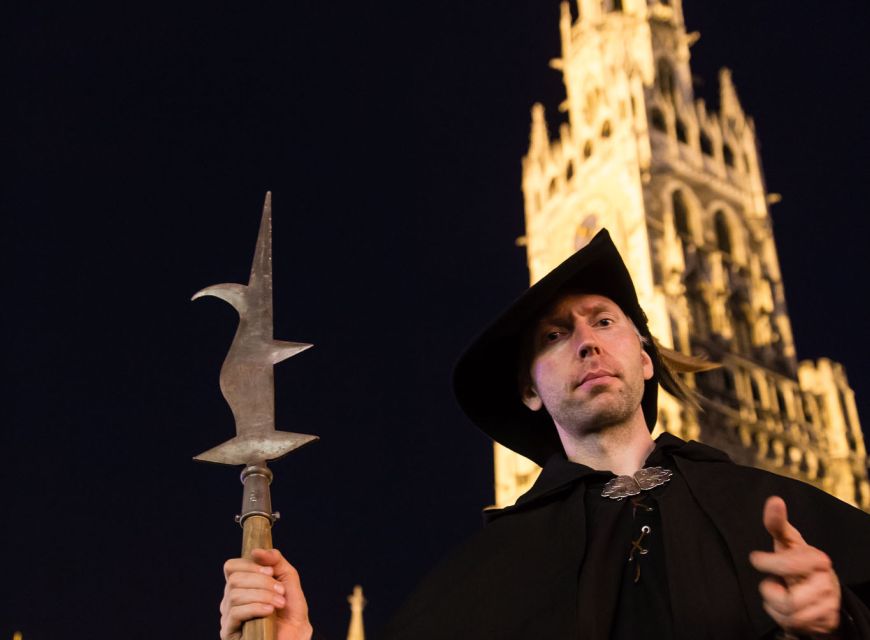
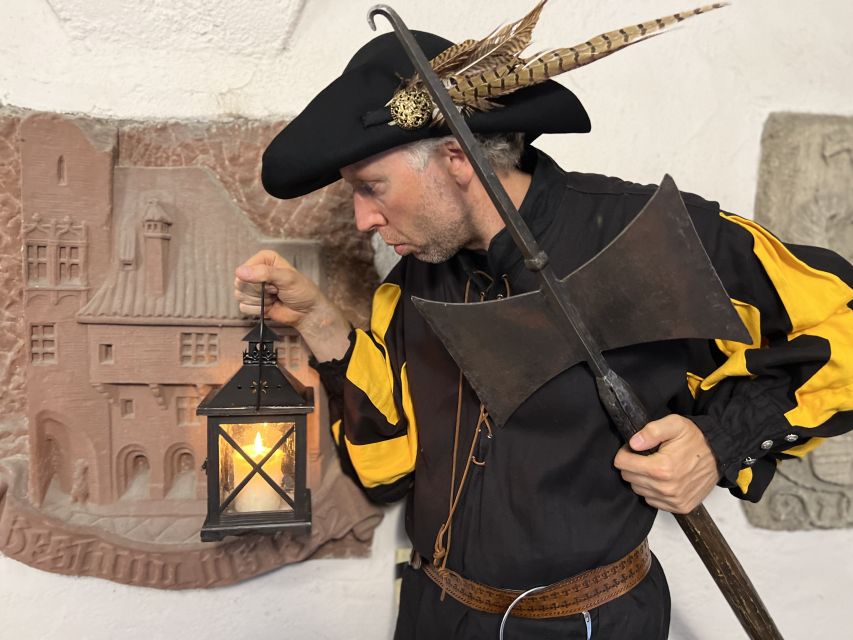
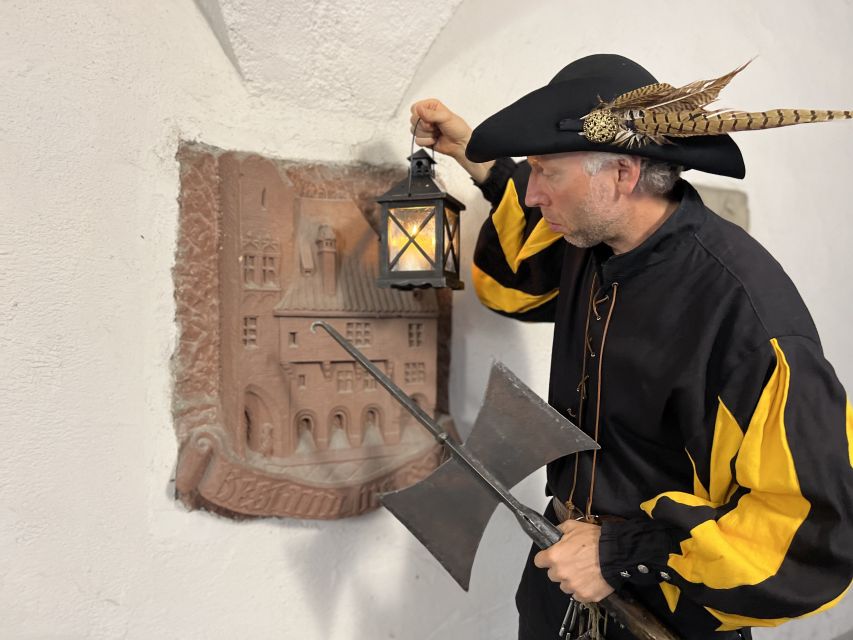
Nighttime Munich tells a different story. This 1.5-hour walk through the old town brings the past to life with a costumed night watchman, a lantern, and a sharp eye for grim tales, old customs, and local jokes. I like the way the tour uses narrow lanes, churchyards, city gates, and palace squares as its setting rather than relying on a standard sightseeing script.
I also like the guide’s theatrical character. He is not simply pointing at buildings. He acts as a keeper of law and order, grumbling about late-night revelers and testing your knowledge of Munich’s patron saints. The stories about St. Peter’s crooked towers, medieval funeral customs, and the old torture chamber give the walk a memorable edge. The main drawback is the $530 price for a group of up to 30, which is hard to justify for one or two people unless you value a private, character-led tour.
In This Review
- Key points to know before booking
- Why Munich works so well after dark
- Marktplatz and the first call of the watchman
- St. Peter’s Church and the crooked towers
- Altes Rathaus, the Salzstraße, and Munich’s protective saints
- Torture, prison, and the old Alter Hof
- City walls, Gruftgasse, and a tale from Walchensee
- Frauenkirche and stories of luck, loss, and height
- Promenadeplatz, royal palaces, and a costly love affair
- Salvatorkirche and the Theatine Church finale
- The guide’s style and language choices
- What $530 means for value
- Who should book this night walk?
- Final verdict: a memorable choice for groups
- FAQ
- How long does the Munich Night Watchman Walking Tour last?
- What language is the tour offered in?
- Is the tour private?
- How much does the tour cost?
- What is included in the experience?
- Are food and drinks included?
- Is transportation included?
- Is the tour wheelchair accessible?
- Can I cancel the tour for a full refund?
Key points to know before booking
- A lantern-lit route through Munich’s old town: The walk passes Marktplatz, St. Peter’s Church, the Altes Rathaus, Alter Hof, Frauenkirche, Promenadeplatz, and the Theatine Church.
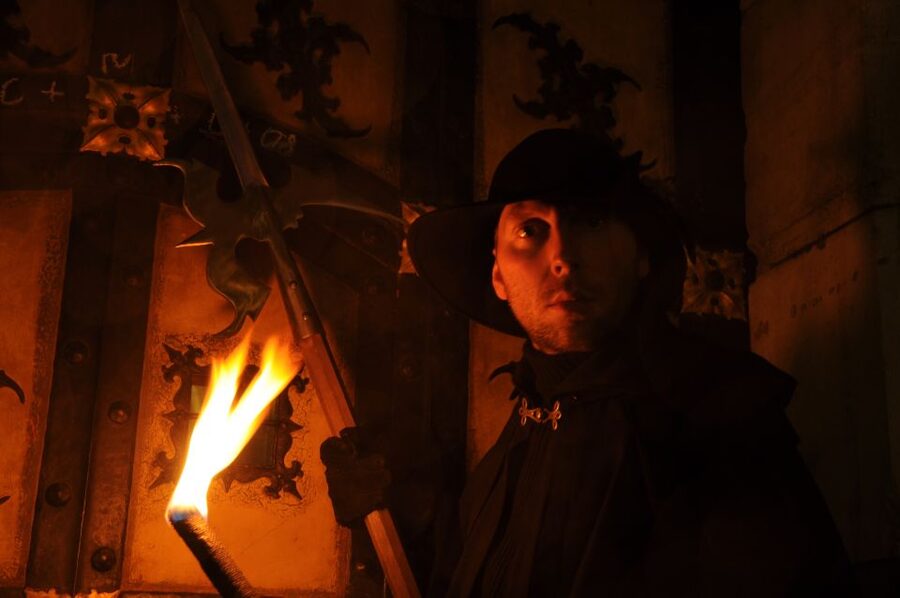
- A guide in medieval costume: The night watchman performs a role, complete with stern warnings, local humor, and tales of crime, death, faith, and royal life.
- A story-heavy experience: Expect anecdotes about gravestones, missing pews, palace scandals, patron saints, and a mysterious tale from Walchensee.
- A private-group price: The listed cost covers up to 30 people, so the value improves sharply when shared across a larger party.
- English and German tours: You can select the language when booking, with live guidance rather than an audio recording.
- An accessible old-town option: The activity is listed as wheelchair accessible, though the exact meeting point and route may vary by booking option.
Why Munich works so well after dark
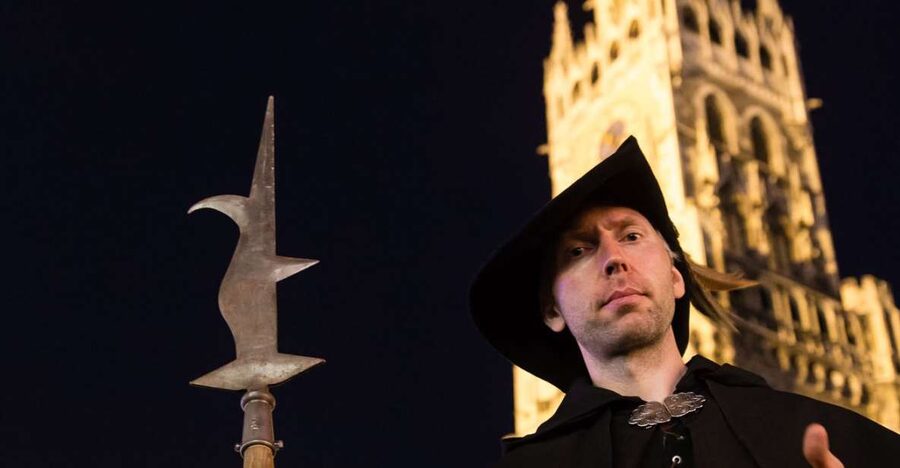
Munich’s old town can feel polished and orderly by day. At night, the same streets take on a more secretive mood. Narrow passages, old church walls, courtyards, and shadowed towers become part of the story instead of merely forming a backdrop for photographs.
That change in mood is the main reason to choose this experience. You are not walking through a museum with labels beside every object. You are being led through the places where a medieval watchman might have worked, worried, and complained.
The guide’s role adds humor. He dislikes the modern era, expects respectable people to be in bed after 9 p.m., and keeps a watchful eye on the group. The character may sound stern, but the tone is playful. Even the question of why Munich needs so many taps has a comic answer tied to beer.
This style will suit you if you enjoy history presented as a story. If you prefer dates, architectural detail, or a quiet photographic walk, the performance may feel like too much theater.
More Night Watchman Tours in Munich
- Munich: Night Watchman Torch Tour in German
★ 4.8 · 1,280 reviews - Munich: Middle Ages Tour with Night Watchman
★ 4.9 · 652 reviews - On the road with the night watchman
★ 5.0 · 142 reviews
Marktplatz and the first call of the watchman
The tour begins in the old center, with the watchman gathering his flock at Marktplatz. The exact meeting point can change with the booking option, so check your confirmation carefully before setting out.
From the start, the guide establishes the rules of his imaginary night shift. Law-abiding citizens should be asleep. Anyone still roaming the streets after 21:00 is treated with suspicion. This gives the group a simple lens through which to view the old town: every alley might hide a troublemaker, a secret society, or a story that respectable Munich would rather forget.
The opening section is useful because it sets the tone before the more detailed stops begin. You quickly learn that this is not a lecture in modern clothes. The guide stays in character, yet still answers questions and explains the customs behind the jokes.
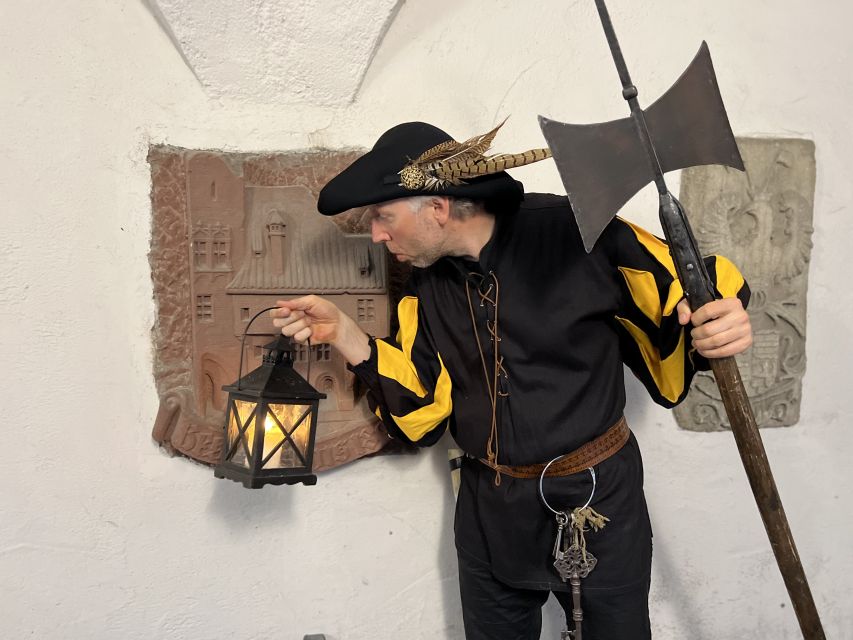
A guide such as Elsbeth brings the role to life with humor and clear information. Her approach has been praised for feeling authentic, lively, and well informed. That combination matters. A costume alone can become a gimmick, but a guide who can switch from comic scolding to useful explanation keeps the hour and a half moving.
St. Peter’s Church and the crooked towers
At St. Peter’s Church, the watchman directs your attention upward to the tops of the towers. He explains why they stand askew, turning an unusual architectural detail into a short lesson in Munich’s past.
The south side of the church brings a darker change of mood. The old churchyard becomes the setting for stories about gravestones, funeral customs, epitaphs, and the way people once thought about death. You also hear about decomposing bodies and missing church pews, details that are unsettling without needing modern special effects.
This is one of the strongest parts of the route for anyone who enjoys social history. A church is not treated only as a pretty building. You get a sense of how ordinary people worshipped, buried their dead, marked loss, and tried to make sense of sudden death.
The material can be macabre. Families with young children should consider how comfortable they are with stories about corpses and death. The tour is not presented as a horror attraction, but its subject matter is sometimes grim.
Altes Rathaus, the Salzstraße, and Munich’s protective saints
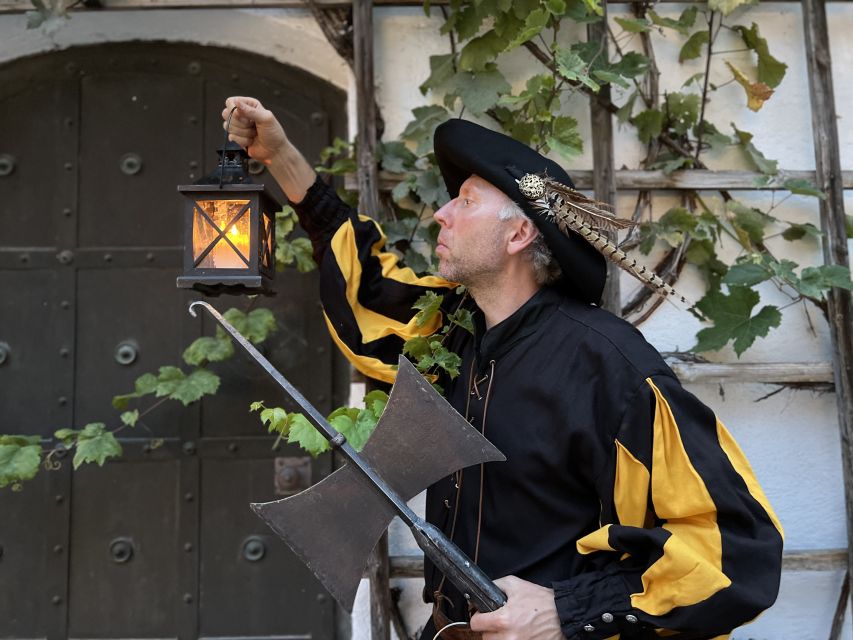
The route continues to the tower of the Altes Rathaus on the historic Salzstraße. Here, the old city gate is given a voice and complains about its rebuilding in the 1970s.
That small piece of performance points to a larger truth about old cities: restoration can be as controversial as destruction. The watchman’s complaint lets you think about what Munich chooses to preserve and how later generations reshape historic buildings.
The guide also questions your piety and introduces the patron saints Onuphrius and Henry the Lion. Their role is tied to protection from sudden death, a concern that makes more sense after the earlier churchyard stories.
This stop works best if you enjoy connecting religious symbols with daily fears. Medieval faith was not merely decoration on a church wall. Saints were called upon for safety, health, political legitimacy, and protection from dangers that people could not control.
More Walking Tours in Munich
- Munich: Third Reich & WWII Walking Tour
★ 4.6 · 6,181 reviews - Third Reich Walking Tour Munich
★ 4.5 · 4,291 reviews - Munich: Old Town & Viktualienmarkt City Walk in German
★ 4.7 · 2,304 reviews - Munich Ghosts and Spirits Evening Walking Tour
★ 5.0 · 1,900 reviews
Torture, prison, and the old Alter Hof
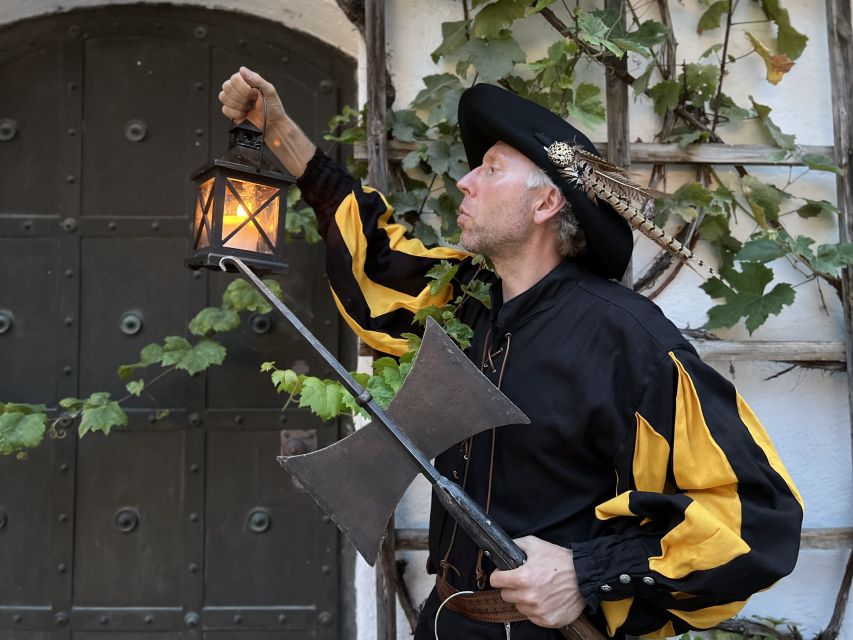
Near the former torture chamber and prison, the mood turns more severe. You hear about punishment and confinement before moving toward the Alter Hof, a complex associated here with Louis II.
The guide explains why this ruler was considered harsh, how the Wittelsbach family came to Munich, and where the name Zwingerstock came from. These stories add political weight to the route. Until this point, the watchman has been guarding streets and telling tales of death. Here, you get a closer look at power and the machinery used to enforce it.
The value of this section depends on your interest in medieval government. The stories are delivered in an accessible way, but the tour does not promise a long political lecture. You will receive selected anecdotes rather than a complete account of the Wittelsbach dynasty.
That is a sensible format for a night walk. Too many names and dates would slow the group, especially in the dark. The guide gives you enough to understand why Munich grew around ruling families, fortified spaces, and strict civic control.
City walls, Gruftgasse, and a tale from Walchensee
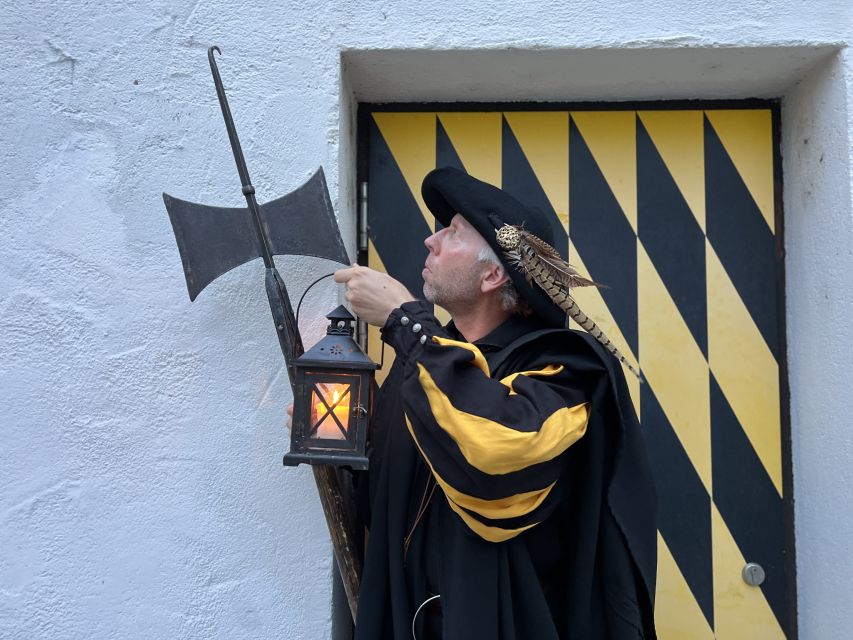
The walk follows sections of the 12th-century city walls and heads west from Wasserburg. This part helps you picture Munich as a smaller fortified town rather than the large Bavarian capital you see today.
At Gruftgasse, Alois tells the eerie story of Waller in Walchensee, a young lady, and her golden ring. The tale adds a folk-story element to the tour. It is not simply an explanation of a building or a street name. You are given a local mystery that belongs to the darker side of the evening.
The story format is particularly useful when you are tired after a full day of sightseeing. You do not need to memorize architectural terms. You can follow a plot, remember a character, and connect the tale with the street where it is told.
At Schäfflergasse, the guide explains why wine, rather than beer, was the preferred drink in the Middle Ages. This is a nice correction to the easy assumption that Munich has always been a beer-first city. Food and drink habits change with trade, wealth, taste, and availability, and the watchman uses a simple question to open that door.
Frauenkirche and stories of luck, loss, and height
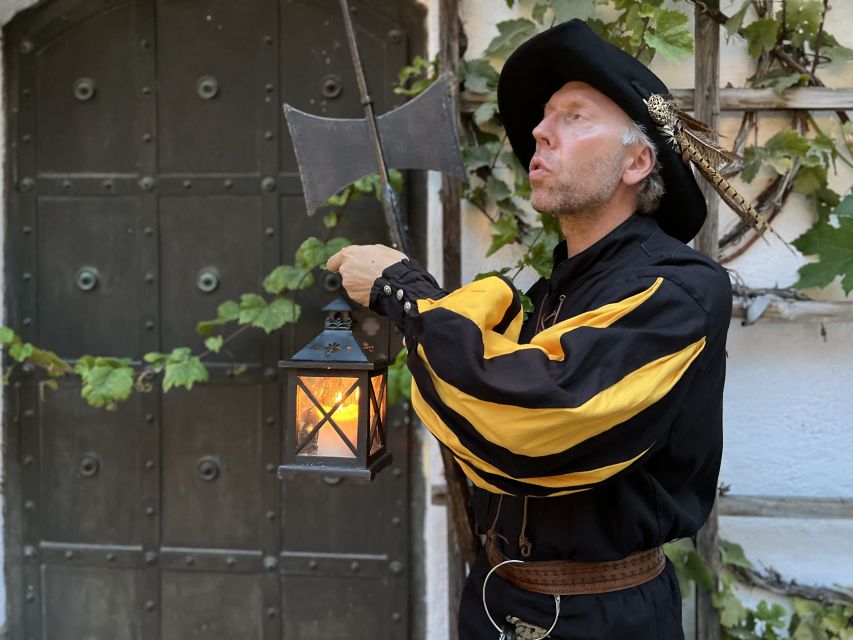
At the cathedral, you look up at the two towers, important symbols of Munich. The scale of the building changes the feel of the walk. After narrow lanes and old walls, the open view toward the towers gives the group a clear point of orientation.
The guide then tells the story of a rich widow’s epitaph and the unlucky fall of Fanny von Ickstatt from the north tower of the Frauenkirche. These stories bring personal drama into the route. Instead of hearing only about rulers and institutions, you encounter individual lives marked by wealth, memorials, accidents, and loss.
The cathedral section is also a reminder that old buildings preserve many kinds of memory. A tower can represent civic pride, religious faith, and danger all at once. The guide’s storytelling helps you look beyond the building’s familiar outline.
You will not enter every site along the way, and the experience is primarily an exterior walking tour. That is worth keeping in mind if you want interior visits or tower access.
Promenadeplatz, royal palaces, and a costly love affair
The inner-city route continues to Promenadeplatz and the old Salzstadel. From there, you pass Palais Porcia and Palais Holstein while hearing about sovereign lord Karl Albrecht and the palaces built for his mistress.
This is one of the more entertaining royal stories on the walk. It shows how personal relationships, money, status, and architecture could overlap at court. A grand palace was not always built for public service or religious devotion. Sometimes it was a very expensive expression of private power.
The palaces also offer a change from the medieval lanes. Their presence gives you a look at a later, more courtly Munich, while the watchman’s voice keeps the route tied to the older city.
For me, this mix is one of the tour’s strengths. You move through several layers of Munich without stopping for a formal timeline. The city itself supplies the sequence: market, churchyard, gate, prison, palace, cathedral, and church.
Salvatorkirche and the Theatine Church finale
Near Salvatorkirche, the guide tells the story of a major host desecration. This is sensitive religious material, and the story reflects the fears and tensions of an earlier age. The guide presents it as part of the city’s past, not as a modern argument.
At the Theatine Church cloister, the tone shifts to dynastic hope and romance. You hear about Henriette Adelaide, consort of Elector Ferdinand Maria, and the long-awaited birth of an heir after ten years. The Theatine Church was built after the birth, giving the building a direct connection to dynastic gratitude.
This is a fitting final stop because it brings together faith, monarchy, family, and architecture. The route began with a watchman policing ordinary streets and ends with a church built to celebrate a royal succession.
Finally, the night watchman releases his flock into the night and returns to his rounds. The ending preserves the fiction that his shift continues after your tour is over. It is a small theatrical touch, but it gives the experience a proper finish rather than simply stopping beside a landmark.
The guide’s style and language choices
The guide is the heart of this experience. Medieval clothing and a lantern create the first impression, but the performance works only when the person leading it can balance drama with useful information.
The strongest guide style here is witty, informed, and willing to play the stern night patrol officer. German and English tours are available, and the activity uses a live guide rather than recorded commentary.
Names may vary, but Elsbeth has been praised for an authentic, experience-focused style that also delivers solid information. Other recent praise centers on tours being funny, informative, and well presented. Those qualities are exactly what you should look for in this format.
The role includes mock scolding, questions about saints, complaints about nightlife, and answers to practical local questions. If you take part, respond to the character rather than waiting for a conventional museum talk. The more you engage, the more enjoyable the performance is likely to feel.
What $530 means for value
The listed price is $530 per group of up to 30 people. That makes this a very different purchase from an inexpensive public walking tour priced per person.
For a large family group, wedding party, school group, or company outing, the math can work well. At the full 30-person capacity, the cost averages about $18 per person. For 10 people, it is about $53 each. For only two people, it becomes a costly private walk.
The private-group option is the real value question. You are paying for a dedicated guide, a themed performance, and a route through central Munich. You are not paying for food, drinks, or transport, so plan to reach the meeting point on your own and eat before or after the walk.
I would consider the price reasonable for a group that wants a shared evening activity with a strong sense of occasion. I would hesitate if you are a solo visitor or couple comparing it with standard city walks.
The tour lasts 1.5 hours, which is long enough to cover many central sights without taking over your entire evening. Since starting times vary, check availability and choose a slot that fits your dinner plans and energy level.
Who should book this night walk?
I would recommend it most strongly for:
- Families with older children who enjoy spooky stories
- Groups celebrating a special occasion
- First-time visitors who want a playful introduction to Munich’s old center
- History fans who prefer anecdotes to long lectures
- People who enjoy theatrical guides and audience interaction
- Anyone looking for an evening activity after the museums close
I would be more cautious if you need a quiet, highly academic tour. The night watchman is a character, and the evening is built around performance. You should also think about the subject matter if stories of torture, death, corpses, and religious conflict are not your idea of fun.
The route is listed as wheelchair accessible, which is important for planning. Since meeting points may differ by option, confirm the exact starting location and route details before you go.
Final verdict: a memorable choice for groups
You should book the Munich Night Watchman Walking Tour if you want the old town presented as a living stage of saints, rulers, prisoners, lovers, and suspicious midnight wanderers.
I like its clear sense of place, its unusual stories, and the way it takes familiar landmarks beyond postcard views. The guides’ humor and warmth are central strengths, especially when the role stays informative rather than becoming pure theater.
The price is the deciding factor. For a large private group, it can be good value and an easy way to give everyone the same evening experience. For a couple or solo visitor, it is expensive. If that cost works for your group, this is a lively and atmospheric way to see Munich after dark.
FAQ
How long does the Munich Night Watchman Walking Tour last?
The tour lasts 1.5 hours.
What language is the tour offered in?
Live tours are available in German and English.
Is the tour private?
A private group option is available. The listed price covers a group of up to 30 people.
How much does the tour cost?
The listed price is $530 per group of up to 30 people.
What is included in the experience?
The experience includes guidance from a night watchman dressed in medieval clothing.
Are food and drinks included?
No. Food and drinks are not included.
Is transportation included?
No. Transportation is not included, so you must make your own way to the meeting point.
Is the tour wheelchair accessible?
Yes, the activity is listed as wheelchair accessible.
Can I cancel the tour for a full refund?
Yes. You can cancel up to 24 hours in advance for a full refund.
Just added around Munich
- Pub crawl incl. Oktoberfest museum guided tour with beer tasting (private)★ 5.0 · 5 reviews
- South Tyrolean specialties and wine tasting★ 5.0 · 5 reviews
- Size Matters Beer Tour Munich★ 4.6 · 105 reviews
- Short & sweet: Tasting the Viktualienmarkt★ 4.8 · 37 reviews
- Secret Food Tours Munich★ 4.8 · 5 reviews
- Munich: Romantic Wine Experience for Two at Viktualienmarkt★ 4.2 · 14 reviews
- Residence of Munich private tour with skip the line ticket★ 5.0 · 4 reviews
- Munich: Resistance against Hitler – Historical Walking Tour★ 5.0 · 5 reviews
Night Watchman Tours, compared.
The Original Night Watchman Tour in Lantern Light
Read our review →
1.5-Hour Public Tour with Night Watchman Bremme
Read our review →
The Night Watchman Old Town Walking Tour in German
Read our review →
Browse the lists this tour appears in