
Reviewed · THIRD REICH HISTORY TOURS
Munich: Third Reich and World War II Private Guided Tour
Munich’s darkest chapters are still visible. This private walking tour connects Marienplatz, Hofbräuhaus, Feldherrnhalle, and Königsplatz to the rise and fall of National Socialism, with a guide who can explain the political story and the human cost. I especially like the route through the Beer Hall Putsch sites and the chance to ask hard questions in a private group.
I also like the choice between a focused three-hour walk and a 4.5-hour version that includes the NS Documentation Center. The main caution is the price, $311 per person, which is a serious spend for a walking tour. It makes the most sense if you want personal discussion, not just a quick list of historic buildings.
In This Review
- Key points to know before you book
- Why this Munich history walk matters
- Starting at Marienplatz and the New Town Hall
- Hofbräuhaus and the birth of a political movement
- Following the Beer Hall Putsch to Feldherrnhalle
- Resistance, remembrance, and the White Rose
- Führerbau and the Munich Agreement
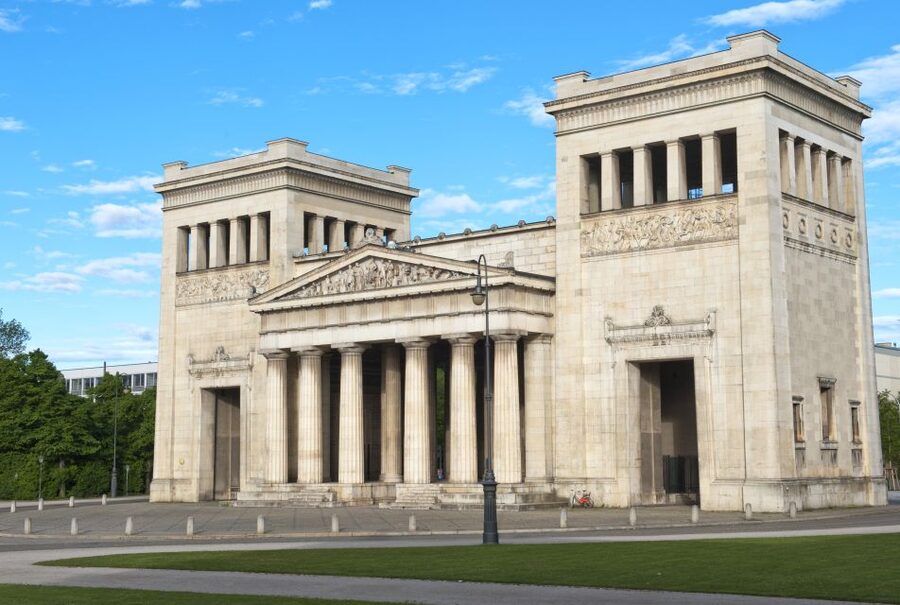
- Königsplatz and the end of the three-hour route
- What the 4.5-hour option adds at the Documentation Center
- The value of a private guide at $311 per person
- Timing, meeting details, and practical advice
- Who will get the most from this experience?
- Should you book this Munich Nazi history tour?
- FAQ
- Where does the tour meet?
- How long does the walking tour last?
- What is included in the standard tour?
- Is the NS Documentation Center included?
- Which sites are covered?
- Which languages are available?
- Is this a private tour?
- Is the tour wheelchair accessible?
- Can I cancel for a full refund?
- How much does the tour cost?
Key points to know before you book
- The route begins at Marienplatz, where Nazi propaganda events took place and where the New Town Hall still reflects Munich’s wartime destruction.
- Hofbräuhaus is part of the political story, not merely a beer stop. The tour explains Hitler’s 1920 speech connected with the founding of the National Socialist German Workers’ Party.
- Feldherrnhalle and Odeonsplatz follow the Beer Hall Putsch route, linking Munich streets to Hitler’s failed 1923 attempt to seize power in Bavaria.
- The tour includes resistance history, including the White Rose Group, a student-led movement that opposed the Nazi regime.
- Königsplatz closes the standard walk, with its links to Nazi rallies and book burning.
- The 4.5-hour option adds the NS Documentation Center, with photographs, documents, film projections, and media stations covering the Nazi movement, war, and postwar Munich.
Why this Munich history walk matters
Munich is often sold through palaces, beer halls, and handsome squares. Those things are real, but they tell only part of the city’s story. Munich was also the place where the Nazi movement built its identity, tested its power, and turned political theater into a path toward dictatorship.
That makes this tour more useful than a generic old-town walk. You are not simply looking at façades. You are asking why certain places mattered, how public spaces were used, and how ordinary citizens and institutions responded.
The private format is important here. National Socialism is not a subject that fits neatly into a few dates and famous names. You may want to ask about Munich’s citizens, resistance groups, propaganda, the Beer Hall Putsch, or the city’s destruction in 1945. A private guide can adjust the conversation instead of moving a large group along to the next stop.
The guide languages are English, German, French, Italian, and Spanish. The tour is also listed as wheelchair accessible, although the experience remains a walking route through the Old Town, so you should confirm any personal mobility needs before booking.
More Third Reich History Tours in Munich
- Munich: Third Reich & WWII Walking Tour
★ 4.6 · 6,181 reviews - Third Reich Walking Tour Munich
★ 4.5 · 4,291 reviews - Munich: Birthplace of the Third Reich Guided Walking Tour
★ 4.6 · 771 reviews
Starting at Marienplatz and the New Town Hall
The meeting point is in front of Hotel BEYOND by Geisel at Marienplatz 22, opposite St. Peter. Do not go inside the hotel. It is only the meeting point, and the hotel staff is not informed about the tour.
Marienplatz is a strong place to begin because it puts modern Munich beside the city’s political past. The square hosted Nazi propaganda events, so the guide can explain how public gatherings, symbols, speeches, and mass emotion helped shape political power.
You will also hear about the New Town Hall, or Neues Rathaus. The building was reconstructed after Munich’s 1945 bombing, and its survival is a useful reminder that this history is tied to physical damage as well as ideology. Much of the downtown area was destroyed during the war.
I like this opening because it avoids treating the Nazi era as something that happened far away. The story begins in the center of daily Munich, among streets and buildings still used by residents and visitors.
Hofbräuhaus and the birth of a political movement
The route continues to Hofbräuhaus am Platzl, one of Munich’s best-known beer halls. Here, the point is not to stop for a drink. The building is connected to Adolf Hitler’s speech in 1920 associated with the founding of the National Socialist German Workers’ Party.
That detail gives the tour a useful sense of place. Political movements do not always begin in grand government buildings. In Munich, beer halls offered rooms where speeches could draw crowds, arguments could spread, and a new movement could present itself as a force for national renewal.
Your guide will explain the origin story of the party and the support it gained from Nazi sympathizers. This part should help you separate the early movement from its later image as a fully formed dictatorship. The party had to build support, create slogans, organize followers, and use Munich as a stage.
Hofbräuhaus can be crowded and touristy, which may feel uncomfortable when discussing such serious events. That tension is part of the place’s value, but it also means the stop works best when your guide supplies context rather than letting the building become a photo opportunity.
Following the Beer Hall Putsch to Feldherrnhalle
The tour follows the route of the Beer Hall Putsch toward Feldherrnhalle and Odeonsplatz. In 1923, Hitler and his supporters attempted to storm the Bavarian Defense Ministry and seize control. The effort failed, but the event became central to Nazi mythology.
At Feldherrnhalle, you can connect the physical route with the movement’s later propaganda. The failed coup helped Hitler gain publicity, and the story fed into his political writing, including Mein Kampf. The tour explains how a failed attempt to take power could still be used to strengthen a political cause.
This is one of the most useful parts of the walk because streets and squares become evidence. You can see how close important sites are and understand the route in a way that a museum timeline cannot fully provide.
The drawback is that the outdoor sites themselves do not present a complete explanation. You will need to listen carefully and ask questions. Without the guide, Feldherrnhalle and Odeonsplatz might look like attractive architectural stops with little visible connection to the events.
Still Munich, at a slower pace:
- From Munich: Neuschwanstein & Linderhof Castle Full-Day Trip
★ 4.5 · 12,494 reviews - Neuschwanstein & Linderhof Castle-Fairytale Day Tour from Munich
★ 4.5 · 7,275 reviews - Dachau Concentration Camp Memorial Site Tour from Munich by Train
★ 4.5 · 5,637 reviews - Neuschwanstein Castle Tour from Munich
★ 4.5 · 5,117 reviews
Resistance, remembrance, and the White Rose
The tour does not present Munich only as the birthplace of the Nazi movement. It also covers resistance to the regime, including the White Rose Group led by five university students.
That change in focus matters. A serious account of this period needs to show both collaboration and opposition. The White Rose story gives you a human-scale example of people who recognized the danger of the regime and chose to resist it.
The tour also visits the Monument to the Victims of National Socialism. This stop brings the discussion away from political tactics and toward those who suffered under the regime. It is a useful pause in a route that otherwise concentrates on party offices, speeches, and leaders.
I would give this section your full attention. The larger political story can make individuals disappear behind dates and institutions. Resistance history brings the moral choices back into view, while the monument reminds you that the consequences were not abstract.
Führerbau and the Munich Agreement
You will see former Nazi Party office buildings, including Führerbau, or the Führer’s Building. The building is linked to the 1938 Munich Agreement, signed there by Neville Chamberlain and Adolf Hitler.
This stop helps explain how Nazi power operated beyond rallies and street politics. Diplomacy, international concessions, and the appearance of negotiation also played a role in the period before the Second World War.
The building’s connection to the Munich Agreement gives the guide a chance to explain the wider European setting. You are not only following Hitler’s rise inside Germany. You are also looking at how foreign leaders responded to his demands and how those decisions shaped the approach to war.
The name can sound grand, but the lesson is sobering. Government buildings often look stable and respectable, even when the decisions made inside them carry enormous consequences. That contrast is one reason a guide-led visit is worthwhile.
Königsplatz and the end of the three-hour route
The standard walking tour ends at Königsplatz. Under the Nazi regime, the square was used for mass rallies and book burning.
Königsplatz is an effective final outdoor stop because it brings together spectacle, ideology, and public control. Large open spaces could be transformed into settings for loyalty, intimidation, and political theater. Book burning also shows the regime’s attack on ideas and free expression.
By the end of the three-hour route, you will have followed the story from party origins to attempted revolt, government power, resistance, war, and defeat. The walk also covers the bombing and liberation of Munich in 1945.
Three hours is long enough to make the route serious without turning it into an all-day commitment. Still, the subject is dense. You may leave with a strong framework but still want more time for the causes and consequences of the war, the postwar period, and the city’s process of remembrance.
What the 4.5-hour option adds at the Documentation Center
The longer version adds the Munich Documentation Center for the History of National Socialism. This is the better choice if you want more than an outdoor introduction.
The center includes photographs, documents, texts, film projections, and media stations. These materials cover the origin and rise of the Nazi movement, the war, and the postwar period in Munich.
I like this addition because it gives you primary material and visual evidence after the walking route has supplied the geography. You first see the places where events unfolded, then examine records and exhibits that explain how the movement developed and what followed.
The extra 90 minutes changes the pace of the experience. You have more time to ask questions about causes, responsibility, resistance, war, and the city’s response after 1945. If you have a strong interest in twentieth-century history, I would choose the longer option.
The tradeoff is time and energy. A 4.5-hour historical program requires concentration, and the material is difficult. If you want a lighter introduction before visiting another attraction, the standard walk may suit you better.
The value of a private guide at $311 per person
At $311 per person, this is not a budget activity. You are paying for a private group, a live guide, a tailored conversation, and, with the longer option, entry to the NS Documentation Center.
The value depends on how you like to learn. If you prefer a fixed audio guide or a short public tour, the cost will probably feel high. If you want to ask questions about Munich’s role in National Socialism and have the guide adjust the explanation to your interests, the private format has a clearer purpose.
The strongest praise attached to the experience is directed at the guides. Mireya is specifically singled out as great, and the overall rating is 4.8 from 20 reviews. Other short comments describe the experience as perfect or simply say Tutto, meaning everything. These comments are brief, so they do not tell you much about the exact teaching style, but they do point to consistent satisfaction and particularly positive guide impressions.
Because the price is listed per person, the private format may make more sense for families or small groups who can share the experience together. For one person or a couple, the cost requires a stronger interest in the subject.
Timing, meeting details, and practical advice
The standard option lasts three hours. The longer option lasts 4.5 hours, or 270 minutes. Starting times depend on availability, so check the schedule before you build the rest of your Munich day around it.
Wear comfortable shoes. The route moves through Munich’s Old Town and connects several sites on foot. No transportation, meals, or drinks are included in the information provided, so plan this as a walking and history experience rather than a food tour.
Arrive at the stated meeting point in front of Hotel BEYOND by Geisel, across from St. Peter. Since the hotel staff is not involved, do not ask the reception desk to locate the guide.
The tour is offered in English, German, French, Italian, and Spanish. It is private and wheelchair accessible. Free cancellation is available up to 24 hours before the tour, and you can reserve now and pay later, which helps if your Munich plans are still shifting.
Who will get the most from this experience?
I would recommend this tour to you if you want a serious introduction to Munich’s Nazi past and prefer conversation over a standard sightseeing script. It suits first-time visitors who want historical context for places they might otherwise pass without noticing.
It is also a good choice for students, families with older children, and anyone already familiar with the basic story of Hitler and the Second World War. The private setup gives you room to ask precise questions without worrying about slowing down a large group.
The tour may not suit you if you want a relaxed city walk, a beer hall experience, or a broad survey of Munich attractions. The subject is grim, and the pace is built around political history, war, resistance, and responsibility.
I would choose the three-hour walk if your time is limited or you want to see the main sites. Choose 4.5 hours if the Documentation Center is a priority and you want photographs, documents, films, and postwar context alongside the outdoor route.
Should you book this Munich Nazi history tour?
Book it if Munich’s role in the rise of National Socialism is an important part of your visit. The route is well chosen, the private format supports difficult questions, and the longer version adds a serious museum component.
At $311 per person, I would not book it casually. For a small group with a strong interest in history, the personal guide and flexible discussion may justify the cost. For a tighter budget, visit the sites independently and reserve your spending for the NS Documentation Center.
If you do book, I would choose the 4.5-hour option for the fullest account. The three-hour walk gives you the essential places. The museum time helps connect those places to documents, images, war, and Munich’s postwar memory.
FAQ
Where does the tour meet?
The meeting point is in front of Hotel BEYOND by Geisel at Marienplatz 22, 80331 Munich, opposite St. Peter. Do not enter the hotel because its staff is not informed about the tour.
How long does the walking tour last?
The standard walking tour lasts three hours. A longer option lasts 4.5 hours, or 270 minutes.
What is included in the standard tour?
The standard option includes a live history guide and a walking tour through Munich’s Old Town.
Is the NS Documentation Center included?
The NS Documentation Center is included only with the 4.5-hour option.
Which sites are covered?
The route includes Marienplatz, the New Town Hall, Hofbräuhaus am Platzl, Feldherrnhalle, Odeonsplatz, the Monument to the Victims of National Socialism, Führerbau, and Königsplatz.
Which languages are available?
The tour is offered in English, German, French, Italian, and Spanish.
Is this a private tour?
Yes. The experience is arranged for a private group with a live guide.
Is the tour wheelchair accessible?
Yes, the activity is listed as wheelchair accessible.
Can I cancel for a full refund?
Yes. You can cancel up to 24 hours in advance for a full refund.
How much does the tour cost?
The listed price is $311 per person.
Just added around Munich
- Pub crawl incl. Oktoberfest museum guided tour with beer tasting (private)★ 5.0 · 5 reviews
- South Tyrolean specialties and wine tasting★ 5.0 · 5 reviews
- Size Matters Beer Tour Munich★ 4.6 · 105 reviews
- Short & sweet: Tasting the Viktualienmarkt★ 4.8 · 37 reviews
- Secret Food Tours Munich★ 4.8 · 5 reviews
- Munich: Romantic Wine Experience for Two at Viktualienmarkt★ 4.2 · 14 reviews
- Residence of Munich private tour with skip the line ticket★ 5.0 · 4 reviews
- Munich: Resistance against Hitler – Historical Walking Tour★ 5.0 · 5 reviews