
Reviewed · CITY TOURS
Münster: Private Guided Rickshaw City Tour
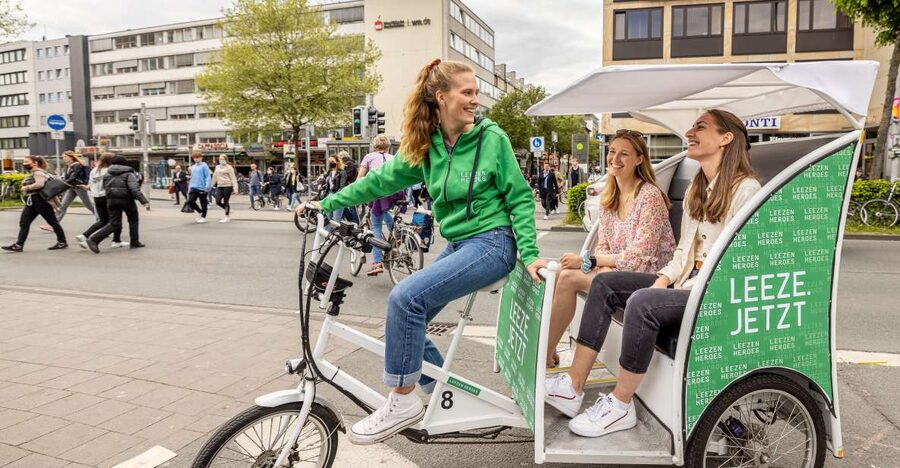
Münster reveals itself one story at a time. This private rickshaw ride gives you a quick, comfortable look at the city’s medieval walls, grand palace, cathedral, and sculpture-lined Aasee, while a local guide adds the small dönekes, or amusing local tales, that make the streets easier to remember. I especially like the personal format and the way the tour joins major sights with lesser-known details.
I also like the tour’s compact length and its $33-per-person price, which make it easy to fit into a busy day. The main point to consider is the duration: your chosen option may last only 30 minutes or as long as 1.5 hours, so check the available departure and timing details carefully before booking.
In This Review
- Five good reasons to consider this Münster ride
- Why a rickshaw suits Münster
- Starting at the Old City Hall and Prinzipalmarkt
- Münster Schloss and the city’s grand scale
- Aasee and Münster’s sculpture-filled shore
- Erbdrostenhof and the pleasure of looking up
- Zwinger and the old city walls
- Münster Cathedral as the final major stop
- What the private format really adds
- Is $33 per person good value?
- Timing, clothing, and practical planning
- Who will enjoy this most?
- Should you book the Münster rickshaw tour?
- FAQ
- How long does the Münster rickshaw tour last?
- What sights are included on the route?
- Is the tour private?
- Which languages does the guide speak?
- Does the price include entry to the attractions?
- Where does the tour start and finish?
Five good reasons to consider this Münster ride
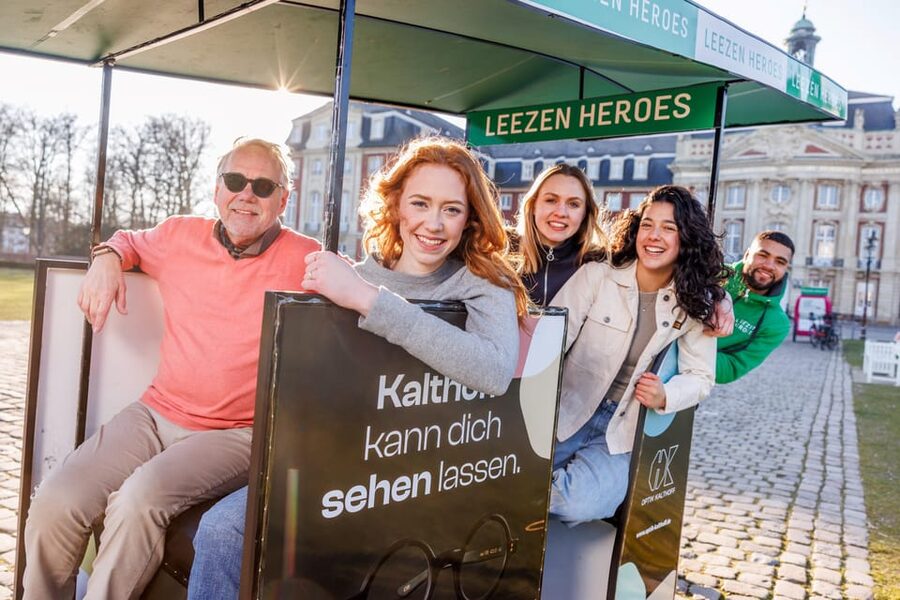
- A private rickshaw keeps the tour personal: You ride with your own group rather than joining a large crowd.
- The route covers Münster’s essential sights: You pass the Prinzipalmarkt, Münster Schloss, Münster Cathedral, Zwinger, Erbdrostenhof, and Aasee.
- Local dönekes add character: The guide’s short stories and jokes bring color to buildings that might otherwise blur together.
- Aasee adds open space to the city tour: The sculpture-lined shore gives you a change from streets and historic façades.
- The short format works well for a first look: You can get oriented without committing half a day or paying attraction entry fees.
Why a rickshaw suits Münster
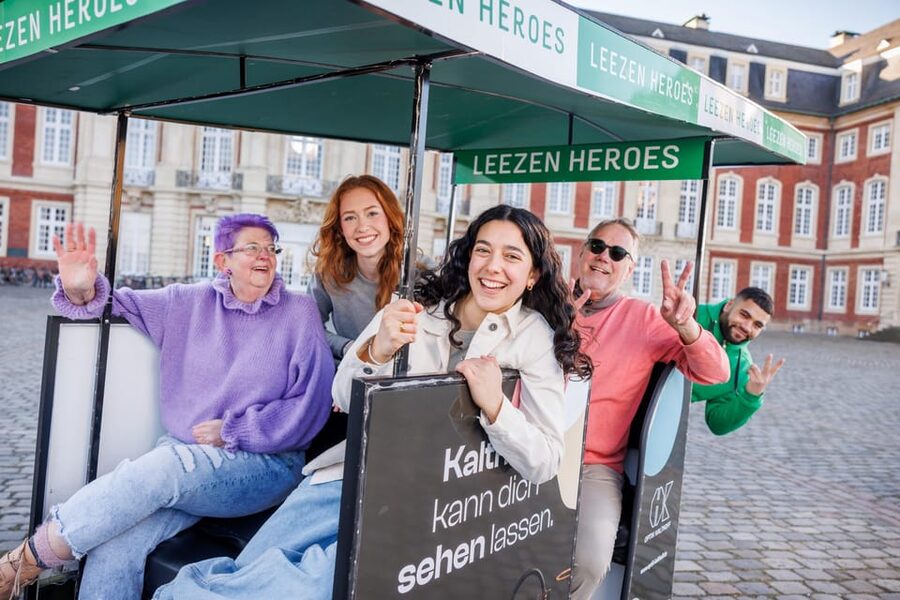
Münster is a city where grand buildings and small details sit close together. A rickshaw lets you cover more ground than you would on foot, but it keeps you close enough to see façades, walls, sculptures, and street corners without the sealed-in feeling of a bus.
I find that useful in a city such as Münster. You are not simply transported from one sight to the next. You can look around as you move, hear the guide speak, and pause at selected places for a closer look. The private setup also means the experience can feel more direct and less formal than a large walking group.
The vehicle matters most if you want an overview early in your stay. You get a sense of how the old center connects with the palace, the lake, and the remaining defensive structures. Afterward, you can decide which places deserve a longer visit on foot.
The tour is not designed to replace museum visits or detailed interior sightseeing. Entry to attractions is not included, and the experience focuses on seeing the landmarks from outside while listening to the guide. Think of it as a lively orientation ride, not a full historical study.
More City Tours in Munster:
- Private crime city tour by rickshaw including guide
★ 5.0 · 21 reviews - Berlin: 1-Hour City Tour by Boat with Guaranteed Seating
★ 4.3 · 16,993 reviews - Leipzig: City History Canal Sightseeing Tour on a Motorboat
★ 4.7 · 6,232 reviews
Starting at the Old City Hall and Prinzipalmarkt
The tour begins at the Old City Hall and heads toward the Prinzipalmarkt, one of Münster’s most recognizable city spaces. This is a strong opening because it puts you among the city’s signature historic architecture right away.
The Prinzipalmarkt is known for its elegant row of gabled houses and arcades. From a rickshaw, you can take in the line of façades without spending the first part of the tour trying to find your way through the center. Your guide can point out details as you pass, which helps turn a pretty street into a place with a sense of identity.
I like this part for another reason: it sets the tone for the rest of the ride. Münster is not presented as a list of isolated monuments. The route shows how the old center, civic buildings, religious sites, and defensive remains fit together.
Because the starting point may vary with the option you book, check your meeting instructions rather than assuming every departure begins at the same spot. The activity ends back at the meeting point, which makes planning the next part of your day easier.
Münster Schloss and the city’s grand scale
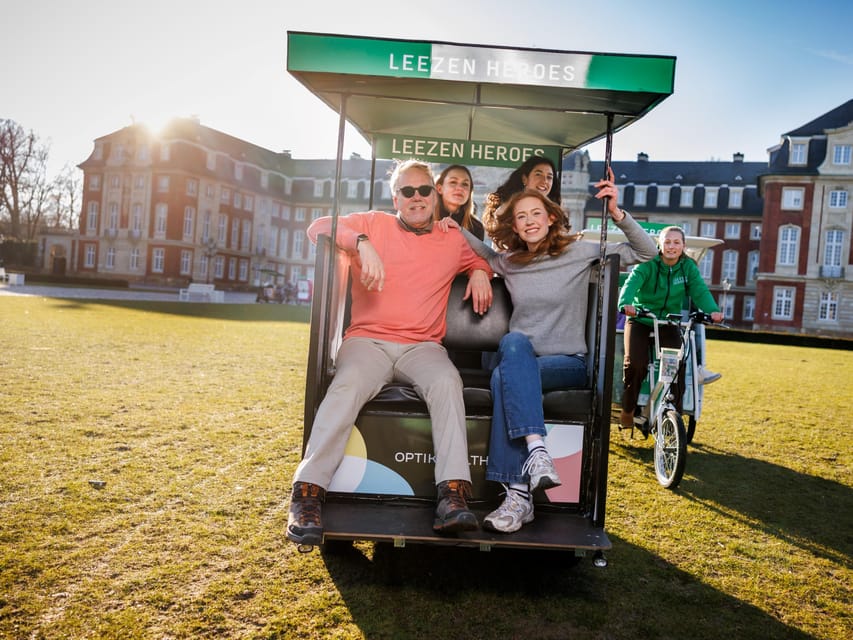
The route continues to Münster Schloss, the imposing palace that gives the city a sudden change of scale. After the more enclosed streets of the old center, the palace grounds and broad baroque architecture provide a more spacious view.
This is one of the tour’s best contrasts. You move from medieval town streets to a formal palace setting, and the guide explains how the building fits into Münster’s past. The palace is not just another photograph stop. It helps you see how civic and aristocratic power shaped the city’s appearance.
The tour does not include entry to the palace or other attractions, so you should treat this stop as an exterior visit. That is perfectly reasonable for a short city ride, especially if you mainly want to see the building and hear its background. If you want an extended look inside, you will need to arrange that separately.
I would pay attention here to the guide’s storytelling style. The supplied description places real weight on dönekes, the local word for little stories. These are likely to be the moments that make the palace and nearby streets easier to recall later, since a personal anecdote often sticks better than a string of dates.
Aasee and Münster’s sculpture-filled shore
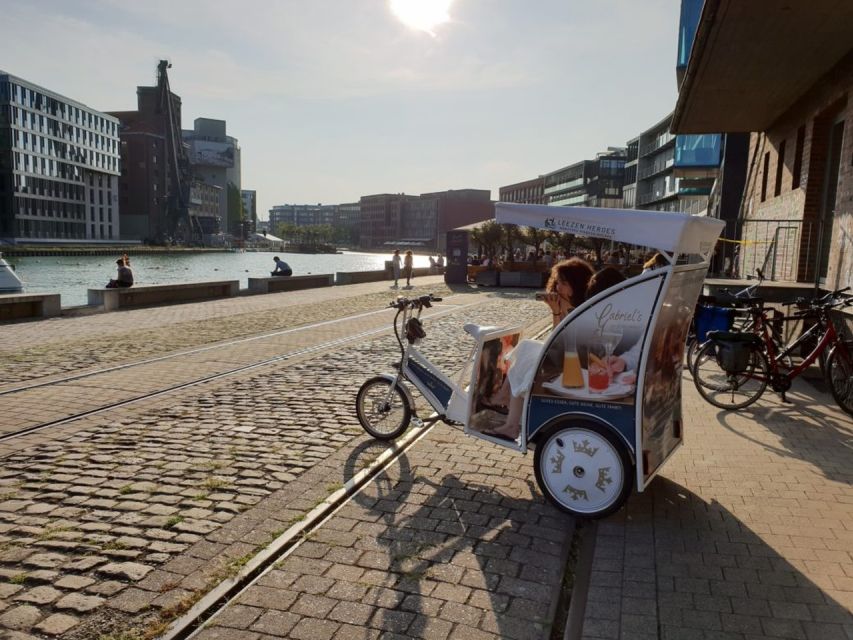
The ride then heads to the Aasee, where the city opens into a different kind of setting. Instead of tightly packed historic buildings, you see water, open shore, and a collection of sculptures placed around the lake.
This stop gives the itinerary welcome variety. A tour that stayed only in the old center could feel visually repetitive, with one grand façade following another. At Aasee, you get a break from masonry and a chance to notice Münster’s public art.
The sculptures are a key reason to take this route rather than a simple old-town circuit. They add a modern and playful note to the tour, and the guide can explain what you are seeing as you pass. The information provided does not specify the names or exact positions of the individual works, so you should expect an overview rather than a detailed sculpture study.
I would use this stop to slow down mentally. The rickshaw helps you reach the lake without making you spend much of your limited time navigating there. If your selected tour lasts only 30 minutes, the Aasee portion may be a quick look. A longer option should give the guide more room to talk and allow a more relaxed stop.
A few more Munster trips worth comparing
- Münster: Old Town Highlights Guided Tour
★ 4.7 · 286 reviews - Münster: Nachtwächter-Führung (Erlebnistour)
★ 4.4 · 213 reviews - Münster: Night watchman tour through the picturesque old town by lantern light
★ 4.8 · 65 reviews - Münster: Beer Tasting Rickshaw Tour
★ 4.7 · 56 reviews
Erbdrostenhof and the pleasure of looking up
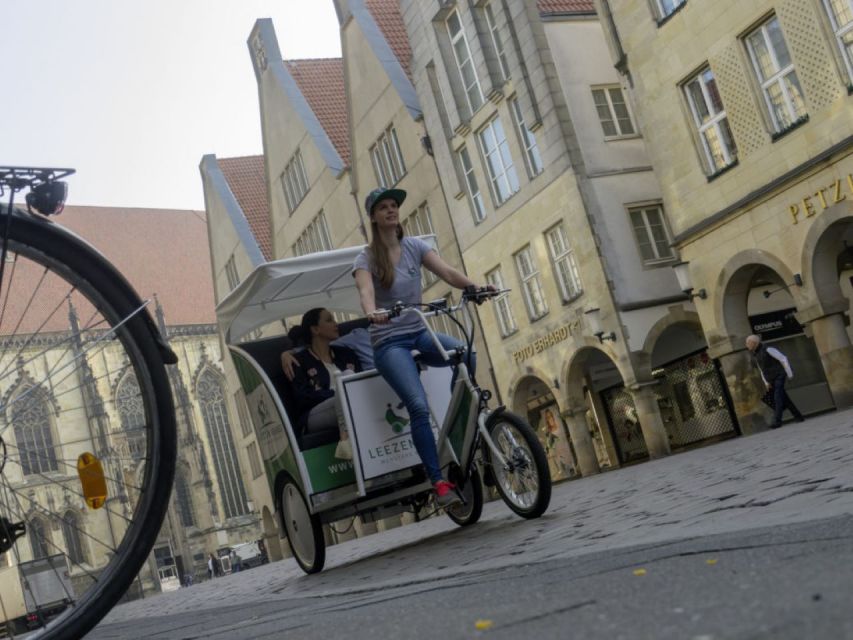
Back in town, the route includes the Erbdrostenhof, a notable baroque building with an elaborate exterior. This is the kind of sight that rewards attention to shape and decoration rather than a quick checklist photograph.
The Erbdrostenhof brings another architectural period into the tour. You have already seen medieval traces, the Prinzipalmarkt, and the palace. Here, the baroque style adds a more formal and decorative note.
I like including a building such as this because it gives you something specific to look for as you continue through Münster. Notice the symmetry, the ornament, and the way the façade presents itself to the street. Even without entering, the building can make the city’s architectural story feel more varied.
The stop also shows why a local guide is useful. A rickshaw ride without commentary would still give you a pleasant view of the city, but you might pass the Erbdrostenhof without understanding why it matters. The guide’s role is to supply that quick context while keeping the ride moving.
Zwinger and the old city walls
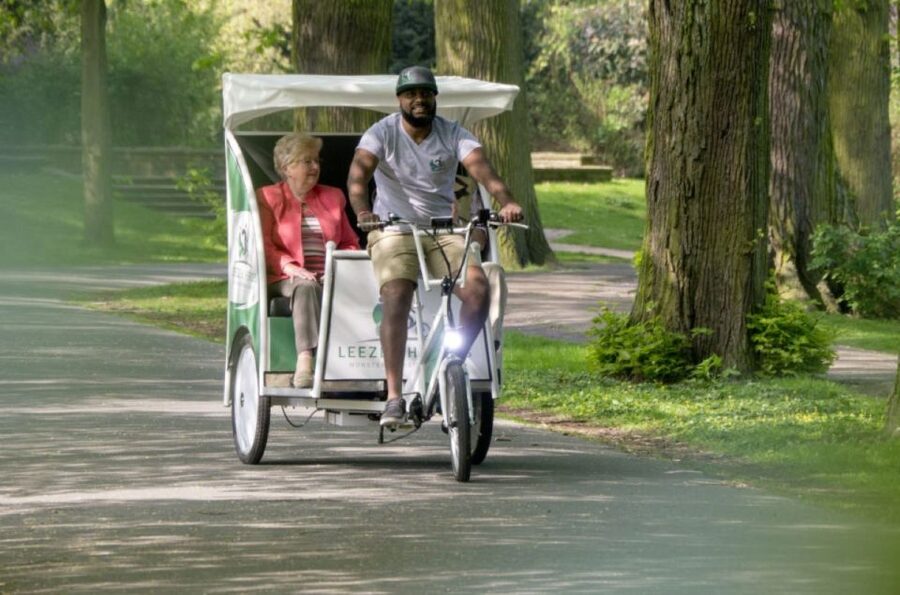
The Zwinger is another important stop, especially if you want to understand Münster as a fortified medieval city. It forms part of the ancient city walls and offers a physical link to the period when protection and defense shaped the edge of town.
The tour’s promise of a journey back to the medieval ages works best here. A palace or cathedral can belong to many eras in your mind, but a surviving defensive structure makes the city’s earlier purpose easier to picture. You can see that Münster was not always the open, connected city you experience today.
This is also a good place to listen for the guide’s smaller stories. Fortifications often have practical uses, unusual details, and local tales attached to them. The tour does not specify exactly which stories you will hear, so I would expect the content to vary with the guide and the time available.
The Zwinger may appeal most to people who enjoy history without wanting a long lecture. The rickshaw format keeps the explanation brief and connected to what is directly in front of you. You get context, then continue through the city.
Münster Cathedral as the final major stop
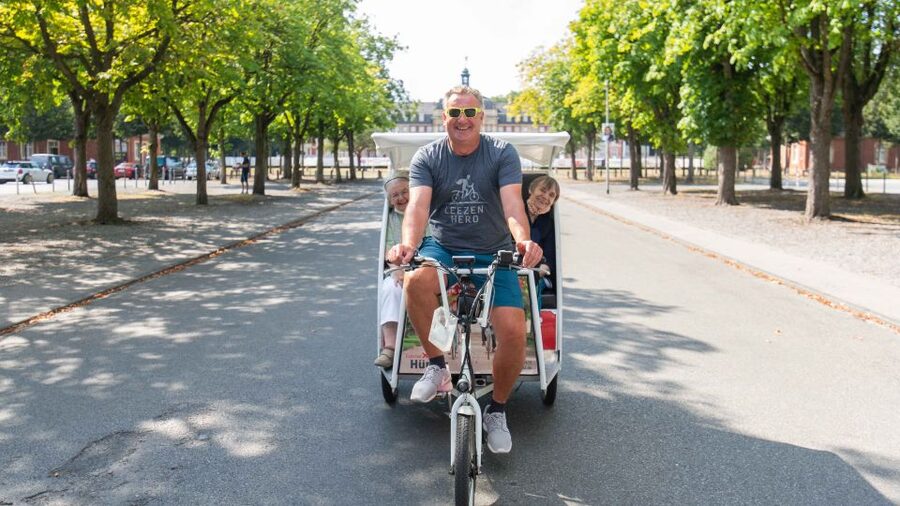
The ride finishes with a stop outside Münster Cathedral, also known as the Münster Dom. This is a fitting end because the cathedral is one of the city’s defining landmarks and gives the tour a strong final image.
You can admire the exterior and hear about its place in Münster without needing to enter. Again, admission is not part of the experience, so plan a separate visit if you want to explore the interior.
Ending at the cathedral also brings the route back to the religious and civic center of the city. By this point, you have seen the main square, palace, lake, baroque architecture, defensive walls, and cathedral. The sequence gives you a useful mental map of Münster rather than showing the sights in random order.
If you are choosing between the shortest and longest option, I would favor the longer ride if the cathedral and Aasee both matter to you. Thirty minutes can provide a sharp introduction, but 1.5 hours should allow more explanation and less rushing. The exact duration depends on the option available when you book.
What the private format really adds

The private group setup is one of the strongest parts of this experience. You are not sharing the rickshaw with a large mixed group, so the ride can feel more relaxed and conversational.
That matters when you want to ask a quick question about a building or hear another local story. It also makes the tour a good fit for couples, families, or small groups who prefer a personal outing over a fixed public tour.
A private ride does not guarantee that the route will change to suit every request. The advertised path already has a clear set of stops, and the guide will need to work within the chosen duration. Still, the private setting should make the experience feel less anonymous than a large group excursion.
The live guide speaks German or English. That gives English-speaking visitors a practical way to learn about Münster while keeping the ride local in character. The strong emphasis on dönekes suggests that the tone is not meant to be stiff or academic. You should expect useful facts mixed with lighter stories.
Is $33 per person good value?
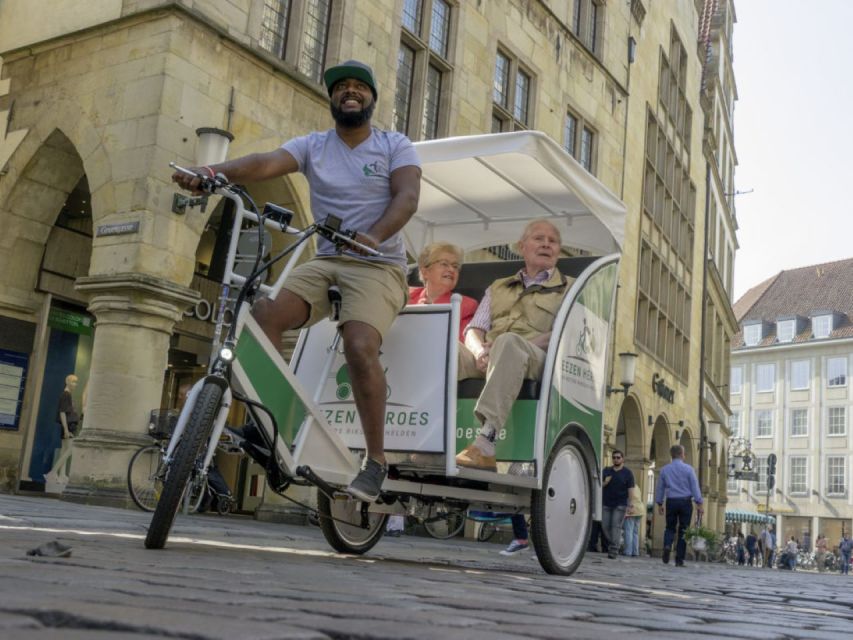
At $33 per person, I consider this a reasonable way to see Münster, especially if you are short on time or want a gentle introduction before exploring independently. The value comes from combining transport, a private guide, and a broad route through several parts of the city.
You are paying for orientation and interpretation rather than admission to a monument. Since no attraction entry is included, the price makes the most sense if you plan to admire the sights from outside and use the ride to decide where you want to return.
The value changes with the length of the option. At 30 minutes, the price buys a fast overview and a chance to see the city’s main landmarks without much walking. At 1.5 hours, the same basic price can represent better value if the longer format gives you more stories, more time at the stops, and a calmer pace.
I would compare this ride with the cost of a standard city tour, but the private format is the real point of difference. If you are happy joining a larger group, a conventional walking tour might offer more detailed commentary. If you want comfort, privacy, and a quick route between scattered sights, this rickshaw option makes more sense.
Timing, clothing, and practical planning
The tour runs from 30 minutes to 1.5 hours, with starting times shown according to availability. Do not assume the longest version is automatically offered on your preferred date. Check the current options before making plans around it.
Wear clothing suited to the weather. A rickshaw leaves you more exposed than a closed vehicle, and the ride may feel cool or damp even when walking would seem comfortable. Practical clothing will help you focus on the sights and the guide instead of the forecast.
The meeting point can vary depending on the option booked. Read the booking details carefully, and allow enough time to reach the stated location. Since the ride finishes back at the meeting point, you can use it as a simple loop at the start of your day.
You can cancel up to 24 hours in advance for a full refund, and the reserve-now, pay-later option offers some flexibility. These policies are useful if your Münster plans may shift, though you should still check the exact terms attached to your chosen departure.
Who will enjoy this most?
I would recommend the tour to first-time visitors who want a quick map of Münster. It is also a good choice if you have limited walking time, prefer a private outing, or enjoy local stories more than formal historical lectures.
Families may appreciate the moving format and the short duration. The sculptures at Aasee and the rickshaw itself add variety for anyone who might lose interest during a long walking tour.
It can also work well near the beginning of a stay. After seeing the Prinzipalmarkt, Schloss, Aasee, Erbdrostenhof, Zwinger, and cathedral from the rickshaw, you can return to the places that caught your attention.
I would be less likely to recommend it as your only Münster activity if you want long interior visits, detailed architectural study, or an in-depth account of every landmark. The tour is broad and selective by design. Its strength is the connection between places, not extended time at one building.
Should you book the Münster rickshaw tour?
Book it if you want a private, efficient introduction to Münster with a local guide who adds personality through dönekes. The route covers a lot for the price, and the rickshaw offers a pleasant middle ground between walking and riding in a larger vehicle.
Choose the longest available option if you want time for the palace, Aasee sculptures, Zwinger, and cathedral to register properly. Choose the shortest option if you mainly need orientation and a quick look before spending the rest of your day on foot.
Skip it if your priority is entering attractions or receiving a long, specialist-level history lesson. For most visitors seeking an easy first view of Münster, though, this is a practical and personable choice.
FAQ
How long does the Münster rickshaw tour last?
The available options range from 30 minutes to 1.5 hours. Check the current availability for the exact duration and starting time.
What sights are included on the route?
The route includes the Old City Hall, Prinzipalmarkt, Münster Schloss, Aasee and its nearby sculptures, Erbdrostenhof, Zwinger, and Münster Cathedral.
Is the tour private?
Yes. The activity is arranged for a private group rather than a shared public group.
Which languages does the guide speak?
The live tour guide can conduct the experience in German or English.
Does the price include entry to the attractions?
No. The price includes the guide and private rickshaw tour, but attraction entry is not included.
Where does the tour start and finish?
The meeting point may vary according to the option booked. The activity ends back at the meeting point.
Just added around Munster
- Private crime city tour by rickshaw including guide★ 5.0 · 21 reviews
- Münster: Private Guided Sculptures Tour on a Rickshaw★ 5.0 · 12 reviews
- Münster Private Guided Walking Tour★ 4.5 · 18 reviews
- Münster Old Town: Outdoor Escape Game★ 4.1 · 14 reviews
- Münster: Old Town Historical Walking Tour by “Geo Epoche”★ 4.7 · 51 reviews
- Münster: Private pub crawl with insider guide & free shots★ 4.6 · 11 reviews
- Münster Escape Tour Kreuzviertel★ 4.2 · 8 reviews
- Münster: Old Town Crime Mystery Tour★ 4.0 · 35 reviews
City Tours, compared.
1-Hour City Tour by Boat with Guaranteed Seating
Read our review →
City History Canal Sightseeing Tour on a Motorboat
Read our review →
Browse the lists this tour appears in