
Reviewed · OLD TOWN TOURS
Münster: Old Town Historical Walking Tour by “Geo Epoche”
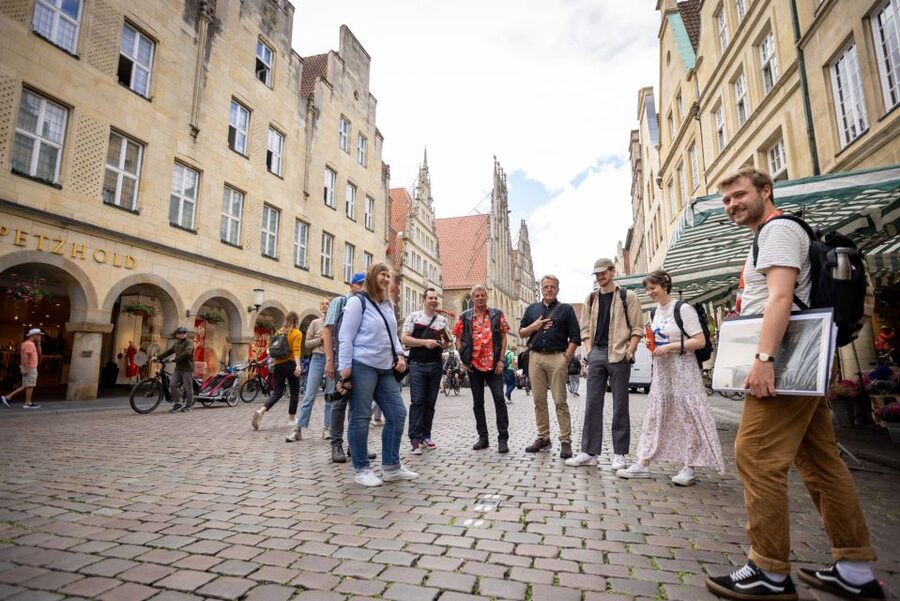
Münster’s past is stranger than it looks. This two-hour walk brings the Anabaptist takeover of the city into focus while leading you through the Old Town’s major landmarks. I like the clear historical theme, and I like the brochure with old photographs and diagrams, which helps you picture places as they once were. The main catch is that the tour is in German and takes place outdoors in all weather.
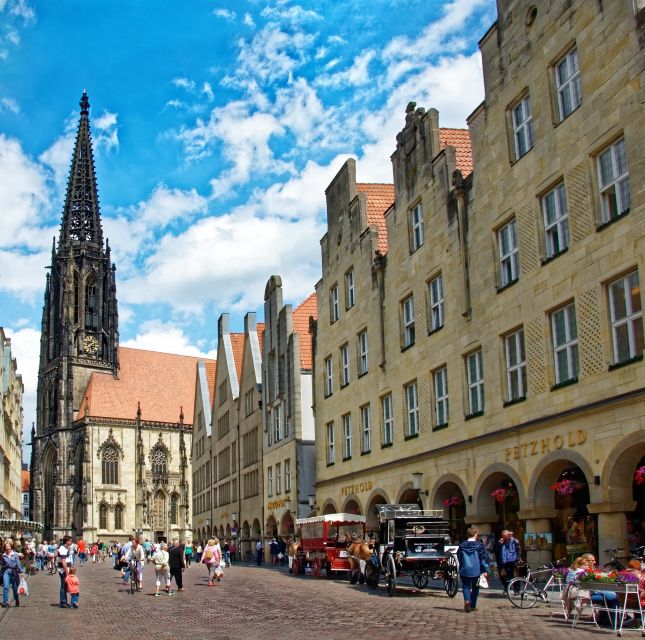
I especially like the way the route links big events to ordinary streets, churches, and civic buildings. You hear about how the Anabaptists came to power and tried to reshape Münster, then connect that story to the Lambertikirche, Prinzipalmarkt, Krameramtshaus, and Historical City Hall. One possible drawback is the pace of the storytelling: one recent participant found the account of the Anabaptists too detailed, especially during heavy rain.
The tour costs about $29 per person, a fair price if you want a focused introduction rather than a general city walk. It earns a strong 4.7 rating from 51 reviews, with praise for being informative, entertaining, and led by a friendly guide. Wear good shoes, bring weather-ready clothing, and remember that this is a German-language walking tour with no food or drinks included.
In This Review
- Key points to know before you book
- Why Münster’s Anabaptist story makes this walk different
- Starting at Lambertikirche and the Lamberti Fountain
- Lambertikirche and the story of power
- Prinzipalmarkt and Münster’s public face
- Krameramtshaus and the lives behind the façades
- Historical City Hall and the civic story
- Historical pictures make the talk easier to follow
- What the two-hour format does well
- Weather, language, and group expectations
- Is $29 a fair price?
- Who should book this Münster walking tour?
- FAQ
- Where does the tour meet?
- How long does the walking tour last?
- What language is the tour conducted in?
- What is the main subject of the tour?
- Which Münster landmarks are included?
- Is a guide included?
- Do I receive any printed material?
- Are food and drinks included?
- What should I bring?
- Does the tour run in bad weather?
- Should you book it?
Key points to know before you book

- The Anabaptist era is the central story: This is not a broad introduction to every period of Münster’s past. The tour concentrates on the years when the Anabaptists gained control and radically changed the city.
- The route begins at the Lamberti Fountain: Meet your guide in front of the entrance to Lambertikirche, a convenient starting point in the Old Town.
- Historic images come with the walk: A brochure of photographs and diagrams from the past gives you something concrete to study as you move between sites.
- The walk lasts two hours: You have enough time for a clear historical thread and several important buildings, but not for a slow, in-depth visit inside every stop.
- German is the only stated language: You should be comfortable following a live German talk for the full tour.
- Rain does not cancel the outing: The tour runs rain or shine, so poor weather can affect how enjoyable the stops feel.
Why Münster’s Anabaptist story makes this walk different
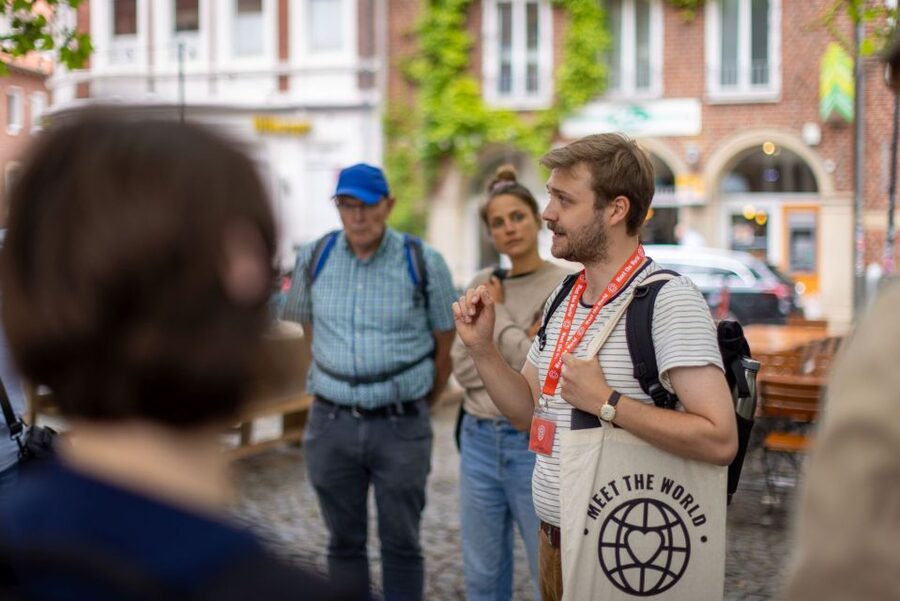
Münster is an appealing place for a historical walk because the subject is not just a list of dates. The Anabaptists’ rise to power changed the city itself, and this tour shows how that political and religious upheaval touched the streets, churches, and public buildings around you.
You will hear how the movement came into power and how its leaders sought to redesign Münster according to their beliefs. That gives the walk a strong narrative shape. Instead of hearing isolated facts about a church here and a town hall there, you follow a period of pressure, change, and conflict from one location to the next.
I like that approach because it gives the Old Town a human scale. You are not simply looking at handsome façades. You are considering how people who lived in Münster experienced sudden changes in authority, religion, and daily life.
The stories also reach beyond major political figures. The tour promises anecdotes about the people who lived in the city in the past, which can make the period easier to understand. Ask yourself what it meant to pass through these streets when the rules of public life were changing. That is the sort of question that turns sightseeing into historical thinking.
More Old Town Tours in Munster:
- Münster: Old Town Highlights Guided Tour
★ 4.7 · 286 reviews - Münster: Night watchman tour through the picturesque old town by lantern light
★ 4.8 · 65 reviews - Münster: Old Town Crime Mystery Tour
★ 4.0 · 35 reviews
Starting at Lambertikirche and the Lamberti Fountain
The meeting point is the Lamberti Fountain in front of the entrance to Lambertikirche. Arrive with comfortable shoes already on, since the activity is a walking tour from the start rather than a seated talk followed by a short stroll.
Lambertikirche matters here for two reasons. It is an easy place to find your guide, and it is one of the landmarks tied to the story of Münster’s Anabaptist period. The church gives the guide a natural first setting for explaining the forces at work in the city.
From this point, you can expect the guide to establish the main historical thread before moving through the surrounding streets. The supplied description does not give a fixed minute-by-minute route, so the exact order of the stops may vary. Still, the named sites show that the walk covers the central Old Town and focuses on places with political, religious, and commercial meaning.
One useful tip: look for the guide at the fountain, not somewhere inside the church. Since the tour takes place outdoors, you should also allow a little time to adjust clothing or footwear before the group sets off.
Lambertikirche and the story of power

Lambertikirche is more than a backdrop. On this tour, it helps explain how religion and public authority overlapped in Münster during the Anabaptist period.
The guide discusses how the Anabaptists gained control and what happened when they began changing the city. You may find this part especially useful if you know only the broad outline of the episode. The tour is designed to show how an ideological movement could shape public space and civic life, not just private belief.
The strongest praise for the experience concerns this subject. Elke wrote that she learned much that was new about the Anabaptists and also discovered unusual details about Münster. She found that familiar places looked different after hearing their stories. That is a good measure of the tour’s value: the goal is not only to add facts, but to change how you read the city afterward.
The subject can also be heavy on detail. One participant described the guide’s explanation as very vivid but, at times, too detailed. If you prefer a quick overview with plenty of free time for photos, this may feel more like a history lesson than a casual orientation walk.
Prinzipalmarkt and Münster’s public face
The Prinzipalmarkt is one of the named stops, and it offers a useful contrast to the darker political story. This is the kind of place where the city’s public image, trade, and civic pride come together.
The tour uses the square and its surrounding buildings to connect Münster’s physical appearance with the lives of its residents. You hear surprising facts and anecdotes rather than only receiving architectural labels. The point is to understand how a public space functioned within the city’s past.
Because the experience lasts two hours, expect an explanation from the street rather than a long architectural study of every building. That is sensible for a walking route. You get context while standing in the place itself, then continue before the talk becomes disconnected from the city around you.
I would pay close attention here to the brochure’s old images. Comparing the historical pictures with what you see today can help you notice changes that a quick glance would miss. The brochure is included, so you do not need to prepare your own background material before arriving.
More History Tours in Munster:
- Leipzig: City History Canal Sightseeing Tour on a Motorboat
★ 4.7 · 6,232 reviews - Berlin: Natural History Museum Entrance Ticket
★ 4.6 · 3,382 reviews - Leipzig: 1.5-Hour Historical Walking Tour in German
★ 4.7 · 2,217 reviews - Berlin: World Heritage Cruise to Potsdam
★ 4.5 · 1,435 reviews
Krameramtshaus and the lives behind the façades
The Krameramtshaus is another named stop, and it shifts attention toward the city’s working and commercial life. Its inclusion suggests that the tour is not limited to churches and grand political buildings.
This is where the promise of stories about ordinary residents becomes important. A historical tour can easily focus only on rulers, rebels, and dramatic events. The guide’s anecdotes about people who lived in Münster help show how larger changes affected daily life.
You might find this stop especially worthwhile if you have already seen the Old Town’s main sights but feel you know little about the people connected to them. The route gives familiar buildings a social setting. It asks you to picture the city as a place where people worked, traded, worshipped, argued, and adapted to new rules.
Do not expect food, drinks, or a scheduled refreshment break. The price covers the guide and the historical brochure, not anything you may want during the walk. If you need a drink, bring one with you.
Historical City Hall and the civic story

The Historical City Hall brings the tour back to the city’s political center. Here, the story of the Anabaptists fits into a larger question: who had the right to govern Münster, and how could control of the city be displayed?
The guide explains the historical importance of the building along with the other stops. You should expect anecdotes, photographs, and diagrams rather than a formal museum presentation. That format works well when you want to keep moving and see the relationship between different parts of the Old Town.
The City Hall stop also helps tie the route together. Lambertikirche represents religious power and public belief. The Prinzipalmarkt reflects civic and commercial life. The Krameramtshaus points toward the people and trades that kept the city going. The Historical City Hall places those forces within the struggle for authority.
Since the tour is outdoors, the quality of this stop depends partly on the day. In good weather, you can listen and examine the setting comfortably. In steady rain, the experience becomes more practical and less relaxed.
Historical pictures make the talk easier to follow
The included brochure is a small but useful part of the experience. It contains illustrative pictures from the past, along with the historical photographs and diagrams used to bring earlier events to life.
I value this sort of aid on a city walk because spoken descriptions can blur together after several stops. A picture gives you something to check while the guide explains what changed. It can also help if you are not familiar with Münster’s buildings or with the Anabaptist period before arrival.
The brochure will not replace the guide’s explanation. The activity is built around a live German presentation, and the images support that talk rather than provide a self-guided translation. If your German is limited, the visual material may help, but the tour still requires you to follow spoken German.
Günter gave the walk a strong recommendation, calling it informative and entertaining and praising the guide as very pleasant. That combination matters. A serious topic can become tiring if it is delivered in a dry way, so a warm and lively presentation is a real part of the value.
What the two-hour format does well
Two hours is a useful length for this route. You get a solid historical focus without committing half a day to one subject. The walk should fit well on a day when you also want time for Münster’s other sights.
The format also keeps the story connected to place. You move through the Old Town, stop at landmarks, hear the relevant explanation, and then continue. That rhythm is better for many people than sitting through a long indoor lecture.
The tradeoff is depth. The tour can tell you a great deal about the Anabaptists, but it cannot spend unlimited time at every church, civic building, or anecdote. If you want a broad survey of Münster from Roman times to the present, this is not the right choice. If you want one important chapter explained with a clear route, it makes more sense.
The walk involves some leisurely walking, but it is still a two-hour outdoor activity. Anyone who finds prolonged standing or walking difficult should take the stated mobility restriction seriously. The tour is not suitable for people with mobility impairments.
Weather, language, and group expectations
The tour runs in rain or shine. This is the most practical issue to consider before booking. The recent account from a group of eight makes the point clearly: during very poor weather, they would have preferred to view the stops briefly and hear more of the story under cover.
You should bring weather-appropriate clothing and comfortable shoes. There is no promise of indoor shelter at each stop, so a wet day can change the tone from leisurely to merely determined. In fair weather, the outdoor format is a strength because the buildings and streets remain part of the lesson.
The tour is conducted in German, with a live German-speaking guide. You should book it only if you can follow a sustained German explanation about history, religion, and politics. The brochure may offer visual help, but it does not change the language of the presentation.
Pets are not allowed. The supplied information does not state a fixed maximum group size. One person who booked a private outing for eight was surprised when six additional people joined, so you should confirm the group arrangement if a private format is important to you.
Is $29 a fair price?
At about $29 per person, the cost is reasonable for a two-hour guided walk with a live guide and an illustrated historical brochure. You are paying for interpretation, not transportation, admission tickets, food, or drinks.
The price makes the most sense if you would otherwise walk past Münster’s landmarks without understanding their connection to the Anabaptist period. A guide who links the church, market, civic buildings, and working quarters can save you time and give the route a clear purpose.
It is less attractive if you want a flexible, photo-first stroll or if you already know the Anabaptist story well. You may prefer to explore at your own speed and read about the buildings separately.
The free cancellation policy, available up to 24 hours before the tour, and the reserve-now, pay-later option reduce the risk of committing too early. They do not solve the weather issue, but they give you useful flexibility while planning a Münster visit.
Who should book this Münster walking tour?
I would recommend it to you if you enjoy history with a strong local focus. It suits visitors who want to understand why Münster’s central buildings matter and who appreciate anecdotes as much as dates.
It is also a good fit if you have already seen some of the Old Town and want a fresh way to read it. Elke’s experience captures the benefit well: familiar places can take on a new meaning once you know the events connected to them.
You may want to skip it if you need English, dislike listening to detailed historical accounts, or find two hours of outdoor walking uncomfortable. Families or groups should also check the language level and group setup before booking.
FAQ
Where does the tour meet?
Meet the guide at the Lamberti Fountain in front of the entrance to Lambertikirche in Münster’s Old Town.
How long does the walking tour last?
The tour lasts two hours.
What language is the tour conducted in?
The live tour is conducted in German.
What is the main subject of the tour?
The main subject is the Anabaptists, including how they came to power in Münster and how they changed the city.
Which Münster landmarks are included?
Named landmarks include Lambertikirche, the Krameramtshaus, Prinzipalmarkt, and the Historical City Hall, along with other Old Town locations.
Is a guide included?
Yes. A live tour guide is included.
Do I receive any printed material?
Yes. The tour includes a brochure with illustrative pictures from the past.
Are food and drinks included?
No. Food and drinks are not included.
What should I bring?
Bring comfortable shoes and clothing suitable for the weather.
Does the tour run in bad weather?
Yes. The tour takes place rain or shine. Pets are not allowed, and the activity is not suitable for people with mobility impairments.
Should you book it?
Book this walk if you want Münster’s Old Town explained through one dramatic and unusual chapter of its past. The Anabaptist focus, lively anecdotes, and historical images give the two hours a clear purpose, while the central landmarks keep you connected to the city around you.
I would be cautious if the forecast calls for heavy rain, if you need an English tour, or if a private group is essential. For German-speaking visitors who enjoy a detailed story and do not mind walking outdoors, $29 is a sensible price for a focused look at Münster’s past.
More Walking Tours in Munster
- Münster Private Guided Walking Tour
★ 4.5 · 18 reviews - Discover Berlin Half-Day Walking Tour
★ 5.0 · 9,624 reviews - Berlin: Third Reich and Cold War 2 Hour Walking Tour
★ 4.9 · 6,830 reviews - Munich: Third Reich & WWII Walking Tour
★ 4.6 · 6,181 reviews
Just added around Munster
- Private crime city tour by rickshaw including guide★ 5.0 · 21 reviews
- Münster Private Guided Walking Tour★ 4.5 · 18 reviews
- Münster: Private Guided Sculptures Tour on a Rickshaw★ 5.0 · 12 reviews
- Münster Old Town: Outdoor Escape Game★ 4.1 · 14 reviews
- Münster: Private pub crawl with insider guide & free shots★ 4.6 · 11 reviews
- Münster Escape Tour Kreuzviertel★ 4.2 · 8 reviews
- Münster: Old Town Crime Mystery Tour★ 4.0 · 35 reviews
- Münster: Beer Tasting Rickshaw Tour★ 4.7 · 56 reviews
Old Town Tours, compared.

Old Town & Viktualienmarkt City Walk in German
Read our review →

The Night Watchman Old Town Walking Tour in German
Read our review →
Browse the lists this tour appears in