
Reviewed · WALKING TOURS
Münster Private Guided Walking Tour
Münster’s past is written in stone. This private walk brings together the Peace of Westphalia and the city’s medieval center, while also showing how a university town became famous for bicycles. I especially like the focus on big European events and the chance to shape the walk with your guide. The main concern is simple: this is a walking tour, not a bus tour, and the meeting details deserve a careful check before you arrive.
For $294 per group of up to 15, the value depends heavily on your group size. A full group pays about $20 per person, which is fair for a private guide; a couple pays the full amount and may find it costly. Guide Greta Verduyn has received especially warm praise for engaging both children and adults, but guide assignment is not guaranteed.
In This Review
- Key points to know before booking
- Why Münster works so well as a walking city
- The Peace of Westphalia in Münster’s Town Hall
- The Münster Rebellion and the Thirty Years’ War
- St Paulus Dom and the late medieval astronomical clock
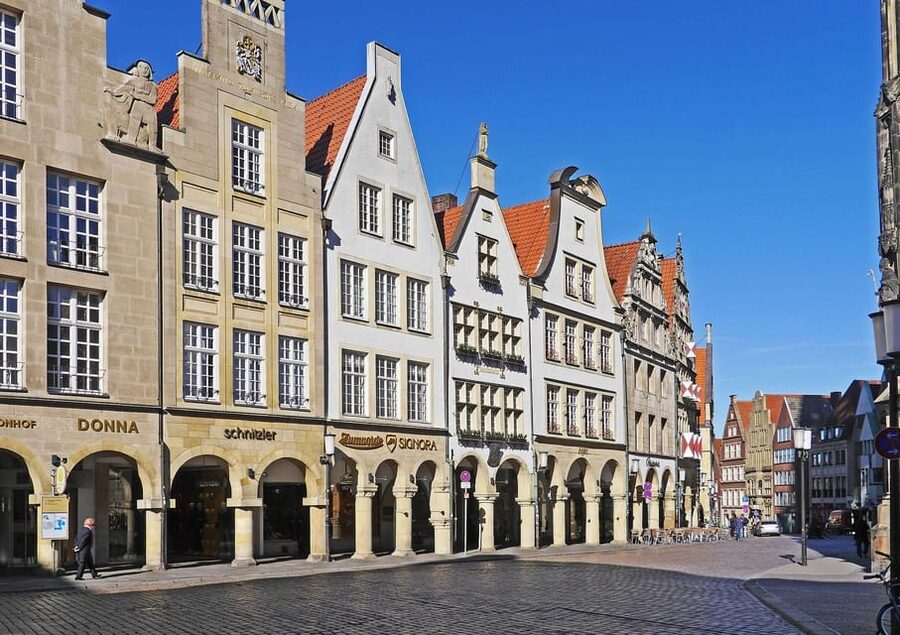
- Prinzipalmarkt and Münster’s merchant past
- Bicycles, students, and the modern city
- The Pablo Picasso Museum and what is not included
- What a private format really adds
- The walking pace and the bus-tour confusion
- Is $294 fair for two hours?
- Who will get the most from this Münster walk?
- Should you book the Münster private walking tour?
- FAQ
- How long is the Münster private guided walking tour?
- Is this a walking tour or a bus tour?
- Where does the tour meet?
- What languages are available?
- Are entrance fees included?
- How many people can join the private group?
Key points to know before booking
- Two hours on foot: Plan for a city walk through Münster’s Old Town, not a vehicle-based sightseeing tour.
- The Peace of Westphalia: You visit the setting connected with the 1648 peace settlement that ended the Thirty Years’ War.
- A cathedral clock worth seeing: St Paulus Dom contains a late medieval astronomical clock and anchors the old center.
- Private attention: Your group has its own local guide, with possible adjustments made during the walk.
- Outdoor focus: The Historical Town Hall is viewed from outside, and entrance fees are not included.
- Confirm the start point: The stated meeting place is in front of the Town Hall at Stadthaus 1, Klemensstraße 10, but one recent booking reported that the published location was incorrect.
Why Münster works so well as a walking city
Münster is old enough to give a two-hour walk plenty to talk about, yet young enough to avoid feeling like a museum piece. It has about 1200 years of urban history, a university population, a large bicycle culture, and a forward-looking reputation for green city planning.
That mix is the real appeal here. You are not simply moving from one old building to another. You are seeing how a bishop’s seat, a Hanseatic trading town, a city scarred by religious conflict, and a modern university center occupy the same compact area.
The tour begins in front of the Town Hall at Stadthaus 1 on Klemensstraße. Since the meeting point has caused confusion for at least one booking, I would confirm the exact spot and guide contact before setting out. Do not assume that any prominent city hall entrance is the correct place.
The two-hour length suits visitors who want an introduction without giving up an entire morning or afternoon. It also means the guide must keep a steady pace. If you want lengthy interior visits, museum time, or a slow look at every architectural detail, you may need to arrange a separate visit.
More Walking Tours in Munster:
- Münster: Old Town Historical Walking Tour by “Geo Epoche”
★ 4.7 · 51 reviews - Discover Berlin Half-Day Walking Tour
★ 5.0 · 9,624 reviews - Berlin: Third Reich and Cold War 2 Hour Walking Tour
★ 4.9 · 6,830 reviews
The Peace of Westphalia in Münster’s Town Hall
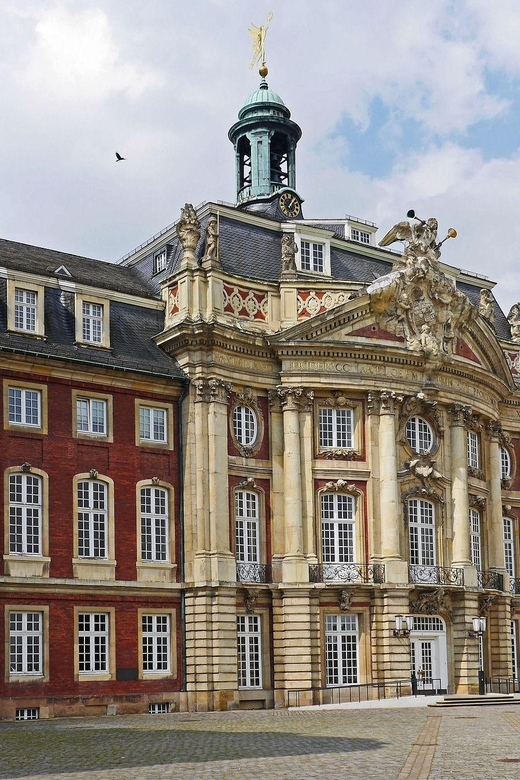
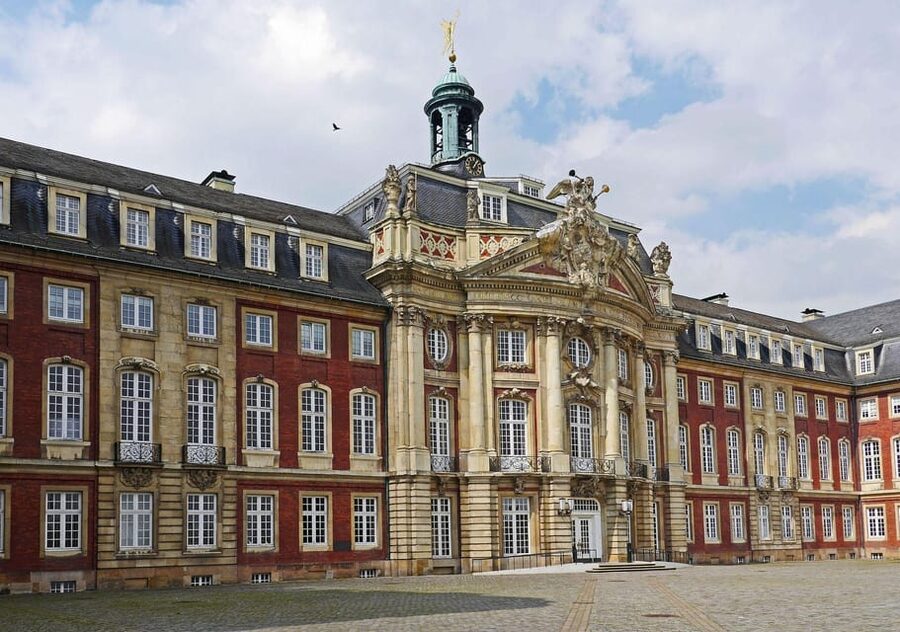
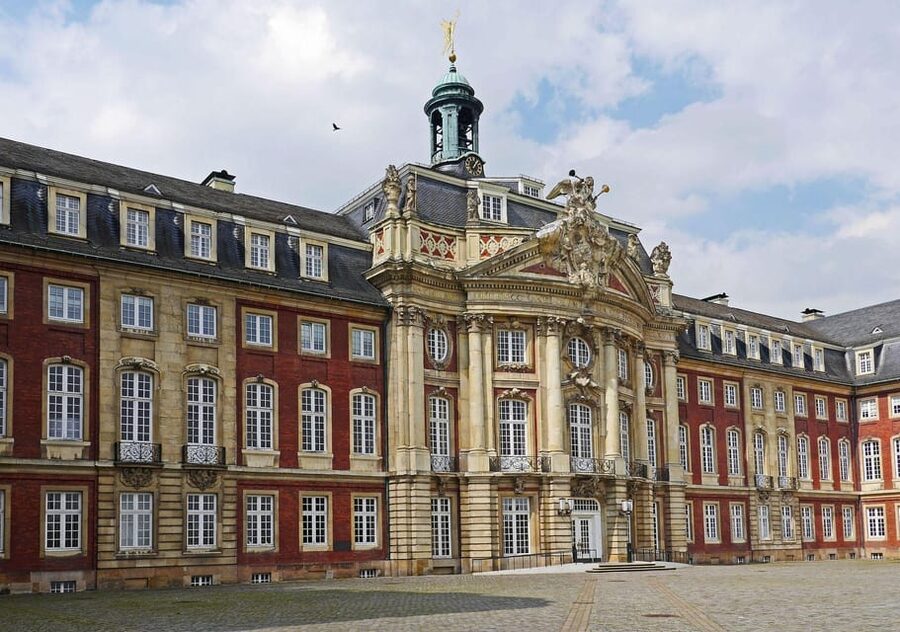
Münster’s strongest historical subject is the Peace of Westphalia. In 1648, agreements connected with the end of the Thirty Years’ War were signed here, making the city an important place in European diplomatic history.
The value of seeing this setting with a guide is context. A bare building can be easy to overlook, especially when you are surrounded by attractive streets and shopfronts. A guide can explain why Münster mattered, how negotiations unfolded, and why the settlement still appears in discussions of European politics.
The walk includes the outside of the Historical Town Hall, so you should not book this experience expecting an interior tour. Entrance fees are not included, and the supplied details do not promise admission to any building. If entering the Town Hall matters to you, ask about current access separately.
This stop is especially worthwhile for adults and older children who enjoy history with a clear connection to a real place. It is less satisfying if you want a long, object-filled museum visit. The strength here is the location and the explanation, not a series of interior displays.
The Münster Rebellion and the Thirty Years’ War
Münster’s story is not polite or tidy. The tour covers the Münster Rebellion, one of the city’s most dramatic episodes, and the aftermath of the Thirty Years’ War.
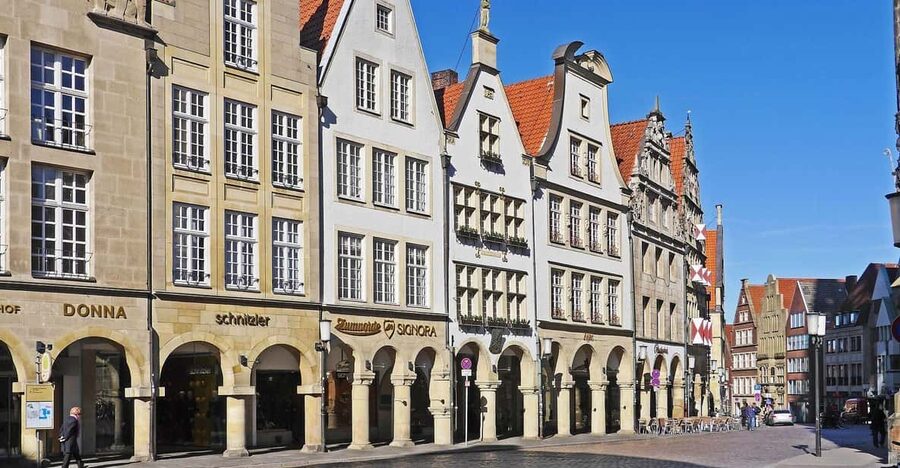
That subject gives the Old Town more weight. Medieval façades and market streets can look charming at first glance, but the Rebellion reminds you that Münster was also a place of religious tension, political struggle, and sudden upheaval. The tour’s historical arc helps connect those events to the later peace negotiations.
I like this part of the experience because it avoids treating the city as a string of pretty façades. You get the darker chapters too. The exact depth will depend on your guide and the questions your group asks, so those who enjoy military, religious, or political history should speak up early.
The private format helps here. A guide can spend more time on the Rebellion if your group is interested, or move along if children are losing patience. The activity specifically allows possible customization on the spot, which is more useful on a private walk than on a fixed group outing.
St Paulus Dom and the late medieval astronomical clock
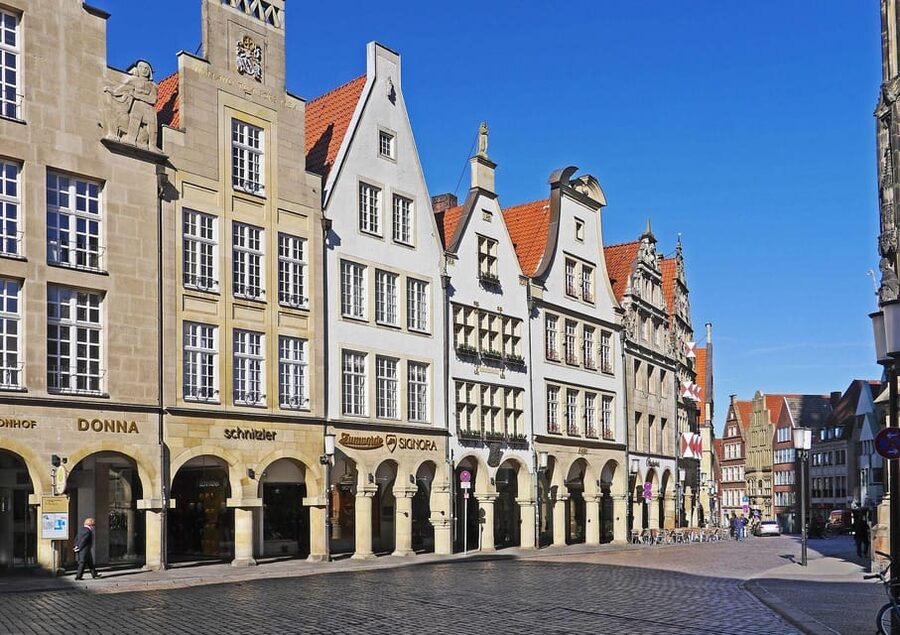
St Paulus Dom is the architectural anchor of the tour. The 13th-century cathedral sits in the center of Münster, surrounded by the streets of Prinzipalmarkt and the old merchant quarter.
The cathedral represents several layers of the city at once. It recalls Münster as a bishop’s seat, connects the present center with the Middle Ages, and gives you a clear sense of how religious buildings shaped urban life.
The astronomical clock is the detail I would make a priority. It is described as a late medieval work, and it offers something more distinctive than a quick look at a grand façade. Clocks of this kind joined timekeeping, astronomy, religion, and public spectacle. Even if you are not a clock enthusiast, it is the sort of small feature that can make a cathedral visit memorable.
The tour information does not state that cathedral admission is included. Treat the stop as part of the guided sightseeing route, and ask the guide whether you will enter and whether any fee applies. Since entrance fees are excluded, carry a little flexibility in your plans.
A few more Munster trips worth comparing
- Münster: Old Town Highlights Guided Tour
★ 4.7 · 286 reviews - Münster: Nachtwächter-Führung (Erlebnistour)
★ 4.4 · 213 reviews - Münster: Private Guided Rickshaw City Tour
★ 4.8 · 143 reviews - Münster: Night watchman tour through the picturesque old town by lantern light
★ 4.8 · 65 reviews
Prinzipalmarkt and Münster’s merchant past
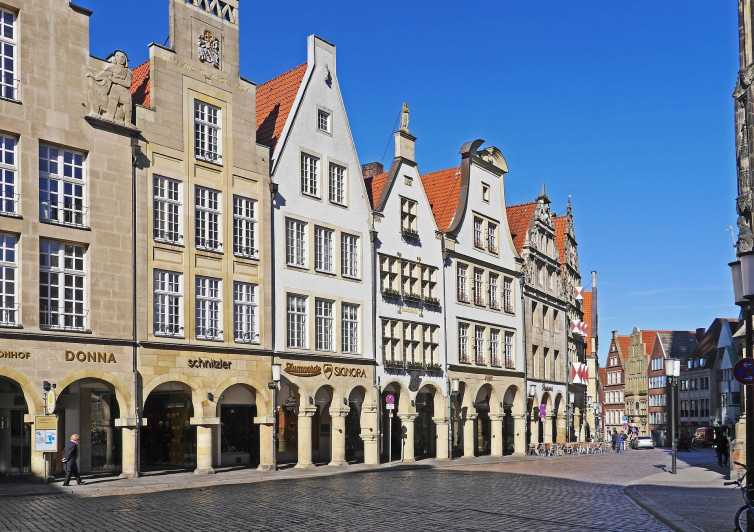
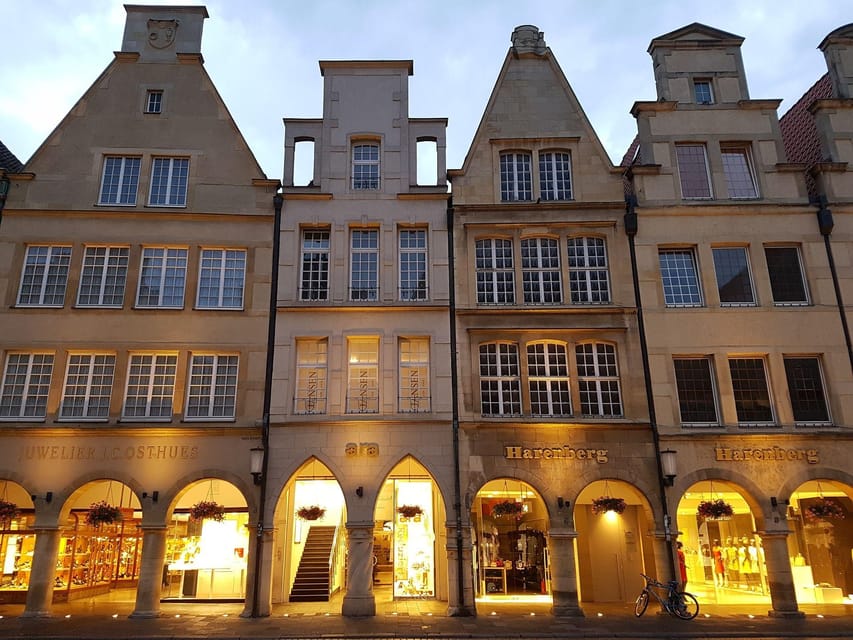
The streets around Prinzipalmarkt show Münster’s commercial side. The city was part of the Hanseatic League, the trading network that linked northern European towns, and old merchant families still operate businesses in the center.
That connection matters because it changes how you read the architecture. The old town was not built only for bishops and church officials. It was also a place of trade, money, storage, negotiation, and family enterprise.
A guide can point out how these functions appear in the street plan and buildings. You will get more from the area if you look beyond the prettiest angle. Notice how the market streets relate to the cathedral, the Town Hall, and the older business quarter.
Because the tour is private, you can ask for help reading the city rather than simply photographing it. Ask which buildings are tied to trade, which reflect church power, and which parts of the center were rebuilt or altered over time. The supplied information confirms that Münster’s architecture carries these historical echoes, but it does not promise a detailed list of every building.
Bicycles, students, and the modern city
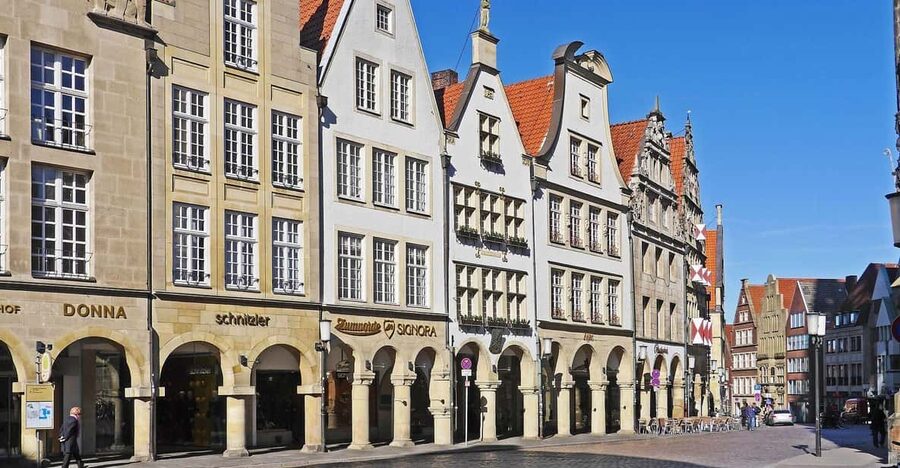
Münster is known as a city of bicycles. The supplied figures put the bicycle count at about 500,000 in a city of roughly 300,000 people, although another description refers to around 280,000 inhabitants. Either way, the point is clear: bicycles are a major part of daily life.
You should expect this to be more than a decorative theme. The bicycle culture helps explain Münster’s reputation as a model for greener urban living in Germany and beyond. It also gives the walk a useful modern counterpoint to the medieval center.
Watch the cycle traffic as you walk. A peaceful-looking street can still carry fast-moving bicycles, so keep to the proper side and follow the guide’s lead. The city’s cycling identity is one reason this tour feels current rather than fixed in the past.
The university is another important part of the present-day picture. Münster is a university city with a youthful population and an active public life. The walk presents the city as a place where old institutions and current urban habits share the same streets.
The Pablo Picasso Museum and what is not included
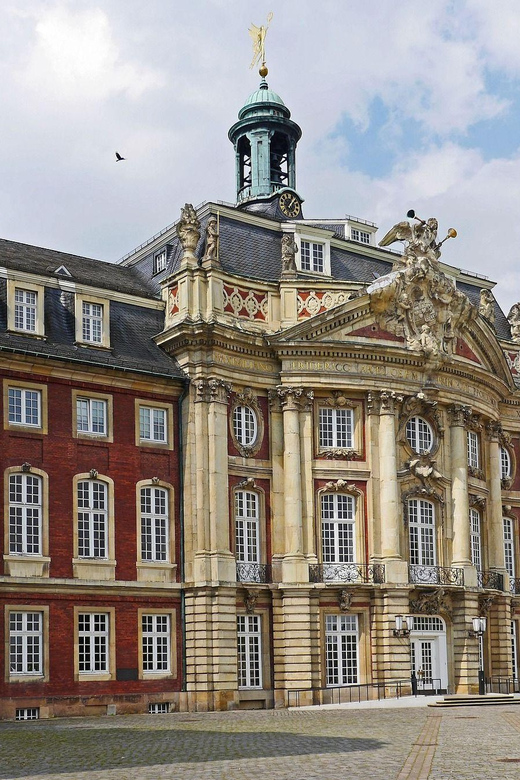
Münster is also home to the Pablo Picasso Museum, described as the only museum in Germany dedicated to the artist. That is a useful cultural fact, but you should read the tour description carefully: the walk highlights the museum as part of the city’s identity, yet entrance fees are not included.
Do not assume you will receive a full museum visit during the two-hour route. The itinerary specifically emphasizes the Old Town, the outside of the Historical Town Hall, St Paulus Dom, Prinzipalmarkt, and the city’s wider story. If the Picasso Museum is a priority, plan a separate visit and check its opening times and admission details.
This is a good example of why the tour works best as an orientation. Your guide can show how Münster combines art, university life, commerce, religion, and civic history. You can then choose which places deserve more of your own time.
What a private format really adds
The guide is with your group only, and that can make a large difference. You can ask direct questions, adjust the emphasis, and request a slower explanation at a stop that matters to you.
The flexibility is most useful for mixed groups. A family can ask for a clearer version of the Münster Rebellion, while adults may want more detail about the Peace of Westphalia. One especially positive booking praised Greta Verduyn for holding the attention of children from age nine through teenagers and adults. That is a strong sign for families, though it does not guarantee that Greta will lead your booking.
The group limit is advertised as 15 people, but one recent booking questioned whether the stated maximum was accurate. I would confirm the actual group size if that affects your decision. A private walk with six people feels very different from one with 15, especially on narrow Old Town streets.
Language choices are English and German. Select the language that lets your group ask questions easily. Historical explanations lose their value if you are spending the walk translating every other sentence.
The walking pace and the bus-tour confusion
The clearest practical warning is that this is a walking tour. Two recent German-language bookings objected to wording that suggested a city tour by bus or vehicle, particularly for groups of older people.
That complaint is important. The experience lasts two hours and takes place on foot through the Old Town. If anyone in your group is over 70, has limited stamina, or expected to remain seated, contact the provider before booking. The supplied information does not give an accessibility statement, route length, seating plan, or mobility accommodation.
For most visitors who can comfortably walk for two hours, the format makes sense. Münster’s central sights are best understood at street level, where you can see bicycles, market streets, church architecture, and old merchant buildings together. You also avoid the distance and traffic barriers that can make a vehicle tour feel disconnected from the center.
Wear comfortable shoes and keep your expectations practical. This is a focused historical walk, not a full-day city program.
Is $294 fair for two hours?
The price is $294 per private group of up to 15 people. With 15 participants, that works out to about $19.60 per person, which is reasonable for a dedicated local guide. With ten people, the cost is about $29.40 each; with four, it is $73.50 each; for two, it is $147 each.
That sliding value is the key to the decision. The tour makes financial sense for a family, reunion, school-sized private group, or group of friends sharing the fee. It is much harder to justify for one or two people unless privacy and customization matter more to you than price.
Entrance fees are not included, so budget separately if you want to enter the cathedral, Town Hall, or Picasso Museum. The walk’s main value lies in the guide’s interpretation and the compact route through Münster’s most important sights.
The booking terms are flexible: you can reserve now and pay later, and cancellation is free up to 24 hours before the start for a full refund. Those terms help if your schedule is still moving, but they do not solve the meeting-point issue. Confirm the location even if you have already booked.
Who will get the most from this Münster walk?
I would recommend it most strongly to:
- First-time visitors who want a clear introduction to Münster
- Families needing a guide who can adjust explanations for different ages
- Groups interested in the Peace of Westphalia or the Münster Rebellion
- Visitors who prefer a private guide over a large scheduled group
- People who want Old Town orientation before exploring museums alone
- Groups of several people who can share the $294 fee
I would be more cautious if you want a bus tour, extensive indoor sightseeing, or a low-cost activity for one or two people. I would also ask questions first if your group has limited walking ability or needs a slower route.
Should you book the Münster private walking tour?
Book it if you want Münster’s major stories tied together in a short, private walk. The Peace of Westphalia, the Münster Rebellion, St Paulus Dom, the astronomical clock, Prinzipalmarkt, bicycles, and university life make a strong introduction to the city.
The best value comes with a larger group and an interest in history. The guide can make the difference, and Greta Verduyn has earned particularly strong praise for connecting with a wide age range. Still, confirm the guide, the actual group size, and the exact meeting point before paying.
If you are expecting a bus, do not book this without clarification. If you can walk comfortably and want a well-focused first look at Münster, this is a useful way to get your bearings before exploring the city on your own.
FAQ
How long is the Münster private guided walking tour?
The tour lasts two hours.
Is this a walking tour or a bus tour?
It is a walking tour through Münster’s Old Town. The experience does not provide a bus tour.
Where does the tour meet?
The stated meeting point is in front of the Town Hall, Stadthaus 1, Klemensstraße 10, 48143 Münster. Because one booking reported that the published meeting point was incorrect, confirm the exact location before the tour.
What languages are available?
The tour is available in English and German.
Are entrance fees included?
No. Entrance fees are not included in the price.
How many people can join the private group?
The stated capacity is up to 15 people per group. One recent booking questioned whether the actual maximum matched the published information, so confirm the group size if it is important to you.
Just added around Munster
- Private crime city tour by rickshaw including guide★ 5.0 · 21 reviews
- Münster: Private Guided Sculptures Tour on a Rickshaw★ 5.0 · 12 reviews
- Münster Old Town: Outdoor Escape Game★ 4.1 · 14 reviews
- Münster: Old Town Historical Walking Tour by “Geo Epoche”★ 4.7 · 51 reviews
- Münster: Private pub crawl with insider guide & free shots★ 4.6 · 11 reviews
- Münster: Old Town Crime Mystery Tour★ 4.0 · 35 reviews
- Münster Escape Tour Kreuzviertel★ 4.2 · 8 reviews
- Münster: Beer Tasting Rickshaw Tour★ 4.7 · 56 reviews
Walking Tours, compared.



Old Town & Viktualienmarkt City Walk in German
Read our review →Browse the lists this tour appears in