
Reviewed · OLD TOWN TOURS
Trier: Guided Old Town Highlights and History Walking Tour
Ancient stones tell lively stories. This 1.5-hour walk gives you a useful first look at Trier, moving from the Roman Porta Nigra to the medieval center, the Cathedral, Main Market, and the former home of Karl Marx. I like the compact route and the way it connects famous buildings to ordinary life under Roman rule. I also like that you can ask the guide for restaurant and bar tips before the tour ends.
The main consideration is language: the live tour is offered in German. That makes it a natural choice for German-speaking visitors, but it may not suit you if you need an English explanation. The pace is also brisk enough to cover major sights in 90 minutes, so this is an introduction rather than a long, detailed inspection of every monument.
In This Review
- Key points at a glance
- Meeting the guide beside Trier’s Roman gate
- Following Trier from Rome into the Middle Ages
- Trier Cathedral and the city’s changing face
- The Main Market and everyday city life
- Karl Marx’s Trier home
- Patrick, Herbert, and the guide’s role
- What $16 gets you in 90 minutes
- Language, timing, and practical planning
- Who will enjoy this Trier walking tour?
- Should you book the Trier old town walk?
- FAQ
- Where does the Trier walking tour meet?
- How long does the tour last?
- What language is the tour offered in?
- What sights are included?
- Is entry to the Porta Nigra included?
- How much does the experience cost?
- Can young children join the tour?
- Can I cancel the booking?
Key points at a glance
- Roman Trier begins at the Porta Nigra: Start opposite this massive city gate and learn how Trier developed under Roman rule.
- A 90-minute route covers the historic core: See the Porta Nigra, Trier Cathedral, Main Market, medieval architecture, and Karl Marx’s former residence.
- The guide adds humor and personal style: Patrick is praised for answering questions clearly, while Herbert is described as informative, funny, and especially good with families.
- The tour is conducted in German: Keep this in mind when deciding if the experience fits your language needs.
- $16 is a sensible orientation price: You get a live guide and a focused walk through several of Trier’s key sights.
- Young children join free: Children ages 0 to 5 do not pay, which helps families keep the cost down.
Meeting the guide beside Trier’s Roman gate
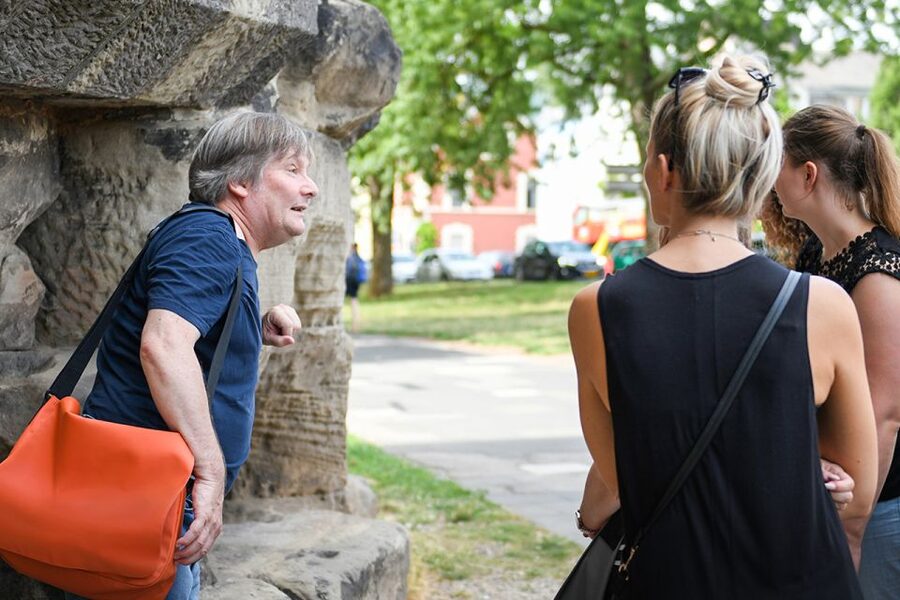
Your starting point is easy to identify: meet the guide in front of the Mercure Hotel, opposite the Porta Nigra. This is a practical place to begin because Trier’s most famous monument is right there, and the gate immediately gives you a sense of the city’s age and scale.
The Porta Nigra was built by the Romans as early as 170 AD. Its dark stonework and huge blocks make it more than a quick photo stop. The guide uses it to explain Trier’s Roman beginnings and to picture daily life when the city was under Roman rule.
That focus on ordinary life matters. Dates and emperors can blur together, but questions about streets, buildings, work, trade, and the routines of people who lived here give the ancient city a human shape. You are not simply looking at an old gate. You are learning why it was built and what role it played in the city.
The tour does not include a separate entrance ticket to the Porta Nigra in the information provided. Expect to see and discuss the landmark as part of the walking route. If entering the monument is important to you, ask the guide whether that can be arranged separately, rather than assuming it is part of the 90-minute walk.
More Old Town Tours in Germany:
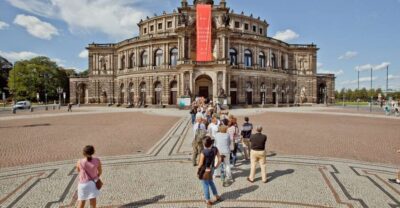
- Dresden: Semperoper and Old Town Tour
★ 4.8 · 5,735 reviews - Nuremberg: Old Town Guided Walking Tour
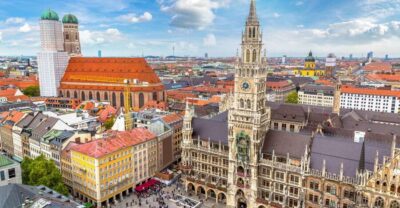
★ 4.6 · 2,416 reviews - Munich: Old Town & Viktualienmarkt City Walk in German
★ 4.7 · 2,304 reviews
Following Trier from Rome into the Middle Ages
From the Roman starting point, the walk traces how Trier changed over time. The city is not presented as a single period preserved under glass. Instead, you see Roman remains alongside medieval architecture and later buildings, with the guide explaining how the city evolved into its modern form.
This is one of the strongest reasons to choose a guided walk instead of simply following a map. A map can tell you where the buildings are. A guide can connect them, showing how Trier’s streets and landmarks reflect different chapters of its past.
The route is short enough to keep the story moving. In 90 minutes, you get a broad framework rather than a specialist lecture on one monument. I would treat this as a smart first activity in Trier. It helps you recognize the major sights and gives you enough background to return later on your own.
The tradeoff is detail. A short city walk cannot fully explain every architectural change or historical figure. You will hear anecdotes and key points, but you should not expect an exhaustive treatment of Trier’s past. That limit is not a flaw if you want orientation. It matters if you already know the city well and want an in-depth study.
Trier Cathedral and the city’s changing face
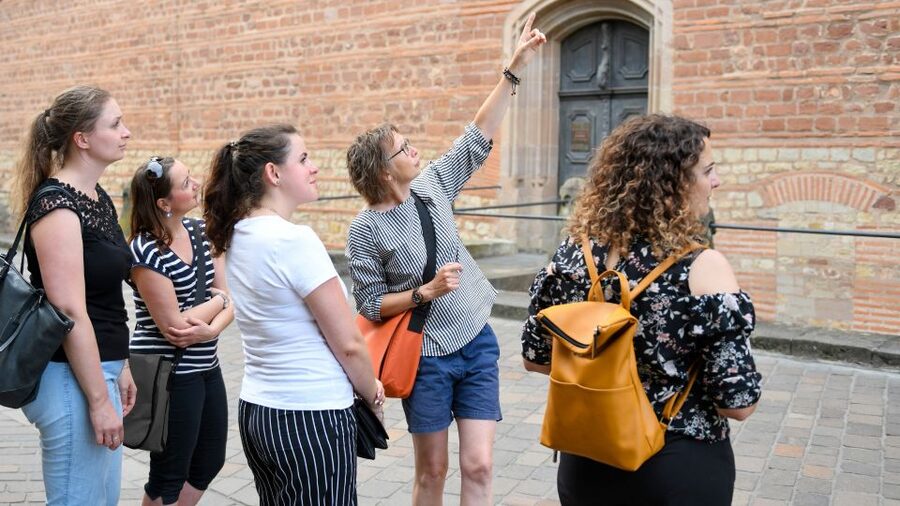
Trier Cathedral is one of the central sights on the route. Its presence helps show how the city moved beyond its Roman beginnings and developed a strong medieval identity.
The tour uses buildings such as the Cathedral to explain architectural change. You can expect the guide to point out how different periods appear in the city, from antiquity through the Middle Ages and into more recent times. That layered approach is more useful than treating each building as an isolated stop.
You may want to give yourself extra time around the Cathedral after the tour, especially if you enjoy architecture or religious history. The walking experience is designed to keep moving, and the supplied details do not promise a lengthy interior visit. Think of the stop as part of the city story, not necessarily as a full Cathedral tour.
This is also where the guide’s delivery can make a difference. Patrick is praised for explaining the history and buildings in a clear way, while Herbert is described as mixing extensive information with humor and a personal touch. Those details suggest a tour that aims to be lively, not just factual.
The Main Market and everyday city life
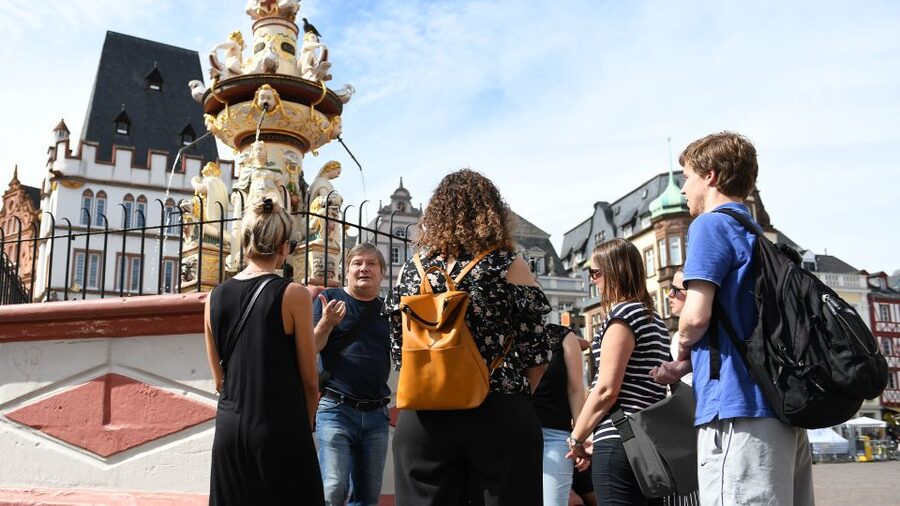
The Main Market gives the route a more public, urban feel. After the heavy Roman presence of the Porta Nigra and the religious importance of the Cathedral, this stop helps you see Trier as a living city rather than only an outdoor museum.
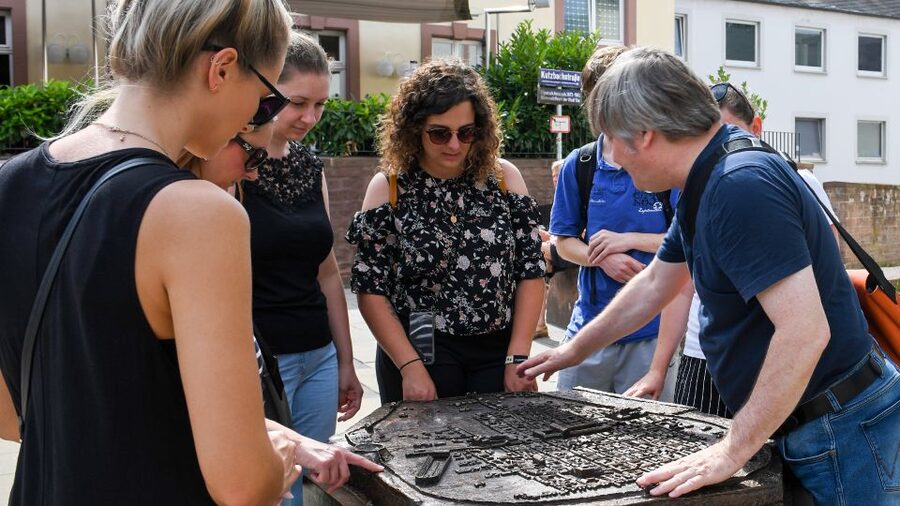
The guide explains the architecture and the people who helped shape Trier. You will hear stories about the city’s development and see how older buildings remain part of modern daily life. The value here is the connection between history and place: the square is not only something to photograph, but a setting where Trier’s past and present meet.
Because the tour is on foot, you can notice the changes from one area to the next in a way that is hard to grasp from a vehicle. You move through the historic center at street level, with time to see the relationship between major monuments and the surrounding city.
The provided details do not specify the exact amount of free time at the Main Market. I would not plan on a long café stop during the tour. If you want to sit down, shop, or take careful photographs, save that for afterward.
More History Tours in Germany:
- Leipzig: City History Canal Sightseeing Tour on a Motorboat
★ 4.7 · 6,232 reviews - Berlin: Natural History Museum Entrance Ticket
★ 4.6 · 3,382 reviews - Leipzig: 1.5-Hour Historical Walking Tour in German
★ 4.7 · 2,217 reviews - Berlin: World Heritage Cruise to Potsdam
★ 4.5 · 1,435 reviews
Karl Marx’s Trier home
The walk also takes you to the residential house associated with Karl Marx, one of the most influential philosophers. This gives the tour a modern political and intellectual thread, balancing the older Roman and medieval subjects.
The point is not only that Marx lived in Trier. His connection to the city shows how local history can reach far beyond the city walls. The guide places his life and influence within Trier’s wider story, alongside the people and events that shaped the city.
The information provided says you will see the house where he used to live. It does not state that the tour enters the building, so plan on viewing it from the route unless the guide explains otherwise. If Marx is your main reason for booking, ask how much time the tour gives this stop.
I like this part of the route because it prevents the tour from becoming a simple parade of Roman ruins. Trier is presented as a city with several identities: Roman, medieval, modern, and connected to major political ideas.
Patrick, Herbert, and the guide’s role
The guide can make or break a history walk, especially one that covers a great deal in only 90 minutes. The strongest praise here centers on clear explanations, humor, and the ability to answer questions.
Patrick is specifically praised for sharing his broad knowledge in an entertaining way and for responding well to questions. Herbert is described as informative, amusing, and personal, with a style that worked well for children as well as adults.
That is useful information if you are booking for a family. One family found the tour appealing to children, which suggests that the storytelling does not rely only on long, dry explanations. Still, the tour is in German, so children and adults need enough German to follow the guide.
You should also use the final minutes wisely. The guide is available to recommend restaurants and bars for afterward. This is a small but valuable feature, especially when you have just arrived and do not yet know which part of town suits your evening plans.
What $16 gets you in 90 minutes
At $16 per person, this is priced as an affordable orientation walk rather than a major day excursion. The fee includes the walking tour and a live guide. There is no transportation, meal, or separate attraction package listed.
I think the price makes sense if you want context for Trier’s main sights without committing half a day. In one short outing, you cover the Roman gate, Cathedral, Main Market, medieval architecture, and Karl Marx’s former home. Doing that alone would cost nothing, but you would also miss the historical links and local explanations.
The value is highest at the start of your stay. Take the tour early, then return to the places that caught your attention. You can use the guide’s restaurant and bar suggestions to extend the experience into the evening.
The price also works well for families with small children because ages 0 to 5 join free. For older children, check the booking price shown for your date. Since the route is only 1.5 hours, it is easier to fit into a family day than a long full-city program.
Language, timing, and practical planning
The live guide speaks German. This is the single most important booking detail. If you understand German, the tour offers a direct way to hear local history and ask questions. If you do not, you may miss the humor, anecdotes, and explanations that make a guided walk worthwhile.
The tour lasts 1.5 hours, and starting times vary, so check availability for your chosen date. Meet in front of the Mercure Hotel opposite the Porta Nigra, not at a general tourist office or another city landmark.
Wear comfortable shoes because the experience is entirely on foot. The supplied information does not give a group size, route surface, or accessibility details, so contact the provider if those points affect your plans.
The operator, k3 stadtführungen, allows free cancellation up to 24 hours before the start time, with a full refund. You can also reserve now and pay later, which is useful if your schedule is still shifting.
Who will enjoy this Trier walking tour?
I would recommend it most strongly to first-time visitors who want a clear introduction to Trier. It suits you if you like history but prefer stories, buildings, and city streets to a long museum lecture.
It is also a good fit for:
- German-speaking couples who want a short overview before exploring alone
- Families with children who can follow a German-speaking guide
- Visitors interested in Roman Trier and Karl Marx in the same outing
- Cruise or short-stay visitors with limited time in the city
- Anyone who wants local suggestions for food and drinks afterward
You may want another option if you need an English-language guide, a full interior tour of the monuments, or a specialist focus on Roman archaeology. The route gives you breadth, not a close study of one site.
The high rating of 4.7 from 687 bookings supports the tour’s appeal, especially its combination of useful information, humor, and approachable guides. I would still put language first in your decision. A well-run tour is of little value if you cannot follow the commentary.
Should you book the Trier old town walk?
Book it if you want an affordable, German-language introduction to Trier’s Roman, medieval, and modern story. The Porta Nigra gives the tour a dramatic beginning, while the Cathedral, Main Market, and Karl Marx’s former home keep the route varied.
I especially like the balance between famous monuments and human stories. Patrick’s question-friendly style and Herbert’s humorous, family-friendly approach are strong signs that the experience is meant to be engaging as well as informative.
Skip it if you require English, want long visits inside each monument, or already know Trier’s historic center in detail. For most German-speaking first-time visitors, though, $16 for 90 minutes is a fair way to get your bearings and learn what deserves a closer look.
FAQ
Where does the Trier walking tour meet?
Meet the guide in front of the Mercure Hotel, opposite the Porta Nigra.
How long does the tour last?
The walking tour lasts 1.5 hours.
What language is the tour offered in?
The live guided tour is conducted in German.
What sights are included?
The route includes the Porta Nigra, Trier Cathedral, the Main Market, examples of medieval architecture, and the residential house associated with Karl Marx.
Is entry to the Porta Nigra included?
The information confirms that the Porta Nigra is part of the tour route and that you learn about the monument and Roman life. It does not state that a separate interior admission is included.
How much does the experience cost?
The listed price is $16 per person.
Can young children join the tour?
Yes. Children ages 0 to 5 can join free of charge.
Can I cancel the booking?
Yes. You can cancel up to 24 hours in advance for a full refund. You can also reserve now and pay later.
More Walking Tours in Germany
- Discover Berlin Half-Day Walking Tour
★ 5.0 · 9,624 reviews - Berlin: Third Reich and Cold War 2 Hour Walking Tour
★ 4.9 · 6,830 reviews - Munich: Third Reich & WWII Walking Tour
★ 4.6 · 6,181 reviews - Berlin: Discover Berlin Walking Tour
★ 4.9 · 5,998 reviews
Just added around Germany
- Private Walking Tour in Berlin: Hitler’s Germany & WWII★ 5.0 · 7 reviews
- The History of Berlin: WWII PRIVATE Walking Tour With Locals★ 5.0 · 209 reviews
- Private Berlin WWII and Cold War History Tour with Local Expert Guide★ 5.0 · 28 reviews
- Private Walking Tour Berlin 3 hours: Brandenburg, Historic Center★ 5.0 · 7 reviews
- Berlin: Private Bike Tour of the Berlin Wall and Third Reich★ 5.0 · 23 reviews
- Berlin: Guided Private Bike Tour to Explore the Highlights★ 5.0 · 12 reviews
- Berlin Photography Masterclass – Private Photography Lesson★ 4.5 · 23 reviews
- Group Driving Tour 1 to 6 people. Berlin Shore Excursion incl pick-up at Port★ 5.0 · 8 reviews
Old Town Tours, compared.
Old Town & Viktualienmarkt City Walk in German
Read our review →
The Night Watchman Old Town Walking Tour in German
Read our review →
Browse the lists this tour appears in