
Reviewed · MUNICH TOURS
Exploring Munich in a Rikscha
Munich looks better at street level. This private rickshaw ride gives you close views of Marienplatz, the Old Town, and the English Garden without putting you behind a tour bus window. I especially like the small group size, limited to two adults and one child, and the chance to hear local stories from guide Pablo Catalan in English, German, or Spanish. The main point to check before booking is the timing: the activity is sold as one hour, but the included description also calls it a 90-minute tour.
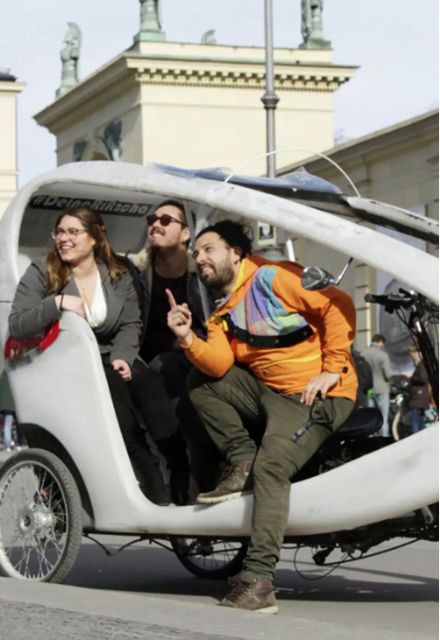
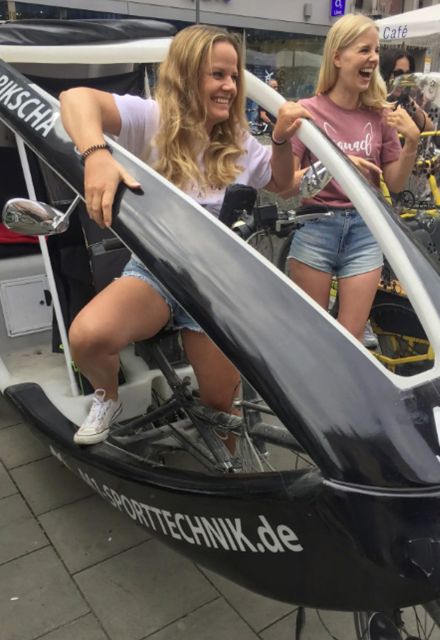
I also like the route’s mix of famous squares and open green space. You get Munich’s grand center, royal buildings, Nazi-era and wartime context, and the city’s present-day character in one compact outing. The rickshaw is eco-friendly and easy to maneuver, though one rider found the vehicle simpler than expected, more like a bicycle with a front bench than the stylish rickshaw pictured.
In This Review
- Key points at a glance
- What kind of Munich tour is this?
- Meeting at Burgstraße 2 near Marienplatz
- Marienplatz: Munich’s grand first impression
- Max-Joseph-Platz and the royal center
- Munich Residenz: a ten-minute historical pause
- Odeonsplatz and Munich’s difficult past
- The English Garden: twenty minutes of open space
- The rickshaw itself: practical comfort and expectations
- How long is the tour really?
- What the guide adds to the price
- Who should book this Munich rickshaw ride?
- Booking advice and final verdict
- FAQ
- Where does the Munich rickshaw tour begin?
- How many people can ride in one rickshaw?
- Which languages are available?
- How long does the experience last?
- Which places does the route visit?
- Is the rickshaw suitable for wheelchair users?
Key points at a glance
- Start beside Marienplatz: Meet at Burgstraße 2, in front of Garibaldi wine shop, only a few steps from the city’s main square.
- Private ride for up to three people: The stated limit is two adults and one child per rickshaw, making this most useful for a couple or a small family.
- Four historic center stops: The route includes Marienplatz, Max-Joseph-Platz, the Munich Residenz, and Odeonsplatz.
- Twenty minutes in the English Garden: The final major stop gives you a change from stone squares to Munich’s famous urban park.
- Three guide languages: Pablo Catalan offers the tour in English, German, or Spanish.
- Strong praise for the guide: Several comments single out Pablo as friendly, safe, entertaining, and well informed about Munich’s past.
What kind of Munich tour is this?
This is a private sightseeing ride rather than a full museum visit or a long walking tour. You sit in a modern rickshaw while your guide pedals between key places, then provides short guided explanations at each stop.
That format matters in Munich. The Old Town’s main sights are close together, but the city’s most famous central spaces can still feel like a lot to cover on foot during a first visit. A rickshaw gives you a moving overview, with less effort and more direct contact with the streets than you get from a large sightseeing vehicle.
The tour is also designed to give you orientation. You begin near Marienplatz, pass through the historic center, reach Odeonsplatz, and then continue toward the English Garden before returning to Burgstraße. I would treat it as a first look at Munich, not a replacement for visiting the Residenz interior or spending a full afternoon in the park.
The guide is a big part of the value. Pablo Catalan has more than ten years of experience leading tours in Munich, and the comments about him are unusually consistent. He is praised for being fun, intelligent, safe, friendly, and good at explaining history. That combination is useful on a short tour, since a rushed guide can turn a compact route into a list of dates and names.
A few more Munich trips worth comparing
- From Munich: Neuschwanstein & Linderhof Castle Full-Day Trip
★ 4.5 · 12,494 reviews - Neuschwanstein & Linderhof Castle-Fairytale Day Tour from Munich
★ 4.5 · 7,275 reviews - Munich: Third Reich & WWII Walking Tour
★ 4.6 · 6,181 reviews
Meeting at Burgstraße 2 near Marienplatz
The meeting point is Burgstraße 2, directly in front of the Garibaldi wine shop. It is just a few steps from Marienplatz, so you are not being sent to a distant pickup point or an obscure edge of town.
This location makes sense for a short central tour. Marienplatz is the natural starting point for Munich sightseeing, and beginning nearby lets you move into the Old Town almost at once. Give yourself enough time to find Burgstraße and the wine shop, especially if you are arriving by public transportation or have just left the main square.
The tour is offered as a private group. That means you are not sharing the ride with a large crowd, and the guide can keep the pace focused on your small party. The maximum is two adults and one child per rickshaw. If three adults are in your party, you will need to ask about another arrangement rather than assuming everyone can fit.
The booking price is $116 per group of up to two people. For two adults, that works out to $58 per person. That is more expensive than a standard group walking tour, but the comparison is not quite equal. You are paying for a private ride, a small party, a local guide, and transport between several central sights. For a couple who values comfort and personal attention, the price can make sense. For a solo visitor, it is a much bigger expense per person.
Marienplatz: Munich’s grand first impression
Marienplatz is the logical place to begin. It is Munich’s central square and one of the best spots to get your bearings before you move into the surrounding streets.
The guided portion here lasts about ten minutes. That is enough for an introduction to the square, Munich’s foundation, and the role Marienplatz plays in the city today. You should not expect a long architectural lecture or interior visits. The strength of this stop is its setting and its ability to frame the rest of the tour.
I like starting here because you immediately get a sense of Munich’s public face. The square is one of the city’s must-see places, but a guide can add meaning that a quick photograph cannot. The discussion also reaches beyond medieval origins, with stories that connect Munich’s past to the Second World War and the present day.
Because the stop is short, keep your expectations realistic. You will get an overview, not a detailed study of every building around the square. If you want extended time for photographs, you may need to return on your own after the ride.
Max-Joseph-Platz and the royal center
The next stop is Max-Joseph-Platz, another ten-minute guided visit. This square brings you into Munich’s royal and cultural heart, with grand buildings and a more formal feel than Marienplatz.
The short stop works well as part of a moving overview. You can take in the scale of the square and hear how it fits into Munich’s development without spending the whole morning on one location. A guide who knows the city can also point out details that are easy to miss when you are walking alone and trying to read a map.
This is one reason a private ride can be useful early in your stay. You are shown where the major landmarks sit in relation to one another. Later, you can decide which ones deserve a longer return visit.
Do not book this expecting admission to every attraction along the route. The experience is described as a guided ride and exterior sightseeing tour. The value is in the route, commentary, and close views rather than a series of museum entries.
Still Munich, at a slower pace:
- Dachau Concentration Camp Memorial Site Tour from Munich by Train
★ 4.5 · 5,637 reviews - Neuschwanstein Castle Tour from Munich
★ 4.5 · 5,117 reviews - Third Reich Walking Tour Munich
★ 4.5 · 4,291 reviews - Munich Hop-On Hop-Off Tour: 1-Day or 2-Day Ticket
★ 4.3 · 4,161 reviews
Munich Residenz: a ten-minute historical pause
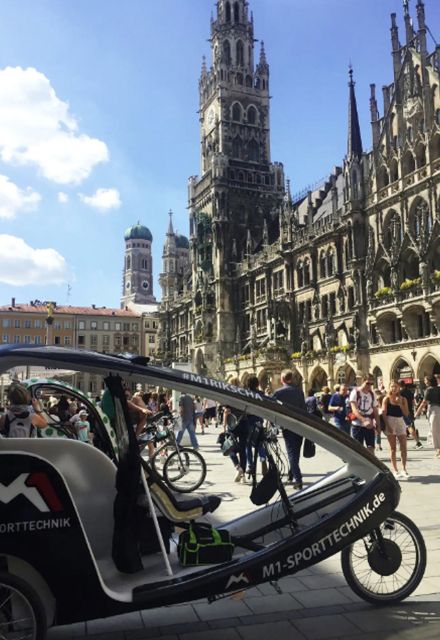
The tour then reaches the Munich Residenz, the former royal palace complex. The guided time is again about ten minutes.
The Residenz is an important stop because it ties the city to Bavaria’s rulers and court life. It also gives the guide a natural place to discuss Munich’s political and cultural past. On a short city ride, this kind of landmark helps turn the route into a story instead of a string of disconnected squares.
The trade-off is obvious: ten minutes is not enough to tour the palace rooms, galleries, and collections. If the Residenz is high on your list, plan a separate visit. The rickshaw stop can help you decide where to return and can provide useful context before you enter.
I would also pay attention to the guide’s balance here. A good explanation should give you the basic reason the building matters without burying you in names. The strongest comments about Pablo point to his ability to make history enjoyable and clear, which is particularly valuable at a place with a lot of background.
Odeonsplatz and Munich’s difficult past
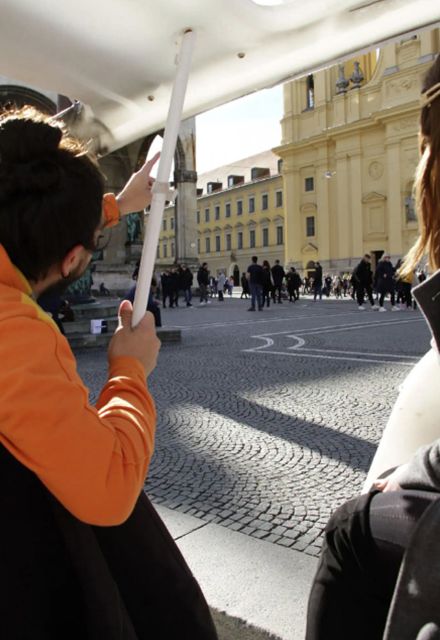
Odeonsplatz is the fourth central stop, with another ten-minute guided explanation. This is a large and important square, and it offers a useful bridge between Munich’s royal image and its more troubled twentieth-century history.
The experience promises stories reaching from the city’s foundation through the Second World War and into modern Munich. Odeonsplatz is a fitting place for that wider discussion. The guide can connect the buildings and public spaces around you to the events that shaped the city, rather than presenting Munich as only a pretty Bavarian postcard.
This is one of the tour’s strongest features on paper. You are not just being driven past attractive buildings. You are getting a broad timeline of Munich, delivered in manageable pieces. The four ten-minute central stops keep the historical material from becoming too heavy.
Again, the short format has limits. You should see this as an introduction to Munich’s difficult past, not a specialist history tour. If your main interest is the Second World War, political history, or memorial sites, you will want to add a more focused visit elsewhere.
The English Garden: twenty minutes of open space
The final major stop is the English Garden, with about twenty minutes of guided time. That is the longest single portion of the route, and it gives the tour a welcome change of pace.
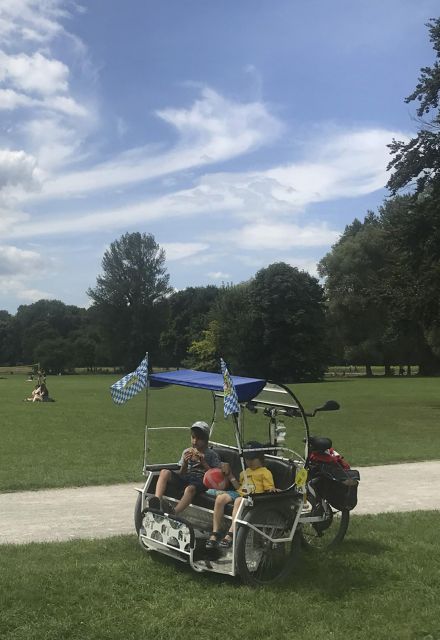
After the formal squares and palace district, the park offers a more relaxed view of Munich. The rickshaw lets you cover part of the distance without turning the outing into a long walk. You can expect commentary about the park and its place in city life, along with time to enjoy the surroundings at close range.
I like this part because it broadens the idea of Munich. You see more than the Old Town’s historic buildings. You also get a sense of the city as a place where residents spend time outdoors. The park stop keeps the tour from feeling like one continuous circuit of monuments.
Twenty minutes is enough for a taste, not a full exploration. The English Garden is large, so you will not cover every corner or have time for an extended independent visit during this ride. If the park is a priority, return later with more time. The rickshaw route helps you identify the areas you may want to explore on foot.
The rickshaw itself: practical comfort and expectations
The vehicle is described as modern, eco-friendly transportation. Its small size is an advantage in central Munich, where a large vehicle would be awkward and a walking group can lose time moving between stops.
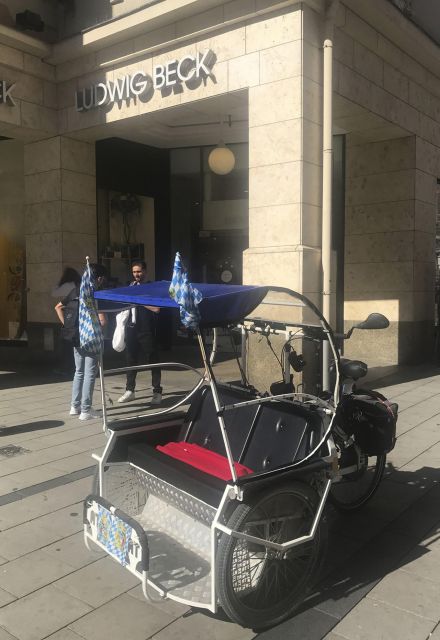
You should picture a bicycle-style rickshaw with a seat or bench at the front, not a luxury carriage. One rider specifically found the vehicle more basic than the promotional photograph suggested. That is an important expectation to set before you pay $116.
The ride is likely best in dry, mild weather. A separate comment noted that the rickshaws could be better suited to rain. Since the vehicle is open and the tour moves through outdoor public spaces, poor weather may affect comfort. The provided information does not promise weather protection, so check conditions before setting out and ask the operator if rain is forecast.
The rickshaw is not suitable for wheelchair users. The capacity is also firm: two adults and one child. Those limits are not minor footnotes. They determine who can book the experience and whether it will work for your party.
How long is the tour really?
The advertised duration says one hour, and the listed route adds up neatly to about sixty minutes: ten minutes each at Marienplatz, Max-Joseph-Platz, the Munich Residenz, and Odeonsplatz, followed by twenty minutes in the English Garden.
At the same time, the included description calls it a 90-minute tour. That conflict should be cleared up before you reserve, especially if you have a train, restaurant booking, or museum entry afterward. The starting and ending point is the same, Burgstraße 2, but the exact length matters when planning your day.
A one-hour version is a brisk city sampler. A 90-minute version gives the guide more room to pedal at an easy pace, answer questions, and allow for traffic or short pauses. Either way, this is a compact experience. You will see a lot, but you will not have long free time at each stop.
What the guide adds to the price
The strongest reason to choose this tour is the guide rather than the vehicle. The comments about Pablo Catalan repeatedly focus on his personality, safety, and ability to explain Munich’s past.
That matters because the route covers several subjects in a short period. Munich’s foundation, royal history, the Second World War, and modern city life could easily become a jumble. A good guide gives those subjects shape and helps you remember why each place matters.
The private format also gives you a better chance to ask questions than a large group tour would. The guide can offer recommendations for other places and activities in Munich, which is useful if this is your first day in the city. You can use the ride as a planning session as well as sightseeing.
Language choice adds another practical benefit. The tour is available in English, German, and Spanish. Make sure you select the language you want when booking, since the quality of a short history tour depends heavily on how easily you can follow the explanation.
Who should book this Munich rickshaw ride?
I would recommend it most strongly to couples who want a private introduction without committing to a half-day tour. It also suits a parent with one child, provided everyone is comfortable with the vehicle and the child fits within the stated limit.
It can work well for people who prefer not to walk long distances. You still get out into the city and stop at major sights, but the rickshaw handles the movement between them. The experience is also appealing if you want an eco-friendly alternative to a motor vehicle.
First-time visitors will get the most from the route. You can see the central sights, hear a broad story of Munich, and collect ideas for where to return later. Repeat visitors may still enjoy it if they want a different view of familiar places or a private ride with a local guide.
I would hesitate if you want extensive time inside museums, a serious specialist history lesson, or a fully weatherproof vehicle. I would also think twice if you are traveling alone and the full group price feels high for one hour.
Booking advice and final verdict
The experience offers free cancellation up to 24 hours before departure, and you can reserve now and pay later. Those terms help if your Munich plans are still shifting, but the more important step is confirming the actual duration and vehicle style.
Book this tour if you value personal guiding, easy movement through the center, and a quick but meaningful introduction to Munich. Pablo Catalan’s strong comments for safety, warmth, and historical storytelling give the experience real appeal.
Skip it if your main goal is a long visit inside the Residenz, a detailed wartime history tour, or a guaranteed rain-ready ride. For most couples with one free hour, though, this is a pleasant way to connect Marienplatz, the royal center, Odeonsplatz, and the English Garden without spending the day on foot.
FAQ
Where does the Munich rickshaw tour begin?
It begins at Burgstraße 2, in front of the Garibaldi wine shop, a few steps from Marienplatz.
How many people can ride in one rickshaw?
Each rickshaw can carry a maximum of two adults and one child.
Which languages are available?
The live guide can conduct the tour in English, German, or Spanish.
How long does the experience last?
The activity information lists a duration of one hour. The included description also refers to a 90-minute tour, so confirm the exact timing before booking.
Which places does the route visit?
The route includes Marienplatz, Max-Joseph-Platz, the Munich Residenz, Odeonsplatz, and the English Garden. It begins and ends at Burgstraße 2.
Is the rickshaw suitable for wheelchair users?
No. The experience is not suitable for wheelchair users.
Just added around Munich
- Pub crawl incl. Oktoberfest museum guided tour with beer tasting (private)★ 5.0 · 5 reviews
- South Tyrolean specialties and wine tasting★ 5.0 · 5 reviews
- Size Matters Beer Tour Munich★ 4.6 · 105 reviews
- Short & sweet: Tasting the Viktualienmarkt★ 4.8 · 37 reviews
- Secret Food Tours Munich★ 4.8 · 5 reviews
- Munich: Romantic Wine Experience for Two at Viktualienmarkt★ 4.2 · 14 reviews
- Residence of Munich private tour with skip the line ticket★ 5.0 · 4 reviews
- Munich: Resistance against Hitler – Historical Walking Tour★ 5.0 · 5 reviews
Munich Tours, compared.
Neuschwanstein & Linderhof Castle-Fairytale Day Tour from Munich
Read our review →
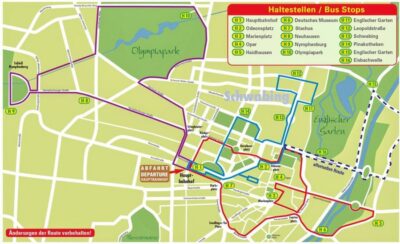
Munich Hop-On Hop-Off Tour: 1-Day or 2-Day Ticket
Read our review →
Premium Neuschwanstein Castle and Linderhof VIP Tour from Munich
Read our review →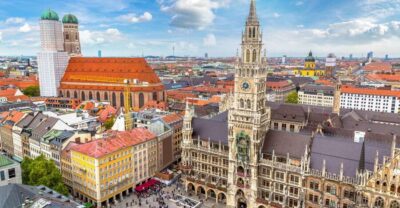
Old Town & Viktualienmarkt City Walk in German
Read our review →
Browse the lists this tour appears in