
Reviewed · THIRD REICH HISTORY TOURS
Munich 3-Hour Segway Tour: Nazi Munich & Royal Architecture
History feels closer on two wheels. This 3-hour Munich Segway tour mixes the city’s grand royal buildings with reminders of its Nazi past, then adds the fun surprise of watching surfers ride the Eisbach River. I like the small groups of up to eight and the patient training, which helps first-time riders settle in. I also like the useful spread of sights, from Königsplatz to the Maximilianeum. The main drawback is simple: you spend much of the tour outdoors, and Munich’s cold, rain, traffic, and uneven riding conditions can affect the day.
At $91 per person, this is not a cheap way to see Munich. Still, you cover a lot of ground in three hours, get an English or German-speaking guide, and return with a basic map of the city in your head. I would take it early in a Munich visit, especially if you want orientation before choosing which museums and historic sites deserve a longer visit.
In This Review
- Key points before you book
- Getting started at Karlsplatz
- Karolinenplatz and Königsplatz: Munich’s grand stage
- Pinakothek museums without the museum time
- Siegestor and Odeonsplatz: power, ceremony, and memory
- The Residenz and Bavaria’s royal image
- Haus der Kunst and Munich’s Nazi-era story
- The Eisbachwelle: the tour’s most surprising stop
- The Angel of Peace, Isar River, and Maximilianeum
- Bavarian State Opera and the ride back
- What the small group adds
- Price, timing, and who gets good value
- Weather, clothing, and practical comfort
- Should you book the Munich Segway tour?
- FAQ
- Where does the Munich Segway tour start?
- Where does the tour finish?
- How long does the tour last?
- What languages does the guide speak?
- What are the age and weight requirements?
- Does the tour run in bad weather?
Key points before you book
- Thirty minutes of Segway training comes first: You get an orientation and safety briefing before setting off, with time for individual coaching.
- The tour handles Munich’s bright and dark sides: Royal architecture, museums, Nazi-era sites, and modern city life all fit into one route.
- The group is limited to eight people: That makes it easier to ask questions and get help with the machine.
- The Eisbachwelle is a real highlight: You stop to watch river surfers riding a standing wave in the English Garden area.
- You ride in mixed conditions: The route includes roads and off-road sections, so this is active sightseeing rather than a gentle roll through pedestrian lanes.
- Strict participation rules matter: Riders must be at least 14 years old, weigh between 100 and 250 pounds, and be comfortable with outdoor activity.
Getting started at Karlsplatz
Your meeting point is Fat Tire Tours at Karlsplatz 4, near the Stachus McDonald’s. With your back to the old city gate, turn right along Sonnenstrasse and walk about 50 meters. The shop is on the right in the courtyard of Karlsplatz 4.
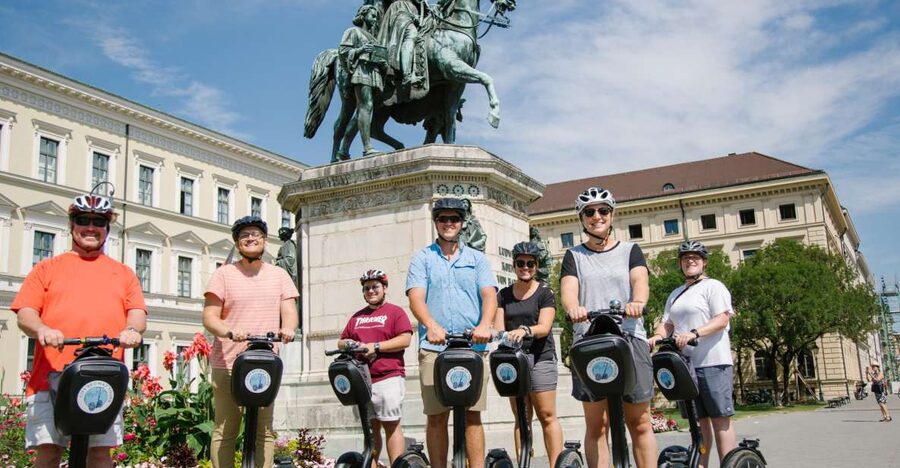
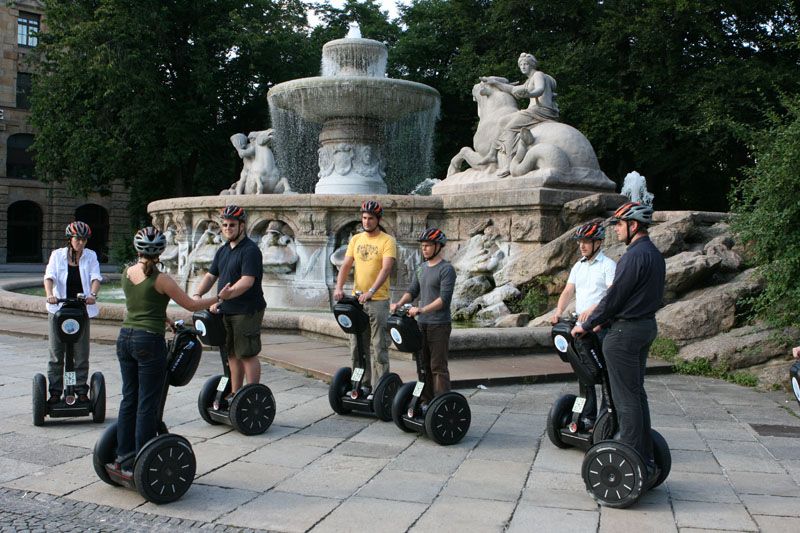
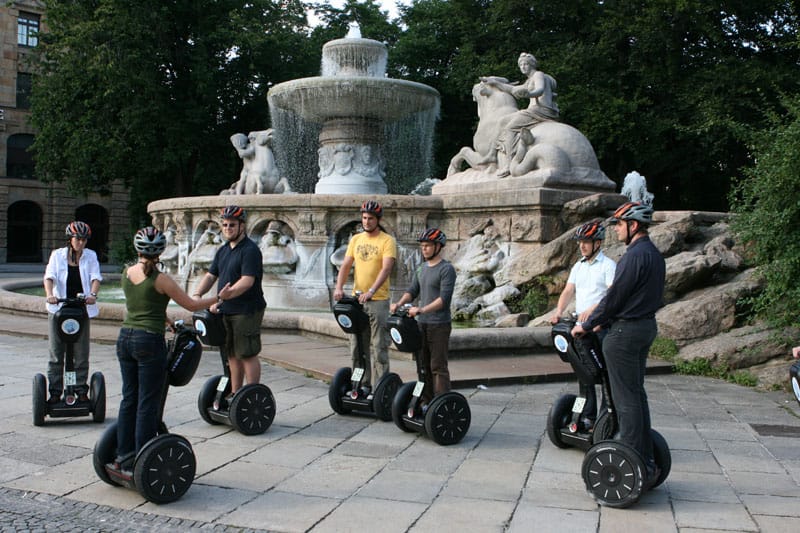
The tour begins with a serious introduction to the Segway. That is good news, especially if you have never ridden one. The machine responds to your balance and body movement, so smooth actions matter more than strength. The guide gives safety instructions and helps each rider become comfortable before the group heads into the city.
The training takes about 30 minutes, followed by another short safety and practice period. This is not wasted time. Several riders who had never used a Segway before found the controls easy after the lesson, and the guides continued helping anyone who needed it. Matt, Canaan, Tom, Bob, José, Steve, Thomas, and Michelle were all praised for a mix of good instruction, humor, and local storytelling.
You should arrive in comfortable shoes and clothes. Open-toed shoes are not allowed, and you should bring cash, though food and drinks are not included. Raincoats are supplied, and extra jackets and gloves have been available when the weather turned cold. Still, dress for the forecast. The tour runs in rain unless conditions become extremely bad, and wind chill can make a moving Segway feel much colder than a walk.
More Segway Tours in Munich
- Munich: City Highlights Guided Segway Tour
★ 4.6 · 266 reviews - Munich Segway Tour
★ 5.0 · 181 reviews - Munich: City Highlights Guided Segway Tour
★ 4.5 · 161 reviews
Karolinenplatz and Königsplatz: Munich’s grand stage
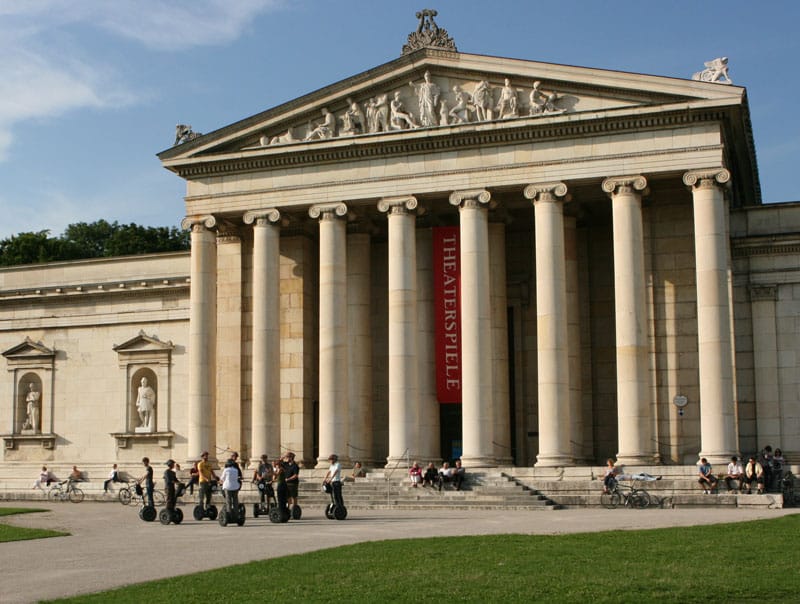
Once the group is ready, the route heads toward Karolinenplatz and Königsplatz. These broad, formal spaces show Munich’s taste for monumental architecture and its links to classical Greece and Rome.
Königsplatz was modeled on the Acropolis in Athens. Its open setting gives you a clear view of the columns and classical forms, and the Segway lets you see the whole arrangement without spending much time walking between viewpoints. You stop for photos and a short explanation, rather than entering the buildings.
Karolinenplatz is smaller but important for understanding the city’s grand urban planning. The route gives you a quick look rather than an extended history lesson. That is a recurring pattern on this tour: you see many locations, but you do not spend long at any one of them.
The pace suits a first look. If you want detailed architectural study, return on foot later. For a broad introduction, these early stops help explain how Munich moved from a medieval settlement to a wealthy Bavarian capital.
Pinakothek museums without the museum time
The tour passes the Alte Pinakothek and the Pinakothek der Moderne. These are major cultural institutions, but your visit here is an exterior stop for photos and sightseeing.
That can feel brief if art is your main reason for coming to Munich. You will not have time to see collections or study individual works. On the other hand, the route helps you place the museums within the wider city, and your guide can point out how Munich’s royal and civic ambitions shaped this part of town.
The Alte Pinakothek represents the older artistic tradition, while the Pinakothek der Moderne points toward modern design and art. Seeing both on the same route gives you a quick sense of Munich’s range. I would note the museums during the tour, then return on another day if you want to go inside.
Siegestor and Odeonsplatz: power, ceremony, and memory
At Siegestor, you see one of Munich’s best-known monumental gates. It was built as a military victory monument, but its later meaning became more complicated after the destruction and upheaval of the Second World War. The guide uses this kind of stop to connect Munich’s proud public image with the difficult events that followed.
The route continues to Odeonsplatz, one of the city’s grandest squares. It is closely tied to Munich’s royal past and to the Nazi movement. This is one of the places where the tour’s title makes sense: the guide does not present Munich as only a pretty city of palaces and opera houses.
You should expect the history to be delivered while standing outdoors, often with city activity around you. The detail will depend partly on the guide, but the best guides use short stories and clear context rather than a long lecture. Canaan was praised for making Bavarian history memorable through stories, while Tom and Thomas were singled out for strong local knowledge and clear explanations.
More Third Reich History Tours in Munich
- Munich: Third Reich & WWII Walking Tour
★ 4.6 · 6,181 reviews - Third Reich Walking Tour Munich
★ 4.5 · 4,291 reviews - Munich: Birthplace of the Third Reich Guided Walking Tour
★ 4.6 · 771 reviews - Munich World War II Sites Including Dachau Concentration Camp
★ 4.5 · 570 reviews
The Residenz and Bavaria’s royal image
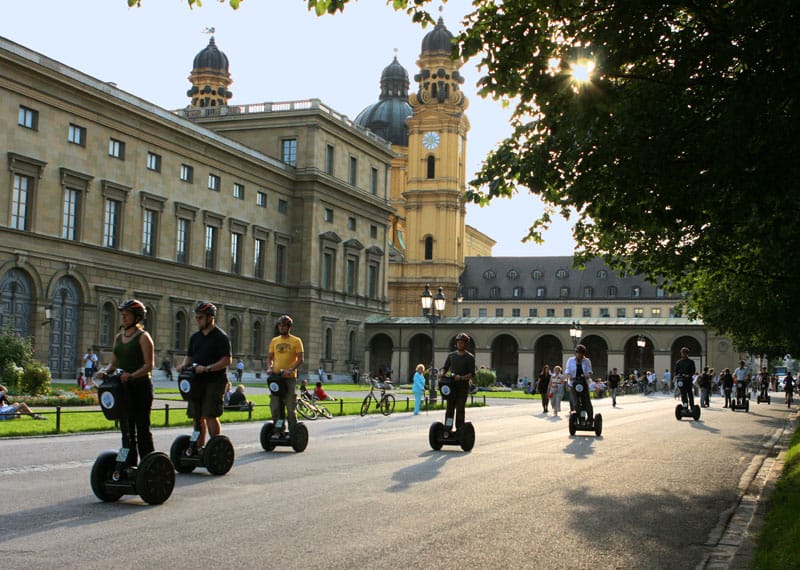
The Munich Residenz brings the route back to royal architecture. This former palace complex represents the power of the Bavarian rulers, and its scale helps explain why Munich feels more like a royal capital than a simple regional city.
You stop outside for about five minutes. That is enough to admire the setting and take photos, but not enough to see the palace interiors. If you want lavish rooms, collections, and a longer look at the Wittelsbach rulers, plan a separate visit.
I like the balance here. The tour does not let elegant buildings erase the harder parts of Munich’s past. Instead, the Residenz becomes one part of a larger story about wealth, political power, cultural ambition, and the damage caused by dictatorship and war.
Haus der Kunst and Munich’s Nazi-era story
Haus der Kunst is another major stop, and its history connects directly to the Nazi period. The building was created under the Nazi regime as a showcase for state-approved art. Seeing it alongside Odeonsplatz and other central sites gives you a better sense of how politics shaped Munich’s public spaces.
The tour’s treatment of Nazi Munich is one of its strongest features, but you should set your expectations correctly. This is not a specialist memorial tour, and you are not entering a museum or spending hours with archival material. Instead, the guide points out physical places and explains how Munich figured in the rise of Nazism and the Second World War.
That approach works well for a first orientation. You see the city as a place where royal ceremony, cultural institutions, political power, and dark ideology occupy the same streets. If this subject matters greatly to you, use the tour as an introduction and set aside another day for Munich’s museums and memorial sites.
The Eisbachwelle: the tour’s most surprising stop
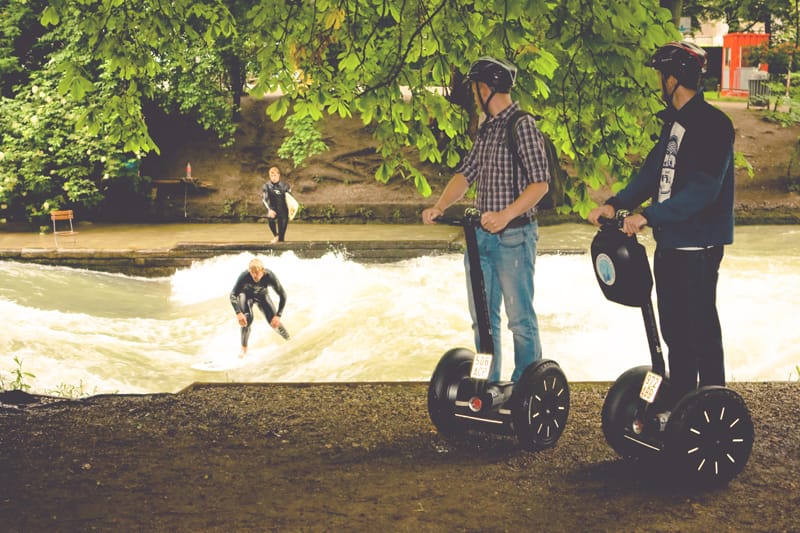
The Eisbachwelle is the most unexpected moment on the route. At this standing wave in the Isar canal system, surfers ride continuously in the middle of Munich. The city’s river surfers are famous, and this spot is described as the first of its kind in the world.
You stop for about ten minutes, which gives you time to watch the surfers and take photos. The contrast is terrific: one minute you are hearing about royal rulers and Nazi-era politics, and the next you are watching skilled surfers handle a permanent river wave in a city park.
This stop also gives the group a change of mood. The history can be heavy, so the Eisbach provides a lively, modern counterpoint. It shows a different Munich, one that is playful, athletic, and a little odd in the best possible way.
The Angel of Peace, Isar River, and Maximilianeum
The route then moves toward the Angel of Peace, a tall monument overlooking the Isar. It commemorates a period of peace after the Franco-Prussian War and adds another layer to Munich’s habit of expressing political ideas through large public monuments.
At the Isar River, you get a broader look at the waterway that shapes the city. This is a short sightseeing stop, not a nature walk or river cruise. The Segway keeps you moving, but the river gives the route a welcome break from formal squares and heavy stone buildings.
The Maximilianeum is one of the tour’s strongest architectural views. The grand building has been home to the Bavarian state parliament since 1949, and its position above the river makes it especially impressive from outside. You stop for photos and a short explanation before continuing along Maximilianstrasse.
Maximilianstrasse is Munich’s well-known grand avenue, associated with high-end shops and stately buildings. You do not need to shop here to appreciate the setting. The avenue helps show how Munich connects royal planning with modern wealth.
Bavarian State Opera and the ride back
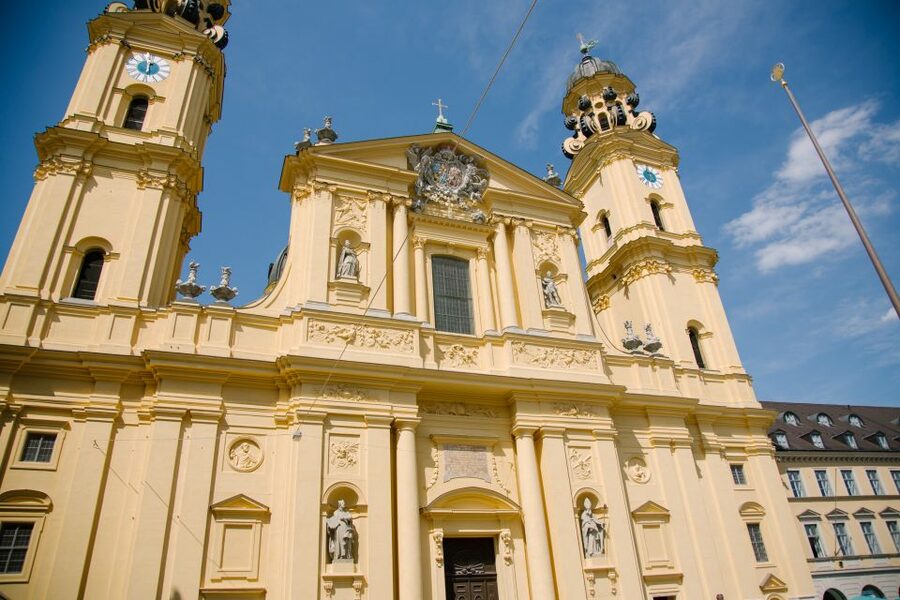
The final major stop is the Bavarian State Opera. Its exterior completes the tour’s look at Munich as a city of court culture, music, and public ceremony.
From there, you return to Karlsplatz 4. The full route takes about three hours, though one longer outing ran beyond the expected time under a particularly engaged guide. Do not count on that extra time, but it is useful to know that the experience may not feel rushed if the group has questions and the guide is willing to continue.
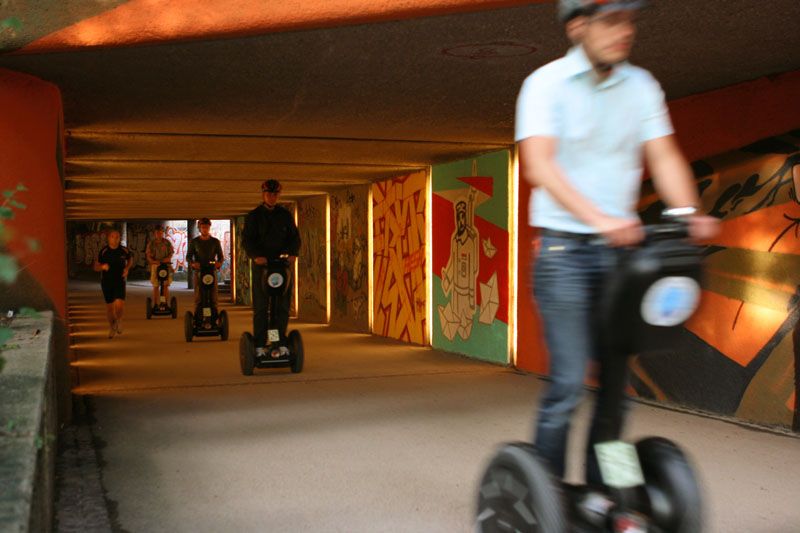
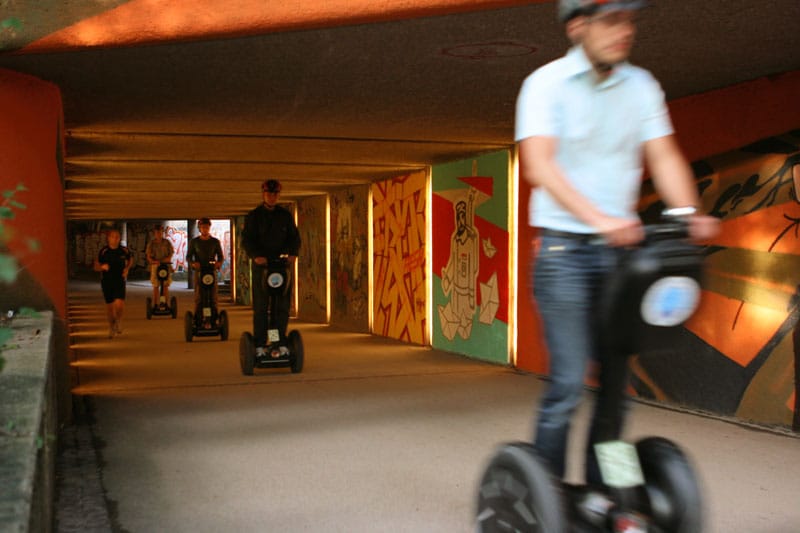
You ride on both roads and off-road sections. That makes the tour more exciting and helps you cover ground, but it also means you need to stay alert. Thomas was praised for explaining road etiquette, and the guide stays in charge of the group’s movement. Even so, this is not the right activity if you want a completely relaxed or passive sightseeing experience.
What the small group adds
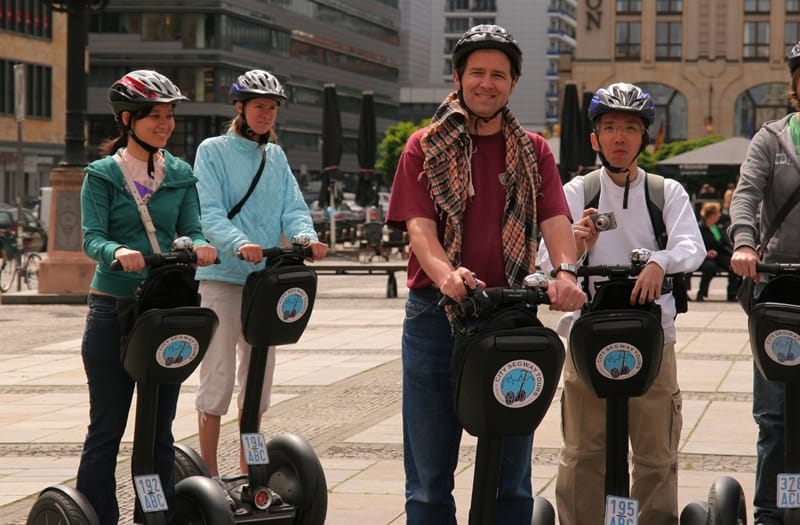
A maximum of eight participants is a real advantage. You can hear the guide more easily, ask questions without holding up a large crowd, and get individual help during the training period.
That personal attention matters most at the beginning. Canaan was praised for giving one-on-one instruction, and Matt was described as patient and encouraging when riders needed help. If you are nervous about balancing, tell the guide early rather than pretending you are ready.
The atmosphere also depends on the group. Some outings have a warm, humorous tone, and José was praised for keeping the mood positive. One rider felt that crude jokes before the tour were unnecessary, so humor may not suit every person. The guides appear to favor an informal style, which many people enjoy, but you should not expect a solemn academic lecture.
Price, timing, and who gets good value
At $91 per person, the tour costs more than a basic walking tour or a city bus ride. You are paying for the Segway, training, guide, small group, and the ability to cover a large part of central Munich without walking every kilometer.
I think the price works best when you take the tour early in your stay. You will see enough places to decide where to return, and the guide can offer practical tips for the rest of your visit. The value is weaker if you mainly want to enter museums, since nearly every stop is outside and brief.
The tour is suited to visitors aged 14 and older who have a reasonable level of fitness and no back, mobility, pregnancy, or recent surgery concerns. Riders must weigh between 100 pounds, or 45 kilos, and 250 pounds, or 115 kilos. People over 95 are also listed as unsuitable.
Free cancellation is available up to 24 hours before departure, and you can reserve now and pay later. Starting times vary, so check availability for the day you want.
Weather, clothing, and practical comfort
You need comfortable closed shoes and clothing that can handle wind or rain. Raincoats are included, but do not treat that as a full cold-weather kit.
Several outings took place in cold conditions, including sleet and snow. Riders still enjoyed themselves, but one long ride became very cold, especially at speed. The practical lesson is clear: bring layers, gloves, and weather protection even if the city feels mild when you leave your hotel.
Food and drinks are not included. A coffee stop may happen during the outing, but you should not assume it is part of every tour or that refreshments are provided. Bring cash as requested, and eat beforehand if you know you get hungry during active sightseeing.
Should you book the Munich Segway tour?
Book it if you want a lively first look at Munich, enjoy local stories, and like the idea of mixing royal buildings with serious twentieth-century history. It is especially useful for first-time visitors who want orientation, a small group, and a memorable stop at the Eisbachwelle.
Skip it if you dislike balancing machines, need a fully accessible activity, want long museum visits, or prefer a slow walking tour with plenty of time at each site. The history is broad rather than specialist, and the weather can make a major difference.
For the right rider, $91 buys more than a novelty ride. You get a practical city overview, a fresh way to see Munich’s major districts, and a guide who can connect the palace, parliament, opera, monuments, river, and Nazi-era sites into one understandable route.
FAQ
Where does the Munich Segway tour start?
The tour starts at Fat Tire Tours, Karlsplatz 4, near the Stachus McDonald’s. From the Karlsplatz McDonald’s, keep your back to the city gate, turn right along Sonnenstrasse, and walk about 50 meters to the shop in the courtyard.
Where does the tour finish?
The tour ends back at the same meeting point at Karlsplatz 4.
How long does the tour last?
The scheduled duration is three hours. Starting times vary, so you need to check availability for your chosen date.
What languages does the guide speak?
The tour is available with a live guide in English or German.
What are the age and weight requirements?
Participants must be at least 14 years old. Riders must weigh between 100 pounds, or 45 kilos, and 250 pounds, or 115 kilos. Minors under 18 must have an accompanying adult or an adult complete the insurance paperwork.
Does the tour run in bad weather?
The tour operates in rain unless the weather becomes extremely severe. Raincoats are provided, but you should wear suitable layers and closed, comfortable shoes.
Just added around Munich
- Pub crawl incl. Oktoberfest museum guided tour with beer tasting (private)★ 5.0 · 5 reviews
- South Tyrolean specialties and wine tasting★ 5.0 · 5 reviews
- Size Matters Beer Tour Munich★ 4.6 · 105 reviews
- Short & sweet: Tasting the Viktualienmarkt★ 4.8 · 37 reviews
- Secret Food Tours Munich★ 4.8 · 5 reviews
- Munich: Romantic Wine Experience for Two at Viktualienmarkt★ 4.2 · 14 reviews
- Residence of Munich private tour with skip the line ticket★ 5.0 · 4 reviews
- Munich: Resistance against Hitler – Historical Walking Tour★ 5.0 · 5 reviews