
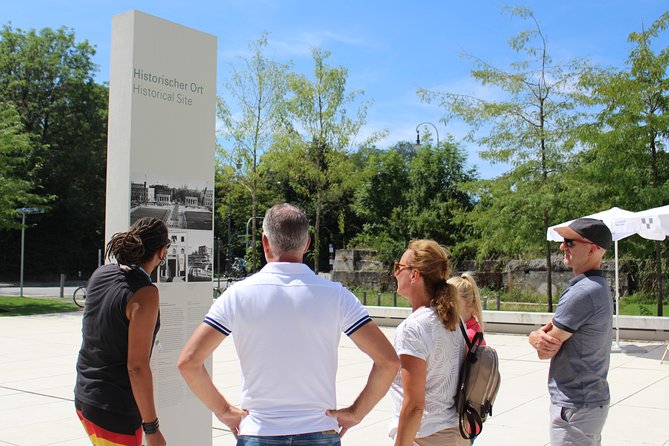
Reviewed · THIRD REICH HISTORY TOURS
Munich World War II Sites Including Dachau Concentration Camp
History feels different on foot. This full-day experience links Dachau Memorial Site with Munich locations tied to the rise of the Third Reich, giving you both the camp itself and the city where Nazi power first took hold. I like the strong two-part design, and I also like that the tour uses public transportation rather than adding the cost of a private coach. The main drawback is the length: at about eight and a half hours, with substantial walking and standing, this is a demanding day.
I especially value the guides’ respectful approach to an agonizing subject. Past tours led by Jake, Ian, Nick, Scott, Steve, Connie, Sam, and others have been praised for clear explanations, thoughtful presentation, and careful group management. Still, the amount of information can feel heavy, and some people have found it hard to hear guides in noisy streets or echoing buildings.
In This Review
- Key points to know before booking
- Why combine Dachau with Munich’s Nazi sites?
- Meeting at Radius Tours at 9 a.m.
- Reaching Dachau by train and bus
- Entering the Dachau Concentration Camp Memorial Site
- The break between the two tours
- Walking through Munich’s Third Reich sites
- Walking, weather, and the physical effort
- Is $105.21 good value?
- How the guides shape the experience
- Who should book this full-day experience?
- Cancellation and basic booking notes
- Should you book it?
- FAQ
- Where does the tour begin?
- How long does the experience last?
- Is transportation to Dachau included?
- What does the Dachau portion include?
- Are children allowed to join?
- What happens if I need to cancel?
Key points to know before booking
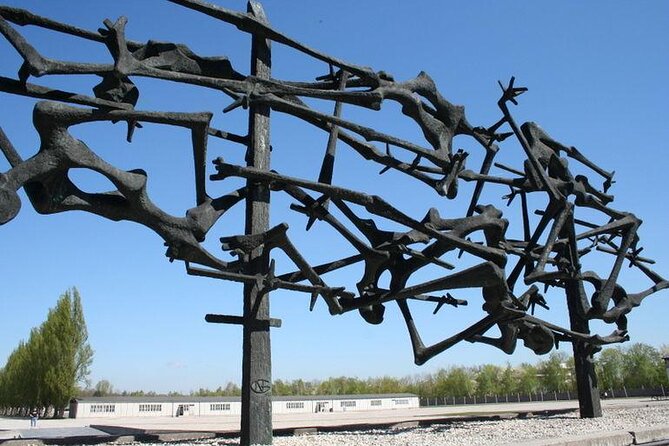
- Dachau comes first: You spend roughly three hours at Germany’s first Nazi concentration camp, including the museum, reconstructed cell blocks, administration area, photographs, documents, and crematorium.
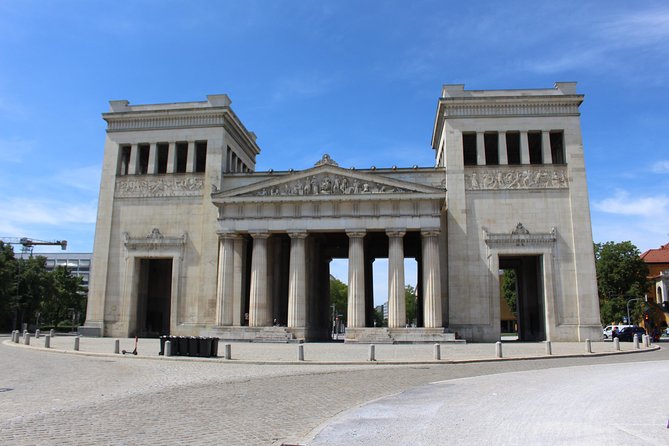
- Munich’s Nazi past is part of the day: The city walk covers Marienplatz, Königsplatz, the former Gestapo headquarters, Hitler’s early Nazi Party connection, and the Beer Hall Putsch site.
- Public transport is part of the experience: You travel by train and city bus from Munich to Dachau, with transportation handled by the tour company.
- Plan for a long, serious day: The program begins at 9 a.m. and can run until around 6 p.m., with a short break between the two sections.
- Guides make a major difference: Jake, Ian, Steve, Nick, Scott, Connie, and Sam have all received especially warm praise for combining facts with sensitivity.
- The price is fair for the coverage: At $105.21 per person, you receive two guided tours, local transportation to Dachau, and a full day of historical context.
Why combine Dachau with Munich’s Nazi sites?
Munich is not just a convenient base for visiting Dachau. It was central to the Nazi movement’s early growth, and many important events took place here before the regime controlled Germany. The city walk helps you understand that political story, while Dachau shows the machinery of imprisonment and terror in a direct, physical setting.
I like this pairing because it prevents Dachau from feeling detached from the wider story. You begin with the city’s political streets and buildings, then move toward the camp, or, depending on the day’s arrangement, visit Dachau first and return to Munich for the city walk. The supplied schedule describes Dachau in the morning, followed by a break and the Munich walk later in the day.
The tour is also useful if your time in Munich is short. Instead of arranging separate transport to Dachau and researching the city sites alone, you receive a guided explanation of both in one booking. The tradeoff is pace. You will cover a lot, but you will not have unlimited time to read every panel or pause at every location.
More Third Reich History Tours in Munich
- Munich: Third Reich & WWII Walking Tour
★ 4.6 · 6,181 reviews - Third Reich Walking Tour Munich
★ 4.5 · 4,291 reviews - Munich: Birthplace of the Third Reich Guided Walking Tour
★ 4.6 · 771 reviews
Meeting at Radius Tours at 9 a.m.
The day begins at the Radius Tours office at Dachauer Str. 4, close to München Hauptbahnhof, Munich’s main railway station. The meet-and-greet is straightforward, but you should arrive ready for a full day rather than a relaxed morning outing.
The tour is offered in English, uses a mobile ticket, and accepts a maximum of 25 people. A smaller group is helpful in the city, where the guide needs to keep everyone together across busy streets and historic squares. It also makes questions easier, though the group may still spread out during outdoor explanations.
Bring water, a snack, and weather-appropriate clothing. The day is spent largely outdoors, and the program includes long periods of walking and standing. One detailed account described cold conditions, while another praised Connie for finding shade and sitting areas during hot weather. The practical lesson is simple: check the forecast and dress for it.
Reaching Dachau by train and bus
The journey north begins by train from Munich, followed by a city bus to the memorial site. The tour company covers the public transportation used during the excursion, so you do not need to arrange those tickets yourself.
This is not a private coach tour. Some people would prefer a direct vehicle, especially with a group, but the public route keeps the cost down and supports a more accessible price. It also gives you a look at the ordinary transport network used to reach the memorial.
The bus can become crowded, and public transport adds some moving parts to the morning. You should be prepared to stay with the group and follow the guide closely. The upside is that the route does not turn the camp visit into an isolated sightseeing transfer. It remains connected to modern Munich and its surrounding communities.
Entering the Dachau Concentration Camp Memorial Site
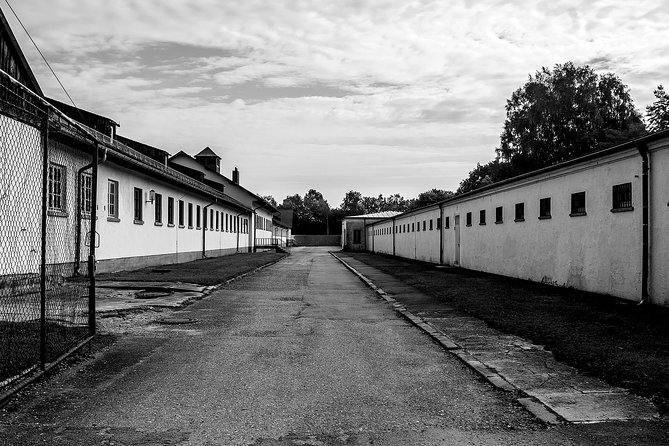
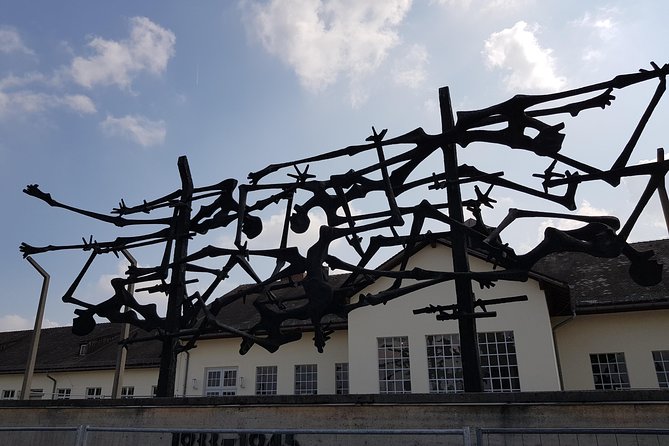
Dachau was the first Nazi concentration camp in Germany and later served as a model for camps built afterward. The memorial site is therefore crucial for understanding how the camp system developed, how it was administered, and how prisoners were treated.
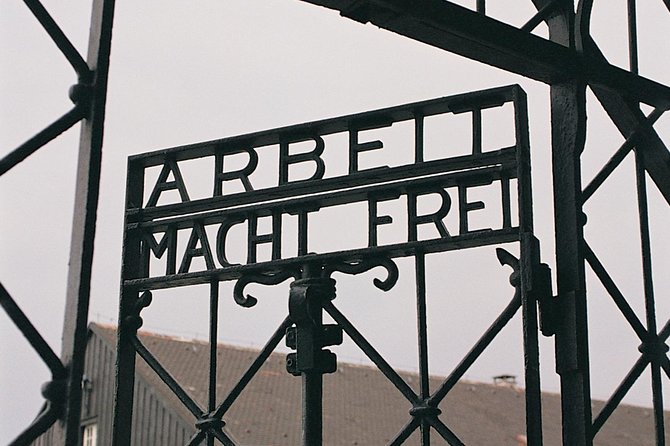
The guided visit lasts about two and a half to three hours. It includes the museum and the camp grounds, with photographs, documents, reconstructed cell blocks, the administration headquarters, and the crematorium. Reconstruction matters here. Much of what you see has been preserved, rebuilt, or presented through archival material rather than left exactly as it was in 1945.
That can surprise you. One person felt disappointed that several buildings were reconstructed or no longer existed, while another appreciated the way guides used historical photographs to show the difference between then and now. I think you should arrive with the right expectation: Dachau is a memorial and educational site, not an untouched camp frozen in time.
The guide’s role is especially important. A careful guide can explain what you are seeing without turning the place into a spectacle. The strongest feedback praised guides such as Jake, Ian, Scott, Nick, and Connie for presenting the subject with gravity while still keeping the group focused. Connie was also praised for using quotations from people who had been imprisoned there, adding personal voices to the documents and buildings.
You will hear about the camp’s administration, the people imprisoned there, and the Nazi figures connected with the site, including Heinrich Himmler, who founded the camp. The purpose is not to make the history feel distant or abstract. It is to show how ideology, government offices, guards, buildings, and paperwork combined to create a system of persecution.
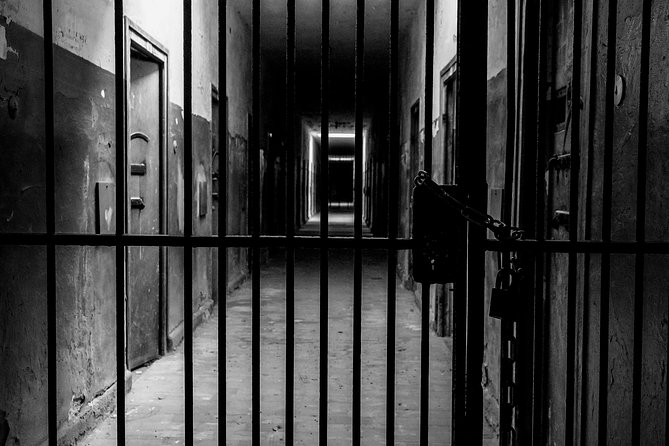
Expect the memorial portion to be emotionally difficult. Dachau is not a place for casual sightseeing, and the tour does not try to soften that fact. The respectful tone praised by many people is one of the experience’s strongest features.
At the same time, three hours is a compromise. It is enough for a structured introduction and a guided route through major areas, but it may not satisfy you if you want to read every exhibit at your own speed. If you prefer a quiet, self-directed visit, this format may feel rushed. If you want an informed route and help interpreting the site, the guide adds real value.
Other memorial sites open to visitors:
- Dachau Concentration Camp Memorial Site Tour from Munich by Train
★ 4.5 · 5,637 reviews - From Munich: Dachau Memorial Site Day Tour
★ 4.8 · 2,723 reviews - From Munich: Dachau Memorial Site Half-Day Trip
★ 4.7 · 2,526 reviews - From Munich: Dachau Memorial Site Full-Day Tour
★ 4.9 · 1,406 reviews
The break between the two tours
After returning to Munich, you have a short break before the city walking tour. The break is generally about an hour, giving you time to eat lunch at your own expense, use a restroom, and recover from the morning.
Food and drinks are not included. I recommend treating this pause as necessary rather than optional. The second half involves another long walk, and the day can run from 9 a.m. to approximately 6 p.m.
The separation between the tours is useful because it gives the day a natural pause. Still, do not expect a long rest. Several people described the combined experience as physically demanding, with few chances to sit outside the break.
Walking through Munich’s Third Reich sites
The Munich walking tour covers about two and a half hours in the old town. It focuses on the rise and fall of Adolf Hitler and the Third Reich, using buildings and public spaces to explain how Munich became important to the Nazi movement.
At Marienplatz and nearby streets, you see central Munich through a political lens. The guide connects familiar city landmarks with the events and people of the period, helping you understand how ordinary urban spaces became tied to radical politics.
The route includes the building where Hitler first joined the Nazi Party, the former Gestapo headquarters, and the site of the 1923 Beer Hall Putsch, also called the Munich Putsch. Königsplatz, the famous marching grounds of the Nazi Party, is another major stop and is listed as the ending point for the walk.
Some of these places are altered, reconstructed, or no longer physically present in their former form. Guides may use photographs to show what stood there before wartime destruction and postwar changes. That is a good reason to take the tour rather than simply walk between addresses with a guidebook. The meaning often lies in the contrast between the present-day street and the historic image.
The city section can be information-heavy. One person described it as almost too much instruction, while another felt the guide simply recited facts without enough energy. This variation is worth keeping in mind because the quality of the day depends partly on which guide leads each segment.
The most praised guides brought personality without making light of the subject. Jake, Ian, Steve, Sam, and Josh were singled out for strong explanations, engagement, and the ability to shift between serious material and a more approachable teaching style. A good guide can answer questions, add context, and help you follow a complicated political story without losing the thread.
Hearing can be a problem. City traffic, street noise, and echoes around Dachau sometimes make it difficult to catch every sentence. The company does not list audio headsets as part of the tour, so stay near the guide and ask for repetition when needed.
Walking, weather, and the physical effort
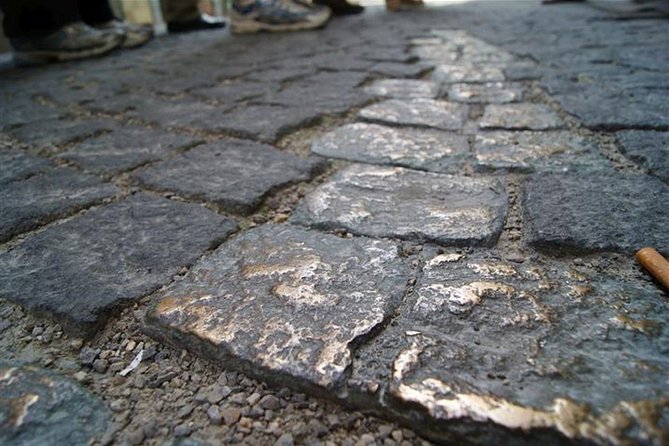
This is not a bus-based sightseeing day. You walk through Munich, walk around the memorial grounds, stand in exhibits and historic spaces, and use train and bus connections between the city and Dachau.
Most people can participate, but the day still calls for reasonable stamina. If you have knee, back, or mobility concerns, consider the combined length carefully. The group may need to keep moving, and one account noted that some people struggled to keep up during the city portion.
Comfortable shoes matter. So do water, layers, sun protection in warm weather, and a coat in colder months. There are bathroom breaks, and guides have been praised for looking after the group, but you should not count on frequent opportunities to sit.
Children under 13 cannot attend, and proof of age is required. That age rule makes sense given the subject matter and the intensity of the memorial visit.
Is $105.21 good value?
At $105.21 per person, the tour is not the cheapest way to see Dachau, but it covers a great deal. You receive a guided memorial visit, a two and a half hour Munich history walk, local transportation to and from Dachau, and the services of a local guide.
The value is strongest if you want structure. You do not need to work out the train and bus route, identify the key Nazi-era sites, or build a historical timeline yourself. The guide connects Munich’s political past to the camp, which is difficult to achieve with a casual city walk.
The value is weaker if you already have strong subject knowledge and prefer to study exhibits alone. You may want more time at Dachau, and the fixed schedule leaves little room for lingering. You are paying for interpretation and organization, not private transport or meals.
A maximum group size of 25 is reasonable for the price. It is not an intimate private tour, but it is small enough to remain manageable when the guide is attentive. The 93 percent recommendation rate and 4.7 rating from 570 reviews suggest that the format works well for most people, while the lower ratings point to the same recurring concerns: a long day, information overload, rushed moments, and occasional difficulty hearing.
How the guides shape the experience
The guide names that appear most often in strong feedback include Jake, Ian, Steve, Nick, Scott, Sam, Connie, Josh, and Achim. No specific guide can be guaranteed, but the pattern is useful: the company has several guides who bring serious preparation and a human tone to difficult material.
Jake received especially strong praise for the combined walking tour and Dachau visit. Ian was described as personable and engaging, while Steve was praised for making the history interesting. Scott was valued for presenting essential information in an educational and respectful way.
Connie’s handling of hot weather also shows what good guiding looks like in practice. She found shade and places to sit, rather than treating the schedule as more important than the people in the group. At Dachau, small acts of care matter.
The experience is not perfectly uniform. One city guide was described as less engaging, and one person felt their Dachau guide did not provide enough subject knowledge. You should book for the overall format and company, not on the assumption that a particular guide will lead your departure.
Who should book this full-day experience?
I would choose this tour if you want a serious introduction to Munich’s Nazi-era history and Dachau, especially if you have only a few days in the city. It suits adults and older teenagers aged 13 and above who are willing to spend a full day learning, walking, and thinking about painful history.
It is also a good fit if you appreciate a guide who can provide context and answer questions. The strongest guides help you understand not just what happened, but how the political movement developed and how the camp system operated.
I would choose separate visits instead if you want a slow, private pace. Dachau rewards time with the exhibits, and some people will prefer to read every document without keeping up with a group. You should also reconsider the combination if long walks, limited sitting, or public transport would make the day uncomfortable.
Cancellation and basic booking notes
You receive confirmation when booking, and free cancellation is available up to 24 hours before the 9 a.m. start time for a full refund. Changes or cancellations made inside that 24-hour window are not accepted for a refund, and the experience requires a minimum number of participants. If the company cancels because that minimum is not reached, you are offered another date or experience, or a full refund.
Should you book it?
Book this tour if you want the efficient, guided version of Munich’s WWII story, with Dachau placed at the center rather than treated as a quick side trip. The combination offers strong educational value, well-regarded guides, and a practical way to connect the city’s Nazi past with the camp memorial.
Skip it if you need lots of free time, dislike group pacing, or want a quiet self-guided visit. For everyone else, the $105.21 price is fair for a long and serious day that covers ground you would otherwise need to organize yourself. Go prepared for difficult material, sturdy shoes, and a full schedule, and you are likely to find the experience worthwhile.
FAQ
Where does the tour begin?
The tour begins at Radius Tours, Dachauer Str. 4, 80335 Munich, near München Hauptbahnhof. The start time is 9 a.m.
How long does the experience last?
The experience lasts approximately eight hours and 30 minutes. The full program generally runs from about 9 a.m. to around 6 p.m., including a break between the Dachau and Munich portions.
Is transportation to Dachau included?
Yes. The group travels by public train and city bus, and the transportation used during the tour is handled by the tour operator. Hotel pickup and drop-off are not included.
What does the Dachau portion include?
The visit includes a guided tour of the Dachau Concentration Camp Memorial Site, including the museum, photographs, documents, reconstructed cell blocks, crematorium, and administration headquarters.
Are children allowed to join?
The tour is open to visitors aged 13 and older. Children under 13 are not permitted, and proof of age is required.
What happens if I need to cancel?
You can cancel at least 24 hours before the local start time for a full refund. Cancellations or changes made less than 24 hours before the start are not accepted for a refund.
Just added around Munich
- Pub crawl incl. Oktoberfest museum guided tour with beer tasting (private)★ 5.0 · 5 reviews
- South Tyrolean specialties and wine tasting★ 5.0 · 5 reviews
- Size Matters Beer Tour Munich★ 4.6 · 105 reviews
- Short & sweet: Tasting the Viktualienmarkt★ 4.8 · 37 reviews
- Secret Food Tours Munich★ 4.8 · 5 reviews
- Munich: Romantic Wine Experience for Two at Viktualienmarkt★ 4.2 · 14 reviews
- Residence of Munich private tour with skip the line ticket★ 5.0 · 4 reviews
- Munich: Resistance against Hitler – Historical Walking Tour★ 5.0 · 5 reviews