
Reviewed · THIRD REICH HISTORY TOURS
Munich and Nazi History Combination Day Tour Small Group
History here is impossible to ignore. This eight-hour Munich tour links the Dachau Concentration Camp Memorial Site with the streets where Hitler and the Nazi Party first gained power. I like the combination of a licensed Dachau memorial guide and a small group capped at 15 people, which makes a serious subject easier to follow and discuss. I also like that transportation costs are covered and handled by the guide, rather than leaving you to work out Munich’s trains and buses alone.
The main consideration is the pace. You spend about three hours at Dachau, then return to central Munich for lunch before beginning a second walking tour at 3 p.m. That makes for an efficient day, but it is also a long and emotionally heavy one. Children under 14 are not permitted, and comfortable shoes are essential.
In This Review
- Key points to know before booking
- Why this tour adds meaning to Munich
- Meeting at Marienplatz at 9 a.m.
- The journey to Dachau
- Three hours at the Dachau Memorial Site
- Returning to Marienplatz for lunch
- Munich’s Nazi history begins at Marienplatz
- Hofbräuhaus and the city’s ordinary beauty
- Königsplatz and the Führerbau
- The guide and group size
- Is $109 a fair price?
- Who should choose this experience?
- Should you book the Munich and Nazi History Combination Tour?
- FAQ
- Where does the tour begin?
- How do I identify the guide?
- What time does the tour start?
- How long does the tour last?
- Is transportation included?
- How does the group reach Dachau?
- How much time is spent at Dachau?
- Is lunch included?
- Is the tour offered in English?
- Are children allowed to join?
- What should I wear?
- Can I bring luggage?
- Where does the tour finish?
- Can the itinerary change?
Key points to know before booking
- Dachau comes first: The morning focuses on the memorial site, its museum, and guided interpretation.
- Munich’s Nazi past comes into view: The afternoon connects Adolf Hitler and the Nazi Party to real places around the city.
- Public transport is part of the tour: Your guide handles the train and bus connections, with transportation included during the tour.
- Small groups matter: The maximum of 15 participants allows more room for questions and personal attention.
- The day has a useful break: You return to Marienplatz for about an hour to buy lunch before the Munich walking tour.
- Alun Evans leads the experience: He is praised for clear historical context, smooth transport planning, and thoughtful answers.
Why this tour adds meaning to Munich
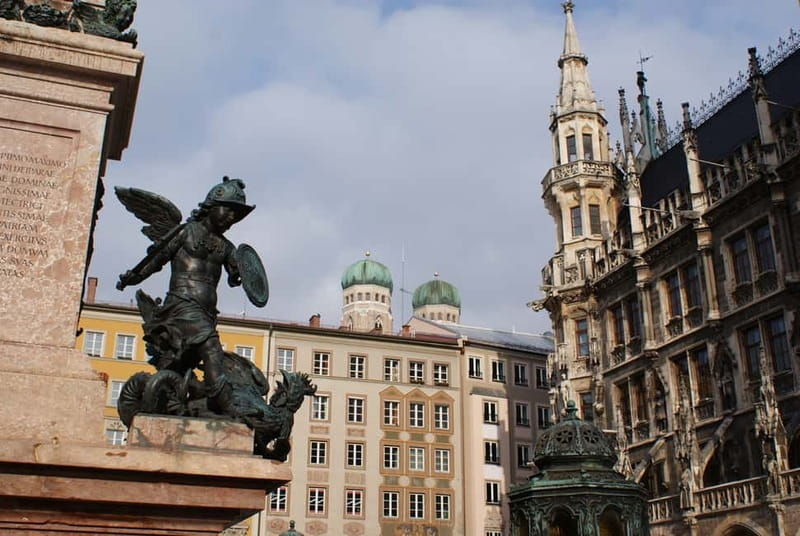
Munich can look like a postcard city of church towers, grand squares, beer halls, and elegant streets. Its connection to the Nazi period is not always obvious if you are exploring on your own. This tour helps you see how the city became an important center of the Nazi movement and how political decisions made in Munich affected German Jews and the wider world.
I appreciate the two-part design. Dachau gives you a direct encounter with the system of imprisonment and murder created by the Nazi regime. The afternoon in Munich then shifts attention to the political origins of that system, including the locations tied to Hitler’s rise and the Nazi Party’s public display of power.
That connection matters. You are not simply visiting a memorial in the morning and taking a general city walk later. The guide places both parts in the same story, helping you understand how ideology, organization, fear, and government power developed over time.
This is a history tour, not a sightseeing trip with a few dark anecdotes added for effect. The tone needs to be serious, respectful, and fact-based. The strongest part of the experience is the chance to ask questions as the day unfolds, rather than trying to absorb everything from signs and displays on your own.
More History Tours in Munich
- Munich: Guided Tour of the historic Town Hall on Marienplatz
★ 4.8 · 63 reviews - Munich Craft Beer & Cultural Tour With Snack
★ 5.0 · 46 reviews - Munich History Tour: Private & Personalized with a Local Guide
★ 4.5 · 33 reviews
Meeting at Marienplatz at 9 a.m.
The tour begins at Marienplatz, in front of the central Tourist Information Center. Look for a guide holding a placard marked Dachau Memorial Tour.
This is a practical meeting point. Marienplatz is easy to find in central Munich, and it gives you a simple place to begin the day before heading out to Dachau. You should arrive ready for public transportation and plenty of walking. Large bags and luggage are not allowed, so bring only what you need for the day.
The guide accompanies you from the start. That is useful because the morning includes train and bus travel, and the group needs to move together. Several people who took this tour particularly valued the guide’s ability to navigate crowded public transport without wasting time. For you, that means less attention spent on ticket machines, connections, and directions, and more attention on the history.
Transportation during the tour is included in the price. Hotel pickup is not included, and transport costs outside the tour period are your responsibility.
The journey to Dachau
The trip to Dachau takes about 45 minutes. Public transport may sound less polished than a private coach, but it fits the subject. You are moving through the same modern transport network used by people living and working around Munich today, while the guide explains the historical setting.
The journey also gives the guide time to introduce the memorial site and answer early questions. That preparation is important. Dachau is not a place you should approach casually, and a clear introduction can help you understand what you are seeing once you arrive.
The practical advantage is simple: you do not need to plan the route yourself. The guide manages the transportation for the duration of the tour, which several participants found especially helpful.
Three hours at the Dachau Memorial Site
The morning’s main visit lasts about three hours. Dachau was the first regular concentration camp established by the Nazi regime, and its memorial site now serves as a place of remembrance, education, and reflection.
The tour provides a guided visit to the grounds, followed by time for you to explore the museum exhibit independently. An hour in the museum is described as part of the visit, although the exact timing can depend on the guide and current conditions at the memorial.
That independent time is valuable. A guide can explain the structure and significance of the site, but a museum also requires quiet attention. You can read at your own pace, pause over material that matters to you, and decide where you need more time.
The guide encourages questions and discussion. That is one of the strongest reasons to choose a guided visit instead of going alone. The subject includes political history, personal suffering, military events, and the machinery of persecution. A good guide can separate fact from assumption and explain how individual places fit into the larger story.
Alun Evans, the guide named for this experience, is repeatedly praised for his grasp of World War II history and his ability to provide context without losing the group in unnecessary detail. He is also described as friendly, patient, and easy to question. That balance matters at Dachau. You need solid information, but you also need a guide who understands the emotional weight of the site.
Expect the visit to be confronting. The memorial is not designed to entertain, and the experience should not be judged by the usual sightseeing standards. Its value comes from learning, remembrance, and a more direct understanding of what happened.
Current regulations at the memorial may change the way the visit is conducted. In some circumstances, historical information may be given away from certain areas, with extra independent time on the grounds. The itinerary can therefore vary.
More Third Reich History Tours in Munich
- Munich: Third Reich & WWII Walking Tour
★ 4.6 · 6,181 reviews - Third Reich Walking Tour Munich
★ 4.5 · 4,291 reviews - Munich: Birthplace of the Third Reich Guided Walking Tour
★ 4.6 · 771 reviews - Munich World War II Sites Including Dachau Concentration Camp
★ 4.5 · 570 reviews
Returning to Marienplatz for lunch
After Dachau, you return to Marienplatz by public transport. The return journey is listed at about 45 minutes, followed by a one-hour lunch break.
Meals and drinks are not included. Your guide can suggest places to eat, which is useful because the pause is limited. You should treat this as a proper break rather than a leisurely restaurant outing. Buy something practical, drink water, and be ready to start the second part at 3 p.m.
The split schedule is one of the tour’s most sensible features. Dachau deserves concentration, and Munich’s city walk requires a different kind of attention. Returning to the center gives you time to reset before moving into the afternoon portion.
Still, be honest with yourself about the length of the day. After a serious morning at the memorial, you may feel mentally tired. The lunch break helps, but it does not turn the afternoon into a light sightseeing walk.
Munich’s Nazi history begins at Marienplatz
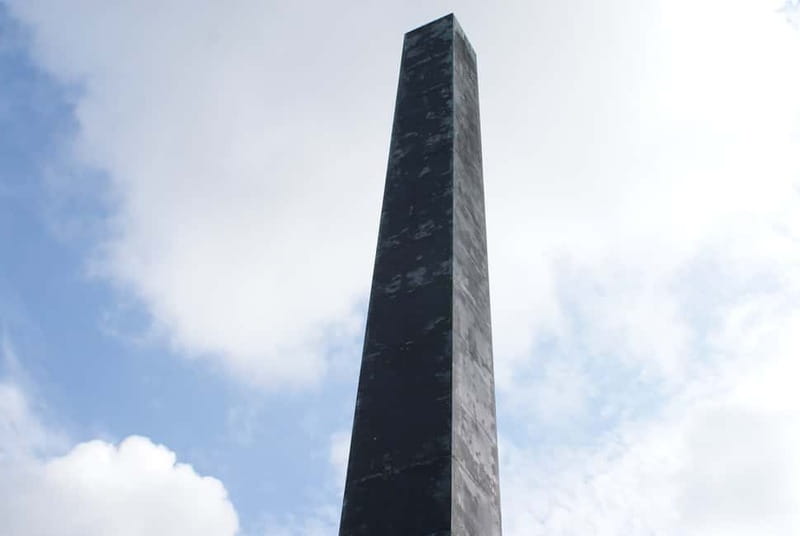
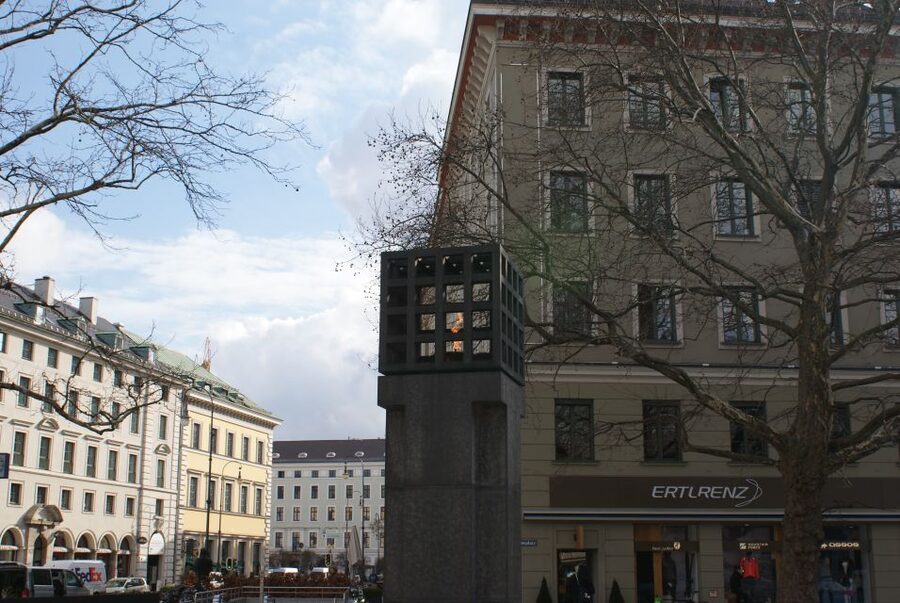
The afternoon starts again at Marienplatz with a guided walk through central Munich. This is where the tour makes an important connection between familiar city sights and less visible parts of the past.
You visit the location where Hitler joined the German Workers Party. The stop helps place his political beginnings in a real Munich setting rather than treating his rise as something that happened somewhere far away from ordinary city life.
The walk also examines the location where a pogrom against German Jews was decided in November 1938. That is a serious and difficult part of the tour, and the guide’s role is to explain the event with historical accuracy and context.
Another stop concerns the signing of the Munich Agreement in 1938. The location offers a way to connect local Munich history with the wider political crisis of prewar Europe.
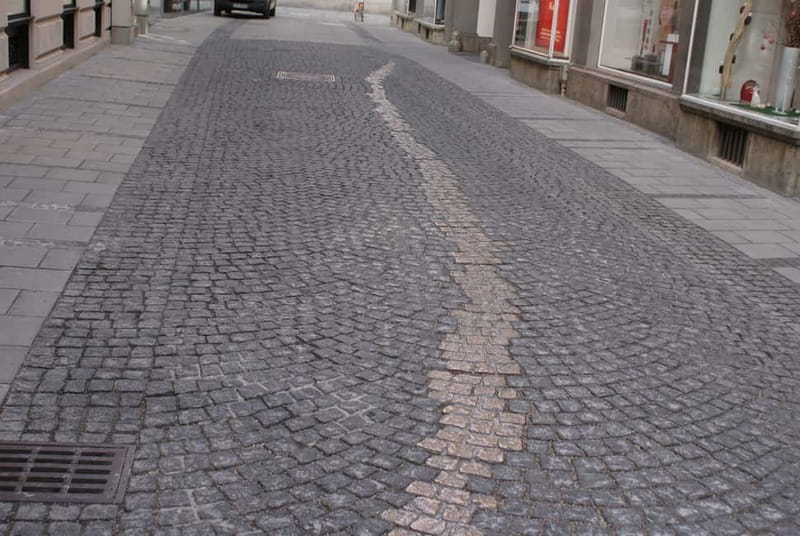
These are not grand ruins or dramatic monuments. Often, the challenge of this kind of tour is that the places look ordinary. A guide gives them meaning without suggesting that the streets themselves can tell the whole story. You learn to look past the attractive city center and recognize the decisions and events associated with it.
Hofbräuhaus and the city’s ordinary beauty
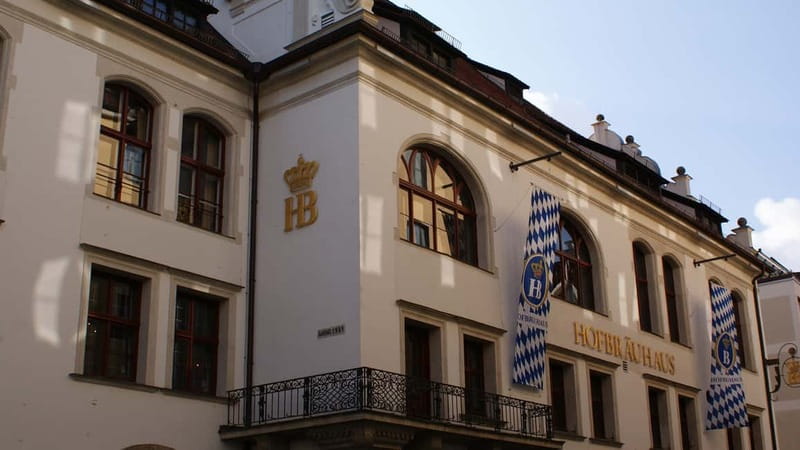
The afternoon is not only a sequence of Nazi-era locations. You also see parts of Munich that make the city appealing to visitors, including the oldest parish church in Munich, one of the city’s quaintest beer gardens, and the famous Hofbräuhaus.
Hofbräuhaus is included as a short guided stop of about 10 minutes. It is a useful reminder that Munich’s beer culture and political history have sometimes occupied the same public spaces. You should not expect a long meal or a full beer-hall visit during the tour. The stop is brief and intended to provide historical and cultural context.
The inclusion of more familiar sights gives the walk a better rhythm. You are not moving from one grim political site to another without pause. At the same time, the tour does not allow the beer hall or pretty streets to soften the central subject too much.
The oldest parish church and beer garden stops add local character, but they are supporting details rather than the main reason to book. If you want a broad Munich city tour covering art, palaces, shopping, and food, this is not the right choice. Its focus remains the Nazi period.
Königsplatz and the Führerbau
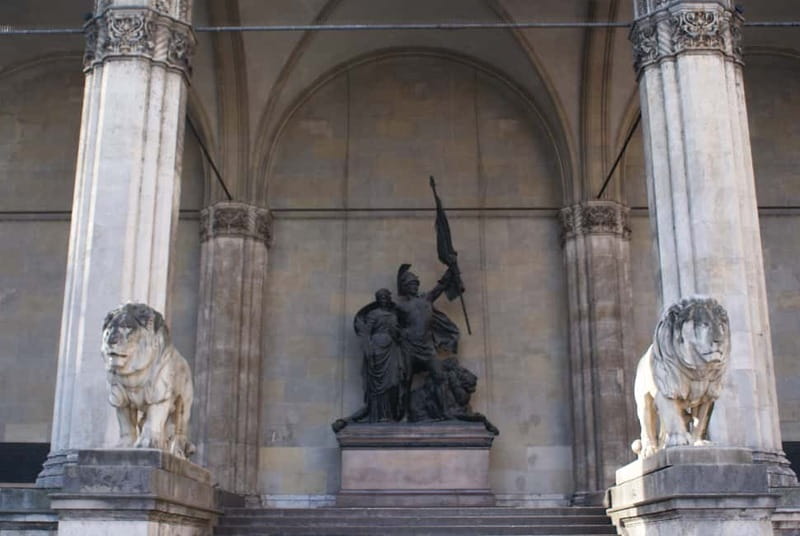
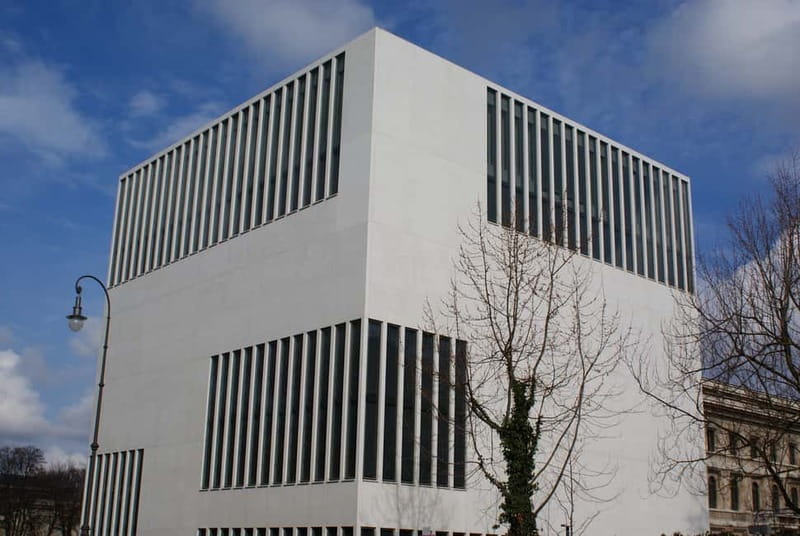
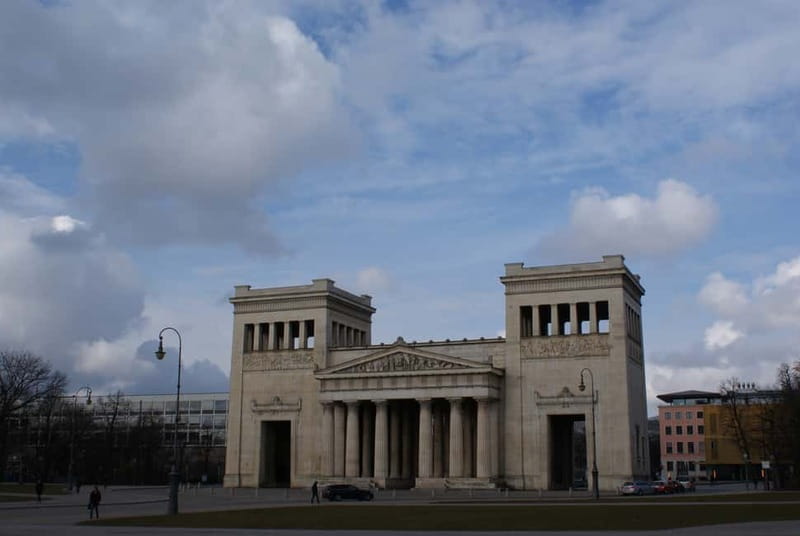
The walk ends at Königsplatz, a square used by the Nazis for rallies. Here you see the location of the former Führerbau and the new Documentation Center of National Socialism.
Königsplatz is especially important because it shows how public space can be used for political theater. Large rallies, imposing architecture, and carefully staged ceremonies helped the Nazi regime project authority. The guide explains how the place functioned within that system.
The Führerbau is connected to the Munich Agreement and Nazi leadership. Seeing the location after learning about the morning’s broader history gives the day a clear endpoint. You begin with the concentration camp system and finish by examining the political spaces where power was displayed and decisions were made.
The tour ends at Königsplatz, with the option of returning to Marienplatz by train with your guide. You can also continue with your own plans. The guide is available to offer directions and restaurant suggestions, which is a handy final touch if you are still deciding what to do that evening.
The guide and group size
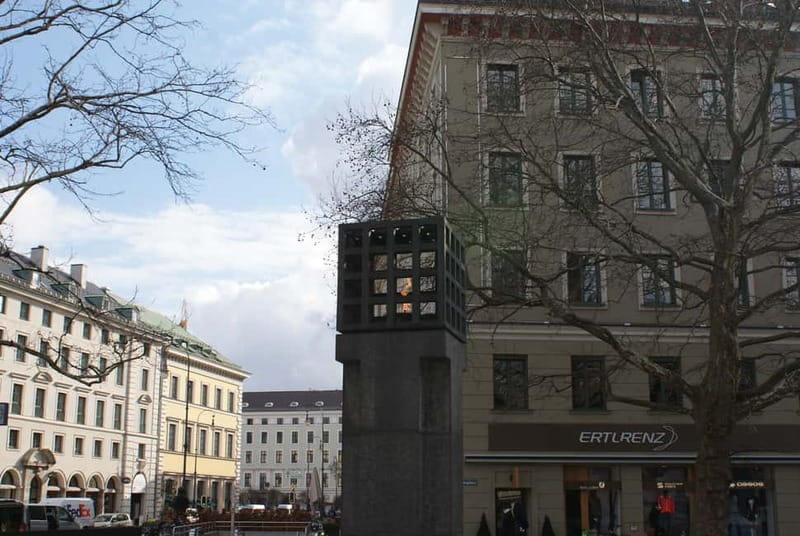
The guide is central to the quality of this experience. Alun Evans is praised for explaining complex history clearly, answering difficult questions, and keeping the day organized. His background as a history major is also noted, along with his ability to provide detail while remaining concise.
The transport work is not a minor matter. Moving a group through Munich’s trains and buses takes attention, especially when stations are crowded or the schedule is tight. A small group of 11 to 13 people has been reported on some departures, within the advertised maximum of 15.
That size gives you a better chance to hear the guide and ask questions. It also makes it easier for the group to stay together on public transport. The phrase like a private tour should not be taken literally, since you are sharing the experience with other participants, but the group is small enough to feel personal.
The tour is offered in English with a live English-speaking guide. If you need another language, this experience does not list one.
Is $109 a fair price?
At $109 per person, this is not the cheapest way to see Dachau and Munich. The value depends on how much structure and explanation you want.
The price includes the guide’s services and transportation costs during the tour. You are paying for a full eight-hour day, a licensed memorial guide, route planning, the Dachau visit, and a focused Munich history walk. Meals, drinks, hotel pickup, and transport outside the tour are not included.
For an independent visitor, the public transport route to Dachau is possible to arrange. You could also walk through Munich’s Nazi-related sites without a guide. But doing both parts well requires research, timing, and a clear understanding of what you are looking at.
I think the price is reasonable if your main goal is historical understanding and you want someone else to manage the day. It is less compelling if you prefer to move slowly, spend much longer in the museum, or choose your own stops.
Free cancellation is available up to 24 hours before the tour, and you can reserve while paying later. Those terms give you some flexibility, but they do not change the need to check the starting time when booking.
Who should choose this experience?
I would recommend this tour to adults and teenagers aged 14 or older who want a serious introduction to Munich’s Nazi history. It suits first-time visitors who have limited time and want to combine Dachau with the city sites in one organized day.
It is also a good match if public transport in Munich feels unfamiliar. The guide handles the practical details, and the small group keeps the day manageable.
You may want another option if you dislike fixed schedules or prefer long periods alone at museums. The Dachau visit is guided, but the independent museum time is limited compared with what you might choose on a full-day solo visit.
Wear comfortable walking shoes and dress for the weather. Do not bring luggage or large bags. Most of all, allow yourself some quiet time after the tour. The subject is demanding, and the day deserves more than a quick transition into nightlife.
Should you book the Munich and Nazi History Combination Tour?
Book it if you want one focused day that links Dachau with Munich’s Nazi-era locations, especially if you value a guide who can handle public transport and explain difficult history in clear English.
Alun Evans appears to be the major strength. His careful organization, historical detail, and willingness to answer questions suit the subject well. The small group and included transport add practical value.
Skip it if you want a relaxed city tour, a family activity for young children, or unlimited time at Dachau’s museum. For the right audience, though, this is an efficient and serious way to understand a part of Munich’s past that is easy to miss while admiring the city’s beautiful center.
FAQ
Where does the tour begin?
It begins at Marienplatz in central Munich, in front of the Tourist Information Center.
How do I identify the guide?
The guide will be holding a placard marked Dachau Memorial Tour.
What time does the tour start?
The described schedule begins at 9 a.m. You should check availability for the current starting time.
How long does the tour last?
The experience lasts approximately eight hours.
Is transportation included?
Transportation costs during the tour are included. Hotel pickup and transport outside the tour duration are not included.
How does the group reach Dachau?
The group uses Munich’s public transportation system. The journey to Dachau takes about 45 minutes, and the guide accompanies the group.
How much time is spent at Dachau?
The guided visit at Dachau lasts about three hours. You are also given time to explore the museum exhibit independently.
Is lunch included?
No. You return to Marienplatz for about one hour to buy lunch, and the guide can suggest places to eat.
Is the tour offered in English?
Yes. The tour has a live English-speaking guide.
Are children allowed to join?
Children under 14 are not permitted on the tour.
What should I wear?
Comfortable walking shoes are recommended, and you should dress appropriately for the weather.
Can I bring luggage?
No. Luggage and large bags are not allowed.
Where does the tour finish?
The main tour finishes at Königsplatz. You can either return to Marienplatz by train with the guide or continue with your own plans.
Can the itinerary change?
Yes. The itinerary may change because of current regulations at the Dachau memorial. Historical information may sometimes be presented offsite, with extra independent time on the grounds.
Just added around Munich
- Pub crawl incl. Oktoberfest museum guided tour with beer tasting (private)★ 5.0 · 5 reviews
- South Tyrolean specialties and wine tasting★ 5.0 · 5 reviews
- Size Matters Beer Tour Munich★ 4.6 · 105 reviews
- Short & sweet: Tasting the Viktualienmarkt★ 4.8 · 37 reviews
- Secret Food Tours Munich★ 4.8 · 5 reviews
- Munich: Romantic Wine Experience for Two at Viktualienmarkt★ 4.2 · 14 reviews
- Residence of Munich private tour with skip the line ticket★ 5.0 · 4 reviews
- Munich: Resistance against Hitler – Historical Walking Tour★ 5.0 · 5 reviews