
Reviewed · GERMANY
Munich: Places of Luck in Munich
Munich hides luck in plain sight. This 105-minute walk links sacred sites, royal symbols, miracle stories, and local rituals between Marienplatz and Odeonsplatz, giving you a playful way to see the old center. I like its unusual theme and the way it turns familiar sights into places with a little mystery.
I also like the central walking route and the lively guides, especially Patrizia and Uwe, who are praised for warmth, passion, and memorable storytelling. The main drawback is clear: the tour is only in German, so you will need strong German skills to follow the legends and explanations.
In This Review
- Key points to know before booking
- Starting beneath Munich’s Old Town Hall
- Holy Spirit Church and Munich’s miracle stories
- Marienplatz and rituals for luck
- The patron saint of lovers
- From Frauenkirche toward Max-Joseph-Platz
- Munich Residence and the four magical lions
- Why the guides matter so much
- What $26 gets you
- Who will enjoy this Munich walk
- Is Places of Luck in Munich worth booking?
- FAQ
- Where does the tour start?
- How long does the tour last?
- What language is the tour in?
- What places does the tour visit?
- Does the tour focus on Munich’s churches?
- What kinds of rituals are discussed?
- Is the tour wheelchair accessible?
- Can I cancel the booking for a refund?
Key points to know before booking
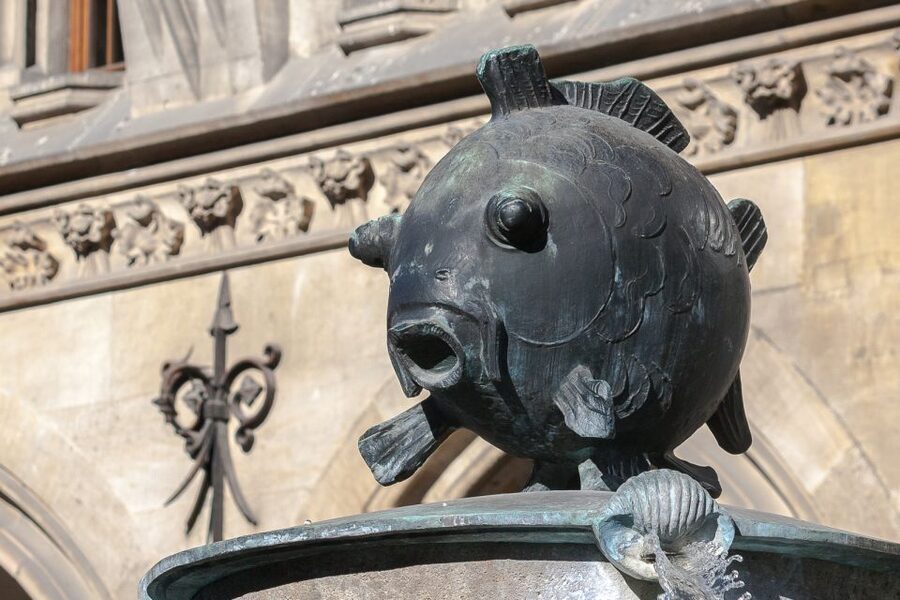
- Holy Spirit Church brings the spiritual side of the tour to life, with miracle Madonnas, saints, and stories of healing.
- Marienplatz becomes a map of good fortune, with rituals connected to love, health, wealth, and luck.
- The route runs from the Old Town Hall to the Residence, covering Munich’s pedestrian center on foot.
- The four lions at the Residence have a special role, including the familiar nose-rubbing ritual.
- Local guides make the experience personal, with Patrizia and Uwe receiving especially warm praise for their storytelling.
- The tour costs $26 per person, a fair price if you enjoy folklore, city legends, and lesser-known details more than a standard monument tour.
Starting beneath Munich’s Old Town Hall
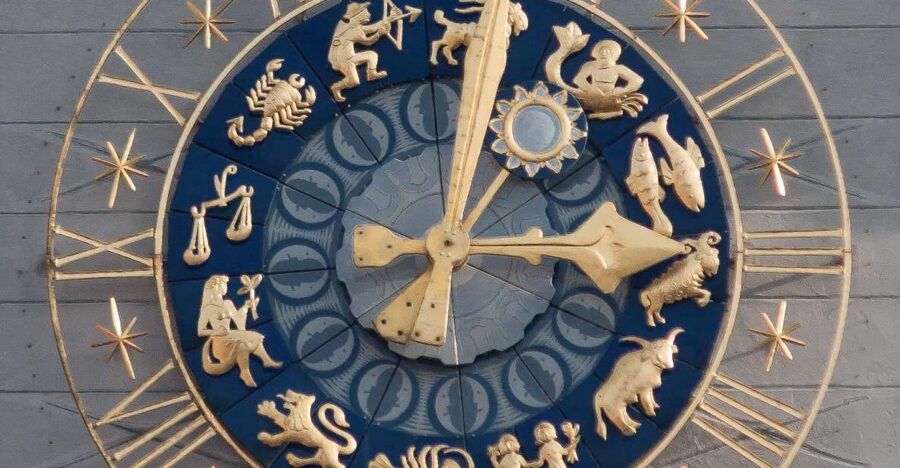
The tour begins at Marienplatz 15, in front of the entrance to the Toy Museum, beneath the Old Town Hall between Marienplatz and Tal. This is a practical meeting point in the middle of Munich’s old center, though Marienplatz can be busy and crowded, so give yourself a few minutes to find the exact spot.
From here, you move through the pedestrian zone toward Odeonsplatz. The route is compact and does not require public transport. That matters because the city’s old center is best understood on foot, where a church doorway, statue, fountain, or royal emblem can appear within a few steps of the main square.
This is not a standard Munich highlights tour. You will not simply hear dates and architectural labels. Instead, the guide connects places with ideas people have carried for centuries: protection, healing, love, money, royal virtue, and luck.
I find that approach useful early in a trip. You see the city’s famous center, but you also get a reason to look more closely at details you might otherwise pass without noticing.
Other ways to spend a day in Germany:
- Berlin: Reichstag, Dome and Government District Guided Tour
★ 4.7 · 18,288 reviews - Berlin: 1-Hour City Tour by Boat with Guaranteed Seating
★ 4.3 · 16,993 reviews - Hamburg: Sex and Crime in St. Pauli Tour for Ages 18+
★ 4.7 · 15,447 reviews
Holy Spirit Church and Munich’s miracle stories
One of the first major stops is the Church of the Holy Spirit, or Heilig-Geist-Kirche, one of the oldest churches in Munich’s inner city. The tour focuses on its miracle Madonnas and the sacred atmosphere associated with healing and wellbeing.
The church gives the experience its strongest spiritual layer. You hear legends connected with famous saints and learn why particular figures became objects of devotion. The emphasis is not simply on art or architecture. It is on the hopes people brought into the church and the rituals that grew around those hopes.
You should expect storytelling rather than a formal religious service or a detailed art-history lecture. The guide helps you see the church as a place where belief, local custom, and personal wishes overlap.
That makes this stop especially appealing if you like the human side of history. A painting or statue becomes more than decoration when you learn what people asked of it. The tour also keeps the tone light, moving from sacred stories to more everyday wishes for money, romance, and good health.
The church may be the most meaningful stop for some people, but it can be less satisfying if you want a detailed explanation of Munich’s church architecture. The advertised focus is on saints, legends, and healing powers, not a full survey of construction dates or artistic styles.
Marienplatz and rituals for luck
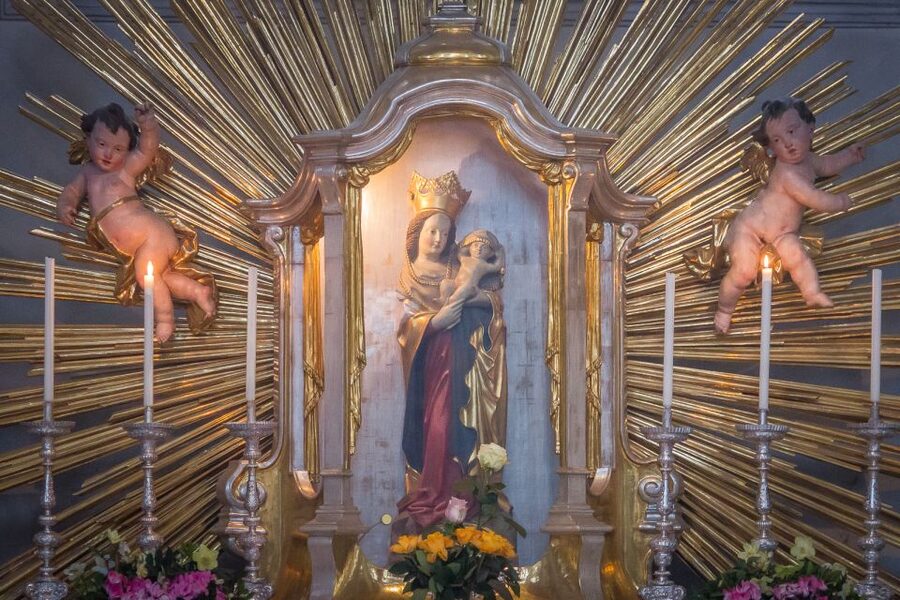
The area around Marienplatz is familiar to almost everyone who visits Munich. The clever part of this tour is that it gives you a different way to read the square.
Here, the guide introduces local rituals linked to wealth, health, love, and luck. You learn which places have symbolic power and what people traditionally do to benefit from it. The experience encourages you to take part in harmless customs rather than simply watch the city pass by.
The details matter. A ritual can be a quick gesture, a touch, or a visit to a particular figure, but the supplied information does not give a fixed list of every action. You should expect the guide to explain the traditions during the walk rather than receive a formal printed rulebook.
This is also where the tour’s humor comes through. Munich’s old center can feel grand and official, with monumental buildings and royal connections. The luck theme brings the city down to earth. You are not only looking at power and religion. You are asking the same simple questions people have asked for generations: How can I stay healthy? How can I find love? How can I keep my purse full?
I like this part because it gives you small details to remember after the tour. You may not recall every date from a conventional city walk, but you are more likely to remember where Munich’s traditions connect with good fortune.
The patron saint of lovers
The route also takes you to the resting place of the patron saint of lovers. The focus here is on love and the ways people can benefit from her powers.
The information provided does not identify the saint by name, so you should not book this expecting a precise biographical lecture about one named figure. Instead, the appeal is the local tradition itself: a sacred place tied to romance, devotion, and personal wishes.
This stop adds variety to the walk. After hearing about healing and general good fortune, you get a more specific theme. It also shows how different needs found a home in Munich’s religious spaces. Health, love, and prosperity each have their own stories and symbols.
For couples, this may be one of the most entertaining parts of the experience. Solo visitors can enjoy it just as easily, since the guide presents the story as part of Munich’s customs rather than as a serious matchmaking exercise.
Still Germany, at a slower pace:
- Hamburg: 1.5-Hour Harbor and Speicherstadt Day Cruise
★ 4.6 · 14,200 reviews - From Munich: Neuschwanstein & Linderhof Castle Full-Day Trip
★ 4.5 · 12,494 reviews - Dresden: Semperoper Tickets and Guided Tour
★ 4.7 · 12,102 reviews - Berlin: Boat Tour Along the River Spree
★ 4.4 · 11,252 reviews
From Frauenkirche toward Max-Joseph-Platz
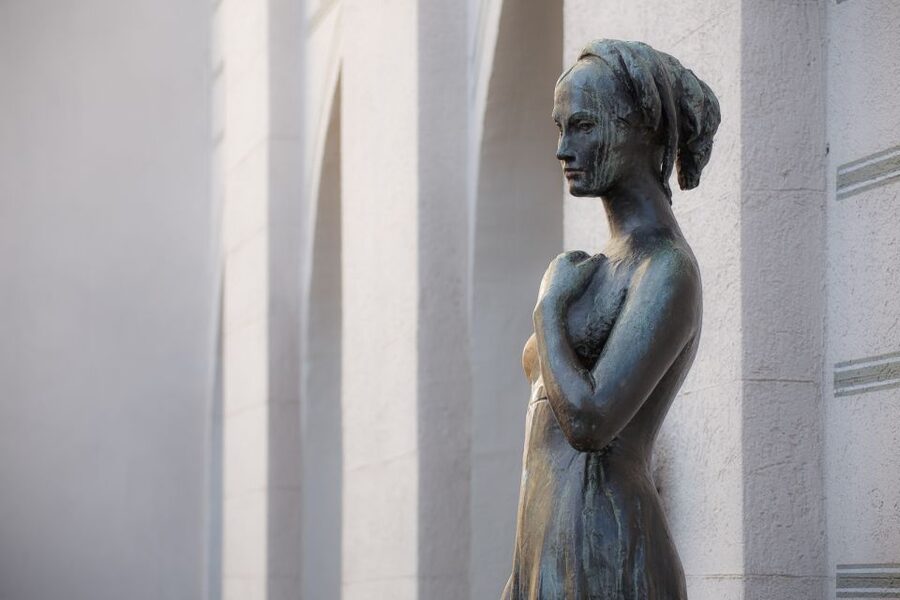
The tour continues through the area between Frauenkirche, the Residence, and Marienplatz. Frauenkirche is one of Munich’s most recognizable landmarks, and the route uses this central setting to point out secret places, characters, and traditions.
The supplied details do not promise a full interior tour of Frauenkirche, nor do they list a separate architectural talk there. Think of the church as part of a wider trail of meaningful locations. The guide’s job is to connect these places, not to give every major building equal time.
You then reach Max-Joseph-Platz, a broad square near the Munich Residence. This change in setting is useful. The earlier portion of the tour centers on churches, saints, and personal hopes. Around Max-Joseph-Platz, the focus turns toward royal virtues and the symbols of power.
The route works best for people who enjoy connections between different parts of a city. Munich’s sacred and royal worlds are close together, and the walk shows how both used symbols to express ideals such as health, prosperity, duty, and strength.
Munich Residence and the four magical lions
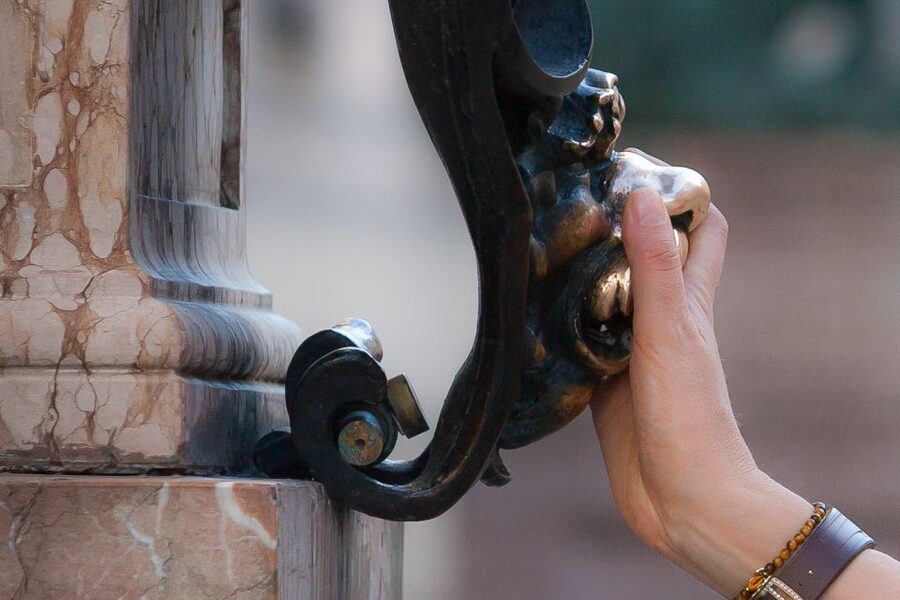
The Munich Residence provides the tour’s royal finish. Close to Odeonsplatz, this former royal complex introduces the idea of royal virtues and the stories attached to the building.
The most distinctive detail is the group of four magical lions. You learn what lies behind them and what really happens when you rub their noses. Nose rubbing is a familiar travel ritual, but this tour gives it a local explanation and places it within Munich’s royal setting.
This is a good example of the experience’s overall method. It takes something you might treat as a quick photo stop and asks why the custom exists. The answer may be playful, symbolic, or rooted in old belief, but the guide gives the action a story.
The Residence also brings a sense of contrast. Churches and saints represent spiritual protection. The royal buildings represent authority, character, and public ideals. The tour links both worlds through the common wish for a better life.
The itinerary lists sightseeing at the Residence rather than a long museum visit. You should therefore expect the guide to focus on the relevant places and stories along the route. If you want to spend hours examining palace rooms and collections, you will need separate time for that.
Why the guides matter so much
This experience depends heavily on the person leading it. The subject is unusual, and the tour needs a guide who can explain legends without making them feel flat or overly solemn.
Patrizia receives especially strong praise for her lively and authentic delivery. One description says the stories stayed memorable because of her way of telling them, and another singles out her lively stories. Those comments point to the tour’s main strength: personality.
Uwe is also praised as a great guide on a fascinating walk. Other feedback describes the guide as warm, passionate, and able to explain small local details in an engaging way. That is important here because the tour does not rest on grand views or major museum collections. The stories and the guide carry much of the value.
Guide assignments can change, so you should not assume Patrizia or Uwe will lead every departure. Still, the repeated praise for the guiding style gives you a useful picture of what the experience aims to offer: a personal, story-led walk with plenty of local color.
What $26 gets you
At $26 per person, the price is reasonable for a 1.75-hour guided walk in central Munich. You receive a live German-speaking guide and a small gift, while the main value comes from the stories, interpretations, and access to local customs.
This is not the right comparison with a ticketed palace tour or a museum visit. You are paying for a themed city walk, not a long indoor attraction. The price makes more sense if you enjoy having someone point out details you would likely miss on your own.
The small gift is a pleasant extra, though it should not be the reason you book. The real question is whether the luck and legend theme suits you. If you want a conventional overview of Munich’s history, another city tour may serve you better. If you already know the major sights, this walk offers a fresh angle for a modest cost.
The free cancellation option up to 24 hours before the start and the reserve-now, pay-later choice also make it easier to fit into a changing schedule. The tour lasts 105 minutes, so it can work well before lunch, after a museum visit, or as an early introduction to the old center.
Who will enjoy this Munich walk
I would recommend it most to you if you like folklore, local rituals, religious stories, and unusual details about well-known places. It is also a good choice for repeat visitors who have already seen Marienplatz, Frauenkirche, and the Residence but want to understand them in a less standard way.
Couples may enjoy the love-related stories, families with older children may like the magical lions and luck rituals, and curious Munich residents can still pick up small local details. One piece of feedback specifically says the tour worked even for genuine Munich locals, which suggests the content goes beyond the most basic sightseeing facts.
You should be comfortable walking through the city center for 105 minutes. The tour is listed as wheelchair accessible, which is useful, but the route includes churches, squares, and pedestrian streets, so you may still want to confirm current access details when booking if you have specific mobility needs.
The biggest filter is language. This tour is conducted only in German. You need enough German to follow spoken stories, jokes, explanations, and instructions connected with the rituals. If you understand only a little German, you may appreciate the locations but miss the heart of the experience.
Is Places of Luck in Munich worth booking?
Book this tour if you want Munich told through saints, symbols, royal lions, and everyday wishes rather than through a standard list of monuments. The guide’s warmth and storytelling are central, and the $26 price is fair for a focused 105-minute walk in the old center.
Skip it if you need English, want a detailed architectural tour, or prefer a large museum-style presentation. For German speakers who enjoy legends and local customs, this is an entertaining way to revisit Munich’s best-known squares and churches with fresh eyes.
FAQ
Where does the tour start?
It starts at Marienplatz 15, in front of the entrance to the Toy Museum, under the Old Town Hall between Marienplatz and Tal.
How long does the tour last?
The tour lasts 105 minutes, or 1.75 hours.
What language is the tour in?
The tour is conducted only in German with a live local guide.
What places does the tour visit?
The route includes Marienplatz, the Church of the Holy Spirit, areas near Frauenkirche, Max-Joseph-Platz, and the Munich Residence near Odeonsplatz.
Does the tour focus on Munich’s churches?
Yes. It includes stories about famous saints, the oldest churches in Munich’s inner city, miracle Madonnas at the Church of the Holy Spirit, and sacred places linked with healing.
What kinds of rituals are discussed?
The tour covers local rituals connected with love, prosperity, health, wealth, and luck. It also explains the meaning of rubbing the noses of the four lions at the Residence.
Is the tour wheelchair accessible?
Yes, the activity is listed as wheelchair accessible.
Can I cancel the booking for a refund?
Yes. You can cancel up to 24 hours in advance for a full refund. You can also reserve now and pay later.
Just added around Germany
- Private Walking Tour in Berlin: Hitler’s Germany & WWII★ 5.0 · 7 reviews
- The History of Berlin: WWII PRIVATE Walking Tour With Locals★ 5.0 · 209 reviews
- Private Berlin WWII and Cold War History Tour with Local Expert Guide★ 5.0 · 28 reviews
- Private Walking Tour Berlin 3 hours: Brandenburg, Historic Center★ 5.0 · 7 reviews
- Berlin: Private Bike Tour of the Berlin Wall and Third Reich★ 5.0 · 23 reviews
- Berlin: Guided Private Bike Tour to Explore the Highlights★ 5.0 · 12 reviews
- Berlin Photography Masterclass – Private Photography Lesson★ 4.5 · 23 reviews
- Group Driving Tour 1 to 6 people. Berlin Shore Excursion incl pick-up at Port★ 5.0 · 8 reviews