
Reviewed · COLD WAR TOURS
Private Berlin WWII and Cold War History Tour with Local Expert Guide
Berlin’s past is written into its pavements. This private four-hour walk links Nazi-era sites, Cold War border points, grand landmarks, and quieter corners of Mitte with a local guide who can adjust the route to your interests. I especially like the combination of major sights and lesser-known places such as the Missing House and Heckmann Höfe. The included currywurst also adds a welcome taste of everyday Berlin.
I also like the personal format. You walk only with your own group, so you can ask questions, slow down, or shift attention toward World War II, Jewish Berlin, the Cold War, architecture, or modern city life. The main drawback is simple: this is a long walking tour, and the ambitious route can feel tiring in cold weather or for anyone with limited mobility.
In This Review
- Key points to know before booking
- Why this private Berlin tour works well
- Starting at Oranienburger Strasse
- The Palace of Tears and the human cost of division
- Reichstag and Brandenburg Gate: Berlin’s grand public face
- The Holocaust Memorial and the Führerbunker site
- Currywurst on Wilhelmstrasse
- Checkpoint Charlie and the Cold War story
- Bebelplatz and the Nazi book burning
- Museum Island and the city’s cultural center
- The Missing House and Heckmann Höfe
- How much walking should you expect?
- Is $129 per person a fair price?
- Who should book this Berlin walking experience?
- FAQ
- How long is the Berlin WWII and Cold War tour?
- Where does the tour begin and end?
- Is the tour private?
- Is currywurst included?
- Does the price include museum admission?
- What happens if I need to cancel?
- Should you book it?
Key points to know before booking
- The route connects Berlin’s biggest symbols: Brandenburg Gate, the Reichstag, the Holocaust Memorial, Checkpoint Charlie, and Museum Island all fit into one introduction.
- You get a private guide, not a fixed group script: Guides such as Dimitri, Eleni, Lucian, Simon, Despina, and Peter have been praised for adapting the pace and subject matter.
- The currywurst is included: It is a small but useful pause during a history-heavy morning or afternoon.
- Expect substantial walking: The planned route covers a wide section of central Berlin, and some outings have lasted five hours or more.
- Most sights are viewed from outside: The price includes the private guide and snack, but it is not designed as a museum admission tour.
- The meeting point is central: You begin at Oranienburger Strasse 28 to 30 and finish back at the same point.
Why this private Berlin tour works well
Berlin can be confusing at first. Its important sights are spread across a large central area, and the city’s story does not unfold in a neat line. A grand royal square may sit a few minutes from a Nazi memorial, while a former border crossing appears beside shops and restaurants.
This tour gives you a framework. You move through Berlin’s Nazi past, the destruction of World War II, the division between East and West, and the city’s present-day renewal. I like this approach because the guide can explain how the periods connect instead of treating each monument as a separate photo stop.
The private format matters most here. On a standard group tour, four hours can feel rushed because everyone must follow the same pace. With your own guide, you can ask for more detail at the Führerbunker site, spend longer at the Holocaust Memorial, or move along more quickly when you have seen enough architecture.
Guides named in the feedback include Dimitri, Eleni, Lucian, Simon, Despina, Peter, and Demetrios. Their reported strengths are similar: clear explanations, patience, personal stories, and a willingness to reshape the day. If requesting a guide is possible when you book, Dimitri, Eleni, or Lucian received especially strong praise for making the tour both informative and personal.
More History Tours in Berlin
- Berlin: Natural History Museum Entrance Ticket
★ 4.6 · 3,382 reviews - Berlin: World Heritage Cruise to Potsdam
★ 4.5 · 1,435 reviews - Berlin Historical Highlights Walking Tour
★ 4.9 · 657 reviews
Starting at Oranienburger Strasse
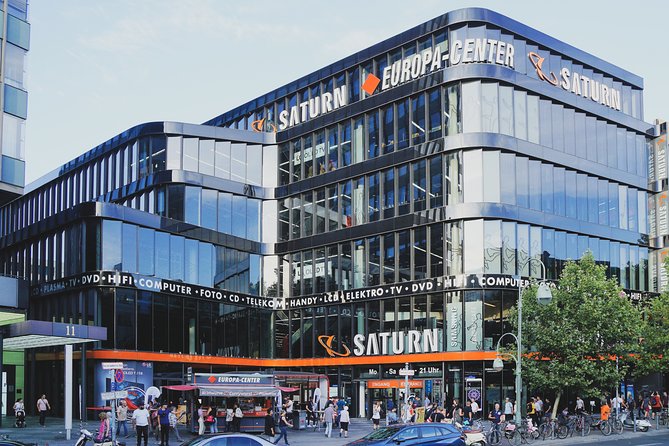
You meet your guide at Oranienburger Strasse 28 to 30, near public transportation. This puts you in Mitte, a useful starting point for a tour that combines Jewish Berlin, Cold War history, government buildings, memorials, and Museum Island.
The first nearby landmark is the New Synagogue, home to the Centrum Judaicum. Its Moorish-style exterior is one of the most striking sights on Oranienburger Strasse, with a large golden dome and ornate details. The tour focuses on the building’s role as an important Jewish landmark and a link between Berlin’s past and future.
You should expect to admire the synagogue from the outside and take photographs. If you want a full museum visit, ask your guide how much time the private route allows, since the four-hour schedule already includes many stops.
This opening section also helps set the tone. Berlin’s history is not only about military decisions and political leaders. It is also about families, religious communities, ordinary streets, and buildings that survived or were rebuilt after terrible damage.
The Palace of Tears and the human cost of division
From Oranienburger Strasse, you continue to the Palace of Tears, the former border terminal at Friedrichstrasse station. Its nickname comes from the tearful goodbyes that took place there when people from East Berlin were separated from relatives who were leaving for the West.
Inside, the preserved 1960s interior gives the place an unusually direct feeling. The floor tiles, wall clock, and plain modern design make it easier to imagine the bureaucracy of a divided city. This is not a grand monument. Its power comes from how ordinary it looks.
Your guide explains the border system and the attempts made by people in Soviet-occupied East Berlin to reach Allied-occupied West Berlin. That personal angle is one of the strongest parts of the tour. You are not simply hearing that Berlin was divided. You are hearing what the division meant for movement, family life, and freedom.
Allow about 20 minutes here. The Palace of Tears is one of the most meaningful stops, but it may be less visually dramatic than Brandenburg Gate or the Reichstag. The value comes from the explanation.
Reichstag and Brandenburg Gate: Berlin’s grand public face
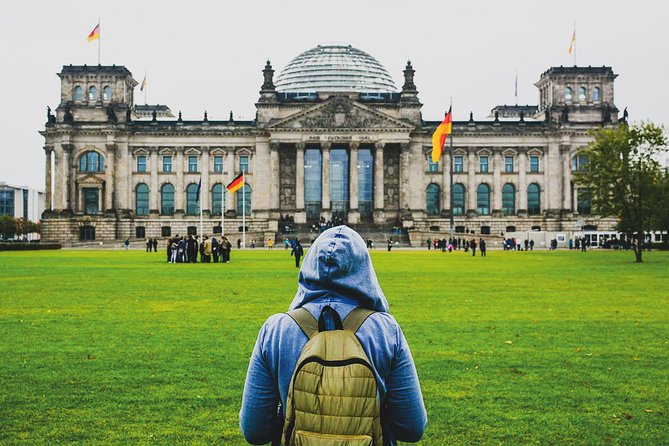
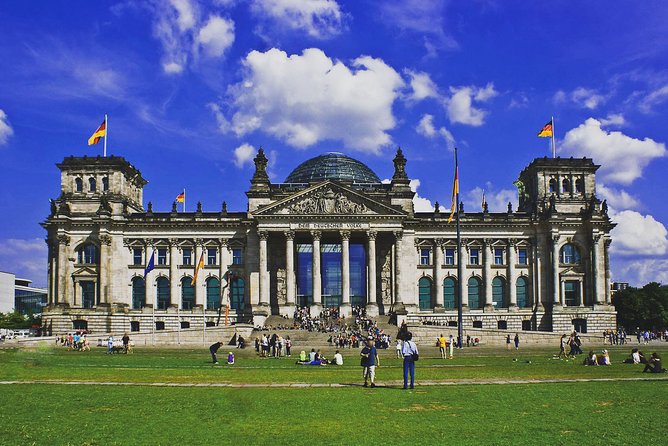
The Reichstag Building gives you a chance to shift from personal stories to national politics. Its classic architecture and later role in modern Germany make it an essential stop, even if you only view it from outside.
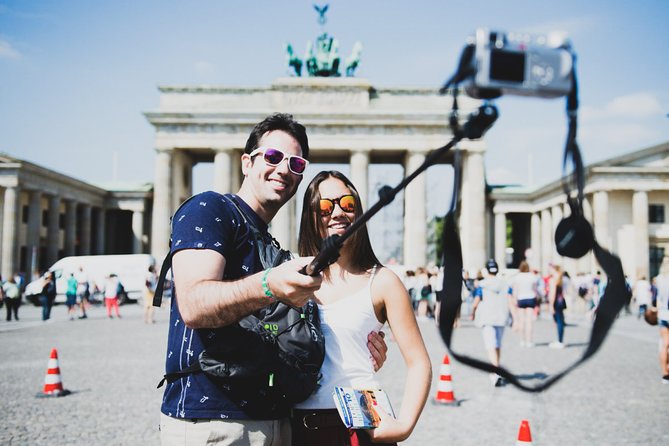
The route then reaches Brandenburg Gate, perhaps the most recognizable symbol in Berlin. Once tied to Prussian power, the gate later became associated with the division of the city and its reunification. Your guide can place the monument within that larger story, which helps keep the photo stop from becoming just another postcard moment.
The itinerary allows around 20 minutes at each location. That is enough for photographs and an explanation, but not enough for an extended architectural study. The tour does not include a visit to the Reichstag dome, so you should treat this as an exterior stop rather than a building tour.
I appreciate the way these landmarks are paired with more difficult subjects later in the route. Berlin presents beauty and trauma side by side, often within a short walk.
More Third Reich History Tours in Berlin
- Berlin: Third Reich and Cold War 2 Hour Walking Tour
★ 4.9 · 6,830 reviews - Berlin’s Best: 2 Hour Walking Tour Third Reich and the Cold War
★ 5.0 · 5,486 reviews - Third Reich Berlin: Hitler and WWII Walking Tour
★ 5.0 · 3,301 reviews - Berlin: Third Reich, Hitler, and WWII Walking Tour
★ 4.9 · 1,133 reviews
The Holocaust Memorial and the Führerbunker site
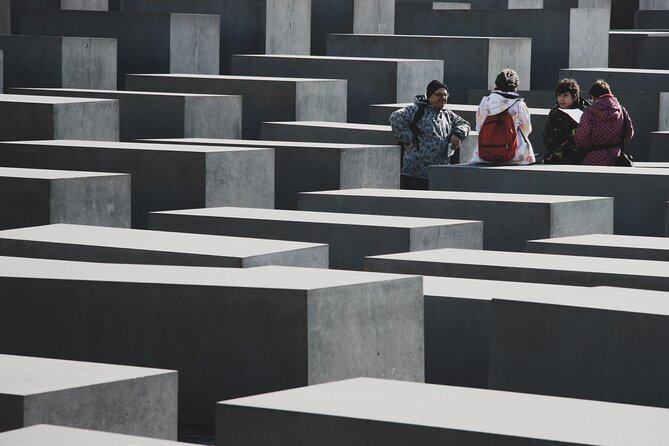
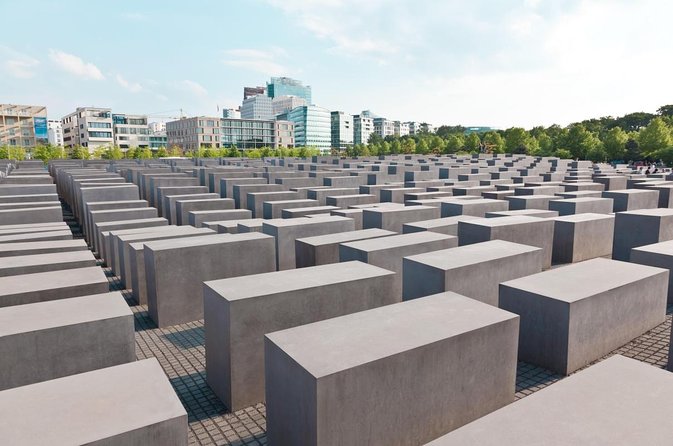
The Memorial to the Murdered Jews of Europe is made up of 2,711 concrete slabs arranged across a large open area. As you walk among them, the ground changes and the columns rise around you. The design is deliberately spare, and your guide can help explain its purpose without telling you how you are supposed to feel.
Give this stop your attention. It is not a place to rush through for photographs. The memorial is most effective when you walk quietly, look around, and consider the scale of the murder it commemorates.
Nearby, you visit the site of the Führerbunker, where Adolf Hitler spent the final days of his life. There is no dramatic preserved bunker interior to tour here. The site is marked in a low-key way, and the absence of a grand monument is part of Berlin’s approach to Nazi locations.
This portion of the walk is serious. You will hear about the rise of the Nazi Party, World War II, and the final days of the regime. A guide such as Demetrios or Lucian can be particularly helpful if you want more context or have detailed questions about the period.
The itinerary gives about 20 minutes to the bunker site. That is appropriate for a location with little visible structure, but the stop depends heavily on the guide’s explanation.
Currywurst on Wilhelmstrasse
After several intense historical stops, the included currywurst provides a practical break. Berlin’s classic snack is usually a sliced sausage covered with curry-spiced tomato sauce, often served with fries or a bread roll.
Do not expect a full meal. It is a modest street-food serving, and extra food and drinks are not included. Still, the pause is useful. You can grab a tea or coffee, rest your shoulders, and regain energy before the second half of the walk.
This is also one of the tour’s more human moments. Berlin’s food culture is not separated from sightseeing behind a restaurant door. A quick currywurst stop lets you experience something ordinary and local while moving through a very historic part of town.
If you are traveling with children or with someone who finds memorial visits emotionally heavy, this break can reset the mood. If you need a longer meal, tell your guide early and ask how it might affect the rest of the route.
Checkpoint Charlie and the Cold War story
Checkpoint Charlie was the best-known crossing between East and West Berlin. Today, it is a busy central attraction surrounded by shops, restaurants, and plenty of photo opportunities.
The setting can feel commercial, and that is the main limitation. The original Cold War atmosphere has largely disappeared. You should not expect to see a preserved border crossing exactly as it looked before 1989.
The guide is what gives this stop its weight. You can learn how the crossing worked, why it became such a powerful symbol, and how tense the relationship between the two sides could be. The stories of escape attempts are especially important because they turn a famous name into a place connected with real danger.
Checkpoint Charlie also shows how Berlin handles difficult history in a modern city. The past is visible, but it is surrounded by daily life. That contrast can be uncomfortable, yet it is an honest part of visiting Berlin.
Bebelplatz and the Nazi book burning
Bebelplatz is one of central Berlin’s most attractive squares, framed by impressive buildings and linked to the city’s intellectual life. It is also the site of the Nazi book burning on May 10, 1933, when works by Jewish, socialist, liberal, and other writers were destroyed.
A memorial beneath the square provides a stark reminder of that event. Look down through the glass panel if conditions allow. The empty underground bookshelves are more powerful than a large statue would be.
This is a good example of why a guide improves the walk. Without context, Bebelplatz may look like a handsome architectural square. With an explanation, you see how public spaces can be used for both culture and political intimidation.
The stop also connects naturally to Museum Island. You move from the destruction of ideas to the institutions that preserve art, archaeology, and human history.
Museum Island and the city’s cultural center
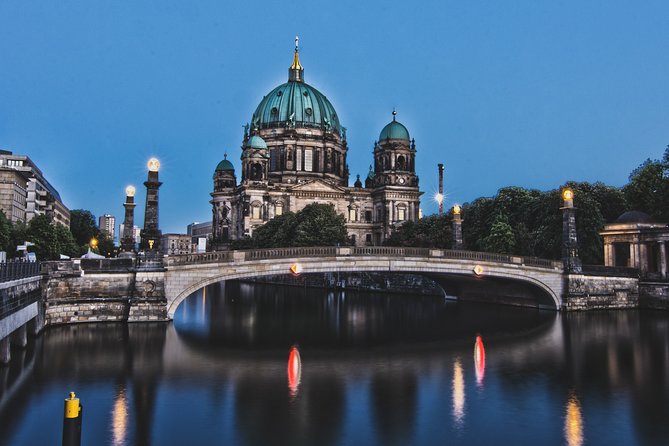
Museum Island is a UNESCO-listed group of five major museums on the Spree River. The ensemble includes some of Berlin’s most important cultural buildings, along with the Berlin Cathedral nearby.
The tour gives you an introduction rather than museum entry. You can admire the buildings, hear about their place in Berlin’s development, and learn more about the book burning and cultural suppression under the Nazis.
If you plan to visit one of the museums later, use this stop to ask your guide for practical advice. The tour includes expert suggestions about where to go and what to do after it ends, which is useful because each museum requires more time than this walking route can provide.
Museum Island is also a welcome change of pace after the memorials and border sites. You see Berlin as a center of art and learning, not only as a city shaped by war and dictatorship.
The Missing House and Heckmann Höfe
The final part of the route explores Mitte away from the biggest monuments. On Große Hamburger Strasse, the Missing House marks the absence left by a building destroyed in World War II. Instead of reconstructing the structure, the site presents the names and stories of former residents.
It is a quiet, easily missed place, and that is exactly why it belongs on a private tour. You are reminded that war damage was not abstract. It erased homes, neighbors, and entire pieces of the city.
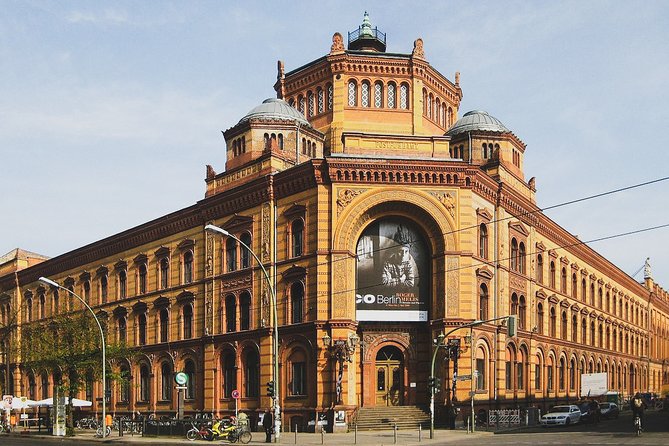
Heckmann Höfe offers another change in mood. This attractive series of courtyards reveals a more intimate side of Berlin, with tucked-away passages and historic urban details. It is a fine final stop after the grand squares and famous crossings.
The tour returns to Oranienburger Strasse. Since the route is customizable, your guide may adjust the balance between major landmarks and smaller sites. The exact order can also vary with your interests, pace, and available time.
How much walking should you expect?
You need a moderate level of physical fitness. The tour is listed at about four hours, but several outings have run closer to five or five and a half hours, especially when the group asked many questions or moved at a relaxed pace.
That flexibility is helpful, but it also means you should plan carefully. Wear comfortable shoes and dress for the weather. A winter outing can be cold, and one group completed the walk on an icy December morning. Bring water, and do not count on the currywurst alone to carry you through the whole route.
The guide can stop for rests, cafés, and drinks. Guides have also been praised for adjusting the pace when someone in the group had trouble walking. Still, this remains a walking tour covering a broad part of central Berlin. If anyone in your group tires easily, discuss this at the start and decide which stops matter most.
Is $129 per person a fair price?
At $129 per person, this is not the cheapest way to see Berlin’s landmarks. You are paying for a private guide, a four-hour walking route, a currywurst, and the ability to customize the experience. The value improves when several people share the booking, particularly if group discounts apply.
For a first visit, the price can make sense because the tour covers so much ground in one outing. You see the main symbols of Berlin while also gaining context that would take considerable planning to assemble alone.
The value is lower if you want museum interiors, long visits at individual sites, or a relaxed architectural walk. Most stops are exterior visits, and the pace is ambitious. I would see this as an orientation tour and history lesson, not a replacement for visiting Berlin’s museums on your own.
The tour is recommended by 97 percent of customers and has a 4.8 rating from 29 reviews. One serious service failure involved a guide who did not appear at the meeting point. The company said that guide no longer works with it and that a full refund was issued. That incident is worth noting, but the larger pattern points to strong guide performance and high satisfaction.
Who should book this Berlin walking experience?
I would recommend it to first-time visitors who want their bearings quickly and who care about World War II and Cold War history. It also suits families or small groups that want to ask plenty of questions without holding up strangers.
It is a good fit if you like walking, photographs, personal stories, and a flexible schedule. It works especially well at the beginning of a Berlin stay because your guide can suggest museums, restaurants, train routes, and activities for later days.
I would be more cautious if you dislike long walks, want extensive indoor sightseeing, or prefer a slow tour focused on just two or three locations. You may find the route packed, especially in winter or when the group stops often for questions.
When booking, request a guide who matches your interests if that option is available. Dimitri, Eleni, Lucian, Simon, Despina, Peter, and Demetrios are all associated with strong comments about historical detail, patience, and personal attention, but guide assignment may vary.
FAQ
How long is the Berlin WWII and Cold War tour?
The tour lasts approximately four hours. Some outings have lasted around five to five and a half hours when the group walked at a slower pace or spent extra time with the guide.
Where does the tour begin and end?
You meet at Oranienburger Strasse 28 to 30 in Berlin. The tour ends back at the same meeting point.
Is the tour private?
Yes. Only your group participates, and the itinerary can be customized around your interests and preferences.
Is currywurst included?
Yes. A traditional Berlin currywurst is included. Extra food and drinks are not included.
Does the price include museum admission?
The tour includes the private walking guide and listed fees and taxes. The experience is primarily an exterior walking tour, so you should not expect extended visits inside Berlin’s museums.
What happens if I need to cancel?
You can cancel up to 24 hours before the start time for a full refund. Cancellations or changes made less than 24 hours before the start time are not accepted for a refund.
Should you book it?
Book this tour if you want Berlin’s major WWII and Cold War sites explained in one private walk, with room for questions and changes along the way. The combination of Brandenburg Gate, the Holocaust Memorial, the Führerbunker site, Checkpoint Charlie, Museum Island, and smaller places such as the Missing House gives you a useful first picture of the city.
Skip it if you want a museum-heavy day or cannot manage several hours on foot. For most first-time visitors who can walk comfortably, the $129 price is reasonable when shared by a small group, especially because the guide’s time and local advice continue to be useful after the final stop.
More Cold War Tours in Berlin
- Cold War, Berlin Wall, Spies and the East Side Gallery
★ 5.0 · 1,024 reviews - Berlin: Cold War Walking Tour on Berlin Wall Route
★ 4.8 · 437 reviews - Berlin: Cold War Era History Guided Bike Tour
★ 4.8 · 413 reviews - Cold War, Berlin Wall, Spies and the East Side Gallery
★ 4.8 · 254 reviews
Just added around Berlin
- Private Walking Tour in Berlin: Hitler’s Germany & WWII★ 5.0 · 7 reviews
- The History of Berlin: WWII PRIVATE Walking Tour With Locals★ 5.0 · 209 reviews
- Private Walking Tour Berlin 3 hours: Brandenburg, Historic Center★ 5.0 · 7 reviews
- Berlin: Private Bike Tour of the Berlin Wall and Third Reich★ 5.0 · 23 reviews
- Berlin: Guided Private Bike Tour to Explore the Highlights★ 5.0 · 12 reviews
- Berlin Photography Masterclass – Private Photography Lesson★ 4.5 · 23 reviews
- Group Driving Tour 1 to 6 people. Berlin Shore Excursion incl pick-up at Port★ 5.0 · 8 reviews
- A Taste of Berlin: Craft Beer Private Tour★ 4.5 · 26 reviews
Cold War Tours, compared.
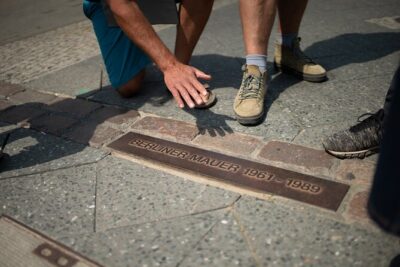
Cold War, Berlin Wall, Spies and the East Side Gallery
Read our review →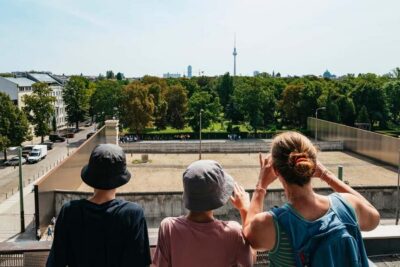

Cold War, Berlin Wall, Spies and the East Side Gallery
Read our review →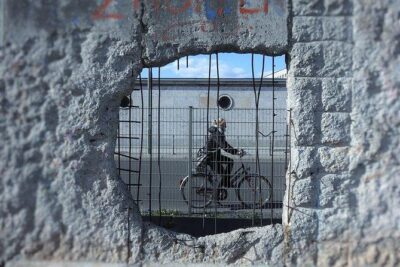
Explore The Berlin Wall: Cold War Berlin and Behind the Berlin Wall
Read our review →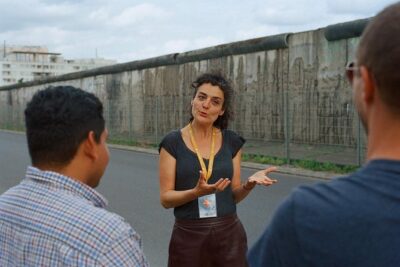
PRIVATE BEHIND THE BERLIN WALL and COLD WAR BERLIN TOUR
Read our review →Browse the lists this tour appears in