
Reviewed · THIRD REICH HISTORY TOURS
Private Walking Tour in Berlin: Hitler’s Germany & WWII
Berlin’s past is impossible to avoid. This private four-hour walk connects Nazi-era sites across central Berlin, from a former deportation station to Hitler’s bunker site and the Reichstag. I like the private format, which lets your group ask questions and spend longer at places that matter most. I also like the guide-led focus on resistance and victims, not only Hitler.
The main drawback is that every stop is viewed from outside, so this is a street-based history lesson rather than a museum tour. You also need a Berlin public transport ticket, and the $173.06 price per person is a serious outlay unless your group values personal attention.
In This Review
- Key points to know before booking
- What this Berlin history walk really offers
- Otto Weidt and Berlin’s Jewish story
- Anhalter Bahnhof and the machinery of deportation
- The Topography of Terror and the former Nazi command district
- Johann Georg Elser and the difficult story of resistance
- The Holocaust Memorial and the problem of remembrance
- The Soviet Memorial in Tiergarten and Berlin after 1945
- Hitler’s bunker site and the Reichstag finish
- Guide style and the value of a private group
- Is $173.06 per person good value?
- Practical advice for a smoother four hours
- Should you book this private Berlin tour?
- FAQ
- How long does the tour last?
- Is this a private tour?
- Where does the tour begin?
- Where does the tour finish?
- Is hotel pickup available?
- Do I need a public transport ticket?
- Are entrance tickets included?
- Is the Reichstag interior included?
- Can service animals take part?
- What is the cancellation policy?
Key points to know before booking
- A private group walk across central Berlin: Only your party takes part, with room for questions and a flexible pace.
- Ten powerful locations in about four hours: The route links Jewish history, Nazi terror, resistance, wartime destruction, and postwar memory.
- The former Gestapo and SS district is central to the story: At the Topography of Terror area, your guide explains how the Nazi system operated.
- Hitler’s bunker site is part of the route: You see the location from outside, with no underground access.
- The final stop is the Reichstag: The tour finishes outside Germany’s parliament building, a useful place to continue sightseeing.
- Guide quality matters: Jasper, Stefan, Rohan, Lewis, and Xavier received especially warm praise for clear explanations, humor, and thoughtful answers.
What this Berlin history walk really offers
This is not a tour of grand Nazi architecture. Much of that architecture is gone, altered, or marked only by a modest plaque, memorial, or open space. That is part of the lesson. Berlin’s Nazi past often appears in ordinary streets where the horror is easy to miss unless someone points it out.
Your guide provides the thread. The tour begins at Neue Promenade 3, near central Berlin, and ends at the Reichstag Building. Along the way, you move through several districts and use public transport for part of the route. A single Berlin AB ticket costs about €4 per person and is not included.
The private setup changes the feel of the walk. You are not trying to keep up with a large crowd or wait for strangers to finish photographs. If your group wants more time at the Holocaust Memorial, asks about German resistance, or needs a clearer explanation of the Nazi rise to power, the guide can adjust the time. The listed stop times are short, but the overall walk lasts about four hours.
This flexibility also means you should not expect a minute-by-minute sightseeing schedule. The route is designed around explanation and discussion. Some stops may last longer if your group has questions, while others may be brief outdoor viewpoints.
More Third Reich History Tours in Berlin
- Berlin: Third Reich and Cold War 2 Hour Walking Tour
★ 4.9 · 6,830 reviews - Berlin’s Best: 2 Hour Walking Tour Third Reich and the Cold War
★ 5.0 · 5,486 reviews - Third Reich Berlin: Hitler and WWII Walking Tour
★ 5.0 · 3,301 reviews
Otto Weidt and Berlin’s Jewish story
The first stop is the Museum Blindenwerkstatt Otto Weidt. Your guide explains the history of Otto Weidt and the workshop associated with him. The site introduces a human-scale story of people trying to protect Jewish workers during the Nazi period.
The stop is especially useful at the beginning because it avoids starting with military hardware or Hitler’s final days. Instead, you meet a story about individual choices under a brutal system. The guide can help you understand how acts of protection and resistance fit into a wider society shaped by persecution.
Admission is free, but the tour only visits the site from outside. If you want to see the museum itself, you will need separate time and entrance arrangements. That is an important limitation, since the interior would provide more detail than a ten-minute outdoor explanation.
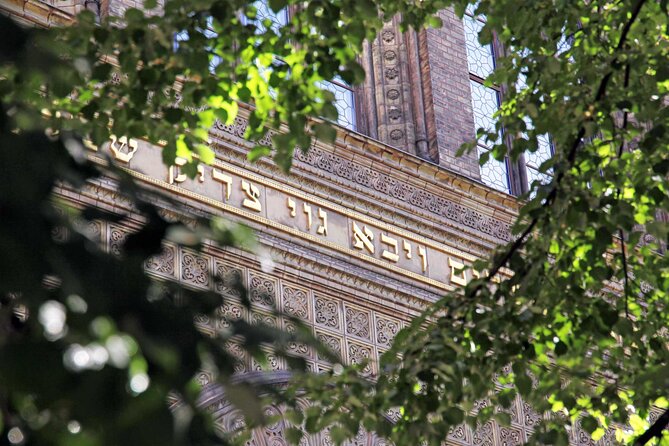
From here, the walk continues to the Neue Synagogue and Centrum Judaicum. The synagogue is one of Berlin’s most recognizable Jewish landmarks, and the guide explains its place in the city’s Jewish life and Nazi-era story. This gives the tour a broader social setting before it turns toward deportation, state terror, and the war.
The two opening stops work well together. One presents a personal rescue story. The other points to the wider Jewish community that the Nazis targeted. I would pay close attention here, since the historical thread can become harder to follow once the tour begins crossing larger central areas.
Anhalter Bahnhof and the machinery of deportation
The ruins of Anhalter Bahnhof bring the Nazi persecution story into sharper focus. Once a major railway station, it was used in the deportation of prisoners to concentration camps. Today, the surviving structure is a fragment, not a complete station experience.
That physical fragment is powerful because it does not look like a conventional memorial. Your guide supplies the missing context: how transport, administration, policing, and ideology worked together to move people from city streets into the camp system.
This is one of the stops where a historian guide adds real value. A ruin alone cannot explain who was deported, how the process was organized, or how ordinary infrastructure became part of mass persecution. The outdoor setting also keeps the stop grounded in the modern city around you.
The drawback is practical. You are not entering a preserved station with a long indoor exhibition. The stop is brief, and the meaning comes mainly through the guide’s explanation. If you prefer detailed museum displays, plan a separate visit to one of Berlin’s indoor history museums.
The Topography of Terror and the former Nazi command district
At the Topography of Terror, your guide explains the former Gestapo and SS headquarters. This is one of the most important locations on the route because it helps you see the Nazi regime not just as Hitler’s personal dictatorship, but as an organized system of police power, surveillance, imprisonment, and violence.
The site is closely tied to the administrative side of terror. That makes it different from the Holocaust Memorial, which focuses on public remembrance. Here, the emphasis is on the institutions that carried out Nazi policy.
The outdoor explanation is useful, but it is not the same as entering the Topography of Terror documentation center. The interior contains extensive material, while this tour gives you a guided orientation from outside. I would treat the walk as a strong introduction, then return separately if you want photographs, documents, and longer reading time.
The former Aviation Ministry follows. The building is associated with the Nazi state and later with major moments in German political history. Your guide places it within the wider story of wartime government and the city’s changing role before and after 1945.
This section of the tour shows how Berlin’s buildings can carry several layers of meaning. A government office may look plain, but its location and past can reveal how power was organized. Listen for the connection between architecture, bureaucracy, and political control.
More Walking Tours in Berlin
- Discover Berlin Half-Day Walking Tour
★ 5.0 · 9,624 reviews - Berlin: Discover Berlin Walking Tour
★ 4.9 · 5,998 reviews - Berlin: Hidden Backyards Guided Walking Tour
★ 4.8 · 5,360 reviews - Berlin: Alternative Berlin Walking Tour
★ 4.6 · 1,204 reviews
Johann Georg Elser and the difficult story of resistance
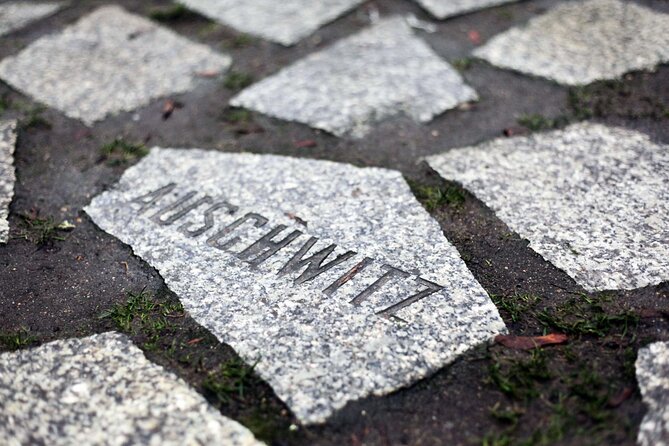
The Johann Georg Elser sculpture introduces one of Germany’s resistance figures. Elser attempted to kill Hitler in 1939, before the war had reached its later scale. His story complicates the easy idea that nobody opposed the Nazi system.
That matters because a tour about Hitler’s Germany can become too focused on the dictator himself. The resistance stop shifts attention toward people who acted against the regime, often at great personal cost. It also gives your guide a chance to explain why resistance was difficult, dangerous, and often isolated.
I like this part of the route because it widens the moral frame. You learn not only how the regime gained power, but also how individuals challenged it. The sculpture is an outdoor stop, so the guide’s storytelling again carries most of the weight.
The tour’s approach is not limited to one form of resistance. Otto Weidt represents protection and rescue. Elser represents an attempt to remove Hitler. Together, those stories help you see that opposition took different forms and came with different risks.
The Holocaust Memorial and the problem of remembrance
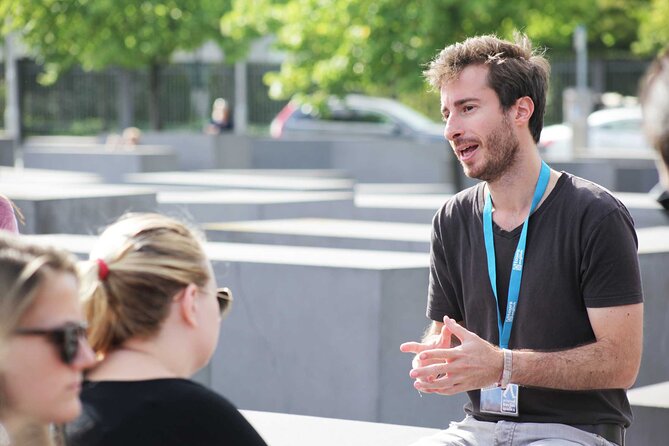
The Memorial to the Murdered Jews of Europe is likely to be the longest stop, with about fifteen minutes set aside for explanation. The field of concrete blocks is familiar from photographs, but it is more affecting when you stand among it and consider the memorial’s scale and open-ended design.
Your guide explains the purpose of the memorial and its place in Berlin’s public memory. The stop does not replace a visit to the underground information center, which is not part of this tour. You may want to return on your own, since the center adds names, documents, and personal stories.
A short outdoor visit can feel quick here. The memorial invites quiet thought, but a group walk must keep moving. If this is the location you most want to study, tell your guide early. The private format may allow additional time, depending on the group’s schedule.
Nearby, the Monument to Homosexuals Persecuted Under the National Socialist Regime broadens the discussion of Nazi victims. It reminds you that Nazi persecution targeted more than Jewish people. The monument’s presence helps place the treatment of gay men within the larger system of Nazi discrimination and punishment.
This is a valuable stop precisely because it can be overlooked on a standard central Berlin walk. It adds a specific victim group to the story and prevents the tour from presenting Nazi persecution as a single, simple category.
The Soviet Memorial in Tiergarten and Berlin after 1945

The Soviet Memorial in Tiergarten shifts the story from Nazi rule and persecution to the war’s end and its aftermath. Your guide explains the memorial’s role and its connection to the Soviet victory over Nazi Germany.
The stop helps connect the wartime events to the physical division and political tension that shaped Berlin after 1945. It also gives you a different kind of memorial experience. The Holocaust Memorial centers on murdered civilians and public remembrance, while the Soviet memorial reflects military victory and occupation.
The route has covered a lot by this point. Jewish life, deportation, Nazi institutions, resistance, genocide, persecution of gay men, and the defeat of Nazi Germany all appear in one half-day. The benefit is the broad connection between sites. The risk is that the subject can feel dense, especially in hot weather or if you are traveling with a teenager who is new to the topic.
One review described a four-hour walk on a very hot day, so weather preparation matters. Wear comfortable shoes, bring water, and expect to spend much of the time outdoors. The tour is accessible to most people, but it remains a walking experience across central Berlin rather than a seated museum visit.
Hitler’s bunker site and the Reichstag finish
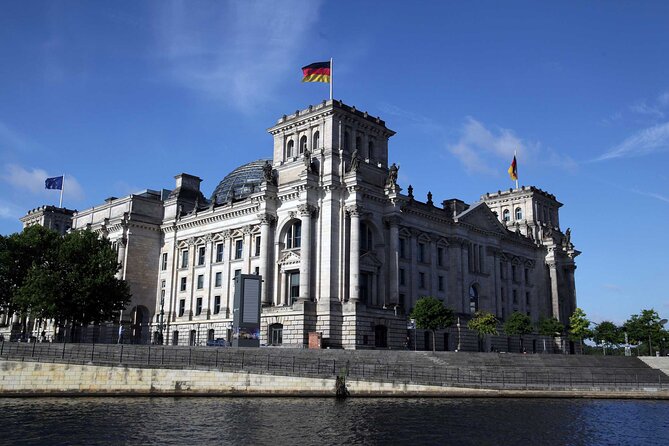
The tour’s headline locations include the site of Hitler’s bunker and the Reichstag. The bunker is not an underground attraction on this experience. You see the location from outside while your guide explains its place in the final days of the Nazi regime and the end of the war.
That approach is sensible. The bunker interior is not open as a normal sightseeing site, and the present-day location can look surprisingly ordinary. The guide’s explanation helps you understand why the spot matters without turning it into a shrine.
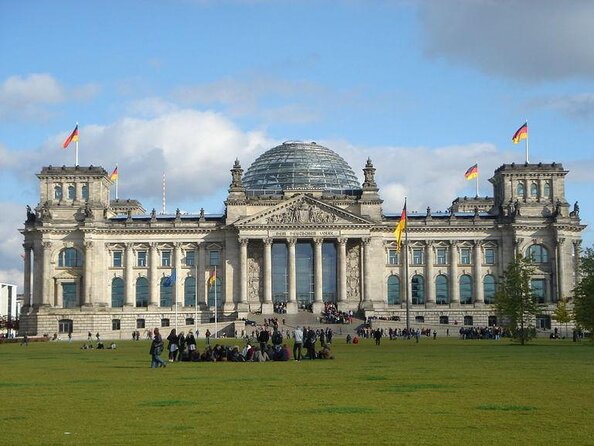
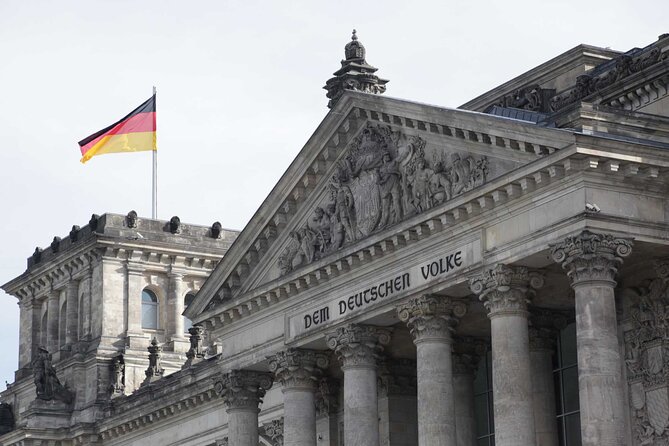
The final stop is the Reichstag Building, viewed from outside. Your guide explains the building’s role in the story, and the tour usually ends at Platz der Republik. This is a convenient finish if you want to continue around the parliament district or arrange your next activity nearby.
The Reichstag is not an included interior visit. If you want to go inside, you need to make separate arrangements. The same applies to every other indoor museum or documentation center along the route.
Guide style and the value of a private group
The strongest part of this experience is the guide. Jasper was praised for a thorough explanation of the sites and the rise of Hitler and the Nazis. Stefan was described as friendly, clear, and willing to engage with questions. Rohan received especially strong praise for his command of the subject and for keeping a fifteen-year-old with GCSE History interested.
Lewis was singled out for making the walk feel essential to understanding Berlin. Xavier was praised for explaining both familiar and less familiar parts of this dark period with feeling and skill. These comments point to the central value of the tour: the quality of the person leading it can shape the entire experience.
Because this is private, your group can ask direct questions without worrying about slowing a large crowd. You can also tell the guide if you want more detail on resistance, the Holocaust, architecture, or Berlin after 1945. The tour is likely best for adults, older children, students, and anyone who wants historical context rather than a quick list of photo stops.
It may be less suitable if you want to enter several museums, avoid walking, or focus only on military technology. The subject is serious, and the route covers difficult material. The guides can make it clear and engaging, but they cannot make the history light.
Is $173.06 per person good value?
At $173.06 per person, this is not a budget walk. The value depends heavily on group size and your interest in private instruction. For two people, the cost is high. For a larger family or small group, the private format becomes easier to justify because the fee buys a dedicated guide rather than a standard group presentation.
The price includes the professional guide and all fees and taxes. It does not include the Berlin AB public transport ticket, which costs about €4 per person, or tips. There are no entrance fees listed because the stops are outdoor explanations.
I would compare the price with what you want from your Berlin visit. If you are comfortable reading plaques and visiting museums on your own, you can see many of these places without paying for a private guide. If you want the sites connected into one clear story and value the chance to ask questions, the cost may be worthwhile.
The best way to protect the value is to arrive with questions. Ask about the Nazi rise to power, daily life under dictatorship, resistance, deportations, or how Berlin remembers the past. A private tour rewards active participation.
Practical advice for a smoother four hours
The meeting point is Neue Promenade 3 in central Berlin. The tour ends at the Reichstag Building, usually outside at Platz der Republik 1. Since the start and finish are in different parts of the city, allow time for your next activity and do not assume you will return to the starting area.
Bring a valid mobile ticket confirmation, comfortable walking shoes, water, and weather protection. Service animals are allowed, the route is near public transport, and most people can take part. The tour provider confirms bookings within 48 hours, subject to availability.
Free cancellation is available up to 24 hours before the start time for a full refund. Changes or cancellations made less than 24 hours before the start are not accepted for a refund.
Should you book this private Berlin tour?
Book it if you want a serious, connected explanation of Berlin’s Nazi past and prefer a private guide to a large group. The route covers unusually broad ground in four hours, and the best guides appear to combine solid historical command with humor, patience, and genuine interaction.
I would especially recommend it for a first visit, a family with an older teenager, or a small group with shared interest in World War II and Holocaust history. Ask for Jasper, Stefan, Rohan, Lewis, or Xavier if guide selection is possible, since those names received particularly strong praise.
Skip it if you mainly want indoor museum time or a low-cost sightseeing walk. Since every location is viewed from outside, you should pair this tour with at least one museum visit if you want documents, photographs, and personal testimony.
For the right group, this is a useful way to read Berlin’s streets. The city does not hand you one neat memorial route. A good guide helps you see how ordinary places became part of dictatorship, persecution, resistance, war, and remembrance.
FAQ
How long does the tour last?
The tour lasts approximately four hours. Some published stop times are brief, but the guide can stay longer at a location depending on your group’s interest.
Is this a private tour?
Yes. Only your group participates in the activity.
Where does the tour begin?
The meeting point is Neue Promenade 3, 10178 Berlin, Germany.
Where does the tour finish?
The tour usually ends outside the Reichstag Building at Platz der Republik 1, 11011 Berlin, Germany.
Is hotel pickup available?
Pickup is offered, though the provided details do not specify the pickup area or exact arrangements.
Do I need a public transport ticket?
Yes. A Berlin AB single ticket is required and costs about €4 per person. It is not included in the tour price.
Are entrance tickets included?
The tour includes all listed fees and taxes, but the sites are viewed from outside. No indoor entrance visits are included.
Is the Reichstag interior included?
No. The Reichstag is explained from the outside, and the tour normally finishes there.
Can service animals take part?
Yes. Service animals are allowed.
What is the cancellation policy?
You can cancel up to 24 hours before the local start time for a full refund. Cancellations or changes made less than 24 hours before the start are not accepted for a refund.
Just added around Berlin
- The History of Berlin: WWII PRIVATE Walking Tour With Locals★ 5.0 · 209 reviews
- Private Berlin WWII and Cold War History Tour with Local Expert Guide★ 5.0 · 28 reviews
- Private Walking Tour Berlin 3 hours: Brandenburg, Historic Center★ 5.0 · 7 reviews
- Berlin: Private Bike Tour of the Berlin Wall and Third Reich★ 5.0 · 23 reviews
- Group Driving Tour 1 to 6 people. Berlin Shore Excursion incl pick-up at Port★ 5.0 · 8 reviews
- Berlin: Guided Private Bike Tour to Explore the Highlights★ 5.0 · 12 reviews
- Berlin Photography Masterclass – Private Photography Lesson★ 4.5 · 23 reviews
- A Taste of Berlin: Craft Beer Private Tour★ 4.5 · 26 reviews