
Reviewed · THIRD REICH HISTORY TOURS
The History of Berlin: WWII PRIVATE Walking Tour With Locals
Berlin carries its past in plain sight. This private four-hour walk connects Nazi-era sites, Cold War border points, memorials, and grand civic buildings with the help of a local guide. I like the one-party format, which lets you ask questions without holding up a busload of strangers, and I like the chance to shape the route around your interests. The main consideration is that the exact sights can vary by guide, so you should confirm your must-see stops before setting out.
At $143.97 per person, this is not a bargain-priced city walk, especially for one or two people. It can make good sense for a family or small group that wants a personal history lesson, since the guide’s full attention is included and group discounts may be available. The tour has a 4.9 rating from 209 reviews, with 97 percent recommending it, though one serious complaint shows why agreeing on the route matters.
In This Review
- Key points at a glance
- Why a private Berlin history walk can work so well
- Starting on Oranienburger Strasse
- Brandenburg Gate and the Holocaust Memorial
- Bebelplatz and Berlin’s damaged center
- Museum Island and the wider city story
- The route is flexible, and that cuts both ways
- Walking demands, timing, and comfort
- Is $143.97 per person a fair price?
- Who should book this Berlin history tour?
- Should you book it?
- FAQ
- How long is the tour?
- Where does the tour begin?
- Where does the tour end?
- Is this a private tour?
- Is the tour offered in English?
- Are attraction entrance fees included?
- Does the tour include hotel pickup and drop-off?
- How much walking should I expect?
- Can I cancel for a full refund?
Key points at a glance
- Four hours on foot: Expect a substantial walking day, with one past participant counting roughly 15,000 steps.
- Private and flexible: Only your party joins, and the route can be adapted to your interests.
- WWII and Cold War focus: The walk may include the Holocaust Memorial, Hitler’s bunker site, Checkpoint Charlie, the Palace of Tears, and other key locations.
- Strong guide praise: Sara, Seth, Boyd, Miha, Amelia, Pablo, Betty, and Michele are all singled out for clear explanations, warmth, and flexibility.
- Mostly an outdoor tour: Museum and attraction admission is not included, and many places are viewed from outside.
- Central meeting point: You meet at Oranienburger Strasse 36 and return there at the end.
Why a private Berlin history walk can work so well
Berlin’s history is hard to understand from isolated monuments. A wall segment, a memorial, and a government building can look unrelated until someone explains how the Nazi dictatorship, wartime destruction, Soviet occupation, divided Berlin, and reunification fit together.
That connecting thread is the real value here. A good guide can point out how a building changed purpose over time, explain why a border crossing mattered, and add the human stories that are easy to miss when you move from sight to sight on your own.
The private setup also changes the pace. You can stop for a question, spend longer at a place that matters to you, or ask to shift the emphasis toward WWII, the Cold War, architecture, Jewish Berlin, or the political history of the city.
That flexibility is not just a pleasant extra. Berlin history can be emotionally heavy, and a private guide can adjust the tone and timing to your group. Sara is praised for adding coffee and bathroom stops at sensible moments, while several guides are praised for adapting the route to specific goals.
There is a practical limit, however. Four hours is enough for a strong introduction, not every major museum or memorial in Berlin. You will see a great deal from the street, but you cannot thoroughly visit Museum Island, the Reichstag, and every WWII site in one half-day.
More History Tours in Berlin
- Berlin: Natural History Museum Entrance Ticket
★ 4.6 · 3,382 reviews - Berlin: World Heritage Cruise to Potsdam
★ 4.5 · 1,435 reviews - Berlin Historical Highlights Walking Tour
★ 4.9 · 657 reviews
Starting on Oranienburger Strasse
The meeting point is Oranienburger Strasse 36, in central Berlin, near public transportation. The street itself places you in an area with layers of Jewish, wartime, East German, and modern Berlin history, making it a sensible starting point.
One early sight is the New Synagogue, famous for its Moorish-style architecture and its prominent golden dome. The exterior gives your guide a useful way to discuss Berlin’s Jewish community and the destruction and survival of Jewish institutions during the Nazi period.
Do not expect a long indoor visit here as part of the standard walk. The tour information describes a pause to admire the building, not an included admission visit.
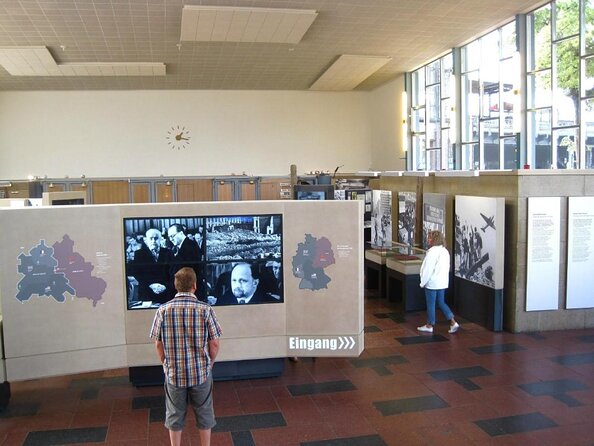
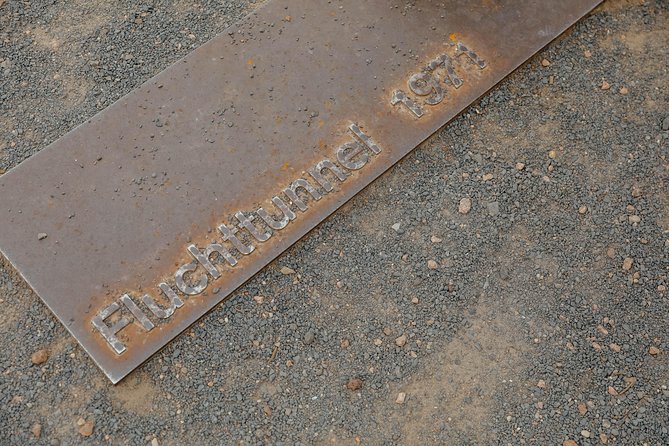
From there, the route may continue toward the Palace of Tears, a former crossing point between East and West Berlin. Its name comes from the tearful farewells that took place there when people from the eastern sector had to leave relatives or friends behind after a visit.
The exhibition explains the divided city through personal accounts and attempted escapes from Soviet-controlled East Berlin into the Allied-controlled western sectors. It is one of the more human-scale stops on the route, since the focus is not only on governments and borders but also on families trying to remain connected.
The Palace of Tears is especially useful early in the tour because it gives the Cold War a personal face. You are not just hearing about a line on a map. You are learning how that division affected ordinary movement and family life.
Brandenburg Gate and the Holocaust Memorial
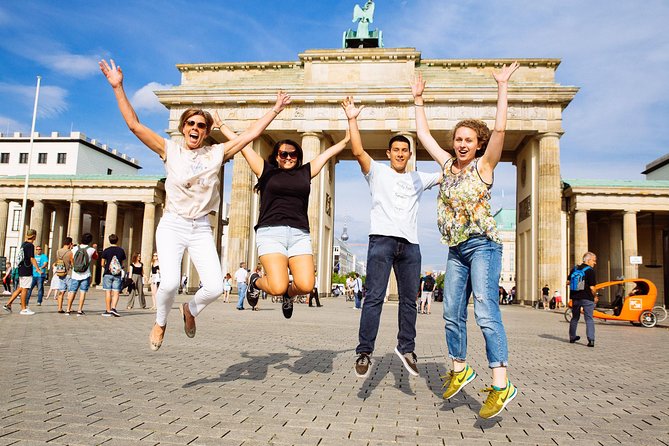
The Brandenburg Gate is one of Berlin’s essential photo stops, but it deserves more than a quick picture. Its meaning shifted repeatedly, from a royal entrance to a symbol used by Nazi propagandists, then to an emblem of divided Berlin and finally of reunification.
Your guide can help place the gate within that changing political story. The broad space around it also makes the scale of central Berlin easier to understand.
Nearby, the Holocaust Memorial offers a very different experience. The field of concrete blocks is deliberately open to interpretation, and walking among the uneven paths can feel unsettling without relying on a long written explanation.
Plan to treat this stop with respect and patience. It is not a theme-park attraction or a place for casual posing. A private guide can explain the memorial’s purpose, but you will also have some responsibility for taking in the space quietly.
The tour information also includes Hitler’s bunker site. You will not enter the bunker, and there is no dramatic underground chamber waiting below the street. The location is marked above ground, and its importance comes from what happened there during the final days of the Nazi regime and from the difficult question of how Berlin should mark such a place.
This is a stop where context matters more than appearance. On your own, you could easily walk past without noticing much. With a strong guide, the site becomes part of a larger explanation of Hitler’s rise, the Nazi government, wartime Berlin, and the city’s postwar effort to deal with the past.
Bebelplatz and Berlin’s damaged center
Bebelplatz brings you into one of the city’s most handsome architectural areas. Buildings around the square reflect Berlin’s royal, imperial, wartime, and modern political chapters, and the setting helps show how much of central Berlin has been repaired or rebuilt.
The square is also associated with the Nazi book burning of 1933. A memorial beneath the pavement recalls the event, making the place another example of Berlin’s approach to remembrance: the sign may be modest, but the historical weight is considerable.
Several guides are praised for explaining how damaged buildings were restored, altered, or left with visible reminders of war. That is useful because Berlin can sometimes look polished at first glance, while details in facades, vacant spaces, and reconstructed buildings reveal the violence that shaped the city.
The tour may also pass important government buildings and the Reichstag. The Reichstag was built for the imperial government, opened in 1894, and badly damaged by fire in 1933. Its history links imperial Germany, the Nazi seizure of power, the divided city, and the restored federal capital.
The itinerary allows about 30 minutes at the Reichstag area, but admission is not included. Think of this as an exterior visit unless your guide confirms another arrangement.
More Third Reich History Tours in Berlin
- Berlin: Third Reich and Cold War 2 Hour Walking Tour
★ 4.9 · 6,830 reviews - Berlin’s Best: 2 Hour Walking Tour Third Reich and the Cold War
★ 5.0 · 5,486 reviews - Third Reich Berlin: Hitler and WWII Walking Tour
★ 5.0 · 3,301 reviews - Berlin: Third Reich, Hitler, and WWII Walking Tour
★ 4.9 · 1,133 reviews
Museum Island and the wider city story
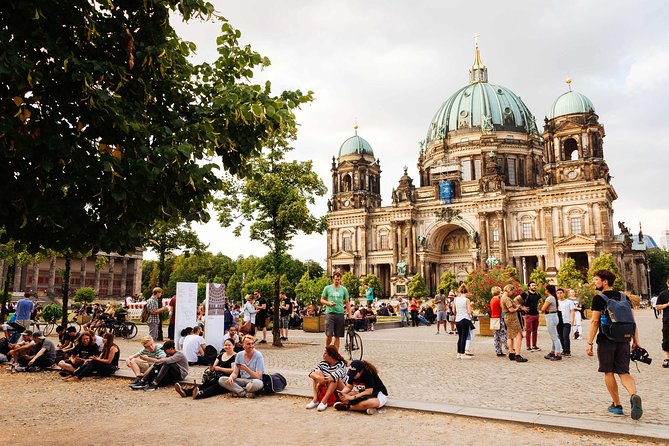
Museum Island occupies the northern part of the Spree Island in Berlin’s historic center. It is a UNESCO-listed museum complex and one of the most important museum areas in Europe.
The tour allows about an hour around Museum Island, but museum tickets are not included. That means the value here is mainly in the guide’s explanation of the buildings and their place in Berlin, rather than a full museum visit.
You might use this time to ask how the island survived wartime destruction, how its institutions fit into the city’s cultural history, or which museum deserves a separate visit later. If you want to go inside, plan that as an additional activity rather than assuming it is covered by the tour price.
Museum Island also provides a useful contrast to the darker WWII stops. Berlin is not only a city of memorials and political ruins. Its museums, neoclassical buildings, and public spaces show the intellectual and cultural ambitions of earlier eras, as well as the effort to rebuild a capital after war.
The listed route also includes Checkpoint Charlie, the best-known former crossing between East and West Berlin. It is a key Cold War site, though the surrounding area is now busy and commercial.
A guide’s explanation is important here. Without context, Checkpoint Charlie can feel like a photo opportunity with souvenir shops nearby. With context, you can learn why the crossing became a major symbol of the confrontation between the Soviet Union and the Western Allies, and how escape attempts and military tension shaped its reputation.
The route is flexible, and that cuts both ways
The tour is marketed as customizable, and that is one of its biggest strengths. Guides have adapted visits for people interested in architecture, postwar history, hidden details, photography, and specific WWII subjects.
Miha, Sara, Boyd, Amelia, Pablo, Betty, Seth, and Michele receive especially warm praise for making the history clear and engaging. Seth is described as particularly effective at weaving WWII and Cold War stories through both famous and less obvious places. Boyd is praised for bringing Berlin’s complicated political history to life, while Sara is repeatedly credited with energy, clear explanations, and custom routes.
But a flexible route can also create uncertainty. One unhappy participant expected the Brandenburg Gate, Berlin Wall, Checkpoint Charlie, and Holocaust Memorial but instead received a walk focused more on East Berlin architecture and government buildings.
That does not necessarily mean the standard experience is poor. It does mean you should not assume every advertised sight will appear automatically. At the beginning, tell your guide exactly which places matter most, then ask how the four hours will be divided.
If the Berlin Wall is your top priority, say so. If you want the Nazi period rather than architecture or the Cold War, say that too. A private tour gives you the right to ask for this clarity.
Walking demands, timing, and comfort
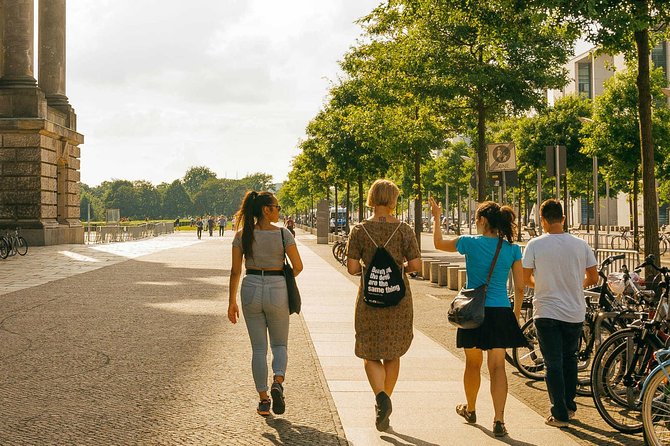
This is a serious walking tour. One account estimates about 15,000 steps, with chances to stop for refreshments along the way. You need comfortable shoes and enough stamina for several hours on city streets.
The physical demand matters because the subject can make the time pass quickly. Several people describe four hours as feeling shorter than expected, but that does not make the walking distance disappear.
Small children may struggle with both the distance and the subject matter unless you tell the guide in advance. Teenagers and adults with an interest in history are likely to get more from the experience, especially if they enjoy asking questions.
The guide can also help manage the pace. Sara is praised for adding appropriate breaks, and other guides are described as adjusting the route to the group’s needs. Still, the tour does not include hotel pickup or drop-off, so you must make your own way to Oranienburger Strasse and back from the ending point.
The tour is offered in English and includes a mobile ticket. Confirmation is provided at booking, and the route begins and ends at the same meeting point.
Is $143.97 per person a fair price?
The price is high for a walking tour, but the comparison should not be with a standard group stroll. You are paying for a private guide, a flexible route, and the chance to ask as many questions as your group likes.
For one person, or a couple who wants a tightly structured budget day, the cost may feel steep. For a family, group of friends, or serious history-focused party, the per-person price can become more reasonable, especially if a group discount applies.
There are no included attraction admissions, transport costs, meals, or hotel transfers. The carbon emissions from the tour are offset, which is a useful extra but should not be the main reason you book.
The value depends heavily on the guide. The best accounts describe guides who connect facts to buildings, notice what interests the group, and offer useful suggestions for what to see later. The weaker experiences show the risk of an uneven guide match, including poor professionalism and a failure to explain the plan.
Withlocals is the provider, and the experience is recommended by 97 percent of customers with a 4.9 rating from 209 reviews. Those numbers suggest a strong overall record, but they do not guarantee a particular guide or route. Ask about your guide and priorities as soon as the booking details arrive.
Free cancellation is available if you cancel at least 24 hours before the start time. Changes or cancellations made inside that window are not accepted for a refund.
Who should book this Berlin history tour?
I would choose this tour if you want Berlin’s major WWII and Cold War sites explained in one connected walk. It is also a good fit if you dislike fixed group schedules or want to focus on a particular subject.
It suits:
- Couples and families who want a private pace
- First-time visitors who need historical orientation
- History fans who enjoy asking detailed questions
- Small groups that can share the private-tour cost
- People who want local suggestions for later sightseeing
I would hesitate if you want extensive time inside museums, dislike long walks, or need a guaranteed checklist of every advertised landmark. I would also avoid booking without contacting the provider if one or two specific sites are non-negotiable.
Should you book it?
Book this private walk if personal attention matters more to you than the lowest price. The strongest guides, especially Sara, Seth, Boyd, Miha, Amelia, Pablo, Betty, and Michele, appear to make Berlin’s difficult history clear, human, and connected to the streets around you.
Before the day begins, name your priorities and ask for a rough route. If the guide confirms the Brandenburg Gate, Holocaust Memorial, Hitler’s bunker site, Checkpoint Charlie, Museum Island, or the Berlin Wall according to your wishes, the tour can be an excellent half-day introduction.
If your main goal is entering museums or covering every landmark, spend the $143.97 elsewhere. If you want a thoughtful conversation while walking through the places where Berlin’s history unfolded, this is a strong choice, provided you take an active role in shaping the route.
FAQ
How long is the tour?
The tour lasts approximately four hours.
Where does the tour begin?
It begins at Oranienburger Strasse 36, 10117 Berlin, Germany.
Where does the tour end?
The tour ends back at the meeting point.
Is this a private tour?
Yes. Only your party participates, and the itinerary can be customized to your interests.
Is the tour offered in English?
Yes. English is the listed tour language.
Are attraction entrance fees included?
No. Admission tickets are not included. Attractions are generally visited from outside unless another arrangement is confirmed.
Does the tour include hotel pickup and drop-off?
No. Hotel pickup and drop-off are not included.
How much walking should I expect?
You should have a moderate level of physical fitness. One account describes approximately 15,000 steps, although the distance can vary with the guide and route.
Can I cancel for a full refund?
Yes, if you cancel at least 24 hours before the experience starts. Cancellations made less than 24 hours before the start time are not refunded.
More Walking Tours in Berlin
- Discover Berlin Half-Day Walking Tour
★ 5.0 · 9,624 reviews - Berlin: Discover Berlin Walking Tour
★ 4.9 · 5,998 reviews - Berlin: Hidden Backyards Guided Walking Tour
★ 4.8 · 5,360 reviews - Berlin: Alternative Berlin Walking Tour
★ 4.6 · 1,204 reviews
Just added around Berlin
- Private Walking Tour in Berlin: Hitler’s Germany & WWII★ 5.0 · 7 reviews
- Private Berlin WWII and Cold War History Tour with Local Expert Guide★ 5.0 · 28 reviews
- Private Walking Tour Berlin 3 hours: Brandenburg, Historic Center★ 5.0 · 7 reviews
- Berlin: Private Bike Tour of the Berlin Wall and Third Reich★ 5.0 · 23 reviews
- Berlin: Guided Private Bike Tour to Explore the Highlights★ 5.0 · 12 reviews
- Berlin Photography Masterclass – Private Photography Lesson★ 4.5 · 23 reviews
- Group Driving Tour 1 to 6 people. Berlin Shore Excursion incl pick-up at Port★ 5.0 · 8 reviews
- A Taste of Berlin: Craft Beer Private Tour★ 4.5 · 26 reviews