
Reviewed · THIRD REICH HISTORY TOURS
Munich: Private or Group Third Reich and WWII Walking Tour
Munich’s prettiest streets carry some of Europe’s darkest memories. This two-hour walk links Marienplatz, Königsplatz, and former Nazi sites, showing how Hitler’s movement grew from local beer halls into a force that wrecked German democracy and plunged the world into war. I like the use of old photographs and documents, which help you see these places as they once appeared. I also like the serious but personal guiding style, with guides such as Karl and Ina praised for making a painful subject clear and human.
The main drawback is the short running time. Two hours can only sketch Munich’s Nazi past, not explain every event or memorial in detail. At $259 per group of up to 25, the price can also feel steep for one or two people, though it becomes much better value when shared by a larger private party.
In This Review
- Key points to know before you book
- Why Munich matters in the story of National Socialism
- Starting at the Mariensäule on Marienplatz
- Beer halls, early speeches, and the failed coup
- Marienplatz and the public face of Nazi power
- Former Nazi headquarters and the machinery of control
- Königsplatz and the architecture of ideology
- Seeing war damage beside memorials
- How the guides shape the experience
- Private group value at $259
- Who should take this walk?
- Should you book the Munich Third Reich tour?
- FAQ
- How long is the Munich Third Reich and WWII Walking Tour?
- Where does the tour meet?
- Is the tour offered in English?
- Is this a private tour?
- Is the tour wheelchair accessible?
- Are children allowed on the tour?
- What should I bring?
Key points to know before you book
- Munich was the birthplace of the Nazi Party: The tour explains why this city became known as the Capital of the Movement.
- Original sites still shape the walk: You visit surviving buildings, former party locations, grand Nazi-era structures, and memorials to victims.
- Old photographs add useful context: Your guide uses documents and images to show what each place looked like during the Nazi period.
- The route connects Marienplatz with Königsplatz: You move from the medieval center into the monumental district built for Nazi ceremonies and power.
- The tone is serious but interactive: Strong guides answer questions and connect political events with individual acts of resistance.
- The tour is best for adults and older teenagers: Children under 10 are listed as unsuitable, and the subject matter is plainly grim.
Why Munich matters in the story of National Socialism
Munich is not just a convenient backdrop for a Nazi history walk. It was one of the movement’s main testing grounds.
Adolf Hitler made Munich his adopted home after World War I. In the city’s beer halls and political circles, he became known as a forceful speaker. The small German Workers’ Party developed here and later became the National Socialist German Workers’ Party, or NSDAP.
That local beginning matters because it shows how extremist politics gained an audience. You are not simply hearing a list of crimes committed during World War II. You are tracing the early conditions that helped Hitler move from fringe agitator to national political figure.
The city was later given the official title Hauptstadt der Bewegung, or Capital of the Movement. Munich became the headquarters of the Nazi Party and a place where its ceremonies, propaganda, violence, and architecture were put on public display.
General Eisenhower called Munich the cradle of the Nazi beast. The phrase is blunt, but it explains why this walk has such weight. Here, the tour can place Hitler’s rise beside the actual streets and buildings where it unfolded.
More Third Reich History Tours in Munich
- Munich: Third Reich & WWII Walking Tour
★ 4.6 · 6,181 reviews - Third Reich Walking Tour Munich
★ 4.5 · 4,291 reviews - Munich: Birthplace of the Third Reich Guided Walking Tour
★ 4.6 · 771 reviews
Starting at the Mariensäule on Marienplatz
The meeting point is easy to identify if you go to the center of Marienplatz and find the Mariensäule, the golden statue on its tall red marble column. Look for a guide carrying a blue bag marked Weis(s)er Stadtvogel.
This central location is practical for two reasons. First, Marienplatz is easy to reach in Munich’s Old Town. Second, it gives the tour a useful starting point: you begin in one of the city’s most familiar public squares before looking at the political history beneath the postcard view.
Your guide sets the period in the unsettled years after World War I. Germany was dealing with defeat, political unrest, and economic strain. Munich became fertile ground for radical groups, and the tour explains how Hitler used public speaking, resentment, and nationalist anger to build a following.
The square itself is not presented as a museum exhibit. It is part of modern Munich, full of daily activity and historic buildings. That contrast can be effective. You are learning about anti-Semitic propaganda, public violence, and political intimidation while standing in a place that now feels ordinary and welcoming.
I would arrive a few minutes early. The statue is visible, but Marienplatz can be busy, and finding a blue bag in a crowd is easier before the scheduled start than after it.
Beer halls, early speeches, and the failed coup
The next part of the walk focuses on the beer halls and streets tied to Hitler’s early public life. The supplied information does not promise entry into a particular beer hall, so you should expect to view relevant locations from the route rather than assume an indoor visit.
These places help explain how political organizing worked in Munich. Hitler was not initially a national figure. He was a local speaker who attracted attention through fiery appearances before a small but devoted group began calling him the Führer.
The tour also covers the Beer Hall Putsch, Hitler’s failed coup attempt. In November 1923, he tried to seize political control in Bavaria and use Munich as a launch point for a wider takeover. The attempt collapsed, but it gave him publicity and a platform for presenting himself as a revolutionary leader.
That failure is important. The Nazi rise was not a straight march to power. There were misjudgments, setbacks, and failed plans. A good guide can show how Hitler changed tactics after the putsch, moving from an open seizure of power toward a legal and electoral route that eventually destroyed the political system from within.
This is one of the places where the guide’s skill matters most. A simple story of bad men suddenly taking over Germany misses the warning. The stronger lesson is that democratic institutions can be weakened by organized propaganda, intimidation, public fear, and political bargains.
Marienplatz and the public face of Nazi power
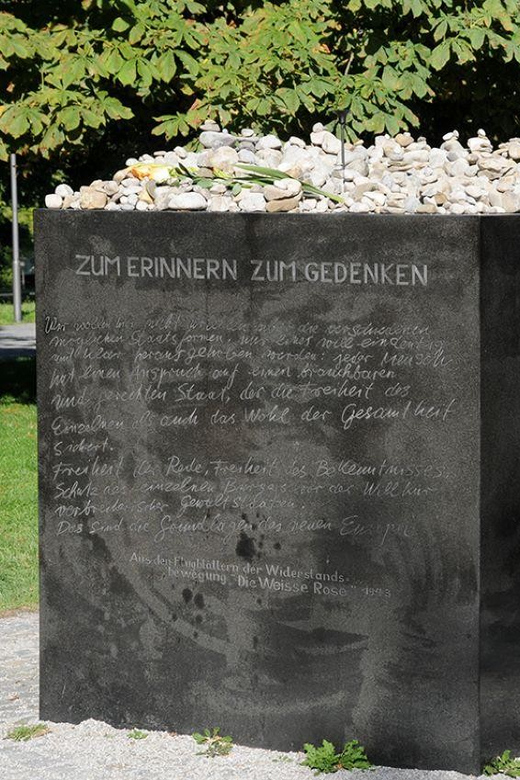
As you walk through the Old Town, the guide points out locations connected with Nazi activity, anti-Semitic actions, and public displays of ideology. The route is not only about grand headquarters. It also considers how the movement occupied ordinary civic spaces.
The tour includes discussion of anti-Semitic pogroms, the destruction of synagogues, and public book burnings. These subjects are difficult, and the walk does not treat them as dramatic set pieces. Their value lies in showing how persecution became visible, organized, and public.
You also hear about the Brownshirts, the paramilitary force that helped spread fear and violence. Seeing the surrounding streets gives you a sense of how political terror could happen in familiar places, close to shops, homes, and public squares.
The guide uses documents and historical photographs at various stops. This is one of the most useful parts of the experience. A surviving building can look harmless until you see an image of the same spot filled with Nazi flags, crowds, or military ceremony. The visual comparison narrows the gap between then and now.
I especially like this approach for anyone who has already visited memorial sites in Berlin, Nuremberg, or Dachau. Munich adds an earlier chapter: the city where the movement formed and learned how to present itself.
More Walking Tours in Munich
- Munich: Old Town & Viktualienmarkt City Walk in German
★ 4.7 · 2,304 reviews - Munich: Night Watchman Walking Tour
★ 4.7 · 2,092 reviews - Munich Ghosts and Spirits Evening Walking Tour
★ 5.0 · 1,900 reviews - Munich Old Town Walking Tour
★ 4.5 · 1,287 reviews
Former Nazi headquarters and the machinery of control
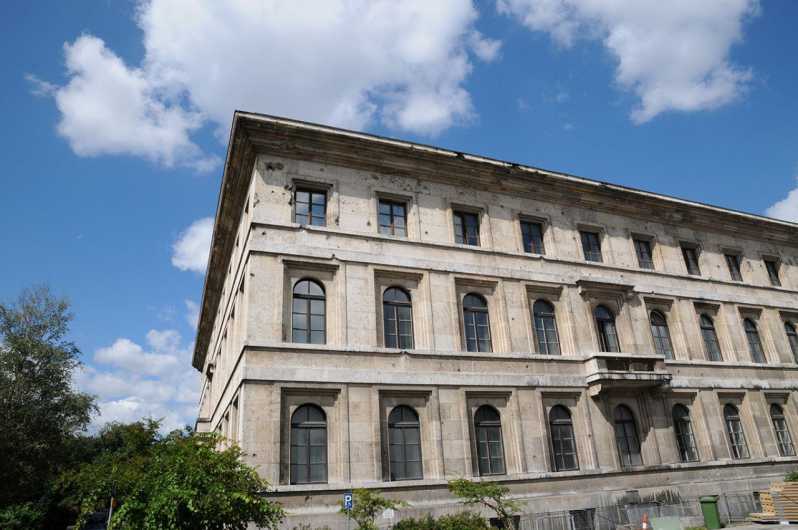
The walk continues toward the former Nazi headquarters, where Hitler exercised power over the party and helped direct a political system that soon controlled Germany.
The building is valuable not because it offers a theatrical ruin, but because it makes the scale of the organization easier to grasp. The Nazi Party required offices, administrators, propaganda workers, security forces, and public spaces for ceremony. Power had a physical address.
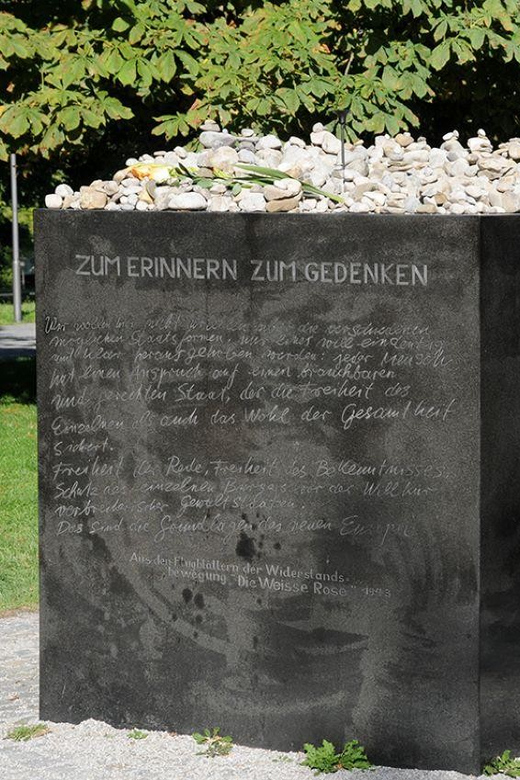
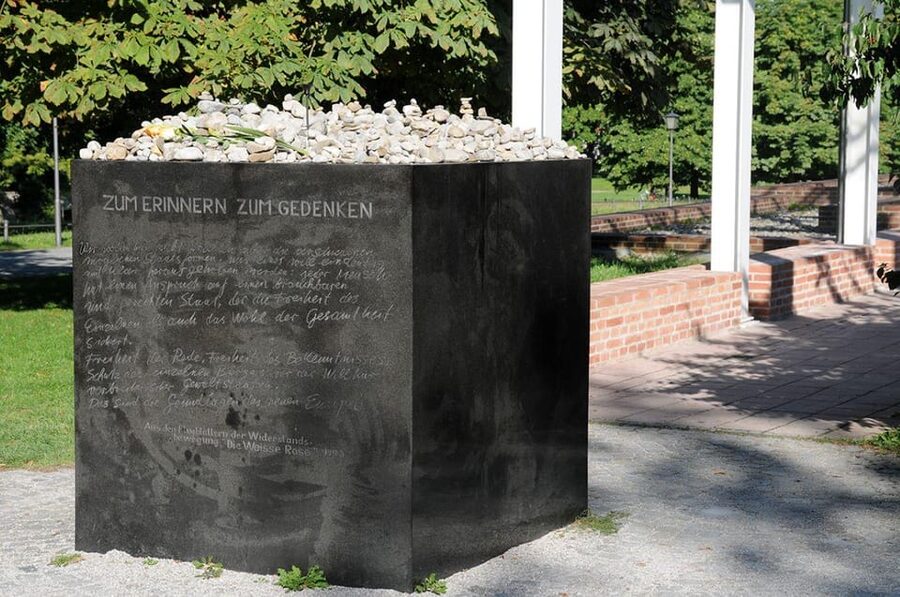
The tour places the headquarters beside the stories of people who resisted Hitler. This balance matters. Munich was central to Nazi power, but it was not filled only with willing followers. Some people opposed the regime and paid with their lives.
That part of the walk prevents the subject from becoming a story about an all-powerful dictator surrounded by a faceless population. It asks you to consider choices, courage, fear, and responsibility. The resistance stories also give the tour a human focus after the large political events.
Guide quality is crucial here. Karl has been praised for making the subject accessible to a solo participant, while Ina was appreciated for offering heartfelt responses rather than reciting a fixed script. The exact guide will vary, but those comments point to what you should hope for: clear facts, room for questions, and a willingness to treat the subject with care.
Königsplatz and the architecture of ideology
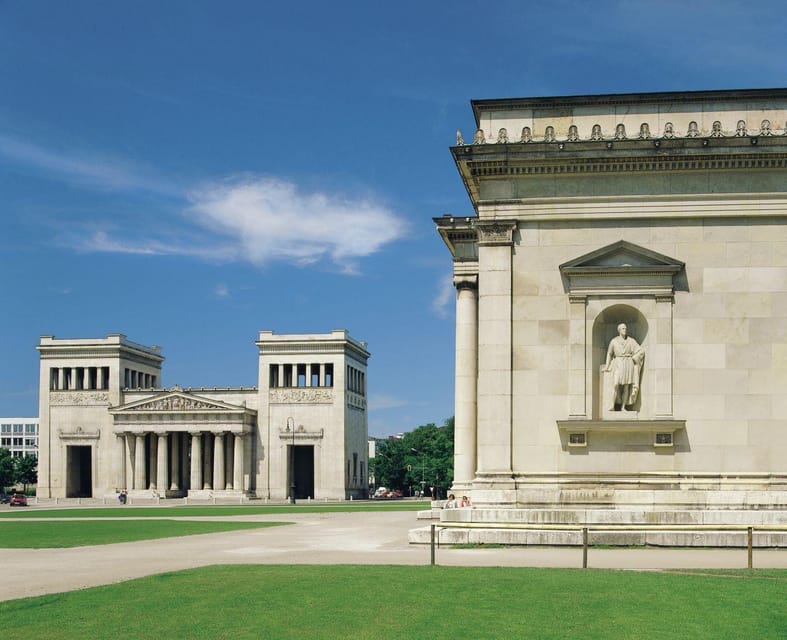
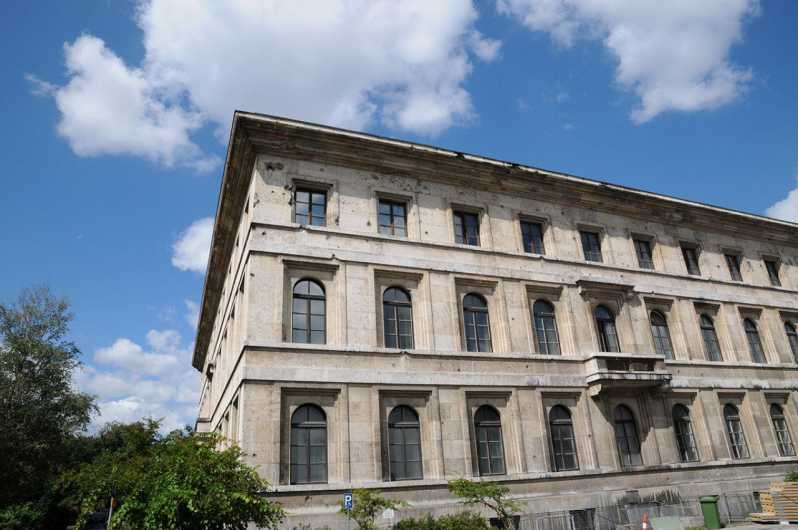
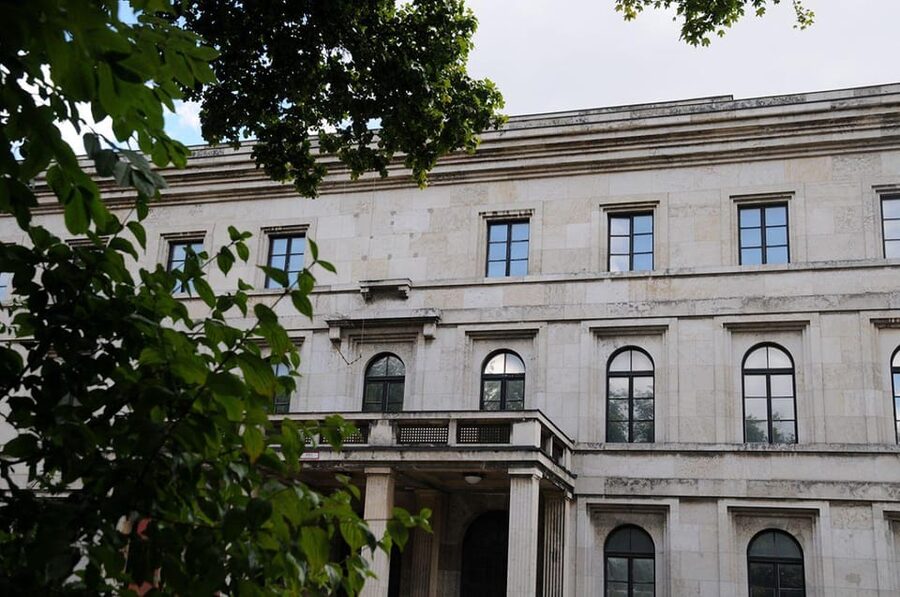
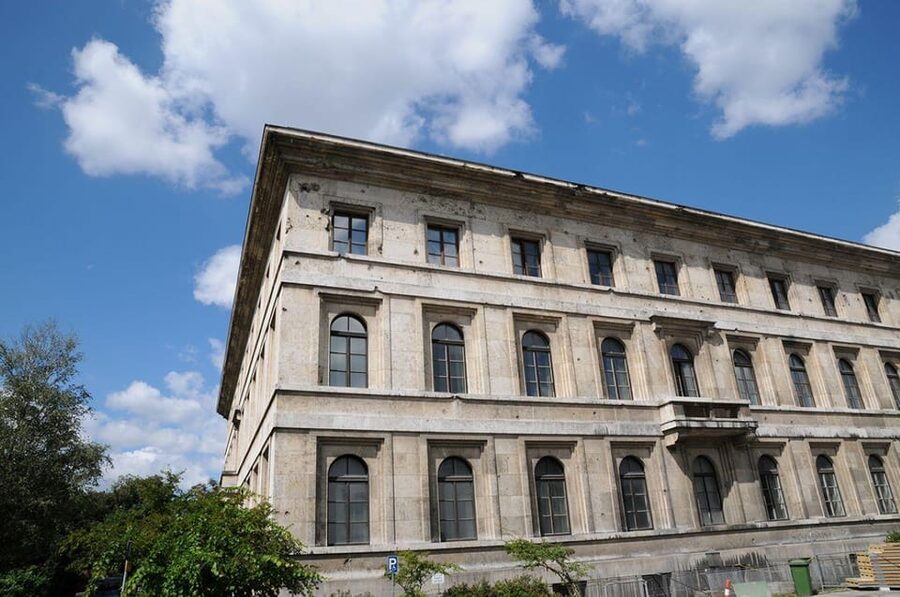
Königsplatz provides a powerful later stop. The square and surrounding district contain monumental buildings and structures associated with the Nazi era. Their survival creates one of the tour’s most striking contrasts.
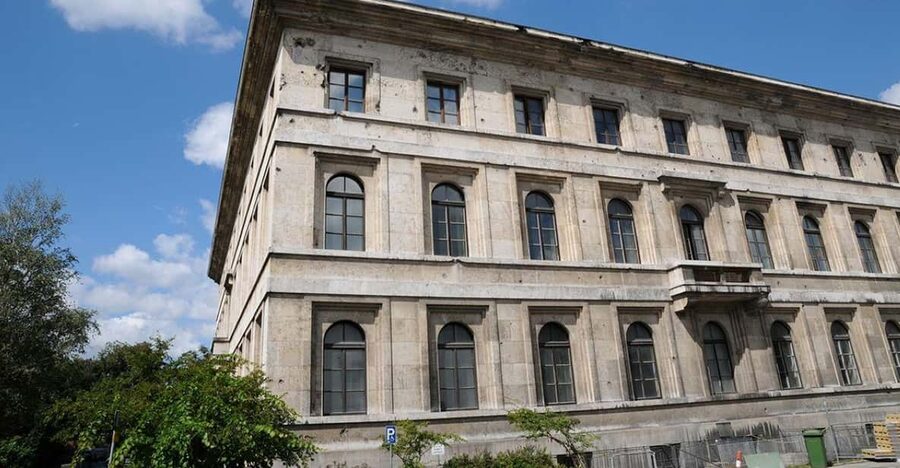
Large parts of central Munich were destroyed by Allied bombing. Yet several imposing buildings constructed or used by the Nazi regime remain. The result is unsettling: the physical symbols of dictatorship can outlast the people and system that created them.
Your guide explains how architecture was used to project authority. Monumental scale, formal spaces, and carefully staged ceremonies were not accidental decoration. They helped turn political power into something that looked permanent and grand.
The square also allows the tour to connect architecture with war. The buildings were part of a movement that promised national greatness, but its policies led to mass murder and a conflict that destroyed cities across Europe, including Munich itself.
You may find this stop visually impressive and morally uncomfortable at the same time. That is exactly why it works. The tour does not ask you to admire Nazi design in isolation. It shows how beauty, order, and scale can be used to serve hateful politics.
Seeing war damage beside memorials
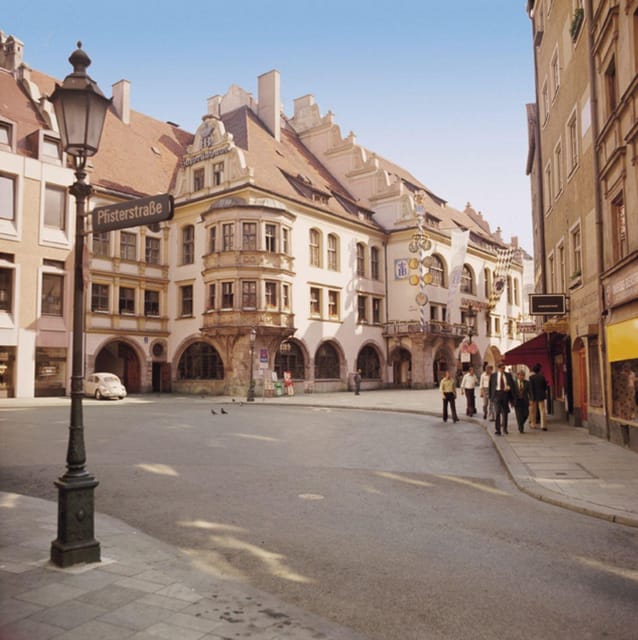
Munich’s surviving buildings do not tell the whole story. Along the route, you also encounter structures that still bear scars from the war Hitler unleashed.
These marks can be easy to miss when you are focused on cafés, shopping streets, and grand church towers. A guide helps you read the city differently. A repaired facade, altered building, or preserved trace can become evidence of both wartime destruction and postwar rebuilding.
The walk also visits memorials dedicated to victims of Nazism and to people who opposed Hitler. These sites shift the focus away from the perpetrators and toward the lives damaged or lost.
I appreciate that the experience links the physical remains of the regime with places of remembrance. If you only visit monumental Nazi architecture, you risk seeing the period through the eyes of the dictatorship. Memorials restore the human cost.
The tour’s subject matter includes Jewish persecution, destroyed synagogues, book burnings, and the wider violence of the regime. You should not expect a light sightseeing outing. Even the two-hour length can feel emotionally demanding, especially in cold or wet weather. Comfortable shoes and a drink are sensible choices, since transportation is not included and the route is walked outdoors.
How the guides shape the experience
The tour is led in English or German by a certified guide. That certification does not tell you exactly how the individual tour will feel, but the feedback points to a strong pattern: guides are praised for clear explanations, warmth, patience, and interaction.
Karl has been singled out for combining a welcoming manner with strong historical context. Ina was praised for adapting her talk to questions and sharing personal reactions instead of giving a stiff, memorized speech. Another guide was described as enthusiastic and interactive, which is useful when the subject covers complicated political events in a short time.
Your experience will depend on who leads your departure. Still, the format supports discussion better than a recorded audio guide. You can ask why one event mattered, clarify names and dates, or request more context about a building.
The use of pictures and documents is another advantage. Written history can feel abstract when you are walking through a modern city. Images give the guide a way to show the transformation of Munich and help you compare present-day buildings with their wartime appearance.
The tour has also been praised for working well for solo participants and mixed-age adults. One party ranging from 21 to 57 found the guide engaging and well informed. That suggests the material can suit different levels of prior knowledge, though you should still expect serious content rather than a casual city stroll.
Private group value at $259
The listed price is $259 per group of up to 25 people. That pricing changes the value calculation completely.
For a full private group, the cost works out to roughly $10 per person. For a party of four, it is about $65 each. For one person, the same price is much harder to justify unless you place a high value on a private guide and focused attention.
The private format gives you more control than a large public walk. You can ask questions without worrying about holding up dozens of people, and your guide can respond to the interests of your group. That is particularly useful for students, family groups, history-minded friends, or anyone who wants to connect Munich’s past with other sites visited during a Germany trip.
The tradeoff is that the tour covers a large subject in only two hours. You are paying for a clear route and guided interpretation, not an exhaustive study of National Socialism. If your main goal is a full-day examination of the regime, this walk will serve better as an introduction or a focused Munich chapter.
The cancellation terms make planning easier: you can cancel up to 24 hours ahead for a full refund, and you can reserve now while paying later. I would still check the departure time before booking, since the exact starting times depend on availability.
Who should take this walk?
I would choose this tour if you want to understand why Munich matters in the Nazi story rather than simply visit a famous memorial.
It suits:
- Adults and older teenagers with an interest in modern European history
- Solo visitors who prefer a live guide and the chance to ask questions
- Private groups that can share the $259 cost
- Visitors who want to connect buildings, political events, and resistance stories
- Anyone who has limited time but wants more context than a standard city walk provides
I would think twice if you are looking for a cheerful introduction to Munich. The subject includes persecution, political terror, war, and mass suffering. It is not suitable for children under 10 according to the activity information, even though one past booking included an eight-year-old who was treated patiently by the guide. I would follow the stated age guidance rather than count on an exception.
The route is wheelchair accessible, but you should still be ready for a two-hour outdoor walk. Transportation is not included. Bring comfortable shoes and a drink, and note that video recording is not allowed.
Should you book the Munich Third Reich tour?
I would book it if Munich is part of a serious history trip, or if you want to understand how an extremist movement gained a foothold in a real city.
The strongest reasons are the original locations, the historical photographs, and the guides’ reported ability to explain difficult material without turning it into a dry lecture. The most important caution is value: $259 is a good group price, but a costly choice for a solo visitor or couple.
Book it early if you are traveling with a larger private party and want a focused, thoughtful introduction to Munich’s role in National Socialism. Skip it if you prefer only light sightseeing, need a longer academic treatment, or cannot manage a serious two-hour walk. For the right audience, this is one of the more meaningful ways to see Munich beyond its palaces, beer gardens, and handsome squares.
FAQ
How long is the Munich Third Reich and WWII Walking Tour?
The walking tour lasts two hours.
Where does the tour meet?
Meet at the Mariensäule in the center of Marienplatz. It is the golden statue on a tall red marble column. Look for a guide carrying a blue bag marked Weis(s)er Stadtvogel.
Is the tour offered in English?
Yes. The live tour guide languages are English and German.
Is this a private tour?
Yes. The activity is described as a private group tour, with pricing for a group of up to 25 people.
Is the tour wheelchair accessible?
Yes, the activity is listed as wheelchair accessible.
Are children allowed on the tour?
The tour is listed as unsuitable for children under 10 years old.
What should I bring?
Bring comfortable shoes and drinks. Transportation is not included, and video recording is not allowed.
Just added around Munich
- Pub crawl incl. Oktoberfest museum guided tour with beer tasting (private)★ 5.0 · 5 reviews
- South Tyrolean specialties and wine tasting★ 5.0 · 5 reviews
- Size Matters Beer Tour Munich★ 4.6 · 105 reviews
- Short & sweet: Tasting the Viktualienmarkt★ 4.8 · 37 reviews
- Secret Food Tours Munich★ 4.8 · 5 reviews
- Munich: Romantic Wine Experience for Two at Viktualienmarkt★ 4.2 · 14 reviews
- Residence of Munich private tour with skip the line ticket★ 5.0 · 4 reviews
- Munich: Resistance against Hitler – Historical Walking Tour★ 5.0 · 5 reviews