
Reviewed · MUNICH TOURS
Munich: Scary Tour with actors in GERMAN
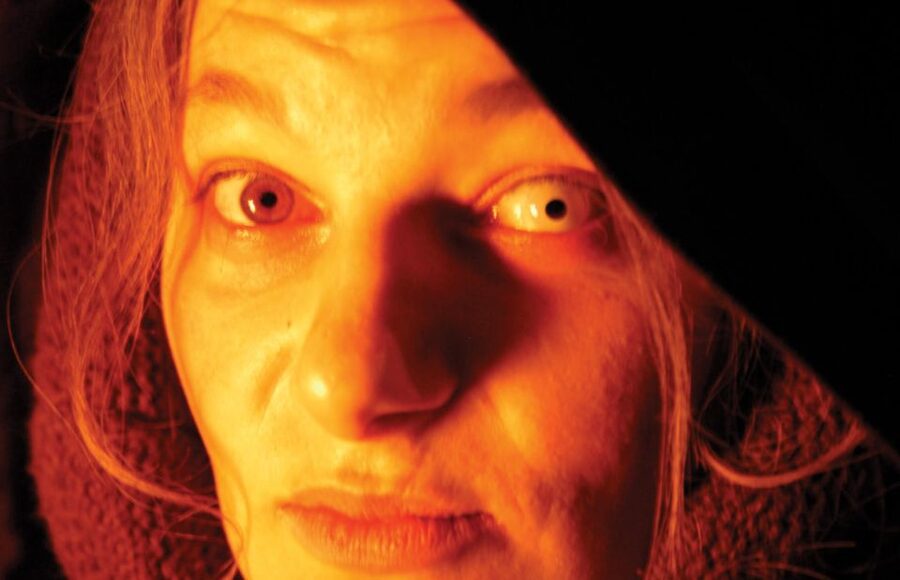
Dark stories make Munich feel startlingly close. This 90-minute evening walk turns the Old Town into a stage, with actors in historic dress bringing witch hunts, executions, prostitution, and old religious fears to life. I like the strong theatrical scenes and the way each performance carries real historical detail. I also like the route, which links major sights such as the Frauenkirche, St. Peter’s Church, and the Town Hall instead of keeping you in one small corner.
The main thing to consider is language. The tour is conducted entirely in German, and much of its appeal comes from quick dialogue and comic exchanges between the actors. If you do not understand German well, you may still enjoy the costumes and settings, but the stories and historical explanations will be difficult to follow.
In This Review
- Key points at a glance
- Starting beneath the Karlstor at dusk
- Neuhauser Tor and the road to punishment
- St. Michael’s Church and the danger of blaming witches
- The Schöner Turm and the unfortunate goldsmith
- The Frauenkirche and Munich’s devilish bargain
- Town Hall courtyard and the gold-making alchemist
- St. Peter’s Church and the life of a hangman
- The Old Town Hall and the former torture chamber
- Platzl, prostitution, and Munich after 1972
- How the acting changes the experience
- Price, language, and who gets good value
- Practical advice before you go
- Should you book the Munich Scary Tour?
- FAQ
- How long is the Munich Scary Tour?
- What language is the tour conducted in?
- Where does the tour meet?
- How can I identify the guide?
- Which Munich sights are included on the route?
- Is the tour wheelchair accessible?
- Does the tour operate in bad weather?
- Can I cancel for a full refund?
Key points at a glance
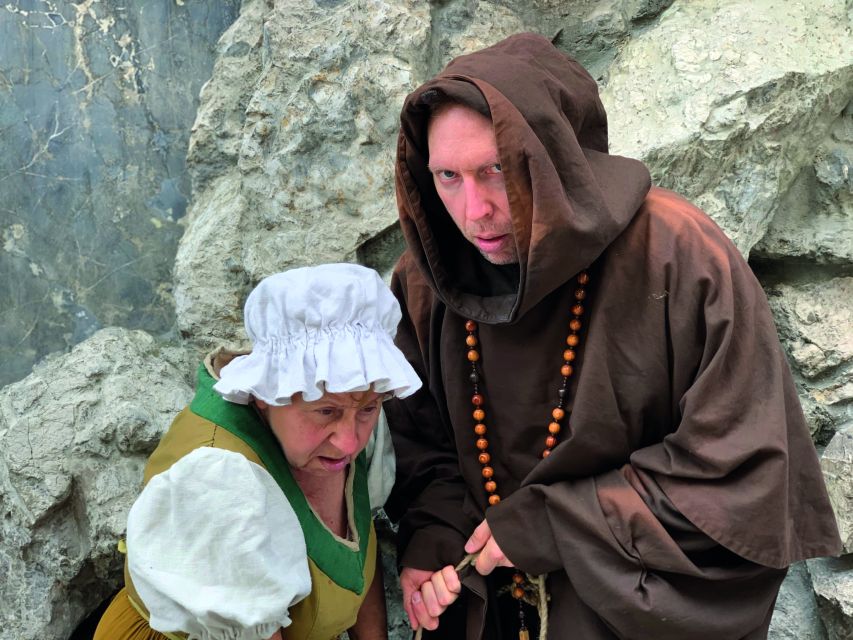
- Witch hunts take center stage: Learn why people blamed witches for disasters, how broomstick legends developed, and what strange ingredients appeared in old stories.
- Munich’s most famous churches become theatrical sets: The route includes St. Michael’s Church, the Frauenkirche, and St. Peter’s Church.
- The actors break up the walking: Historical figures interrupt the guide with short scenes, arguments, warnings, and comic moments.
- The subject matter is genuinely dark: Expect stories about torture, executions, prostitution, hangmen, alleged sorcery, and the devil.
- The route covers the central Old Town: You begin beneath the Karlstor at Karlsplatz and finish near the Old Town Hall and Platzl.
- The tour works best in German: Strong German comprehension matters more here than on a standard sightseeing walk.
Starting beneath the Karlstor at dusk
Meet beneath the archway of the Karlstor, the old gate at Karlsplatz, also called Stachus. Look for the guide carrying a large blue bag marked with the white words Weis(s)er Stadtvogel. That bright bag is the useful landmark in a busy central square.
The evening setting suits the subject. Munich’s center can feel polished and orderly by day, but this walk asks you to picture a different city, one of narrow streets, public punishments, religious fear, and official suspicion. The actors do not simply point at buildings and recite dates. They use the streets as a stage.
The tour lasts 90 minutes. That is long enough to cover a good stretch of the Old Town without turning into an exhausting history lecture. You should expect to walk between stops while listening to the guide and watching short performances. Since the tour goes ahead in rain or shine, dress for the forecast and wear shoes that can handle old city streets.
The group size is not stated, so you should not book this expecting a private performance. The exact starting time also changes, so check availability for the evening you want.
A few more Munich trips worth comparing
- From Munich: Neuschwanstein & Linderhof Castle Full-Day Trip
★ 4.5 · 12,494 reviews - Neuschwanstein & Linderhof Castle-Fairytale Day Tour from Munich
★ 4.5 · 7,275 reviews - Munich: Third Reich & WWII Walking Tour
★ 4.6 · 6,181 reviews
Neuhauser Tor and the road to punishment
The opening section deals with Neuhauser Tor, where people accused of crimes were led out of town toward execution. This is a sharp beginning because it places punishment into the daily life of the city. The gate was not just a handsome entrance. It marked a boundary between the protected town and the grim business carried out beyond it.
From there, the route follows historic Salzstraße toward the former Jesuit school. This section introduces the religious world behind many witch accusations. The tour looks at how fear, belief, and authority worked together, rather than presenting witchcraft as a string of spooky tales without context.
One of the early scenes centers on Duchess Renata and Jesuit Father Ignatius. Their argument brings you back to the 16th century, when a disaster during construction at St. Michael’s Church needed an explanation. When the church tower collapsed, blame fell on accursed bad women, a phrase that shows how quickly women could become convenient targets when events seemed impossible to explain.
The acting helps make this point clear. You are not only hearing that superstition existed. You are seeing how a public argument might have sounded and how religious ideas could shape decisions. That is one of the tour’s best features: the performances give the facts a human face.
St. Michael’s Church and the danger of blaming witches
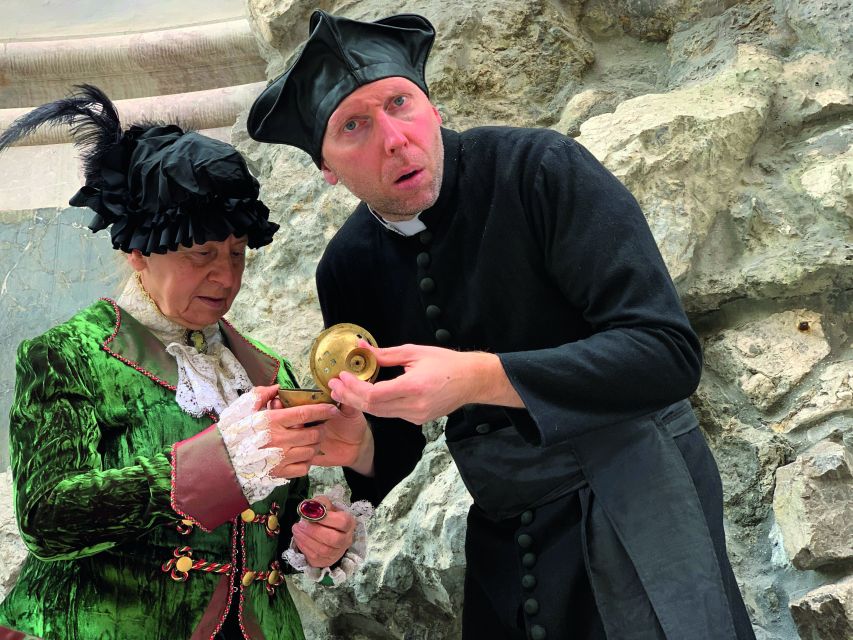
St. Michael’s Church is one of the route’s major landmarks, but the tour uses it for more than a quick architectural stop. Its construction becomes part of a story about fear, blame, and the need to find a cause for catastrophe.
The witch-hunt material is broad enough to keep the subject moving. You hear about potions, toads’ tongues, children’s hands, and broomstick rides. The broomstick question is especially useful because it takes a familiar image and asks where such a belief might have come from.
Do not expect a modern academic seminar. The tone is theatrical, sometimes deliberately playful, and the subject matter can be grisly. That contrast is part of the design. A comic moment can make the next unpleasant fact easier to remember, but it can also feel too light if you prefer solemn historical interpretation.
The strongest scenes are the ones that connect an odd belief to a real social fear. The actors help show how stories about witches were not harmless fairy tales. They could support accusation, punishment, and execution.
The Schöner Turm and the unfortunate goldsmith
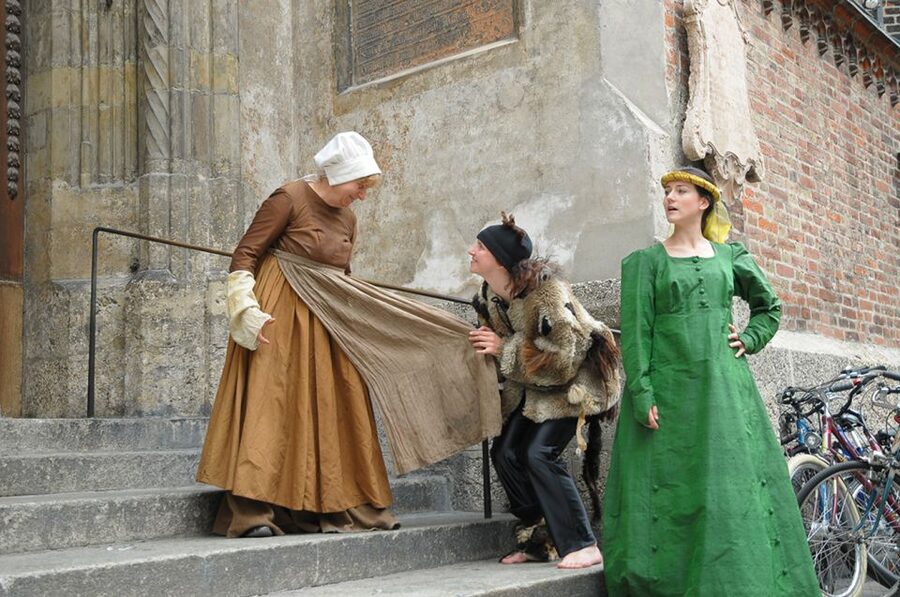
At the Schöner Turm, the focus shifts from witchcraft to a sad story about an unfortunate goldsmith. The change of subject keeps the tour from becoming a single long account of witch trials.
This stop also shows how the walk moves through different types of crime and misfortune. Some stories involve public authority, others involve rumor, and others reveal how people caught in the wrong place could suffer badly. The title of the tour may suggest a haunted attraction, but the material is more concerned with the human cost of old justice than with manufactured scares.
You should expect the actors to play recognizable historical types rather than create a horror show full of special effects. The available information does not indicate jump scares, elaborate props, or supernatural installations. The atmosphere comes from darkness, costumes, performance, and the buildings around you.
That makes the experience a better fit for someone who enjoys historical storytelling with a sinister edge. It is less suitable if you want a pure ghost walk or a polished stage production with sets and lighting.
Still Munich, at a slower pace:
- Dachau Concentration Camp Memorial Site Tour from Munich by Train
★ 4.5 · 5,637 reviews - Neuschwanstein Castle Tour from Munich
★ 4.5 · 5,117 reviews - Third Reich Walking Tour Munich
★ 4.5 · 4,291 reviews - Munich Hop-On Hop-Off Tour: 1-Day or 2-Day Ticket
★ 4.3 · 4,161 reviews
The Frauenkirche and Munich’s devilish bargain
The Frauenkirche provides the tour’s most famous supernatural episode. A strong blast of wind leads you to the church, where the Prince of Darkness appears in the story.
The central tale says the devil helped the master builder construct the church. You learn why the church is associated with wind, what the devil wanted in return, and the amusingly strange question of his shoe size. It is a memorable example of how local legends cling to major monuments.
This stop works because the building is already familiar to most people who spend time in Munich. The performance adds a second layer. Instead of seeing the Frauenkirche only as a landmark to photograph, you begin to notice how a dramatic building can collect stories about pride, danger, and supernatural bargains.
The devil scene also provides some welcome humor. Much of the tour concerns death and punishment, so a playful question about footwear gives the audience a chance to laugh without losing the period flavor. You may find the tone theatrical rather than frightening, especially if you have seen many traditional European devil legends.
Town Hall courtyard and the gold-making alchemist
Near the magnificent Town Hall, the tour introduces Marco Bragadino, an alchemist who claims he can make gold. He tries to persuade the group to take his arts seriously.
This episode brings a different kind of deception into the walk. Witch accusations often came from fear and suspicion, while alchemy could attract people through promises of wealth and secret knowledge. The performance lets you consider how easily people could be impressed by a confident specialist offering something impossible.
The Town Hall courtyard gives the scene a strong setting. You are surrounded by some of Munich’s grandest civic architecture while watching a character who represents ambition, fraud, or both. That contrast is central to the tour’s appeal: ordinary sightseeing and historical theater happen in the same space.
The acting also keeps the route from becoming monotonous. A guide speaking continuously for 90 minutes can lose an audience, especially after a full day of sightseeing. Here, the actors interrupt that rhythm. Recent ratings average 4.7 out of 5 from 59 assessments, and the most praised features are the lively performances, clear explanations, and the way the actors pull people out of passive listening.
St. Peter’s Church and the life of a hangman
At St. Peter’s Church, the subject turns to the everyday life of the executioner. You learn how a hangman looked, why ordinary people avoided him, and how someone might obtain a gallows rope.
This is one of the more useful sections because it moves beyond the execution itself. The tour asks what happened to the person assigned to carry out punishment. A hangman held an official job, yet his work could make him socially isolated. That uncomfortable position reveals how a city could depend on certain professions while treating the people who performed them as outsiders.
The material also returns to the unusual connection between hangmen and prostitution. The tour explores why these three groups, hangmen, prostitutes, and witches, were linked in Munich’s social imagination. One claim presented through the story is that hangmen could also act as pimps, giving the stop an unexpected and unsettling twist.
You will also hear about gallows ropes as objects connected with luck, fear, and folk belief. This is the kind of detail that can stay with you because it shows how execution affected daily customs, not only court records.
The stop includes the story of a beautiful woman escaping certain death. That gives the sequence a more personal turn and prevents it from becoming a simple catalogue of punishments.
The Old Town Hall and the former torture chamber
At the Old Town Hall, the tour crosses the site of the former torture chamber while the actors and guide recount gruesome stories. The setting carries more weight than a generic dark-room performance because you are standing in the historic center, close to the buildings where civic authority once operated.
The tour does not provide a detailed list of torture devices, so you should not expect a museum-style display or a full technical explanation of medieval punishment. Instead, the emphasis is on stories, atmosphere, and the role of public justice.
This section may be the hardest for younger children or anyone sensitive to descriptions of violence. The experience is called scary, but the fear comes mainly from historical subject matter and theatrical presentation. There is no indication that the tour relies on graphic effects.
For adults who like context, the Old Town Hall is an effective late stop. By this point, you have heard about accusations, religious pressure, public executions, and social outsiders. The torture chamber story pulls those threads together and shows how punishment could become part of civic life.
Platzl, prostitution, and Munich after 1972
The walk continues to Platzl, once part of Munich’s red-light district. The story reaches into the 20th century, explaining that prostitution remained in the historic center until the 1972 Olympic Games.
This is an important change of period. The tour is not limited to medieval legends and early modern witch hunts. It also examines how Munich reshaped its public image as a clean, respectable city. The removal of prostitution from the center shows that urban history includes regulation, reputation, and political decisions, not only old churches and royal buildings.
The connection to the Spider Murphy Gang song Skandal im Sperrbezirk adds a modern cultural reference. If you know the song, the stop has an extra layer. If you do not, the historical point still works: Rosi and the women associated with the song belong to a Munich story about who was allowed to remain visible in the city center.
This final subject gives the walk a strong ending because it links old ideas about morality to more recent efforts to control public space. The central district may look tidy today, but the tour reminds you that its social character has changed repeatedly.
How the acting changes the experience
The professional actors are the reason to choose this walk over a standard Old Town tour. Their scenes break up the spoken history and make each stop feel different. You may see an argument, meet a sinister character, hear a plea, or watch someone try to convince the group of an absurd claim.
Several recent scores praise the tour for being entertaining while still teaching substantial background. The performances are also described as funny, engaging, and effective at explaining connections. That balance matters. The material includes torture and executions, but the presentation is not relentlessly grim.
The actors may involve people in the group. That can make the evening more memorable, but it also means you should be comfortable with some audience participation. The exact level of involvement can vary by performance, so you should not assume you will only watch from the sidelines.
The guide remains important. The actors provide the dramatic moments, while the guide supplies the factual thread connecting Munich’s buildings, laws, beliefs, and social customs. When the balance works, you get both a show and a city walk.
Price, language, and who gets good value
At $46 per person, this is not the cheapest way to see Munich’s center. You are paying for a live performance team as well as a guide, not just for directions between landmarks.
I think the price is reasonable if you value theater and want a focused evening activity. The route covers several major sights, and the actors add something you would not get from a basic orientation walk. The strongest praise centers on the performances and the amount of information packed into the 90 minutes.
The value drops if you mainly want architectural facts, a quiet walk, or an English-language introduction. The tour is in German only, and one assessment specifically noted the lack of English or Chinese guiding. Even fluent German speakers should be ready for historical terms, old legends, and fast exchanges between characters.
The tour is wheelchair accessible, and it operates rain or shine. You can cancel up to 24 hours before the start for a full refund, and the reserve-now, pay-later option lets you keep your plans flexible. Those policies are useful, but the real booking decision is still about language and subject matter.
Practical advice before you go
Arrive at Karlsplatz with enough time to find the Karlstor archway and the blue guide bag. Central Munich is easy to reach, but the meeting point can be busy, especially in the evening.
Wear comfortable shoes and bring rain protection. The walk continues in poor weather, and the theatrical mood may be less enjoyable if you are cold or wet.
Read about the route before booking if you are traveling with children. The material includes witch hunts, prostitution, torture, executions, and gallows. The actors may make parts funny, but the themes remain adult in places.
If you are visiting Munich for the first time, this tour is best taken after you have seen a few major sights in daylight. Then you can recognize the Frauenkirche, Town Hall, St. Peter’s Church, and Old Town streets while hearing the darker stories attached to them.
Should you book the Munich Scary Tour?
Book it if you understand German well and want your Old Town sightseeing with a theatrical twist. The combination of professional actors, historic costumes, serious research, and strange local legends gives you more than a routine city walk.
Skip it if you need English, Chinese, or another language, or if torture and execution stories are not your idea of an evening out. The tour is also less useful for visitors who want a broad introduction to Munich rather than a concentrated look at crime, superstition, sex work, and punishment.
For the right audience, $46 is a fair price for 90 minutes of live storytelling in the city streets. The best reason to book is not simply that the tour is scary. It is that the acting makes old fears and social rules easier to understand, and it leaves you looking at Munich’s grandest landmarks with a more complicated eye.
FAQ
How long is the Munich Scary Tour?
The tour lasts 90 minutes.
What language is the tour conducted in?
The live guide and the actors conduct the tour in German.
Where does the tour meet?
The meeting point is beneath the archway of the Karlstor at Karlsplatz, also known as Stachus.
How can I identify the guide?
The guide carries a large blue bag with the white words Weis(s)er Stadtvogel.
Which Munich sights are included on the route?
The route includes Neuhauser Tor, Salzstraße, St. Michael’s Church, the Frauenkirche, the Town Hall courtyard, St. Peter’s Church, the Old Town Hall, and Platzl.
Is the tour wheelchair accessible?
Yes, the activity is listed as wheelchair accessible.
Does the tour operate in bad weather?
Yes. The tour takes place rain or shine.
Can I cancel for a full refund?
Yes. You can cancel up to 24 hours before the tour for a full refund.
Just added around Munich
- Pub crawl incl. Oktoberfest museum guided tour with beer tasting (private)★ 5.0 · 5 reviews
- South Tyrolean specialties and wine tasting★ 5.0 · 5 reviews
- Size Matters Beer Tour Munich★ 4.6 · 105 reviews
- Short & sweet: Tasting the Viktualienmarkt★ 4.8 · 37 reviews
- Secret Food Tours Munich★ 4.8 · 5 reviews
- Munich: Romantic Wine Experience for Two at Viktualienmarkt★ 4.2 · 14 reviews
- Residence of Munich private tour with skip the line ticket★ 5.0 · 4 reviews
- Munich: Resistance against Hitler – Historical Walking Tour★ 5.0 · 5 reviews
Munich Tours, compared.
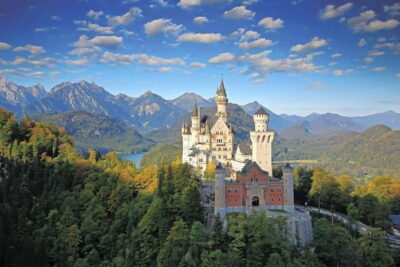
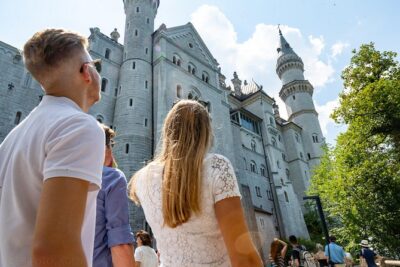
Neuschwanstein & Linderhof Castle-Fairytale Day Tour from Munich
Read our review →
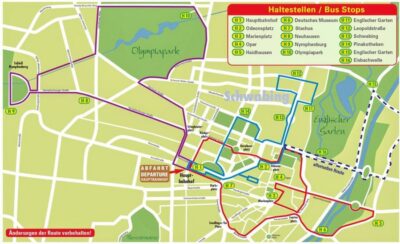
Munich Hop-On Hop-Off Tour: 1-Day or 2-Day Ticket
Read our review →
Premium Neuschwanstein Castle and Linderhof VIP Tour from Munich
Read our review →
Old Town & Viktualienmarkt City Walk in German
Read our review →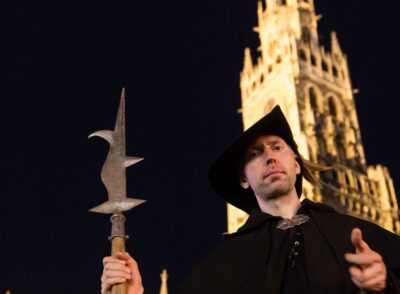
Browse the lists this tour appears in