
Reviewed · SCAVENGER HUNTS AND ESCAPE GAMES
Munich: Scavenger Hunt Self-Guided Tour
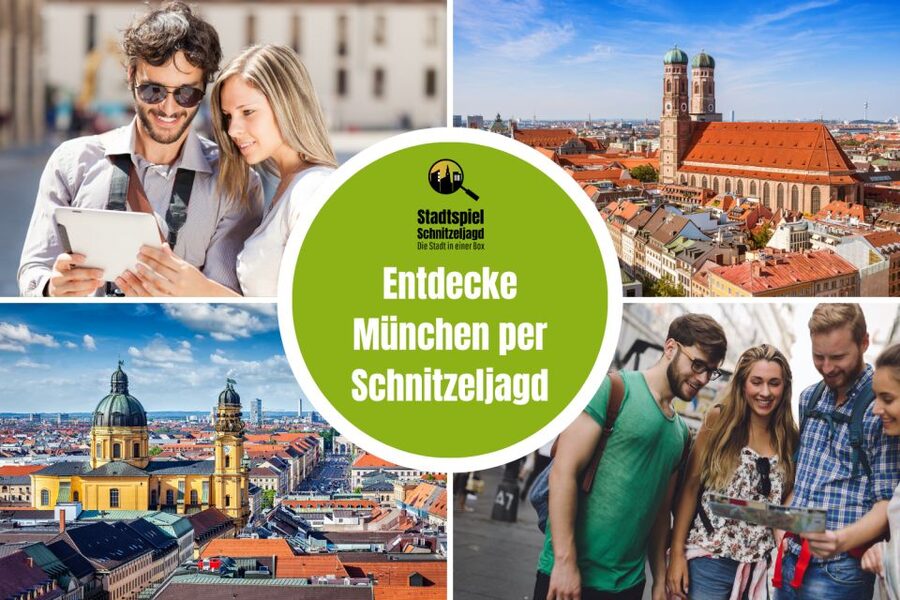
Munich rewards curious walkers. This self-guided hunt turns the old town into a puzzle trail, taking you from Karlstor and Stachus to Frauenkirche, Marienplatz, and Viktualienmarkt. I like the freedom to pause for photos or a meal, and I like that one box can cover a group of up to 10 people. The main concern is that the riddles may feel too easy, and the advertised four-and-a-half-hour outing can take much less time.
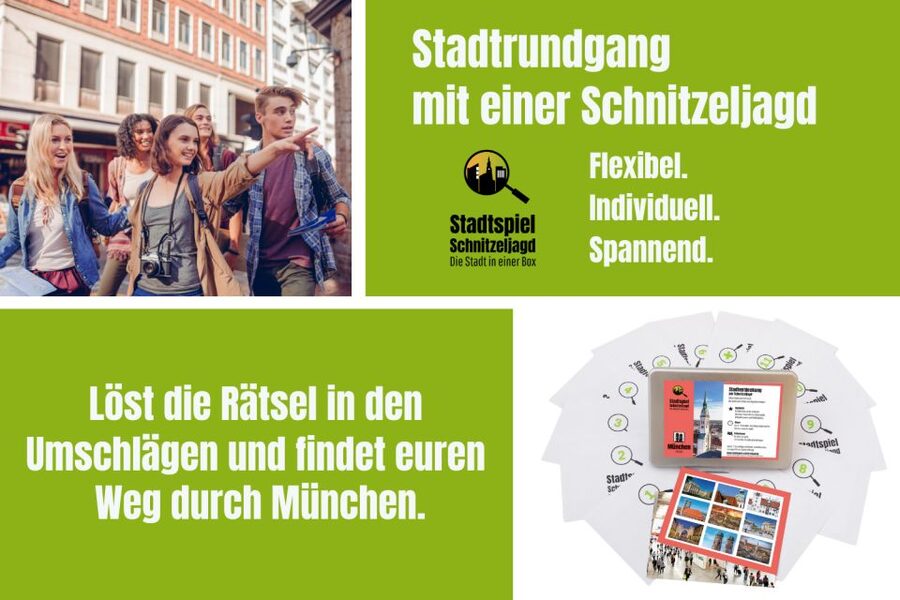
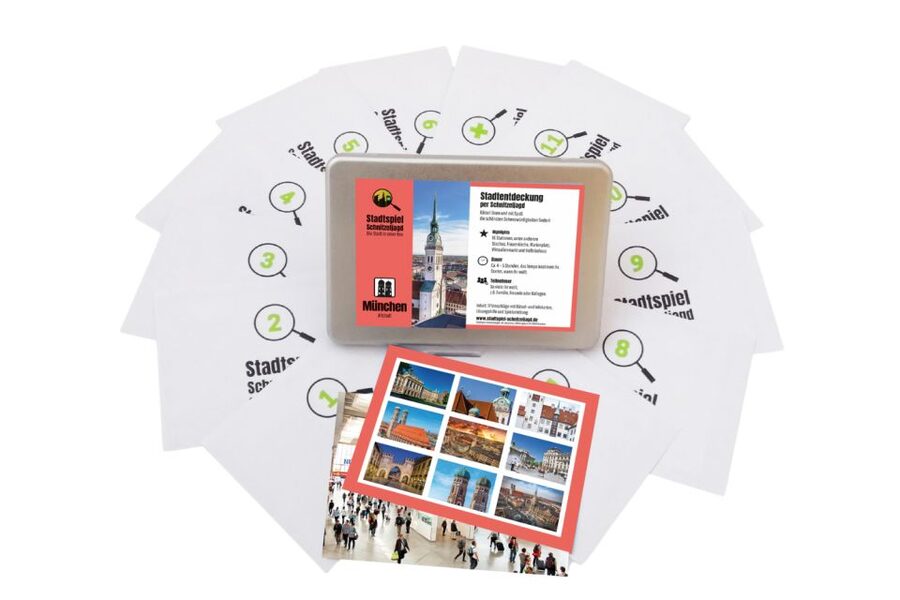
You receive 16 numbered envelopes filled with directions, puzzles, facts, and historical notes, plus an emergency envelope containing the answers. There is no guide waiting at the start, so you set the pace and choose the date after the box arrives. That independence works well for families, friends, and small teams, but less so if you want a lively local guide or detailed commentary at every stop.
In This Review
- Key points at a glance
- Starting with Karlstor and Stachus
- Neuhauser Straße, the Bürgersaal, and St. Michael’s Church
- Frauenkirche gives the route its Munich landmark
- Marienplatz brings together the Old and New Town Halls
- Viktualienmarkt adds a practical Munich stop
- What comes inside the metal box
- The route is flexible, but not always current
- How much time should you allow?
- Is $52 good value for a group?
- Who will enjoy this Munich hunt most?
- Booking advice and final verdict
- FAQ
- Where does the Munich scavenger hunt start?
- Is a tour guide included?
- Can I start the hunt at any time?
- What is included in the box?
- How long does the activity take?
- How many people can join one booking?
- Are food, drinks, and entrance fees included?
- How is the scavenger hunt box delivered?
- What should I bring?
Key points at a glance
- Sixteen envelopes guide the route: Each envelope points you toward the next stop and mixes directions, riddles, facts, and background information.
- The walk begins at Munich’s main station: You move through Karlstor, Stachus, Neuhauser Straße, the Bürgersaal, St. Michael’s Church, Frauenkirche, Marienplatz, and Viktualienmarkt.
- The whole group shares one box: The $52 price covers up to 10 people, making the cost more attractive when several people play together.
- You control the clock: You can begin on any date and at any time after receiving the box, and you can pause whenever you want.
- The challenge level is modest: Some people find the puzzles fun and useful for team building, while others find them repetitive or too simple.
- The route may need a little flexibility: At least some stops, such as a museum or fountain, may no longer match the printed directions, so you may need to use the solution card.
Starting with Karlstor and Stachus
The route starts near Munich’s main station, giving you a practical place to begin a first look at the city center. From there, the clues lead toward Karlstor and the broad square known as Stachus.
Karlstor is one of the old gates into Munich. It gives the opening section a clear sense of place: you are not simply following a phone pin from one anonymous corner to another. You are moving through the historic edge of the old town, with the scavenger hunt asking you to observe details along the way.
The game format matters here. Instead of receiving a long introduction from a guide, you read a clue, inspect your surroundings, and work out where the next envelope should take you. I find that this can make a familiar sightseeing route feel more active. You are looking at the buildings with a purpose.
The drawback is that the first puzzles may not challenge experienced puzzle fans. A person who already knows central Munich may solve some clues quickly. If your group includes adults who want difficult logic problems, you may wish the questions demanded more local knowledge or closer observation.
More Scavenger Hunts in Germany:
- Hamburg: Scavenger Hunt Self-Guided Tour for Children
★ 4.5 · 319 reviews - Dresden: Old Town Self-Guided Scavenger Hunt Tour
★ 4.5 · 151 reviews - Berlin: Self-Guided Family and School Class Scavenger Hunt
★ 4.6 · 128 reviews
Neuhauser Straße, the Bürgersaal, and St. Michael’s Church
The next section follows Neuhauser Straße, one of the best-known pedestrian routes through the old town. The route includes the Bürgersaal, or citizen’s hall, and St. Michael’s Church.
These stops give the walk more substance than a simple point-to-point game. The Bürgersaal is tied to Munich’s civic and religious life, while St. Michael’s is one of the city’s major churches. The envelopes provide information as well as directions, so you get at least some context for what you are seeing.
You should treat the printed information as an introduction, not a full guided tour. One criticism of the experience is that some sights receive only brief treatment, with general suggestions that it is worth looking inside a church or building. If you want architectural detail, dates, artistic background, or a careful explanation of Munich’s role in Bavarian history, you will need another source.
Still, the self-guided setup has a real advantage. You do not have to keep up with a group while someone explains every stop. You can take a quiet look inside a church, stop for a photograph, or continue when your group is ready. The box is especially handy for families because children can help read clues and search for the next detail.
Frauenkirche gives the route its Munich landmark
The route continues to Frauenkirche, the great cathedral with its distinctive twin towers. This is one of the city’s essential sights, and placing it on the hunt gives the route a strong central landmark.
A clue-based visit can change how you approach a major church. Instead of arriving, taking a quick picture, and moving on, you have a reason to notice the building and connect it to the next stage of the game. The envelope may also encourage you to use the information provided before deciding how long to stay.
Keep your expectations measured. The game does not include an entrance fee, a guide, or guaranteed access to every interior space. If you want to go inside any sight, check conditions on the day and allow extra time. The activity price covers the scavenger hunt materials only.
This is also a good point to pause. The instructions allow you to stop at any time, which is useful if your group wants coffee, lunch, or a closer look at the cathedral. The flexible timing is one of the strongest reasons to choose this format over a scheduled walking tour.
Marienplatz brings together the Old and New Town Halls

From Frauenkirche, the clues lead to Marienplatz, Munich’s central square. Here you see both the Altes Rathaus, or Old Town Hall, and the Neues Rathaus, or New Town Hall.
This section gives you the most classic Munich sightseeing experience in a compact area. The Old Town Hall has a different character from the ornate New Town Hall, and the two buildings help explain how the city’s civic center developed over time. The hunt uses the square as a puzzle setting, so your group can compare details, read the information, and work out the next instruction without a guide directing every move.
Marienplatz can also be the busiest-feeling part of the route. Your group needs to stay alert while reading clues and moving between points. The self-guided format means you are responsible for keeping the box together and watching where you are going.
If you have limited time in Munich, this part of the walk makes the activity useful. You see several major sights in the old town without committing to a fixed departure time. If you already know Marienplatz well, though, the puzzles may feel more like a light game than a fresh discovery.
A few more Germany trips worth comparing
- Berlin: Reichstag, Dome and Government District Guided Tour
★ 4.7 · 18,288 reviews - Dresden: Semperoper Tickets and Guided Tour
★ 4.7 · 12,102 reviews - Berlin: Government District around the Reichstag Guided Tour
★ 4.7 · 8,447 reviews - Hamburg: Elbphilharmonie Plaza Guided Tour
★ 4.7 · 5,882 reviews
Viktualienmarkt adds a practical Munich stop
The final major stop is Viktualienmarkt, the city’s well-known food market. This changes the tone of the walk. After churches, gates, and town halls, you reach a place connected with everyday food shopping and Munich’s public life.
I like this kind of ending because it gives you a natural place to pause and decide what to do next. Food and drinks are not included, but you can arrange your own break around the market. Since the activity is self-guided, you are not being hurried away just as you start feeling hungry.
The market is also a good test of the route’s flexibility. You may want to spend more time here than the puzzle requires. You can do that, but remember that the advertised duration is a guideline rather than a strict schedule. One person completed the hunt in about an hour and a half, while the stated duration is 270 minutes. Your pace, group size, time spent at sights, and willingness to stop will determine the real length.
What comes inside the metal box
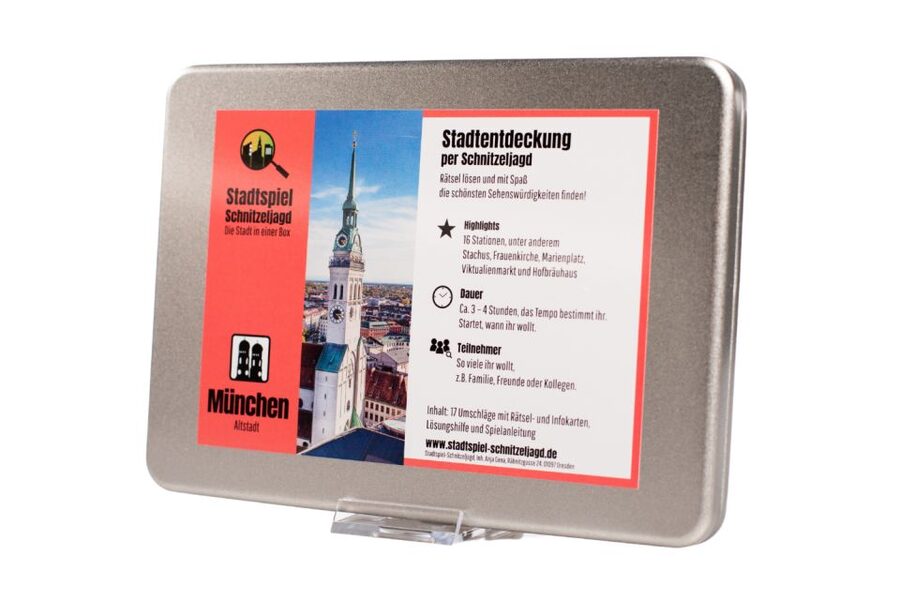
The physical format is part of the appeal. The scavenger hunt arrives in a metal box containing 16 numbered envelopes. Each envelope includes some combination of a riddle, directions, information, and interesting facts.
I prefer this hands-on approach when I am walking with children or a group of friends. Nobody needs to stare at a phone for the entire route, and solving the next clue becomes a shared task. The box also gives the experience a small sense of occasion. Opening the next envelope feels more like playing a game than following a standard sightseeing worksheet.
The emergency envelope contains all the solutions. That is useful when a clue is unclear, a stop has changed, or your group simply wants to keep moving. I would not treat it as cheating. A self-guided activity needs a backup, and getting stuck at one location can drain the fun quickly.
The materials have limits. The puzzles follow a repeated structure, and several people have found them easy, especially if they already know Munich. If you want a serious puzzle challenge, this may disappoint. If you want a light activity that gets your group walking and talking, the simple format is easier for mixed ages and abilities.
The route is flexible, but not always current
The biggest practical strength is independence. You can start on any date and at any time after the box reaches you. There is no guide at the meeting point, no required departure slot, and no need to finish in one continuous stretch.
That flexibility works especially well for a weekend schedule. You could begin in the morning, pause for lunch at Viktualienmarkt, or stop for photographs around Marienplatz. You can also adjust the pace for children, older family members, or anyone who wants more time inside a church.
There is a tradeoff. Printed materials can age. One stop described as a museum or fountain was no longer available, leaving the group dependent on the solution card. You should expect to use common sense if a location has changed. The route appears designed around a set sequence, but the city itself does not promise to remain exactly as it was when the clues were written.
For that reason, I would bring a phone with maps, even though the game is not presented as a digital tour. You may not need it for every clue, but it can help you confirm the route or bypass a changed stop. That is practical insurance, not a replacement for the box.
How much time should you allow?
The official duration is 270 minutes, or four and a half hours. That figure makes sense if you walk slowly, read all the information, stop for photographs, and include a meal or coffee break.
Do not assume you must spend the full four and a half hours solving puzzles. The route’s stations are fairly close together, and one person finished in roughly 90 minutes. A fast adult group familiar with Munich may move through the clues much more quickly than a family stopping at each sight.
I would plan two to four hours, with extra time if you want to visit interiors or eat at the market. The activity is at its best when you resist the urge to race. If speed is your main goal, you may feel the box does not provide enough content for the advertised duration.
Comfortable shoes are essential. This is a walking route through central Munich, and the box itself is one of the few things you need to carry. Food, drinks, public transportation, attraction admission, and travel to and from the start are all separate costs.
Is $52 good value for a group?
The price is $52 per group of up to 10 people. That is a sensible rate for a large family or friend group. Ten people sharing the cost pay only a little over $5 each, before any food, transport, or admission expenses.
For two people, the calculation is less favorable. You are paying for a physical box, 16 envelopes, and the route design, but the short completion time and easy puzzles may make the cost feel high. The experience provides structure and entertainment, not a full guided tour.
I see the strongest value in the group format. A family can use the hunt to give children a role, and a team can use it as a light team-building activity. The clues create conversation and shared decisions, which can be more memorable than walking silently behind a guide.
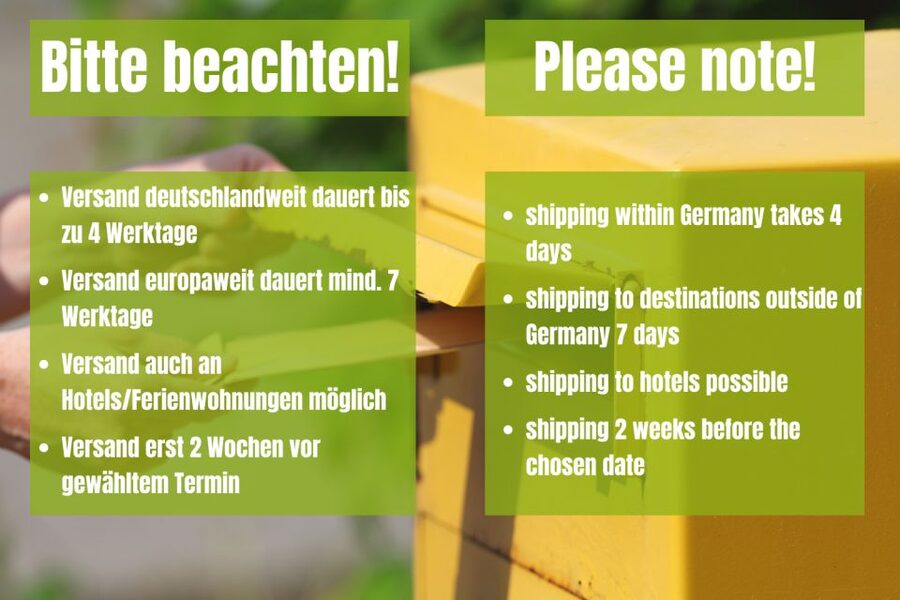
You should also factor in delivery. The box is mailed to you, with shipping within Germany taking up to four working days. It is sent no earlier than two weeks before the selected date, and pickup in Munich is not available. Provide a reliable shipping address and order with enough time before your trip.
Who will enjoy this Munich hunt most?
I would recommend it for:
- Families who want sightseeing with a game attached
- Friends who prefer to explore without a guide
- Small groups looking for a simple team-building activity
- Visitors who want a flexible start time
- People who enjoy physical clue cards more than phone-based tours
I would be cautious if you want a demanding puzzle. The riddles may be too simple for experienced escape-room fans or anyone who already knows central Munich. I would also choose a guided walking tour instead if your priority is detailed information about architecture, Bavarian politics, or church interiors.
The activity works best when you see it as a sightseeing framework. It gives your group a reason to move through the old town, notice landmarks, and share decisions. It is not meant to replace a historian or local guide.
Booking advice and final verdict
Book this hunt if you value control more than expert commentary. The ability to start whenever you wish, pause for food, and continue at your own speed makes it a useful option for a family day in Munich.
I would be less eager to book it for only two adults who already know the old town and want difficult puzzles. In that case, the $52 price may not match the amount of challenge or explanation. For a larger group, the cost becomes easier to justify, especially if the goal is a relaxed walk with a few laughs and plenty of landmark stops.
Before ordering, allow time for the box to arrive and accept that one printed location may have changed. Bring comfortable shoes, keep the solution envelope available, and use the four-and-a-half-hour duration as a generous window rather than a promise. For the right group, this is a pleasant way to connect Munich’s main sights with a little friendly competition.
FAQ
Where does the Munich scavenger hunt start?
The scavenger hunt starts at Munich’s main station. The route then leads through the old town and includes Karlstor at Stachus.
Is a tour guide included?
No. This is a self-guided activity, and there is no guide at the meeting point.
Can I start the hunt at any time?
Yes. You can start on any date and at any time after you have received the scavenger hunt box.
What is included in the box?
The box includes 16 envelopes with riddles, directions, information, and interesting facts. It also includes an emergency envelope with all solutions.
How long does the activity take?
The stated duration is 270 minutes. Your actual time may be shorter or longer depending on your walking speed, puzzle-solving, sightseeing, and breaks.
How many people can join one booking?
One booking covers a group of up to 10 people.
Are food, drinks, and entrance fees included?
No. Food and beverages, entrance fees, transportation tickets, and travel to and from the tour are not included.
How is the scavenger hunt box delivered?
The box is sent by mail. Shipping within Germany can take up to four working days, and the box is shipped no earlier than two weeks before the selected date. Pickup in Munich is not possible.
What should I bring?
Bring the scavenger hunt box and comfortable shoes. A phone may also be useful if you encounter a location that has changed, but the required game materials are supplied in the box.
Just added around Germany
- Private Walking Tour in Berlin: Hitler’s Germany & WWII★ 5.0 · 7 reviews
- The History of Berlin: WWII PRIVATE Walking Tour With Locals★ 5.0 · 209 reviews
- Private Berlin WWII and Cold War History Tour with Local Expert Guide★ 5.0 · 28 reviews
- Private Walking Tour Berlin 3 hours: Brandenburg, Historic Center★ 5.0 · 7 reviews
- Berlin: Private Bike Tour of the Berlin Wall and Third Reich★ 5.0 · 23 reviews
- Berlin: Guided Private Bike Tour to Explore the Highlights★ 5.0 · 12 reviews
- Berlin Photography Masterclass – Private Photography Lesson★ 4.5 · 23 reviews
- Group Driving Tour 1 to 6 people. Berlin Shore Excursion incl pick-up at Port★ 5.0 · 8 reviews
Scavenger Hunts and Escape Games, compared.

Self-Guided Family and School Class Scavenger Hunt
Read our review →
Escaping and spying on the Berlin Wall Scavenger hunt
Read our review →
Leipzig City Centre: Scavenger Hunt Self-Guided Tour
Read our review →
Browse the lists this tour appears in