
Reviewed · OLD TOWN TOURS
Munich: Walking Tour Old Town 3D VR Tour in GERMAN
History gets a clever makeover here. This two-hour German walking tour uses VR glasses and reconstructed 3D images to show how Munich’s Old Town looked in earlier centuries. I like the way it connects familiar places with their past, and I like the guide-led storytelling, which adds meaning to details you could easily walk past. The main drawback is the technology: the images are still pictures, not moving virtual reality scenes, and some participants have found the glasses less useful than the phone itself.
The tour costs about $37 per person, so you are paying for more than a standard walk around the square. I think the price makes sense if you enjoy history, visual aids, and a guide who brings old Munich to life. It is less convincing if you expect a polished, fully interactive VR attraction.
In This Review
- Key points at a glance
- What this Munich tour is really offering
- Meeting the guide at Orlandohaus
- Marienplatz in 1570
- Marienplatz around 1870
- Platzl in 1895
- Hofbräuhaus then and now
- The guide matters more than the gadget
- How good is the VR technology?
- Is $37 a fair price?
- Who should book this walk?
- Should you book the Munich 3D VR tour?
- FAQ
- How long does the Munich 3D VR tour last?
- What language is the tour conducted in?
- Where is the meeting point?
- How do I find the guide?
- What must I bring?
- Are the VR glasses provided?
- What places and time periods does the tour show?
- Is the tour wheelchair accessible?
Key points at a glance
- Marienplatz becomes two different centuries: The western side takes you to 1570, while the eastern side shows the square around 1870.
- The Medieval grain market is part of the story: You see where executions took place and learn about the unusual disgraceful donkey.
- Platzl appears in 1895: The tour explains how this area developed into the Munich quarter you see today.
- The guide is the heart of the experience: The strongest praise goes to the warm, lively delivery and clear historical explanations.
- Bring your own charged smartphone: You must download an app at the meeting point and place your phone inside the VR glasses.
- The glasses have limits: The technology shows reconstructed images, and several participants found the phone screen clearer.
What this Munich tour is really offering
This is not a headset-based computer game. Think of it as a guided Old Town walk with a visual time machine added at selected points.
The tour focuses on four places with specially created 3D renderings. As you walk between them, the guide explains what you are seeing, what changed, and why the location mattered. The glasses let you compare the present-day street scene with an earlier version of the same place.
That distinction matters. The experience is strongest when the guide explains a strange old custom or a vanished building, then gives you a visual reference. It is not designed for constant virtual entertainment from start to finish.
The tour is conducted in German, with a live guide. If you do not understand German well, the historical content will be difficult to follow, even if the images are easy to view. For German-speaking families, couples, and small groups, the format offers something different from a standard city walk.
More Old Town Tours in Munich
- Munich: Old Town & Viktualienmarkt City Walk in German
★ 4.7 · 2,304 reviews - Munich Old Town Walking Tour
★ 4.5 · 1,287 reviews - Munich: Spooky Tour of Old Town in German
★ 4.6 · 1,112 reviews
Meeting the guide at Orlandohaus
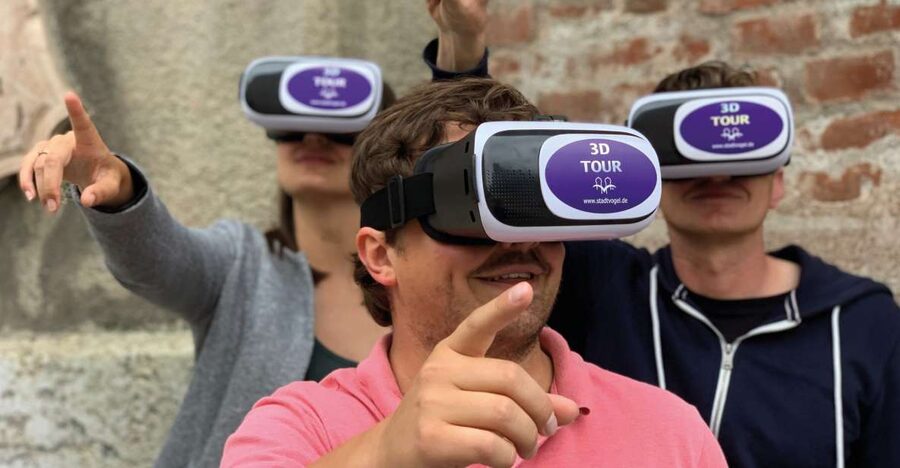
You meet directly in front of Orlandohaus at Platzl 4. Look for a guide carrying a large blue bag marked with the white words Weis(s)er Stadtvogel, along with a 3D Tour sign.
This is useful in a busy Old Town setting. Platzl is close to the Hofbräuhaus and can be crowded, so identifying the blue bag is easier than searching for a tiny sign or trying to guess which group is yours.
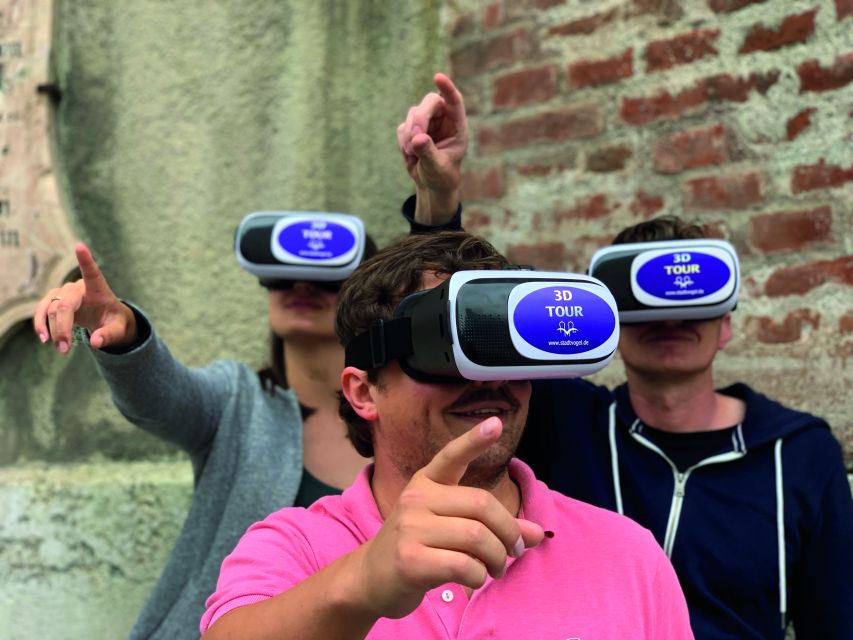
Before the walk begins, you need to download an app onto your smartphone. Your phone is then placed into the VR glasses so you can view the 3D images. Bring a charged phone and internet access. This is not a small detail. If your battery is low or your connection is poor, the visual part of the tour may not work as intended.
The guide supplies the walking tour and the VR glasses. Food, drinks, hotel pickup, and hotel drop-off are not included, so plan to arrive at the meeting point on your own.
Marienplatz in 1570
The western side of Marienplatz takes you back to 1570. Today, this square is one of Munich’s best-known public spaces, but the older view gives it a very different purpose and feel.
The tour shows the Medieval grain market that once occupied the square. That detail helps you picture Marienplatz as a working marketplace rather than simply a photo stop between churches and shopping streets. The 3D image gives you a reference point, while the guide fills in the human side of the scene.
You also hear about the gallows used for special executions and the so-called disgraceful donkey. These are the kind of details that make a city walk memorable. They are odd, unsettling, and specific. Instead of hearing a broad statement about Munich’s past, you get a sense of how public space was used and how authorities displayed punishment.
The drawback is that the 3D view is not a moving reconstruction. You are looking at a rendered image rather than watching medieval Munich act out before you. That can still be useful, but your expectations should be modest. The guide’s explanation does much of the work.
I like this part because it changes how you look at Marienplatz after the tour. The square is no longer only a grand urban center. You can picture trade, punishment, and daily activity occupying the same open ground.
Marienplatz around 1870
On the eastern side of the square, the time setting moves forward by roughly 300 years. Here, the focus is on what the Old Town Hall looked like in 1870, including the first completed section of the hall.
The visual comparison works well because you are standing in the same general area while viewing an earlier version of the buildings and street life. You can see carriages and old professions in action, which adds movement and social detail to the image, even though the image itself is static.
This stop is valuable for anyone who has already seen Munich’s famous buildings but wants more context. A normal sightseeing walk may tell you what a building is. This tour tries to show how the surrounding space functioned and how people used it.
The guide also points out details you might otherwise miss. The strongest feedback about this experience praises the guide’s enthusiasm, warmth, and ability to explain familiar corners in a fresh way. That praise is important because the technology alone is not enough. If the guide simply handed you glasses and waited, the tour would feel thin. Here, the live explanation is the main reason to book.
Some of the visual equipment has not worked perfectly for every participant. Two pairs of glasses or phones have reportedly failed during a tour, and the guide had to manage the problem. That does not mean your equipment will fail, but it is a fair reason to treat the VR element as an addition rather than the whole value of the outing.
More Walking Tours in Munich
- Munich: Third Reich & WWII Walking Tour
★ 4.6 · 6,181 reviews - Third Reich Walking Tour Munich
★ 4.5 · 4,291 reviews - Munich: Night Watchman Walking Tour
★ 4.7 · 2,092 reviews - Munich Ghosts and Spirits Evening Walking Tour
★ 5.0 · 1,900 reviews
Platzl in 1895
The walk continues around Platzl, shown as it looked in 1895. The guide explains how the area developed and how it became the recognizably Munich-style quarter you see today.
This is one of the more useful stops because Platzl is not an isolated monument. It is a living part of the Old Town, surrounded by restaurants, historic façades, and steady foot traffic. A historical image helps you compare the area’s older form with its present character.
The tour looks at how the district changed over time. That gives you a better sense of continuity. Munich did not simply preserve one frozen version of itself. Buildings, trades, streets, and social habits shifted, leaving behind the mix you see now.
The date, 1895, also offers a good bridge between old and modern Munich. It is recent enough to feel familiar, but distant enough for the streetscape and occupations to look different. Again, the benefit comes from combining the image with the guide’s explanation.
If you enjoy stopping often for visual comparisons, you will likely appreciate this part. If you prefer a fast walk with a long list of major sights, the pace may feel slow because the tour spends time on only four rendered locations.
Hofbräuhaus then and now
The Hofbräuhaus receives attention in both its past and present forms. Since it is one of Munich’s most famous addresses, the comparison gives the tour a strong focal point.
You do not simply hear that the building is old or important. You see how its earlier appearance relates to the place you can visit today. That makes the stop useful even if you already know the Hofbräuhaus from guidebooks or previous visits.
The modern building is easy to recognize, while the older image encourages you to look at its shape and surroundings with more care. The guide adds the local context, explaining how this well-known site fits into the story of Platzl and the Old Town.
This is also where the tour’s limits are easiest to understand. The glasses do not create a full animated world. They show historical renderings, and some people have found the images easier to see on their own phone than through the glasses. If you want advanced virtual reality, you may feel the equipment is more like a simple viewing tool than a major attraction.
Still, the Hofbräuhaus comparison is a good example of the tour’s basic idea: take a place you can see today, then give you a visual clue about how it once looked.
The guide matters more than the gadget
The best reason to book this experience is the guide. The strongest praise goes to the human side of the tour, especially the guide’s enthusiasm, humor, and clear delivery.
One particularly positive assessment described the tour as highly educational and presented with real commitment. Another noted that the guide handled technical problems with engagement, fun, and strong historical understanding. That tells you where the experience succeeds: the guide keeps the walk moving and makes the information approachable.
I would not book this expecting the app to carry the entire experience. The app is a tool. The guide gives it purpose by telling you what to notice and why a location matters.
Because the tour is in German, language ability is central. You should be comfortable following spoken German for two hours. There is no indication of a separate English option for this departure, so check the language carefully before booking.
How good is the VR technology?
The technology is inventive, but it is also the tour’s weak spot.
At each selected location, you use your smartphone inside the glasses to view the historical 3D images. The system offers a visual comparison that a normal walking tour cannot provide. You can look at the old version of the square while physically standing in the modern one.
But the images are still images. They are not moving scenes, and they do not create the full sense of entering another world. Two recent assessments specifically criticized the glasses as toy-like and said the pictures were clearer on the phone screen. Another noted that more was expected from the technology.
My practical advice is simple: treat the VR glasses as a bonus viewing frame. The tour still has value if the effect feels basic, because the guide, locations, and historical comparisons remain. If the equipment works well for you, the images add fun and make the walk more memorable. If it does not, you may still follow the tour through the guide’s storytelling.
This also explains the mixed overall rating of 4.3 out of 5 from 14 ratings. The historical content and guide receive warmer reactions than the hardware. That is a fair result for an experience that is strongest as a walking tour and only partly successful as a VR attraction.
Is $37 a fair price?
At about $37 per person, this costs more than a basic self-guided stroll through Munich’s Old Town. You are paying for a live German-speaking guide, a two-hour walking route, and access to the VR glasses and historical renderings.
I think the price is reasonable for someone who values guided interpretation and wants a different way to see familiar places. The four rendered locations give the walk a clear focus, and the guide turns them into a connected story rather than a series of random facts.
The value drops if you mainly want advanced technology. For that person, the still images and occasional equipment problems may not justify the extra cost. You may feel that the historical explanations are doing the heavy lifting while the VR system is a modest extra.
Families and groups may get more enjoyment from the playful side of the glasses. It can be fun to compare what each person sees and discuss the old scenes as you move through the square. History-minded visitors may also appreciate the unusual details, especially the grain market, the execution site, and the disgraceful donkey.
Who should book this walk?
I would recommend it most strongly to:
- German-speaking visitors who enjoy local history
- Families looking for a more interactive Old Town activity
- People who have already seen Marienplatz and the Hofbräuhaus and want more context
- Visitors who like visual comparisons between past and present
- Anyone who prefers a short, focused two-hour walk over a long city tour
I would be more cautious if you want an English tour, a large number of sights, or sophisticated animated VR. This experience does not try to cover all of Munich, and it does not offer a full virtual world.
The walk is listed as wheelchair accessible, which makes it a practical option for many visitors. You should still make sure your smartphone is charged and that you have internet access before arriving. Free cancellation is available up to 24 hours in advance, and you can reserve now and pay later if you want to keep your schedule flexible.
Should you book the Munich 3D VR tour?
Book it if you want a German-language history walk with a visual twist, and if you understand that the guide is more impressive than the gadget. The tour turns Marienplatz, Platzl, and the Hofbräuhaus into reference points for earlier Munich, with unusual stories that are easy to remember.
Skip it if your main goal is cutting-edge virtual reality. The images are static, some phones or glasses may not work smoothly, and the phone screen can be clearer than the headset. At $37, that distinction matters.
For the right visitor, this is a lively way to see the Old Town twice: once as it looks today, and again through selected snapshots of 1570, 1870, and 1895.
FAQ
How long does the Munich 3D VR tour last?
The tour lasts two hours.
What language is the tour conducted in?
The live tour guide speaks German.
Where is the meeting point?
Meet directly in front of Orlandohaus at Platzl 4 in Munich.
How do I find the guide?
Look for a guide carrying a large blue bag with the white words Weis(s)er Stadtvogel and a 3D Tour sign.
What must I bring?
Bring a charged smartphone and internet access. You need your phone to download the app and view the 3D images through the VR glasses.
Are the VR glasses provided?
Yes. VR glasses are included with the guided walking tour.
What places and time periods does the tour show?
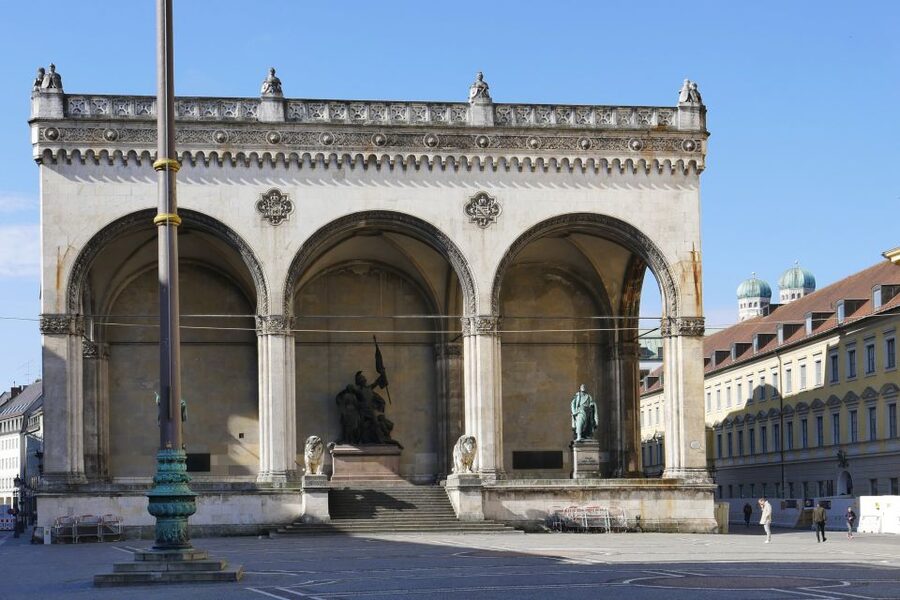
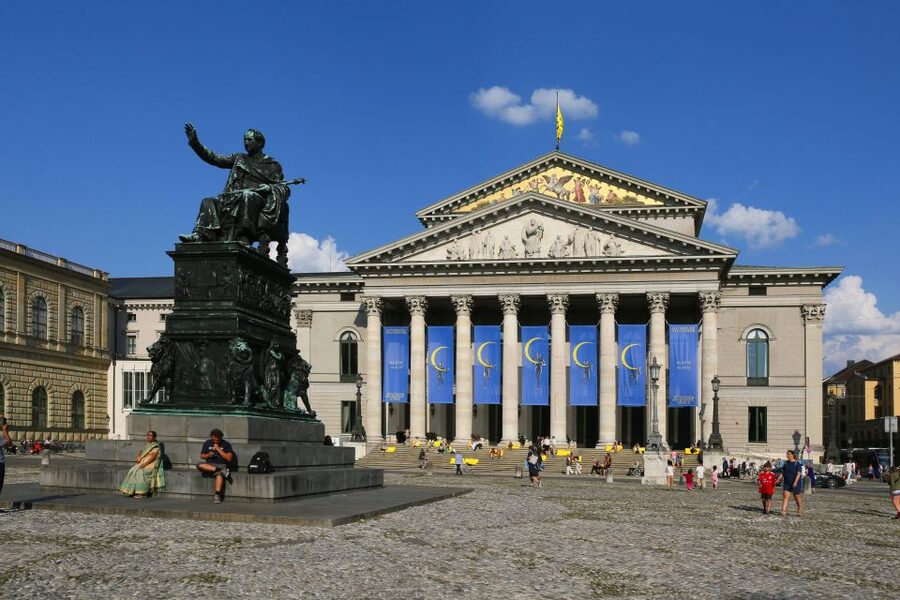
The tour focuses on four places with 3D renderings. It includes Marienplatz as it appeared in 1570, another view of Marienplatz around 1870, Platzl in 1895, and the Hofbräuhaus in past and present forms.
Is the tour wheelchair accessible?
Yes, the activity is listed as wheelchair accessible.
Just added around Munich
- Pub crawl incl. Oktoberfest museum guided tour with beer tasting (private)★ 5.0 · 5 reviews
- South Tyrolean specialties and wine tasting★ 5.0 · 5 reviews
- Size Matters Beer Tour Munich★ 4.6 · 105 reviews
- Short & sweet: Tasting the Viktualienmarkt★ 4.8 · 37 reviews
- Secret Food Tours Munich★ 4.8 · 5 reviews
- Munich: Romantic Wine Experience for Two at Viktualienmarkt★ 4.2 · 14 reviews
- Residence of Munich private tour with skip the line ticket★ 5.0 · 4 reviews
- Munich: Resistance against Hitler – Historical Walking Tour★ 5.0 · 5 reviews
Old Town Tours, compared.
Old Town & Viktualienmarkt City Walk in German
Read our review →
The Night Watchman Old Town Walking Tour in German
Read our review →
Browse the lists this tour appears in