
Reviewed · MUNICH TOURS
Munich’s Hidden Architecture Guided Tour
Munich has a cooler side. This two-hour walk with architect and guide Philipp leads you beyond the usual center to street art, cultural spaces, old neighborhoods, the Isar, and three alternative Christmas markets. I especially like the mix of 700-plus years of local history with newer creative places such as Bahnwärter Thiel and Alte Utting.
I also like the route’s personal feel. Philipp’s clear explanations, strong art and architecture background, and useful city tips earn repeated praise, and the 4.9 rating from 47 reviews supports that impression. The main consideration is winter comfort: you will be outside for two hours, walking across varied urban ground, and the tour is not suitable for wheelchair users or people with mobility impairments.
In This Review
- Key points to know before booking
- Why Munich’s south is worth your time
- Starting at Piazza Zenetti
- Münchner Volkstheater and the first change of scene
- Bahnwärter Thiel and Munich’s creative edge
- Alte Utting, the boat on the bridge
- Dreimühlenstraße and the walk toward the Isar
- Wittelsbacherbrücke and the Isar at night
- Claude-Lorrain-Straße and authentic Giesing
- Little Venice and the willow island
- Finishing at Gans Woanders and the Christmas markets
- Is $36 a fair price?
- Who will enjoy this two-hour walk?
- Should you book Philipp’s Munich tour?
- FAQ
- Where does the Munich architecture tour start?
- How do I reach Piazza Zenetti?
- How long does the tour last?
- Which languages are available?
- Is a private tour possible?
- What places are included on the route?
- Are food and drinks included?
- What should I wear and bring?
Key points to know before booking
- Three alternative Christmas markets give the tour a festive finish without keeping you in Munich’s busiest central squares.
- Alte Utting, a ship placed on a bridge, is one of the route’s oddest and most memorable sights.
- Giesing and Munich’s southern districts reveal a less polished, more local side of the city.
- Philipp is an architect, so expect attention to buildings, street details, public spaces, and how old and new Munich fit together.
- The Isar and Willow Island add trees, water, and nighttime views to an otherwise urban walk.
- Warm clothes and good walking shoes are essential, especially for the winter version of this outing.
Why Munich’s south is worth your time
Munich is often reduced to grand museums, royal buildings, beer halls, and the old town. Those are worthwhile, but they do not tell the whole story. South of the central sights, the city becomes less formal and more experimental, with converted industrial spaces, street art, neighborhood cafés, and cultural projects made from shipping containers and wood.
That change in tone is the main reason to take this tour. You are not simply checking off buildings. You are looking at how Munich has changed, how creative communities use leftover urban spaces, and how older districts keep their own identity.
The route also gives you a useful contrast. One moment you may be considering architecture and urban design. Soon after, you are beside the Isar, crossing a bridge, or looking at a neighborhood with a very different rhythm from central Munich. I like that variety because two hours can otherwise feel long on a purely architectural walk.
Philipp’s role matters here. The praise for his tours focuses on his explanations, his ability to answer questions, and his talent for pointing out small details. One local couple who had lived in Munich for almost 25 years still learned new things and saw familiar places differently. That is a good sign for first-time visitors and people who already know the city.
A few more Munich trips worth comparing
- From Munich: Neuschwanstein & Linderhof Castle Full-Day Trip
★ 4.5 · 12,494 reviews - Neuschwanstein & Linderhof Castle-Fairytale Day Tour from Munich
★ 4.5 · 7,275 reviews - Munich: Third Reich & WWII Walking Tour
★ 4.6 · 6,181 reviews
Starting at Piazza Zenetti
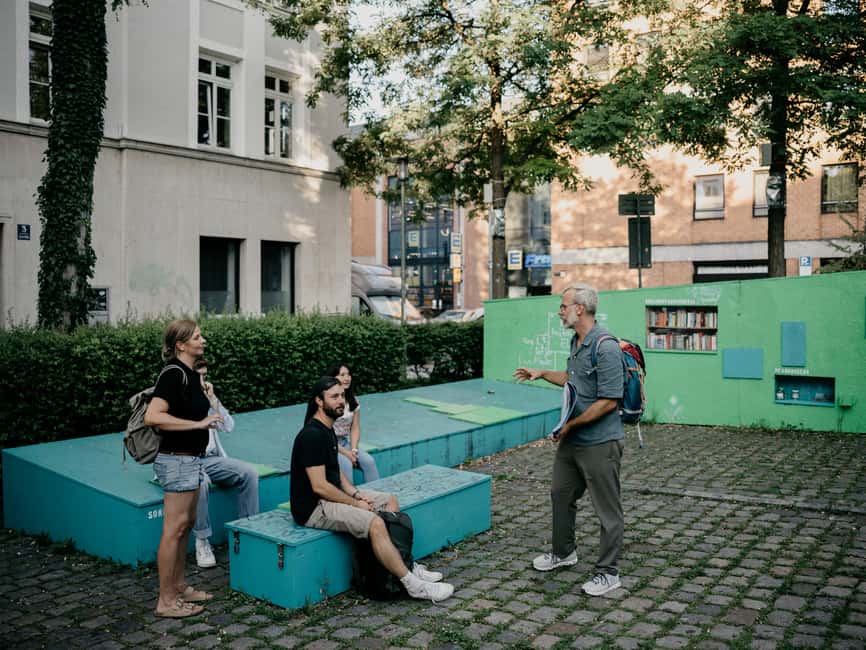
The walk begins at Piazza Zenetti, at the intersection of Tumblingerstrasse and Zenettistrasse. Look for the turquoise and green outdoor furniture and small trees in boxes. Philipp will be carrying a colorful backpack and a blue folder, which should make the meeting point easier to identify.
The simplest arrival is from Goetheplatz, served by the U3 and U6 subway lines. From the station, allow about 10 minutes to walk to the square. I would arrive a little early in winter, since locating an unfamiliar street corner is less pleasant in the dark or cold.
Piazza Zenetti sets the tone well. This is not the grand Munich of palace facades and formal avenues. It is a neighborhood meeting place, with a more informal public feel. From here, the walk heads into the city’s southern districts and gradually builds a picture of how the area mixes old residential streets with newer cultural activity.
The tour is offered in English or German. A private group is available, which may suit families, friends, or architecture students who want more time for questions. The standard price is $36 per person, and the walk lasts two hours.
Münchner Volkstheater and the first change of scene
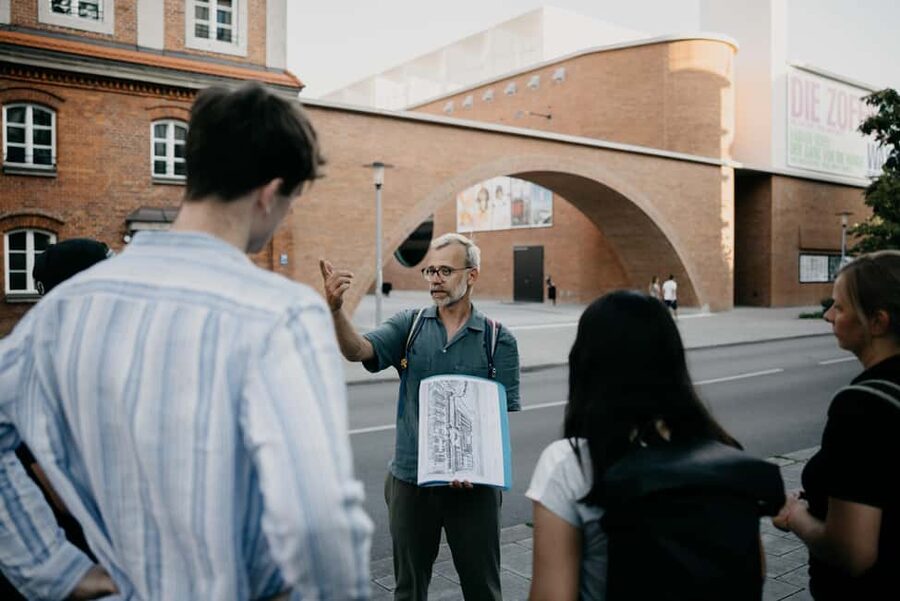
The Münchner Volkstheater is an early stop and an introduction to Munich’s cultural side. The theater gives Philipp a useful starting point for discussing the city’s public culture and the way major institutions sit alongside less formal creative spaces.
Do not expect a full theater performance or an extended indoor visit. This is a guided stop within a walking route, so the value comes from context and observation. If you enjoy architecture, you will likely appreciate having someone explain why a building or cultural institution matters rather than simply passing it on the sidewalk.
This part of the tour also helps bridge the gap between familiar Munich and the less expected places ahead. The route is not trying to ignore the city’s established culture. Instead, it shows how that culture connects with smaller, rougher, more experimental projects farther south.
Bahnwärter Thiel and Munich’s creative edge
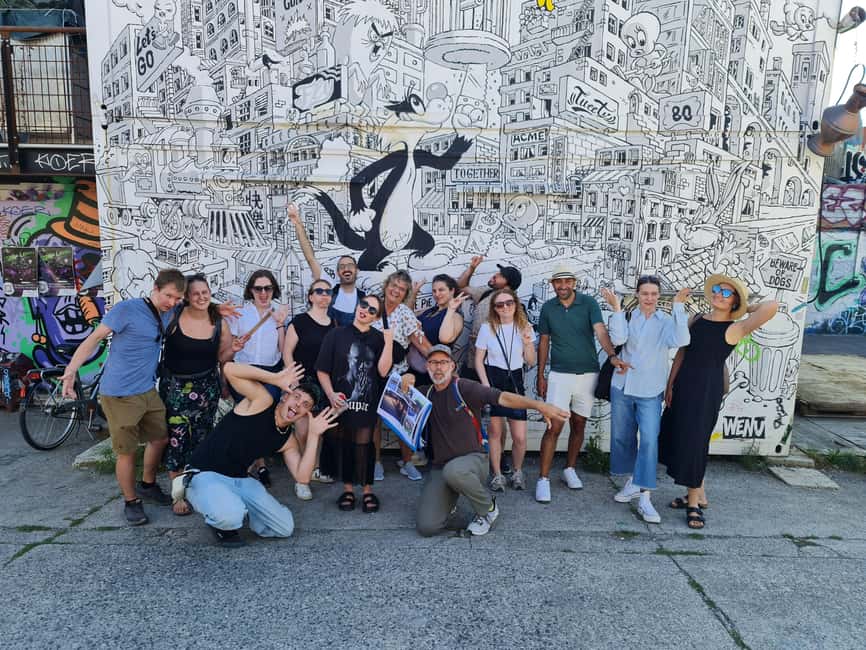
Bahnwärter Thiel is one of the clearest examples of Munich’s alternative character. The site uses shipping containers, wood, street art, and other improvised elements to create a cultural hub. It feels very different from the orderly historic center, and that contrast is exactly the point.
I like this stop because it gives you something to interpret. You can look at the materials, the artwork, and the way the space has been put together, while Philipp explains the background. It is not polished in the traditional sense, and visitors who want pristine monuments may find it rough around the edges. Those seeking modern culture and unusual urban spaces will likely find it much more rewarding.
The site also demonstrates how underused or industrial parts of a city can become places for art and community. That makes the stop more useful than a quick photograph. You get a glimpse of the social life that can grow around temporary or repurposed structures.
Since the tour takes place in winter, the visit may be outdoors and exposed to the weather. Wear a proper coat rather than relying on a stylish city jacket. Warm socks and shoes with a firm sole will make the entire route easier.
Still Munich, at a slower pace:
- Dachau Concentration Camp Memorial Site Tour from Munich by Train
★ 4.5 · 5,637 reviews - Neuschwanstein Castle Tour from Munich
★ 4.5 · 5,117 reviews - Third Reich Walking Tour Munich
★ 4.5 · 4,291 reviews - Munich Hop-On Hop-Off Tour: 1-Day or 2-Day Ticket
★ 4.3 · 4,161 reviews
Alte Utting, the boat on the bridge
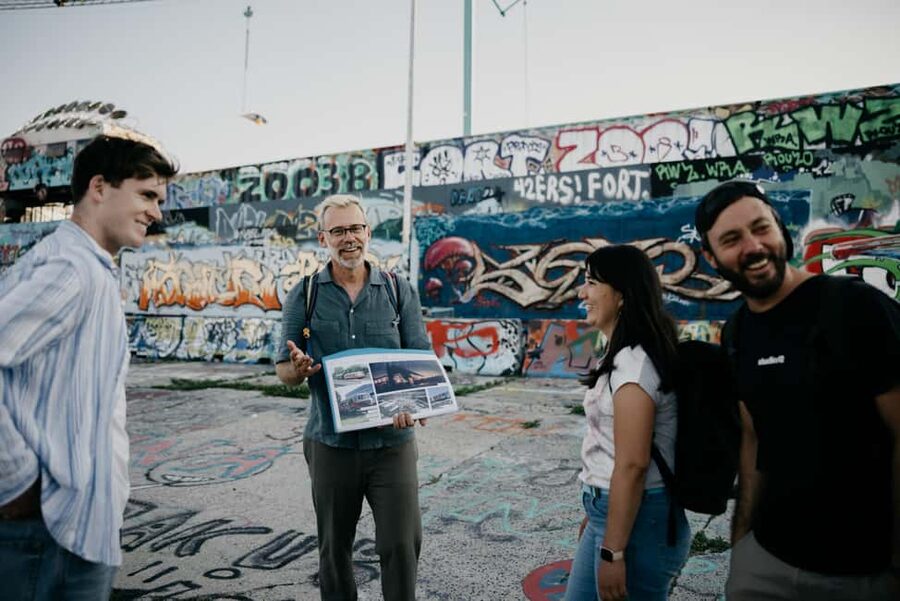
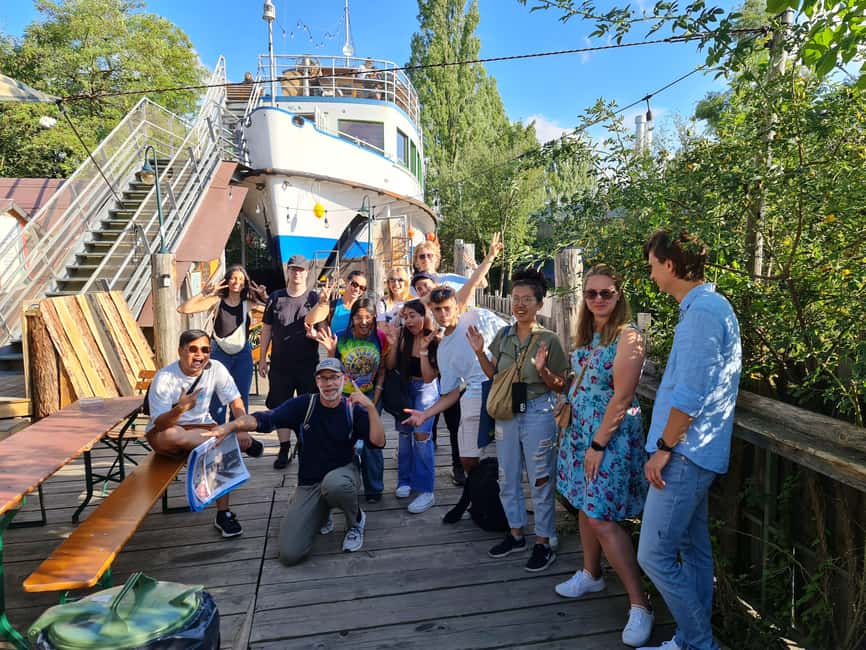
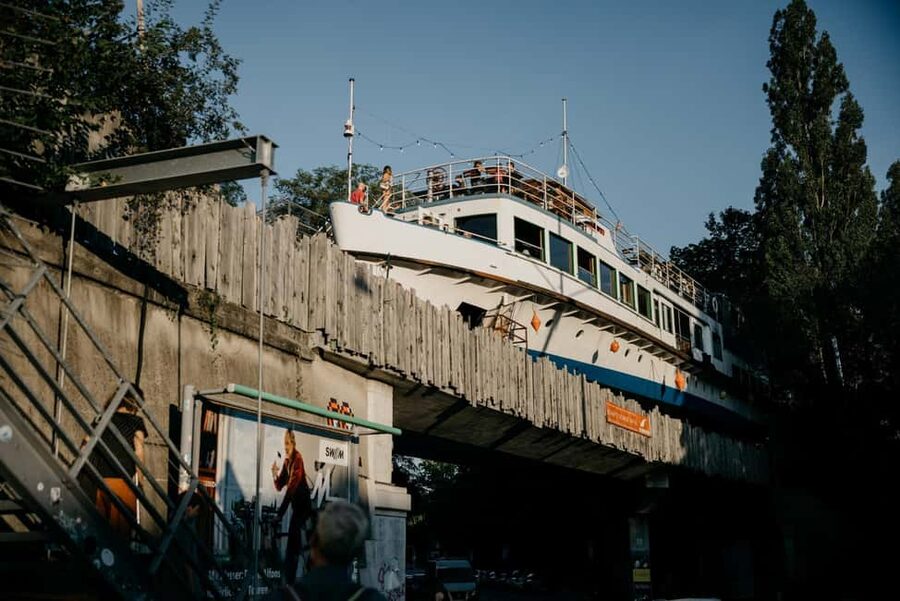
Alte Utting is the tour’s most unusual landmark. A former ship sits on a bridge at Lagerhausstrasse, creating a strange and memorable sight that has attracted international attention. It is the kind of place that makes you stop and ask how it got there.
The ship is more than a quirky photo opportunity. It reflects the character of this part of Munich, where old objects and industrial settings are given new cultural uses. Philipp can help you read the site as architecture, public art, and neighborhood gathering place at the same time.
This is likely to be one of the strongest stops for photographs, especially if the route reaches it at night. The lighting, bridge structure, and ship should give you a very different view of Munich from the one found around Marienplatz.
Food and drinks are not included, so do not assume a stop here comes with refreshments. You may be able to enjoy the wider setting, but the tour should be treated as a walking experience rather than a meal outing. If you want to eat or drink afterward, save that for the end and ask Philipp for suggestions.
Dreimühlenstraße and the walk toward the Isar
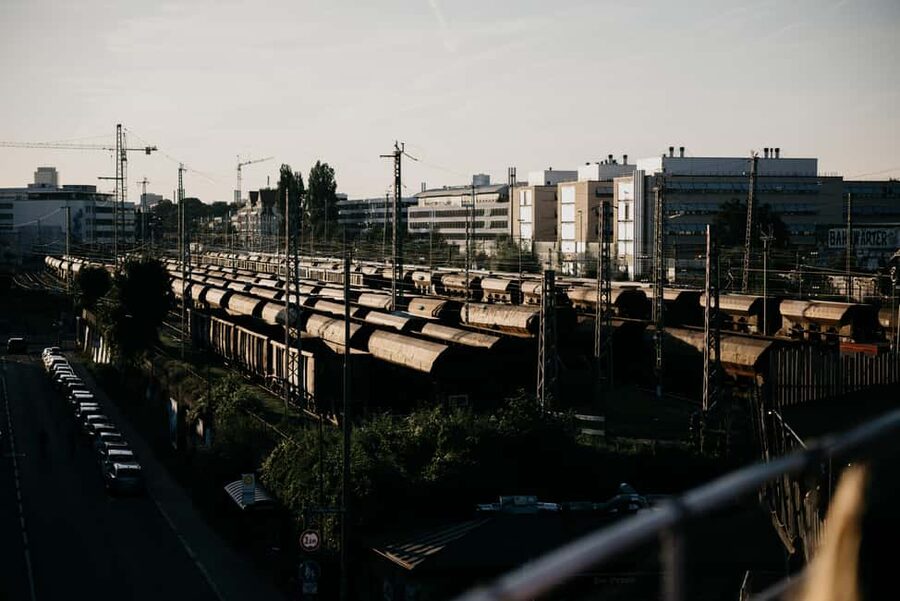
Dreimühlenstraße shifts the focus from creative installations to neighborhood character. This section helps show how Munich’s southern districts are not just collections of attractions. They are lived-in areas with their own streets, buildings, and daily routines.
The route then moves toward the Isar. That change is one of the walk’s best features. After street art, theaters, containers, and bridges, the river gives you open space and a different pace. You can see Munich as a city shaped not only by buildings but also by water and greenery.
The exact amount of time at each stop is not specified, so do not expect a long guided visit at every location. The tour works best if you enjoy steady walking with regular explanations, rather than one place receiving a detailed indoor tour.
Wittelsbacherbrücke and the Isar at night
Wittelsbacherbrücke provides one of the route’s broader views. From the bridge, you can appreciate the relationship between Munich’s neighborhoods and the Isar, with the river acting as both a natural break and a route through the city.
The evening timing can make this section especially appealing. The activity includes the chance to see the city and river by night, which changes the mood of the walk. Reflections, street lighting, and quieter riverside views can make the same places feel less familiar than they do during the day.
There is a practical tradeoff. Nighttime and winter conditions can reduce visibility, and the river section may feel colder than the built-up streets. Bring warm clothing, and do not count on the walk itself providing shelter. The tour is not suitable for wheelchair users or people with mobility impairments, and participation is at your own risk.
Claude-Lorrain-Straße and authentic Giesing
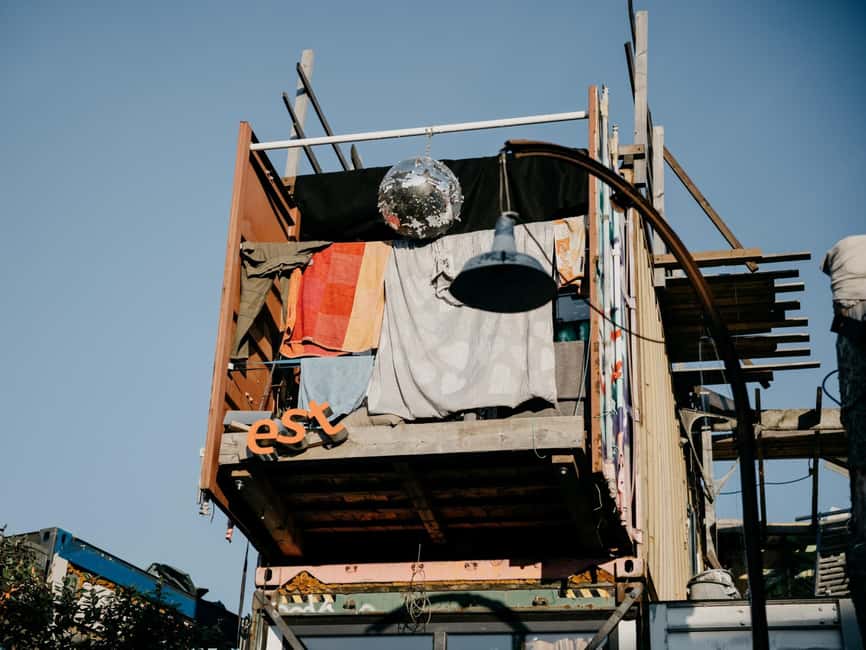
Claude-Lorrain-Straße leads farther into the characterful southern neighborhoods, including Giesing. This district is presented as one of Munich’s last more authentic local areas, with a distinct identity separate from the historic center.
That phrase should not make you expect a preserved medieval village. Giesing is part of a modern city. Its appeal comes from the mix of local atmosphere, older layers of development, street-level details, and a strong neighborhood feel. Philipp’s background in architecture is useful here because the interest lies in noticing how the area has grown over time.
The tour’s historical scope reaches back more than 700 years, but the walk also considers current cultural life. That combination prevents the past from becoming a dry list of dates. You are encouraged to connect the old district with the way people use it now.
I would choose this tour for exactly that reason. It does not treat history as something locked inside a museum. It shows history in streets, bridges, public spaces, and the changing use of buildings.
Little Venice and the willow island

Little Venice adds a softer, more natural section to the route. The stop includes the Isar, nature, and the beautiful willow island, giving you a chance to see a side of Munich that is easy to miss when you stay around the main squares.
The name suggests a scenic water setting, but you should keep expectations reasonable. The tour information does not promise gondolas, a canal ride, or a major attraction. Think of it as a riverside area with water, trees, and a distinct atmosphere.
This is also a good place to bring a camera. The combination of the river, vegetation, bridges, and city surroundings offers more visual variety than a standard architecture walk. In winter, the setting may look spare rather than leafy, but that can make the outlines of the river and willow island easier to notice.
Finishing at Gans Woanders and the Christmas markets
The route finishes at Gans Woanders, a local cultural and social venue with a relaxed alternative feel. This is a fitting endpoint after a walk through street art, repurposed spaces, bridges, and neighborhood streets.
A major feature of the winter version is the visit to three alternative Christmas markets. These are not presented as the standard central markets filled with the same decorations and souvenir stalls. They are part of the southern districts’ creative scene, so you can expect a more unusual setting and a less conventional festive mood.
Food and drinks cost extra. That is worth planning for, since a two-hour winter walk can leave you ready for something hot. The tour gives you the opportunity to finish in a place where you can continue the evening, but the price does not include anything to eat or drink.
There is one practical detail to confirm before you set off. The route is described as finishing at Gans Woanders, while the meeting information also says the activity ends back at the meeting point. Ask Philipp to confirm the final stopping place when you meet, especially if you have a dinner reservation or a subway connection to catch.
Is $36 a fair price?
At $36 per person, this is not the cheapest way to walk around Munich. You can explore the Isar and several southern streets for free, and public transport is not included. The value comes from the guide’s interpretation, the carefully linked route, and access to places you might not find by simply following a central sightseeing map.
The price seems fair if you care about architecture, street art, city planning, and local culture. It is also good value for people who have already seen Munich’s main sights and want a fresh angle. The strongest praise focuses on Philipp’s detailed explanations, engaging speaking style, and helpful recommendations during and after the walk.
It is less useful if you want a standard historic center tour, major indoor attractions, or a relaxed outing with very little walking. You also need to budget for your own drinks and food, plus transport to the starting point.
Free cancellation up to 24 hours before the tour and the reserve-now, pay-later option make booking less risky. Still, winter weather should guide your decision more than the flexible payment terms.
Who will enjoy this two-hour walk?
I would recommend it most strongly to:
- Architecture students and design-minded visitors
- People interested in street art and repurposed urban spaces
- Repeat visitors who have already seen central Munich
- Travelers who prefer neighborhoods to famous monuments
- Couples or small groups looking for an unusual evening activity
- Anyone who enjoys asking a guide detailed questions
Families may enjoy the unusual settings, but the tour is not described as specifically designed for children. Anyone with limited mobility should choose another activity because the route is not suitable for wheelchair users or people with mobility impairments.
You should also be comfortable walking outdoors in winter. Wear warm clothing, comfortable shoes, and bring a camera. Smoking is not allowed during the activity.
Should you book Philipp’s Munich tour?
Book it if you want to see Munich as a changing city rather than a collection of famous old buildings. The combination of Giesing, the Isar, street art, alternative cultural spaces, Alte Utting, and three Christmas markets gives you a strong two-hour introduction to the city’s southern side.
I would skip it if you need step-free access, dislike cold-weather walking, or want a tour centered on major museums and royal sights. For everyone else, the $36 price is reasonable, particularly because Philipp brings professional architecture training, clear explanations, and practical local suggestions to a route that would be difficult to recreate on your own.
FAQ
Where does the Munich architecture tour start?
It starts at Piazza Zenetti, at the intersection of Tumblingerstrasse and Zenettistrasse. Look for turquoise and green outdoor furniture, small trees in boxes, and Philipp’s colorful backpack with a blue folder.
How do I reach Piazza Zenetti?
The suggested route is to take the U3 or U6 subway to Goetheplatz and walk about 10 minutes to Zenettiplatz.
How long does the tour last?
The tour lasts two hours. Starting times vary, so check availability when booking.
Which languages are available?
The live guide can conduct the tour in English or German.
Is a private tour possible?
Yes. A private group option is available.
What places are included on the route?
The route includes Münchner Volkstheater, Bahnwärter Thiel, Alte Utting on Lagerhausstrasse, Dreimühlenstraße, Wittelsbacherbrücke, Claude-Lorrain-Straße, Little Venice, and Gans Woanders.
Are food and drinks included?
No. Food and drinks are not included in the tour price.
What should I wear and bring?
Wear warm clothing and comfortable walking shoes. Bringing a camera is recommended, especially for the Isar, willow island, street art, bridges, and Alte Utting.
Just added around Munich
- Pub crawl incl. Oktoberfest museum guided tour with beer tasting (private)★ 5.0 · 5 reviews
- South Tyrolean specialties and wine tasting★ 5.0 · 5 reviews
- Size Matters Beer Tour Munich★ 4.6 · 105 reviews
- Short & sweet: Tasting the Viktualienmarkt★ 4.8 · 37 reviews
- Secret Food Tours Munich★ 4.8 · 5 reviews
- Munich: Romantic Wine Experience for Two at Viktualienmarkt★ 4.2 · 14 reviews
- Residence of Munich private tour with skip the line ticket★ 5.0 · 4 reviews
- Munich: Resistance against Hitler – Historical Walking Tour★ 5.0 · 5 reviews
Munich Tours, compared.
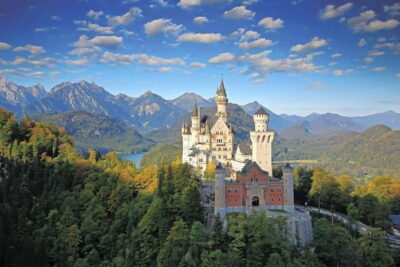
Neuschwanstein & Linderhof Castle-Fairytale Day Tour from Munich
Read our review →
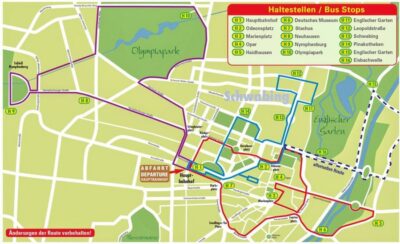
Munich Hop-On Hop-Off Tour: 1-Day or 2-Day Ticket
Read our review →
Premium Neuschwanstein Castle and Linderhof VIP Tour from Munich
Read our review →
Old Town & Viktualienmarkt City Walk in German
Read our review →
Browse the lists this tour appears in