
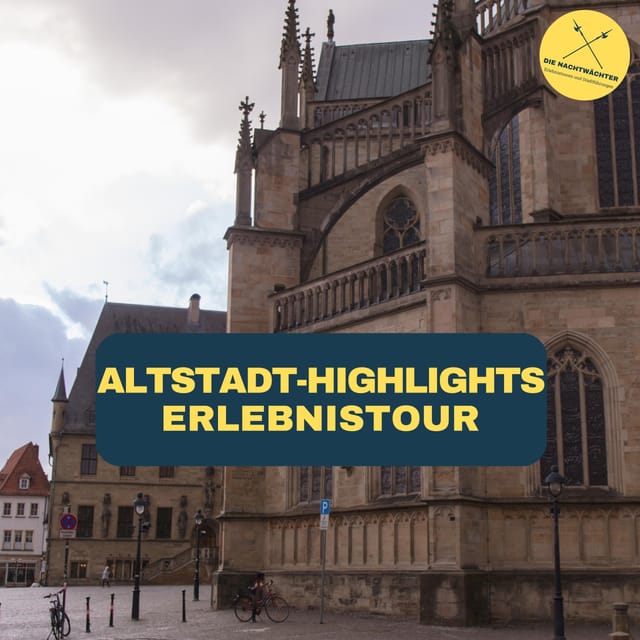
Reviewed · OLD TOWN TOURS
Osnabrück: Altstadt-Highlights (Stadtführung)
Osnabrück packs a lot into one hour. This brisk walking tour links the old town’s key sights with stories about merchants, bishops, the Peace of Westphalia, and even VfL Osnabrück. I like the compact route and the chance to see Osnabrück Cathedral and its cloister when open. I also like the medieval city scales, a small but memorable stop that explains how trade once worked here.
The main thing to consider is the German-only guiding. You also need to accept the pace: this is a quick introduction, not a slow architectural study. The tour runs in wind and rain, so good shoes and weather-ready clothing matter.
In This Review
- Key points at a glance
- Why this one-hour walk works
- Meeting behind the town hall
- The old town in fast, useful chapters
- The medieval scales and the rules of fair trade
- The town hall and the Peace of Westphalia
- Osnabrück Cathedral and the cloister
- The Hexengang and darker pieces of the past
- From the Hanseatic League to VfL Osnabrück
- The guide makes the difference
- Weather, pace, and what to wear
- Is $15 a fair price?
- Who should book this Osnabrück tour?
- FAQ
- How long does the Osnabrück Altstadt Highlights tour last?
- What language is the tour offered in?
- Does the tour include Osnabrück Cathedral?
- Where is the meeting point?
- Is the tour wheelchair accessible?
- Does the tour run in bad weather?
- Should you book it?
Key points at a glance

- One hour from one edge of the old town to the other: A useful choice when your Osnabrück visit is short.
- The medieval city scales tell a practical market story: Learn why merchants could not simply weigh their own goods.
- The town hall connects Osnabrück to European diplomacy: The Peace of Westphalia is a central part of the tour.
- The cathedral and cloister may be included: Entry depends on cathedral opening times.
- A lively guide keeps the history moving: Feedback praises the friendly, well-organized guiding and the ability to involve children.
- German is the only listed language: This tour suits German speakers best.
Why this one-hour walk works
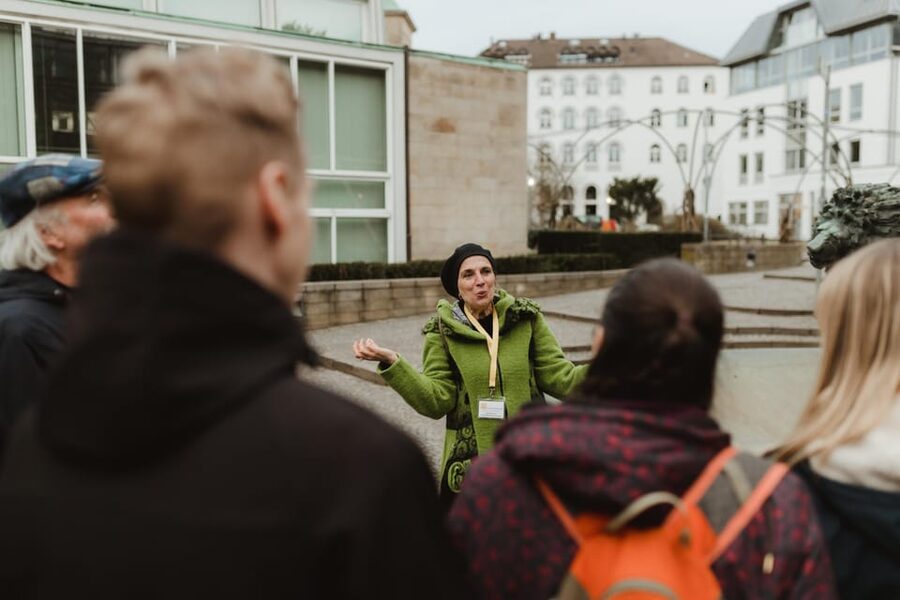
Osnabrück is easy to underestimate. A visitor can wander through the old town, admire the façades, and leave with a pleasant impression but little sense of how the city fits into German and European history. This tour gives you a framework.
The route crosses the historic centre from one edge to another. That matters because you are not simply parked in front of one famous building. You move through the old town and see how civic power, religious life, trade, and modern city identity meet in a relatively small area.
At $15 per person, the price is sensible for a guided hour, especially if you want a quick orientation before exploring on your own. You are paying for a local guide who connects separate sights into one story. The value is weaker if you do not understand German, since all guiding is listed in German and there is no stated translation service.
The schedule is also practical. You can fit this walk into a morning before another activity, or use it as a first look at Osnabrück before choosing where to spend more time. The trade-off is clear: one hour gives you breadth, not much time for detailed questions or long interior visits.
More Old Town Tours in Germany:
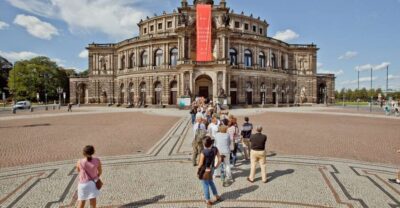
- Dresden: Semperoper and Old Town Tour
★ 4.8 · 5,735 reviews - Nuremberg: Old Town Guided Walking Tour
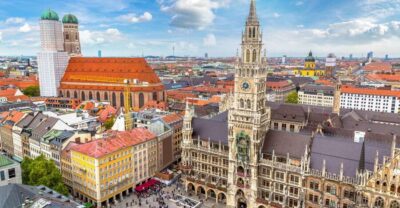
★ 4.6 · 2,416 reviews - Munich: Old Town & Viktualienmarkt City Walk in German
★ 4.7 · 2,304 reviews
Meeting behind the town hall
The meeting point is at Bierstraße 28, 49074 Osnabrück, behind the town hall and opposite the Tourist Information. This is a useful place to begin because you are already close to several of the old town’s main sights.
I would arrive a few minutes early. The walk is short, and the guide needs to gather the group before setting off. Since the meeting point is by a well-known visitor facility and the town hall, it should be easier to locate than a meeting point on an anonymous side street.
The experience is wheelchair accessible, which is important for a historic-centre tour. Still, old streets and older buildings can create practical challenges, so anyone needing specific access details should confirm them when booking. The provided information confirms accessibility, but it does not give a detailed surface-by-surface route description.
The old town in fast, useful chapters
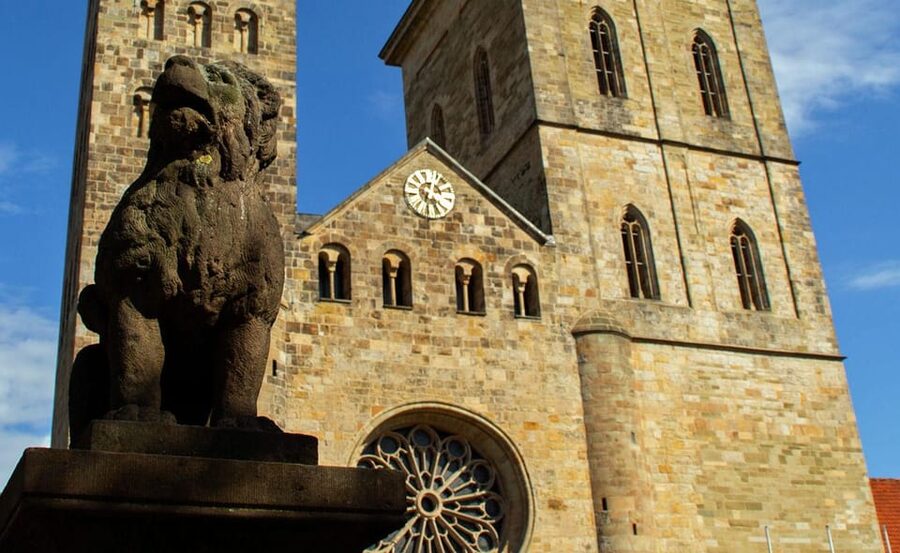
The guide’s task is to keep the hour moving without turning it into a list of dates. The strongest feedback points to exactly that balance. The tour is described as informative, entertaining, and well structured, with a friendly guide who can handle children and explain the city in a way that keeps the group together.
One recent German-language assessment praised a short tour packed with information and a motivated female guide. Another described a guide who gave the group about an hour and a half of city history in an easy, humorous way, without appearing rushed by the clock. The official duration is one hour, so you should plan for one hour, but the experience can occasionally run longer depending on the guide and group.
That flexibility is a plus, but it also means you should avoid scheduling something immediately afterward. A city walk is better when you can listen rather than keep checking the time.
The historical range is wide. You hear about Osnabrück’s place in the Hanseatic League, its religious and civic buildings, and its modern connection to VfL Osnabrück. That jump from medieval trade to football helps prevent the past from feeling sealed off from present-day city life.
The medieval scales and the rules of fair trade
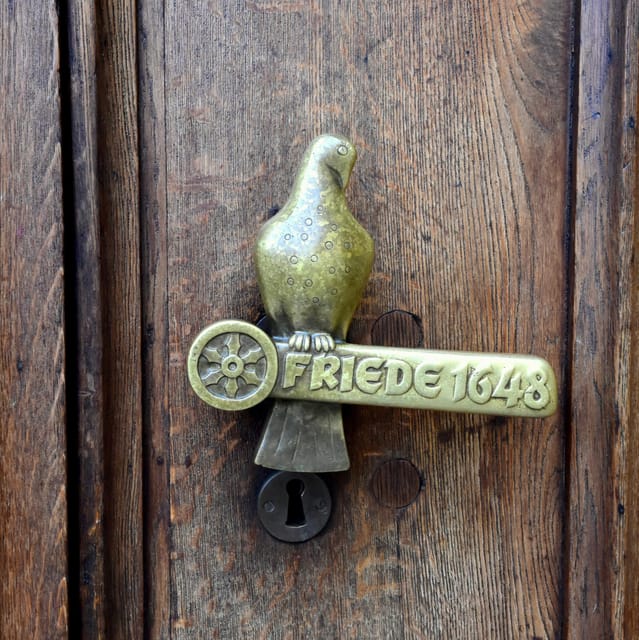
The medieval city scales are one of the most interesting stops because they explain daily business rather than simply presenting another old building. They sit between the town hall and St. Mary’s Church, an important position in the old market area.
For merchants arriving with goods, the scales were a required checkpoint. The question is simple: why could a trader not just weigh merchandise personally and announce the result? The answer involves trust, control, and fair dealing in a public market. An official weighing point gave buyers and sellers a common measure.
This is the sort of detail that makes a short tour worthwhile. You do not need a long lecture on medieval commerce to understand the basic point. The scales show how a city tried to manage trade and protect the market’s credibility.
I would pay close attention here, especially if you are interested in old towns as working places rather than postcard scenes. The stop ties together the nearby town hall, church, merchants, and market. It also gives children a concrete puzzle to solve, which helps keep younger minds involved.
More City Tours in Germany:
- Berlin: 1-Hour City Tour by Boat with Guaranteed Seating
★ 4.3 · 16,993 reviews - Leipzig: City History Canal Sightseeing Tour on a Motorboat
★ 4.7 · 6,232 reviews - Cologne: Panoramic City Cruise
★ 4.3 · 5,698 reviews - Berlin: City Sightseeing Hop-On Hop-Off Bus Tour
★ 4.1 · 4,233 reviews
The town hall and the Peace of Westphalia
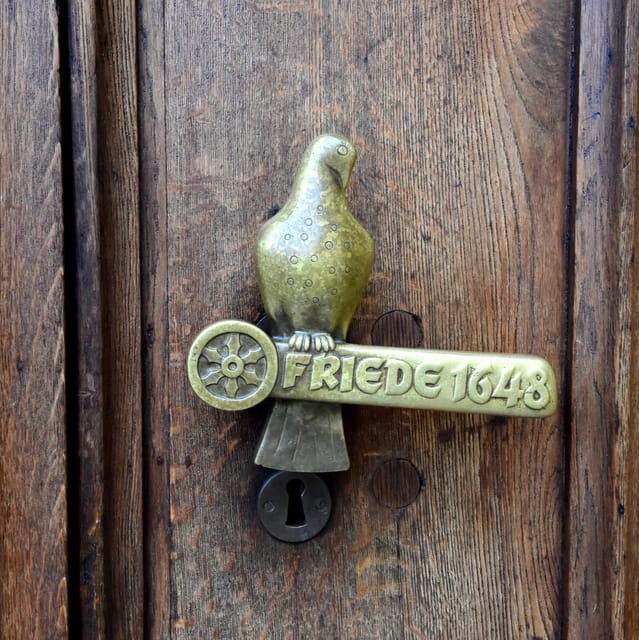
The town hall is one of the tour’s major stops, and its importance reaches far beyond Osnabrück. The city is closely linked with the Peace of Westphalia, the group of treaties that ended the Thirty Years’ War in 1648.
The tour explains Osnabrück’s role in that long peace process. This is valuable context because the town hall becomes more than a handsome civic building. It becomes a place tied to negotiation, conflict, and the reshaping of political life in Europe.
You should not expect a university lecture in a one-hour walk. Instead, the guide gives you the essential connection between the building and the peace settlement, then places it within Osnabrück’s wider story. That is the right level for a first visit.
This stop may be the strongest reason to choose the tour over simply walking around with a map. You can look up the Peace of Westphalia on your own, but a local guide can point out why Osnabrück matters in that story and connect it to the streets around you.
Osnabrück Cathedral and the cloister
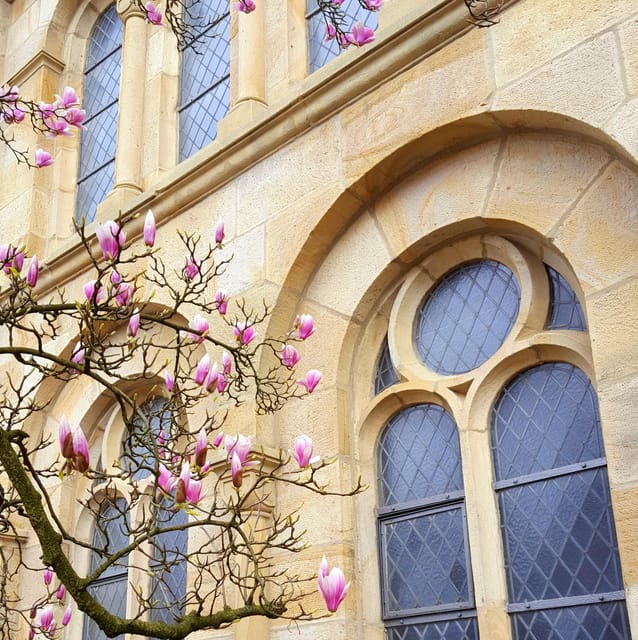
At times when the cathedral is open, the tour includes Osnabrück Cathedral and the cloister. This is an important qualification. Cathedral access is not guaranteed at every departure, so check the timing if seeing the interior is a priority.
The cathedral gives the tour a different mood from the market and town hall. You move from civic authority and trade into religious history. The cloister adds a quieter architectural space and lets you look more closely at the relationship between the cathedral and the institutions that grew around it.
Because the tour lasts only an hour, the cathedral visit is likely to be an introduction rather than a detailed examination of every feature. That is fine for most people. You get a sense of the building’s place in Osnabrück, then you can return later if you want more time.
If you are planning your own cathedral visit, keep the opening-time issue in mind. A departure during closed hours may still cover the cathedral from outside, but the supplied details only promise access at suitable times.
The Hexengang and darker pieces of the past
The route also brings in the so-called Hexengang, one of the less cheerful parts of Osnabrück’s past. Its inclusion gives the tour some weight. A useful city walk should not offer only pretty façades and easy civic pride.
The name points toward the history of witch persecution and the fears surrounding it. The details provided for this experience do not spell out the full story, so you should expect the guide to explain the local connection rather than assume a long treatment of the subject.
This kind of stop works best when treated with care. It reminds you that the old town was not only a place of commerce, worship, and diplomacy. It was also a place where ordinary people faced harsh beliefs and legal systems.
From the Hanseatic League to VfL Osnabrück
The historical span is one of the tour’s appealing features. Osnabrück’s Hanseatic connections place it within the network of northern European trading towns. That helps explain why merchants, market rules, and weighing goods matter so much in the old town story.
Then the tour reaches toward the present with VfL Osnabrück, the city’s football club. This is a smart touch. It shows that local identity is not frozen in the Middle Ages or in 1648. A city’s story keeps adding new chapters.
The guide cannot give equal depth to every period in one hour. That is the central limit of the format. You get a broad outline and a series of memorable links. If you want specialist detail on the Hanseatic League, church architecture, or the Peace of Westphalia, you will need more time elsewhere.
Still, for a first orientation, the range is useful. You leave with several subjects worth following up, instead of knowing only the names of two or three monuments.
The guide makes the difference
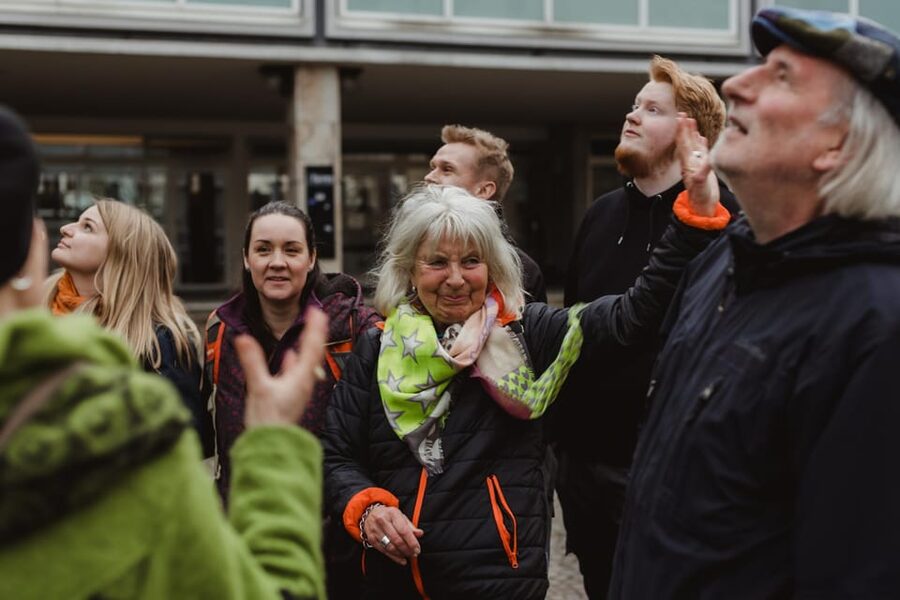
The strongest praise focuses on the guide rather than on any single building. The guiding has been described as competent, personable, informative, and entertaining. One assessment specifically praised a pleasant voice, good structure, and the ability to involve children in the group.
That matters on a one-hour tour. A guide who simply recites facts can make even an attractive old town feel flat. Here, the feedback points to a more relaxed style, with humorous phrasing and enough engagement to keep the walk enjoyable in poor weather.
There is no guide name provided for this experience, so I cannot tell you to request a particular person. The useful takeaway is the pattern: the quality seems to come from the individual guide’s energy and delivery. One especially positive account described a female guide who stayed relaxed and did not make the group feel hurried.
The German-only format remains the main limitation. If you speak German comfortably, you can enjoy the jokes and quick explanations as intended. If you do not, the buildings may still be interesting, but much of the tour’s value will be lost.
Weather, pace, and what to wear
The tour runs in all weather. That is not a minor note in northern Germany, where a clear morning can turn damp quickly. Wear a waterproof outer layer, comfortable shoes, and clothing suited to the forecast.
You will be outside for much of the walk, moving through the historic centre. The cathedral and cloister provide an indoor element when included, but they do not turn this into a fully sheltered activity.
The one-hour length should suit most people who can manage a normal city walk. The route is wheelchair accessible, but the information does not describe every surface or interior doorway. If you use a wheelchair, contact the provider ahead of time for the most useful route details.
Families may find the pacing helpful. The guide’s ability to work with children was singled out as a strength, and the scales offer a clear question that younger visitors can understand. The darker material around the Hexengang may call for a little explanation depending on the child’s age.
Is $15 a fair price?
At $15, this is a low-cost way to add structure to a short Osnabrück visit. The price includes a guided walk through the historic centre, information about the major sights, and cathedral and cloister access when opening times allow.
The best value comes when you use the tour as an orientation. Afterward, you know the location and meaning of the town hall, city scales, St. Mary’s Church area, cathedral, cloister, and Hexengang. You can then return to the places that caught your interest.
The value is less clear if you want a long interior visit or a tour in English. The duration is short, the language is German, and some departures may not include the cathedral interior. Those are not hidden costs, but they are important expectations to set before booking.
Free cancellation up to 24 hours before the start and a reserve-now, pay-later option make it easier to fit the walk into an uncertain schedule. Tips are not included, so bring a little extra if you feel the guide earned it.
Who should book this Osnabrück tour?
I would choose this walk if you have only a few hours in Osnabrück, want a quick first look, or prefer stories to a self-guided route. It also suits families and visitors who enjoy learning how old buildings were used, not just how old they are.
German speakers will get the full benefit. The tour may also work for visitors with some German who can follow a live explanation, but it is not presented as multilingual.
You may want a different plan if you need English guiding, dislike walking in poor weather, or want a slow, highly detailed study of the cathedral and town hall. In that case, use this as a starting point only, then set aside extra time for independent visits.
FAQ
How long does the Osnabrück Altstadt Highlights tour last?
The scheduled duration is one hour. One recorded experience lasted about an hour and a half, so avoid booking another activity immediately afterward.
What language is the tour offered in?
The live tour guide speaks German. German is the only language listed for the experience.
Does the tour include Osnabrück Cathedral?
The tour includes access to Osnabrück Cathedral and the cloister when the cathedral is open. Cathedral access depends on opening times, so check the departure details if this is important to you.
Where is the meeting point?
Meet at Bierstraße 28, 49074 Osnabrück, behind the town hall and opposite the Tourist Information.
Is the tour wheelchair accessible?
Yes, the activity is listed as wheelchair accessible. The supplied details do not describe the exact surfaces or interior access points.
Does the tour run in bad weather?
Yes. The tours operate in all wind and weather conditions, so wear clothing appropriate for the forecast.
Should you book it?
Book this tour if you want Osnabrück’s main old-town stories in a compact package, especially if you speak German and have a tight schedule. The medieval scales, Peace of Westphalia connection, cathedral cloister, and Hexengang give the hour more substance than a simple photo walk.
I would treat it as a smart first step, not a complete study of the city. At $15, the cost is easy to justify for a well-paced introduction, but check cathedral opening times and prepare for outdoor weather. If those conditions suit you, this is a practical way to get your bearings and understand why Osnabrück deserves more than a quick pass-through.
Just added around Germany
- Private Walking Tour in Berlin: Hitler’s Germany & WWII★ 5.0 · 7 reviews
- The History of Berlin: WWII PRIVATE Walking Tour With Locals★ 5.0 · 209 reviews
- Private Berlin WWII and Cold War History Tour with Local Expert Guide★ 5.0 · 28 reviews
- Private Walking Tour Berlin 3 hours: Brandenburg, Historic Center★ 5.0 · 7 reviews
- Berlin: Private Bike Tour of the Berlin Wall and Third Reich★ 5.0 · 23 reviews
- Berlin: Guided Private Bike Tour to Explore the Highlights★ 5.0 · 12 reviews
- Berlin Photography Masterclass – Private Photography Lesson★ 4.5 · 23 reviews
- Group Driving Tour 1 to 6 people. Berlin Shore Excursion incl pick-up at Port★ 5.0 · 8 reviews
Old Town Tours, compared.
Old Town & Viktualienmarkt City Walk in German
Read our review →
The Night Watchman Old Town Walking Tour in German
Read our review →
Browse the lists this tour appears in