
Reviewed · PHOTOGRAPHY SESSIONS
Private Photo Tour in Kreuzberg
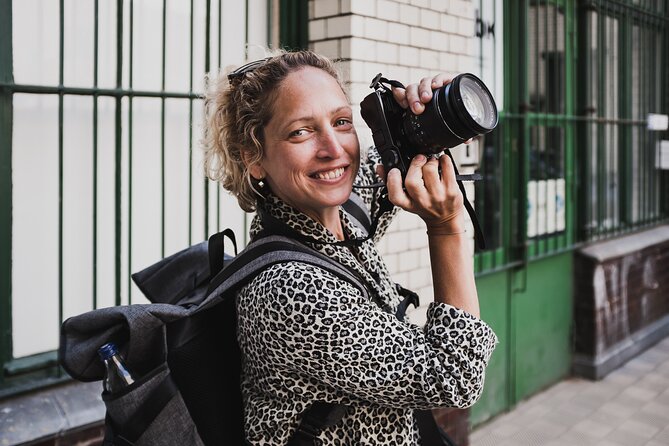
Look closer, and Kreuzberg changes shape. This private walk pairs street photography with local history, so you are not just hunting for attractive walls or unusual angles. You learn why the neighborhood looks the way it does, then use that knowledge to make stronger pictures.
I especially like the private format, which lets the guide adjust the route to your interests. I also like the use of historical photographs at several stops, since old views make Berlin’s changes easier to see. The main consideration is pace: two and a half hours covers a lot of ground, and one hour is devoted to courtyards alone, so this is more about focused discovery than a relaxed city stroll.
In This Review
- Key Points Before You Book
- What This Kreuzberg Photo Walk Is Really About
- Starting at Kottbusser Tor and Adalbertstraße
- Oranienplatz and Lenné’s City Planning
- The One-Hour Courtyard Session on Oranienstraße
- Rio-Reiser-Platz and the Fight to Save Homes
- Mariannenplatz, Marianne, and Kunsthaus
- Engelbecken and the Border Between Kreuzberg and Mitte
- Photo Instruction Without the Classroom
- The Private Price and Who Gets Good Value
- Practical Details for a Smooth Walk
- Who Should Book This Kreuzberg Experience
- Should You Book the Private Photo Tour in Kreuzberg?
- FAQ
- Where does the private photo tour start?
- Where does the tour finish?
- How long does the tour last?
- How many people can join the private tour?
- What is the price?
- Is the tour offered with a mobile ticket?
- What places are included?
- Are entrance tickets included?
- Can service animals join the tour?
- Is this tour accessible by public transportation?
- Can the route be adjusted?
- What is the cancellation policy?
Key Points Before You Book
- Private for up to five people: Your group receives the guide’s attention rather than joining a large photo class.
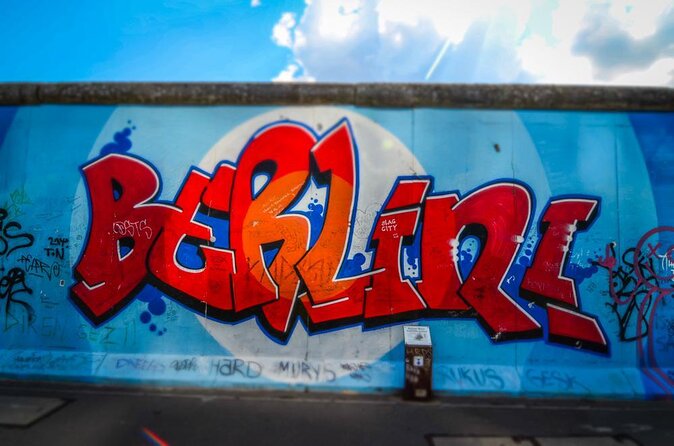
- A history lesson with a camera in hand: Kottbusser Tor, Oranienplatz, squatters, postwar planning, and neighborhood activism all enter the picture.
- One full hour in Oranienstraße courtyards: The guide selects courtyards that are both accessible and worth photographing.
- A route shaped around your interests: A previous tour was adjusted after guide Sascha discussed the participant’s wishes in advance.
- A practical two-and-a-half-hour length: Long enough for several subjects, but short enough to fit into a day of Berlin sightseeing.
- An easy public-transport setting: The tour begins at the FHXB Friedrichshain-Kreuzberg Museum on Adalbertstraße.
What This Kreuzberg Photo Walk Is Really About
This is not a tour built around famous postcard views. It uses ordinary streets, housing blocks, courtyards, former conflict zones, and public spaces as photographic subjects.
That choice gives the experience its value. Kreuzberg is often reduced to graffiti, nightlife, and alternative culture. Those things are part of its identity, but they do not explain the whole district. On this walk, you get a closer look at how planning decisions, migration, housing struggles, preservation efforts, and public art have shaped the area.
The guides are local photographers, and the tour has been running since 2009. That long focus on image design matters because you are not simply being told where to point your camera. You are encouraged to notice structure, repetition, old and new building lines, changing light, and the details that make a place photographically interesting.
The exact teaching style will depend on your guide and your own goals. You might want help with composition, or you might mainly want a local who can explain what you are seeing. The format is suitable for either approach, but it is wise to discuss your priorities before the tour.
The private setup is particularly useful here. With a maximum of five people, you can stop when a building catches your eye, ask questions about a courtyard, or request more help with framing without holding up a large group.
More photo walks in Berlin:
- Berlin: Fotografiska Photography Exhibition Ticket
★ 4.6 · 168 reviews - 5hours: Guide, Chauffeur & Photographer in Berlin private Tour
★ 5.0 · 66 reviews - BERLIN PHOTO TOUR with a professional Photographer from Berlin
★ 5.0 · 44 reviews
Starting at Kottbusser Tor and Adalbertstraße
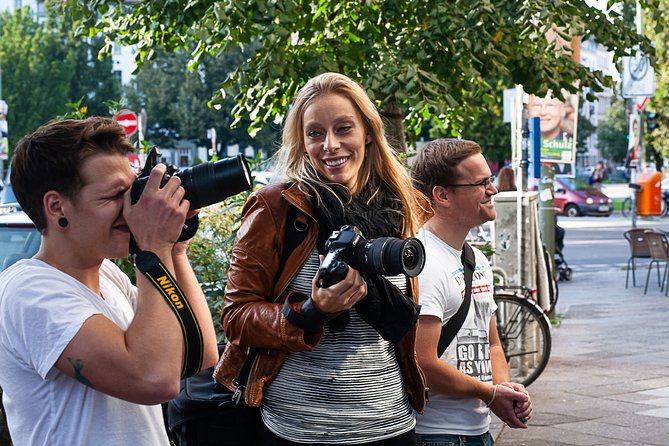
The meeting point is the FHXB Friedrichshain-Kreuzberg Museum at Adalbertstraße 95A. The first part of the route centers on Kottbusser Tor, a place that has changed sharply over roughly 150 years.
This is a strong opening because Kottbusser Tor gives you several visual layers at once. Large residential towers, busy roads, and the elevated subway create a city scene that can look chaotic at first. The guide uses historical images to explain how the square developed and why the railway runs above the street.
That elevated subway is not just a transport detail. It is also a useful lesson in reading Berlin’s infrastructure. You can compare the older street pattern with later housing and transport decisions, then look for ways to include those contrasts in a photograph.
The itinerary labels this first stop Adalbertstraße, while the description points to Kottbusser Tor. Treat the museum and surrounding Kottbusser Tor area as the opening zone rather than expecting a single, tightly marked viewpoint.
You receive free admission at the stops, and the main cost covers the private guide rather than entrance fees. Bring a camera or phone with enough battery for the full walk. A mobile ticket is provided, which keeps the booking side simple.
Oranienplatz and Lenné’s City Planning
The short stop at Oranienplatz shifts the focus from transport and housing to urban design. The square was planned by Peter Joseph Lenné, the landscape designer associated with Sanssouci and Pfaueninsel.
That connection gives the stop a wider Berlin frame. You are not looking at Oranienplatz as an isolated square. You are considering how a major planner shaped public spaces and how later changes altered the original idea.
The stop lasts about 15 minutes, so expect a compact explanation rather than a long lecture. That is probably the right balance. You get enough context to understand the square, then move on before the photo walk loses momentum.
For photographers, a planned public space can be useful because it offers lines, open areas, edges, and relationships between buildings. The guide can help you decide what deserves attention. A formal square may not provide an obvious dramatic subject, but its geometry can make a stronger picture than a random street scene.
This is also one place where historical photographs are useful. Seeing an earlier Oranienplatz beside the present view helps you identify what has survived, what disappeared, and how a public space can change without losing every trace of its original design.
The One-Hour Courtyard Session on Oranienstraße
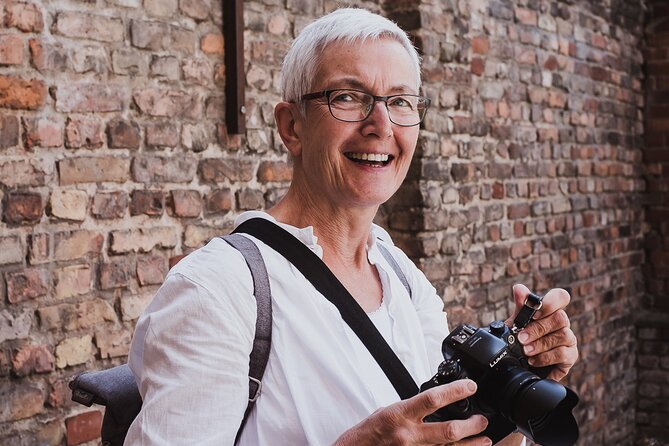
Oranienstraße is the heart of the experience. The tour spends about an hour exploring courtyards, making this the longest single section of the route.
That time allocation tells you what the guide considers important. Kreuzberg’s street frontage is only part of the story. Courtyards reveal another side of the district, with building forms and architectural ideas that are easy to miss from the pavement.
The guide does not simply take you into every courtyard. The focus is on places that are accessible, visually interesting, and worth your camera’s attention. That saves you from wandering through ordinary entrances while hoping to find something useful.
You learn when the courtyards were built and what architectural thinking shaped them. The details can help you make sense of the repeated patterns in Berlin housing: entrances, passageways, inner spaces, and the relationship between street-facing buildings and their less visible rear areas.
A full hour allows time to slow down. You can work with different angles, compare a wide view with a detail, or ask why one courtyard photographs better than another. If you use a phone, this section should still be worthwhile because the subjects are based on form and atmosphere, not expensive equipment.
There is one practical limit. Access to courtyards can depend on what is open at the time, and the description makes clear that the guide chooses courtyards you can enter. You should not expect every private interior space to be available. The value comes from informed selection, not unlimited access.
This section also makes the private format more useful. If you are interested in architecture, you can spend longer on building details. If you prefer people, textures, or abstract shapes, you can direct the photographic emphasis accordingly.
A few more Berlin trips worth comparing
- Berlin: Reichstag, Dome and Government District Guided Tour
★ 4.7 · 18,288 reviews - Berlin: 1-Hour City Tour by Boat with Guaranteed Seating
★ 4.3 · 16,993 reviews - Berlin: Boat Tour Along the River Spree
★ 4.4 · 11,252 reviews - Discover Berlin Half-Day Walking Tour
★ 5.0 · 9,624 reviews
Rio-Reiser-Platz and the Fight to Save Homes
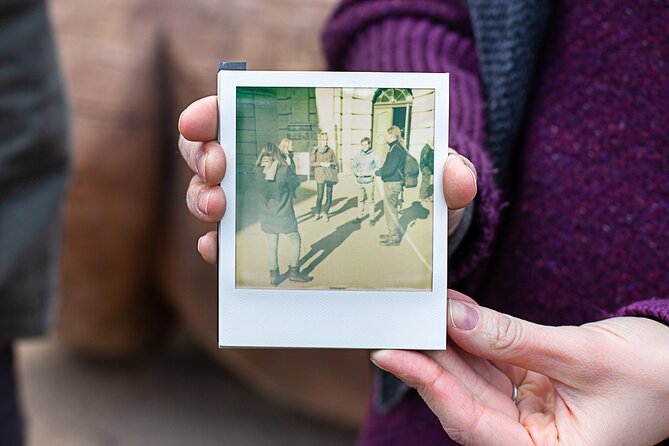
The route then reaches Rio-Reiser-Platz, named after Heinrich, the full first name of musician Rio Reiser.
The stop asks a more political question: how were plans to demolish the houses here prevented, and what role did squatters play? That subject gives the walk a clear link to Berlin’s housing struggles and the disputes that shaped Kreuzberg.
You are not only photographing old buildings. You are looking at why they remain, who fought over them, and how an urban district can be altered by decisions made outside the street itself.
The stop lasts around 20 minutes. That is enough time for a focused explanation and some photographs, though you should not expect a full seminar on Berlin housing policy. The strength is the direct connection between a place and the conflict that helped preserve it.
This is also a useful reminder that attractive old buildings do not survive by accident. Preservation can involve residents, organized protest, and resistance to planned redevelopment. That story gives your photographs more meaning without requiring you to turn every picture into a political statement.
Mariannenplatz, Marianne, and Kunsthaus
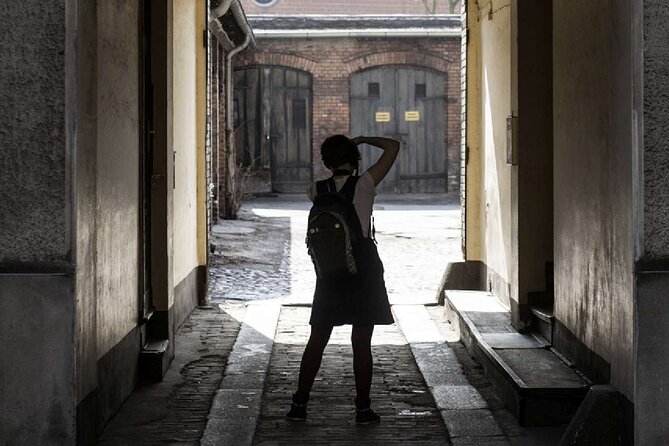
Mariannenplatz brings another layer of local identity. The guide explains who Marianne was, what happened in the square during recent decades, and the role of the large Kunsthaus located there.
The name itself is a good prompt for a city walk. Public squares often carry historical names that become familiar without remaining understood. Learning the person behind the name turns a sign into a starting point.
The square’s more recent story also matters. You get a sense of how public space changes through use, conflict, art, and neighborhood life. The Kunsthaus adds a visual and cultural subject, giving you something different from residential architecture and transport infrastructure.
The stop takes about 20 minutes. That makes it a useful middle-to-late section of the route, when you have already learned to look beyond obvious details. You might find the best photographs here in the relationship between the square, its buildings, and the art institution rather than in one single object.
Because the route is private, you can ask for more detail on the parts that interest you. Someone drawn to art may want to spend more time around the Kunsthaus. Someone focused on urban history may prefer the story of the square itself.
Engelbecken and the Border Between Kreuzberg and Mitte
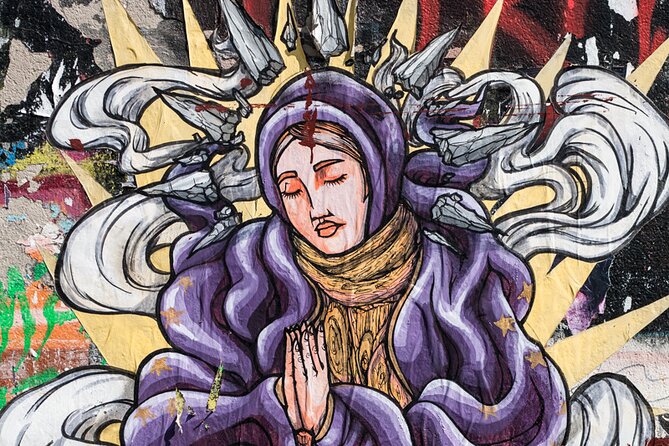
The final stop is Engelbecken. Administratively, it sits in Mitte, but the tour treats it as part of Kreuzberg for several reasons.
That is a fitting ending because Engelbecken brings together geography, local identity, and resident action. Historical photographs show how the area changed, while the guide explains the commitment of local residents and the events that shaped the site.
The stop lasts about 20 minutes. It gives you another chance to compare past and present, but it also broadens the idea of a neighborhood boundary. District lines on a map do not always match the way people understand a place.
For photography, Engelbecken offers a different kind of subject from Kottbusser Tor or Oranienstraße. The mood, open space, and historical layers shift the visual rhythm of the walk. The route ends in a different location from the starting point, so you should plan your next activity from Engelbecken rather than assuming you will return to the museum.
The exact end point is not specified in the available details. That is worth keeping in mind if you have a timed reservation immediately afterward.
Photo Instruction Without the Classroom
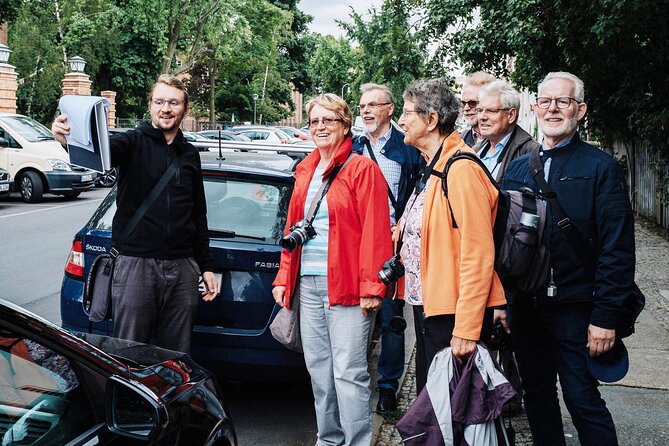
The tour’s photography teaching is built into the city rather than separated into a formal lesson. You learn by looking at real streets and buildings, then testing how you want to frame them.
The guides have extensive experience in image design, but the supplied details do not promise a specific camera course or technical syllabus. I would book this for help with seeing and composing, not for guaranteed instruction in advanced manual settings.
That distinction matters. If you want a lesson on shutter speed, flash, or post-processing, ask about it before booking. If you want to understand why a scene works, how history affects what you notice, and how to find better viewpoints, the format makes more sense.
The tour can suit different equipment levels. A phone is enough to record the route and work on composition. A compact camera or interchangeable-lens camera may give you more control, but the experience does not require a specific type of gear in the details provided.
The best benefit of a photo walk like this is attention. A guide can point out the motif you might have passed without seeing. Historical photographs add another tool, letting you compare the same place across time.
The Private Price and Who Gets Good Value
The price is $206.10 for a group of up to five people. That can look high beside a standard walking tour, but the comparison changes if you fill the group.
For five people, the cost works out to about $41.22 each. For two people, it is about $103.05 per person. A solo participant pays the full group price, so the value is strongest for friends, couples, families, or a small photography club that wants a dedicated guide.
You are paying for roughly two and a half hours, local photography guidance, historical interpretation, and a route that can be adjusted to your interests. The private format is the main reason to consider the price. You are not paying for admission to major attractions, since the listed stops have no entrance charge.
I would not choose this tour solely to save money. I would choose it when personal attention matters. The experience becomes more worthwhile if your group has a clear goal, such as architecture, composition, phone photography, neighborhood history, or a custom route.
A previous participant discussed their wishes in detail with Sascha before the tour, and the route was changed to match those interests. That is the most useful clue about how to get value from the booking: contact the provider with specific preferences rather than arriving with no plan.
Practical Details for a Smooth Walk
The tour lasts approximately two hours and 30 minutes. It starts at the FHXB Friedrichshain-Kreuzberg Museum, Adalbertstraße 95A, and finishes somewhere different, at Engelbecken.
The meeting area is near public transportation, which makes the start convenient. The tour information says most people can participate, and service animals are allowed. The provider also states that it works climate-neutral and that all guides are LGBTQI-friendly.
The experience is booked with a mobile ticket. Confirmation arrives at the time of booking, and cancellation is available up to 24 hours before the tour for a full refund.
The available opening information lists Monday hours from 10:30 a.m. to 5:30 p.m. for the stated date range, September 4, 2020 through June 16, 2026. Since that schedule is presented narrowly, check the available date and time when booking.
The tour is booked, on average, 50 days ahead. That does not guarantee every date will sell out, but it suggests that you should reserve early if you need a particular day, especially for a private guide.
Who Should Book This Kreuzberg Experience
I would recommend it most strongly to:
- Photographers who want better subjects, not just a list of famous views.
- Visitors interested in architecture, especially courtyards, housing blocks, and city planning.
- Small groups, since the private price becomes more sensible when shared.
- Repeat visitors to Berlin, who may prefer neighborhood stories over the usual central sights.
- People who like local history tied to real places, including housing campaigns and resident action.
- Phone photographers, since the teaching is centered on looking, framing, and image design.
I would be more cautious if you want a quick highlight tour, a museum-heavy outing, or a fully technical camera workshop. You may also find the route less appealing if you dislike walking between several stops or prefer a fixed endpoint.
The tour’s rating is 5 from three available ratings, which is a small sample. I would treat that as encouraging but not enough to settle every question about guide style or route conditions.
Should You Book the Private Photo Tour in Kreuzberg?
Book it if you want to see Kreuzberg through both a camera and a local story. The best parts are the private customization, the hour spent in selected courtyards, the historical photographs, and the way the route connects architecture with housing and neighborhood change.
The price makes the most sense for a group of three to five, or for serious photographers who place a high value on personal guidance. Before booking, tell Berlin Photo Tours what you want to photograph and ask whether the planned route can match that goal.
If you do that, this should feel less like a standard sightseeing walk and more like a working session in the city, with Berlin itself providing the material.
FAQ
Where does the private photo tour start?
It starts at the FHXB Friedrichshain-Kreuzberg Museum, Adalbertstraße 95A, 10999 Berlin, Germany.
Where does the tour finish?
The activity ends at a different location from the starting point, around the final stop at Engelbecken. A specific end address is not provided.
How long does the tour last?
The tour lasts approximately two hours and 30 minutes.
How many people can join the private tour?
The price covers one private group of up to five people.
What is the price?
The listed price is $206.10 per group of up to five people.
Is the tour offered with a mobile ticket?
Yes. A mobile ticket is available, and confirmation is received at the time of booking.
What places are included?
The route includes Kottbusser Tor and Adalbertstraße, Oranienplatz, Oranienstraße courtyards, Rio-Reiser-Platz, Mariannenplatz, and Engelbecken.
Are entrance tickets included?
The listed stops have free admission, so there are no separate entrance fees stated for those stops.
Can service animals join the tour?
Yes. Service animals are allowed.
Is this tour accessible by public transportation?
The tour meeting area is near public transportation.
Can the route be adjusted?
The tour is private, and the route can be tailored to group interests. One tour was adjusted after guide Sascha discussed the participant’s wishes in advance.
What is the cancellation policy?
You can cancel up to 24 hours before the experience for a full refund.
Just added around Berlin
- Private Tour: Potsdam Day Trip from Berlin★ 4.5 · 43 reviews
- Berlin’s Gallery Scene★ 5.0 · 4 reviews
- Private Tour: Secret Food Tours Berlin★ 5.0 · 4 reviews
- Private Tour: Jewish Heritage Walking Tour of Berlin★ 5.0 · 29 reviews
- Private Sachsenhausen Concentration Camp tour with train★ 5.0 · 205 reviews
- Private walking Tour: Berlin Architecture Tour★ 5.0 · 14 reviews
- Private Tour: Daytime Food Tour Trends & Classics★ 5.0 · 24 reviews
- Private Tour: Berlin by Trabant Stretch-Limousine★ 5.0 · 186 reviews
Photography Sessions, compared.
Magic Bavaria – Museum of Fun, Photos and Illusions
Read our review →
5hours: Guide, Chauffeur & Photographer in Berlin private Tour
Read our review →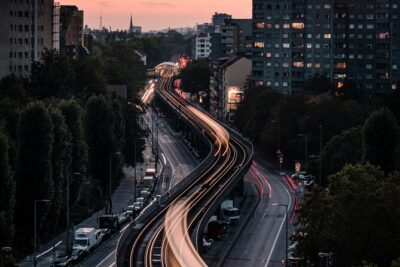
BERLIN PHOTO TOUR with a professional Photographer from Berlin
Read our review →
Ticket for Photography Exhibitions at C/O Berlin
Read our review →
Private Photo Session with Professional Photographer
Read our review →Browse the lists this tour appears in