
Reviewed · WALKING TOURS
Stuttgart: Stäffele Guided Walking Tour
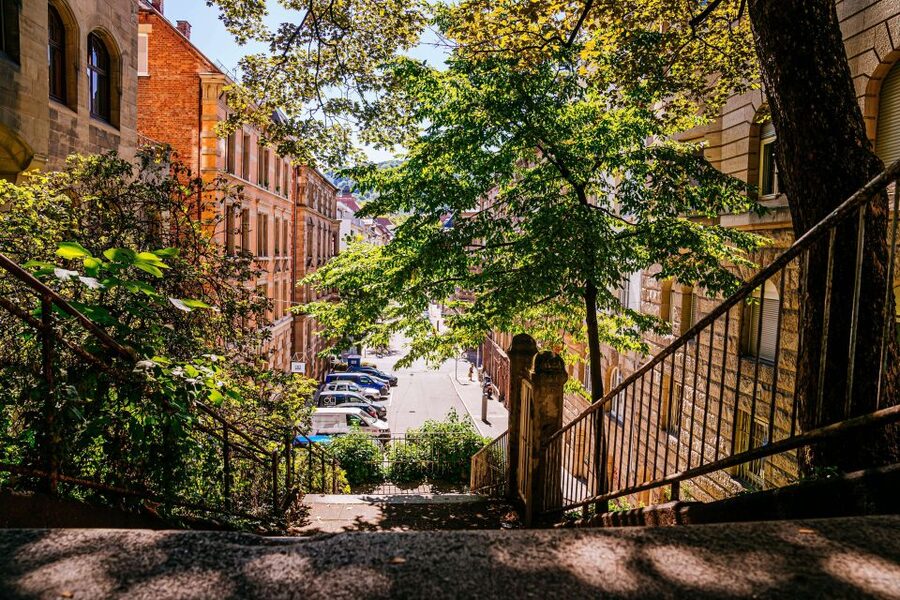
Stuttgart makes you earn its best views. I like this tour because it turns the city’s steep stairways into a real sense of place, not just a workout, and because each route reveals a different side of Stuttgart. The German-speaking guides add local stories, historical background, and amusing details along the way. The main drawback is clear: climbing more than a thousand steps requires good fitness, and the tour is not suitable for wheelchair users or pregnant women.
I also like the choice of five routes. You can head north through vineyards and hillside neighborhoods, east toward Uhlandshöhe, south past the Lapidarium and Karlshöhe, west toward the Kräherwald forest, or stay near the center on the Mitte route. A few participants have wished for more insider information, so if you want a very detailed specialist history tour, ask questions as you walk.
In This Review
- Key points to know before booking
- Why Stuttgart’s Stäffele are worth your time
- The North route: vineyards, towers, and hillside homes
- The East route: Anna Sutter, Uhlandshöhe, and the Sängerstaffel
- The South route: Karlshöhe, the Lapidarium, and city vineyards
- The West route: villas and the Zeppelin viewing platform
- The Mitte route: Eugenstaffel and the view from Eugensplatz
- What the guide adds to the climb
- How hard is the walk?
- Timing, price, and practical value
- Who should book this Stäffele walk?
- Should you book the Stuttgart Stäffele tour?
- FAQ
- How much does the Stuttgart Stäffele Guided Walking Tour cost?
- How long does the Stäffele tour last?
- How many routes can I choose from?
- Is the tour conducted in English?
- Do all routes include more than a thousand steps?
- What should I wear or bring?
- Is the tour suitable for wheelchair users?
- Is the tour suitable for pregnant women?
- Are food, drinks, or transportation included?
Key points to know before booking
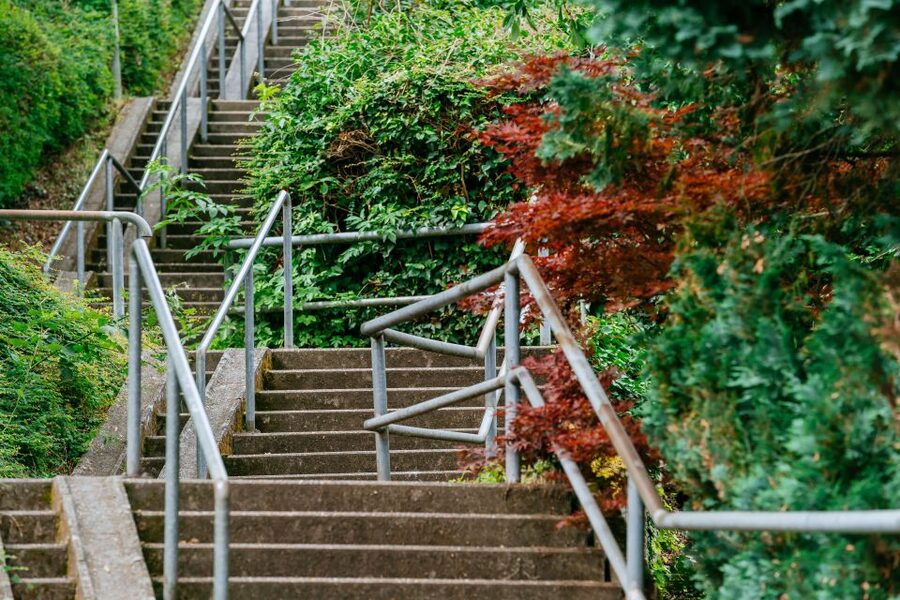
- Five distinct routes: Choose North, East, South, West, or Mitte, with each route offering different views and sights.
- More than pretty stairways: The Stäffele connect Stuttgart’s central basin with its hillside neighborhoods, vineyards, homes, gardens, and lookout points.
- A proper physical challenge: Comfortable shoes and good fitness are required, with some routes involving more than a thousand steps.
- Strong guide-led experience: The most praised feature is the pleasant guiding style, with stories and anecdotes added along the way.
- Good value at $25: For one to two hours with a live local guide, the price is reasonable if you want context rather than a simple city walk.
- German only: The tour is conducted in German, so you should be comfortable following spoken German for the full walk.
Why Stuttgart’s Stäffele are worth your time
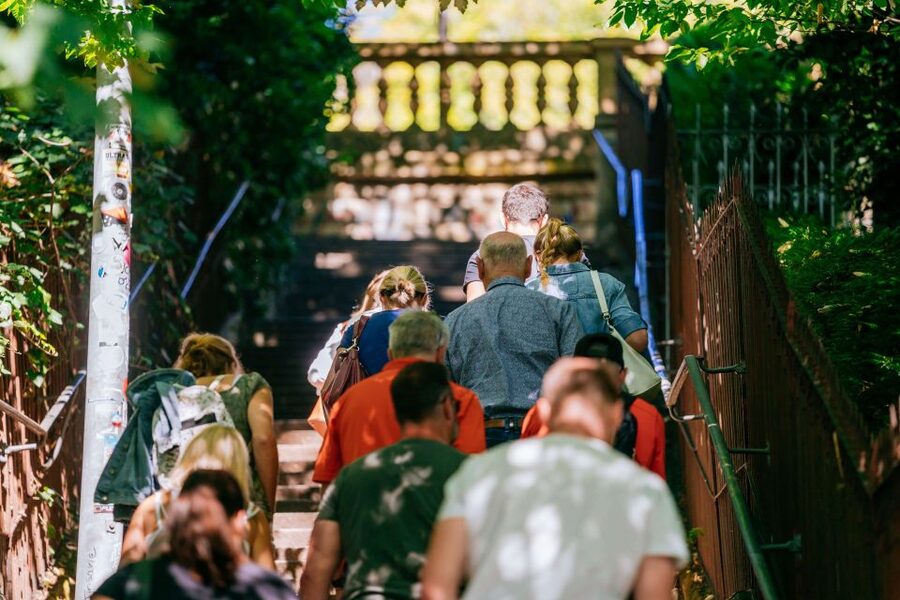
Stuttgart is often pictured as a city of cars, museums, and grand palaces. That is only part of the story. The city sits in a basin surrounded by slopes, and its stairways lead from the flatter central streets into older residential areas, vineyards, gardens, and elevated viewpoints.
These stairways are called Stäffele, a local Swabian term for steps or little stairs. They are not one single attraction. They are a network of routes built into the city’s hills, and they show how Stuttgart grew around difficult ground.
That makes this walk more interesting than a standard sightseeing circuit. You are not simply stopping in front of monuments. You are moving through the city’s shape. Every climb changes your view, and every descent reveals another street, home, garden, or corner of the hillside.
I like that the tour does not treat Stuttgart as a flat checklist of sights. The city’s topography is part of its identity, and the Stäffele make that identity visible, one flight at a time.
The price is about $25 per person. For a one to two hour guided walk, that is fair, especially if you value local explanation and do not want to plan a route yourself. You are paying for a guide who connects the steps with Stuttgart’s people, buildings, and past.
The catch is that the price does not include food, drinks, or transportation back to the starting point. Since the meeting point changes with the route, you should check the details carefully before setting out.
More Walking Tours in Stuttgart
- Stuttgart: Guided Ghost Walking Tour
★ 4.5 · 662 reviews - Stuttgart: City Highlights – Guided Walking Tour
★ 4.7 · 189 reviews - Stuttgart: Private Guided Circular City Walk
★ 4.7 · 129 reviews
The North route: vineyards, towers, and hillside homes
The North tour begins around the Europaviertel and moves into the higher districts of northern Stuttgart. It is a route of repeated climbs and descents, with architecture and viewpoints appearing between the stairways.
One of the early areas is Postdörfle, followed by the Hexenwäldle. These names alone give the route a slightly mysterious local flavor, but the appeal is practical too: you are seeing parts of Stuttgart that are easy to miss if you stay along the main streets.
The route continues toward the Kriegsbergturm and Mönchhalde. These higher sections provide broad views over the city, and the climb helps explain why Stuttgart’s upper neighborhoods feel so different from the center.
The North route also passes homes connected with prominent Stuttgart figures. That gives the guide an opening to add human stories rather than sticking only to dates and building styles.
A vineyard is part of the route as well. This is an important detail because Stuttgart is not only surrounded by hills. Some of those hills remain tied to wine production, right inside the city.
I would choose North if you want a mixture of architecture, city views, named neighborhoods, and vineyards. It is less about one major sight and more about seeing how the northern slopes fit together.
The East route: Anna Sutter, Uhlandshöhe, and the Sängerstaffel
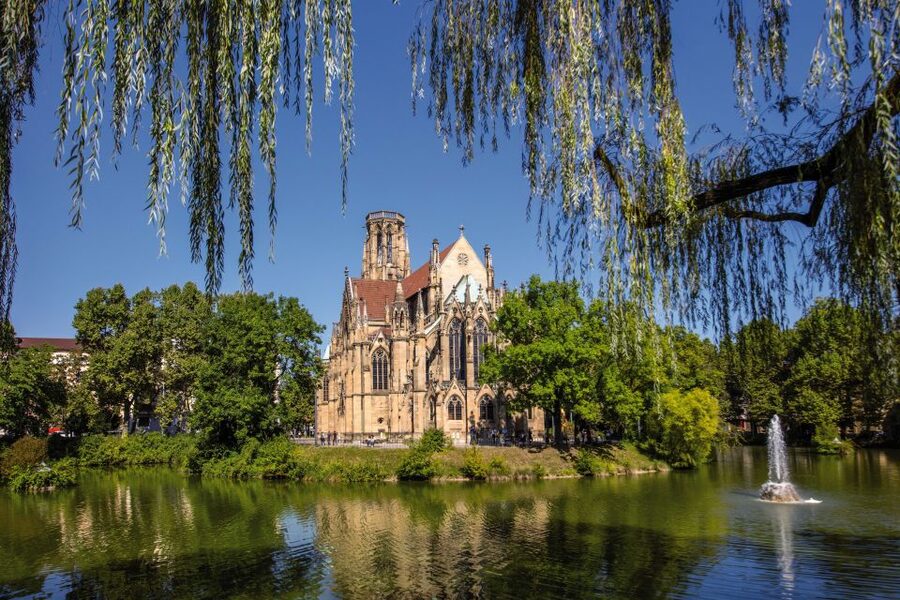
The East tour follows less familiar paths through Stuttgart’s eastern districts. One early stop is connected with opera singer Anna Sutter, whose death was dramatic and tragic. That story gives the walk a darker note and shows how local history can be tied to an individual address.
You also pass the Stuttgart Observatory. From there, the route climbs several flights of steps toward Uhlandshöhe, one of the city’s best places for a high view.
The view from Uhlandshöhe is a major reason to select this route. You get a broad look over Stuttgart, and the uphill walk gives the viewpoint a satisfying sense of arrival. You should still expect the view to depend on weather and visibility, but the route is designed around these elevated sections.
After Uhlandshöhe, the walk continues toward the John Cranko Ballet School in its striking new building. This gives the route a modern architectural finish after its older stories and stairways.
The descent uses the Sängerstaffel, often described as one of the most attractive staircases in the city. Descending is easier on your lungs than climbing, but steep steps can still be hard on knees, so good footwear matters.
I would pick East if you want a balanced route with local drama, a major viewpoint, modern architecture, and one especially memorable staircase.
The South route: Karlshöhe, the Lapidarium, and city vineyards

The South tour runs through leafy residential districts and heads toward Karlshöhe. The route begins along the city’s longest relay of steps, making this one of the better choices for anyone who wants the full Stäffele challenge.
You pass the Lapidarium on the way. The route information does not promise a dedicated visit inside, so treat it as an exterior sight along the walk rather than a separate museum stop.
The city winery is another important feature. Passing one of Stuttgart’s vineyards makes the South route a strong choice if you want to connect the city’s urban streets with its wine-growing slopes.
At Karlshöhe, you can look over the west and south sides of Stuttgart. The view is one of the route’s main rewards, and the open stretches afterward keep the walk from feeling like a series of narrow stairwells.
The return descends by several panoramic sections. You will also pass the Schwabtunnel, which was once the widest road tunnel in Europe. That detail adds useful historical context to what might otherwise seem like an ordinary piece of city infrastructure.
I would choose South if your priorities are green residential areas, wine, long stairways, and views toward the west and south. It is also a good route for people who want the Stäffele experience to feel closely tied to Stuttgart’s vineyards.
Still Stuttgart, at a slower pace:
- Stuttgart 24-Hour Hop-On Hop-Off Sightseeing Bus Tour
★ 4.4 · 1,647 reviews - Stuttgart: Mercedes-Benz Museum Entry Ticket
★ 4.8 · 1,400 reviews - Tickets SWR Fernsehturm Stuttgart
★ 4.5 · 674 reviews - Stuttgart: Museum of Illusions Entry Ticket
★ 4.2 · 507 reviews
The West route: villas and the Zeppelin viewing platform
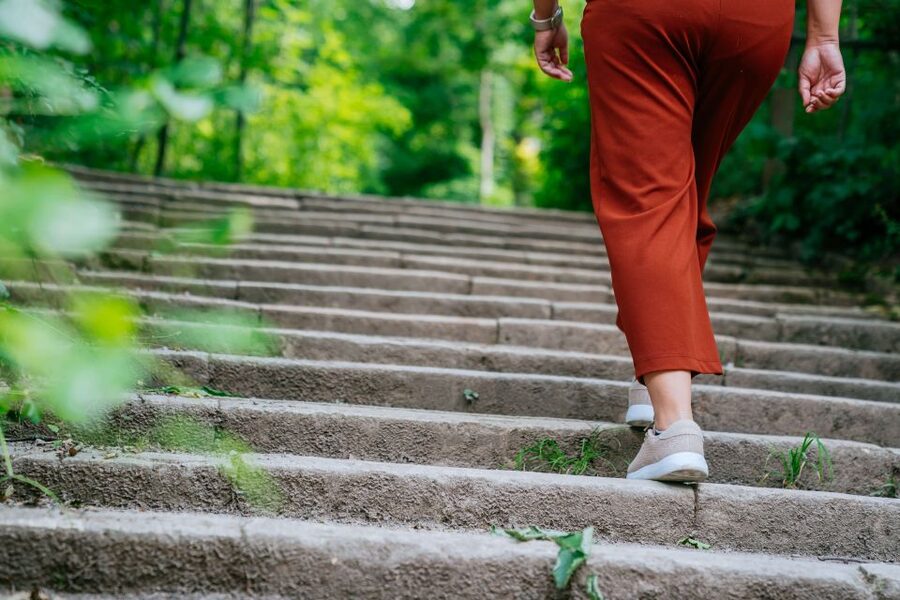
The West tour climbs a series of open-air staircases toward the edge of the Kräherwald forest. Along the way, you pass grand villas and see why Stuttgart West has such a strong hillside character.
The route is not centered on a single famous monument. Its appeal lies in the changing streetscape, the villas, and the gradual move from dense city districts toward the forest edge.
A key stop is the Zeppelin viewing platform. From here, you get a view over the western districts and the city center. This is the kind of stop that helps you understand Stuttgart’s basin, since the city spreads below while the wooded edge sits behind you.
The tour also includes historical stories, amusing facts, and details about the area. That balance matters. Without a guide, a staircase can be just a staircase. With context, you begin to see how the slopes shaped housing, travel, and daily life.
The West route is a good choice if architecture interests you, especially villas and residential streets. It also suits you if you prefer a route that reaches toward a forested edge rather than focusing mainly on vineyards.
The Mitte route: Eugenstaffel and the view from Eugensplatz
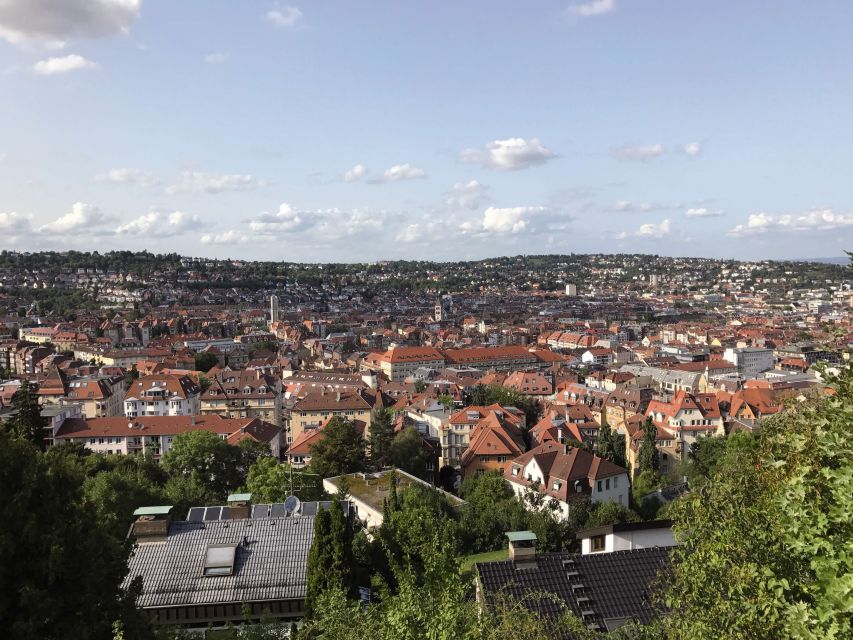
The Mitte route is the most central option and may be the easiest fit if you have limited time in Stuttgart. It includes the Eugenstaffel, one of the city’s best-known staircases.
The Eugenstaffel is associated with the fountain at its upper end and the view from Eugensplatz. The square also has a Galatea feature and a curious pug statue, both of which give the guide something unusual to explain.
The view from Eugensplatz is one of the strongest attractions on this route. You get a clear look toward the city center, and the central location makes it easy to connect the walk with other Stuttgart sights before or after the tour.
Mitte also includes the Sünderstaffel, another legendary staircase. The route ends back in the Kessel at the Stadtpalais, keeping the finish within the central city rather than leaving you on a distant hillside.
I would select Mitte if this is your first introduction to the Stäffele, if you want a central route, or if you prefer not to commit to one of the longer-feeling outer hillside options. It still involves serious steps, but the setting may be more convenient for a short Stuttgart visit.
What the guide adds to the climb
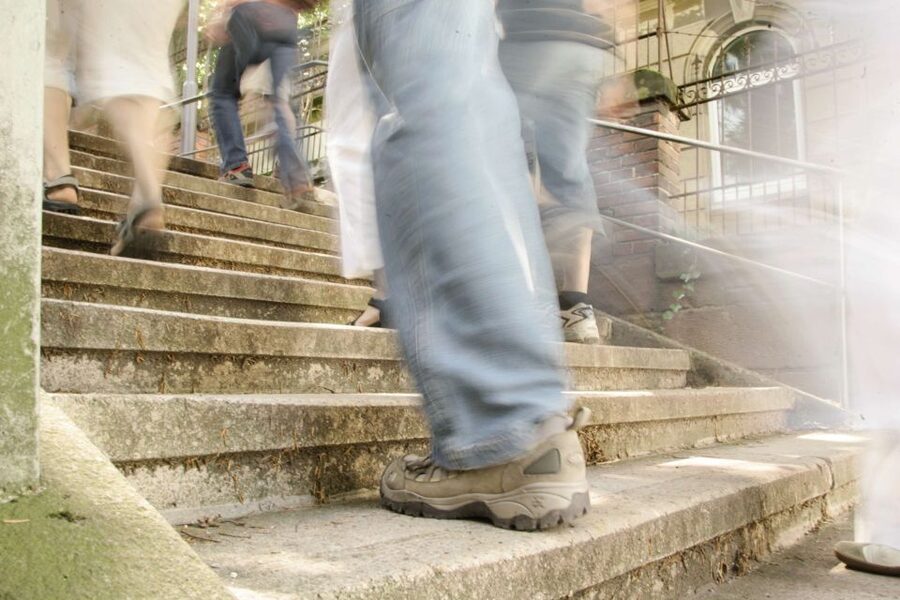
The best reason to book a guided Stäffele walk is not simply finding the stairways. You can walk up steps on your own. The guide gives them meaning.
The strongest praise for this experience centers on pleasant guides, stories told along the way, historical background, and amusing anecdotes. One especially useful point is that the tour can reveal places even local residents or people who work in Stuttgart have never seen, or have not visited in years.
That tells you something about the experience. It is not only aimed at first-time visitors. The routes pass through enough side streets, staircases, viewpoints, and less familiar corners to offer something fresh to people who already know the center.
The guiding style also seems to be warm rather than stiff. You should expect explanation mixed with storytelling, not a lecture delivered at every corner.
The tour is in German, and no other language is listed. If you understand German well enough to follow a live walking tour, this can be a very good way to hear local stories in their natural setting. If you do not, the experience will be difficult to enjoy fully.
One piece of useful criticism is that some people would like more insider information. I would treat that as a reason to take an active role. Ask about the neighborhoods, the stairway names, the buildings, or the view whenever a question comes to mind.
How hard is the walk?
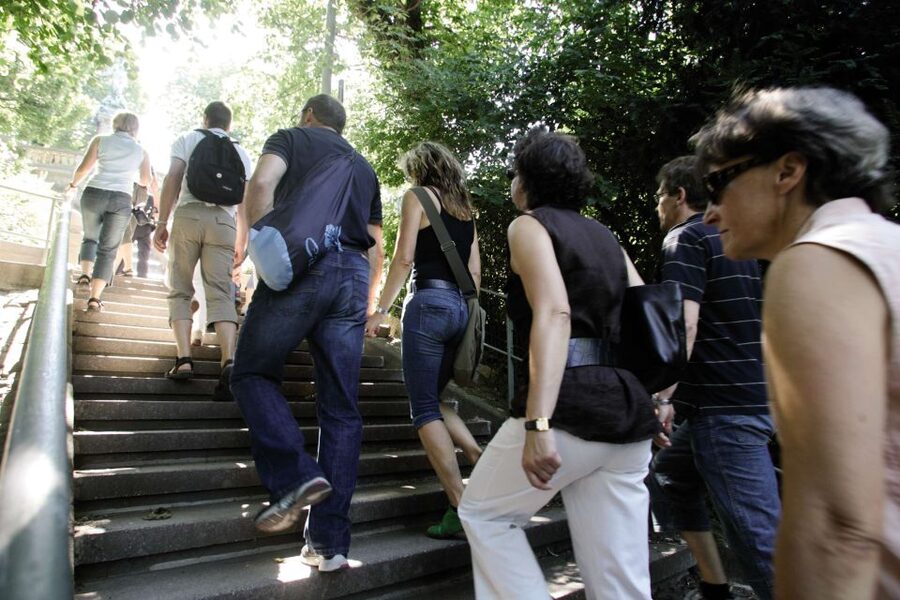
The title may sound gentle, but this is not a casual stroll. The routes involve many flights of steps, and the tour information warns that more than a thousand steps may be included.
You need comfortable shoes. A firm sole and good support are more important than looking stylish for the afternoon.
You also need reasonable physical fitness. The length is only one to two hours, but stairs make a short tour feel much harder than a flat walk of the same duration.
The tour is not suitable for wheelchair users or pregnant women. Since the routes depend on historic and open-air stairways, you should not assume that a route can be adapted for limited mobility.
Pace may vary with the route and the group, but you should expect regular climbs and descents rather than one single hill followed by an easy finish. If you dislike steep urban walks, this is probably not the right use of your $25.
Timing, price, and practical value
The tour lasts one to two hours, with the exact duration and starting time depending on the selected route and availability. That makes it easy to fit into a Stuttgart day, but you should avoid placing an important timed activity immediately afterward.
The meeting point also changes according to the option you book. Check it before leaving your hotel, especially if you choose North, East, South, or West rather than Mitte.
At $25 per person, the tour offers solid value for anyone who wants local background without committing to a long sightseeing program. You get a live German-speaking guide, a planned route, and access to views and neighborhoods that could take time to find on your own.
The price is less appealing if you only want photographs from a viewpoint. In that case, a self-guided walk may be enough. The paid value lies in the stories, route planning, and local explanation.
Food and drinks are not included. Bring water, particularly in warm weather, since the climb can be demanding. You are also responsible for getting back to the starting point if the route finishes elsewhere.
Free cancellation is available up to 24 hours before the tour for a full refund, and you can reserve now and pay later. Those policies are helpful if your Stuttgart schedule is still changing.
Who should book this Stäffele walk?
I would recommend it to you if you enjoy city walks with a physical challenge, local history, and viewpoints earned by climbing.
It is particularly well suited to:
- First-time visitors who want to understand Stuttgart’s hills
- People interested in architecture and residential neighborhoods
- German speakers looking for local stories and anecdotes
- Repeat visitors who have already seen the major central sights
- Walkers who enjoy vineyards, stairways, and elevated city views
I would be cautious if you have knee, balance, or stamina concerns. The short duration can be misleading because the steps do most of the work.
I would also think carefully about language. This is a German-language tour, not a multilingual walk with German as one option.
Should you book the Stuttgart Stäffele tour?
Book it if you want to see Stuttgart from its slopes rather than only from its main streets. The combination of stairways, vineyards, villas, viewpoints, neighborhood stories, and local history gives you a more grounded picture of the city.
Choose Mitte for the central setting and Eugensplatz views. Pick North for vineyards and northern neighborhoods, East for Uhlandshöhe and the Sängerstaffel, South for Karlshöhe and the Lapidarium area, or West for villas, Kräherwald, and the Zeppelin platform.
At $25, the experience is worth it for a fit walker who understands German and values a guide’s stories. It is not a good match for anyone seeking an easy, flat outing. Bring proper shoes, check the meeting point, and choose your route based on the part of Stuttgart you most want to understand.
FAQ
How much does the Stuttgart Stäffele Guided Walking Tour cost?
The tour costs $25 per person.
How long does the Stäffele tour last?
The tour lasts between one and two hours, depending on the route and scheduled option.
How many routes can I choose from?
You can choose from five routes: North, East, South, West, and Mitte.
Is the tour conducted in English?
No. The listed tour language is German, with a German-speaking live guide.
Do all routes include more than a thousand steps?
The experience is described as involving more than a thousand steps, but the exact number can differ by route. All options require climbing stairways.
What should I wear or bring?
Wear comfortable shoes. Good physical fitness is required because of the many climbs and descents.
Is the tour suitable for wheelchair users?
No. The tour is not suitable for wheelchair users.
Is the tour suitable for pregnant women?
No. Pregnant women are listed among those for whom the tour is not suitable.
Are food, drinks, or transportation included?
No. Food and drinks are not included, and transportation back to the starting point is also not included.
Just added around Stuttgart
- Stuttgart: Landesmuseum Württemberg Old Castle Entry Ticket★ 4.5 · 15 reviews
- Stuttgart: Exklusive Floßboote Finne & Fischle★ 4.5 · 23 reviews
- Stuttgart: Wilhelma Zoological-Botanical Garden Ticket★ 4.7 · 121 reviews
- Stuttgart: Winter Sunday Brunch Buffet★ 4.6 · 16 reviews
- SUP Yoga with Guide★ 4.1 · 4 reviews
- Stuttgart: Walking Custom Tour with a Local Guide★ 3.8 · 4 reviews
- Stuttgart: Wine Tour with wines of the best winemakers★ 4.0 · 7 reviews
- Stuttgart: Stand Up Paddling Rental★ 4.6 · 55 reviews
Walking Tours, compared.



Old Town & Viktualienmarkt City Walk in German
Read our review →Browse the lists this tour appears in