
Reviewed · OLD TOWN TOURS
Weimar: Old Town Tour Classical Weimar
Weimar tells its story one square at a time. This 90-minute walking tour links the town’s key classical-era places, including Goethe’s and Schiller’s former homes, Herder Square, the Anna Amalia Library, and Theater Square. I like the clear route and the strong concentration of sights. For $11, it is an inexpensive way to get your bearings before exploring museums on your own.
I also like that the tour keeps you in the old town rather than sending you out on a bus. You see the places connected with Goethe, Schiller, Herder, and Wieland in the streets where their work shaped Weimar. The main caution is language: the live guide speaks German only, and the small-group description may not always mean a truly tiny group. One booking group was divided because it became larger than expected, with each section still numbering about a dozen people.
In This Review
- Key points to know before booking
- Why this short Weimar walk works
- Market Square: the best place to begin
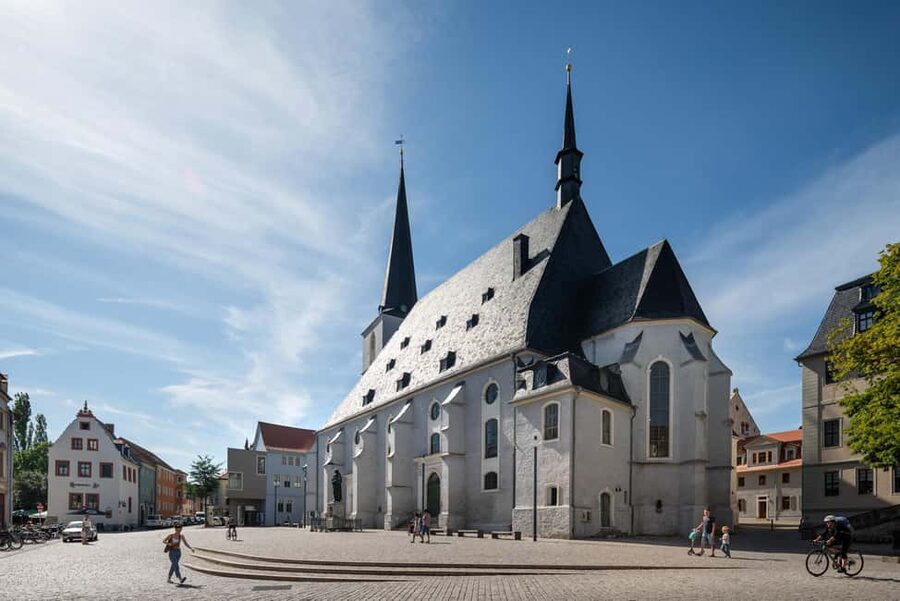
- Herder Square and the church at its center
- Democracy Square and the Anna Amalia Library
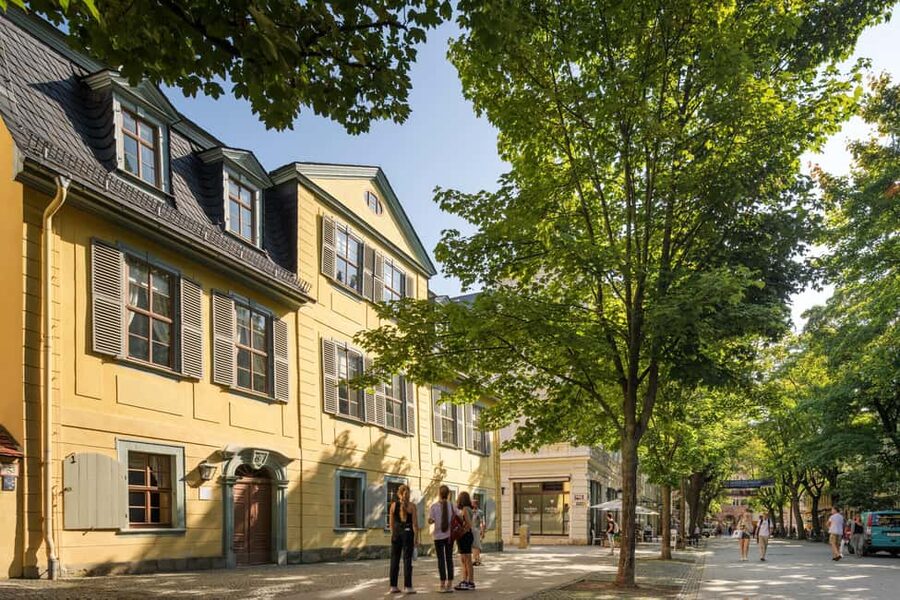
- Goethe’s House and Schiller’s former residence
- The Ilm park and Goethe’s garden house
- Theater Square and the Goethe and Schiller monument
- What the $11 price really buys you
- Group size, language, and walking comfort
- Who should book this Weimar tour?
- Should you book the Classical Weimar walk?
- FAQ
- How long does the Weimar Old Town Tour take?
- Where does the tour begin?
- Which sights are included?
- Are the buildings visited inside?
- What language does the guide speak?
- Is the tour suitable for people with mobility impairments?
- Can I cancel the booking?
Key points to know before booking
- A focused 90-minute route: You cover the main classical sights without spending a full day on a single activity.
- The tour begins at Markt 4: Meet at the Weimar Tourist Information Office by the Neptune Fountain.
- The best sights are viewed from outside: The route gives you context and orientation, but it does not include interior visits.
- German is the only guide language: This matters if you need detailed explanations in English or another language.
- The advertised group limit is six: Group size has varied in practice, so ask at booking if a very small group is important to you.
- The route ends around Theaterplatz: Booking information also says the activity returns to the meeting point, so confirm the exact finish arrangement before setting off.
Why this short Weimar walk works
Weimar can feel surprisingly dense with important names. Goethe lived here. Schiller worked here. Herder preached and taught here. Wieland helped make the court town a major center of German letters. The challenge for a first-time visitor is knowing how those names connect to actual streets and buildings.
This tour gives you that framework quickly. It begins at the market square and moves through several central squares before reaching Theaterplatz. You get the basic story of classical Weimar without committing to a museum-heavy day.
I see the experience as an orientation walk rather than a complete cultural tour. You will not enter the listed buildings, and 90 minutes is not enough for long interior visits. But you will learn which buildings matter, where the main figures lived and worked, and which museums deserve your time afterward.
That distinction is important. If you want a deep look inside the Duchess Anna Amalia Library or Goethe’s House, book separate admission and allow more time. If you want a useful first pass through the old town, this tour gives you a lot for the price.
More Old Town Tours in Germany:
- Dresden: Semperoper and Old Town Tour
★ 4.8 · 5,735 reviews - Nuremberg: Old Town Guided Walking Tour
★ 4.6 · 2,416 reviews - Munich: Old Town & Viktualienmarkt City Walk in German
★ 4.7 · 2,304 reviews
Market Square: the best place to begin
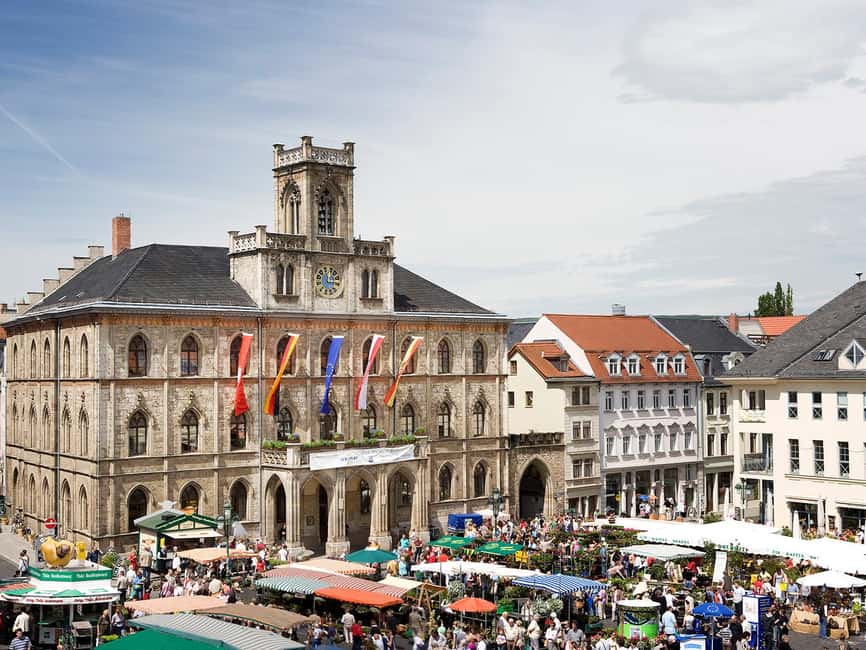
The meeting point is at Markt 4, at the Weimar Tourist Information Office near the Neptune Fountain. This is a practical starting point because the square gathers several of the town’s most recognizable buildings in one view.
The town hall gives the square its civic focus. Nearby, the Cranach House connects the setting with Lucas Cranach the Elder and his artistic world. The Hotel Elephant adds another historic building to the scene, giving the guide several points from which to explain how Weimar developed as a court and cultural center.
You should expect a guided look at the square lasting about 20 minutes. That is enough time to identify the buildings and hear why the market area matters, but not enough for a long architectural lecture or indoor visit.
I like starting here because it puts Weimar’s public life before its literary personalities. You first see the town as a working place, then follow the route toward the churches, residences, libraries, and theater connected with its famous residents.
Take a moment before the group moves on. The square is one of the easiest places to photograph, and the Neptune Fountain makes the meeting point fairly clear. Arrive early enough to locate the Tourist Information Office without rushing.
Herder Square and the church at its center
Herder Square, or Herderplatz, shifts the mood from civic buildings to religious and educational history. The main sight here is St. Peter and Paul’s Church, also known as the Herder Church.
The church is linked with Johann Gottfried Herder, one of the four major figures named in the tour’s theme. You see the building from outside and hear how it fits into Weimar’s intellectual life. The nearby Wilhelm Ernst Gymnasium adds an educational layer to the square.
This stop works best if you pay attention to the connections between buildings. Weimar’s classical period was not created by poets working in isolation. Churches, schools, court buildings, libraries, and private homes all formed part of the same small town.
The route includes a photo stop and guided sightseeing here. It is a good point to take pictures, though the tour format means you should stay with the group rather than wander inside or spend a long time composing shots.
Democracy Square and the Anna Amalia Library
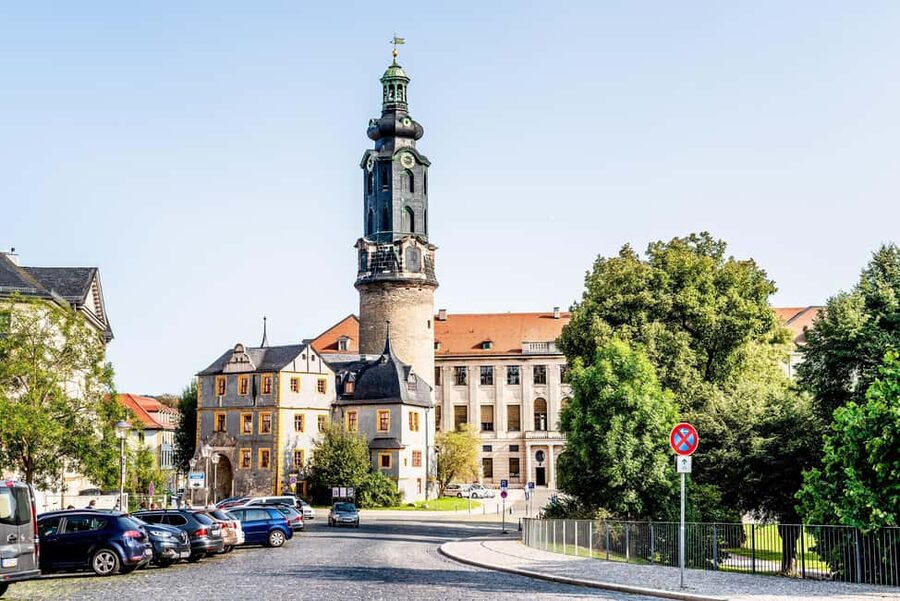
The Square of Democracy, also called Democracy Square, brings two major buildings into view: the Duchess Anna Amalia Library and the Princely House.
The library is one of Weimar’s most famous cultural institutions. On this walk, you view it from outside, so the guide’s explanation is especially useful. The tour can tell you why the building matters and help you decide if you want to return for an interior visit.
The Princely House adds a courtly and political dimension. Together, the library and princely building show how education, culture, and government were linked in Weimar’s past.
This is one of the most valuable stops for first-time visitors because it gives a visual link between Weimar’s political setting and its literary reputation. You are not simply seeing a famous library. You are seeing it in relation to the ruling household and the town’s wider cultural ambitions.
Keep your expectations realistic. The tour does not include library admission, and a photo stop is not a substitute for seeing the interior. Still, an outside explanation can save you from walking past the building without understanding why it matters.
Still Germany, at a slower pace:
- Berlin: Reichstag, Dome and Government District Guided Tour
★ 4.7 · 18,288 reviews - Berlin: 1-Hour City Tour by Boat with Guaranteed Seating
★ 4.3 · 16,993 reviews - Hamburg: Sex and Crime in St. Pauli Tour for Ages 18+
★ 4.7 · 15,447 reviews - Hamburg: 1.5-Hour Harbor and Speicherstadt Day Cruise
★ 4.6 · 14,200 reviews
Goethe’s House and Schiller’s former residence
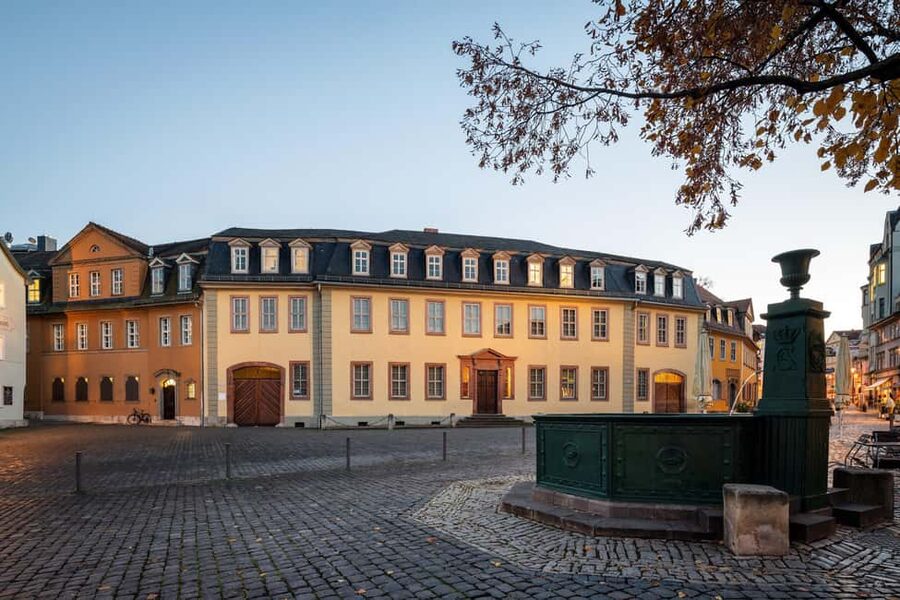
The route includes photo stops at Goethe’s House and Schiller’s House. These are among the most important places on the walk because they turn famous names into addresses you can place on a map.
At Goethe’s House, the guide introduces the residence connected with Johann Wolfgang Goethe. At Schiller’s residence, you get the corresponding connection with Friedrich Schiller. Seeing both as part of one route helps explain why Weimar is known for the close relationship between these two writers.
You should not expect to tour the rooms during this activity. The included sightseeing is from outside, which keeps the walk moving but limits the detail you can absorb about domestic life, manuscripts, furnishings, and personal belongings.
I recommend treating these stops as previews. If Goethe or Schiller is a major reason for your visit, use the walk to decide which house deserves a separate ticket. The guided explanation should make those later visits more meaningful because you will already understand where each residence fits into the town.
The information provided does not name the individual guides, so you cannot select a particular guide in advance. The guide is German-speaking, and one piece of feedback praised the presentation as informative and well delivered. If you understand German, this part of the tour should be especially rewarding.
The Ilm park and Goethe’s garden house
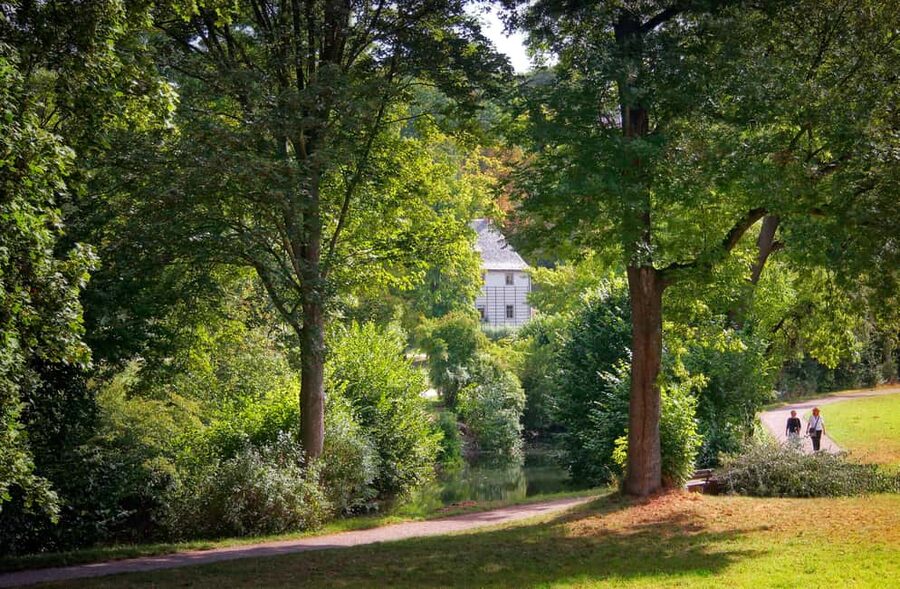
The planned route also mentions the park along the Ilm and Goethe’s Garden House. These places broaden the story beyond tightly packed streets and formal buildings.
The park connection matters because Goethe’s Weimar was not only about court rooms, libraries, and residences. The garden house points to a more private side of his life and work. It also shows how the town’s cultural story reaches into open space beside the river.
The wording of the tour information places these sights within the overall route, while the detailed stop list highlights the main squares and outside views. Because the walk is limited to about 90 minutes, ask the guide at the start how much time will be spent at the park and garden house on your departure date.
This is a useful practical question. If your priority is the central squares and Theaterplatz, the listed route provides a clear sequence. If Goethe’s Garden House is your main goal, you may want to confirm the exact walking pattern and whether the stop is a full visit from outside or a brief mention.
Theater Square and the Goethe and Schiller monument
The walk finishes around Theater Square, one of the strongest visual endings in Weimar. The Goethe and Schiller monument is the obvious focal point, with the two writers depicted side by side.
This monument gives the whole tour a neat final image. You have moved from public squares and churches to the homes of individual writers, then arrive at a place that presents Goethe and Schiller together as symbols of Weimar’s classical period.
The square also helps you continue exploring after the tour. It is a natural place to orient yourself toward the theater and nearby cultural sights. The tour information names Theaterplatz as the finish, although the meeting-point details also say the activity ends back at the starting location. Confirm this small logistical point when you arrive, especially if you have a timed museum entry or train to catch.
The monument is worth seeing even if you do not take the tour. With a guide, though, you get the names and context that make the pairing more than a standard city statue.
What the $11 price really buys you
At $11 per person, this is priced as a low-cost introduction to Weimar rather than a full cultural package. You are paying for a guided old town walk, not admissions, transportation, meals, or extended time inside the sights.
That is good value if you plan to explore independently afterward. A guide can point out the buildings you might otherwise miss and explain how Goethe, Schiller, Herder, and Wieland fit into the town’s story. You then choose which interiors deserve your money and time.
The value is less clear if you already know Weimar well or only want to enter museums. Since all sights are viewed from outside, museum-focused visitors will still need separate tickets and planning.
The tour also gives you a flexible booking arrangement. You can reserve and pay later, and cancellation is free up to 24 hours before the activity for a full refund. Those terms are helpful if your Thuringia schedule may change.
The duration label can be confusing. The activity page describes the duration as one day while the actual old town tour is presented as 90 minutes. Treat the walk itself as an hour and a half, and check the available starting time for your date.
Group size, language, and walking comfort
The advertised group is limited to six participants, which would normally make a city walk more personal and easier to follow. A small group also gives you a better chance to ask questions at places such as Goethe’s House or the Anna Amalia Library.
Still, the group-size promise deserves a little caution. One booking group was split because it grew larger than expected, but each smaller section still had roughly a dozen people. That is not a private tour, and it may be harder to hear every explanation in a busy square.
The live tour guide speaks German only. You should book this experience if you can follow a German-language explanation. If you cannot, the walk may still show you the route and buildings, but you would miss much of the value you are paying for.
The activity is listed as unsuitable for people with mobility impairments. The route stays in the old town and includes several outdoor sightseeing stops, so anyone concerned about walking conditions should check the route directly with the provider before booking.
Who should book this Weimar tour?
I would choose this walk for a first visit, especially if you have only a morning or afternoon in town. It gives you a clean introduction to the old center and helps you place Weimar’s main literary names in real locations.
It also suits visitors who prefer a short guided overview before exploring alone. You can take notes on the houses, squares, and museums that interest you most, then return at your own pace.
German speakers will get the most from the guide’s explanations. The tour may also suit architecture and cultural-history fans who enjoy seeing places from the street without spending several hours inside museums.
I would be more cautious if you need wheelchair-friendly arrangements, require an English guide, or expect a private group of six. I would also not book it as your only Goethe or Schiller experience. The outside views are useful, but they cannot replace the interiors of their residences.
Should you book the Classical Weimar walk?
Book it if you want an affordable, compact introduction to Weimar’s old town and can follow German. The route covers the market square, Herder Square, Democracy Square, Goethe’s and Schiller’s residences, the Ilm park area, and Theaterplatz, with the most important sights tied together in one story.
Skip it if you want museum admission, a language choice, or guaranteed private attention. For most first-time visitors, though, $11 is a sensible price for a short orientation walk. Confirm the final meeting point, check the actual start time, and do not assume the six-person limit will always mean a group of six or fewer.
FAQ
How long does the Weimar Old Town Tour take?
The guided old town walk takes about 90 minutes. The activity page also shows a one-day duration label, so check the available starting time for your chosen date.
Where does the tour begin?
The tour begins at Markt 4, at the Weimar Tourist Information Office near the Neptune Fountain.
Which sights are included?
The route includes Market Square, Democracy Square, the Duchess Anna Amalia Library, the Princely House, City Palace, St. Peter and Paul Church, Goethe’s House, Schiller’s House, and Theater Square. The route also mentions the Ilm park and Goethe’s Garden House.
Are the buildings visited inside?
No. The included tour views the listed sights from outside. You will need separate arrangements for interior visits.
What language does the guide speak?
The live guide speaks German. No other guide language is listed.
Is the tour suitable for people with mobility impairments?
The activity is listed as unsuitable for people with mobility impairments. Contact the provider before booking if you need specific information about the walking route.
Can I cancel the booking?
Yes. You can cancel up to 24 hours in advance for a full refund. You can also reserve now and pay later.
Just added around Germany
- Private Walking Tour in Berlin: Hitler’s Germany & WWII★ 5.0 · 7 reviews
- The History of Berlin: WWII PRIVATE Walking Tour With Locals★ 5.0 · 209 reviews
- Private Berlin WWII and Cold War History Tour with Local Expert Guide★ 5.0 · 28 reviews
- Private Walking Tour Berlin 3 hours: Brandenburg, Historic Center★ 5.0 · 7 reviews
- Berlin: Private Bike Tour of the Berlin Wall and Third Reich★ 5.0 · 23 reviews
- Berlin: Guided Private Bike Tour to Explore the Highlights★ 5.0 · 12 reviews
- Berlin Photography Masterclass – Private Photography Lesson★ 4.5 · 23 reviews
- Group Driving Tour 1 to 6 people. Berlin Shore Excursion incl pick-up at Port★ 5.0 · 8 reviews
Old Town Tours, compared.

Old Town & Viktualienmarkt City Walk in German
Read our review →

The Night Watchman Old Town Walking Tour in German
Read our review →
Browse the lists this tour appears in