
Reviewed · WALKING TOURS
2-Hour Best of Frankfurt Walking Tour (English)
Frankfurt reveals itself on foot. This two-hour walk links the city’s old center, river views, food market, museums, and modern shopping streets, giving you a useful first look without taking up your whole day. I like the compact route and the chance to see both historic Frankfurt and its present-day city life. I also like that guide Anita brings a warm, personal approach, with plenty of room for questions. The main consideration is pace: two hours is enough for an overview, not enough for extended visits inside every sight.
You begin in front of Alte Nikolaikirche at Römerburg square and finish at the same meeting point. The walk is wheelchair accessible, conducted in English, and priced at $27 per person. That is fair value if you want orientation, stories, and several central stops in one outing, though museum interiors and market shopping will need separate time.
In This Review
- Key points at a glance
- Starting at Alte Nikolaikirche and Römerburg
- Römerburg, stories, and Frankfurt’s difficult past
- St. Bartholomew’s Cathedral and the old center
- Crossing the Main on Eiserner Steg
- Museum highlights without spending hours indoors
- Kleinmarkthalle and the taste of everyday Frankfurt
- Zeil Shopping Street and modern Frankfurt
- Anita’s guiding style
- Is $27 a fair price?
- Who should book this Frankfurt walk?
- Should you book the Best of Frankfurt Walking Tour?
- FAQ
- How long does the Frankfurt walking tour last?
- What language is the tour conducted in?
- Where does the tour begin?
- Where does the tour end?
- How much does the tour cost?
- Which Frankfurt sights are included?
- Is the walking tour wheelchair accessible?
- Can I cancel the booking for a refund?
Key points at a glance
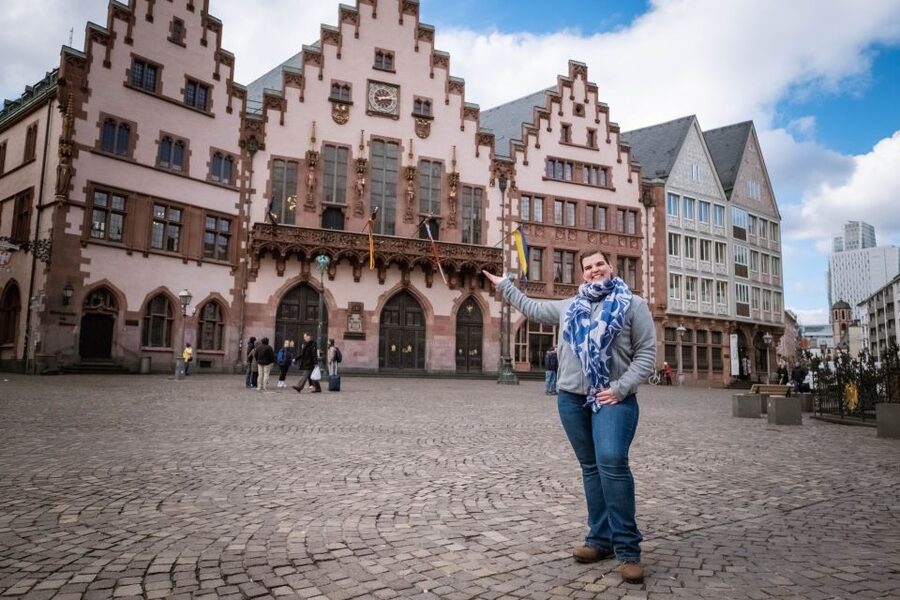
- Römerburg starting point: Meet beside Alte Nikolaikirche in the heart of Frankfurt’s old center.
- Many sides of the city: The route brings together medieval-looking squares, the cathedral, the Main River, museums, a food market, and Zeil shopping street.
- Anita’s friendly style: Her clear English, easy manner, and willingness to answer questions are major strengths.
- Two-hour format: Long enough to get your bearings, short enough to fit around other plans.
- Small-group feel: Several comments describe the experience as intimate, which can make questions and conversation easier.
- Flexible approach: The tour is designed to explore Frankfurt’s past and present rather than simply rush from one photo stop to another.
Starting at Alte Nikolaikirche and Römerburg

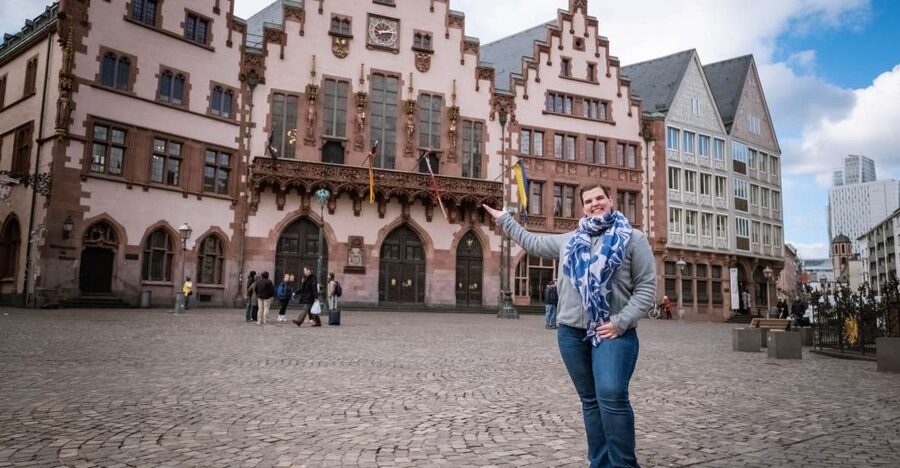
The meeting point puts you in the right place from the first minute. Alte Nikolaikirche faces Römerburg square, one of Frankfurt’s most recognizable central spaces, so you are not beginning in an anonymous street or at the edge of town.
Römerburg is a useful introduction to Frankfurt because it represents the city people often picture first: historic buildings, a civic square, and the old center gathered around the Römer. The tour uses this setting to explain Frankfurt’s past before moving into its newer face.
I like this start for first-time visitors. You can begin with a clear sense of place, then keep returning to that central point as a mental reference. It is also practical if you are staying in the central area or planning to continue sightseeing after the walk.
Expect an outdoor introduction rather than a long church visit. The focus is on the square, the surrounding architecture, and the story of Frankfurt. If you want quiet time inside Alte Nikolaikirche or a detailed look at the Römer’s interiors, plan to return on your own.
More Walking Tours in Frankfurt
- Frankfurt Highlights English Walking Tour
★ 5.0 · 1,203 reviews - Frankfurt on Foot Daily Walking Tour in English
★ 4.9 · 323 reviews - Frankfurt: Private or Shared Walking Tour
★ 4.8 · 156 reviews
Römerburg, stories, and Frankfurt’s difficult past
A good city walk does more than point at old buildings. It explains what happened to them, what changed, and why the city looks the way it does now. This tour includes discussion of Frankfurt’s darker past as well as its architecture and more familiar landmarks.
That balance is one of the better reasons to book. You are not getting only postcard views and cheerful anecdotes. Anita is praised for covering both older events and more recent history, while keeping the delivery casual and approachable.
I would especially value this part early in a Frankfurt visit. It gives later sightseeing more meaning. A building is easier to remember when you understand its place in the city’s story, and a modern street feels less disconnected when you have first seen the old civic center.
The guide’s style seems suited to curious visitors rather than people who want a formal lecture. She is described as enthusiastic, personable, and happy to stop for questions. That matters in a two-hour tour, since a guide who listens can adjust the amount of detail to the group.
St. Bartholomew’s Cathedral and the old center
From the central square, the route includes St. Bartholomew’s Cathedral, Frankfurt’s major church landmark. Its large scale gives the old center a strong focal point, and its presence helps explain the importance of this part of the city.
The cathedral is a good place to pause and look up. I like stops that let you connect a building with the wider city rather than simply take a picture and move on. Here, the value comes from hearing why the cathedral matters and how it fits into Frankfurt’s story.
The available details do not promise an extended interior visit, special access, or a dedicated religious-art presentation. Think of this as a guided exterior and city-history stop within a broader walk. If the cathedral is high on your list, allow extra time before or after the tour.
The route is described as an easy walk that works well for children. That does not mean you should treat it as completely effortless for every person, but it does suggest a manageable format rather than a strenuous excursion. The wheelchair-accessible description is useful for guests who need step-free planning, although you should still check current conditions when booking.
Crossing the Main on Eiserner Steg
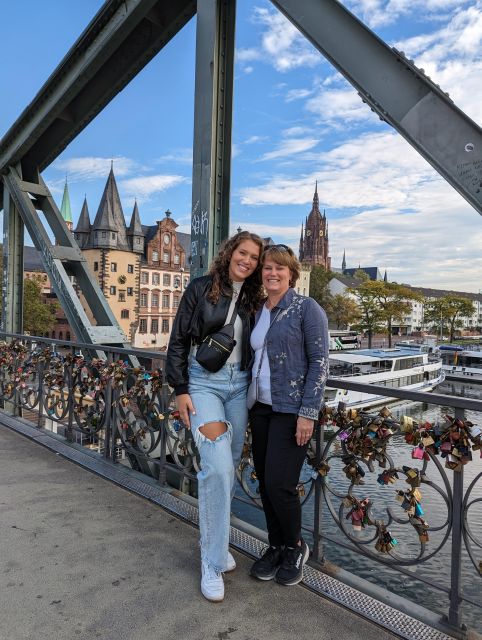
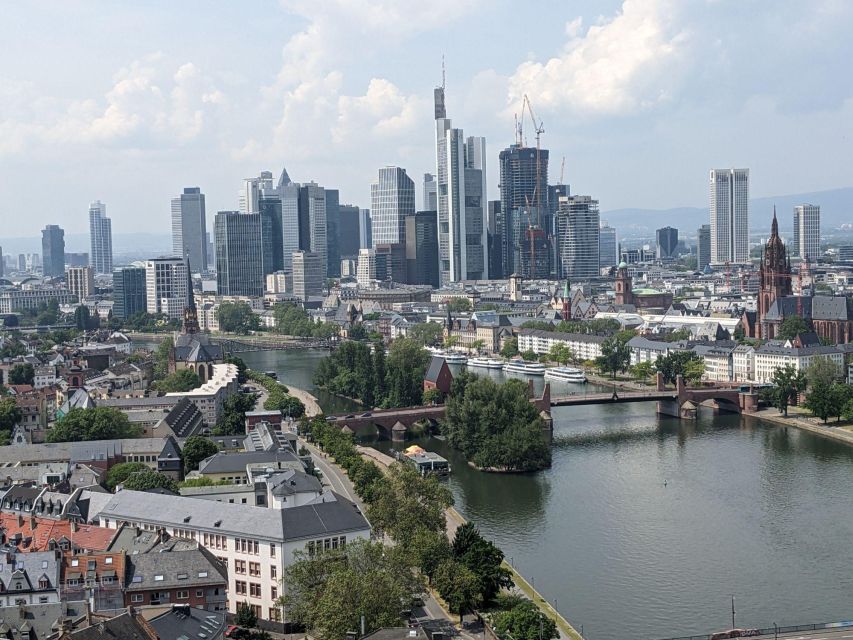
Eiserner Steg brings a change of mood. The pedestrian bridge crosses the Main and gives you a different view of Frankfurt from the river, with the city’s historic center on one side and its modern profile beyond.
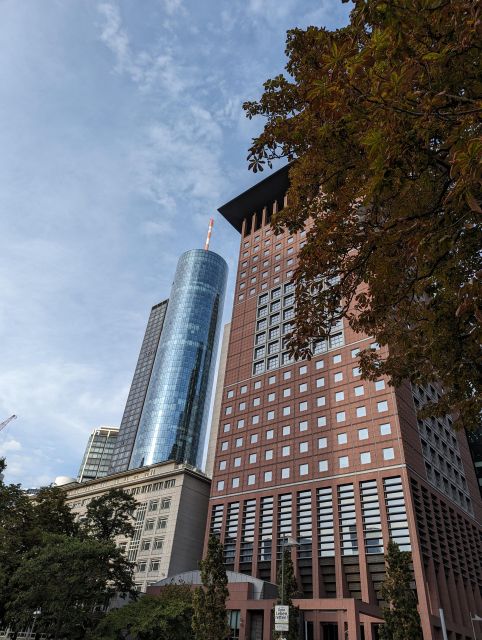
This is one of the most useful photo points on the route. From the bridge, you can see how Frankfurt combines old civic buildings with a contemporary skyline. That contrast is central to understanding the city, and it is much clearer from the river than from a narrow old-town street.
The bridge also breaks up the architecture-heavy portion of the walk. After squares and churches, you get open air, water, and a chance to take in the city as a whole. I like that variety in a short tour. It keeps the experience from feeling like two straight hours of standing beside façades.
Weather will matter here. One group enjoyed the tour despite a cold day, but a river crossing can feel exposed in poor conditions. Wear suitable shoes and bring a layer, especially if you are visiting outside summer. The activity continues outdoors, so a little preparation can make the walk much more comfortable.
Still Frankfurt, at a slower pace:
- Frankfurt: River Main Sightseeing Cruise with Commentary
★ 4.3 · 5,127 reviews - Frankfurt: Hop-On, Hop-Off Grand or Express Bus Ticket
★ 3.9 · 2,088 reviews - Frankfurt: 1-Hour Panorama Boat Cruise on the river Main
★ 4.4 · 1,822 reviews - From Frankfurt: Rhine Valley Day Trip
★ 4.4 · 1,317 reviews
Museum highlights without spending hours indoors
The route includes museum highlights, adding a cultural side to the tour. The information does not specify particular museum interiors, exhibitions, or admission tickets, so you should understand this as an overview of Frankfurt’s museum area rather than a museum tour.
That can be a strength when your time is limited. You get help deciding which cultural stops deserve a later visit, instead of using your only sightseeing window inside one institution. A guide can also show how the museum area relates to the river and old center.
I would not book this walk if your main goal is a detailed art lesson or several hours inside galleries. The two-hour format is built for city orientation. You will learn where the museums are and why the area matters, then choose your own follow-up visit.
This is where the flexible approach is helpful. You can ask about the places that interest you most, and the guide can add context without turning the whole walk into a rigid script. Anita’s strong reputation for answering questions is particularly useful at a stop like this.
Kleinmarkthalle and the taste of everyday Frankfurt
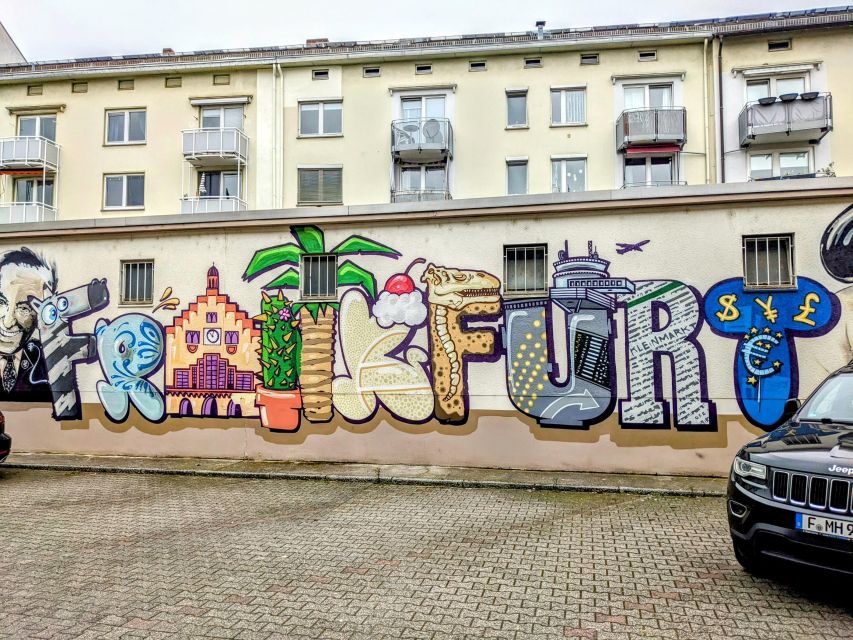
Kleinmarkthalle adds a welcome practical note to the route. This food market gives you a chance to see a part of Frankfurt connected to daily life, shopping, and local eating rather than only monuments.
I like this stop because markets make a city feel more immediate. You can see the kinds of food people buy, notice the pace of the place, and return later if something catches your eye. The tour does not promise a tasting session or a meal, so bring your appetite expectations down to a simple orientation.
The market may also be one of the best places to ask for food ideas. Since the tour is flexible, you can use the guide’s local knowledge to identify what to explore after the walk. Allow extra time if you want to browse properly. Two hours covers many sights, and it is unlikely to leave room for a leisurely market lunch.
For families, the market can provide a change of scene after historic explanations. For independent visitors, it is a useful bridge between sightseeing and ordinary city life. That mix helps keep the tour from feeling like a parade of monuments.
Zeil Shopping Street and modern Frankfurt
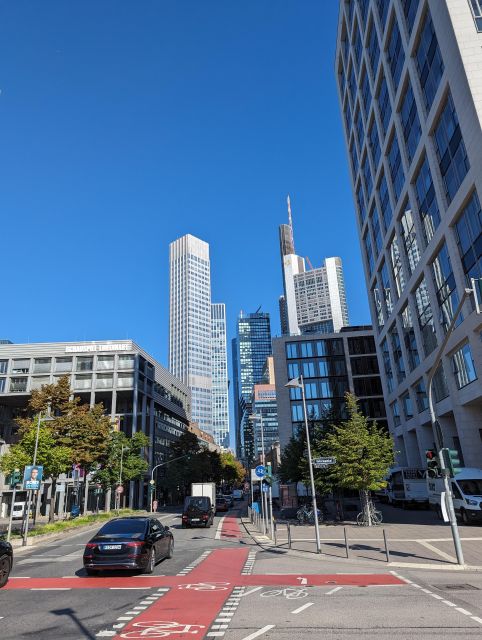
Zeil Shopping Street shows another side of the city. After the old center, cathedral, river, and museums, the route reaches a major commercial area where Frankfurt feels newer, busier, and more practical.
This contrast is a central strength of the itinerary. You are not being shown only the preserved past. You also see where people shop and how the city functions today. For a first visit, that makes the tour more useful than a narrow old-town walk.
Shopping is not included as a guided activity, and there is no stated time for browsing stores. Think of Zeil as a location and a city-life stop. If you want to shop, note the stores that interest you and come back after the tour.
I also appreciate the route’s range. Römerburg and the cathedral offer historical atmosphere. Eiserner Steg gives you river views. The museums add culture, Kleinmarkthalle adds food, and Zeil adds modern city energy. In two hours, you get a broad sample of Frankfurt rather than one repeated theme.
Anita’s guiding style
The guide can make or break a short walking tour, and Anita receives especially strong praise for her delivery. She is described as warm, enthusiastic, down to earth, and easy to talk to. Her English is clear, and she checks in about questions during the walk.
Those details matter more than a long list of facts. You want a guide who can explain Frankfurt without making you feel as if you are sitting through a classroom lesson. The comments describe a casual style with plenty of information, plus stories that make the history easier to remember.
The small and intimate feel is another advantage. A compact group usually makes it easier to hear, ask questions, and keep the conversation moving. The exact group size is not specified, so I would not assume a private tour, but the experience appears suited to direct interaction.
The tone also seems good for mixed groups. Families appreciated the easy length, while adults praised the historical detail. If you like asking questions, Anita’s willingness to stop and respond should add real value. If you prefer to walk silently and take photographs, remember that a live guide naturally includes regular pauses for explanation.
Is $27 a fair price?
At $27 per person, this is a reasonable buy for an introductory city walk. You are paying for two hours with a live English-speaking guide and a route that covers several major parts of central Frankfurt.
The value is strongest if you are new to the city. A good orientation can save time later by showing you how the old center, river, museums, market, and shopping district connect. You also get context that you would likely miss by walking between sights alone.
The value is weaker if you already know central Frankfurt well or plan to spend most of your time inside museums and churches. The tour does not include a meal, museum admission, or a long stop inside each attraction. It is a guided overview, not a full-day sightseeing package.
The booking terms reduce some risk. You can reserve now and pay later, and cancellation is free up to 24 hours before the activity for a full refund. Starting times vary, so check availability before arranging trains, meals, or other timed plans.
Who should book this Frankfurt walk?
I would choose this tour for a first visit, a short city break, or a stopover when you want the main central sights explained in plain English. It also suits families because the walk is described as easy and not too long for children.
It is a good match for you if you want:
- A quick orientation before exploring alone
- A mix of old buildings, river views, museums, food, and shopping
- A friendly guide who welcomes questions
- A tour that fits into a two-hour schedule
- An accessible activity in central Frankfurt
I would think twice if you want a specialist museum tour, a food tasting, or a detailed visit inside every landmark. The route gives you useful introductions, but you will need separate time for deeper exploration.
Should you book the Best of Frankfurt Walking Tour?
Yes, if you want a friendly and efficient first look at Frankfurt. The strongest reasons are the varied route, the small-group feel, and Anita’s personable way of explaining both the city’s proud moments and its darker chapters.
Book it early in your stay so you can use the advice for the rest of your visit. Wear comfortable shoes, bring a layer for Eiserner Steg, and leave room in your schedule to return to Kleinmarkthalle, the museums, or Zeil after the walk.
At $27, it offers solid value for a guided introduction. Just keep your expectations in the right place: this is a well-paced overview, not an in-depth visit to every sight.
FAQ
How long does the Frankfurt walking tour last?
The tour lasts two hours.
What language is the tour conducted in?
The live tour guide conducts the experience in English.
Where does the tour begin?
Meet in front of Alte Nikolaikirche, located at Römerburg square.
Where does the tour end?
The tour ends back at the meeting point.
How much does the tour cost?
The listed price is $27 per person.
Which Frankfurt sights are included?
The route includes Römerburg, St. Bartholomew’s Cathedral, Eiserner Steg, museum highlights, Kleinmarkthalle, Zeil Shopping Street, and other central locations.
Is the walking tour wheelchair accessible?
Yes, the activity is described as wheelchair accessible.
Can I cancel the booking for a refund?
Yes. You can cancel up to 24 hours in advance for a full refund. You can also reserve now and pay later.
Just added around Frankfurt
- Day Trip to Rothenburg from Frankfurt★ 4.6 · 25 reviews
- Rhine Valley: Half Day Tour from Frankfurt★ 3.7 · 66 reviews
- Private Tour with Native English speaking Local★ 4.9 · 60 reviews
- Darmstadt: Mathildenhöhe UNESCO Site Guided Visit★ 4.7 · 124 reviews
- Mainz: Private custom tour with a local guide★ 3.8 · 11 reviews
- Mainz: guided evening tour of the Rhine embankment/old town in German and English★ 4.9 · 38 reviews
- Mainz Highlights, private walking tour★ 4.9 · 15 reviews
- Hohenzollern Castle: Full-Day Tour from Frankfurt★ 4.3 · 11 reviews
Walking Tours, compared.
Old Town & Viktualienmarkt City Walk in German
Read our review →Browse the lists this tour appears in