
Reviewed · CYCLING TOURS
3-Hour Bike Tour of Tiergarten and Berlin’s Hidden Places
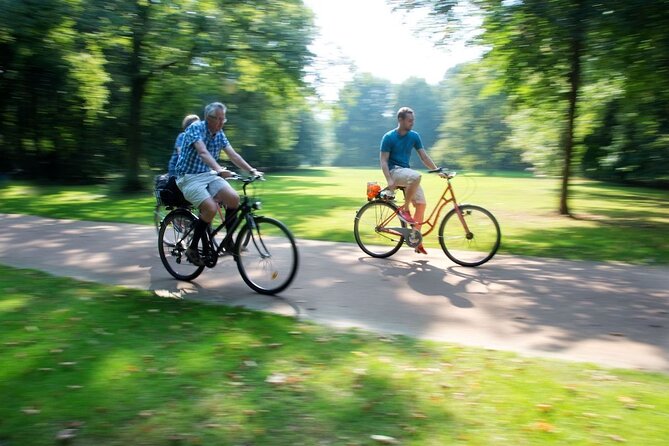
Berlin rewards a slower set of wheels. This three-hour ride moves from leafy Tiergarten to old quarters, rebuilt churches, modern housing, and odd little city corners that buses pass by. I like the small group size of 5 to 15 and the chance to see Berlin through bike lanes, garden paths, and quiet side streets.
I also like the range of subjects packed into the route, from the city’s medieval beginnings to postwar design and present-day culture. The guide, especially David, is praised for pairing solid facts with Berlin humor. The main drawback is clear: the tour is offered only in German, and three hours without a planned food or drink break may feel long for some riders.
In This Review
- Key points before you book
- Why this bike tour takes you beyond postcard Berlin
- Starting at Poststraße and finding your riding rhythm
- Tiergarten: Berlin’s green breathing space
- Nikolaiviertel and the city’s first chapter
- Märkisches Museum and Berlin in miniature
- Bears, ruins, and the medieval city
- Global Stone Project: Berlin gets strange
- Hansaviertel and the 1957 vision of modern living
- Clärchens Ballroom and the city after dark
- Scheunenviertel: courtyards, culture, and city life
- The guide, the group, and the language question
- Is $45.10 a fair price for three hours?
- Who should book this Berlin bike ride?
- Should you book the 3-Hour Bike Tour of Tiergarten and Berlin’s Hidden Places?
- FAQ
- How long does the bike tour last?
- Where does the tour start?
- Where does the tour end?
- Is the tour available in English?
- Are bicycles and helmets included?
- Are food and drinks included?
- Can I cancel for a full refund?
Key points before you book
- A city tour with a strong local angle: You move beyond Berlin’s famous postcard sights and stop at places tied to the city’s origins, destruction, rebuilding, art, and daily life.
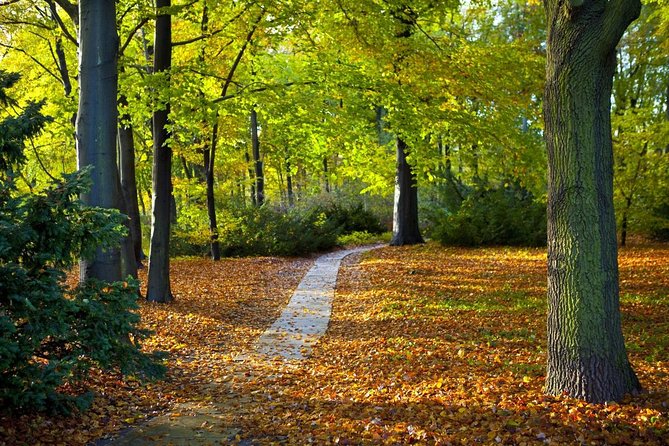
- Tiergarten is only the beginning: The route uses Berlin’s central park, bike lanes, paths, and quieter streets before reaching districts such as Nikolaiviertel, Scheunenviertel, and Hansaviertel.
- David earns special praise: He is described as a true Berlin original, combining first-rate subject knowledge with a good sense of humor.
- The ride is active but not pitched as a workout: The tour lasts about three hours and is described as leisurely, with regular stops for stories and views.
- Bring your own water and perhaps a snack: Food and drinks are not included, and one review specifically wished for a short break to buy something.
- Language matters: This is a German-language tour. An English version requires choosing a private tour.
Why this bike tour takes you beyond postcard Berlin
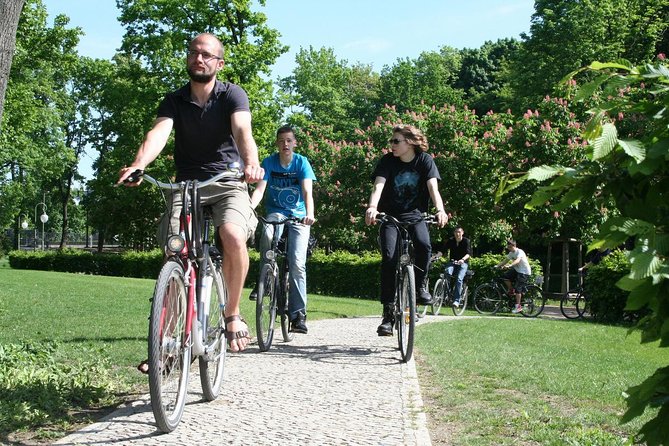
Berlin is so spread out that walking tours can leave you with a string of disconnected sights. A bike helps link the city together. You can cover more ground than on foot, yet still turn down a side street, pause beside an old church, or stop in a park without the fuss of a large vehicle.
That is the central appeal here. You are not simply pedaling past famous buildings while a guide recites dates. The route uses Berlin’s practical cycling network to connect very different chapters of the city. Tiergarten gives you open green space. Nikolaiviertel brings you to Berlin’s beginnings. Hansaviertel shows a bold postwar idea of urban housing. Scheunenviertel brings the ride back to contemporary food, shopping, art, and nightlife.
The group limit helps. With no more than 15 people, you should have a better chance of hearing the guide and staying together than you would on a huge city ride. The minimum is five, so the tour has a small-group feel but still requires enough bookings to operate.
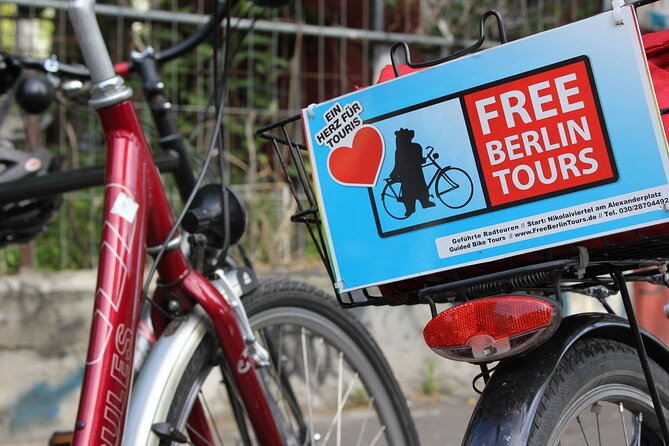
The bicycles and helmets are included. You meet at Poststraße 11 in central Berlin, use the provided bike, and return to the same point at the end. Hotel pickup is not included, so plan to make your own way to the departure point. The meeting place is near public transportation.
More Bike Tours in Berlin
- Berlin: Sights and Highlights Bike Tour with a Local Guide
★ 4.8 · 2,698 reviews - Berlin Highlights 3-Hour Bike Tour
★ 5.0 · 948 reviews - Berlin City Bike Tour with Beer Garden Stop
★ 5.0 · 917 reviews
Starting at Poststraße and finding your riding rhythm
The first 15 minutes are set aside at Free Berlin, the departure and bike-rental point. This is useful time, not filler. You receive your bicycle and helmet, get organized, and settle into the riding position before the main route begins.
The tour is described as leisurely, which makes it suitable for most people who are comfortable on a bicycle. Still, a three-hour ride is longer than a quick city spin. If you have not ridden recently, consider the total time in the saddle before booking. Children must be accompanied by an adult.
The tour operates in all weather. That makes clothing important. Berlin weather can change, and the ride continues in rain or cooler conditions unless the provider cancels for another reason. Wear practical clothes and bring water. Since there is no included meal or drink, you should not count on refreshments being supplied along the way.
Tiergarten: Berlin’s green breathing space
Tiergarten is the first major stop, with about 30 minutes allotted. Calling it Berlin’s central park gives you the right idea, though this is not just a lawn beside a museum district. It is a large, leafy part of the city where paths and greenery create a break from Berlin’s broad streets and heavy urban form.
A bike is particularly useful here. You can move through the park without spending the better part of an hour walking from one end to another. The guide can also explain how this central green space fits into the wider city while giving you a calmer start to the ride.
This stop helps set the pace. You are not racing from sight to sight. You pedal, stop, listen, and look around. If you prefer a tour built around interiors, formal museum visits, or long time at major monuments, this may feel too light. If you want a pleasant introduction to Berlin’s scale and cycling culture, it works well.
Nikolaiviertel and the city’s first chapter
The route then shifts from parkland to Nikolaiviertel, a quiet quarter in the heart of Berlin. It is described as the place where Berlin began, but the area you see today was remodeled after wartime destruction and later rebuilding during the 1980s.
That detail is important. Nikolaiviertel is not a perfectly preserved medieval pocket. It is a reconstructed version of an old quarter, and that makes it a useful Berlin stop. The city has repeatedly had to decide what to save, what to rebuild, and what to create anew.
You have about 10 minutes here. That is enough for an explanation and a quick look, but not enough for a long wander through every lane. Think of the stop as a compact piece of historical context that prepares you for later discussions about reconstruction and change.
Still Berlin, at a slower pace:
- Berlin: Reichstag, Dome and Government District Guided Tour
★ 4.7 · 18,288 reviews - Berlin: 1-Hour City Tour by Boat with Guaranteed Seating
★ 4.3 · 16,993 reviews - Berlin: Boat Tour Along the River Spree
★ 4.4 · 11,252 reviews - Discover Berlin Half-Day Walking Tour
★ 5.0 · 9,624 reviews
Märkisches Museum and Berlin in miniature
Near Märkisches Museum, the tour pauses for about 15 minutes to look at large three-dimensional models of Berlin. These models offer a practical way to understand how the city keeps changing.
Berlin can be hard to grasp from street level. Its districts feel separate, and the gaps between old neighborhoods, modern developments, parks, and former industrial areas can seem random. A model gives you the bird’s-eye view. You can better understand the city as something constantly renewed rather than a finished historic display.
The museum itself is not listed as an included interior visit, so do not expect museum admission or a guided tour inside. The value here comes from the models and the guide’s explanation of Berlin’s ongoing physical changes.
Bears, ruins, and the medieval city
Three short stops cover some of Berlin’s more unusual historical corners.
At the Bärenzwinger Berlin, the guide tackles the question of where the name Berlin comes from and how bears became linked to the city. The stop lasts about 10 minutes. It is a small subject, but these details often make a city easier to remember than a list of rulers and construction dates.
Parochialkirche offers another 10-minute pause focused on religion, destruction, rebuilding, and the buildings or fragments that survived. Berlin’s past is full of breaks rather than a smooth line. Churches and civic buildings were damaged, altered, abandoned, or reconstructed, and this stop gives the guide room to explain those layers.
At Franziskaner Klosterkirche, you see an abandoned site tied to Berlin’s medieval past. It is described as a rare memorial to that period. The appeal is partly visual, but also interpretive. A ruined or unused place can tell you as much about what Berlin lost as a polished landmark tells you about what the city chose to restore.
These stops are brief, so you should expect spoken context rather than lengthy exploration. Their strength is variety. In less than half an hour, the route moves from a city symbol to religious history and a medieval remnant.
Global Stone Project: Berlin gets strange
The 15-minute stop at the Global Stone Project is one of the route’s most curious moments. It is presented as Berlin’s Stonehenge, with a theme involving love and difficulty.
The description leaves some of the mystery intact, but that is part of the charm. This is not a standard monument on every first-time visitor’s checklist. The guide uses an unusual urban feature to show that Berlin’s story includes eccentric art and personal ideas as well as wars, governments, and architecture.
This stop may appeal most if you like the unexpected side of a city. If your ideal tour sticks to major historical milestones, you may find it less essential. For many people, though, a strange local sight is exactly what breaks up a conventional city itinerary.
Hansaviertel and the 1957 vision of modern living
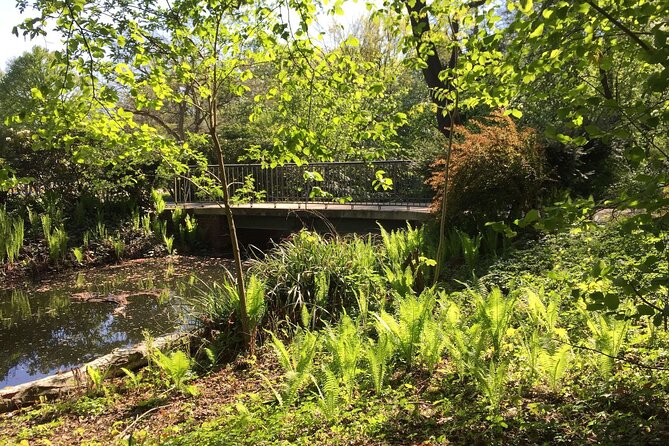
Hansaviertel brings the tour into a different era. The 15-minute stop looks at the future of housing from the perspective of 1957.
That date matters. Postwar Berlin was not merely repairing old buildings. It was testing new ways to plan homes, open space, and city life. Hansaviertel lets you consider what architects and planners thought modern housing should be, and how those ideas look with several decades of hindsight.
This is a strong stop for anyone interested in architecture or urban planning. You may not get the same emotional response as you would at an old church or ruined monastery, but you gain a clearer sense of how Berlin became a laboratory for new design.
It also gives the tour a useful balance. Berlin is not only about medieval origins and wartime scars. It is also about experiments in how people live.
Clärchens Ballroom and the city after dark
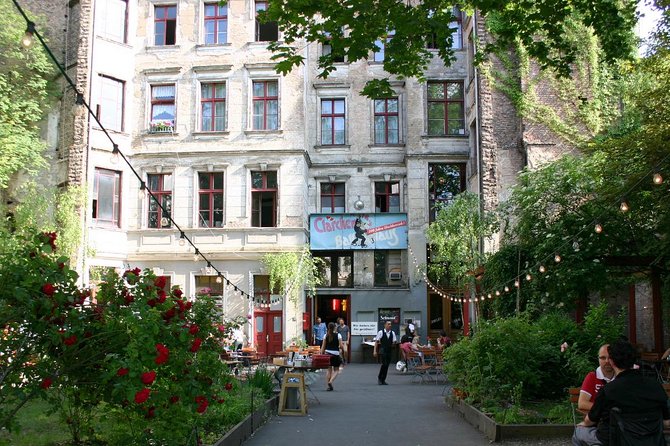
The 10-minute stop at Clärchens Ballroom shifts the mood again. The venue is associated with dancing and is surrounded by what the description calls a morbid charm.
Even in a short visit, the place represents a side of Berlin that formal monuments cannot show. This is the city of entertainment, memory, fading glamour, and nightlife. Its atmosphere connects naturally with the final stop in Scheunenviertel, where art, dining, shopping, and parties shape the neighborhood.
You should not expect a dance lesson or an evening event to be included. The stop is about seeing the place and hearing its story. It is a quick glimpse into Berlin’s social history, not a separate performance.
Scheunenviertel: courtyards, culture, and city life
The final major district is Scheunenviertel, with about 15 minutes allotted. It is presented as an urban quarter of courtyard oases, shopping, fine dining, culture, art, and nightlife.
This is where the tour connects the past to the present most clearly. Berlin’s appeal often lies in the way old buildings, changing businesses, creative spaces, and ordinary city life sit close together. Scheunenviertel gives you a chance to see that mix from a bicycle rather than through a bus window.
The short stop is enough to understand the character of the area, but you may want to return later if you find a restaurant, gallery, or shop worth more time. That is one of the practical benefits of this route. It introduces places you could revisit on foot after the tour.
The guide, the group, and the language question
Guide quality matters more on a route like this than on a simple point-to-point ride. The sights are varied, and some are not self-explanatory. You need a guide who can connect a ruined church, a housing project, a city model, and a dance hall without making the ride feel like a history lecture.
David receives especially warm praise for being a genuine Berlin character who combines strong subject knowledge with humor. That mix is valuable. Facts help you understand the city, while humor keeps three hours of commentary from becoming heavy.
The published rating is 4.8 out of 5 from 26 reviews, with 96 percent recommending the experience. Those figures suggest a consistently positive reception, though the sample is not large enough to promise that every departure will feel identical.
The key limitation is language. This experience is available only in German. If you need English commentary, you must choose a private tour instead. Do not treat this as a minor detail. The stories are a major part of the value, so book only if you can comfortably follow German or are selecting the private option.
Is $45.10 a fair price for three hours?
At $45.10 per person, the tour offers a solid amount of time for the money. Your price covers the professional guide, bicycle, and helmet. There are no separate admission tickets listed for the stops, so you are paying for the guided route, equipment, and local interpretation rather than a collection of expensive entries.
I see the strongest value in the range of the route. A short walking tour might cover one central district. This ride links green space, medieval remains, rebuilt neighborhoods, postwar architecture, and current cultural areas in a single outing.
The value drops if you want long visits at each place, food included, or a major attraction with an indoor admission. Nothing like that is part of the package. You should also budget for your own drinks and perhaps a snack, since one three-hour ride can leave you wanting a break.
You can cancel for a full refund up to 24 hours before the start time. Cancellations or changes inside 24 hours are not refunded, and the tour requires a minimum number of participants. If that minimum is not met, you are offered another date or experience, or a full refund.
Who should book this Berlin bike ride?
I would recommend it to you if you want a broad introduction to Berlin and enjoy learning through neighborhoods rather than only famous monuments. It suits riders who can manage a leisurely three-hour outing and who like architecture, urban history, local stories, and odd details.
It is also a good first or second-day activity. The route can help you identify places to revisit later, especially Scheunenviertel and the central quarters around Nikolaiviertel. The bike gives you an early feel for how far apart Berlin’s districts are.
I would hesitate if you dislike cycling, need frequent planned breaks, or want an English-language group tour. The lack of included food and drinks is easy to solve, but the language restriction is not. Families can join, provided children are accompanied by an adult.
Should you book the 3-Hour Bike Tour of Tiergarten and Berlin’s Hidden Places?
Book it if you want Berlin with some personality and rough edges still showing. The route does not simply collect grand landmarks. It asks you to look at rebuilt streets, abandoned religious sites, unusual stones, postwar housing, and places where Berlin’s present-day culture takes shape.
The best reasons to go are the small group, included bicycle and helmet, unusual route, and guides such as David, who bring both facts and humor. Bring water, dress for the weather, and confirm the German-language format before paying. For a reasonable price, this is a lively way to understand how Berlin keeps changing.
FAQ
How long does the bike tour last?
The tour lasts approximately three hours.
Where does the tour start?
It starts at Poststraße 11, 10178 Berlin, Germany, at Free Berlin, the bike-rental and departure point.
Where does the tour end?
The activity ends back at the meeting point.
Is the tour available in English?
The group tour is available only in German. For English, you need to choose a private tour.
Are bicycles and helmets included?
Yes. The price includes use of a bicycle and a helmet.
Are food and drinks included?
No. Food and drinks are not included unless specifically stated. You should plan to bring or purchase your own refreshments.
Can I cancel for a full refund?
Yes, if you cancel at least 24 hours before the experience start time. Cancellations or changes made less than 24 hours in advance are not refunded.
Just added around Berlin
- Private Walking Tour in Berlin: Hitler’s Germany & WWII★ 5.0 · 7 reviews
- The History of Berlin: WWII PRIVATE Walking Tour With Locals★ 5.0 · 209 reviews
- Private Berlin WWII and Cold War History Tour with Local Expert Guide★ 5.0 · 28 reviews
- Private Walking Tour Berlin 3 hours: Brandenburg, Historic Center★ 5.0 · 7 reviews
- Berlin: Private Bike Tour of the Berlin Wall and Third Reich★ 5.0 · 23 reviews
- Berlin: Guided Private Bike Tour to Explore the Highlights★ 5.0 · 12 reviews
- Berlin Photography Masterclass – Private Photography Lesson★ 4.5 · 23 reviews
- Group Driving Tour 1 to 6 people. Berlin Shore Excursion incl pick-up at Port★ 5.0 · 8 reviews
Cycling Tours, compared.
Sights and Highlights Bike Tour with a Local Guide
Read our review →
Classic Mike’s Bike Tour daily @ 11.30 incl Beer Garden & Surfers
Read our review →
Browse the lists this tour appears in