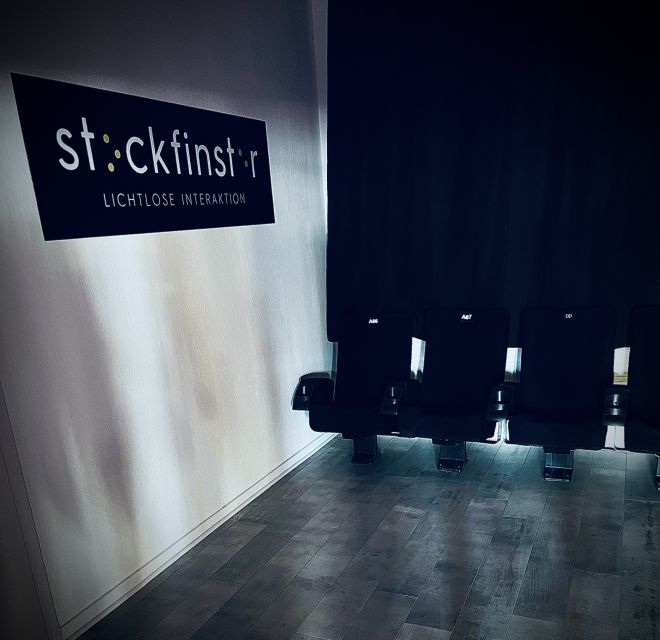
Reviewed · GUIDED
Adventure Darkness – Guided tour in the dark
Turn off the lights, and rethink everything. Adventure Darkness in Germany’s Ruhr Area gives you a guided route through pitch-black rooms, led by a blind or severely visually impaired guide with a long cane. I like the direct lesson in inclusion, and I like how ordinary tasks become fresh challenges when you must rely on sound, touch, smell, and taste. The main drawback is that the experience is conducted in German, and some visitors may find the darkness more demanding than expected.
After roughly an hour, you reach a dark bar for a drink and a chance to talk with your guide. The small groups, limited to eight people, keep the experience personal. Guide Florian has earned especially warm praise for his friendly manner and ability to connect with the group, although one visitor found that the sound effect in the road-crossing room did not work properly.
In This Review
- Key points to know before booking
- What Adventure Darkness is really trying to show you
- Entering the dark with a long cane
- Everyday situations become serious tests
- A sporting challenge without visual clues
- Crossing a road by sound
- Why the dark bar is part of the experience
- The sensory effect is stronger than expected
- Is $21 a fair price?
- Who will enjoy this Ruhr Area activity most?
- Language, group size, and useful preparation
- Should you book Adventure Darkness?
- FAQ
- How long does Adventure Darkness last?
- Where does Adventure Darkness take place?
- What language is the tour conducted in?
- How many people are in each group?
- What is included in the price?
- What items are not allowed?
- Can children or wheelchair users take part?
Key points to know before booking
- The tour lasts 90 minutes, with about 60 minutes spent moving through dark adventure rooms and the remaining time at a dark bar.
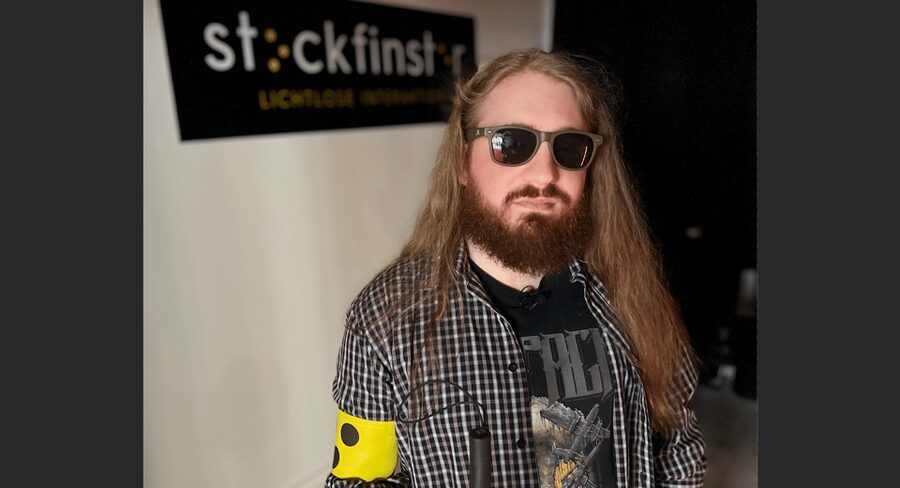
- Blind and severely visually impaired guides lead the route, making the experience about inclusion as well as unusual entertainment.
- You use a long cane, and your other senses become your main tools for finding your way.
- The scenes include everyday situations, a sporting challenge, and a simulated road crossing, so the tour has more variety than a simple walk in a dark room.
- Groups are limited to eight people, which should make it easier to hear the guide and ask questions.
- The language is German, and the rules ban cellphones, cameras, flashlights, and jewelry.
What Adventure Darkness is really trying to show you
This is not simply a sightseeing activity with the lights switched off. It is designed to give you a small, controlled taste of how much work the brain does when vision is unavailable.
You are guided by someone who knows how to move through the dark and how to help others do so safely. That change in leadership matters. You are not pretending to be an expert in visual impairment, and you are not left to guess your way through a room. Instead, you depend on instructions, a cane, your hands, your ears, your nose, and your sense of balance.
The result can be surprisingly humbling. A familiar task may suddenly require careful listening and slow movement. Sounds seem more important. Textures may become clues. Smells can help you understand where you are. Even a drink at the end becomes part of the lesson because taste is no longer competing with visual information.
I also appreciate the focus on inclusion. The experience does not treat blindness as an abstract topic. It gives you a practical sense of how people navigate situations that sighted people usually handle without thought. That can lead to better questions and more respect, especially during the conversation with your guide.
You should still keep your expectations realistic. Ninety minutes cannot reproduce the daily experience of someone who is blind or severely visually impaired. It offers a brief sensory exercise and a chance to listen. Its value comes from that honest starting point, not from claiming to show you everything.
A few more Germany trips worth comparing
- Berlin: Reichstag, Dome and Government District Guided Tour
★ 4.7 · 18,288 reviews - Dresden: Semperoper Tickets and Guided Tour
★ 4.7 · 12,102 reviews - Berlin: Government District around the Reichstag Guided Tour
★ 4.7 · 8,447 reviews
Entering the dark with a long cane
The tour begins with the basic fact that you cannot use your eyes. Cameras, cellphones, flashlights, and jewelry are not allowed. These rules are practical, not fussy. A glowing phone screen would spoil the setting, and jewelry could catch on something or create noise that distracts from the activity.
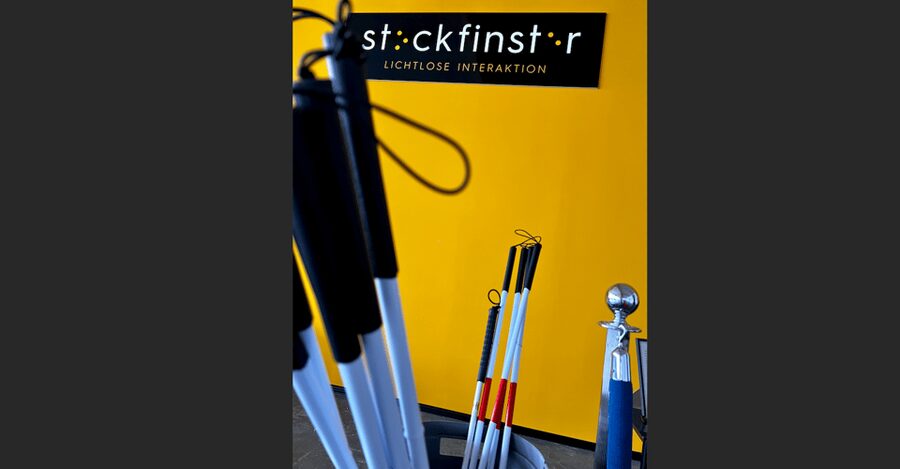
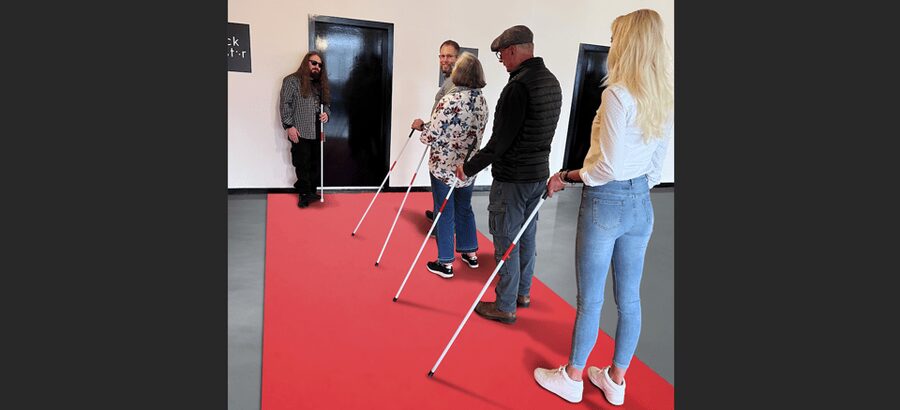
You are equipped with a long cane, then led through a series of completely dark rooms. The cane gives you a physical point of contact with the floor and the objects around you. It also makes you slow down. That is useful because most sighted people are used to moving quickly and correcting their path with a glance.
Your guide gives the directions. Since the tour is in German, you need enough German to follow spoken instructions. The small group size, capped at eight, should help because clear audio is vital when you cannot look at the guide for a visual cue.
At first, you may focus on the fact that you cannot see anything. Soon, the experience asks you to do more than simply endure the darkness. You must listen for information, feel your surroundings, and work out what is happening from carefully chosen clues.
The guide’s role is central here. Florian is described as especially friendly and good at responding to the group. That personal connection matters in a setting that could otherwise feel tense. A calm guide can make you more willing to ask for help, admit confusion, or laugh at your own clumsy first attempts.
Everyday situations become serious tests
The most useful part of the route is its attention to normal life. The rooms recreate typical everyday situations, though the available details do not specify every scene or the exact order.
That broad approach gives the activity a practical edge. You are not only dealing with a strange attraction. You are considering how a person with little or no sight might handle familiar surroundings when signs, colors, facial expressions, and visual warnings are unavailable.
You may find yourself paying attention to the floor, the shape of objects, the direction of sound, or the difference between one surface and another. These are small details, but the absence of sight gives them new weight. The activity shows how much information sighted people absorb without noticing.
It can also expose your own assumptions. Sighted visitors often think of navigation as a matter of looking where they want to go. Here, navigation depends on communication and trust. You may need to follow the guide’s words carefully rather than relying on your usual habits.
This is where the tour earns its educational purpose. It does not ask you to feel sorry for blind people. It asks you to notice the built-in advantages you normally carry and the extra effort that can be required when spaces and situations are designed mainly for sight.
A sporting challenge without visual clues
One section presents a sporting challenge in darkness. The details of the activity are not specified, so you should not book expecting a particular sport or a competitive event.
The point is the change in how you understand movement. In a normal sporting setting, you watch the ball, the playing area, other participants, and the direction of action. In this room, those visual shortcuts disappear. Sound and touch take on a larger role, and you have to rethink timing and coordination.
This part may appeal to families with older children, couples, and friends who enjoy doing something active together. It also adds variety to the route. Without it, the tour could risk feeling like a sequence of conversations in a dark room. The physical challenge gives your brain another problem to solve.
Do not expect a polished sports attraction with bright energy and fast action. The darkness changes the pace. You are there to notice how the activity feels without sight, not to prove that you are the best athlete in the group.
Still Germany, at a slower pace:
- Berlin: 1-Hour City Tour by Boat with Guaranteed Seating
★ 4.3 · 16,993 reviews - Hamburg: Sex and Crime in St. Pauli Tour for Ages 18+
★ 4.7 · 15,447 reviews - Hamburg: 1.5-Hour Harbor and Speicherstadt Day Cruise
★ 4.6 · 14,200 reviews - From Munich: Neuschwanstein & Linderhof Castle Full-Day Trip
★ 4.5 · 12,494 reviews
Crossing a road by sound
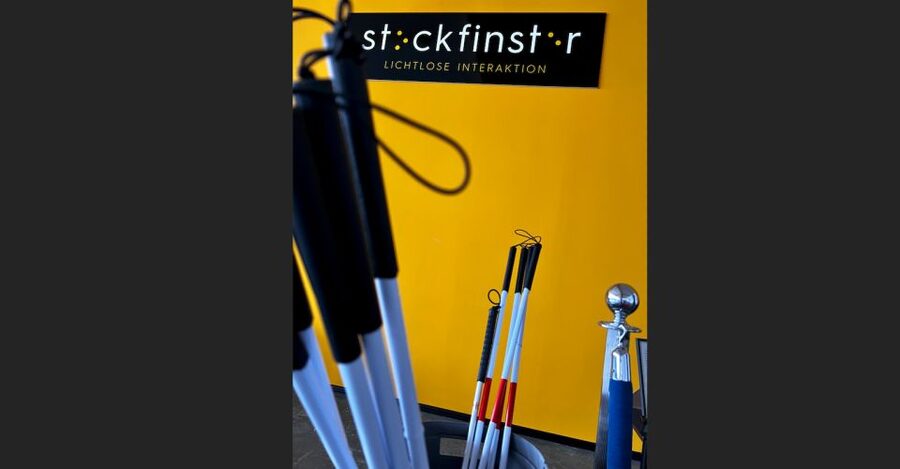
The simulated road-crossing scene brings the theme into a familiar public setting. Crossing a street normally involves watching traffic lights, checking vehicles, reading the movement of other people, and judging distance with your eyes. Removing those cues makes the situation feel far less automatic.
This is potentially one of the strongest scenes because it connects the tour to a real safety issue. You begin to understand why audible information, clear street design, and considerate behavior matter to people with visual impairments.
There is one practical caveat. One visitor found that the sound setup in the fictional street scene was not working properly during the visit. That appears to have reduced the effect of the exercise. Technical problems can matter more in a sound-led activity than they would in an ordinary museum, so it is fair to keep this limitation in mind.
Even with that concern, the road scene has a clear purpose. It reminds you that inclusion is not only about personal kindness. It also depends on public spaces that provide useful information in more than one way.
Why the dark bar is part of the experience
After approximately 60 minutes in the dark, you arrive at the dark bar. You can chat with your guide over a glass of fritz-kola, a cup of coffee, or a cold beer, then think over what has just happened.
This final period is important. The activity could end with everyone simply stepping back into a lit room and moving on. Instead, the bar gives you time to discuss the experience while the sensory change is still fresh.
You can ask your guide about the route, the challenges of visual impairment, and the way daily situations may feel from a different point of view. Since the guides are blind or severely visually impaired, the conversation can add a human dimension that a written display or audio recording cannot provide.
The bar also softens the transition back to normal sight. The drink is not just a refreshment. It gives you something familiar to hold and taste while you compare how the world felt in darkness.
The available choices are modest but clear: fritz-kola, coffee, or beer. If you do not drink alcohol, you still have two straightforward alternatives. The tour details do not say whether the drinks are included in the $21 price, so you should confirm that point when booking.
The sensory effect is stronger than expected
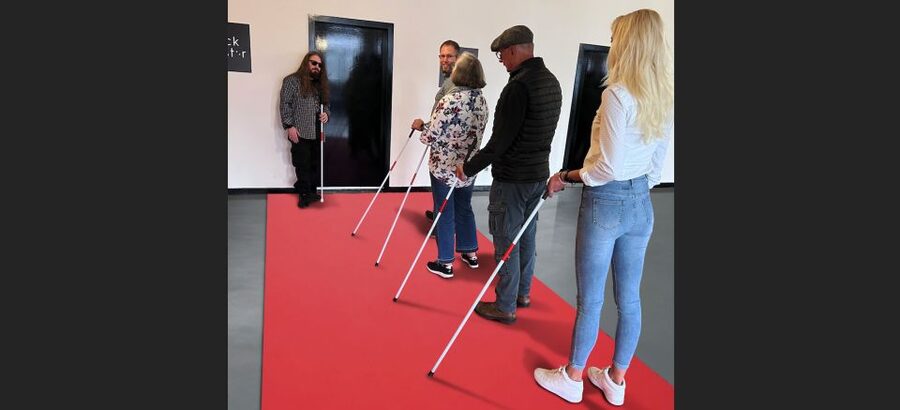
Without vision, your brain reacts more strongly to deliberate sounds, textures, smells, and tastes. The tour is built around those four channels.
Sound becomes a source of direction and context. You may listen for the guide, environmental effects, or clues connected with the scene around you. This is also why a malfunctioning sound effect can weaken one part of the route.
Touch becomes your way of checking surfaces and objects. The long cane extends your reach, while your hands help you understand what the cane cannot fully explain.
Smell can identify a setting or add atmosphere. Since you cannot simply look around, scent may become a useful part of the story.
Taste is most obvious at the dark bar, where the drink helps you pay attention to something you might normally consume without much thought.
The activity does not promise that you will suddenly develop sharper senses. Rather, you become more aware of senses that vision usually pushes into the background. That shift is one of the most memorable parts of the experience.
Is $21 a fair price?
At $21 per person, Adventure Darkness is reasonably priced for a 90-minute guided activity, particularly in a small group of no more than eight people. You are paying for a structured route, a live guide, specially prepared rooms, and a discussion period at the bar.
The value is strongest if you want an experience with an educational and social purpose. This is not a major historic attraction or a full-day outing. You should compare it with the price of an interactive museum visit, a short guided activity, or an unusual evening experience rather than with a large tourist attraction.
The price also makes it suitable for a couple, a small group of friends, or a family with older children. Because the activity depends on spoken guidance and personal reflection, a smaller group can make the money feel better spent than a crowded session.
You can reserve now and pay later, and free cancellation is available up to 24 hours before the appointment. If you cancel later or do not arrive, a replacement date is not guaranteed. The voucher is valid for six months from purchase, but only for the option purchased, and each person needs an individual voucher.
One important booking point is that an appointment is required by phone with the voucher code. Do not assume that buying online alone completes the process.
Who will enjoy this Ruhr Area activity most?
I would recommend it to you if you want something thoughtful, unusual, and different from standard city sightseeing. It works especially well for:
- Adults interested in accessibility and inclusion
- Couples who want a shared challenge
- Friends who enjoy sensory or problem-solving activities
- Families with children aged five and older
- German-speaking visitors who are comfortable following spoken instructions
- Anyone looking for a short activity that can fit around other Ruhr Area plans
Children under five are not allowed. Older children may find the darkness exciting, but you should judge their comfort with unfamiliar settings and close reliance on adult guidance.
This may not suit you if you dislike enclosed or completely dark environments, need to use a cellphone during an activity, or want a highly visual attraction. The tour removes almost every visual reward on purpose.
There is also conflicting accessibility information. The activity details describe it as wheelchair accessible, but the restrictions also say it is not suitable for wheelchair users. Because that is a direct contradiction, you should contact Stockfinster before booking if you use a wheelchair or have mobility concerns.
Language, group size, and useful preparation
The live tour guide speaks German. That is the single biggest practical issue for international visitors. Since the experience relies on spoken instructions, basic conversational German is more important here than it would be at a museum with translated signs.
Arrive ready to leave your phone, camera, flashlight, and jewelry outside the experience. The exact storage arrangements are not provided, so do not bring valuables you would be uncomfortable setting aside.
Wear something that lets you move comfortably, though no specific clothing rule is given. The route includes a sporting challenge and simulated everyday situations, so comfort is more useful than dressing up.
The experience has an overall rating of 4.6 out of 5 from 32 ratings. That matches the main pattern: the guide’s friendly manner and the sense of learning how the world feels without sight receive the strongest praise. The less positive comments focus on a technical problem in the road scene, not on the basic idea of the activity.
Should you book Adventure Darkness?
Book it if you want a short, personal experience that changes how you think about ordinary movement and public spaces. The combination of a blind guide, small group, cane work, everyday scenes, and conversation at the dark bar gives the tour a clear purpose beyond novelty.
Skip it if you need an English-language tour, dislike total darkness, or expect a conventional attraction with plenty to look at. Also clarify the wheelchair policy before paying, since the available information gives two different answers.
For the right visitor, $21 is a fair price for a memorable lesson in attention and inclusion. You will not leave knowing what blindness is like in full, but you may leave noticing sounds, obstacles, and access needs that you once overlooked.
FAQ
How long does Adventure Darkness last?
The tour lasts 1.5 hours, or 90 minutes. Approximately 60 minutes are spent in the dark adventure rooms, followed by time at the dark bar.
Where does Adventure Darkness take place?
The experience takes place in the Ruhr Area of Germany.
What language is the tour conducted in?
The live guide speaks German.
How many people are in each group?
The activity uses small groups limited to eight participants.
What is included in the price?
The included service is the 90-minute tour in the dark. The provided information does not confirm whether the drink at the dark bar is included.
What items are not allowed?
Cameras, jewelry, flashlights, and cellphones are not allowed during the experience.
Can children or wheelchair users take part?
Children under five are not suitable for the activity. The accessibility information is contradictory: one section says the experience is wheelchair accessible, while another says it is not suitable for wheelchair users. Contact the provider before booking if this affects you.
Just added around Germany
- Private Walking Tour in Berlin: Hitler’s Germany & WWII★ 5.0 · 7 reviews
- The History of Berlin: WWII PRIVATE Walking Tour With Locals★ 5.0 · 209 reviews
- Private Berlin WWII and Cold War History Tour with Local Expert Guide★ 5.0 · 28 reviews
- Private Walking Tour Berlin 3 hours: Brandenburg, Historic Center★ 5.0 · 7 reviews
- Berlin: Private Bike Tour of the Berlin Wall and Third Reich★ 5.0 · 23 reviews
- Berlin: Guided Private Bike Tour to Explore the Highlights★ 5.0 · 12 reviews
- Berlin Photography Masterclass – Private Photography Lesson★ 4.5 · 23 reviews
- Group Driving Tour 1 to 6 people. Berlin Shore Excursion incl pick-up at Port★ 5.0 · 8 reviews
Guided, compared.
Reichstag, Dome and Government District Guided Tour
Read our review →
Government District around the Reichstag Guided Tour
Read our review →