
Reviewed · CITY TOURS
All of Berlin (city panorama)
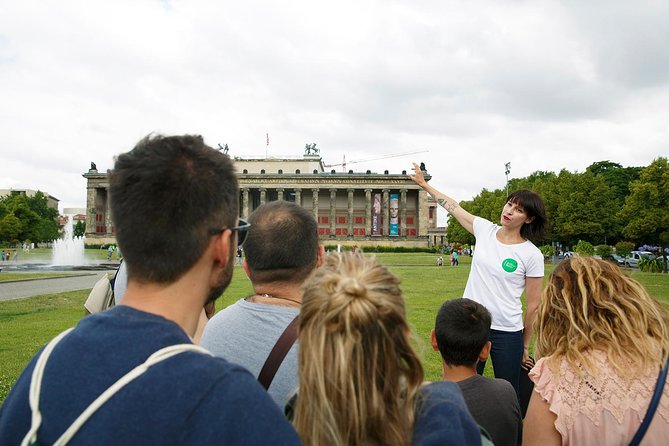
Berlin reveals itself one layer at a time. This four-hour walking tour gives you a fast, useful introduction to the capital, moving from Alexanderplatz through the historic center to Brandenburg Gate. I like the broad range of sights and the way the guide connects them to Berlin’s changing past. I also like the modest price, $25.58, for a guided route covering so much ground.
The main consideration is the walking. You cover a long central route, with several stops lasting only five to fifteen minutes. The tour is operated entirely in Spanish, and it may not suit anyone who has trouble walking for long distances.
In This Review
- Key points at a glance
- Why this four-hour Berlin tour works well
- Alexanderplatz and the city’s medieval core
- Nikolaiviertel and Berlin Cathedral
- Unter den Linden and Bebelplatz
- Neue Wache and Gendarmenmarkt
- Checkpoint Charlie and the Berlin Wall era
- Potsdamer Platz and Berlin’s modern face
- The Holocaust Memorial and Brandenburg Gate
- What the Spanish guide adds
- Price, pace, and practical value
- Who should book this city panorama?
- Should you book it?
- FAQ
- Where does the tour begin?
- What time does the tour start?
- How long does the tour last?
- Is the tour conducted in English?
- What is included in the price?
- How much does the tour cost?
- How large can the group be?
- Is the tour suitable for people with limited mobility?
- Can I cancel the tour for a refund?
Key points at a glance
- Nearly all of central Berlin in four hours: The route links Alexanderplatz, Museum Island, Unter den Linden, Gendarmenmarkt, Checkpoint Charlie, Potsdamer Platz, the Holocaust Memorial, and Brandenburg Gate.
- A Spanish-only experience: The guide provides historical and cultural commentary in Spanish, with Juan praised for giving especially useful information.
- A strong first-day orientation: You see where major sights sit in relation to one another before deciding which museums or memorials deserve more time.
- Mostly outdoor sightseeing: The tour focuses on squares, streets, monuments, and exterior views rather than extended indoor visits.
- A small enough group to remain manageable: The maximum is 25 people, a reasonable size for a city walk.
- An excellent price for an overview: At $25.58, the value is strongest if you have limited time or want help planning the rest of your Berlin visit.
Why this four-hour Berlin tour works well
Berlin is spread out, and its major sights belong to very different chapters of the city’s past. A royal boulevard, a Nazi-era memorial, a Cold War border crossing, and a glassy modern plaza can all appear in one day, but arranging them yourself takes time.
This route solves that problem. You begin at Alexanderplatz and walk through the historic center, then continue toward the Cold War sites and the modern Potsdamer Platz area before finishing near Brandenburg Gate. I see it as a get your bearings fast tour rather than a deep visit to any single attraction.
That distinction matters. You will not enter every major building, and the short stop at each place leaves little room for a full museum visit. But you do get the setting, the key facts, and a guide who can explain why each place matters.
The tour begins at 10:00 a.m. beside the Berlin TV Tower entrance at Panoramastraße 1A. Bring a mobile ticket, comfortable shoes, and enough water for a long walk. The route is near public transportation, which makes the starting point fairly practical.
More City Tours in Berlin
- Berlin: 1-Hour City Tour by Boat with Guaranteed Seating
★ 4.3 · 16,993 reviews - Berlin: City Sightseeing Hop-On Hop-Off Bus Tour
★ 4.1 · 4,233 reviews - Potsdam: City and Castles Tour
★ 4.7 · 3,721 reviews
Alexanderplatz and the city’s medieval core
Alexanderplatz is a useful place to start because it immediately shows you one of Berlin’s contrasts. The square is broad, modern, and closely associated with the TV Tower, yet the surrounding area leads quickly into some of the oldest parts of the city.
The opening 20-minute stop gives the guide time to explain the square, its monuments, and its place in Berlin’s story. That context is more useful than simply taking a photograph under the tower. Alexanderplatz has changed greatly over time, and the guide’s job here is to help you read the space rather than treat it as a simple meeting point.
The five-minute stop at Neptunbrunnen adds a quick look at the Neptune Fountain in the middle of the square. The fountain provides an easy visual detail, but do not expect a long discussion or much time to study it on your own.
Next comes Rotes Rathaus, the red brick town hall. The stop is brief, but it answers a practical question you may have while walking through the center: what is this striking red building, and what role does it play in Berlin’s government?
The route then touches the entrance area of the complex of buildings and museums associated with UNESCO World Heritage status. The supplied timing does not give this point a separate stop length, so treat it as a short orientation rather than an included museum visit. If you want to see the museums properly, you will need to return on your own.
Nikolaiviertel and Berlin Cathedral

Nikolaiviertel offers a sharp change of mood. The quarter is presented as the most original part of Berlin, with more than 800 years of foundation behind it. The 15-minute stop lets you look at the older character of the city and consider how different this area feels from Alexanderplatz.
The mention of St. Georg in the middle of the square gives the guide a specific detail to explain. Small references like this can make a walking route more rewarding because you are not simply passing through an old-looking district without knowing what you are seeing.
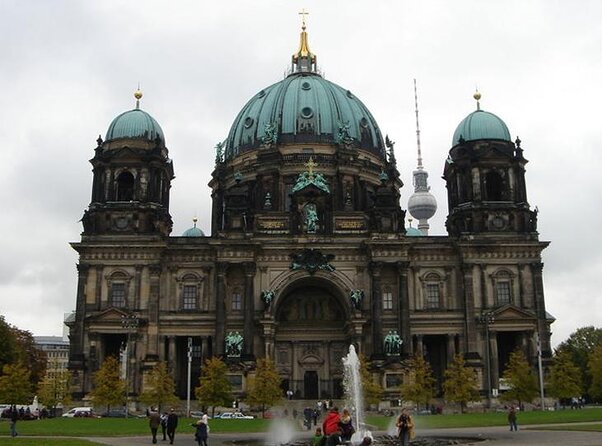
Berlin Cathedral follows with a 10-minute exterior stop. The dome and decoration make it one of the easiest buildings in the city to recognize, and the guide explains the church’s background and the people connected to its construction.
The short timing is the key point here. You can admire the exterior and hear the main story, but you will not have time for a full interior visit, dome climb, or careful look at every architectural detail. If the cathedral is high on your list, mark it for a separate visit.
Lustgarten, just outside the cathedral, receives five minutes. The guide explains the name of the garden and why this exact location became important. This is one of the better photo settings along the route because the open space frames several major buildings at once.
Unter den Linden and Bebelplatz
From Lustgarten, the tour moves along Unter den Linden, one of Berlin’s main streets. It once served as a royal route between the palace and the Tiergarten, and today it remains one of the city’s most visited avenues.
The value here is not just the street itself. Unter den Linden links many of the sights you have already seen with places still ahead, so walking it helps you understand Berlin’s central layout. You also get a sense of how the old royal axis shaped the city.
The Staatsoper Unter den Linden receives a five-minute stop. The opera house adds a cultural note to the route, and the guide explains its place on the boulevard. This is another exterior-focused visit, so you will see the building and learn about it without attending a performance or taking a formal interior tour.
Bebelplatz is more powerful than its size suggests. The 10-minute stop addresses the square’s importance during the 20th century, the memorial in its center, and the role played by Hitler’s propaganda minister in what happened there.
This is one of the points where a guide adds real value. The memorial can be easy to miss if you walk across the square alone, and the historical meaning is not obvious from a quick glance. Expect a concise explanation, not a long seminar, but the stop gives you a better reason to pause.
Still Berlin, at a slower pace:
- Berlin: Reichstag, Dome and Government District Guided Tour
★ 4.7 · 18,288 reviews - Berlin: Boat Tour Along the River Spree
★ 4.4 · 11,252 reviews - Discover Berlin Half-Day Walking Tour
★ 5.0 · 9,624 reviews - Berlin: Hop-on Hop-off Bus Tour with Live Commentary
★ 4.3 · 8,579 reviews
Neue Wache and Gendarmenmarkt
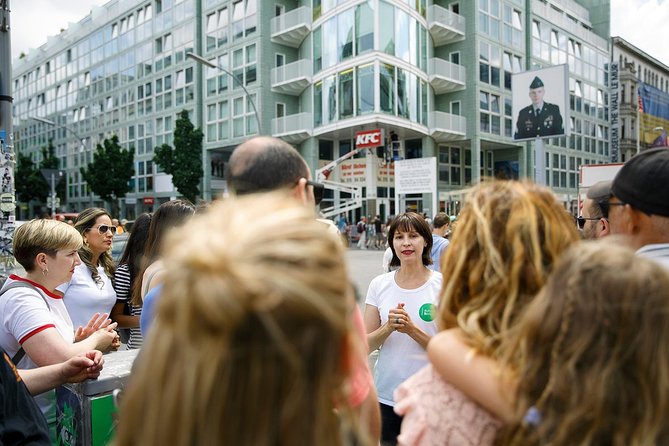
Neue Wache provides another concentrated look at Berlin’s difficult past. The building has served as a memorial in different periods, and the 10-minute stop includes the work of Käthe Kollwitz.
The important thing here is the changing meaning of the memorial. Berlin often asks you to consider how later governments used existing places to present their own version of national memory. A short guided explanation can help you notice those layers.
Gendarmenmarkt then offers one of the route’s most attractive scenes. The square brings together the concert house and two church buildings with matching towers. The 15-minute stop gives you time to take in the arrangement and hear why the square is often considered Berlin’s most beautiful public space.
This is a pleasant visual pause after several serious historical sites. Still, the area is visited quickly. You will have time for photographs and an overview, not a long architectural study or a concert house visit.
Checkpoint Charlie and the Berlin Wall era
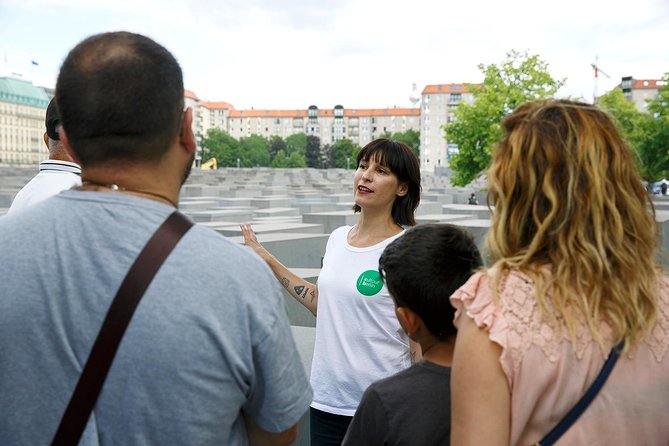
Checkpoint Charlie receives the longest stop, 25 minutes, and that feels appropriate. The site recalls the former border crossing between East and West Berlin, the Cold War, and the division of the city.
The guide focuses on the historical setting of the wider area rather than offering private transportation between points. That means you walk through the district and use the streets themselves as part of the lesson.
Checkpoint Charlie can feel theatrical today, with its famous name carrying more weight than the present-day setting might suggest. A guide helps separate the actual Cold War significance from the modern tourist presentation. Pay close attention to the explanation here, since the surrounding area has been shaped by memory, reconstruction, and commercial tourism.
The 25-minute timing also gives you one of the better chances to ask a question. If Berlin’s division is a priority for you, this is a useful introduction before visiting a dedicated Cold War museum or memorial later.
Potsdamer Platz and Berlin’s modern face
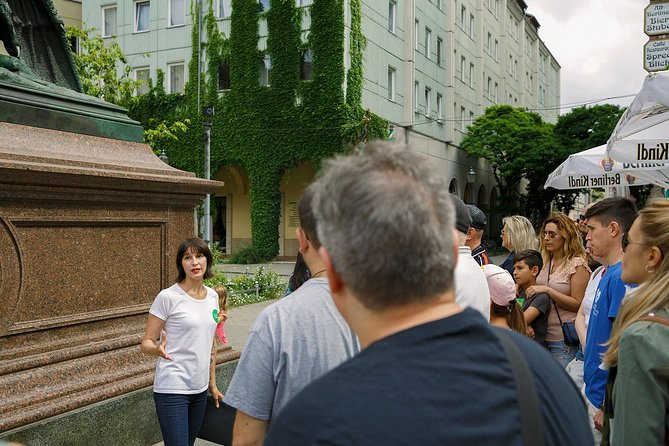
Potsdamer Platz follows as a five-minute stop. The guide traces what the area was like from its earlier days to the present, when it is known for modern architecture and large-scale redevelopment.
The quick visit is enough to understand the broad change, but it is not enough to inspect the buildings closely. The point is comparison. Earlier stops showed royal Berlin, old Berlin, and divided Berlin. Potsdamer Platz shows how the city rebuilt and reshaped itself in the modern period.
This contrast is one of the tour’s best features. You are not looking at a single polished version of Berlin. You are moving through a city that has repeatedly been damaged, divided, rebuilt, and reinterpreted.
The Holocaust Memorial and Brandenburg Gate
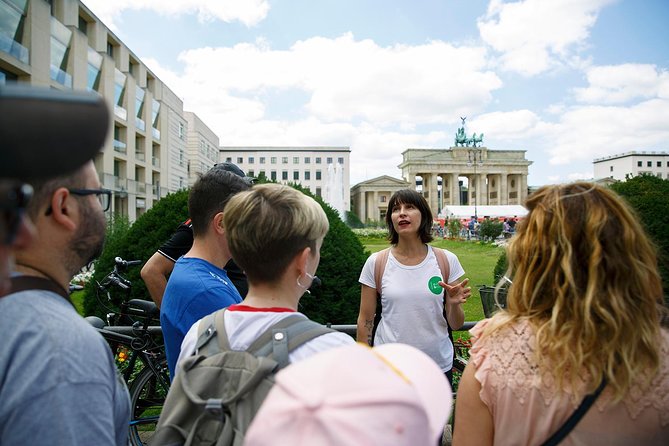
The Holocaust Memorial receives 15 minutes. Its formal name is the Memorial to the Murdered Jews of Europe, and its location near Brandenburg Gate makes it one of Berlin’s central places of remembrance.
The guide aims to help you understand the author’s intended meaning. That is important because the memorial’s rows of concrete blocks can seem simple at first, while the experience of walking among them changes your sense of space. The stop is respectful and brief, so you should not expect a full museum presentation or extensive time inside the information center.
The route ends at Brandenburg Gate, with a 20-minute stop. From here, you can see the Tiergarten, Pariser Platz, and the Adlon Hotel, while the guide explains the gate’s place in Berlin’s past.
Brandenburg Gate works well as the final point because it gathers several themes from the tour in one setting. It was connected to royal Berlin, later became a symbol of division, and now represents a reunified capital. You finish with one of the city’s most recognizable views and a clearer idea of how the earlier stops fit together.
The booking information says the activity ends back at the meeting point, while the route description identifies Brandenburg Gate as the finish. Since those details do not fully match, confirm the exact end arrangement before booking if your next appointment depends on it.
What the Spanish guide adds
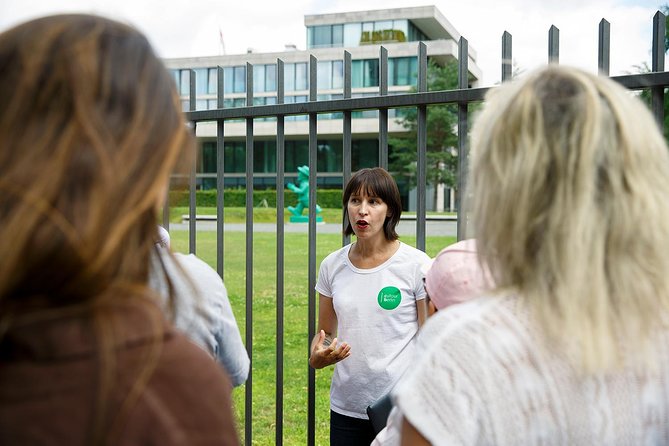
This experience is designed for Spanish-speaking visitors. The guide operates only in Spanish, so you should choose it only if you can follow historical explanations comfortably in that language.
The strongest praise is directed toward the amount of historical information. Juan is specifically praised for explaining the places visited and making the route highly recommendable. That fits the tour’s purpose: you are getting interpretation at nearly every stop, not simply a ride past famous buildings.
A guide also helps with the less obvious details. The memorial at Bebelplatz, the changing purpose of Neue Wache, the role of Rotes Rathaus, and the meaning of the Neptune Fountain all benefit from explanation. Without context, some of these stops would be easy to overlook.
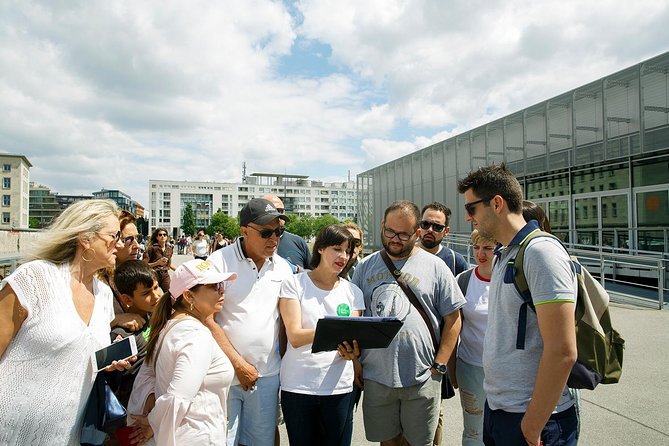
The group can include up to 25 people. That is not an intimate private walk, but it is still far smaller than a large sightseeing bus. Keep close to the guide, especially when crossing busy central streets or moving between squares.
Price, pace, and practical value
At $25.58 per person, this is a strong value if you have only one day in Berlin or want a guided overview before exploring alone. You are paying for four hours of route planning, commentary, and access to a sequence of central sights without having to research the order yourself.
The price is less compelling if you already know Berlin well or prefer to spend an hour at each major site. This tour gives you breadth, not depth. You will see many places, but most stops are short and admission to interior attractions is not part of the experience.
There is no private transportation. That is not a flaw for this particular route, since the walking links the sites and lets you see areas that a vehicle cannot reach. It does mean you need good footwear and a realistic view of your own stamina.
The tour is not recommended for people who cannot walk properly for long distances. Service animals are allowed, most people can participate, and the route is near public transportation. Confirmation is provided at booking, and you can cancel for a full refund up to 24 hours before the scheduled start time.
Who should book this city panorama?
I would choose this tour for a first visit, a short stay, or the opening morning of a longer Berlin trip. It gives you a useful mental map and points out the places that deserve a return visit.
It is also a good match if you prefer history explained in Spanish and want a local guide to connect the sights. The high 4.9 rating from 181 reviews and 99 percent recommendation figure support the impression that the format works well for its intended audience.
I would look elsewhere if you want a relaxed pace, extensive indoor sightseeing, or commentary in English or another language. You should also avoid scheduling something immediately afterward until you confirm where the walk actually ends.
Should you book it?
Book it if you want to cover Berlin’s central landmarks in four hours, value clear historical commentary in Spanish, and can handle a long walk. The combination of Alexanderplatz, Museum Island, Unter den Linden, Checkpoint Charlie, Potsdamer Platz, the Holocaust Memorial, and Brandenburg Gate gives you an unusually broad first look for $25.58.
Skip it if you prefer slow museum visits or already have a detailed Berlin plan. For the right person, though, this is a practical and inexpensive way to get the city’s major pieces into place before exploring further.
FAQ
Where does the tour begin?
It begins at the Berlin TV Tower, next to the entrance, at Panoramastraße 1A, 10178 Berlin, Germany.
What time does the tour start?
The scheduled start time is 10:00 a.m.
How long does the tour last?
The tour lasts approximately four hours.
Is the tour conducted in English?
No. It is operated by a Spanish-speaking guide and is conducted only in Spanish.
What is included in the price?
The experience includes a Spanish-speaking local guide. Private transportation is not included.
How much does the tour cost?
The listed price is $25.58 per person.
How large can the group be?
The tour has a maximum group size of 25 people.
Is the tour suitable for people with limited mobility?
The tour is not recommended for people who are unable to walk properly for long distances. Most people can participate, and service animals are allowed.
Can I cancel the tour for a refund?
Yes. You can cancel up to 24 hours before the start time for a full refund. Cancellations or changes made less than 24 hours before the start are not accepted for a refund.
Just added around Berlin
- Private Walking Tour in Berlin: Hitler’s Germany & WWII★ 5.0 · 7 reviews
- The History of Berlin: WWII PRIVATE Walking Tour With Locals★ 5.0 · 209 reviews
- Private Berlin WWII and Cold War History Tour with Local Expert Guide★ 5.0 · 28 reviews
- Private Walking Tour Berlin 3 hours: Brandenburg, Historic Center★ 5.0 · 7 reviews
- Berlin: Private Bike Tour of the Berlin Wall and Third Reich★ 5.0 · 23 reviews
- Berlin: Guided Private Bike Tour to Explore the Highlights★ 5.0 · 12 reviews
- Berlin Photography Masterclass – Private Photography Lesson★ 4.5 · 23 reviews
- Group Driving Tour 1 to 6 people. Berlin Shore Excursion incl pick-up at Port★ 5.0 · 8 reviews
City Tours, compared.

1-Hour City Tour by Boat with Guaranteed Seating
Read our review →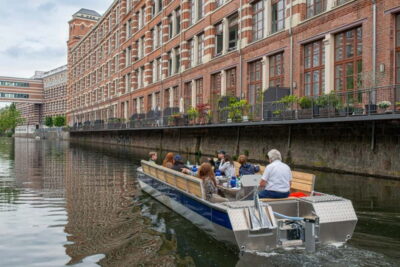
City History Canal Sightseeing Tour on a Motorboat
Read our review →
Browse the lists this tour appears in