Reviewed · PRIVATE
Architectural Berlin: Private Tour with a Local Expert
Berlin lets buildings do the talking. This two-hour private walk connects Berlin’s grand older monuments with bold modern design, giving you a useful way to read the city through its architecture. I like the exclusive format, which lets your guide adjust the pace and focus to your interests, and I like the route from Museum Island to the Berlin Philharmonic, a strong cross-section of Berlin’s changing character.
The main caution is the price: $639.96 for up to two people is a serious charge for a two-hour walk, and the quality depends heavily on the individual guide. Georg earned warm praise for being personable and well prepared, while another booking was let down by a guide with little architecture knowledge and no clear check of opening conditions.
In This Review
- Key Points to Know Before Booking
- Starting on Museum Island at Bodestraße 1
- The Dome and Scale of Berlin Cathedral
- A Modern Office Building With an Ecological Focus
- The Reichstag’s Historic Shell and Glass Dome
- Another Modern Building in a Historic Setting
- Ending at the Berlin Philharmonic
- How the TV Tower Fits Into the Story
- What the Private Format Adds
- Is $639.96 Good Value for Two Hours?
- Practical Details That Shape the Day
- Who Should Book This Berlin Architecture Walk?
- Should You Book It?
- FAQ
- How long does the Architectural Berlin tour last?
- How many people can join the private tour?
- Where does the tour start and end?
- Are museum and monument entry tickets included?
- Can the itinerary change?
- What is the cancellation policy?
Key Points to Know Before Booking
- A private two-hour route: Only your group participates, and the guide can adapt the pace and emphasis.
- Six major architectural settings: The walk links Museum Island, a grand cathedral, the Reichstag, a modern office building, another contemporary structure, and the Berlin Philharmonic.
- A useful historic-to-modern arc: You see how imperial, religious, political, ecological, and cultural design all meet in Berlin.
- The TV Tower gets skyline attention: The Berliner Fernsehturm helps explain Berlin’s changing city profile, even though it is not listed as a separate walking stop.
- Guide quality matters: Georg received especially strong praise, while one booking raised concerns about architectural preparation and site availability.
- Very expensive for two hours: The cost makes most sense for visitors who place a high value on privacy and personal guidance.
Starting on Museum Island at Bodestraße 1
The tour begins at Bodestraße 1, on Berlin’s Museum Island. This is a smart starting point because the area compresses centuries of art, religion, royal power, and city planning into a small part of central Berlin.
Your first listed stop is a gallery with neoclassical design and a collection of 19th-century art. The building itself is part of the lesson. Its orderly columns and formal proportions reflect an older idea of the museum as a place of public education and cultural prestige.
You can expect your guide to explain how the building’s appearance connects to the artwork inside and to Berlin’s wider artistic identity. Since museum entry is not included, this portion is mainly an exterior architecture stop unless you arrange and pay for admission separately.
That detail matters. If your main interest is the building, two hours can work well. If you want time inside the galleries, the schedule may feel tight, and you should not assume an indoor visit is part of the walk.
Museum Island also gives your guide room to tailor the discussion. You might focus on neoclassical form, the role of museums in city planning, or the way Berlin rebuilt and reshaped its cultural center. The private format is most useful here because you can ask questions instead of waiting for a group to move along.
A few more Berlin trips worth comparing
- Berlin: Reichstag, Dome and Government District Guided Tour
★ 4.7 · 18,288 reviews - Berlin: 1-Hour City Tour by Boat with Guaranteed Seating
★ 4.3 · 16,993 reviews - Berlin: Boat Tour Along the River Spree
★ 4.4 · 11,252 reviews
The Dome and Scale of Berlin Cathedral
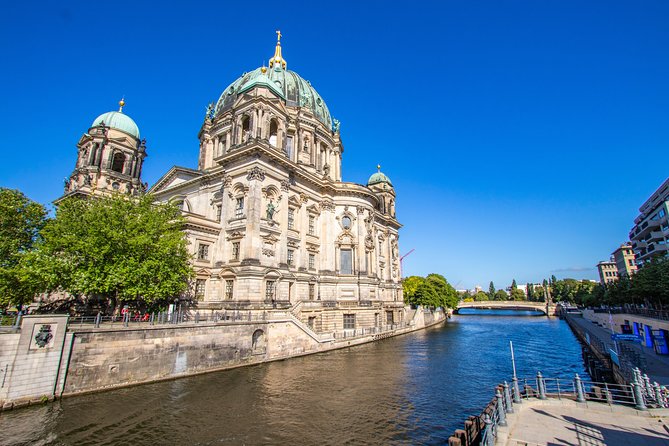
The next stop is a large historic church near Lustgarten. Its Renaissance and Baroque influences, along with its huge dome, make it one of the most commanding buildings in this part of Berlin.
This is a good contrast with the gallery. The museum presents a measured, civic face, while the church uses height, decoration, and mass to create a more dramatic impression. From the outside, you can study how the dome changes the view around the park and how religious buildings were designed to dominate their surroundings.
You should also expect a discussion of Berlin’s mix of styles rather than a single clean architectural story. The city has been rebuilt, altered, divided, and modernized many times. A private guide can help you connect the church to the nearby museum buildings and explain why this small area feels so visually dense.
The drawback is the same as at the first stop: admission is not covered. Transportation, museum tickets, and monument entry are also excluded. If you hope to go inside, ask in advance how that would affect the two-hour plan.
For many people, the exterior view is enough to make this stop worthwhile. The dome is easy to appreciate without a lecture, but a strong guide should help you notice the relationship between the church, Lustgarten, and the surrounding cultural buildings.
A Modern Office Building With an Ecological Focus
The route then shifts from historic Berlin to a contemporary office building known for innovative and environmentally friendly architecture. This is where the tour’s theme becomes more than a parade of old facades.
The building represents modern Berlin’s attempt to combine practical office use with new ideas about energy, materials, and urban design. You can expect the guide to point out how the structure differs from the older monuments you have just seen and how contemporary architecture responds to present-day city needs.
This stop will appeal most if you enjoy the reasons behind a building’s design. It is less about decorative detail and more about how a structure works, how it fits into its surroundings, and what it says about Berlin’s current direction.
Because the itinerary description does not name the office building, you should confirm the exact structure and meeting route after booking. That is not a small point for architecture enthusiasts. A named building would make it easier to decide if this tour matches your interests.
Still, the change in tone is valuable. You are not being shown only the Berlin of domes and government buildings. You are also looking at the city as a place where new construction tries to address environmental concerns and changing work patterns.
The Reichstag’s Historic Shell and Glass Dome
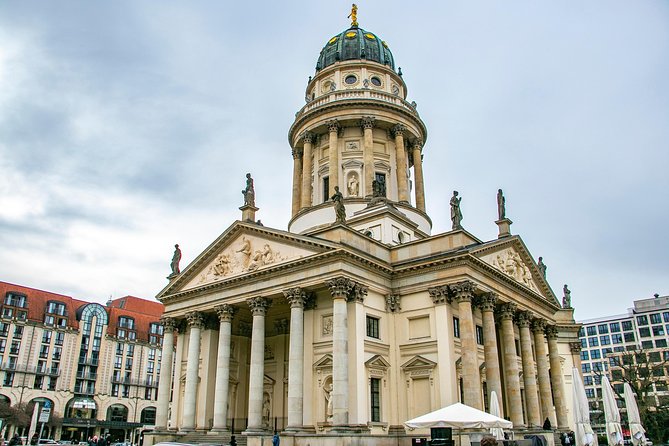
The German parliament building is the clearest example of old and new meeting in one place. The historic structure carries the weight of national politics, while Norman Foster’s glass dome gives it a modern public face.
The dome is especially important because it is presented as a symbol of political openness and transparency. Its design changes how you experience the building. Instead of a sealed government monument, the roof introduces light, visibility, and a sense of public access.
Your guide can explain how the newer design sits within the older structure without erasing it. That balance is central to Berlin architecture. The city often places new work beside older buildings rather than pretending the past can be restored to one perfect moment.
Do not assume that a visit inside the Reichstag is included. The tour price does not cover monument entry, and the route may stay outside. If entering the building matters to you, check the arrangements before the day of the tour and allow for the fact that this is only an approximately two-hour experience.
Even from outside, the Reichstag makes a strong stop. It gives the walk a clear political center and helps you see why Berlin’s architecture is so tied to questions of memory, government, and public life.
Still Berlin, at a slower pace:
- Discover Berlin Half-Day Walking Tour
★ 5.0 · 9,624 reviews - Berlin: Hop-on Hop-off Bus Tour with Live Commentary
★ 4.3 · 8,579 reviews - Berlin: Government District around the Reichstag Guided Tour
★ 4.7 · 8,447 reviews - Berlin: Reichstag, Plenary Chamber, Cupola & Government Tour
★ 4.6 · 8,422 reviews
Another Modern Building in a Historic Setting
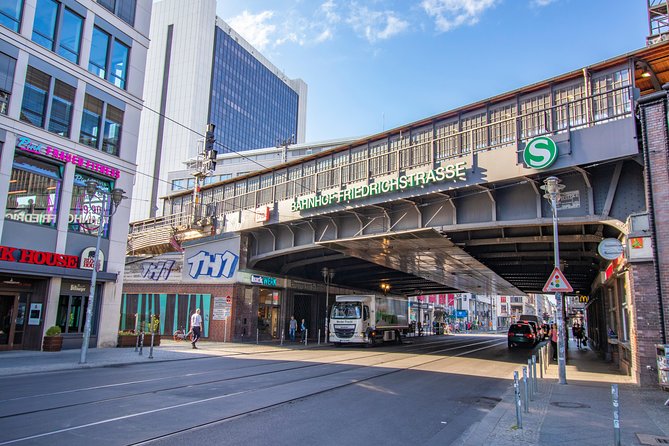
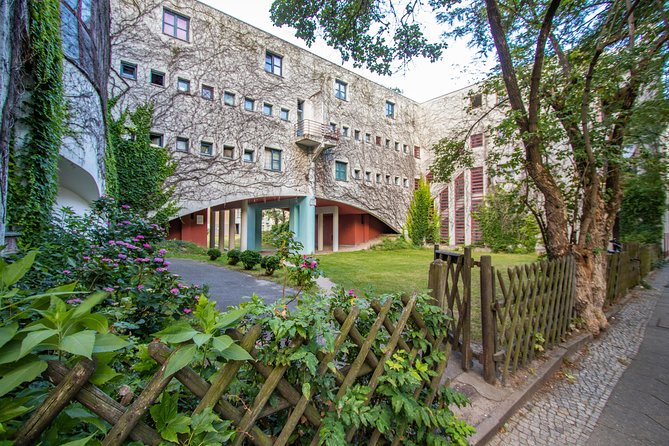
A further stop focuses on a building that combines modern architecture with the older setting around it. The appeal here is not just the structure itself, but the tension between new lines and established surroundings.
Berlin is full of these contrasts. A contemporary building can look restrained beside a historic facade, or deliberately assertive against older stonework. Your guide’s job is to explain how the building responds to its location rather than simply pointing out its shape.
This stop may be especially useful for you if you want to understand urban planning. Architecture is not only about isolated buildings. It is also about height, materials, sightlines, public space, and the decision to preserve, replace, or reinterpret what came before.
Again, the building is not named in the supplied route, so the exact emphasis may vary. The itinerary is designed to adapt to your interests and walking speed, and stops can change with weather. That flexibility is helpful, but it also means you should not expect a fixed, minute-by-minute architectural checklist.
One German-language booking praised guide Rüdiger for arranging a pleasant and varied circuit after discussing the route directly. That is a useful clue about the tour’s best possible form: less like a scripted march and more like a conversation shaped around what you want to see.
Ending at the Berlin Philharmonic
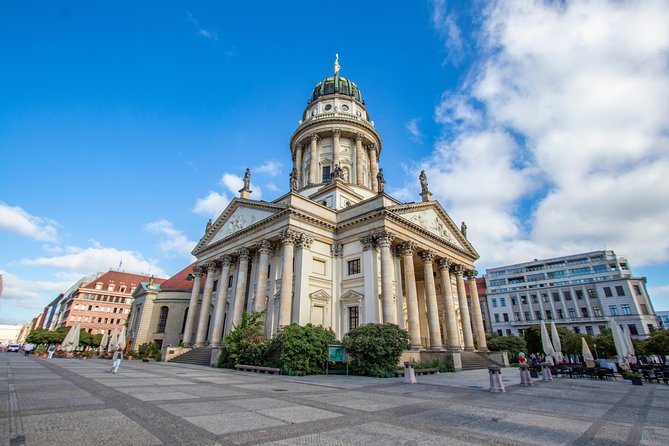
The walk ends at Herbert-von-Karajan-Straße 1, home of the Berlin Philharmonic. The building is one of the route’s most memorable modern works, with its distinctive tent-like form and strong connection to music.
Its unusual shape reflects the way the concert hall places the orchestra at the center, surrounded by the audience. The result is not a traditional box with a stage at one end. The design supports close visual and acoustic contact between performers and listeners.
The building is also known for its excellent acoustics and serves as the home of the Berlin Philharmonic orchestra. That gives the final stop a different focus from the Reichstag or the office building. Here, architecture is closely tied to sound, performance, and the shared experience of a concert.
You should not assume a concert or interior tour is included. The supplied details identify the building as the ending point, but they do not include performance tickets or special access.
Ending here is a strong choice. The route begins with museums and religious architecture, passes through political and ecological design, and finishes with a building created around music. It gives the two-hour walk a clear shape rather than leaving you among unrelated sights.
How the TV Tower Fits Into the Story
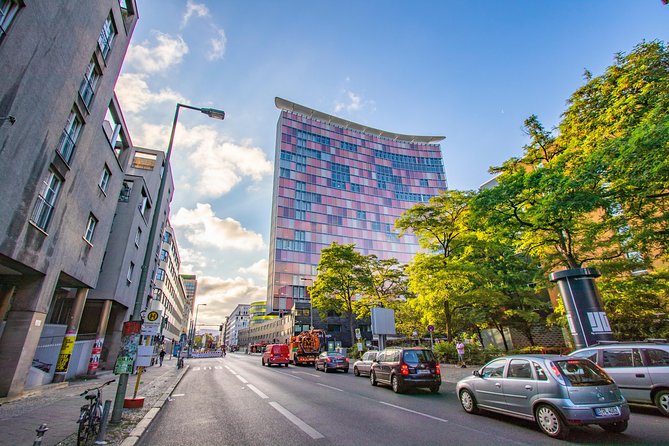
The Berliner Fernsehturm, or TV Tower, is highlighted as part of the way the tour explains Berlin’s skyline. It is an important visual marker for the city, especially when discussing how Berlin changed during the divided era and how its central profile developed.
The tower is not listed as one of the six formal walking stops, so treat it as a skyline reference rather than a guaranteed visit. Your guide may use it to help you orient yourself and understand how different parts of Berlin relate to one another.
This is one of the private tour’s useful features. You can ask for more attention to the tower, postwar planning, or Berlin’s east and west architectural differences if those subjects interest you. The route is meant to respond to your questions and pace.
What the Private Format Adds
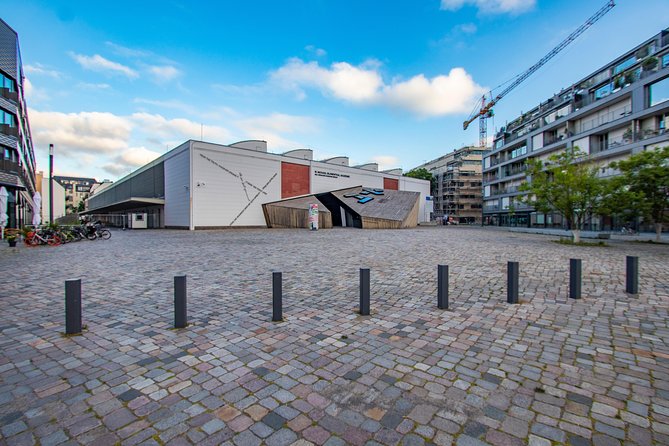
Only your group participates, with a maximum of two people at the advertised price. That gives you room to stop for questions, slow down around a building, or move on when a subject does not hold your attention.
The itinerary also adapts to weather and walking pace. This matters in Berlin, where a cold or wet day can change how much time you want to spend outdoors. The tour may alter its stops in those conditions, so flexibility is more useful than a rigid promise.
A local guide can also offer recommendations for seeing more of Berlin after the walk. The quality of those suggestions will depend on the person leading your tour, but the private setting makes it natural to ask for ideas based on your interests.
There is a clear risk here. One booking had an excellent experience with Georg, who was described as friendly, engaging, and well prepared. Another person found the guide pleasant but said the guide lacked architecture knowledge and had not checked whether sites were open. For a tour built around expert interpretation, that difference is important.
I would contact the operator before booking if you have a serious architecture background or specific buildings in mind. Ask for confirmation that the guide assigned to you is comfortable discussing architectural design, not only general Berlin sightseeing.
Is $639.96 Good Value for Two Hours?
At $639.96 per group of up to two, this is not a budget walking tour. The cost is easier to justify if you value privacy, a custom route, and the chance to shape the discussion around your own interests.
For a couple who wants a personal introduction to Berlin’s architecture, the private format may be appealing. You are not paying per seat in a large group, and the guide can adjust the route rather than delivering the same talk to a crowd.
Still, two hours is a short window for six architectural settings spread across central Berlin. The experience works best as an introduction and orientation, not as a full study of every building. If you want museum interiors, a Reichstag visit, or detailed time at each site, you may need separate plans.
The price also excludes personal expenses and admission to transportation, museums, and monuments. Add those costs only if you decide to enter somewhere, but keep the exclusions in mind when comparing this with other ways to see Berlin.
My value judgment is simple: the tour is expensive, but potentially worthwhile for two people who want a private conversation and are comfortable paying for personal attention. It is harder to recommend if you mainly want a list of famous buildings or a low-cost overview.
Practical Details That Shape the Day
You receive confirmation when booking, and the experience uses a mobile ticket. The meeting point is Bodestraße 1, while the tour ends at Herbert-von-Karajan-Straße 1, so you should plan for the walk to finish in a different part of central Berlin.
The route is near public transportation, though transport tickets are not included. Service animals are allowed, and most people can participate. The details also indicate that people with impaired mobility should take their own needs into account, especially since the route is a walking experience and the exact stops may change.
Free cancellation is available if you cancel at least 24 hours before the local start time. Changes or cancellations inside that window are not accepted for a refund.
Who Should Book This Berlin Architecture Walk?
I would recommend it most strongly to:
- Couples who want a private guide rather than a group tour
- First-time visitors who want Berlin’s architecture explained in one connected route
- People interested in the contrast between historic monuments and modern design
- Visitors who want to ask questions and adjust the pace
- Anyone who wants recommendations for further city exploration
I would be more cautious if you need guaranteed entry to museums or monuments, want a detailed academic architecture tour, or are watching your budget. You should also confirm the guide’s architecture background if the subject is your main reason for booking.
Should You Book It?
Book this tour if a private two-hour introduction sounds more useful than a longer group walk, and if the high price fits your plans. The route has a thoughtful progression, from neoclassical art and a domed church to sustainable office design, the Reichstag, modern city building, and the Berlin Philharmonic.
I would make one request before paying: ask for confirmation of the assigned guide and the expected stops. Georg and Rüdiger show how good the experience can be when the guide is personable, prepared, and willing to shape the route. The weaker account shows why that check matters.
For architecture-minded visitors who want personal attention, this can be a sharp and enjoyable start to Berlin. For everyone else, the cost may be better spent on individual museum admission and a less expensive city walk.
FAQ
How long does the Architectural Berlin tour last?
The tour lasts approximately two hours.
How many people can join the private tour?
The advertised price of $639.96 covers a private group of up to two people. Only your group participates.
Where does the tour start and end?
The tour starts at Bodestraße 1, 10178 Berlin, Germany, and ends at Herbert-von-Karajan-Straße 1, 10785 Berlin, Germany.
Are museum and monument entry tickets included?
No. Entry tickets for transportation, museums, and monuments are excluded from the tour price.
Can the itinerary change?
Yes. The itinerary adapts to your interests and walking pace, and stops may vary depending on weather conditions.
What is the cancellation policy?
You can cancel for a full refund up to 24 hours before the experience start time. Cancellations or changes made less than 24 hours before the start are not accepted for a refund.
Just added around Berlin
- Private Walking Tour in Berlin: Hitler’s Germany & WWII★ 5.0 · 7 reviews
- The History of Berlin: WWII PRIVATE Walking Tour With Locals★ 5.0 · 209 reviews
- Private Berlin WWII and Cold War History Tour with Local Expert Guide★ 5.0 · 28 reviews
- Private Walking Tour Berlin 3 hours: Brandenburg, Historic Center★ 5.0 · 7 reviews
- Berlin: Private Bike Tour of the Berlin Wall and Third Reich★ 5.0 · 23 reviews
- Berlin: Guided Private Bike Tour to Explore the Highlights★ 5.0 · 12 reviews
- Berlin Photography Masterclass – Private Photography Lesson★ 4.5 · 23 reviews
- Group Driving Tour 1 to 6 people. Berlin Shore Excursion incl pick-up at Port★ 5.0 · 8 reviews
Private, compared.


Berlin Private Complete History All Day Walking Tour
Read our review →
Munich Private Tour with a Local – Highlights & Hidden Gems
Read our review →
Your private 3-hour Hamburg driving tour with a former policeman
Read our review →
Strasbourg: Private City Sightseeing Boat Tour
Read our review →
1.5-Hour Private Tour through Historical Old Town
Read our review →
Berlin Private Half-Day Walking Tour: Discover the German Capital’s History
Read our review →