
Reviewed · SEGWAY TOURS
Berlin: 3-Hour Segway Tour
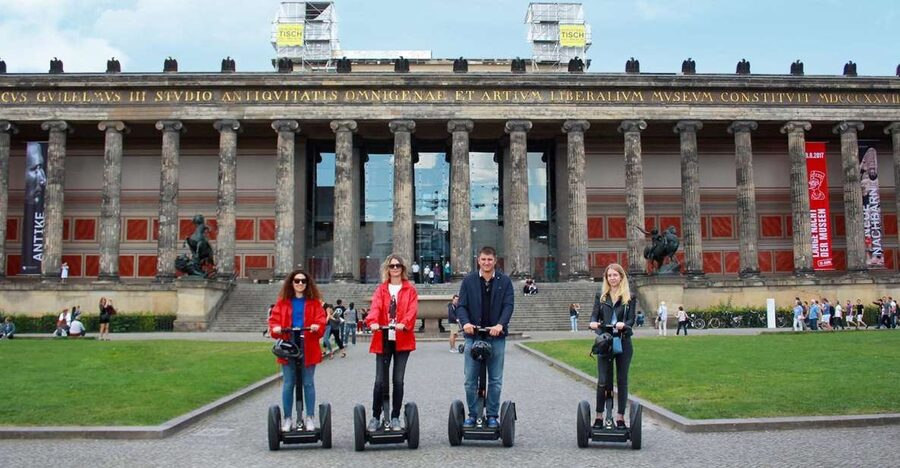
See Berlin before your feet get tired. This three-hour Segway tour covers a remarkable sweep of central Berlin, from Checkpoint Charlie and the Brandenburg Gate to Hackescher Markt and Karl-Marx-Allee. I like the efficient route and the chance to cover ground that would take much longer on foot. I also like the small groups, capped at 10 people, which make it easier to hear the guide and ask questions. The tradeoff is simple: you need to feel comfortable riding near city traffic, and the historical explanations may be brief at some stops.
The tour begins with practice time, so you are not thrown straight into Berlin on a two-wheeled machine. Guides such as Eishan, Morgan, Vincent, Gabriel, Mike, and Hunter have received strong praise for patience, safety, and storytelling. Winter riders should take the weather gear seriously, though: one January group enjoyed the tour partly because the Segway saved them from a long, cold walk.
In This Review
- Key points at a glance
- Why a Segway works well in Berlin
- Starting at Robot City and learning the controls
- Checkpoint Charlie and the divided city
- Gendarmenmarkt and the old royal center
- Rotes Rathaus, Alexanderplatz, and East Berlin
- Hackescher Markt and the city’s changing face
- Berlin Cathedral and the central monuments
- The Holocaust Memorial and the limits of a moving tour
- The Spree, Tiergarten, and breathing room
- Guides, safety, and group size
- Is $100 a fair price?
- Who should book this ride?
- Final call: book it or skip it?
- FAQ
- Where does the Berlin Segway tour meet?
- How long does the tour last?
- What languages are offered?
- How many people can join the tour?
- What are the age, weight, and license requirements?
- What equipment is included?
Key points at a glance
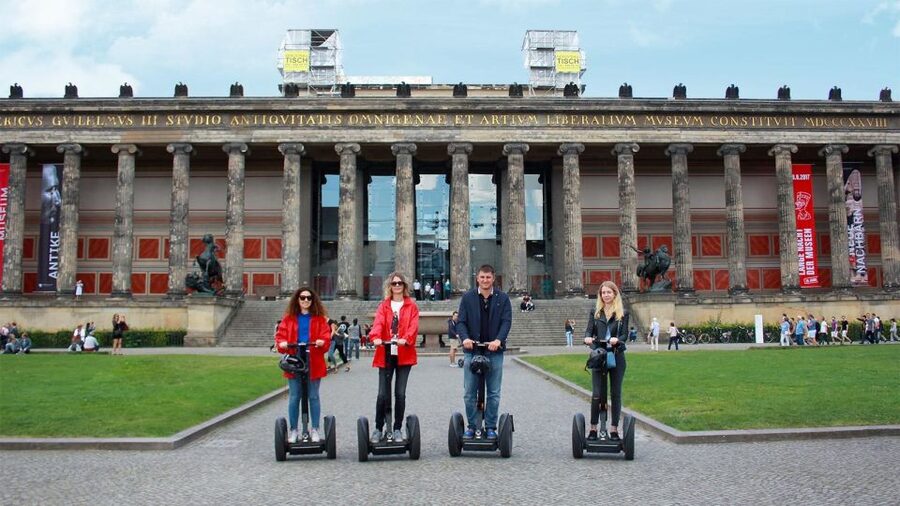
- A wide central Berlin route: See the Brandenburg Gate, Reichstag, Holocaust Memorial, Berlin Cathedral, Alexanderplatz, and more in three hours.
- Practice comes first: You get time to learn the self-balancing Segway before leaving Robot City.
- Small groups help: With no more than 10 participants, you can usually hear the guide and ask questions without shouting.
- Cold War Berlin is part of the ride: Checkpoint Charlie and Karl-Marx-Allee add useful context beyond the usual postcard sights.
- Good for first-day orientation: The broad route can help you decide which places deserve a longer visit later.
- Be ready with paperwork: Riders must be at least 15, weigh between 45 and 118 kilograms, and carry a valid driver’s license or moped certification.
Why a Segway works well in Berlin
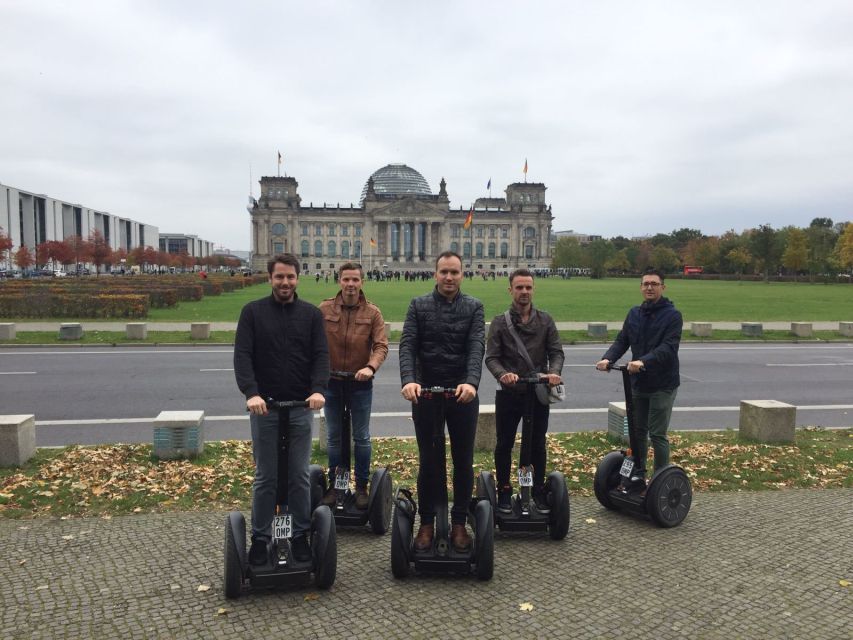
Berlin is spread out. Its major sights are not gathered around one compact old-town square, so walking between them can eat up much of your day. Public transport is useful, but it can also leave you underground just when the city’s streets are doing the talking.
A Segway gives you a middle ground. You move faster than a walking tour, yet you remain outside and close to the buildings, memorials, parks, and broad avenues. You can stop for photos, listen to a short explanation, then move on without losing half an hour to a bus or train connection.
I especially like this format for a first or second day in Berlin. The route introduces you to the historical heart, the government quarter, the old East Berlin axis, and several major neighborhoods. Afterward, you will have a better sense of where to return for museums, memorials, or a slower look.
The ride is not a replacement for visiting Berlin’s museums. It is a city overview with wheels. You see many places from the outside, and the guide’s comments give you a starting point. If you want long discussions at every stop, a private walking tour would offer more detail.
More Segway Tours in Berlin
- Berlin 2-Hour Segway Tour
★ 4.6 · 238 reviews - Berlin: 2-Hour Premium Segway Tour
★ 4.5 · 157 reviews - 2-Hour Segway Discovery Tour Berlin
★ 5.0 · 154 reviews
Starting at Robot City and learning the controls
You meet at Robot City, where the tour begins with a practice session. This is more than a quick safety speech. You get a chance to learn how the Segway moves, stops, and turns before joining the city route.
That matters because the machine responds to your body position. Lean forward and it moves ahead; shift back and it slows or stops. The practice period lets you gain confidence without trying to absorb Berlin’s history at the same time.
You should wear comfortable shoes and clothing suited to the forecast. Helmets are included, along with raincoats, gloves, and warm vests for changing conditions. That extra gear is useful in Berlin, where a bright morning can still turn chilly on an exposed boulevard.
The age and weight rules are firm: you must be at least 15 years old and weigh between 45 and 118 kilograms. You also need a valid driver’s license or moped certification. Check those requirements before paying, since they affect whether you can participate.
Checkpoint Charlie and the divided city
Checkpoint Charlie brings the Cold War into view. The former border crossing became one of the best-known symbols of divided Berlin, when the city was split between East and West.
The stop is most useful when the guide explains what the crossing meant, rather than treating it as a quick photo backdrop. The site itself is highly visited and can feel staged, but the larger story is important. This is where Berlin’s postwar division becomes easier to picture as a physical barrier between two political systems.
A Segway tour also gives you a sense of how the city connects its major historic zones. You are not simply moving from monument to monument. You are riding through streets shaped by the Cold War, reunification, and the rebuilding of central Berlin.
Do not expect a long museum-style presentation here. The tour has many stops ahead, so explanations are likely to be concise. One four-star assessment made exactly this point: the route covered the desired landmarks, but some stops could have used more detailed commentary.
Gendarmenmarkt and the old royal center
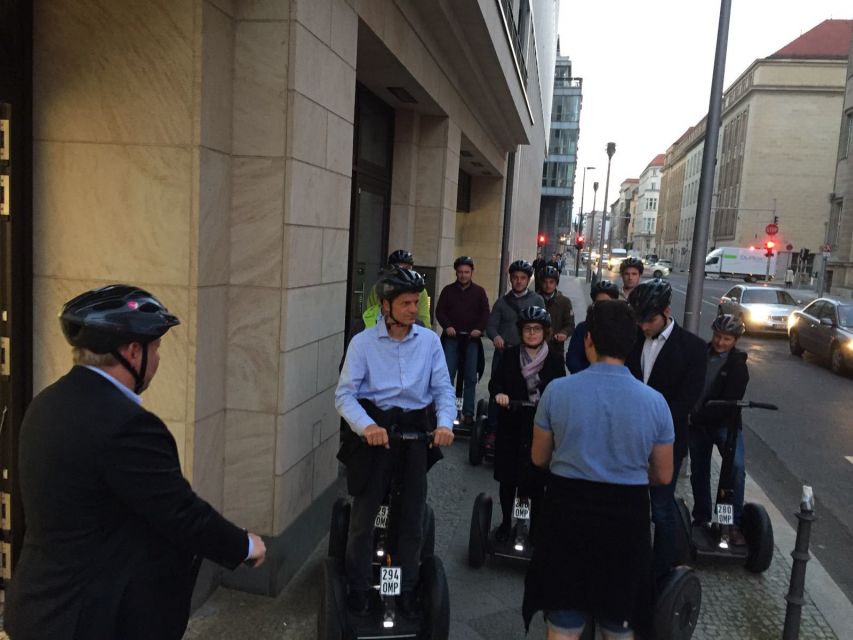
Gendarmenmarkt is one of central Berlin’s grandest squares. Its formal setting gives you a strong contrast with the rougher traces of Berlin’s 20th-century past.
The tour also passes the Berlin Palace and the historic Nikolaiviertel area. Nikolaiviertel is especially useful for understanding the older core of the city, since much of Berlin can otherwise feel defined by imperial buildings, wartime destruction, postwar division, and modern construction.
At these stops, you get a quick visual lesson in Berlin’s changing identity. Royal architecture, reconstructed historic streets, socialist planning, and modern government buildings all sit within a manageable part of the center.
You will want to take photos here, but keep your attention on the guide as well. A moving tour cannot linger at every facade, and the value comes from linking the places together rather than collecting isolated snapshots.
Still Berlin, at a slower pace:
- Berlin: Reichstag, Dome and Government District Guided Tour
★ 4.7 · 18,288 reviews - Berlin: 1-Hour City Tour by Boat with Guaranteed Seating
★ 4.3 · 16,993 reviews - Berlin: Boat Tour Along the River Spree
★ 4.4 · 11,252 reviews - Discover Berlin Half-Day Walking Tour
★ 5.0 · 9,624 reviews
Rotes Rathaus, Alexanderplatz, and East Berlin
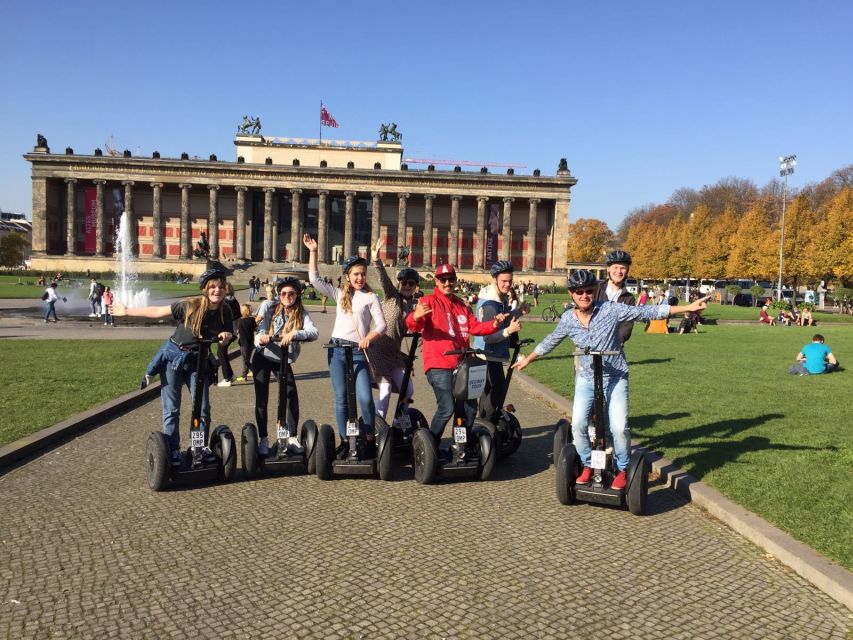
The red-brick Rotes Rathaus, or Red Town Hall, is easy to recognize and helps anchor the route in Berlin’s civic center. From there, the ride continues toward Alexanderplatz, one of the city’s best-known public spaces.
Alexanderplatz is not a preserved medieval square. Its wide, open character reflects the rebuilding and planning of the former East Berlin. That makes it an important stop for seeing how the city’s socialist-era identity differed from the older central districts.
Karl-Marx-Allee adds another layer. This broad boulevard is associated with East German urban planning and monumental apartment architecture. Riding along it lets you see the scale of the avenue in a way that a short photo stop cannot fully convey.
This section is one of the tour’s best features for anyone interested in 20th-century Berlin. Many quick city tours focus only on the Brandenburg Gate and Reichstag. Including Karl-Marx-Allee gives you a clearer picture of the former East Berlin, not just the famous reunified center.
Hackescher Markt and the city’s changing face
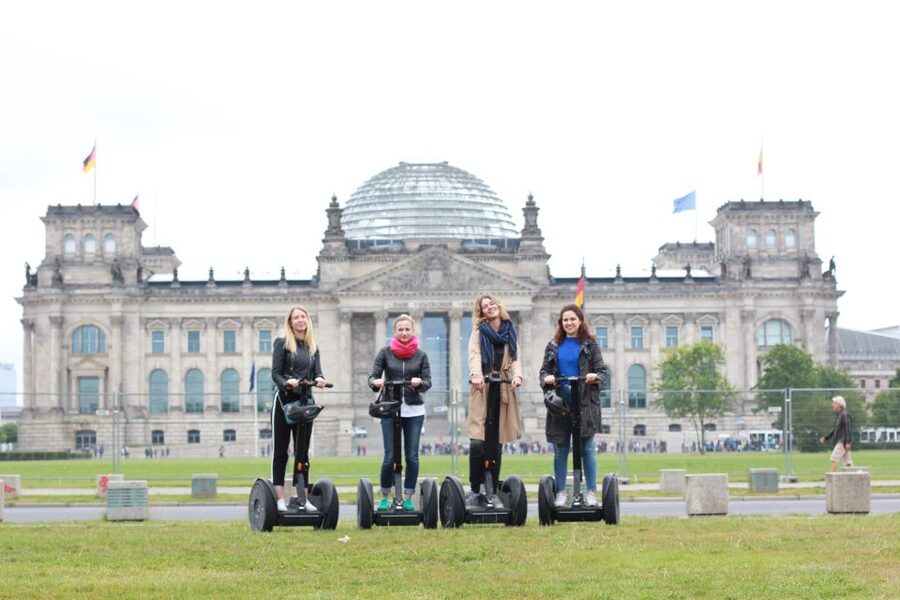
Hackescher Markt offers a different mood. The area has been regenerated and is known for its lively streets, shops, courtyards, and restaurants. It gives the tour a more everyday side of Berlin after so many government and memorial sites.
You will pass through a place that feels less formal than Gendarmenmarkt or the Reichstag quarter. That change keeps the tour from becoming a parade of official buildings. It also helps you see how Berlin mixes historic fabric with newer commercial life.
The route may include time to pause and take pictures, but this is not a shopping tour. If you want to explore the courtyards or browse shops, save that for a later visit. The Segway is best here as a way to get an overview and mark the neighborhood on your mental map.
Berlin Cathedral and the central monuments
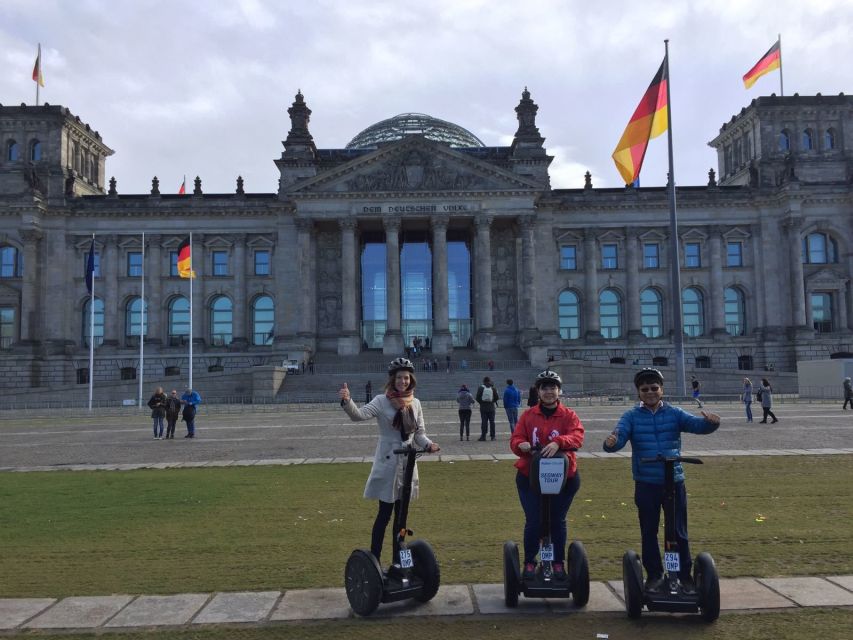
Berlin Cathedral is one of the city’s most striking churches and an important visual marker beside the Spree. The tour passes it along with other central sights, giving you a chance to see the building from the outside and understand its place in the historic center.
The route also includes the Brandenburg Gate, one of Berlin’s defining symbols. Its meaning has shifted over time, from a royal entrance to a Cold War landmark and then a sign of reunified Germany. A guide can make that change easier to grasp than a photograph alone.
The Reichstag building and German Chancellery bring the story into present-day Germany. Together, these buildings show Berlin as the country’s political center, while the earlier stops show the city’s royal, wartime, divided, and socialist chapters.
You should think of this part as a connected story, not a checklist. The route moves from older Berlin through its 20th-century breaks and into the modern capital. That broad sweep is the reason the three-hour length works well.
The Holocaust Memorial and the limits of a moving tour
The Memorial to the Murdered Jews of Europe is one of the most serious stops. Its field of concrete slabs is dedicated to Jewish victims of the Nazi regime, and its open design leaves room for personal reflection.
A guided ride can introduce the memorial’s purpose and place it within Berlin’s wider history. Still, this is a site that deserves time and quiet. You may want to return on foot later, especially if you want to walk through the memorial at your own pace or visit its information center.
That is an important limit of the tour. Three hours and many landmarks mean that some places receive an overview rather than a full visit. The Segway helps you reach more sites, but it cannot give every memorial the time it deserves.
I see this as a strength if you use the tour as an introduction. Let the guide show you where the major sites are, then choose the ones that deserve a slower return. The Holocaust Memorial is a clear example.
The Spree, Tiergarten, and breathing room
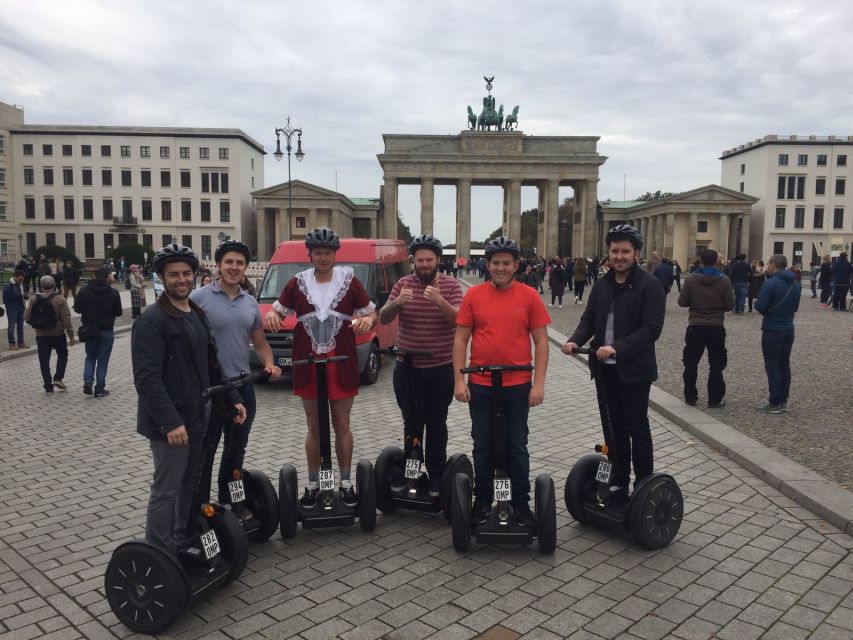
One guide-led route has included a glide through the Tiergarten and along the River Spree. These sections provide a welcome change from central streets and large traffic corridors.
The Tiergarten gives you a greener setting, while the Spree helps you see Berlin from a more open angle. You are still close to the city, but the pace feels less focused on monuments and government buildings.
This was one of the most praised elements of the experience. It shows why a Segway can be more than a novelty. You can cover a fair distance without the effort of a long walk, and you remain alert to the city around you.
Conditions matter here. Rain, wind, or cold can make any open-air tour less pleasant, even with the provided raincoats, gloves, and warm vests. The January experience was still enjoyable, but the rider specifically noted how cold it was. For winter, dress as if you will be outside for the full three hours.
Guides, safety, and group size
The guide can make or break a city tour, and this experience has received repeated praise for careful instruction and friendly leadership. Mike was singled out for his focus on safety, while Vincent was praised for handling traffic calmly and stopping often for photos and discussion.
Eishan was praised for combining many sights with history and stories. Morgan’s route included the Tiergarten and Spree, while Gabriel was appreciated for adding a few less expected places. Those details suggest that the guide is not simply following a silent route between monuments.
The language options are English and German. A past booking was conducted in English even though German had been selected, but the group found that change acceptable. If the language matters greatly to you, confirm it before setting off.
Groups are limited to 10 participants. That is small enough to keep the guide within earshot and make questions practical. The number can still affect the ride, since a larger group may take longer to stop and restart than a pair or a very small party.
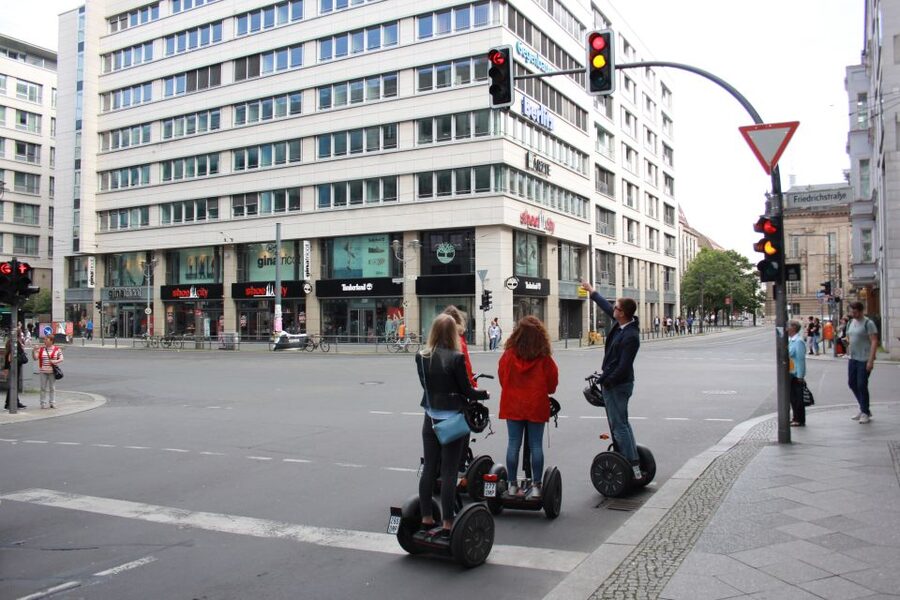
You will ride on city streets, so basic attention is needed. Comfortable clothes and shoes help, and the practice session is essential. I would not book this for someone who dislikes balancing equipment, feels nervous near traffic, or wants a completely passive sightseeing ride.
Is $100 a fair price?
At $100 per person, this is not the cheapest way to see Berlin. You can walk many central streets for free, and public transport costs far less. The price pays for the Segway, the guide, the training, the helmet, the weather gear, and the ability to cover a large route in three hours.
The value is strongest when your time is limited. If you have only a few days in Berlin, the tour can help you see the main districts quickly and decide where to spend the rest of your stay. It is also useful after arrival, when the city’s wide layout and many historical layers can feel confusing.
The value is weaker if you already know central Berlin well or prefer detailed historical talks at each stop. You may feel rushed at sites that deserve more time, and a walking tour may offer more depth for less money.
The small-group cap helps justify the cost. You are not being moved in a large convoy, and the guide can usually respond to questions. Free cancellation up to 24 hours before departure and reserve-now, pay-later booking also make it easier to fit into a changing schedule.
Who should book this ride?
I would choose this tour for first-time visitors, active adults, and anyone who wants a broad introduction without spending all day on foot. It suits couples, friends, and small family groups with riders aged 15 or older who meet the license and weight requirements.
It is also a good choice for history-minded visitors who want to connect several periods of Berlin’s past: royal Berlin, Nazi Germany, the divided city, East German planning, and the modern capital.
I would hesitate if you have limited balance, dislike city traffic, need step-free details that are not provided, or want a slow visit inside museums and memorials. The tour is about outdoor orientation and movement, not extended indoor sightseeing.
Final call: book it or skip it?
Book the Berlin 3-Hour Segway Tour if you want to see a lot of central Berlin in one outing and enjoy an active way to move between major sights. The route is broad, the groups are small, the training is included, and the guides have a strong record for safety and useful commentary.
Skip it if you want long, detailed talks at every stop or prefer to explore each memorial at a quiet pace. The smartest plan is to use the ride early in your visit, note the places that catch your interest, then return on foot to the Brandenburg Gate, Holocaust Memorial, Hackescher Markt, or Berlin Cathedral.
FAQ
Where does the Berlin Segway tour meet?
The meeting point is Robot City in Berlin.
How long does the tour last?
The tour lasts three hours. Starting times depend on availability.
What languages are offered?
The live guide service is offered in English and German.
How many people can join the tour?
The tour is limited to 10 participants, making it a small-group experience.
What are the age, weight, and license requirements?
You must be at least 15 years old, weigh between 45 and 118 kilograms, and have a valid driver’s license or moped certification.
What equipment is included?
The tour includes practice time, a professional guide, a helmet, and weather gear such as raincoats, gloves, and warm vests. Food and drinks are not included.
Just added around Berlin
- Private Walking Tour in Berlin: Hitler’s Germany & WWII★ 5.0 · 7 reviews
- The History of Berlin: WWII PRIVATE Walking Tour With Locals★ 5.0 · 209 reviews
- Private Berlin WWII and Cold War History Tour with Local Expert Guide★ 5.0 · 28 reviews
- Private Walking Tour Berlin 3 hours: Brandenburg, Historic Center★ 5.0 · 7 reviews
- Berlin: Private Bike Tour of the Berlin Wall and Third Reich★ 5.0 · 23 reviews
- Berlin: Guided Private Bike Tour to Explore the Highlights★ 5.0 · 12 reviews
- Berlin Photography Masterclass – Private Photography Lesson★ 4.5 · 23 reviews
- Group Driving Tour 1 to 6 people. Berlin Shore Excursion incl pick-up at Port★ 5.0 · 8 reviews
Segway Tours, compared.

Heidelberg & Neckar Valley: Segway Tour – 360 Degrees
Read our review →
Browse the lists this tour appears in