
Reviewed · 3-HOUR EXPERIENCES
Berlin Reunited and Revived! 3-Hour Alternative Tour
Berlin rewards curiosity.
This private three-hour tour shows how a divided capital became a city of restored courtyards, street art, creative spaces, and rising rents. I especially like the four-neighborhood route, which links Mitte, Prenzlauer Berg, Friedrichshain, and Kreuzberg, and the focus on ordinary Berlin life rather than a parade of famous monuments. The visit to the Kulturbrauerei and the East Side Gallery adds real substance.
The main drawback is the short running season and limited schedule. Tours operate only on Tuesdays and Fridays from April through October, so you need to plan around those days. At $352 per private group of up to 20, the value depends on your party size. It is costly for one or two people, but quite reasonable when shared by a larger group.
In This Review
- Key points to know before booking
- Why this tour gives you a different Berlin
- Mitte: restored buildings and the first signs of change
- Prenzlauer Berg and the Kulturbrauerei
- Friedrichshain: alternative culture under pressure
- East Side Gallery and the politics of street art
- Kreuzberg and the Turkish Market
- What the three-hour format really allows
- Is $352 a fair price?
- Who should book this Berlin tour?
- Booking details that matter
- Should you book it?
- FAQ
- How long does the Berlin Reunited and Revived tour last?
- Which Berlin neighborhoods does the tour visit?
- Is the tour private?
- What languages are available?
- Is hotel pickup included?
- When does the tour operate?
Key points to know before booking
- Four very different neighborhoods: Compare restored Mitte, family-oriented Prenzlauer Berg, alternative Friedrichshain, and politically active Kreuzberg.
- A tour about change: Follow Berlin’s shift after the Berlin Wall fell, including restoration, gentrification, corporate growth, and rising rents.
- Kulturbrauerei included: See how an old brewery became a center for culture and the arts.
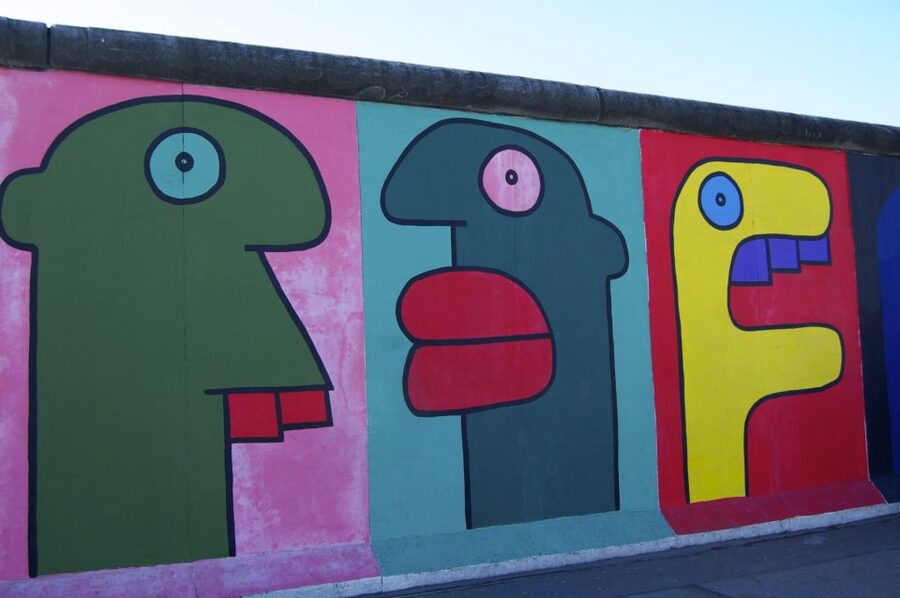
- East Side Gallery explained: Look at painted sections of the Berlin Wall while discussing Berlin’s street art and its political meaning.
- Turkish Market finale: Finish beside the Landwehr Canal among food stalls, fabrics, farmers, artisans, and occasional live music.
- Private and accessible: Your group has an English or German-speaking guide, hotel pickup, and a wheelchair-accessible format.
Why this tour gives you a different Berlin
Many Berlin tours concentrate on the Brandenburg Gate, the Reichstag, Checkpoint Charlie, and the Berlin Wall Memorial. Those places matter, but this experience takes another route. It asks a more everyday question: what happened to Berlin after reunification, and how did those changes affect the people who live there?
That makes the tour useful early in your visit. You get a framework for understanding the city instead of collecting isolated sights. A restored building in Mitte, a converted brewery in Prenzlauer Berg, a mural at the East Side Gallery, and a market in Kreuzberg all become pieces of the same story.
I also like the private format. You are not being moved through Berlin with a large anonymous crowd. A private group of up to 20 can ask questions and adjust the conversation to its interests, though a group near the maximum size will feel less personal than a small party.
The tour is conducted in English or German. Past guide feedback gives you a sense of the possible tone: Tom was praised for his humor and American charm, while Maria was described as lively and interesting. JJ also received strong praise for a funny, energetic English-language tour. Guide assignments can vary, but these comments suggest a presentation that is warm rather than stiff.
A few more Berlin trips worth comparing
- Berlin: Reichstag, Dome and Government District Guided Tour
★ 4.7 · 18,288 reviews - Berlin: 1-Hour City Tour by Boat with Guaranteed Seating
★ 4.3 · 16,993 reviews - Berlin: Boat Tour Along the River Spree
★ 4.4 · 11,252 reviews
Mitte: restored buildings and the first signs of change
The route begins in Mitte, the central district that suffered neglect during the years of division. After the Berlin Wall fell, many of its old buildings were restored, and that change is an important opening chapter for the tour.
Here, you can look beyond polished facades. The point is not simply to admire repaired architecture. You are asked to consider why restoration happened so quickly, who benefited from it, and how a once-neglected part of the city became attractive to new residents, businesses, and investors.
This is where the tour introduces Berlin’s complicated relationship with redevelopment. Reunification brought money, attention, and new life, but it also changed the cost and character of central neighborhoods. The story is not presented as a simple success. You see both the appeal of renewal and the pressure it can place on long-term residents.
Mitte works well as the first stop because it gives you a visual measure for everything that follows. You begin with a district shaped by restoration, then move into neighborhoods where artistic energy, family life, and political resistance have taken different forms.
Prenzlauer Berg and the Kulturbrauerei
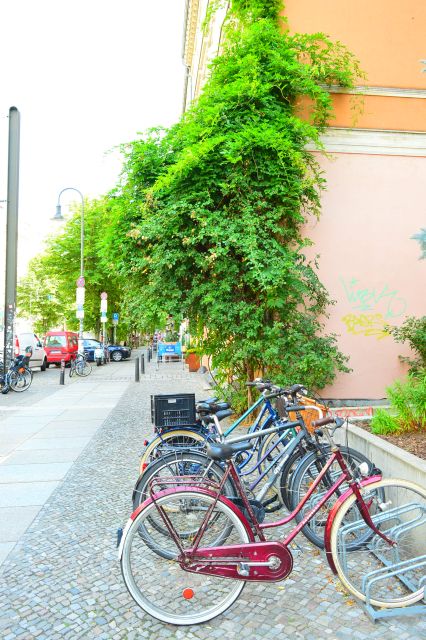
Prenzlauer Berg became an artistic center in the 1990s. That period helped give the neighborhood its reputation for creativity and alternative culture, yet the district has changed again. Today, it draws young professionals and families, a shift that makes it a useful example of Berlin’s ongoing gentrification.
The tour uses Prenzlauer Berg to show how a neighborhood can move from neglected and artistic to fashionable and expensive. You may notice the tension between the district’s former identity and its newer role as a desirable place to live.
The key stop here is the Kulturbrauerei, an old brewery converted into a center for culture and the arts. Its reuse reflects the wider changes taking place across East Berlin. Instead of tearing down every old industrial site, Berlin has often found new uses for former workplaces, warehouses, and production buildings.
I find this stop valuable because it connects architecture with social change. A brewery is not just an attractive old complex. It represents work, industry, abandonment, and renewal. The cultural use also shows how creative spaces can help make a district popular, sometimes contributing to the very rent increases that later threaten its alternative spirit.
If you are interested in urban planning, the arts, or the practical effects of reunification, this may be one of the strongest parts of the route. If you only want famous monuments, the stop may feel less dramatic. Its appeal lies in the explanation.
Friedrichshain: alternative culture under pressure
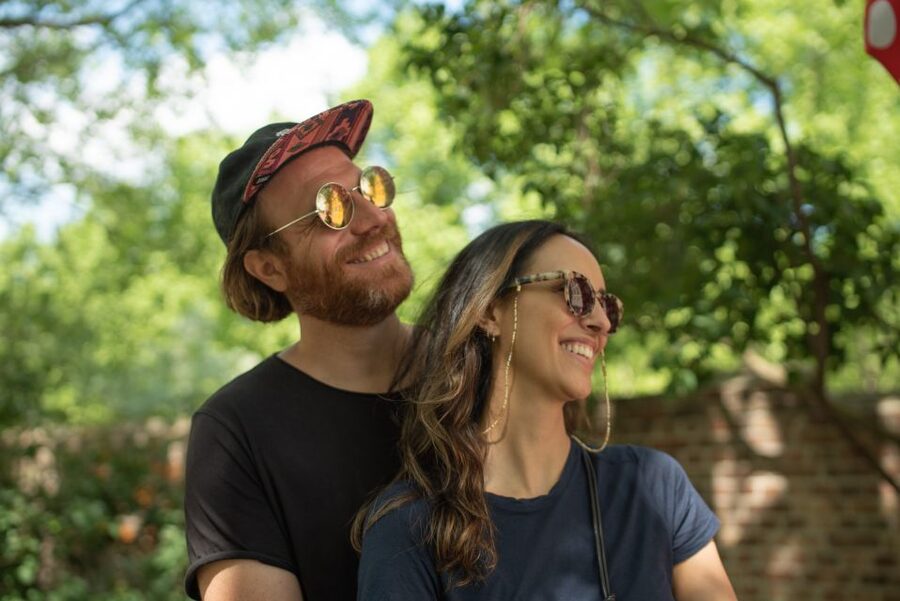
The route then moves toward Friedrichshain, one of the districts associated with Berlin’s alternative scene. Here, the discussion turns more directly to the conflict between independent culture, corporate businesses, landlords, and residents who want to protect the area’s character.
The subject is not presented as an old story that ended when the Wall came down. Berlin’s social changes are still underway. Corporate investment and rent increases continue to shape where people can live and what kinds of businesses survive.
Friedrichshain is useful because it helps you understand why Berlin’s reputation for freedom and creativity can be hard to preserve. The city’s relaxed image attracts new money, and new money can make the city less affordable for the people and projects that created its reputation in the first place.
You will not simply hear that Berlin is cool. You will hear what that label can mean in practical terms for residents. The tour’s emphasis on ordinary citizens gives the neighborhood more weight than a quick stop for photographs would provide.
Keep your expectations realistic. This is a walking tour with a guide, not a behind-the-scenes visit to private buildings or nightlife venues. The value comes from seeing the neighborhood and discussing its changes, not from a special attraction that requires timed entry.
Still Berlin, at a slower pace:
- Discover Berlin Half-Day Walking Tour
★ 5.0 · 9,624 reviews - Berlin: Hop-on Hop-off Bus Tour with Live Commentary
★ 4.3 · 8,579 reviews - Berlin: Government District around the Reichstag Guided Tour
★ 4.7 · 8,447 reviews - Berlin: Reichstag, Plenary Chamber, Cupola & Government Tour
★ 4.6 · 8,422 reviews
East Side Gallery and the politics of street art
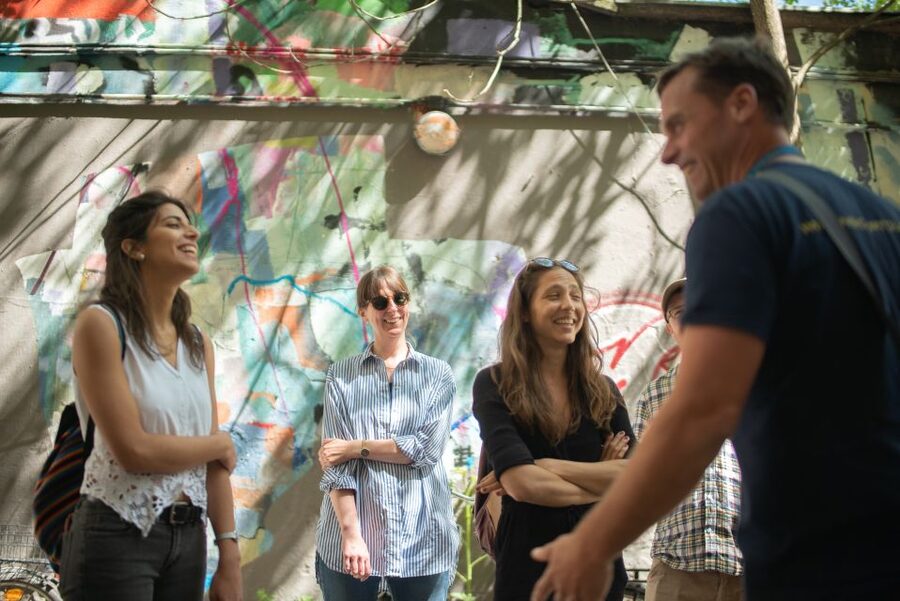
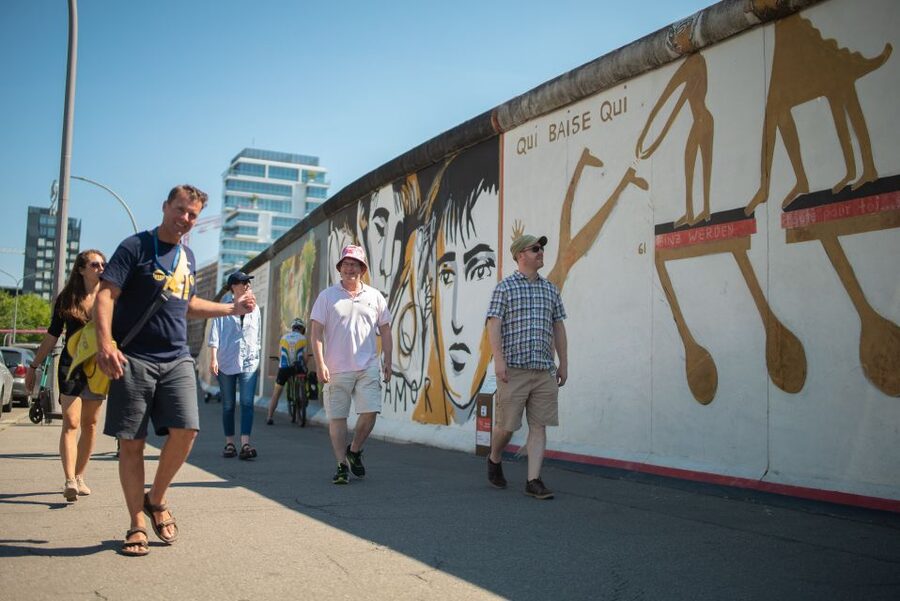
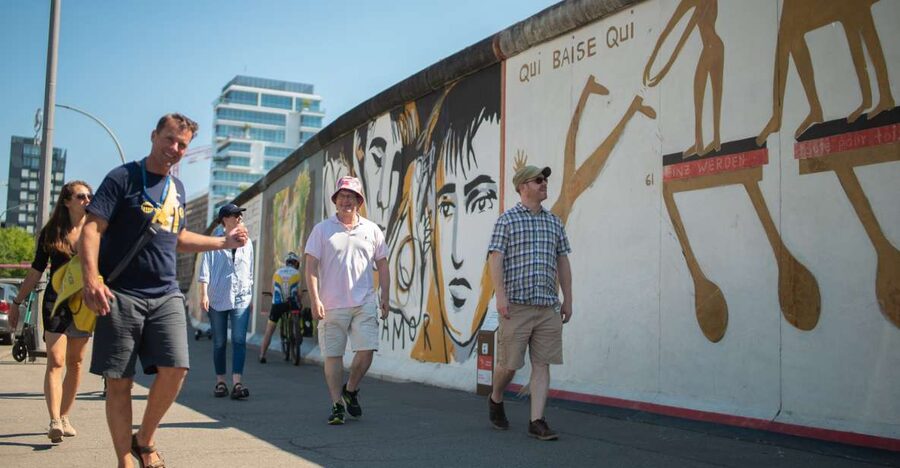
The East Side Gallery is one of the most recognizable parts of the route. This colorful section of the Berlin Wall functions as the world’s largest open-air gallery, and its murals give you a direct link between physical division and public expression.
The stop is more than a wall-photo opportunity. The guide discusses the origins and political overtones of Berlin’s street art scene, helping you read the paintings as part of the city’s public debate. Art here is tied to memory, protest, identity, and the right to use shared space.
That context matters because the East Side Gallery can be easy to consume quickly. You arrive, take pictures, and move on unless someone explains why the paintings appeared, what they represent, and how street art fits into Berlin’s broader culture.
I would pay close attention to the contrast between the wall’s original purpose and its present use. It once divided a city. Now it attracts art, visitors, businesses, and development. That transformation captures the tour’s central theme: Berlin keeps turning old divisions and abandoned places into something new, but each new use creates fresh disputes about ownership and access.
The gallery is also a good point for questions. If you want to understand Berlin’s murals, political art, or the uneasy line between public expression and commercial attraction, this is a natural moment to ask.
Kreuzberg and the Turkish Market
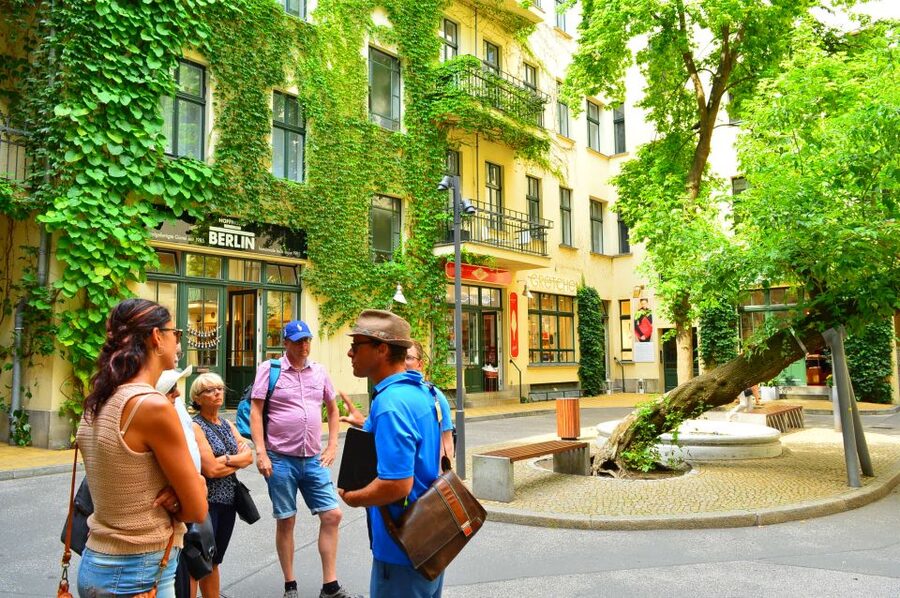
The final district is Kreuzberg, where the tour’s social themes come together. Kreuzberg is associated with alternative politics, immigrant communities, street art, and resistance to corporate expansion and rent-raising landlords.
The tour ends at the Turkish Market beside the Landwehr Canal. It began with fresh produce, Turkish food, and brightly patterned fabric, but its character has broadened. You may find Berlin artisans, local farmers, and impromptu live music alongside the market’s Turkish roots.
This is an effective ending because it moves from buildings and walls to daily life. You see how the city’s population expresses itself through food, commerce, craft, music, and public space.
The market also gives the tour a more human finish. Berlin’s development is not only about property prices or restored architecture. It is also about the people who sell, shop, cook, create, and gather in the city’s neighborhoods.
Food and drinks are not included, so bring money if you want to sample something at the market. Since the tour finishes there, you can also treat the stop as a useful lunch or snack opportunity, depending on the starting time and the market’s operation that day.
What the three-hour format really allows
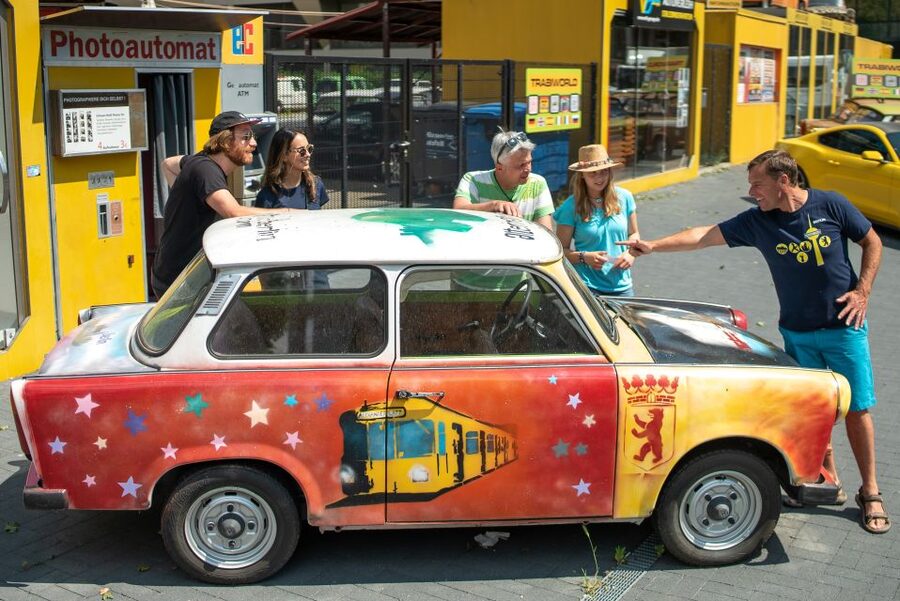
Three hours is enough to connect four neighborhoods, but not enough to explore each one at length. You should expect an overview with selected stops and guided interpretation, not a full neighborhood walking tour in every district.
That limited time is both a strength and a weakness. You cover a lot of ground and see how different parts of Berlin fit together. On the other hand, you will not have long stretches for independent wandering, museum visits, or extended shopping.
The tour is best for someone who wants a clear narrative. You move from restoration in Mitte to cultural reuse in Prenzlauer Berg, alternative politics in Friedrichshain, wall art, and the mixed public life of Kreuzberg. The route has a beginning, a middle, and a strong final stop.
Wear clothing suited to the weather. You will be outside for the duration of a walking tour, and Berlin conditions can shift quickly. Comfortable shoes are sensible, even though the exact walking distance is not provided.
Hotel pickup is included. Wait in your hotel lobby five minutes before the scheduled pickup, and look for a guide wearing a yellow name tag. That simple detail should make the meeting easier, especially in a large hotel.
The tour is wheelchair accessible, which is an important practical benefit. Still, because it visits several neighborhoods, public streets, and an outdoor market, you may want to confirm any specific mobility needs when booking.
Is $352 a fair price?
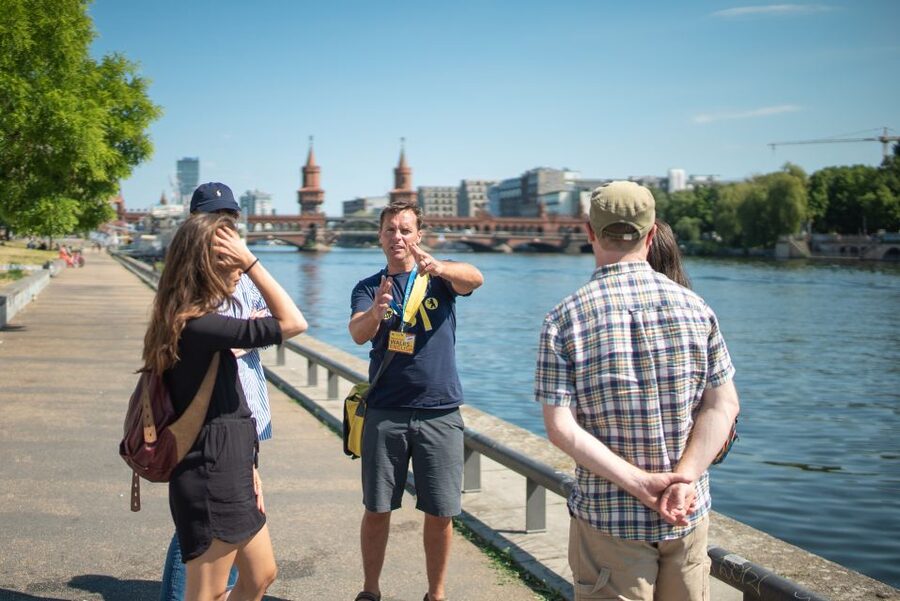
At $352 per group of up to 20, this is not priced like a low-cost city walk. For one or two people, it can feel expensive when compared with a standard group tour. The private format is the main reason to consider it.
For a family, school group, or larger party, the calculation improves quickly. A group of 10 pays about $35 per person, while a full group of 20 pays about $18 per person. Those figures make the tour much more competitive, especially when you value hotel pickup, a private guide, and the ability to ask questions.
The price also buys a focused interpretation of modern Berlin. You are not paying simply to be shown the East Side Gallery. You are paying for connections among neighborhoods, urban change, street art, immigration, culture, and housing pressure.
That value depends on your interests. If you want grand imperial buildings and famous memorials, another Berlin tour may suit you better. If you want to understand how the city functions today, this route earns its price more convincingly.
Who should book this Berlin tour?
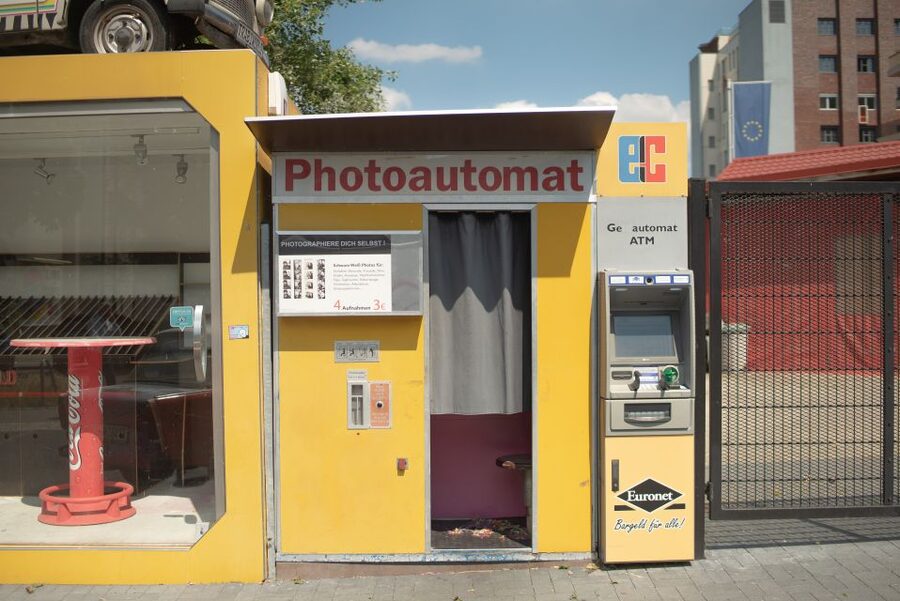
I would recommend it to first-time visitors who want context beyond the standard sights. It is also a good fit for repeat visitors who have already seen central Berlin and want to understand Prenzlauer Berg, Friedrichshain, and Kreuzberg.
The tour should appeal to people interested in:
- Berlin after reunification
- Street art and public politics
- Gentrification and housing
- Immigrant communities and local markets
- Reused industrial buildings
- Alternative culture and corporate pressure
Families can use the private format to keep the pace and questions flexible. Students and groups with an interest in modern European history may find the route especially useful.
I would hesitate if your schedule is tight outside the main tourist center, if you dislike discussions about politics and housing, or if you need a tour available every day. The Tuesday and Friday schedule, from April through October, is a real limitation.
Booking details that matter
The tour lasts three hours and is offered with an English or German-speaking live guide. It runs on Tuesdays and Fridays from April through October, with starting times based on availability.
You can cancel up to 24 hours in advance for a full refund, and you can reserve now while paying later. That flexibility helps because the tour has such a narrow operating schedule.
The private group limit is 20 people. A small group should feel more conversational, while a group close to the limit may be less intimate. Since food and drinks are not included, plan to buy something separately, especially if you want to enjoy the Turkish Market at the end.
The overall rating is 4.9 from nine ratings, and the strongest praise centers on the guides. Tom was appreciated for humor and American charm, Maria for an interesting and lively approach, and JJ for an energetic English-language presentation. The consistent message is that the guide can shape the experience, so bring questions and take advantage of the private format.
Should you book it?
Book this tour if you want Berlin explained through its neighborhoods rather than reduced to a checklist of monuments. The combination of Mitte, Prenzlauer Berg, Friedrichshain, Kreuzberg, the Kulturbrauerei, East Side Gallery, and Turkish Market gives you a useful picture of a city still arguing with its past and its future.
The strongest case is for a larger private group. At $352, the price is hard to justify for one person, but it becomes fair when divided among family or friends. Check the Tuesday or Friday schedule first, dress for the weather, and save room for food at the market.
If those conditions work for you, this is a thoughtful way to see the Berlin behind the postcard.
FAQ
How long does the Berlin Reunited and Revived tour last?
The tour lasts three hours.
Which Berlin neighborhoods does the tour visit?
The route includes Mitte, Prenzlauer Berg, Friedrichshain, and Kreuzberg.
Is the tour private?
Yes. It is offered for a private group of up to 20 people.
What languages are available?
The live guide can conduct the tour in English or German.
Is hotel pickup included?
Yes. You should wait in your hotel lobby five minutes before the scheduled pickup time. The guide will wear a yellow name tag.
When does the tour operate?
Tours run on Tuesdays and Fridays from April through October.
Just added around Berlin
- Private Walking Tour in Berlin: Hitler’s Germany & WWII★ 5.0 · 7 reviews
- The History of Berlin: WWII PRIVATE Walking Tour With Locals★ 5.0 · 209 reviews
- Private Berlin WWII and Cold War History Tour with Local Expert Guide★ 5.0 · 28 reviews
- Private Walking Tour Berlin 3 hours: Brandenburg, Historic Center★ 5.0 · 7 reviews
- Berlin: Private Bike Tour of the Berlin Wall and Third Reich★ 5.0 · 23 reviews
- Berlin: Guided Private Bike Tour to Explore the Highlights★ 5.0 · 12 reviews
- Berlin Photography Masterclass – Private Photography Lesson★ 4.5 · 23 reviews
- Group Driving Tour 1 to 6 people. Berlin Shore Excursion incl pick-up at Port★ 5.0 · 8 reviews
3-Hour Experiences, compared.

Munich’s Beer Halls and Breweries: 3-Hour Guided Tour
Read our review →
Browse the lists this tour appears in