
Reviewed · CYCLING TOURS
Berlin: Secrets of Berlin Bike Tour
Berlin rewards curiosity. The Secrets of Berlin Bike Tour leaves Alexanderplatz for courtyards, street art, old churches, and local cultural spaces that are easy to miss on a standard sightseeing route. I like the stop at Dead Chicken Alley and the climb into Zionskirche’s bell tower. I also like the refreshment break at a local Späti, though you will need to pay for your own drink.
The main consideration is simple: you need to ride a bike comfortably for three and a half hours. The tour runs rain or shine, so weather-ready clothing matters. At $47 per person, it offers a useful mix of guided history, Berlin culture, and cycling time, especially if you want more than the usual postcard sights.
In This Review
- Key points at a glance
- Starting beneath the TV Tower at Alexanderplatz
- Bode Museum and the Spree: a calmer first look
- Hackescher Höfe and the courtyards behind the street
- Tacheles and Berlin’s creative streak
- A Späti break with your own refreshment
- Climbing Zionskirche’s bell tower
- Dead Chicken Alley and Dirksenstrasse street art
- Mauerpark and the People’s Theatre
- What three and a half hours feels like on a bike
- The guide makes the difference
- Is $47 a fair price?
- Who should book this Berlin bike tour?
- FAQ
- Where does the Secrets of Berlin Bike Tour begin?
- How long does the bike tour last?
- What language is the tour conducted in?
- Is a bike provided?
- Is a helmet included?
- Is food or drink included?
- Does the tour run in bad weather?
- Can I cancel the booking?
- Should you book it?
Key points at a glance
- Dead Chicken Alley brings Berlin’s oddball art scene to life: Expect a close look at one of the city’s best-known street art spots.
- Zionskirche adds a climb and a view: Entry to the church is included, along with access to its historic bell tower.
- Hackescher Höfe shows another side of central Berlin: Its courtyards offer a change from the broad avenues and major squares nearby.
- The route favors local character over famous landmarks: You see places such as Tacheles, Dirksenstrasse, Mauerpark, and the People’s Theatre.
- A city-cruiser bike keeps the pace approachable: A bike and helmet are provided, though wearing the helmet is optional.
- Three and a half hours gives the tour room to breathe: The schedule is long enough for several stops without turning into a rushed photo sprint.
Starting beneath the TV Tower at Alexanderplatz
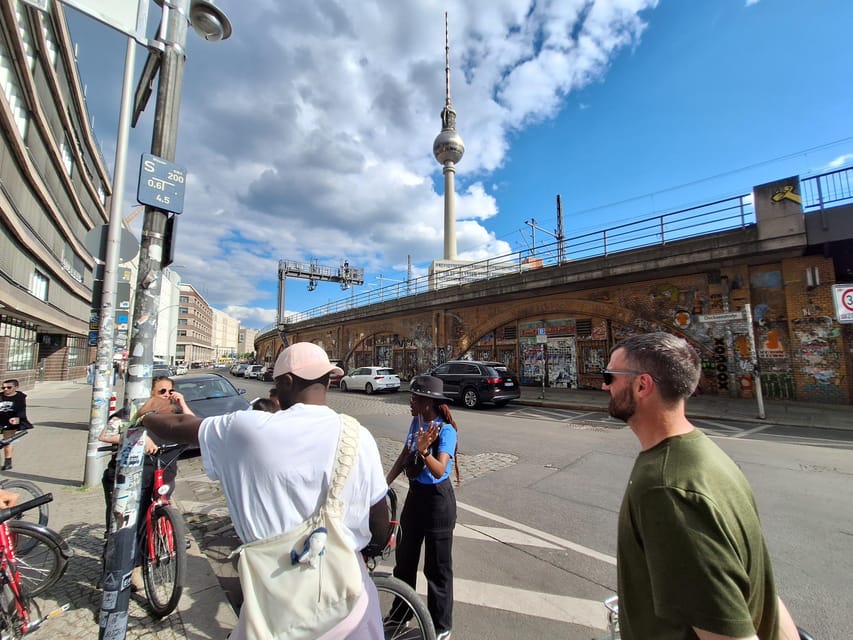
Your meeting point is the Fat Tire Tours shop at Panoramastraße 1A, at the base of Berlin’s TV Tower on the north side. Look between Doughnut Time and the Alex restaurant. That landmark makes the shop fairly easy to locate, which is welcome in a large square with plenty of pedestrian traffic.
Alexanderplatz is a practical starting point because it puts you right in the middle of modern Berlin. The square is not subtle. The TV Tower dominates the view, and the surrounding area carries the feel of a major transport and shopping hub. From here, the tour moves away from the broad public face of the city and into neighborhoods where Berlin’s history is more fragmented and personal.
You receive a comfortable city-cruiser style bike and a helmet. The helmet is provided but optional. The tour is conducted in English with a live guide, so you can ask questions as the route unfolds rather than simply follow a recorded explanation.
The exact group size is not provided, so you should not assume a private or small-group ride. As with any city bike tour, your enjoyment will partly depend on how easily you can keep pace and listen while riding.
More Bike Tours in Berlin
- Berlin: Sights and Highlights Bike Tour with a Local Guide
★ 4.8 · 2,698 reviews - Berlin Highlights 3-Hour Bike Tour
★ 5.0 · 948 reviews - Berlin City Bike Tour with Beer Garden Stop
★ 5.0 · 917 reviews
Bode Museum and the Spree: a calmer first look
One early stop is the Bode Museum along the Spree. The building gives you an attractive riverside marker and a chance to look at one of Berlin’s major museum structures without turning the tour into a museum visit.
This is useful context. Berlin is not one tidy historic center. It is a city of separate districts, waterways, rebuilt spaces, and sharp changes in mood. A bike helps you connect those pieces. You can move from the formal museum quarter to a back street or courtyard in minutes, seeing the contrast rather than reading about it from a fixed sightseeing spot.
The tour is not designed as a full museum tour, and you should not expect time to go inside and study collections. Its value is in the setting and the guide’s explanation of how the surrounding city fits together.
Hackescher Höfe and the courtyards behind the street
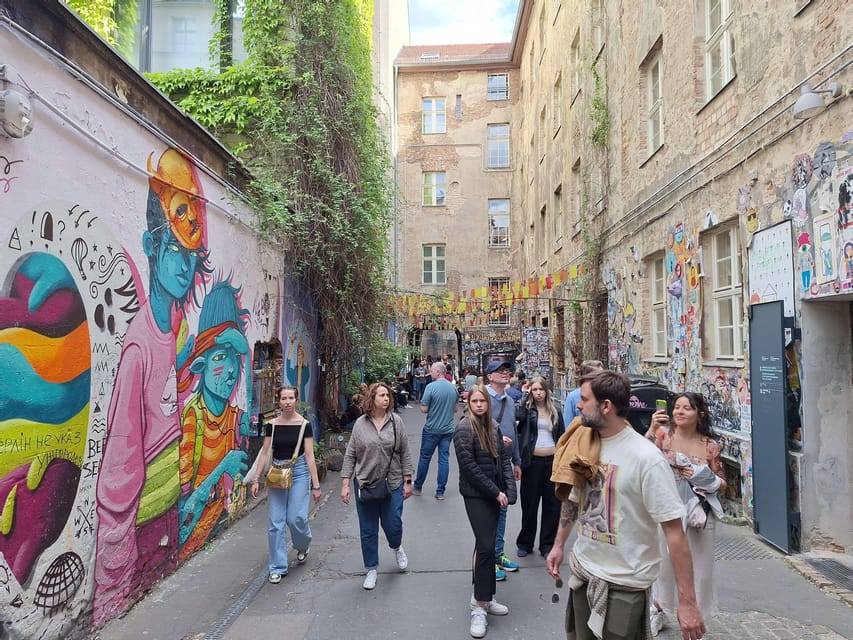
Hackescher Höfe is one of the tour’s most useful stops for understanding Berlin’s architectural mix. From the street, central Berlin can look like a collection of shops, restaurants, and busy crossings. Inside the courtyards, the pace changes. The spaces offer a more enclosed view of the city, with buildings and passageways arranged around interior courtyards.
I like this stop because it rewards attention. You are not just looking at a grand facade. You are seeing how Berlin’s urban spaces can hide behind an ordinary entrance. The courtyards also help explain why a bike tour can reveal more than a coach route. You can arrive close to the site, leave the bike, and spend a little time looking around on foot.
Hackescher Markt is also listed as a sightseeing point on the route. That means you should expect a mix of public square, market-area energy, and historic surroundings rather than a quiet museum visit. If you prefer slow architectural wandering, this may be one of the places where you wish for more free time. The guide-led format keeps the schedule moving.
Tacheles and Berlin’s creative streak
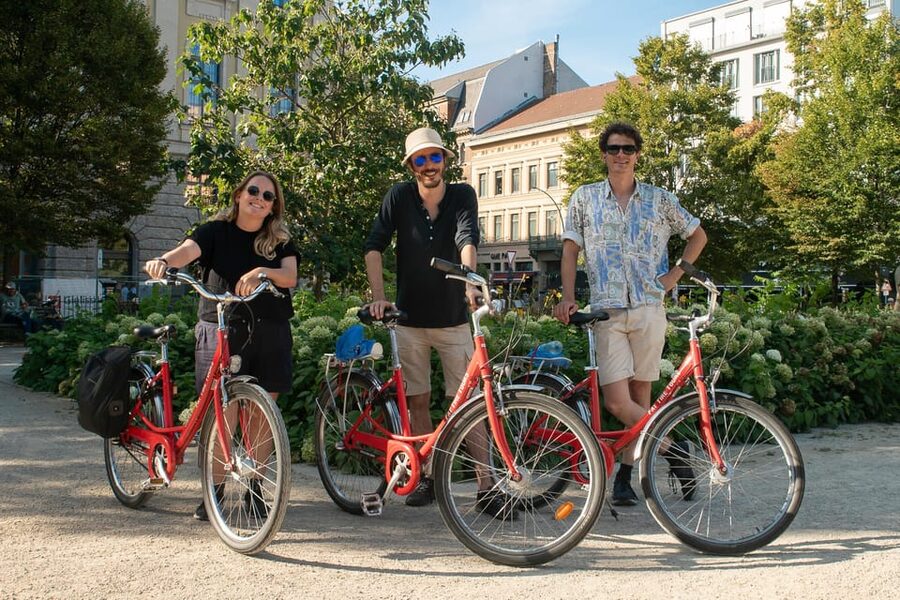
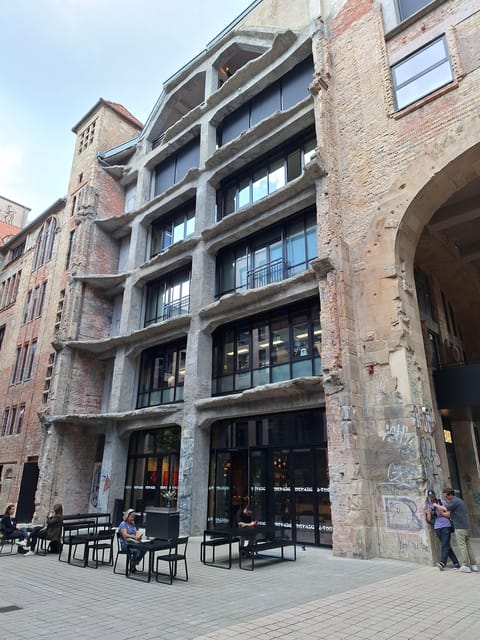
The route includes Tacheles, described as a former department store turned art collective. It is a strong choice for a tour about modern Berlin because it shifts the story away from royal buildings and wartime monuments.
Tacheles represents the city’s long-running interest in alternative art and unconventional use of space. You get a sense of Berlin as a place where old structures can acquire new cultural roles. The stop also helps balance the tour’s historical material with a look at present-day creative life.
You should keep your expectations clear. The tour brings you to the site and explains its place in Berlin culture, but the information provided does not promise a full gallery visit or a scheduled art workshop. Think of it as a cultural stop within a wider ride.
Still Berlin, at a slower pace:
- Berlin: Reichstag, Dome and Government District Guided Tour
★ 4.7 · 18,288 reviews - Berlin: 1-Hour City Tour by Boat with Guaranteed Seating
★ 4.3 · 16,993 reviews - Berlin: Boat Tour Along the River Spree
★ 4.4 · 11,252 reviews - Discover Berlin Half-Day Walking Tour
★ 5.0 · 9,624 reviews
A Späti break with your own refreshment
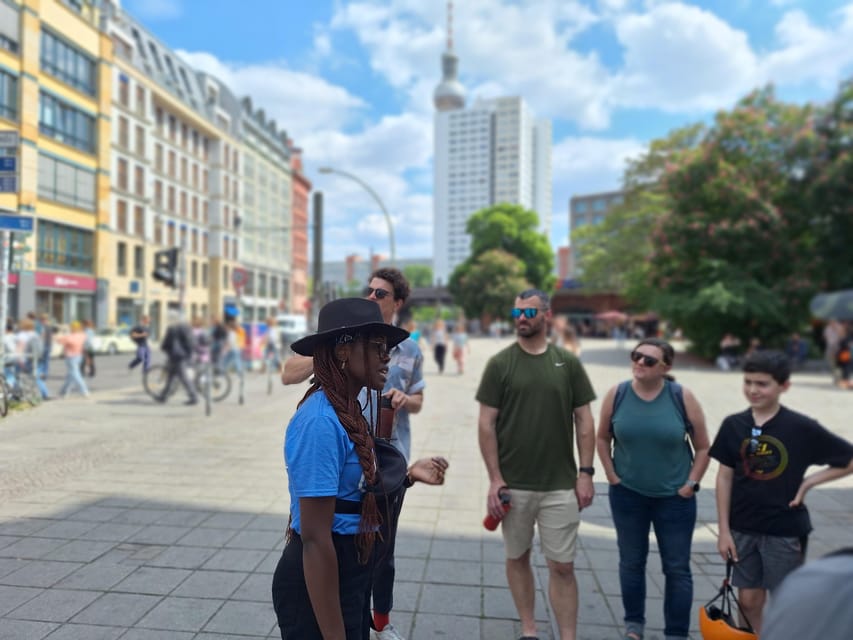
At some point, the group pauses at a local Späti. These small neighborhood shops are part of everyday Berlin life, and the stop gives you a practical taste of the city rather than another formal monument.
Refreshments are not included, so bring money or a payment method for your drink. This is a minor extra cost, but it is worth knowing before you set out. The break also gives your legs a chance to rest during a 210-minute tour.
I like the choice of a Späti because it keeps the break local and informal. You are not being sent to a standard tourist café. The tradeoff is that the stop is not a prepaid snack break, so the final cost will be slightly more than the headline tour price if you buy something.
Climbing Zionskirche’s bell tower
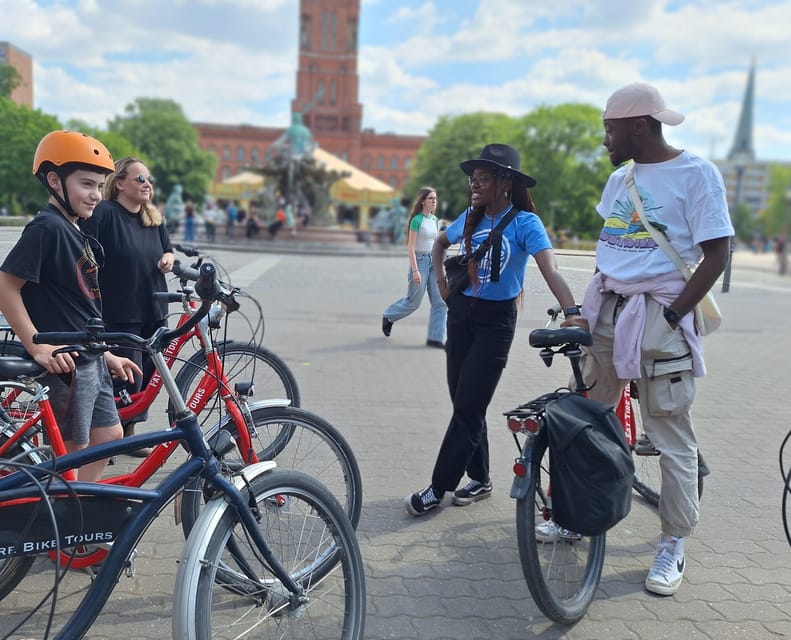
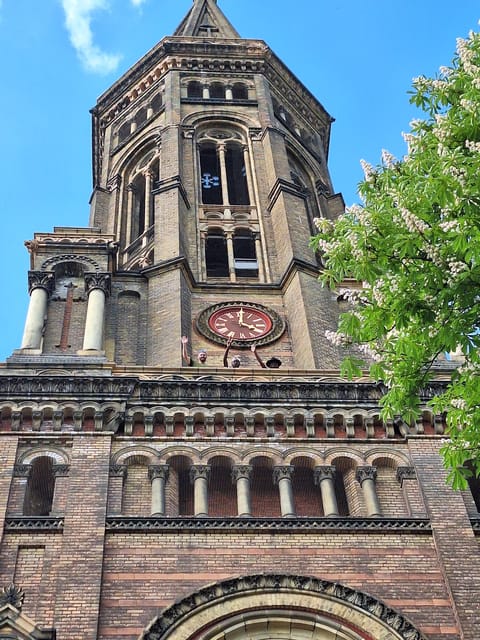
Zionskirche adds one of the most distinctive physical moments to the route. Entry into the church is included, and the tour takes you up the bell tower of this historic building.
A tower climb gives the tour a welcome change of pace. Much of the ride shows Berlin at street level, where murals, courtyards, and shopfronts compete for your attention. From above, you get a different sense of the city’s shape. The supplied information does not specify how many steps there are or how high the viewing point sits, so anyone concerned about climbing should ask the operator before booking.
The church is also a good reminder that Berlin’s character is not only found in its political landmarks or contemporary art. Religious buildings, neighborhood streets, and local gathering places form another part of the city’s story. Because admission is included, you do not need to budget a separate entrance fee for this stop.
Dead Chicken Alley and Dirksenstrasse street art
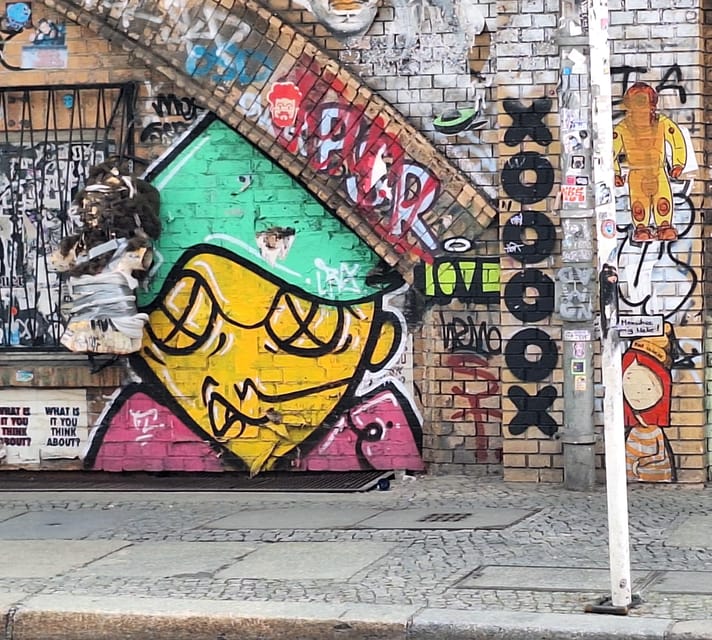
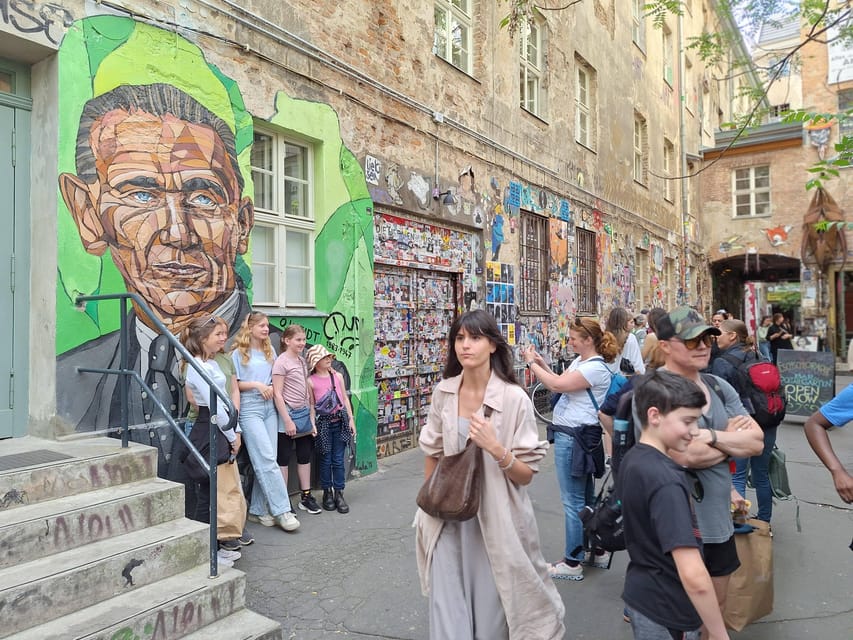
Dead Chicken Alley is likely to be the tour’s most memorable stop for anyone interested in Berlin’s street art. Its name alone hints at the city’s playful, strange side. The alley is known for its dense art atmosphere, and the tour gives you a chance to see it as part of a wider cultural route rather than as an isolated address.
One rating specifically praised the alley and recommended visiting it. That matches the tour’s overall purpose. Berlin’s street art is often found away from polished squares and major monuments, and a guide can help you understand why particular walls and lanes matter.
Dirksenstrasse adds another street art stop. Seeing both locations makes the subject broader. You are not relying on one famous alley for your impression of Berlin’s creative scene. The route lets you compare different urban settings and notice how art changes the feel of a street.
The itinerary lists Dead Chicken Alley as a visit with no specified stop duration. That means you should not expect a long, unstructured art walk. Bring a camera if you like photographing murals, but be ready to return to the bikes when the guide calls the group together.
Mauerpark and the People’s Theatre
Mauerpark is another route highlight. Even without a long list of details about the stop, its inclusion fits the tour’s aim of showing Berlin beyond the central monuments. The name points to the city’s divided past, while the park itself connects that past with modern public life.
The tour also mentions the People’s Theatre and Babylon Berlin as places that help explain modern Berlin culture. These stops broaden the experience beyond street art. You get references to performance, film, and the city’s ongoing habit of turning history into creative work.
Because the tour covers several neighborhoods and themes, you should expect a broad introduction rather than a specialist lecture on any one subject. That is a strength if you are visiting Berlin for the first time and want a useful framework for later exploring. It may feel less satisfying if you already know the city well and want a deep study of one district.
What three and a half hours feels like on a bike
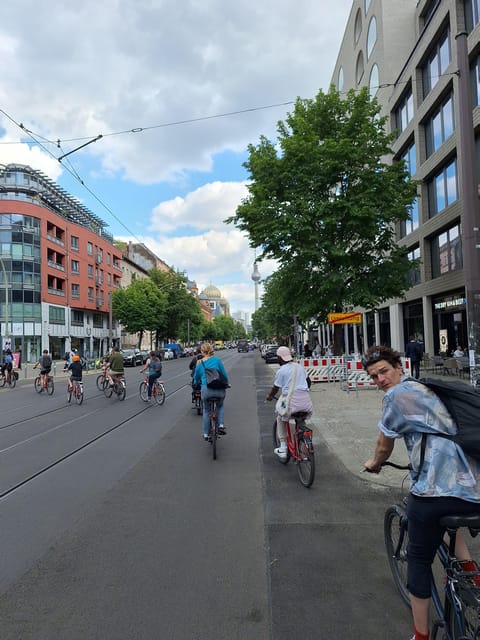
The tour lasts 210 minutes, or three and a half hours. That is long enough to cover Alexanderplatz, the Spree, Hackescher Höfe, Tacheles, Zionskirche, Dead Chicken Alley, Dirksenstrasse, Mauerpark, and other cultural stops without compressing everything into a single short loop.
You will spend part of that time riding and part of it listening or looking around at stops. The bike is especially useful in Berlin because the points of interest are spread across different parts of the central city. You cover more ground than you would on foot, while still moving slowly enough to notice walls, lanes, courtyards, and neighborhood changes.
The drawback is physical rather than technical. This is not suitable for anyone who cannot ride a bike. If you are comfortable cycling but have not ridden for a long time, consider how you feel about several hours of urban riding, repeated stops, and getting back on the bike after each visit.
The tour runs rain or shine. Bring weather-appropriate clothing, and remember that rain ponchos are available for purchase before departure rather than included. A wet day could change the tone of the experience, especially during the outdoor street art stops.
The guide makes the difference
The tour includes an experienced English-speaking guide. That matters here because many of the stops are not self-explanatory. A courtyard, an alley covered in art, or a former department store may look interesting without telling you why it matters.
The guide’s role is to connect these places. You are not simply collecting photographs. You are hearing how Berlin’s unusual spaces fit into the city’s modern identity. One particularly praised guide was Thor, while another booking described the guide as highly competent and friendly. A German rider also praised the guide’s ability to cover a lot of interesting material within the scheduled time.
That last point is important. The route contains many stops, so the guide needs to keep the group moving. You will get more from the tour if you listen while riding, ask questions at the stops, and accept that some visits will be brief.
Is $47 a fair price?
At $47 per person, the price is reasonable for a 210-minute guided experience that includes the bike, helmet, English-speaking guide, and entry to Zionskirche. You are paying for more than bike hire. The main value comes from the route planning and the explanation of places that could be hard to connect on your own.
One rider used the tour as a starting point and then rented two bikes for three more days. That is a useful idea if you want to keep exploring Berlin independently after the guided ride. The tour can give you a map in your head, along with a list of neighborhoods and cultural spots worth revisiting.
The price does not include refreshments, and any extra drinks at the Späti cost you more. Still, that is a small addition compared with the cost of arranging a bike, planning the route, finding the sites, and learning their context separately.
The current rating is 4.6 out of 5 from six ratings. That is a positive signal, though the sample is small. I would treat it as encouraging rather than final proof that every departure will be identical.
Who should book this Berlin bike tour?
I would choose this tour if you have already seen, or do not care much about, Berlin’s most famous postcard stops. It suits you if you want street art, courtyards, local shops, cultural spaces, and a guide who can explain the city’s odd corners.
It is also a good fit for a first visit when you want an overview with more personality than a standard landmark route. You will see enough of Berlin’s central districts to decide where you want to return later.
I would think twice if you cannot ride comfortably, dislike fixed schedules, or want long stretches of independent exploration. The route has many planned stops, and the group needs to stay together. The rain-or-shine policy is another reason to check the forecast and dress sensibly.
Free cancellation is available up to 24 hours before departure for a full refund, and you can reserve now while paying later. Those terms help if your Berlin schedule is still shifting, but the more important decision is your comfort with cycling for three and a half hours.
FAQ
Where does the Secrets of Berlin Bike Tour begin?
It begins at the Fat Tire Tours shop at Panoramastraße 1A, at the base of the TV Tower on the north side of Alexanderplatz. The shop is between Doughnut Time and the Alex restaurant.
How long does the bike tour last?
The tour lasts 210 minutes, or three and a half hours.
What language is the tour conducted in?
The tour has a live English-speaking guide.
Is a bike provided?
Yes. A comfortable city-cruiser style bike is included.
Is a helmet included?
Yes. A helmet is provided, but wearing it is optional.
Is food or drink included?
No. The tour includes a stop at a local Späti, but you pay for your own refreshments.
Does the tour run in bad weather?
Yes. The tour operates rain or shine. Weather-appropriate clothing is recommended, and rain ponchos are available for purchase before departure.
Can I cancel the booking?
You can cancel up to 24 hours in advance for a full refund. You can also reserve now and pay later.
Should you book it?
Book this tour if you want Berlin’s stranger, more creative side, and you are happy to see it by bike. Dead Chicken Alley, Zionskirche’s bell tower, Hackescher Höfe, Tacheles, and Mauerpark create a varied route with more local texture than a basic city highlights ride.
At $47, the tour offers solid value for the included bike, guide, church entry, and three and a half hours of exploring. Bring weather-ready clothing, budget for a Späti drink, and choose it only if you can ride comfortably. If that sounds like your kind of Berlin, this is a smart way to get your bearings and find places worth returning to on your own.
Just added around Berlin
- Private Walking Tour in Berlin: Hitler’s Germany & WWII★ 5.0 · 7 reviews
- The History of Berlin: WWII PRIVATE Walking Tour With Locals★ 5.0 · 209 reviews
- Private Berlin WWII and Cold War History Tour with Local Expert Guide★ 5.0 · 28 reviews
- Private Walking Tour Berlin 3 hours: Brandenburg, Historic Center★ 5.0 · 7 reviews
- Berlin: Private Bike Tour of the Berlin Wall and Third Reich★ 5.0 · 23 reviews
- Berlin: Guided Private Bike Tour to Explore the Highlights★ 5.0 · 12 reviews
- Berlin Photography Masterclass – Private Photography Lesson★ 4.5 · 23 reviews
- Group Driving Tour 1 to 6 people. Berlin Shore Excursion incl pick-up at Port★ 5.0 · 8 reviews
Cycling Tours, compared.
Sights and Highlights Bike Tour with a Local Guide
Read our review →
Classic Mike’s Bike Tour daily @ 11.30 incl Beer Garden & Surfers
Read our review →
Browse the lists this tour appears in