
Reviewed · FOOD & DRINK
Beyond Currywurst: Berlin’s Hidden Street Food & Culture Tour
Come hungry, leave better oriented. This 2.5-hour walk through Prenzlauer Berg mixes four to five food tastings with stories about migration, East Berlin, street art, and neighborhood life. I like the range of bites, from traditional flatbreads and street tacos to a local East Berliner snack and dessert. I also like the small group size, capped at 10 people, which gives the guide room to answer questions and adjust the pace.
The main drawback is that this is an outdoor walking tour, and several food stops may not offer much shelter. One past participant found a cold wind difficult in autumn and winter. The tour also cannot accommodate gluten-free diets, and its bread-heavy menu may not suit everyone.
In This Review
- Key points at a glance
- Why Prenzlauer Berg makes a good food-tour setting
- What you eat during the 2.5-hour walk
- Prenzlauer Berg, street art, and changing Berlin
- Gethsemanekirche and the memory of East Berlin
- The guides are the heart of the experience
- Weather, walking, and the small practical catches
- Who gets the most from this tour
- Should you book Beyond Currywurst?
- FAQ
- Where does the tour begin and end?
- How long does the experience last?
- How many people can join the tour?
- What food and drinks are included?
- Are vegetarian and vegan options available?
- Can the tour accommodate a gluten-free diet?
- What is the cancellation policy?
Key points at a glance
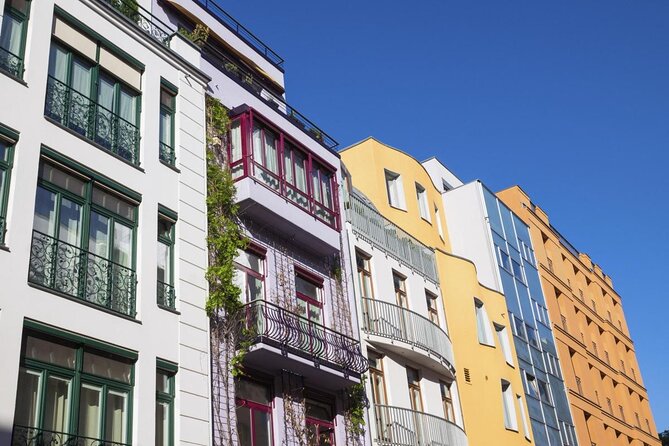
- Prenzlauer Berg beyond the postcard route: Explore one of former East Berlin’s trendiest neighborhoods through its restaurants, bars, side streets, and street art.
- Food tells Berlin’s migration story: The tastings connect local and international cooking with the communities that have shaped modern Berlin.
- Four to five bites plus two drinks: The price includes lunch-sized samples, dessert, and Berliner beer, water, or another non-alcoholic drink.
- A guide-led history walk: Expect discussion of East Germany, the fall of the Wall, changing neighborhood culture, and local life.
- Gethsemanekirche adds a serious note: This short church visit links Prenzlauer Berg to the peaceful opposition movement of the Cold War years.
- Useful advice for the rest of your stay: Guides such as Alex, Laura, Irem, Joseph, Rafael, Paula, and Iram have been praised for personal recommendations and clear storytelling.
Why Prenzlauer Berg makes a good food-tour setting
Prenzlauer Berg gives you a useful introduction to Berlin because the neighborhood contains several versions of the city at once. It was part of East Berlin, but it is now known for restaurants, bars, creative activity, and a changing population. That contrast gives the tour more substance than a simple meal crawl.
The food is used as a way to explain Berlin’s migration story. Instead of treating international dishes as disconnected imports, the tour links them to the people and communities that have helped shape the city. You learn about the multicultural character of Berlin while eating your way through a neighborhood that continues to change.
I find that approach especially useful early in a visit. Food helps you understand a place quickly, but food alone can leave you with only a list of restaurants. Here, the guide adds context about former East Berlin, modern subcultures, and the way local streets have changed.
The walking route also gives you a sense of place between meals. You are not simply transported from one restaurant to another. You spend time on a main strip known for restaurants and bars, look for street art, and see corners you might otherwise pass without noticing.
More Food and Drink Tours in Berlin
- Berlin Center Food Tour with 8+ Authentic Local Tastings
★ 5.0 · 1,227 reviews - Berlin City Bike Tour with Beer Garden Stop
★ 5.0 · 917 reviews - Kreuzberg: Culinary Food Tour
★ 4.5 · 770 reviews
What you eat during the 2.5-hour walk
The tour includes four to five tastings, with dessert included. The exact dishes can vary, but the advertised selection includes traditional flatbreads, street tacos, an East Berliner snack, and other local or international bites. Two drinks are also included. These may be Berliner beer, water, or non-alcoholic beverages.
That variety is the strongest part of the food program. You are not being asked to judge Berlin through currywurst alone. The tour presents a broader food scene, including dishes connected to immigration, contemporary street food, and older East German tastes.
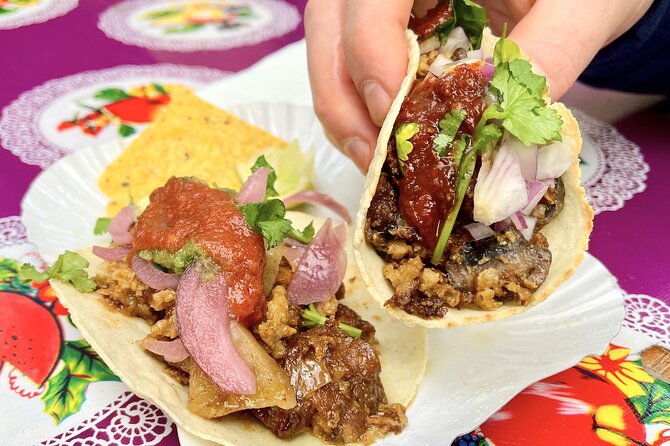
A taco can be a particularly good example of the tour’s style. One past participant singled out a vegan taco made with fresh ingredients, which suggests that the food stops are not treated as token options for people who avoid meat. Vegetarian and vegan choices are available, and the menu has pleased even picky eaters.
Dessert gives the route a pleasant finish. The artisanal ice cream, including the much-praised Hokey Pokey flavor, has become a favorite stop for many people who took the tour. I would not book the experience solely for one ice cream flavor, but it is a nice detail and helps keep the meal from feeling like a string of savory samples.
You should not expect a formal restaurant lunch. The portions are intended to add up to a satisfying meal, and several people have finished the walk full. Still, one person found the food overly heavy on bread and wished for more vegetables. If you prefer lighter meals, keep that in mind and do not arrive expecting a produce-focused tasting.
The tour includes food at the stated stops, but extra food and drinks cost more. At $143.92 per person, the value depends on how much you want the explanation and access to selected places, not just the raw cost of the food. If you only want inexpensive snacks, you can spend less on your own. If you want a small-group introduction with drinks, history, and local guidance, the price is easier to justify.
Prenzlauer Berg, street art, and changing Berlin
The first part of the tour focuses on the neighborhood itself. You walk along lively streets, hear about the area’s restaurant and bar scene, and look at street art and less obvious corners.
The key benefit is interpretation. A guide can point out how the neighborhood reflects Berlin’s changes since German reunification, then connect those changes to what you see around you. The food provides one entry point, while the buildings, public art, and street life provide others.
Several guides have received especially warm praise for making this part personal. Alex has been described as clear and enthusiastic, with useful personal insights about the East German legacy and the years since the Wall came down. Laura has been praised for her energy, humor, and explanations of Stolpersteine, the small memorial stones placed in streets across Germany for people persecuted by the Nazi regime.
Irem has also been valued for answering questions and offering ideas for the rest of a Berlin visit. Joseph’s personal experiences and interest in the neighborhood have added another layer for people who want more than a memorized script. The provider assigns different guides, so your exact style will depend on who leads your departure, but the pattern is consistent: the guide is central to the experience.
This is also a good reason to book near the start of your stay. You receive recommendations on places to visit and things to do after the tour. Those suggestions can help you decide where to eat, what neighborhoods to explore, and how to use the rest of your time in Berlin.
Gethsemanekirche and the memory of East Berlin

Gethsemanekirche is a short stop, only about five minutes, but it adds weight to the walk. The late nineteenth-century church was built in a neo-Romanesque style, with a large domed roof and detailed exterior work.
Its more important role came during the Cold War. The church became a meeting place for East German opposition members, often called peaceful revolutionaries, who gathered there to discuss plans for change. The building is therefore connected not only to religious life but also to the movement for democracy in East Germany.
Do not expect a long church tour. Five minutes is enough for a focused look and a short explanation, not an architectural lecture. The stop works best as a pause in the neighborhood walk, linking the streets and food around you to the political pressure that shaped former East Berlin.
One practical detail is worth noting. A past participant appreciated the guide’s help in reaching the S-Bahn after visiting the church. That suggests the stop can also be useful for finding your bearings, though the official route ends back at the meeting point.
Still Berlin, at a slower pace:
- Berlin: Reichstag, Dome and Government District Guided Tour
★ 4.7 · 18,288 reviews - Berlin: 1-Hour City Tour by Boat with Guaranteed Seating
★ 4.3 · 16,993 reviews - Berlin: Boat Tour Along the River Spree
★ 4.4 · 11,252 reviews - Discover Berlin Half-Day Walking Tour
★ 5.0 · 9,624 reviews
The guides are the heart of the experience
Food tours succeed or fail by the guide. The menu may be good, but the guide determines whether you understand why the food matters and whether the walk feels like a real introduction to Berlin.
The strongest praise has gone to guides who combine history, culture, and personal experience without turning the tour into a classroom. Rafael was described as offering the right mix of those three elements. Alex has been praised for speaking clearly and giving personal observations. Laura’s enthusiasm, humor, and sense of place have made a strong impression.
I also like that the guides appear comfortable with dietary preferences. Vegetarian and vegan options are available, and the food can work well for people who do not usually seek out vegan cooking. Still, the tour cannot accommodate gluten-free diets. That is not a small technical issue if you have celiac disease or need strict avoidance, so contact the provider before booking if your diet is more complicated than vegetarian or vegan.
The maximum group size of 10 matters here. A small group makes it easier to hear the guide on city streets, ask questions at food stops, and keep the walk relaxed. It also makes the experience feel less like a public sightseeing procession.
The tour is offered in English. Most people can participate, and service animals are allowed. It begins and ends at Pappelallee 2 in the 10437 Berlin area, near public transportation.
Weather, walking, and the small practical catches

The tour lasts about two hours and 30 minutes, with roughly two hours devoted to the Prenzlauer Berg food and culture route and a brief church stop. You should wear comfortable shoes because the experience moves through neighborhood streets rather than remaining inside one venue.
The weather deserves more attention than it usually receives in a food-tour description. This is mostly an outdoor experience, and not every food stop has sheltered seating. In warm weather, that may be part of the pleasure. In autumn and winter, bring a warm coat and plan for wind or rain.
The tour’s outdoor format is also why I would avoid scheduling it immediately after a major indoor attraction if you want a slow afternoon. The pace is relaxed, but you are still walking, eating, listening, and moving between stops. It is a social experience rather than a sit-down meal.
The mobile ticket is convenient, and confirmation arrives when you book. The tour is normally reserved about 31 days ahead, which suggests you should plan early if your Berlin dates are fixed. Free cancellation is available until 24 hours before the start time. Changes or cancellations inside that window are not accepted for a refund.
Who gets the most from this tour
I would recommend it most strongly to first-time visitors who want an introduction to Berlin that avoids the standard central sights for a few hours. You get neighborhood orientation, food, street art, East German history, and practical tips in one compact outing.
It also suits people who like trying unfamiliar foods but do not want to choose every stop themselves. The guide handles the route and explains the connections between dishes, communities, and place.
Vegetarians and vegans should find the tour accommodating, provided they confirm their needs when booking. People seeking gluten-free food should choose another experience. If you dislike bread-heavy meals or want lots of vegetables, the menu may feel less balanced than you prefer.
Families and mixed-age groups can benefit from the short duration and varied stops, though the tour still requires walking and outdoor time. History fans will appreciate the discussion of East Berlin and Gethsemanekirche, while food-focused visitors will likely remember the fresh tacos, traditional flatbreads, East Berliner snack, and ice cream most clearly.
The tour has earned a 4.9 rating from 100 ratings, with all published recommendation results positive. Ratings cannot tell you exactly how your guide will lead the walk, but they do support the idea that the combination of food, history, and neighborhood exploration works well.
Should you book Beyond Currywurst?
Book this tour if you want a small, social introduction to Prenzlauer Berg and value stories as much as snacks. The price is high for a short food outing, but it includes four to five tastings, dessert, two drinks, a guide, neighborhood history, and useful advice for the rest of your Berlin stay.
Skip it if you need gluten-free food, dislike outdoor eating in cool weather, or want a long formal sightseeing tour. Also think twice if your main goal is a light meal with plenty of vegetables.
For most visitors, I would place it near the beginning of a Berlin trip. Come without eating lunch, wear weather-ready shoes and clothing, and leave room for conversation. You will likely finish with a full stomach, a better sense of former East Berlin, and a short list of places to explore next.
FAQ
Where does the tour begin and end?
The tour begins at Pappelallee 2, 10437 Berlin, Germany. It ends back at the same meeting point.
How long does the experience last?
The tour lasts approximately two hours and 30 minutes. The Prenzlauer Berg portion takes about two hours, followed by a five-minute visit to Gethsemanekirche.
How many people can join the tour?
The tour has a maximum group size of 10 people.
What food and drinks are included?
You receive four to five food tastings, including dessert, plus two drinks. Drink choices include Berliner beer, water, and non-alcoholic beverages.
Are vegetarian and vegan options available?
Yes. Vegetarian and vegan options are available.
Can the tour accommodate a gluten-free diet?
No. The tour cannot accommodate gluten-free diets.
What is the cancellation policy?
You can cancel at least 24 hours before the experience starts for a full refund. Cancellations or changes made less than 24 hours before the start time are not accepted for a refund.
Just added around Berlin
- Private Walking Tour in Berlin: Hitler’s Germany & WWII★ 5.0 · 7 reviews
- The History of Berlin: WWII PRIVATE Walking Tour With Locals★ 5.0 · 209 reviews
- Private Berlin WWII and Cold War History Tour with Local Expert Guide★ 5.0 · 28 reviews
- Private Walking Tour Berlin 3 hours: Brandenburg, Historic Center★ 5.0 · 7 reviews
- Berlin: Private Bike Tour of the Berlin Wall and Third Reich★ 5.0 · 23 reviews
- Berlin: Guided Private Bike Tour to Explore the Highlights★ 5.0 · 12 reviews
- Berlin Photography Masterclass – Private Photography Lesson★ 4.5 · 23 reviews
- Group Driving Tour 1 to 6 people. Berlin Shore Excursion incl pick-up at Port★ 5.0 · 8 reviews
Food & Drink, compared.
St. Pauli Highlights Guided Tour with Beer for 18+
Read our review →
Elbphilharmonie Plaza and HafenCity Food Tour
Read our review →
Bavarian Beer and Food Evening Tour in Munich
Read our review →
Classic Mike’s Bike Tour daily @ 11.30 incl Beer Garden & Surfers
Read our review →
Berlin Center Food Tour with 8+ Authentic Local Tastings
Read our review →
Browse the lists this tour appears in