

Reviewed · CITY TOURS
City Sightseeing Berlin: HOHO Bus – All Lines (A+B) & Icebar
Berlin rewards a good overview. This open-top bus links 26 stops across central Berlin, from Brandenburg Gate and Checkpoint Charlie to the East Side Gallery, while a second route reaches Berlin Wall sites that are easy to miss. I like the freedom to get off whenever a place catches your eye, and I like that the ticket includes both routes plus entry to Icebar Berlin.
The main drawback is timing. The buses run on set schedules, and the East Berlin route comes only every 40 minutes. Icebar entry is tied to a booked time slot, so you need to plan rather than simply wander in whenever you please.
In This Review
- Key things to know before you book
- Getting your bearings from the top deck
- The Classic Tour, from KaDeWe to Brandenburg Gate
- Tauentzienstrasse and KaDeWe
- Lützowplatz and Potsdamer Platz
- Gropius Bau and Checkpoint Charlie
- Gendarmenmarkt and Neptunbrunnen
- Alexanderplatz
- Lustgarten, Unter den Linden, and Friedrichstrasse
- Brandenburg Gate and the Reichstag
- Hauptbahnhof and the Victory Column
- Zoo, Elefantentor, Café Kranzler, and Kurfürstendamm
- The B-Tour follows Berlin’s Wall story
- Rotes Rathaus and Oranienburger Strasse
- Bernauer Strasse and Mauerpark
- Alexanderplatz and Karl-Marx-Allee
- East Side Gallery and Ostbahnhof
- Making the most of a 24-hour or 48-hour ticket
- Icebar Berlin at minus 10 degrees
- Timing, comfort, and practical limits
- Who should book this Berlin bus and Icebar package?
- Should you book it?
- FAQ
- How long is the hop-on hop-off ticket valid?
- How many routes are included?
- How many stops are available?
- How often does the Classic Tour bus run?
- How often does the East Berlin and Wall Tour bus run?
- How long does the Classic Tour take?
- How long does the East Berlin and Wall Tour take?
- What languages are available for the audio guide?
- What does the Icebar ticket include?
- When is Icebar Berlin open?
Key things to know before you book
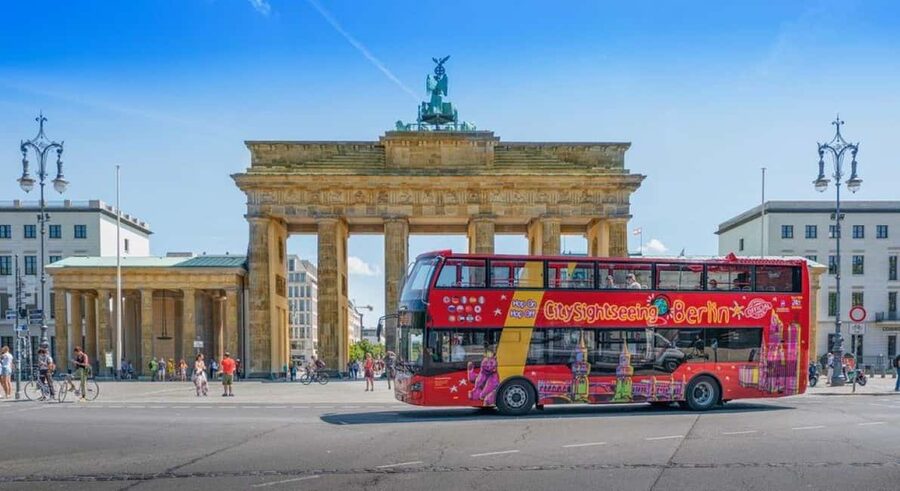
- Two routes cover two very different Berlins: The Classic Tour handles major central sights, while the East Berlin and Wall Tour focuses on former division, street life, and Cold War landmarks.
- The open-top deck gives you a fast city orientation: You can see Brandenburg Gate, the Reichstag, Alexanderplatz, the Victory Column, and other landmarks without changing trains or studying a map.
- Icebar Berlin adds a playful evening stop: You enter a bar kept at minus 10 degrees, see 69,000 kilos of ice, and receive three complimentary drinks.
- The A-Tour is the practical backbone: It lasts about 120 minutes and buses arrive every 25 minutes, making it the easier route for hopping off and back on.
- The B-Tour needs more careful planning: It lasts 60 minutes, runs every 40 minutes, and has fewer stops, but it reaches important Wall-related places.
- The ticket works best over two days: A 48-hour pass gives you time to ride both routes, visit museums and memorials, and keep the Icebar appointment separate.
Getting your bearings from the top deck
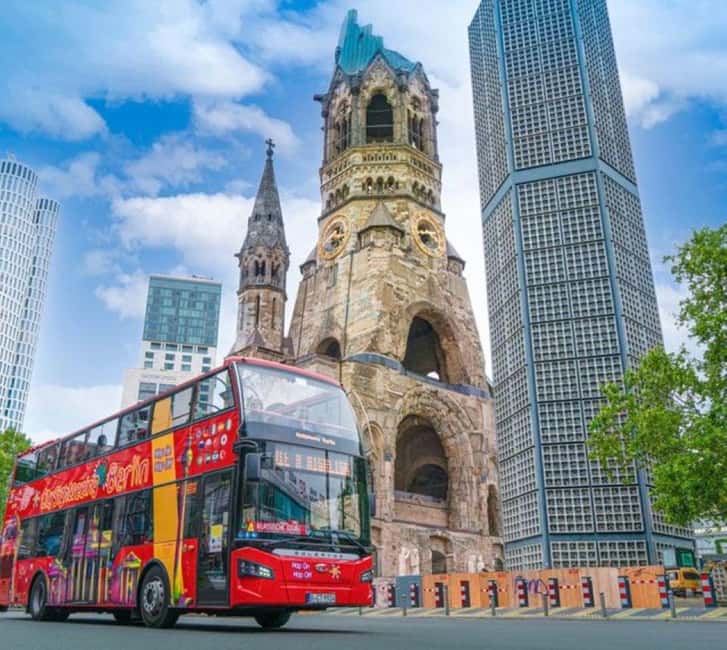
Berlin is spread out. Its main sights do not gather around one compact old town, so a sightseeing bus can save you a fair amount of time during your first day.
The open top is the main attraction, especially on a clear day. You get a broad view of Berlin’s boulevards and landmarks, with fewer walls between you and the city. The audio guide fills in the basic history in 13 languages: English, Spanish, French, German, Italian, Hebrew, Japanese, Chinese, Portuguese, Russian, Polish, Arabic, and Turkish.
I would begin with one full loop before hopping off. The Classic Tour takes about two hours, and that first ride helps you understand how Brandenburg Gate relates to the Reichstag, Potsdamer Platz, Checkpoint Charlie, Alexanderplatz, and the former West Berlin shopping district.
The buses depart from the first stop at 9:30 a.m. The last departure from that starting point is 3:30 p.m. on the Classic Tour and 4:30 p.m. on the East Berlin and Wall Tour. Those final departures matter. A late start can leave you riding rather than exploring.
More City Tours in Berlin
- Berlin: 1-Hour City Tour by Boat with Guaranteed Seating
★ 4.3 · 16,993 reviews - Berlin: City Sightseeing Hop-On Hop-Off Bus Tour
★ 4.1 · 4,233 reviews - Potsdam: City and Castles Tour
★ 4.7 · 3,721 reviews
The Classic Tour, from KaDeWe to Brandenburg Gate
The A-Tour has 18 listed stops and is the best choice if your main goal is Berlin’s famous central sights. The full ride lasts around 120 minutes, with buses scheduled every 25 minutes.
Tauentzienstrasse and KaDeWe
The route begins around Tauentzienstrasse and KaDeWe, a major West Berlin shopping area. KaDeWe is one of the city’s best-known department stores, but the useful point for this tour is location. This stop puts you near the grand shopping streets of former West Berlin.
You may not want to spend your bus time shopping, but the stop makes a good starting point if your hotel is in the western center. It also gives you a quick sense of how different Berlin’s districts feel from one another.
Lützowplatz and Potsdamer Platz
Lützowplatz leads toward Potsdamer Platz, one of Berlin’s most striking modern urban areas. Potsdamer Platz was heavily shaped by redevelopment after the Wall fell, and its sharp modern buildings contrast with the older monuments elsewhere on the route.
The stop is listed as Potsdamer Platz and Historic Traffic Light. That detail hints at the area’s past as a major crossing point before war and division altered the city. You get a useful visual lesson here: Berlin often places newer architecture directly beside reminders of its divided past.
Still Berlin, at a slower pace:
- Berlin: Reichstag, Dome and Government District Guided Tour
★ 4.7 · 18,288 reviews - Berlin: Boat Tour Along the River Spree
★ 4.4 · 11,252 reviews - Discover Berlin Half-Day Walking Tour
★ 5.0 · 9,624 reviews - Berlin: Hop-on Hop-off Bus Tour with Live Commentary
★ 4.3 · 8,579 reviews
Gropius Bau and Checkpoint Charlie
Gropius Bau is a good stop for anyone interested in exhibitions and architecture. The nearby Checkpoint Charlie stop is more directly tied to Cold War history.
Checkpoint Charlie was an important crossing point through the Berlin Wall. Today, the setting can feel busy and commercial, so I would use the bus stop as a starting point rather than treating the checkpoint itself as a complete history lesson. Get off if you want to look around, then use the audio commentary and nearby historical displays to add context.
This is one place where the hop-on hop-off format helps. You can spend a short time at the crossing and continue to the next sight without making a long return trip.
Gendarmenmarkt and Neptunbrunnen
Gendarmenmarkt is one of central Berlin’s grandest squares. The route gives you access to a beautiful area of classical buildings, while Neptunbrunnen brings you closer to the heart of the historic center.
These stops are useful for a walking break. Berlin’s central sights can blur together when viewed only from a moving bus, so I would get off here if you want photographs, a short walk, or a closer look at the streets around the square.
Alexanderplatz
Alexanderplatz is one of the city’s major transport and public spaces. It is a natural place to pause, especially if you want to combine the bus with other city transport or visit nearby sights.
The bus gives you the broad view first. From the street, Alexanderplatz feels more immediate and less polished than some of Berlin’s ceremonial areas. That contrast is part of the appeal. The route does not present one tidy version of Berlin. It moves between shopping streets, memorial sites, offices, historic squares, and busy public spaces.
Lustgarten, Unter den Linden, and Friedrichstrasse
Lustgarten places you near Berlin’s museum district and major historic buildings. Unter den Linden is one of the city’s best-known avenues, and the Friedrichstrasse stop keeps you close to central shopping and cultural areas.
I would schedule this section when you have time to walk. The bus shows you the scale of the avenue, but the best way to appreciate this part of Berlin is to get out and explore on foot. The route is most useful here as a connector between separate sights.
Brandenburg Gate and the Reichstag
Brandenburg Gate is one of Berlin’s essential landmarks. The structure has been tied to several chapters of German history and became a powerful symbol of a divided city before reunification.
The nearby Reichstag is another major stop. From the open top deck, you get a 360-degree view of the building and its setting. The bus cannot replace a planned visit to a specific attraction, but it does make the relationship between the gate, government quarter, and surrounding streets easy to understand.
I would get off at Brandenburg Gate if you have never seen it before. It is one of those places where a quick stop can be worthwhile even on a packed day.
Hauptbahnhof and the Victory Column
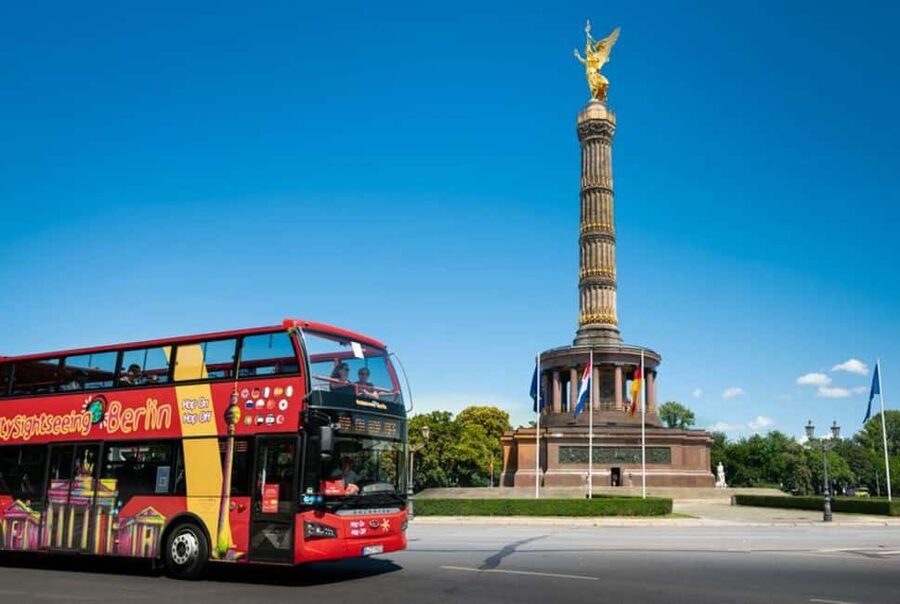
Berlin Hauptbahnhof is the city’s large central railway station and a useful transport reference point. The next stop, the Victory Column, brings a different kind of monument into view.
The Victory Column sits in a broad park setting and is one of the landmarks that can be awkward to reach as part of a tight walking route. Seeing it from the bus is efficient, especially if you are using the tour to cover a lot of ground rather than visit every stop in detail.
Zoo, Elefantentor, Café Kranzler, and Kurfürstendamm
The western part of the Classic Tour returns you toward the Zoo and Elefantentor, Café Kranzler, and Kurfürstendamm. These stops cover another side of Berlin, with grand shopping streets and familiar West Berlin landmarks.
Café Kranzler is an old Berlin name, while Kurfürstendamm remains one of the city’s best-known avenues. I like this section because it rounds out the picture. Berlin is not only memorials, government buildings, and Wall history. The western center has its own identity and is worth seeing alongside the eastern districts.
The B-Tour follows Berlin’s Wall story

The Trendy East Berlin and Wall Tour is shorter, but it covers places with a stronger connection to division, reunification, and the former East Berlin.
It begins near Rotes Rathaus and the Neptune Fountain, then runs every 40 minutes. The full ride takes about an hour, and the final departure from the first stop is 4:30 p.m.
Rotes Rathaus and Oranienburger Strasse
Rotes Rathaus is Berlin’s red city hall, near the Neptune Fountain and the historic center. Oranienburger Strasse and Krausnickstrasse take you into a district known for central Berlin streets and cultural attractions.
These first stops make a useful transition from the formal center to the parts of town where Berlin’s divided past is more visible in the street plan and surviving structures.
Bernauer Strasse and Mauerpark
Bernauer Strasse is one of the most important stops on the B-Tour. The street became famous during the Berlin Wall era because the barrier cut through homes, sidewalks, and daily life. The stop is near Café Bar Central.
Mauerpark, at Bernauer Strasse 45, is another key point. The area is closely tied to the former Wall line and gives you a chance to get off and explore at your own pace. If you have limited time, I would choose Bernauer Strasse or Mauerpark over trying to squeeze in every B-Tour stop.
The 40-minute frequency means you should check the next bus before walking away. Missing one bus can alter the rest of your day.
Alexanderplatz and Karl-Marx-Allee
The route continues to Park Inn Hotel at Alexanderplatz, then to Karl-Marx-Allee and the Computerspielemuseum. Karl-Marx-Allee is particularly useful for seeing the monumental planning of former East Berlin.
The Computerspielemuseum offers a different angle on the city, with a focus on the history of computer games. That stop may appeal to families or anyone looking for a break from monuments and political history. It also shows the value of the B-Tour: the route is not only a checklist of Wall remains. It links history with everyday culture.
East Side Gallery and Ostbahnhof
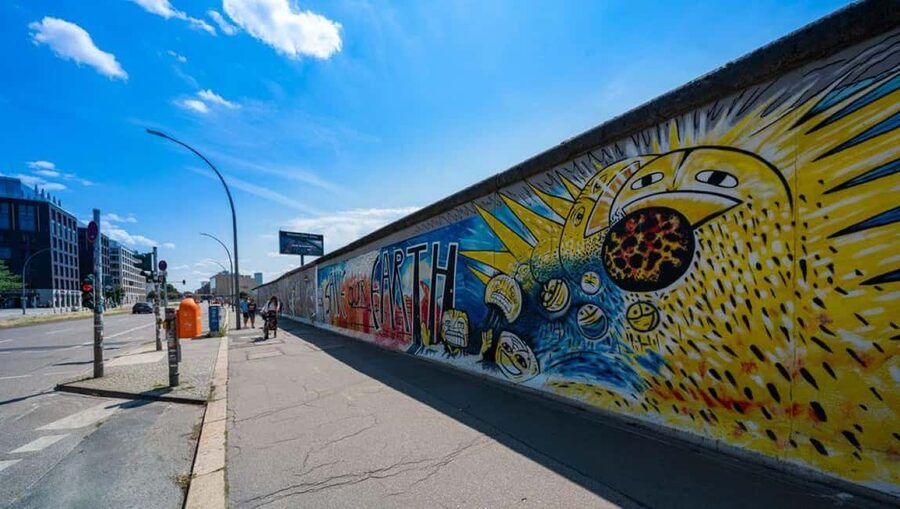
The East Side Gallery is the B-Tour’s major draw. It occupies a remaining section of the Berlin Wall that has been covered with murals and paintings. The site connects political history with public art, and it is one of the easiest places to see how the old barrier has been reinterpreted.
The nearby Mercedes-Benz Arena gives the stop a modern reference point. The route then continues to Ostbahnhof and the Intercity Hotel.
I would allow time to walk along the East Side Gallery rather than simply photograph one painted section. The bus is a convenient way to reach it, but the meaning of the site comes from seeing the length of the surviving Wall segment.
Making the most of a 24-hour or 48-hour ticket
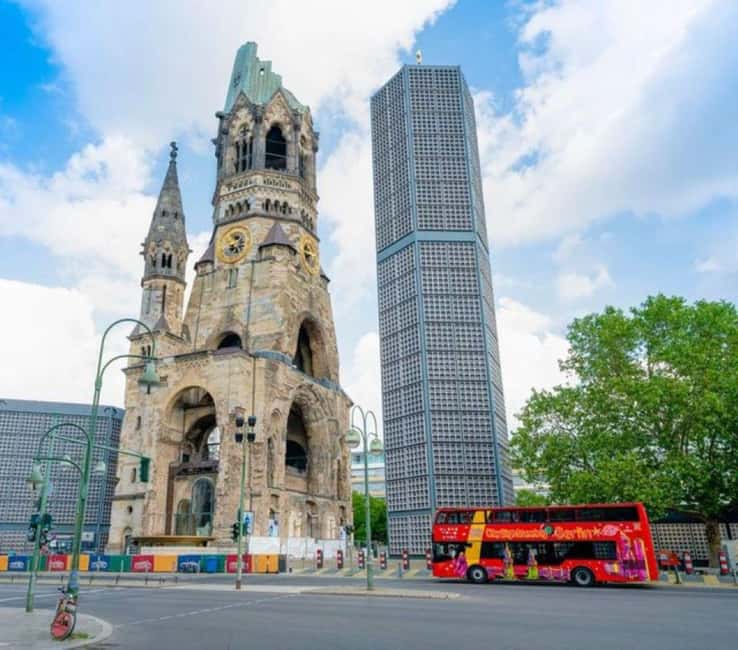
The 24-hour option can work if you want a quick orientation and a focused visit to Icebar Berlin. It is less forgiving if you plan to ride both routes and get off several times.
The 48-hour option offers better value for a slower visit. You can use the first day for the full Classic Tour, then stop at Brandenburg Gate, Checkpoint Charlie, Alexanderplatz, or another central location. Use the second day for the Wall route and any missed stops.
At $48 per person, the ticket earns its keep when you use it as transportation as well as sightseeing. If you remain on the bus for one full loop and make several short stops, you are paying for convenience, commentary, and a high viewpoint. If you only ride once, the value is weaker.
I would not choose this pass as my only way to see Berlin. It works best alongside walking and regular public transport. The bus covers distance and gives you context. Your feet provide the closer look.
Printed paper vouchers and mobile vouchers are accepted, which is helpful if your phone battery is low or you prefer a physical ticket.
Icebar Berlin at minus 10 degrees
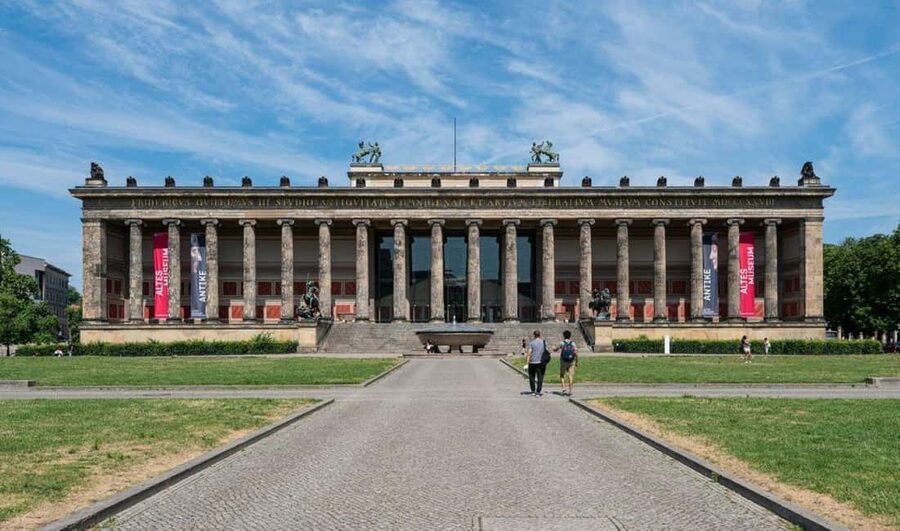
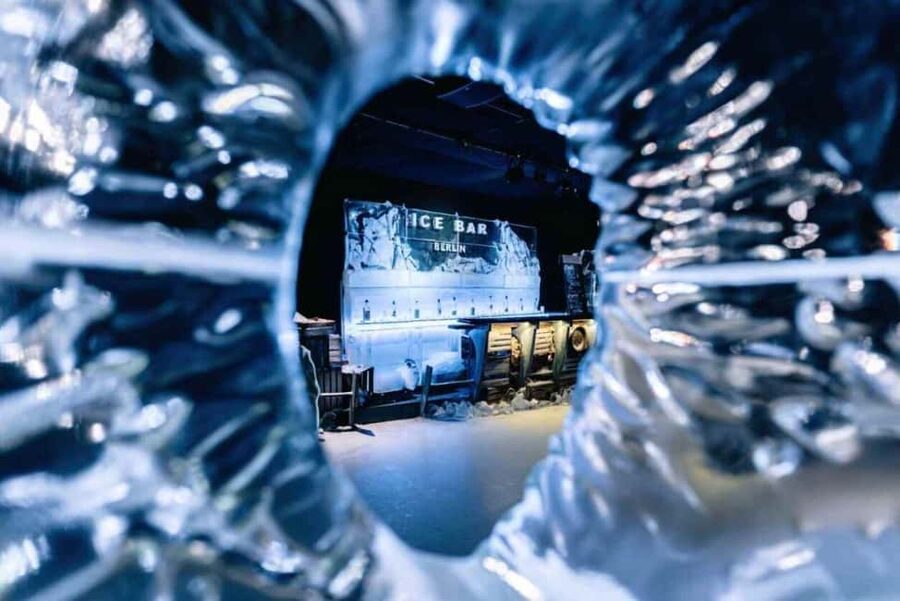
Icebar Berlin gives this package its most unusual extra. The bar is kept at minus 10 degrees, and the interior contains about 69,000 kilos of ice, including ice sculptures.
You receive three complimentary drinks. One direct tip is to ask about the nougat vodka, which received especially strong praise from a customer who enjoyed the bartender’s recommendation. The drinks make the visit feel less like a quick photo stop and more like a small themed experience.
You need to treat the Icebar appointment as fixed. It is a time-slot ticket, and admission later than your booked time is not guaranteed. The Icebar ticket is also non-refundable, so do not schedule it too close to a bus departure or another timed attraction.
Opening hours are:
- Tuesday through Friday, 5 p.m. to midnight
- Saturday and Sunday, 4 p.m. to midnight
- Closed Mondays
- Last admission is one hour before closing
That schedule makes the Icebar a natural evening activity after sightseeing. Since the buses finish their first departures in the afternoon, you can use the day for the city routes and reserve the evening for the frozen bar.
Timing, comfort, and practical limits
The experience is wheelchair accessible, but you should still think about the practical nature of an open-top bus. Weather can affect how enjoyable the upper deck feels, and the open view is less useful when you are cold or wet. The provided information does not specify a covered-seat arrangement, so dress for conditions rather than assuming the top deck will always be comfortable.
Pets are not allowed, and smoking is prohibited.
The biggest planning issue is the difference between route frequency. A 25-minute wait on the Classic Tour is manageable. A 40-minute wait on the B-Tour can cost a large part of your afternoon, especially after visiting Bernauer Strasse or the East Side Gallery.
A second practical concern is communication. One customer reported difficulty reaching the provider and was still waiting for an email response after returning home. I would settle any questions before departure, save your voucher offline, and keep the Icebar time clearly marked.
Free cancellation is available up to 24 hours before the activity for a full refund, but the Icebar time-slot ticket itself is non-refundable. That distinction matters. The general booking may allow flexibility, while the Icebar appointment does not.
Who should book this Berlin bus and Icebar package?
I would recommend it to first-time visitors who want a quick sense of Berlin’s scale. It also suits families, older people, and anyone who prefers not to manage several train and bus connections while learning the city.
The package is especially useful if you want both the famous central sights and the Wall-related eastern districts. The B-Tour gives the experience more substance than a standard central-city loop, while the Icebar adds something light and social after a day of serious history.
I would be more cautious if you already know Berlin well or prefer slow, independent exploration. The fixed bus departures may feel restrictive, and the Icebar appointment limits your evening flexibility. You can also see many of the central sights on foot and by public transport for less money, depending on how much of the ticket you use.
Should you book it?
Book this experience if you want a simple way to cover Berlin’s major landmarks, see key Wall sites, and add a memorable evening stop. The 48-hour ticket is the stronger choice because it gives you room to use both routes properly.
Choose the 24-hour option only if your schedule is tight and you can plan the Icebar time carefully. If you use the bus for full loops, get off at several meaningful stops, and take advantage of the three drinks, $48 is a reasonable price for the convenience.
The package is not a substitute for walking through Berlin’s memorials and neighborhoods. It is a useful first layer, giving you the city’s broad shape before you decide where to spend more time.
FAQ

How long is the hop-on hop-off ticket valid?
You can choose a ticket valid for 24 or 48 hours.
How many routes are included?
The ticket includes two routes: the Classic Tour, also called the A-Tour, and the Trendy East Berlin and Wall Tour, also called the B-Tour.
How many stops are available?
There are 26 stops around Berlin across the two routes.
How often does the Classic Tour bus run?
The Classic Tour runs approximately every 25 minutes.
How often does the East Berlin and Wall Tour bus run?
The East Berlin and Wall Tour runs approximately every 40 minutes.
How long does the Classic Tour take?
The full Classic Tour takes about 120 minutes.
How long does the East Berlin and Wall Tour take?
The full East Berlin and Wall Tour takes about 60 minutes.
What languages are available for the audio guide?
The audio guide is available in English, Spanish, French, German, Italian, Hebrew, Japanese, Chinese, Portuguese, Russian, Polish, Arabic, and Turkish.
What does the Icebar ticket include?
Entry to Icebar Berlin and three complimentary drinks are included. The bar is kept at minus 10 degrees and contains about 69,000 kilos of ice.
When is Icebar Berlin open?
It is open Tuesday through Friday from 5 p.m. to midnight and Saturday and Sunday from 4 p.m. to midnight. It is closed on Mondays, and last admission is one hour before closing.
Just added around Berlin
- Private Walking Tour in Berlin: Hitler’s Germany & WWII★ 5.0 · 7 reviews
- The History of Berlin: WWII PRIVATE Walking Tour With Locals★ 5.0 · 209 reviews
- Private Berlin WWII and Cold War History Tour with Local Expert Guide★ 5.0 · 28 reviews
- Private Walking Tour Berlin 3 hours: Brandenburg, Historic Center★ 5.0 · 7 reviews
- Berlin: Private Bike Tour of the Berlin Wall and Third Reich★ 5.0 · 23 reviews
- Berlin: Guided Private Bike Tour to Explore the Highlights★ 5.0 · 12 reviews
- Berlin Photography Masterclass – Private Photography Lesson★ 4.5 · 23 reviews
- Group Driving Tour 1 to 6 people. Berlin Shore Excursion incl pick-up at Port★ 5.0 · 8 reviews
City Tours, compared.
1-Hour City Tour by Boat with Guaranteed Seating
Read our review →
City History Canal Sightseeing Tour on a Motorboat
Read our review →
Browse the lists this tour appears in