
Reviewed · MUSEUMS
Frankfurt: Museum of Communication Exhibitions
Communication has a long memory. Frankfurt’s Museum of Communication makes that story easy to follow, moving from cuneiform tablets to data glasses through hands-on displays and unusual objects. I like the clear focus on how people connect, and I like the mix of old telegraphs, telephones, radios, televisions, and fax machines. The main drawback is noise: the lobby and some exhibition areas can become very loud, especially when school-age children are visiting.
The museum sits on Schaumainkai, in one of Frankfurt’s best areas for museums and river walks. I would plan a full day if you want to take your time, though the flexible one-day ticket also works well as part of a larger museum visit. The café terrace overlooking the Main is a welcome place to sit after all that information, but bring cash for the café because card payment may not be accepted.
In This Review
- Key things to know before you go
- Why Frankfurt’s communication museum is worth your time
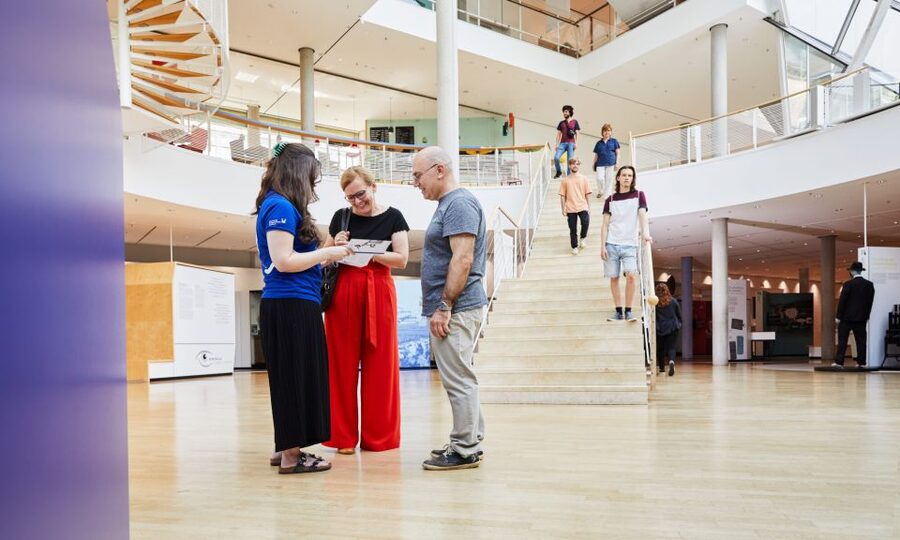
- Entering the permanent exhibition on Schaumainkai
- Telegraphs, telephones, radios, and fax machines
- From old media to data glasses
- KLIMA_X and the communication of climate change
- Planning a comfortable visit
- A break on the Main River terrace
- Who will enjoy this museum most?
- Should you book the Museum of Communication?
- FAQ
- Where is the Museum of Communication Frankfurt?
- How much does admission cost?
- How long is the ticket valid?
- What does the ticket include?
- Is the museum wheelchair accessible?
- What are the public holiday opening hours?
- Can I cancel the booking?
Key things to know before you go
- Communication from cuneiform to data glasses: The permanent exhibition follows human communication across centuries, using objects, inventions, and interactive stations.
- Four ideas organize the museum: Acceleration, networks, control, and participation give the displays a useful structure instead of leaving you with a random pile of old machines.
- Old technology gets close attention: Telegraphs, telephones, fax machines, radios, and televisions show how quickly everyday communication has changed.
- KLIMA_X adds a present-day question: The temporary exhibition asks you to consider your own actions and the simple choices that can help address climate change.
- The Main River terrace is part of the appeal: A coffee break outdoors gives you a calm finish after the busy displays.
- Noise can affect your visit: If you want quiet time with the exhibits, a weekday is the better bet.
Why Frankfurt’s communication museum is worth your time
Many technology museums focus on machines. This one focuses on what those machines changed between people. That difference matters. A telephone is not only a piece of equipment. It changes how quickly families, businesses, governments, and strangers can speak with one another.
The museum presents communication through four broad forces: acceleration, networks, control, and participation. These themes help you connect the objects to daily life. You are not simply looking at a row of outdated devices. You are seeing how messages became faster, how systems linked distant places, how information could be managed, and how ordinary people gained a larger voice.
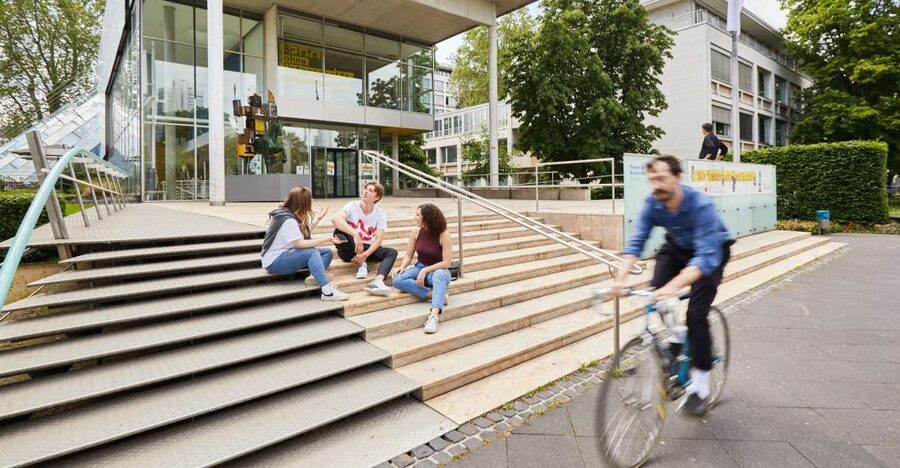
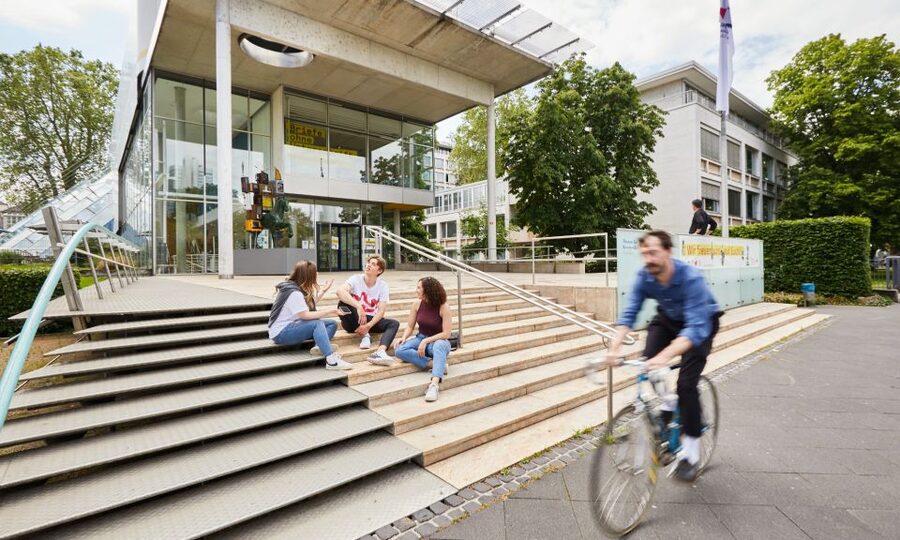
The building on Schaumainkai has won several awards, and the setting adds to the visit. Frankfurt’s museum district is already a useful stop for culture, and the Main River is close at hand. If you are spending time along the river, this museum offers an indoor break with more substance than a quick photo stop.
At around $10 per person, the ticket is fairly priced for a full day of access. The value is strongest if you enjoy museums that ask questions rather than simply display objects. Families can find plenty to do, and adults interested in social change, technology, or media will have reasons to linger.
More Museums in Frankfurt:
- Frankfurt: Struwwelpeter Museum Entry Ticket w/Audio Guide
★ 4.5 · 22 reviews - Berlin: Jewish Museum Berlin Entrance Ticket
★ 4.5 · 8,393 reviews - Berlin: DDR Museum Tickets
★ 4.3 · 3,443 reviews
Entering the permanent exhibition on Schaumainkai
The permanent exhibition, Mediengeschichte|n neu erzählt!, covers about 2,500 square meters. That is enough space to create a real sequence, from early writing systems through modern digital devices.
The opening historical arc reaches back to the cuneiform tablet. This gives you an important starting point: communication did not begin with electronic tools. People first needed ways to preserve information, send it beyond the limits of speech, and pass it to others over time.
From there, the displays move toward increasingly fast and connected forms of communication. The museum uses groundbreaking inventions, curious experiences, and unusual human stories to show how media changed society. I like this approach because it avoids treating technology as a simple march of progress. Every new tool solves one problem, but it can also create new forms of control, dependence, or noise.
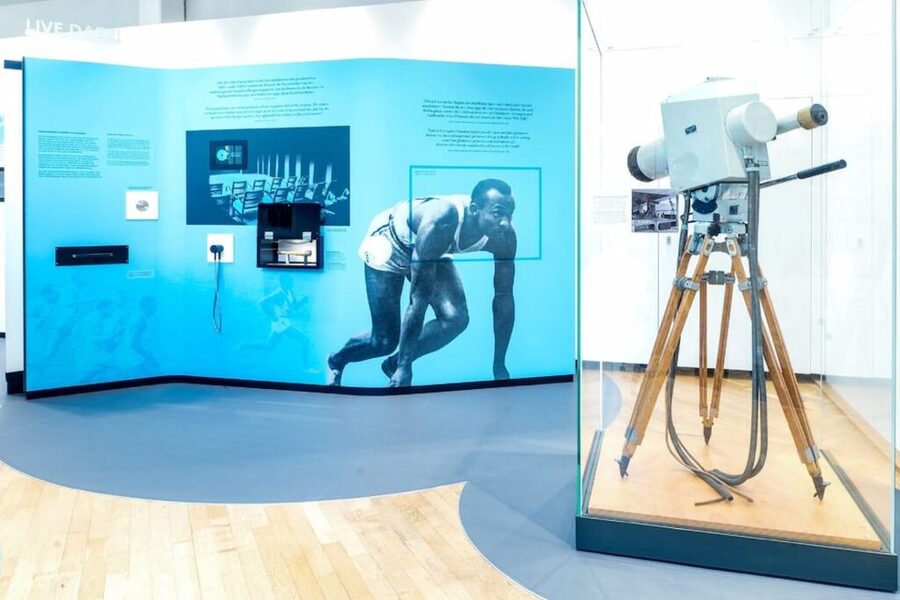
You will encounter objects that once seemed modern but now look wonderfully dated. Old telegraphs show the importance of sending messages over distance. Early telephones reveal how speech became less tied to place. Fax machines, radios, and television sets document later leaps in speed and reach.
These objects are especially useful if you remember some of them from your own life. A younger visitor may see a fax machine as a strange box with buttons. Someone else may remember waiting for a fax, tuning a radio, or using a telephone attached to a wall. The museum gives those memories a larger setting.
Telegraphs, telephones, radios, and fax machines
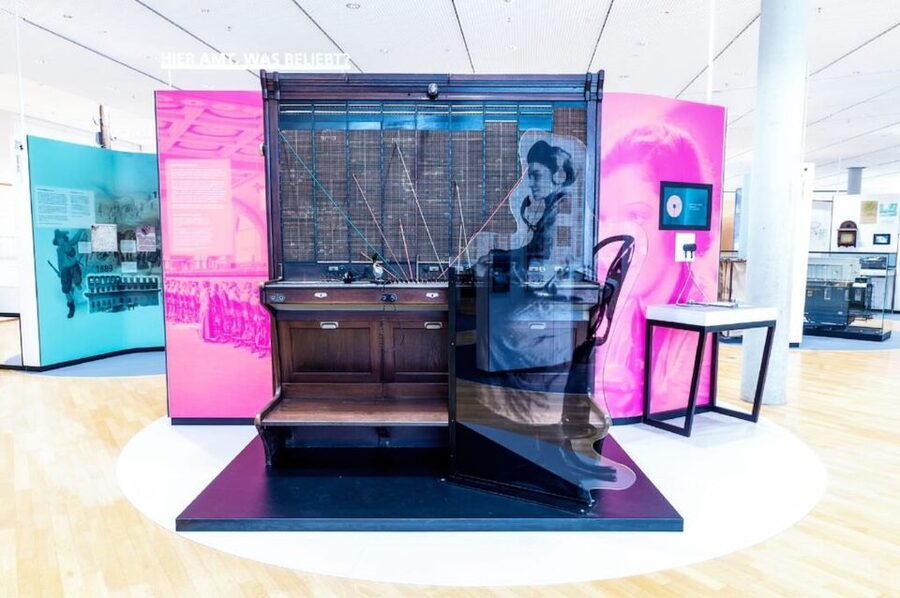
The collection’s older devices provide the clearest sense of change. Telegraphs made long-distance messages possible at a new speed, but they also required networks and systems to carry them. That is where the museum’s themes of connection and control become practical rather than abstract.
Telephones bring the subject closer to home. They changed not just how people spoke, but when and why they could reach one another. A telephone allowed an urgent message to travel quickly, while also creating the expectation that people should be reachable.
Radios and televisions pushed communication in another direction. Instead of one person sending a message to another, broadcasting allowed one source to reach many homes at once. These displays help you think about who controls a message, who receives it, and how public opinion can be shaped.
Fax machines may get a laugh today, but they show how each generation accepts its own version of instant communication. Before email and smartphones, a fax could feel remarkably fast. Seeing it alongside older and newer devices makes the speed of change easier to grasp.
The interactive displays are important here. They keep the museum from becoming a quiet storage room for obsolete equipment. You can connect the history of these machines to the way you communicate now, using phones, screens, and online networks every day.
From old media to data glasses
The final part of the permanent exhibition reaches toward the present and future. Data glasses provide a striking endpoint because they suggest communication that can sit directly in your field of vision.
This progression, from inscribed clay to wearable digital tools, is not only about smaller devices. It is about the growing amount of information people can create, receive, sort, and share. The museum invites you to think about what happens when communication becomes nearly constant.
I find this useful for families because the displays can open a conversation between generations. One person may remember landline telephones, another may know only smartphones, and a child may take video calls and instant messages for granted. The museum gives all three a shared set of objects to discuss.
The experience also suits adults who want to understand media without sitting through a technical lecture. The subject is broad, but the physical exhibits keep it grounded. You can look at an actual machine, see what it did, and then consider how its role has been replaced or expanded.
Do not expect every station to hold your attention equally. The collection covers a lot of ground, and some sections may appeal more to you than others. Give yourself permission to move at your own speed. The ticket is valid for one day, so there is no need to race through the building.
A few more Frankfurt trips worth comparing
- Frankfurt: River Main Sightseeing Cruise with Commentary
★ 4.3 · 5,127 reviews - Frankfurt: Hop-On, Hop-Off Grand or Express Bus Ticket
★ 3.9 · 2,088 reviews - Frankfurt: 1-Hour Panorama Boat Cruise on the river Main
★ 4.4 · 1,822 reviews - From Frankfurt: Rhine Valley Day Trip
★ 4.4 · 1,317 reviews
KLIMA_X and the communication of climate change
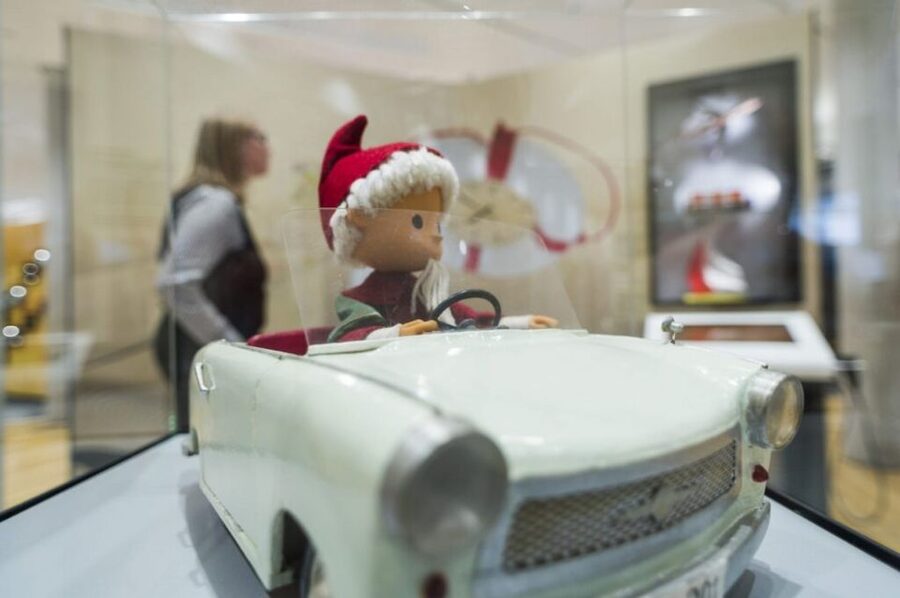
The temporary exhibition KLIMA_X shifts the focus from how people communicate to how communication can change behavior. It examines climate change and asks you to consider the actions you can take to help improve the situation.
This is a smart match for the museum. Climate change is not only a scientific or political issue. It is also a problem of communication. People need to understand the facts, talk about choices, respond to warnings, and decide what they are willing to change.
KLIMA_X offers reminders about simple methods that can improve current conditions. The point is not only to present a large global crisis. It asks you to reflect on your own part in it and on the ways information can encourage useful action.
Because it is a temporary exhibition, its content may change or leave the museum over time. If KLIMA_X is one of your main reasons for visiting, check that it is still on display before setting your schedule. It can also make the museum feel more current after the historical galleries, linking old communication tools with one of today’s biggest public challenges.
Planning a comfortable visit
The museum is easy to approach as a direct destination. You head to the Museum of Communication Frankfurt on Schaumainkai rather than meeting a guide at another location. No tour guide is included, which keeps the visit independent and allows you to pause wherever your interest takes you.
The advertised duration is one day, but that does not mean you must spend every hour inside. I would allow several hours for the permanent exhibition, with extra time for KLIMA_X and the café terrace. If you are building a museum-district day, you can use this museum as the main stop and take a river walk afterward.
The museum is wheelchair accessible, an important practical advantage for anyone who needs step-free access. The ticket includes museum entry only. Food and drinks cost extra, so plan on paying separately for a café stop.
The museum can be busy and loud. One visitor found the lobby filled with very loud children, and another said the noise made it harder to concentrate on the displays. That is not a reason to skip the museum, but it is a reason to choose a weekday if quiet matters to you.
Public holiday hours are listed as 10:00 AM to 6:00 PM. Check the available starting times for the date you want, since the ticket is valid for one day rather than tied to a fixed guided program.
You can cancel up to 24 hours in advance for a full refund, and the reserve-now, pay-later option keeps your plans flexible. The ticket also provides skip-the-line entry, which is useful if a crowd has gathered at the entrance.
A break on the Main River terrace
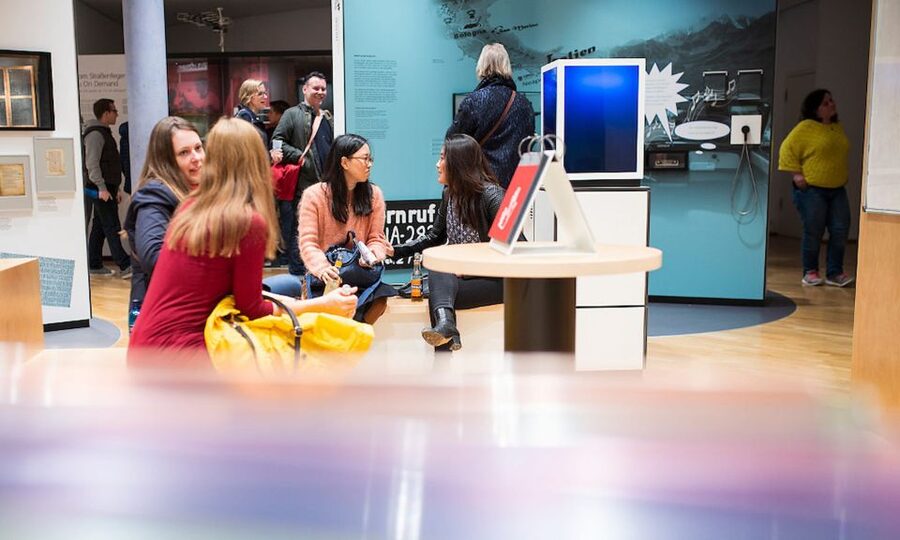
The café terrace may sound like a small extra, but it improves the visit. Communication history can become mentally crowded, especially after displays about media, control, and constant connection. Sitting outside with a coffee gives you room to sort through what you have seen.
The view of the Main adds a pleasant sense of place. You are not eating in an anonymous museum basement. You are looking out toward the river in Frankfurt’s museum district, with the city continuing around you.
Food and drinks are not part of the admission price. Also, payment can be a practical nuisance: Mastercard and Visa may not be accepted at the café. I would carry cash rather than assume you can tap a card after your visit.
The terrace works best as a pause, not as the main reason to buy a ticket. If the weather is poor, the museum still has plenty to offer indoors, but the outdoor break will naturally lose some of its appeal.
Who will enjoy this museum most?
I would recommend the Museum of Communication to several kinds of visitors:
- Families with curious children: Interactive displays and familiar devices can make the subject approachable.
- Adults interested in technology: The sequence from telegraph to data glasses gives older inventions a clear purpose.
- Visitors who enjoy social history: The museum shows how communication affects power, access, speed, and daily routines.
- Anyone seeking a thoughtful indoor stop: The museum offers more substance than a quick collection of objects.
- People visiting Frankfurt’s museum district: The location fits easily into a day near the Main River.
It may be less suitable if you want a very quiet, tightly guided experience. There is no guide included, and noise can be a real issue at busy times. You also may not love every section if your interest is limited to modern smartphones, since much of the pleasure comes from seeing the long road that led to them.
The museum has an overall rating of 4.4 from 45 reviews, which fits my assessment: strong content, a well-designed setting, and a few practical annoyances. The most consistent strengths are the atmosphere, the informative historical displays, the unusual old objects, and the pleasant café setting. The clearest weakness is sound, not the quality of the exhibits.
Should you book the Museum of Communication?
Yes, if you want to understand how people moved from written tablets to instant digital contact. At $10, the ticket offers good value for a self-guided day, especially if you take time with both the permanent exhibition and KLIMA_X.
Choose a weekday if possible, particularly if you like reading labels and trying interactive stations without a lot of background noise. Bring cash for the café, allow several hours, and save time for the Main River terrace.
I would skip it only if your schedule is extremely tight or you dislike museums built around media and technology. For most visitors interested in how modern life took shape, this is a useful, affordable, and pleasantly human museum stop in Frankfurt.
FAQ
Where is the Museum of Communication Frankfurt?
It is located on Schaumainkai in Frankfurt, in the German state of Hessen.
How much does admission cost?
The listed price is $10 per person.
How long is the ticket valid?
The ticket is valid for one day. You should check availability for the starting times offered on your chosen date.
What does the ticket include?
The ticket includes entry to the Museum of Communication. Food, drinks, and a tour guide are not included.
Is the museum wheelchair accessible?
Yes, the museum is wheelchair accessible.
What are the public holiday opening hours?
On public holidays, the museum is open from 10:00 AM to 6:00 PM.
Can I cancel the booking?
Yes. You can cancel up to 24 hours in advance for a full refund. A reserve-now, pay-later option is also available.
Just added around Frankfurt
- Day Trip to Rothenburg from Frankfurt★ 4.6 · 25 reviews
- Rhine Valley: Half Day Tour from Frankfurt★ 3.7 · 66 reviews
- Private Tour with Native English speaking Local★ 4.9 · 60 reviews
- Darmstadt: Mathildenhöhe UNESCO Site Guided Visit★ 4.7 · 124 reviews
- Mainz: Private custom tour with a local guide★ 3.8 · 11 reviews
- Mainz: guided evening tour of the Rhine embankment/old town in German and English★ 4.9 · 38 reviews
- Mainz Highlights, private walking tour★ 4.9 · 15 reviews
- Hohenzollern Castle: Full-Day Tour from Frankfurt★ 4.3 · 11 reviews
Museums, compared.


Skip-the-Line: Berlin Wall Museum at Checkpoint Charlie
Read our review →
Browse the lists this tour appears in