
Reviewed · BERLIN WALL TOURS
Skip-the-Line: Berlin Wall Museum at Checkpoint Charlie
The Wall still has stories to tell. The Berlin Wall Museum at Checkpoint Charlie pairs a famous Berlin address with original escape artifacts, including a hot-air balloon, cars, airplanes, and a mini-submarine. I like its focus on ordinary people who took extraordinary risks, and I like that the museum keeps looking beyond the Wall’s fall to later struggles over freedom and human rights. The main drawback is the presentation: there is a huge amount to read, and the route through the museum can feel loosely arranged.
You pay about $21 per person for admission and skip the ticket line. That is fair value if you allow two hours or more, especially since the museum is much larger than its street frontage suggests. You do not get an audio guide or guided tour, so visitors who prefer a clear spoken narrative may find the displays demanding.
In This Review
- Key points to know before you go
- Why this museum matters at Checkpoint Charlie
- Inside the exhibition: expect more than the street view suggests
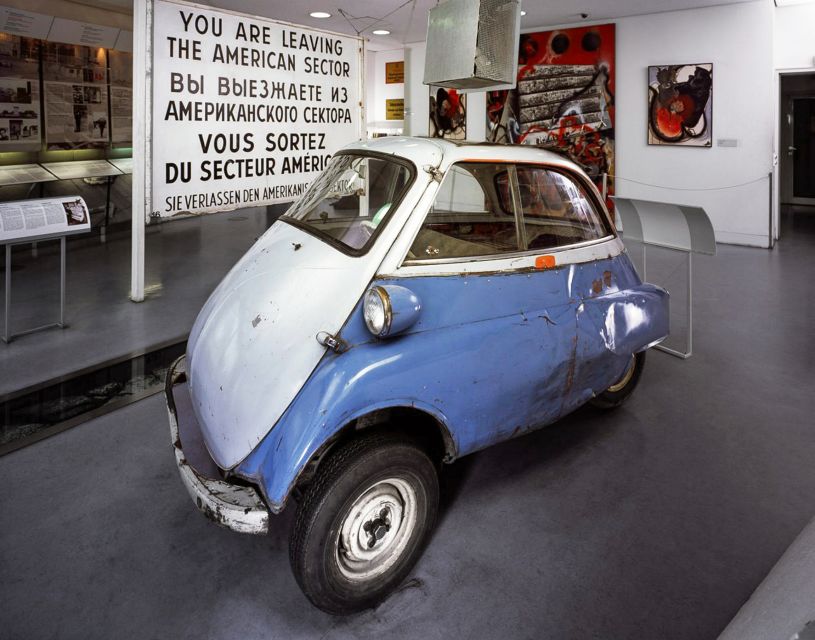
- The escape objects make the history physical
- From the Wall’s construction to its fall
- A museum that asks you to read carefully
- How long should you allow?
- What the $21 ticket is really buying
- Who will get the most from this visit?
- Practical plan for a visit at Checkpoint Charlie
- Should you book the Berlin Wall Museum?
- FAQ
- Where is the Berlin Wall Museum located?
- How much does admission cost?
- How long is the experience?
- What is included with the ticket?
- Is an audio guide included?
- Can I skip the ticket line?
- Is the museum wheelchair accessible?
- Can I cancel for a refund?
Key points to know before you go
- The escape machines are the stars: See a hot-air balloon, mini-submarine, cars, and airplanes connected with successful escapes from East Germany.
- Checkpoint Charlie is part of the experience: The museum overlooks one of Berlin’s best-known former border crossings.
- Plan for serious reading: The exhibition is packed with photographs, documents, explanations, and political context.
- Two hours is a sensible minimum: You can spend far longer if you read closely, and some visitors easily use most of a day.
- The museum reaches beyond 1989: Its material continues into current conflicts, protest movements, and human rights questions.
- Skip-the-line entry saves time, not money: Booking ahead may cost more than buying directly, so compare prices before paying.
Why this museum matters at Checkpoint Charlie
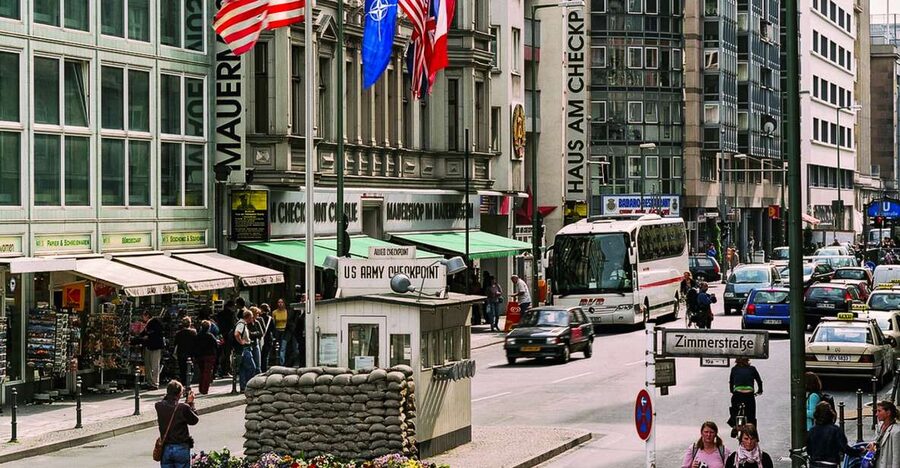
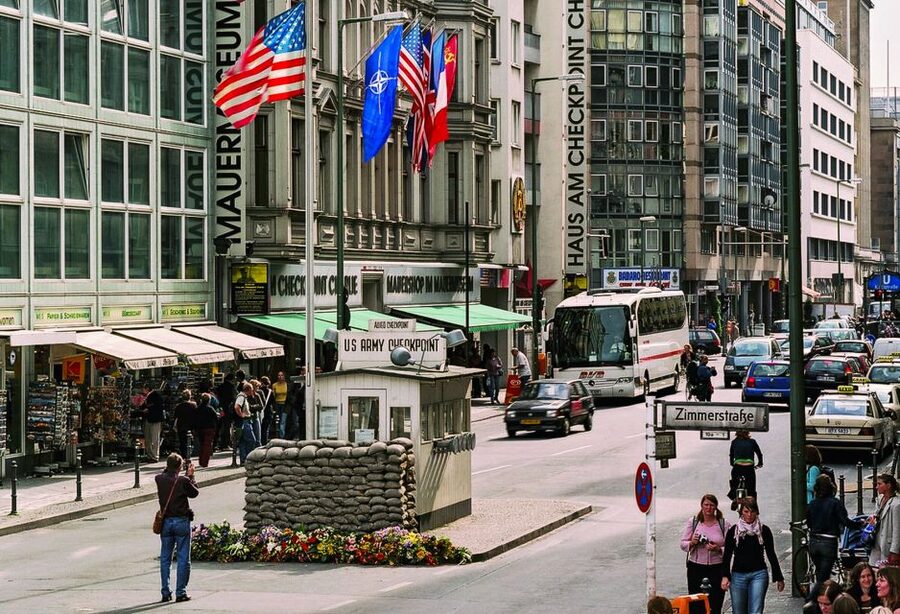
Checkpoint Charlie is one of those Berlin places where the setting does much of the work. The crossing once marked the boundary between the American sector of West Berlin and East Berlin. Today, the famous sign and guardhouse-style booth draw plenty of quick photographs, but the museum gives the location its human meaning.
The museum was founded on October 19, 1962, soon after the Berlin Wall went up. Its purpose was not simply to display objects. It protested the Wall, documented violations of human rights, and helped people seeking freedom. People who planned escapes and organized resistance used the museum as a base.
That background changes how you read the displays. This is not only a museum about concrete, barbed wire, and Cold War speeches. It is about the choices made by people who lived under the German Democratic Republic regime and wanted to leave.
I find that focus valuable because the Wall can become too abstract. A timeline may tell you that it divided Berlin from 1961 to 1989. A converted car or improvised submarine shows what that division demanded from real families and their helpers.
The museum also grew over time, expanding its exhibition space and taking part in the campaign against the Wall. After successful escapes, refugees and their helpers donated vehicles and equipment to the museum. Those objects give the exhibition much of its emotional force.
More Museums in Berlin
- Berlin: Natural History Museum Entrance Ticket
★ 4.6 · 3,382 reviews - Berlin: Museum Island Multiple Museum Entry Ticket
★ 4.4 · 2,007 reviews - Berlin: Interactive DeJa Vu Museum Entrance Ticket
★ 4.1 · 1,338 reviews
Inside the exhibition: expect more than the street view suggests
The entrance can give you the wrong impression. The building does not look enormous from outside, yet the exhibition extends through a large amount of material. Several people have allowed two and a half hours, and others wished they had booked more time.
I would set aside at least two hours if the Berlin Wall is a main reason for your visit. If you have only an hour, you can still see the major objects and absorb the broad story, but you will need to pass over many photographs and written accounts.
The display style is traditional. Expect long walls of text, photographs, documents, maps, and objects rather than a short sequence of polished interactive installations. That suits visitors who enjoy reading and following detail. It can test the patience of teenagers or anyone visiting after a full day of museums.
Some interactive elements may not work perfectly, and a few displays can feel dated. The museum’s size also creates a problem with order. You may not always feel that the story moves in a neat line from the Wall’s construction to its collapse.
That is a fair criticism, but it is also part of the museum’s character. The institution began as a protest center and archive, not as a modern attraction designed around a single smooth route. You may need to pause, backtrack, and decide which subjects deserve your attention.
The escape objects make the history physical
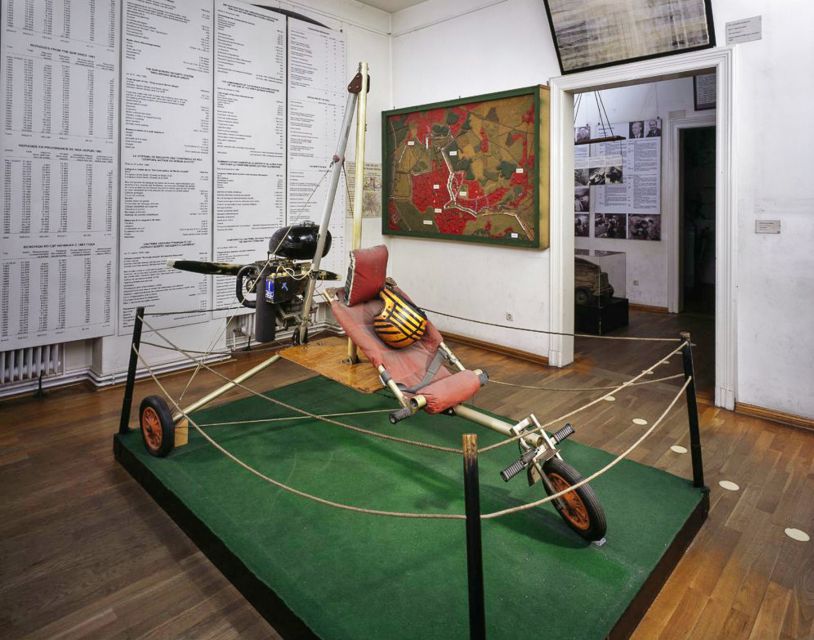
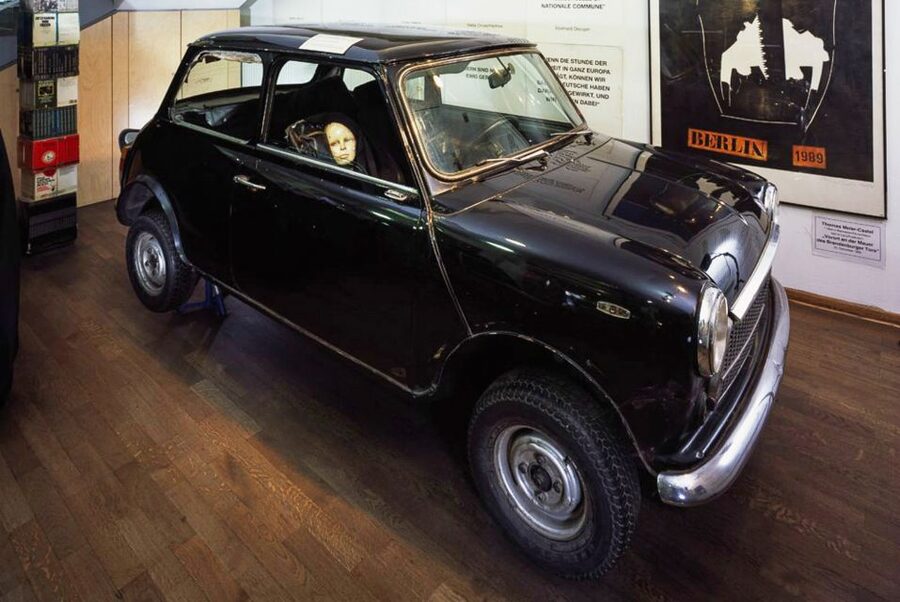
The most memorable section is the collection of escape equipment. These objects show the ingenuity required to cross a border designed to stop people at every turn.
A hot-air balloon makes the danger easy to picture. It was not a comfortable sightseeing flight. It represented planning, secrecy, technical risk, and the hope that weather and machinery would cooperate.
The mini-submarine tells a different story. It points to the range of escape plans and to the willingness of helpers to build unusual tools for a single purpose. Cars and airplanes add still more variety. Vehicles could be altered, hidden compartments created, or routes planned around border controls.
I like that the museum does not treat these objects as clever curiosities alone. Their value comes from the people behind them. A machine may look inventive, but it also reflects fear, patience, and the possibility of arrest or death.
The museum holds original objects from successful escapes, though not every item has the same status. Some material consists of photographs, reproductions, written explanations, or later documentation. If you expect every display to be an untouched Cold War artifact, you may be disappointed.
Even so, the combination of real escape equipment and detailed accounts gives the exhibition weight. You are not just looking at a fragment of Wall sold as a souvenir. You are seeing the practical means by which some people managed to get out.
From the Wall’s construction to its fall
The museum explains the political setting around the Wall and the division between East and West Germany. It covers the pressure placed on East German citizens, the restrictions on movement, and the wider politics of the Eastern Bloc.
This wider frame is important. Without it, the escape stories can seem like isolated adventures. With it, you understand why so many people risked elaborate plans, why helpers became involved, and why a border inside one city became an international crisis.
The displays also cover protests and nonviolent movements. One upper floor presents protest movements connected with world peace and human rights. This section broadens the story beyond Berlin and connects the Wall to other conflicts and political struggles.
That extension will please visitors who want more than a 1961 to 1989 timeline. It may frustrate you if you came for a tightly focused museum about Checkpoint Charlie alone. Some of the material reaches well beyond the immediate Wall story, and the exhibition can feel overextended.
I see that as both a strength and a weakness. The museum makes clear that the end of the Berlin Wall did not end disputes over borders, repression, or freedom. But the added subjects can compete with the central story.
More Berlin Wall Tours in Berlin:
- Cold War, Berlin Wall, Spies and the East Side Gallery
★ 5.0 · 1,024 reviews - Berlin: Guided Bike Tour of the Berlin Wall and Third Reich
★ 4.7 · 499 reviews - Berlin: Cold War Walking Tour on Berlin Wall Route
★ 4.8 · 437 reviews - Berlin: Berlin Wall & East Side Gallery Walking Tour
★ 4.9 · 264 reviews
A museum that asks you to read carefully
You will find explanations in several languages for much of the material. That makes the museum accessible to a broad international audience, though coverage may not be identical for every display. English-language visitors should have plenty to work with, but you should still expect a lot of reading.
An audio guide is not included. You can ask about one at the entrance, but the printed material is extensive enough that some visitors prefer to read at their own pace. If you learn best through narration, check what is available before you arrive rather than assuming your ticket includes it.
The lack of a guided tour has a clear effect. You set your own pace, choose your own subjects, and can spend extra time with an escape story that catches your attention. You also lose the connecting explanation that helps place each object in order.
This is where a little preparation pays off. Know the basic outline of the Wall before you enter: its construction, the division of Berlin, the escape attempts, the protests, and the opening of the border in 1989. The museum can then fill in the human detail instead of asking you to build the entire framework from scratch.
Photography may be restricted inside the exhibition, so do not count on photographing every panel for later. Bring your attention rather than relying on your phone as a notebook.
How long should you allow?
The advertised validity is one day, but this is an admission ticket rather than a scheduled one-day tour. Check the available starting times when you book.
For a brisk visit, allow about one to two hours. That gives you time for the main escape objects and a selection of the written displays.
For a more rewarding visit, allow two to three hours. This is the better choice if you want to follow the political history, read individual stories, and look at the material concerning later conflicts and human rights.
Some people can spend much of a day here. That makes sense for serious students of Cold War history, but most sightseeing schedules do not need that much time. If you are traveling with young children or restless teenagers, plan a shorter visit and identify the escape vehicles first.
The museum is wheelchair accessible, which makes the large exhibition easier to consider for visitors who need step-free access. The sheer amount of material remains the main challenge, not the subject matter alone.
What the $21 ticket is really buying
At around $21, the ticket is not the cheapest way to see Berlin’s Cold War story. The value depends on how much use you make of the museum.
If you rush through in 45 minutes, the price may feel high. If you spend two or three hours with the objects, photographs, and political explanations, it becomes a reasonable admission for a major central museum.
The skip-the-line benefit is practical rather than dramatic. At quiet times, there may be little or no queue. At busy periods, walking straight to entry saves time and removes one small uncertainty from your day.
There is a catch. Buying online may carry an added charge compared with purchasing at the museum. For one person, the difference may be modest. For a family of four, an extra three or four pounds per ticket can add up.
I would compare the online price with the walk-up price before booking. Choose the advance ticket for convenience if the difference is acceptable, especially when your day is tightly planned. If you are visiting in a quieter season and can arrive early, paying at the door may offer better value.
Free cancellation up to 24 hours in advance and the reserve-now, pay-later option add useful flexibility. Those terms matter if your Berlin schedule is still shifting.
Who will get the most from this visit?
I recommend the museum most strongly to adults, older children, history students, and anyone who wants personal escape stories rather than a quick photograph beside a remaining piece of Wall.
It suits you if you enjoy reading, original objects, political background, and difficult questions about freedom. It is also useful for first-time visitors who want a strong introduction to the Wall and East-West German history.
Families should judge their group honestly. The museum offers a lot to see, but it is reading-heavy and not consistently interactive. Teenagers may lose interest before adults do. A shorter visit focused on the escape vehicles can work better than trying to cover every panel.
It may not suit you if you want a short, highly polished multimedia attraction or a guide who tells the story from beginning to end. The museum’s layout can feel crowded with information, and the presentation would benefit from a clearer sequence.
Still, I would not dismiss it for looking old-fashioned. The subject is serious, and the abundance of material reflects decades of collecting and documenting. You may leave with more questions than you expected, which is a useful result for a museum about divided societies.
Practical plan for a visit at Checkpoint Charlie
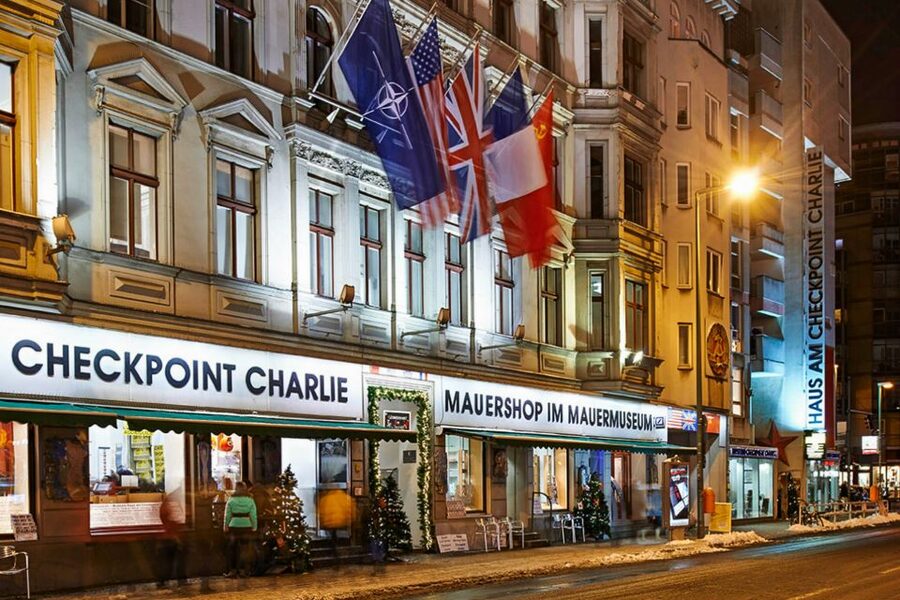
The meeting point is Friedrichstraße 43-45, 10969 Berlin. The museum is at Checkpoint Charlie, so allow time to orient yourself around the famous crossing before or after entering.
I would visit the outdoor checkpoint first. Look at the location, the sign, and the street layout, then enter the museum while the setting is fresh in your mind. The upper-level view of Checkpoint Charlie is another useful feature because it lets you connect the museum displays with the actual urban space below.
Do not schedule a major attraction immediately afterward. The exhibition is larger than expected, and it is easy to underestimate how long you will spend reading. A two-hour buffer is sensible, with extra time if you want to examine the political material carefully.
If you are visiting with a group, agree on a meeting point inside or outside. People will move at different speeds, especially when one person wants to read every panel and another is ready to leave after the main artifacts.
The museum can be visited in any weather, and its central setting makes it easy to combine with other Berlin sights. The important point is not to treat it as a 30-minute stop between photographs. Its best material needs time.
Should you book the Berlin Wall Museum?
Book it if you want human stories, escape equipment, and a serious account of life under the GDR. The hot-air balloon, mini-submarine, cars, and airplanes turn a political subject into something you can see and understand. The museum’s long record, beginning in 1962, also gives it a special connection to the history it documents.
Think twice if you dislike reading-heavy exhibitions or need a clean, modern route through the material. You will not receive a guided tour or audio guide with the basic ticket, and some displays may feel dated.
For most first visits to Berlin, I consider it worthwhile, especially when paired with time at Checkpoint Charlie itself. Compare the advance price with the door price, allow at least two hours, and book ahead when skipping a queue matters more than saving a few dollars.
FAQ
Where is the Berlin Wall Museum located?
The meeting point is Friedrichstraße 43-45, 10969 Berlin. The museum is at Checkpoint Charlie.
How much does admission cost?
The listed price is about $21 per person.
How long is the experience?
The ticket is valid for one day. Most visitors should allow at least one to two hours, while those who read the displays closely may spend two and a half hours or longer.
What is included with the ticket?
The ticket includes entrance to the museum.
Is an audio guide included?
No. An audio guide is not included, and a guided tour is also not included.
Can I skip the ticket line?
Yes. The activity includes skip-the-ticket-line entry.
Is the museum wheelchair accessible?
Yes. The museum is wheelchair accessible.
Can I cancel for a refund?
Yes. You can cancel up to 24 hours in advance for a full refund. You can also reserve now and pay later, which keeps your plans flexible.
Just added around Berlin
- Private Walking Tour in Berlin: Hitler’s Germany & WWII★ 5.0 · 7 reviews
- The History of Berlin: WWII PRIVATE Walking Tour With Locals★ 5.0 · 209 reviews
- Private Berlin WWII and Cold War History Tour with Local Expert Guide★ 5.0 · 28 reviews
- Private Walking Tour Berlin 3 hours: Brandenburg, Historic Center★ 5.0 · 7 reviews
- Berlin: Private Bike Tour of the Berlin Wall and Third Reich★ 5.0 · 23 reviews
- Berlin: Guided Private Bike Tour to Explore the Highlights★ 5.0 · 12 reviews
- Berlin Photography Masterclass – Private Photography Lesson★ 4.5 · 23 reviews
- Group Driving Tour 1 to 6 people. Berlin Shore Excursion incl pick-up at Port★ 5.0 · 8 reviews
Berlin Wall Tours, compared.
Cold War, Berlin Wall, Spies and the East Side Gallery
Read our review →

Cold War, Berlin Wall, Spies and the East Side Gallery
Read our review →
East Berlin and the Berlin Wall 2-Hour Walking Tour
Read our review →
Explore The Berlin Wall: Cold War Berlin and Behind the Berlin Wall
Read our review →Browse the lists this tour appears in