
Reviewed · MUSEUMS
Hamburg: Entrance to the Museum Ship Cap San Diego
Hamburg’s cargo ship still has a pulse. The Cap San Diego lets you walk through a working-style 1960s freighter, from bridge to engine room, while its saloon, cabins, holds, and exhibits tell the story of Atlantic shipping. I like the ship’s size and the freedom to explore it at your own pace.
I also like the human stories tucked into the visit, especially the film about emigrants leaving through Hamburg between 1850 and 1930. The main drawback is practical: stairs, tight spaces, and a maze-like layout make this a poor choice for wheelchair users or anyone with limited mobility, claustrophobia, or trouble finding their way around.
In This Review
- Key points about visiting Cap San Diego
- Walking aboard a 1961 Hamburg freighter
- The bridge gives you the best sense of the route
- The machine room supplies the ship’s heartbeat
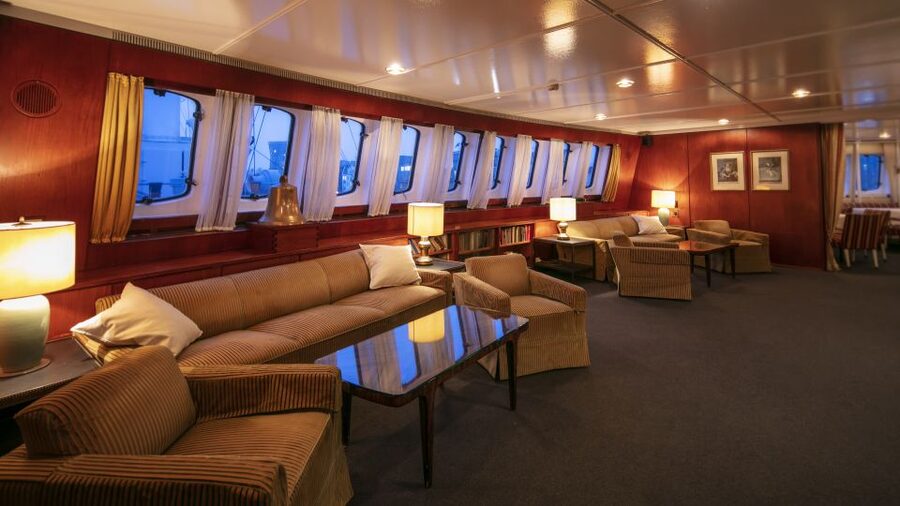
- The saloon shows the more comfortable side of sea travel
- Hatch 2 explains the change from general cargo to containers
- The emigration film adds a serious human story
- The ship’s layout rewards curiosity, not speed
- One day and $14 make this a strong-value stop
- Who will enjoy Cap San Diego most
- Practical advice before you go
- Should you book Cap San Diego?
- FAQ
- Where is the Cap San Diego entrance?
- How much does admission cost?
- How long is the ticket valid?
- What are the museum’s opening hours?
- Is the visit guided?
- Is an audio guide available?
- What parts of the ship can I visit?
- What exhibitions are included?
- Is Cap San Diego wheelchair accessible?
- Is the museum suitable for people with limited mobility or claustrophobia?
Key points about visiting Cap San Diego
- A real 1961 cargo ship: Cap San Diego is the last surviving ship in a series of six fast general cargo ships built for Hamburg South.
- Explore from bridge to hatch: You can move through the ship independently, including the bridge, saloon, holds, and machine room.
- A South American route brought to life: The ship once sailed between Hamburg, Rio de Janeiro, and Buenos Aires.
- Two worthwhile exhibits: Watch the film about Hamburg’s emigration port and visit the cargo-handling exhibition in hatch 2.
- A $14 visit with flexible timing: Your ticket is valid for one day, and the museum is open daily from 10 a.m. to 6 p.m.
- A demanding walk inside: Several flights of stairs and narrow sections mean this is best for visitors who can move comfortably on foot.
Walking aboard a 1961 Hamburg freighter
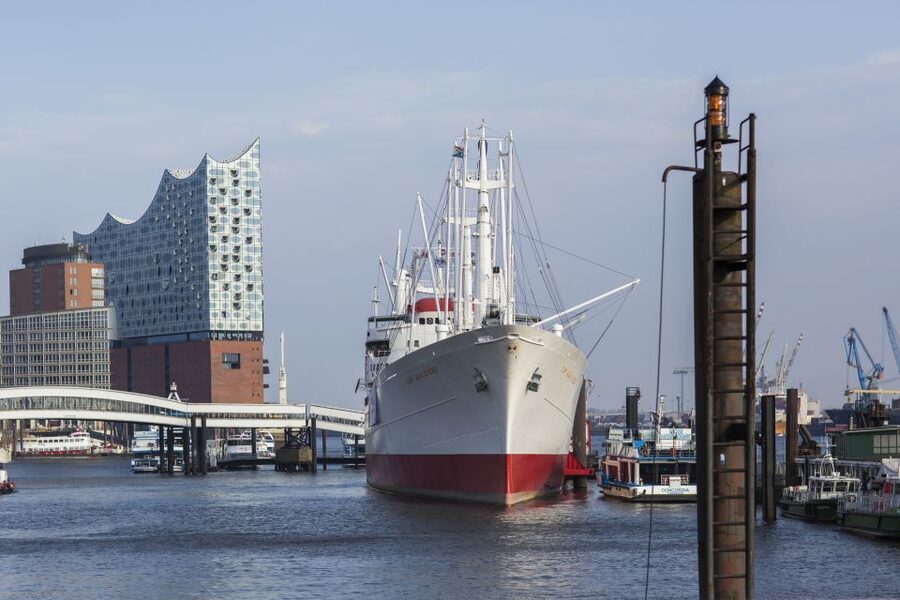
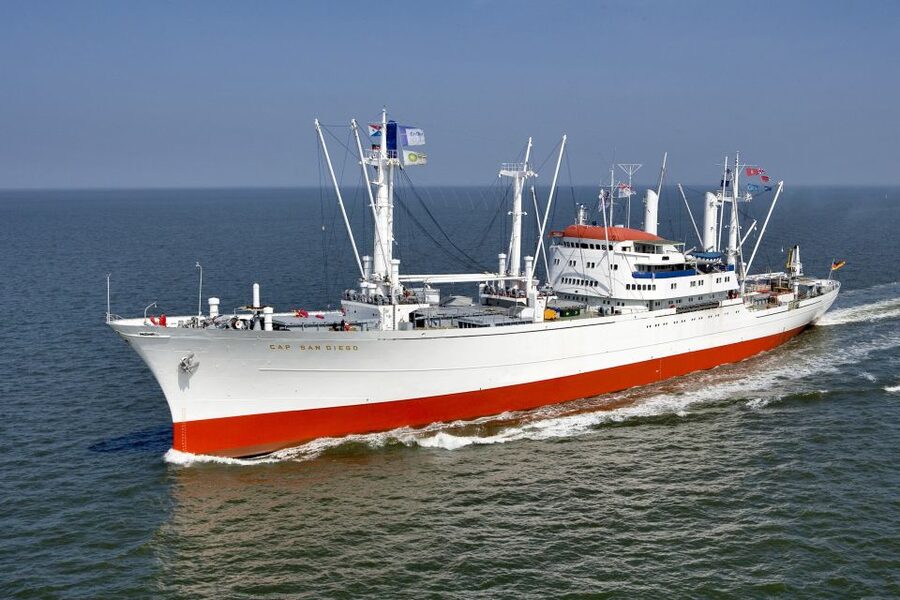
Your visit begins at the end of Überseebrücke, where the ship’s entrance is located. Cap San Diego is not a replica built for tourists. It is the last surviving vessel from a group of six fast general cargo ships built in 1961 and 1962 for the Hamburg South shipping company.
That age matters. The ship gives you a physical sense of how cargo travel worked before container shipping took over. Instead of looking at a model behind glass, you move through the actual spaces where crew members worked and passengers relaxed.
The ship sailed to South America until the end of 1981. Its main route linked Hamburg with Rio de Janeiro and Buenos Aires, so the visit has a clear travel story: leave northern Germany, cross the Atlantic, call at South American ports, and return home.
Since 1988, Cap San Diego has served as a museum ship. It is described as the largest civil museum ship in the world, and the scale becomes clear as you move between its different sections. You can explore from the bridge down through the ship’s working areas and cargo spaces.
This is a self-guided visit. You do not follow a live guide or stay with a fixed group, which gives you time to pause where the ship interests you most. If you want more explanation, an audio guide is available when that option is selected with your ticket.
More Museums in Hamburg
- Hamburg: International Maritime Museum Entrance Ticket
★ 4.7 · 547 reviews - Hamburg: RICKMER RICKMERS Museum Entry Ticket
★ 4.6 · 269 reviews - Hamburg: Museum of Illusions Ticket
★ 4.2 · 122 reviews
The bridge gives you the best sense of the route
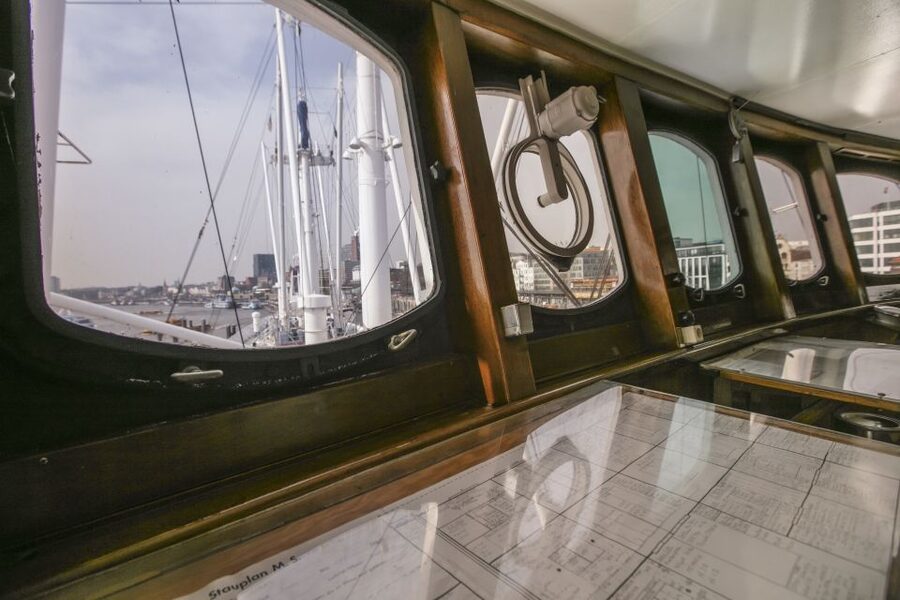
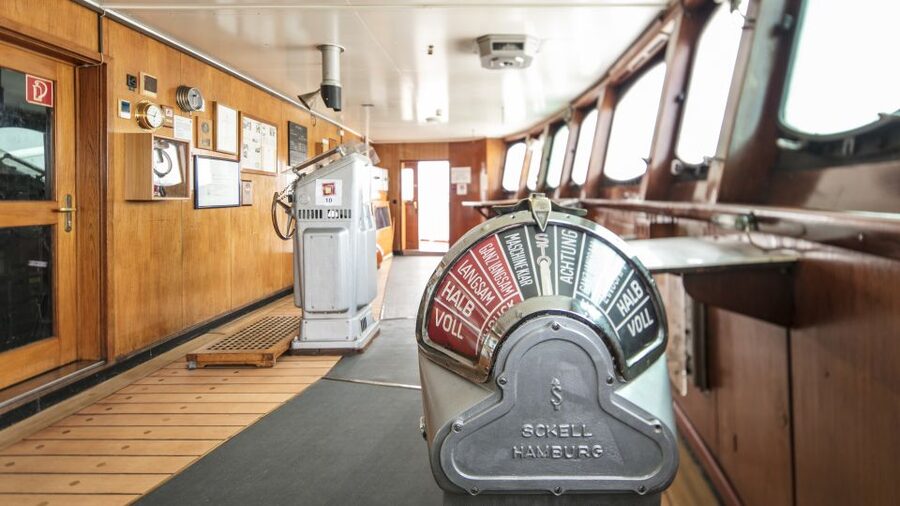
Start high on the bridge if you want to understand the ship’s purpose before exploring its machinery. From this position, you can imagine the lookout watching the Atlantic route and the crew guiding a large freighter toward distant ports.
The imaginary journey to the 1960s and 1970s works best when you think of Cap San Diego as a complete workplace, not just a collection of old rooms. The bridge represents navigation and command, while the holds and machine room show the physical effort behind every voyage.
You can also take on the role of a lookout for a moment. The experience does not provide a staged performance, but the setting encourages you to picture the long ocean crossing and the quiet responsibility of watching the sea.
The route through the ship may not always be perfectly obvious. You should expect to pause, look for signs, and work out where one section leads next. That mild confusion is part of the visit, but a clearer path would make the experience easier for first-time visitors.
The machine room supplies the ship’s heartbeat
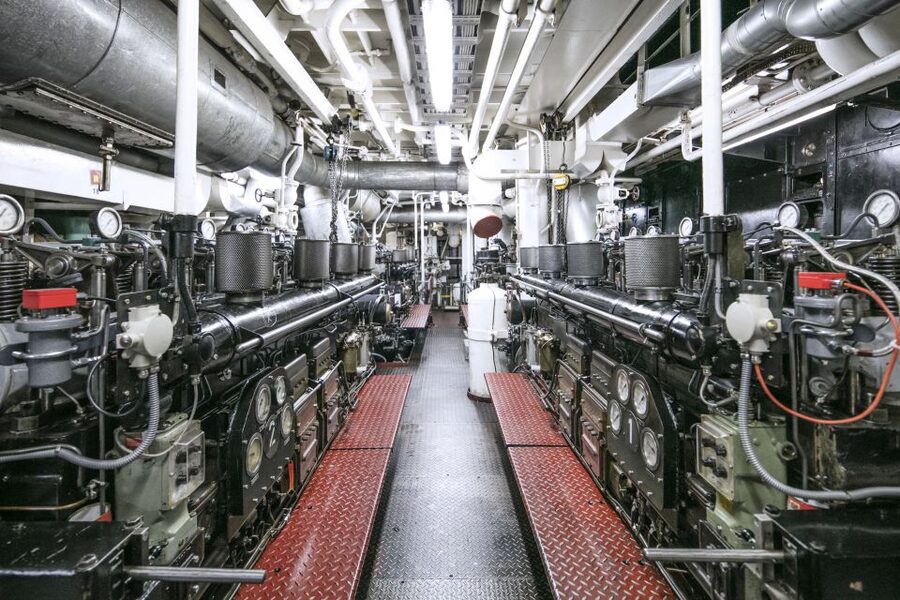
The machine room is one of the strongest parts of the visit. Standing among the engines gives you a physical sense of the steady power needed to push a cargo ship from Hamburg to South America and back.
You do not need to be an engineering expert to appreciate this section. The point is scale and sensation. After seeing the bridge, you can go below and see the machinery that made the route possible.
The shift from the calm passenger areas to the dense mechanical spaces also gives the ship a useful contrast. A long voyage needed both sides of the operation: comfortable surroundings for people and cargo, plus a powerful engine system hidden below.
The machine room can feel confined, so take your time and pay attention to how you feel in enclosed spaces. The museum specifically warns that the visit is not suitable for people with claustrophobia.
The saloon shows the more comfortable side of sea travel
After the bridge and machine room, the saloon offers a change of mood. This was the passenger side of the voyage, where people could relax with light music during the crossing to South America.
The saloon helps prevent the visit from becoming only a machinery tour. You see that a cargo ship also had spaces designed for rest and social time, giving the route a more complete human dimension.
I like this part because it lets you picture the rhythm of a sea journey. The ship was not simply loading freight and burning fuel. People spent days aboard, and the saloon provided a place to sit, listen to music, and enjoy a break from the working parts of the vessel.
Do not expect a modern entertainment program or a fully staged historical show. The appeal comes from the original setting and your own imagination. A little light music and the period atmosphere do much of the work.
Still Hamburg, at a slower pace:
- Hamburg: Sex and Crime in St. Pauli Tour for Ages 18+
★ 4.7 · 15,447 reviews - Hamburg: 1.5-Hour Harbor and Speicherstadt Day Cruise
★ 4.6 · 14,200 reviews - Hamburg: 90-Minute Evening Lights Harbor Cruise
★ 4.5 · 7,728 reviews - Hamburg: 2-Hour XXL Port of Hamburg Cruise Tour
★ 4.7 · 6,979 reviews
Hatch 2 explains the change from general cargo to containers
Hatch 2 contains the permanent exhibition General Cargo and Container Handling. This is a useful stop because it connects Cap San Diego’s working life with the broader change in sea freight.
The exhibition covers the development of shipping from 1960 to today. Historical images and explanatory texts show how cargo handling changed during the period when container transport became increasingly important.
That context makes the ship easier to understand. Cap San Diego was built for the general cargo era, when goods were handled in a less standardized way than they are today. The exhibition helps you see why a ship built in 1961 had a different layout and daily routine from a modern container vessel.
If you are mainly interested in the ship’s engine and bridge, you might spend less time here. I would still make room for it, since it explains why this vessel represents a turning point in commercial shipping rather than only an attractive old ship.
The emigration film adds a serious human story
During the visit, you can watch A Suitcase Full of Hope: Emigration Port of Hamburg. The film covers the fate of emigrants who passed through Hamburg between 1850 and 1930.
This subject gives the museum a wider purpose. Cap San Diego mainly represents the later cargo era, but the film connects the harbor to the earlier movement of people leaving Europe for new lives elsewhere.
The title points to the personal scale of the story. A suitcase may be all someone could carry, yet it could contain the practical necessities and emotional weight of an entire family’s future.
I recommend treating the film as more than a short extra. It gives you historical context for Hamburg’s port and reminds you that harbors have carried people as well as goods. The ship’s later South American route and the earlier emigration story are not identical experiences, but together they show how strongly Hamburg’s identity is tied to departure and long-distance travel.
Because this is a self-guided visit, you control when you watch the documentary and how much time you give it. That flexibility is helpful if you want to balance the film with the physical exploration of the ship.
The ship’s layout rewards curiosity, not speed
Cap San Diego is best enjoyed slowly. You can move between the major areas in your own order, but the vessel has multiple levels and several flights of stairs.
The route is not presented as a simple straight corridor. You may need to retrace a short section or look around to work out how the bridge, machine room, saloon, and hatches connect. The ship’s crew is known for being friendly and willing to provide useful information, which helps when you need to get your bearings.
That personal help adds warmth to a visit that could otherwise feel solitary. Still, you should not expect a live guided tour, scheduled commentary, or someone leading you from room to room.
Wear sensible shoes and allow enough time to stop. A rushed visit would reduce the ship to a checklist of rooms, while a slower walk lets you compare the passenger spaces with the working areas and understand how the whole vessel functioned.
The ship is not wheelchair accessible. It is also not recommended for people with mobility impairments because of the stairs. Narrow or enclosed sections may be uncomfortable if you dislike confined spaces, and the layout may frustrate anyone who finds maze-like interiors difficult.
One day and $14 make this a strong-value stop
Admission costs $14 per person. For a museum visit that is valid for one day and lets you explore a ship of this size, I consider that a fair price.
The value comes from the number of experiences included in one ticket. You get the bridge, the engine room, the saloon, cargo areas, historical exhibits, and the emigration film rather than a single display room.
You also do not have to squeeze everything into a short timed slot. The museum is open daily from 10 a.m. to 6 p.m., and you can check the available starting times when booking. Since the visit is self-guided, you can spend more time in the machine room or documentary area and less time in sections that hold less interest for you.
An audio guide can add value if you prefer structured commentary. If you enjoy reading signs, looking at machinery, and building your own route, the basic entrance ticket may be enough.
The free-cancellation policy also gives you useful flexibility. You can cancel up to 24 hours in advance for a full refund, and the reserve-now, pay-later option means you do not have to pay at the time of booking.
Who will enjoy Cap San Diego most
I would recommend this experience to anyone interested in ships, Hamburg’s port, cargo transport, or the practical side of ocean travel. It also suits families with older children who can manage stairs and enjoy exploring independently.
You will get the most from it if you like places that let you touch history through their layout and machinery. The ship does not need elaborate entertainment because the real spaces provide the interest.
It is also a good choice if you want a flexible indoor activity lasting as much or as little of the day as you prefer. The one-day validity gives you room to fit it around other Hamburg plans.
I would be cautious if you have limited mobility, use a wheelchair, or dislike narrow rooms. The museum clearly warns against visiting in those situations, and you should take that warning seriously rather than hoping the ship will be easier than expected.
You should also choose another activity if you want a polished tour with a live guide. Cap San Diego provides information through displays, the optional audio guide, the film, and helpful staff, but you are responsible for finding your way and setting your pace.
Practical advice before you go
Go directly to the ship entrance at the end of Überseebrücke. The museum is open from 10 a.m. to 6 p.m. every day, but you should check availability for the starting times attached to your visit.
Plan for stairs and uneven movement between the ship’s sections. Keep your route flexible, since the museum is designed for independent exploration rather than a fixed sequence.
If you want the clearest narrative, begin with the bridge, continue through the working areas, and then make time for the film and hatch 2 exhibition. You can also reverse that order if you prefer to understand the historical context before exploring the machinery.
Do not skip the crew if you need help finding a section. Friendly staff and useful information can make the ship’s less obvious connections easier to follow.
Should you book Cap San Diego?
Book it if you want a substantial maritime museum rather than a quick photo stop. For $14, Cap San Diego gives you access to a rare surviving cargo ship, its bridge and machine room, a period saloon, a cargo-handling exhibit, and a serious film about emigration through Hamburg.
I especially recommend it to visitors who enjoy working ships and authentic industrial spaces. Skip it if stairs, tight passages, or independent navigation would make the visit tiring or stressful.
The best reason to go is the combination of scale and freedom. You are not simply looking at a ship from the dock. You are walking through the spaces that explain how it carried cargo, supported a crew, and crossed the Atlantic for two decades.
FAQ
Where is the Cap San Diego entrance?
Go directly to the ship entrance at the end of Überseebrücke in Hamburg.
How much does admission cost?
The entrance ticket costs $14 per person.
How long is the ticket valid?
The ticket is valid for one day.
What are the museum’s opening hours?
Cap San Diego is open daily from 10 a.m. to 6 p.m.
Is the visit guided?
No. This is a self-guided museum visit without a live guide.
Is an audio guide available?
An audio guide is included if you select that option when booking.
What parts of the ship can I visit?
You can explore the ship from the bridge to the hatches, including the saloon and machine room.
What exhibitions are included?
You can watch A Suitcase Full of Hope: Emigration Port of Hamburg, about emigrants between 1850 and 1930. Hatch 2 contains General Cargo and Container Handling, covering sea freight transport from 1960 to today.
Is Cap San Diego wheelchair accessible?
No. The museum is not wheelchair accessible.
Is the museum suitable for people with limited mobility or claustrophobia?
No. The visit is not recommended for people with limited mobility or claustrophobia because the ship has several flights of stairs and confined, maze-like sections.
Just added around Hamburg
- Hamburg: St. Pauli Food and Bier Tour★ 4.7 · 5 reviews
- St. Pauli Tour: Drag-Attack with Barbie Stupid & Lee Jackson★ 4.8 · 280 reviews
- Hamburg: Private Tour Red Light District Walking Tour★ 4.7 · 227 reviews
- St. Michael’s, Elbe Tunnel & Harbor 2-Hour Hamburg Tour★ 4.9 · 21 reviews
- Satt Pauli – der kulinarische Rundgang durch St. Pauli★ 4.8 · 12 reviews
- Hamburg: Safari tour in St. Pauli★ 4.9 · 11 reviews
- Hamburg: Reeperbahn Comedy Club★ 4.3 · 53 reviews
- Radtour um die Alster & durch traumhafte Alsterviertel★ 4.9 · 34 reviews
Museums, compared.




Skip-the-Line: Berlin Wall Museum at Checkpoint Charlie
Read our review →
Browse the lists this tour appears in