
Reviewed · HISTORICAL TOURS
Leipzig: Historical Tour Waldstraßenviertel with GEO Epoche
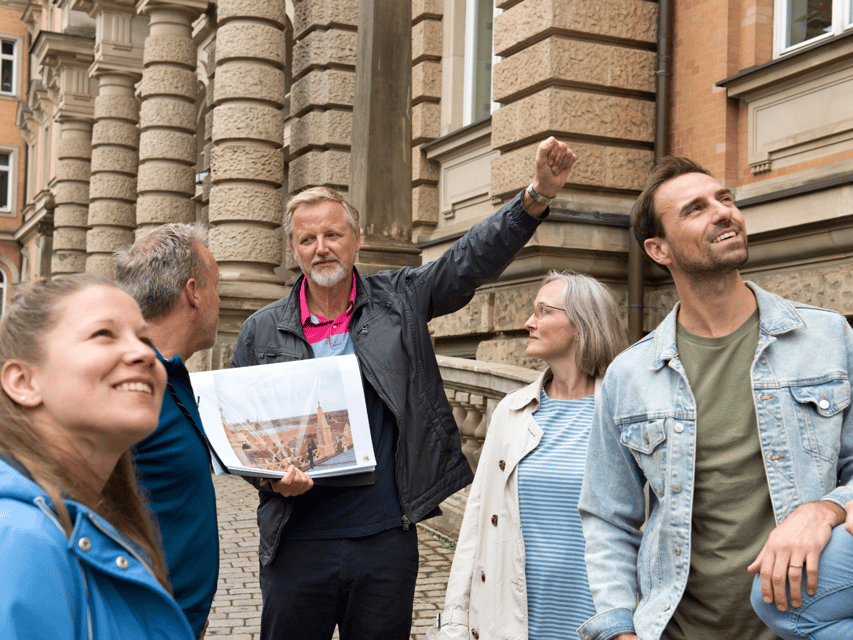
Leipzig’s grand stories begin at a fountain. This two-hour walk through the Waldstraßenviertel links old streets with stories from the Wilhelminian period, the world wars, Jewish life, and the Battle of the Nations. I like the clear historical focus and the chance to hear about events at the places where they happened.
I also like the connection with GEO Epoche, which gives the tour a serious research base without turning it into a classroom lecture. The main caution is simple: the advertised subject may sound like a close study of the neighborhood’s villas, builders, residents, and architecture, but the route can also reach the Red Bull Arena and Rosental. That broader approach will suit some people and disappoint others.
In This Review
- Key points to know before you book
- Starting at the Tänzerin fountain on Waldplatz
- Reading the Wilhelminian period through old streets
- From old streets to Leipzig’s war stories
- Jewish life stories and the people behind the dates
- The Battle of the Nations and the end of an era
- Rosental, August the Strong, and a surprising change of subject
- The Red Bull Arena and the problem of expectations
- Funkenburg Festival and the city’s living memory
- What the guide and brochure add
- Is $29 a fair price for two hours?
- Who should book this Leipzig walk?
- Should you book the Waldstraßenviertel tour?
- FAQ
- Where does the tour meet?
- How long does the tour last?
- What language is the tour in?
- Is a tour guide included?
- Is a brochure included?
- What historical subjects does the tour cover?
- Does the tour include the Red Bull Arena?
- Does the tour visit Rosental?
- Can I bring a pet?
- What happens if it rains?
Key points to know before you book

- The meeting point is the Tänzerin fountain at Waldplatz, Jahnallee 18, 04109 Leipzig.
- The two-hour route covers more than architecture, including war, politics, Jewish life, the Battle of the Nations, and local legends.
- The tour is conducted in German, with a live guide and a tour brochure included.
- Rosental and the Red Bull Arena may be part of the route, so do not expect every minute to focus on the historic houses.
- The guide has been the strongest part for some participants, although one scheduled tour failed to take place without advance notice.
- Comfortable shoes and weather-ready clothing matter, since the walk runs rain or shine.
Starting at the Tänzerin fountain on Waldplatz
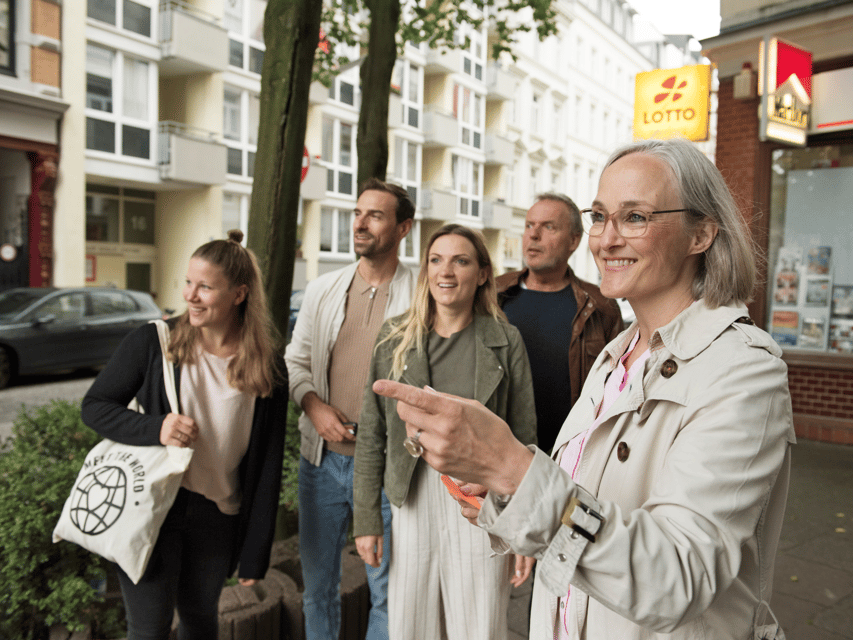
The tour begins at Am Brunnen Tänzerin am Waldplatz, outside Jahnallee 18. This is a useful meeting place because it gives the guide room to gather the group before setting off into the Waldstraßenviertel.
You should arrive ready to walk, not ready for a museum visit. The experience lasts two hours and takes place outdoors. There is no promise of entering private buildings, touring interiors, or inspecting stairwells, so comfortable shoes are more important than dress shoes. Bring suitable clothing for the forecast, since the tour operates in rain or sunshine.
The opening section is likely to give you the basic shape of the neighborhood and its place in Leipzig. The Waldstraßenviertel is known for old streets and buildings from the Wilhelminian period, the era of the German Empire before the First World War. Here, the value lies in seeing how political and social changes appear in the built city.
I like this kind of beginning because it lets you connect broad history with ordinary streets. A date in a book can feel distant. A street where a particular event took place gives that date a physical setting.
More History Tours in Leipzig
- Leipzig: City History Canal Sightseeing Tour on a Motorboat
★ 4.7 · 6,232 reviews - Leipzig: 1.5-Hour Historical Walking Tour in German
★ 4.7 · 2,217 reviews - Leipzig Old Cemetery: 75-Minute Dark History Tour
★ 4.6 · 181 reviews
Reading the Wilhelminian period through old streets
One of the tour’s main themes is the Wilhelminian period. You can expect the guide to use the neighborhood as a setting for explaining how Leipzig changed during that period and how those changes shaped the city’s old streets.
This is also where you should set your expectations carefully. If you mainly want detailed information about who built each house, who lived in it, and how the facades were designed, this may not be the right tour for you. The route is not limited to architecture, and the available information does not promise access to building interiors.
For me, that broader angle is both the attraction and the risk. The houses are not treated as isolated pretty facades. They become evidence of changing power, wealth, society, and city life. But if your ideal walk is a close architectural survey of the Waldstraßenviertel, you may find the historical storytelling too wide-ranging.
The guide’s role matters here. A good explanation can make a street feel much more interesting without filling your head with dates. One participant specifically praised the guide, and another called the tour cool and the guide excellent. That is the clearest positive pattern attached to the experience.
From old streets to Leipzig’s war stories
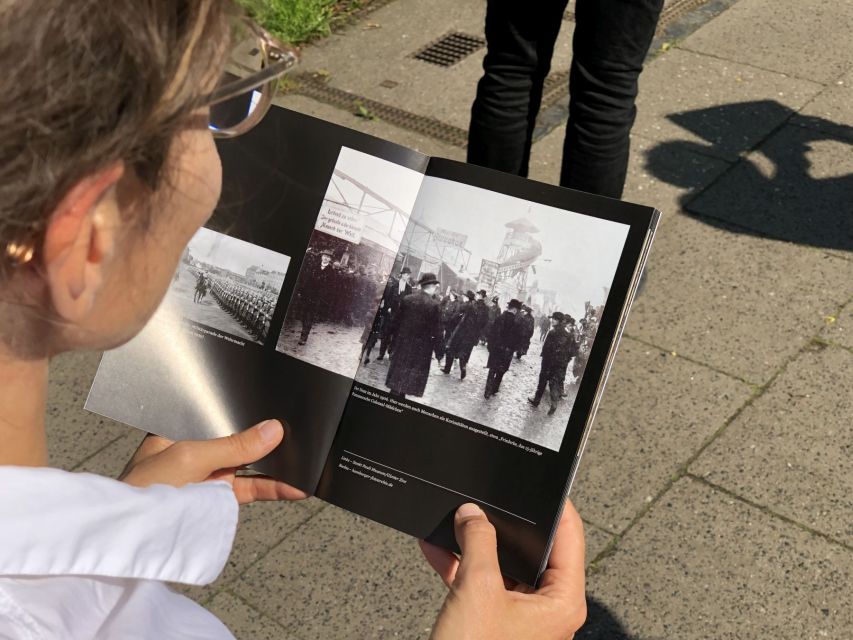
The route also addresses the world wars. The supplied details do not specify every stop or building connected with these subjects, so I would not book this expecting a fixed list of memorials or a detailed military itinerary.
Instead, think of the war sections as part of a larger city story. Leipzig’s streets carry traces of different eras, and the guide uses them to explain how times changed. The tour promises stories linked to specific places, which gives the historical material a local scale.
This approach is useful if you want an introduction rather than a specialist seminar. You can listen for the connections between public events and daily life in the city. The tour’s focus on surprising facts and anecdotes should also keep the walk from becoming a string of dry dates.
The German-only format is important. You need enough German to follow a spoken historical explanation while walking. A brochure is included, but it should not be treated as a substitute for translation. If you are still learning German, consider how comfortable you are with place names, dates, and longer explanations before reserving.
Jewish life stories and the people behind the dates
The tour includes stories of Jewish life in Leipzig. This is one of its most meaningful subjects because it brings attention to people and communities, not just famous battles and rulers.
The information provided does not name specific individuals or identify exact stops. That means I cannot promise a detailed biography walk or a visit to a particular synagogue, memorial, or former residence. What you can expect is a historical account connected to Leipzig and its streets.
I value this part of the experience because it broadens the usual city-tour script. Leipzig’s past was not made only by kings, armies, or grand public events. Jewish residents were part of the city’s social life, and their stories help you understand what was lost and how the city changed.
The guide’s skill will shape this section more than any building will. The best version of this tour will make the subject personal and grounded. The less effective version could leave you wanting more names and specific locations. If Jewish history is your main reason for booking, ask the guide at the beginning how much time the route gives it.
Still Leipzig, at a slower pace:
- Leipzig: 1.5-Hour Public Tour with Night Watchman Bremme
★ 4.6 · 3,116 reviews - Combo Tour in Leipzig: Guided City Tour & City Sightseeing
★ 4.7 · 2,317 reviews - Leipzig: 2-Hour Guided Walking Tour in German
★ 4.8 · 1,612 reviews - Leipzig: 13-Stop Hop-on/Hop-off Bus Ticket
★ 4.6 · 1,468 reviews
The Battle of the Nations and the end of an era
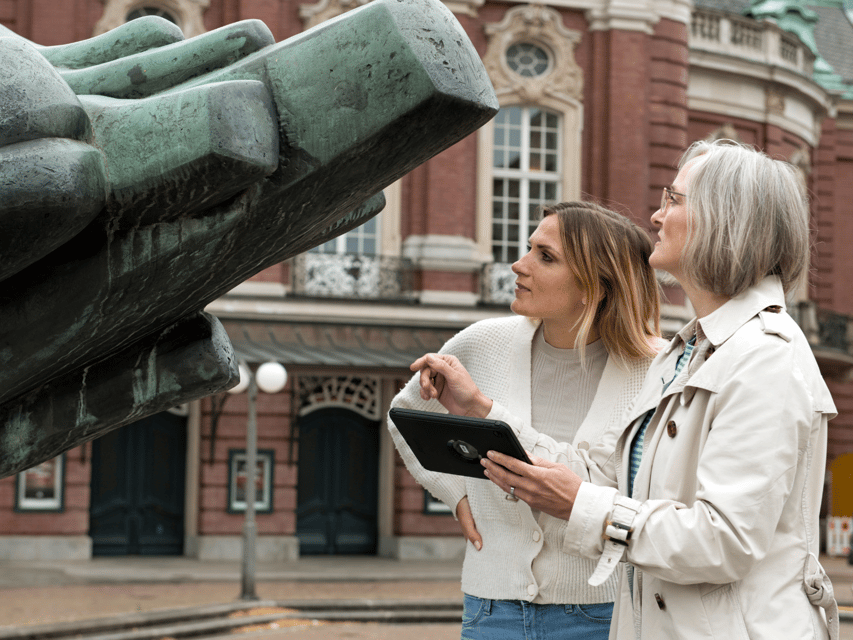
Another major subject is the Battle of the Nations, the 1813 battle near Leipzig during the Napoleonic Wars. The tour promises to explain the end of the battle and where related events took place.
You should not confuse this walk with a dedicated Battle of the Nations excursion. The tour lasts two hours and centers on the Waldstraßenviertel and nearby areas. The supplied information does not say that it visits the main Battle of the Nations monument or the battlefield outside the central city.
Still, hearing about the battle while walking through Leipzig can add useful context. The city was not just a backdrop to European politics. Large events affected its streets, residents, and future. A guide can help you understand that connection more clearly than a quick look at a monument.
The reference to 1700 adds another early date to the tour’s wide time range. The information does not explain the exact event connected with that year, so you should expect the guide to introduce it rather than plan around a specific landmark. This wide sweep makes the tour lively, but it also means no single period receives the full attention of a specialist tour.
Rosental, August the Strong, and a surprising change of subject
The route may continue into Rosental, where the guide discusses a plan connected with August the Strong. According to the supplied details, he came close to building a palace there.
That is a good example of the tour’s fondness for local what-if stories. A palace that was nearly built can reveal ambitions, royal taste, and the ways a city might have looked very different. It is the sort of anecdote you are likely to remember after the dates have faded.
But Rosental also shows why you should read the tour as a general historical walk, not a pure Waldstraßenviertel architecture tour. One participant expected the main subject to be the neighborhood’s villas, builders, residents, and architecture, then felt the route had moved away from that promise when it reached Rosental and the Red Bull Arena.
I think that criticism is fair as a planning warning, not necessarily as a judgment on the whole tour. If you want a tightly focused architectural walk, this route may wander too far. If you enjoy connections between city planning, royal plans, sports, open spaces, and changing public life, the wider route may be exactly what you want.
The Red Bull Arena and the problem of expectations

The Red Bull Arena is another possible point on the walk. Its presence can surprise anyone who expects only historic facades and old residential streets.
The arena represents modern Leipzig rather than the older periods named in the tour description. Without more route details, I cannot say how long the group stays there or exactly what the guide explains. I can say that its inclusion reinforces the tour’s central idea: the city changes, and today’s landmarks sit beside older stories.
Still, this is where your choice matters most. I would book this tour if you like a route that compares different versions of Leipzig. I would skip it if your priority is a specialist survey of architecture in the Waldstraßenviertel, especially if you hope to enter buildings.
The mixed response makes sense. A guide can be excellent, the material can be interesting, and the tour can still miss the mark for someone who booked a narrower theme. A short message to the provider before booking could help clarify how much time is spent on residential architecture, Rosental, and the arena.
Funkenburg Festival and the city’s living memory
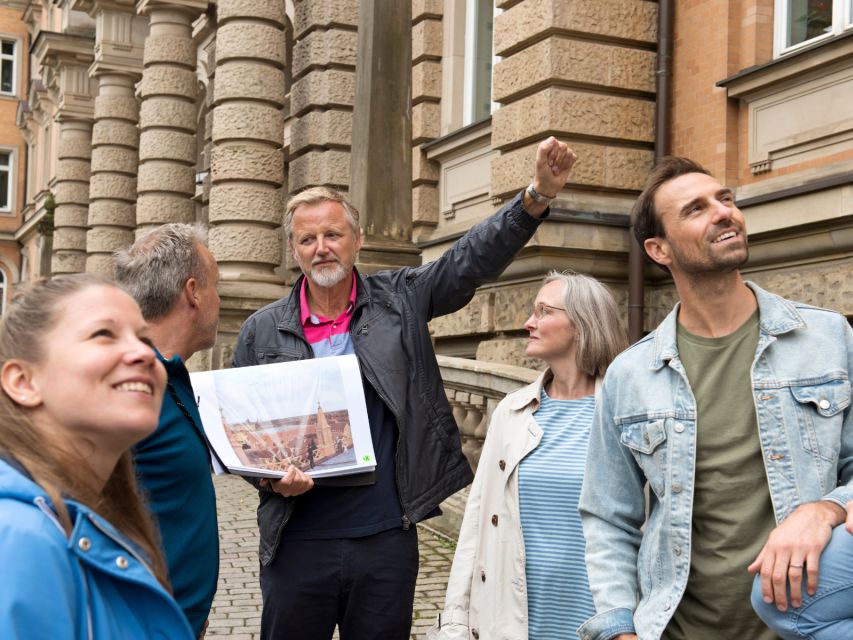
The annual Funkenburg Festival is also part of the historical picture. The available information does not give a festival date, a performance schedule, or a guarantee that you will see the event during your tour. Treat it as a subject the guide discusses, not as an included festival ticket or live program.
This is a worthwhile detail because it connects the neighborhood with public celebration and local memory. History here is not only about wars and rulers. Festivals show how places are remembered, reused, and explained to later generations.
I would especially value this section if the guide ties the festival to the district itself. It can help you see how residents continue to give meaning to old streets. Just keep your expectations realistic: the listed duration is two hours, and the tour is a walking history program, not a festival visit.
What the guide and brochure add

A live guide leads the tour, and a tour brochure is included. The guide is the main reason to choose this experience over reading a city guidebook. You can ask for clarification, hear stories in sequence, and follow the connection between a place and an event.
The brochure should be useful after the walk, especially if you want to remember names, dates, or themes. No details are given about its length or language beyond the fact that the tour itself is in German, so I would not rely on it as a full written translation.
The strongest praise has gone to the guide. One participant described the guide as super, and another called the guide excellent. That matters because the subject covers a lot of ground, from 1700 to the Wilhelminian period, the world wars, Jewish life, the Battle of the Nations, festivals, Rosental, and modern Leipzig.
There is also a serious service warning. A scheduled tour once failed to take place, with no advance notice, and the participant learned this only two days later. The money was refunded, but the wasted trip remained. Before setting out, check your booking communication and confirm that the tour is running, especially if you are arranging other plans around it.
Is $29 a fair price for two hours?
At $29 per person, the tour costs about $14.50 per hour. That is reasonable if you want a live German-language guide, a prepared historical route, and local context that would be hard to assemble quickly on your own.
The value depends on what you want from those two hours. For a broad introduction to Leipzig’s past, the price is fair. You are paying for explanation and selection, not simply for a walk through streets you could reach without a ticket.
The value drops if you want a detailed architecture tour or building access. The route may spend time on Rosental and the Red Bull Arena, and the available information does not promise interior visits. In that case, a more specialized local architecture walk may fit better.
Flexible booking helps. You can reserve now and pay later, and cancellation is free up to 24 hours before the start for a full refund. That is useful when your Leipzig plans depend on weather or changing train schedules, though the tour itself still runs rain or shine.
Who should book this Leipzig walk?
I would recommend it to you if you enjoy history told through streets and want several eras in one outing. It suits visitors who can follow German, like anecdotes, and prefer a guide’s explanation to a long museum visit.
It may also work well early in your Leipzig stay. The walk can give you a sense of how the Waldstraßenviertel, Rosental, older political events, and modern landmarks relate to one another. You can then return to the subjects that interest you most.
I would be cautious if you have limited mobility. The experience is not suitable for people with mobility impairments, and the tour takes place on foot for two hours. Pets are not allowed, so plan accordingly.
Most of all, decide whether you want breadth or precision. This is a broad historical walk with a strong guide-dependent element. It is not clearly a house-by-house architectural inspection.
Should you book the Waldstraßenviertel tour?
Book it if you want a German-language history walk with unusual links between Leipzig’s old streets, Jewish life, the Battle of the Nations, August the Strong’s unrealized palace plan, the Funkenburg Festival, and the modern Red Bull Arena.
Skip it if you want the entire two hours devoted to villas, facades, builders, residents, and interiors. I would also confirm the departure before making a special journey, because one canceled outing was communicated too late.
With a 3.2 rating from four reviews, the experience has not produced a clear consensus. The guide earns the warmest praise, while the main weakness is a mismatch between the expected theme and the actual route. Go in expecting a wide-ranging city history walk, wear sensible shoes, and you are more likely to find the $29 worthwhile.
FAQ
Where does the tour meet?
The guide waits at the Tänzerin fountain at Waldplatz, Jahnallee 18, 04109 Leipzig.
How long does the tour last?
The walking tour lasts two hours.
What language is the tour in?
The live tour guide conducts the experience in German.
Is a tour guide included?
Yes. A live tour guide is included.
Is a brochure included?
Yes. The tour includes a tour brochure.
What historical subjects does the tour cover?
It covers Leipzig’s Wilhelminian period, the world wars, the Battle of the Nations, Jewish life stories, events connected with 1700, the Funkenburg Festival, and other local anecdotes.
Does the tour include the Red Bull Arena?
The route can include the Red Bull Arena, but the supplied information does not specify how much time is spent there.
Does the tour visit Rosental?
Rosental can be part of the route. The guide discusses the possibility that August the Strong nearly built a palace there.
Can I bring a pet?
No. Pets are not allowed.
What happens if it rains?
The tour takes place rain or shine. You should bring suitable clothing and comfortable shoes.
Just added around Leipzig
- City tour on foot, by S-Bahn and tram★ 4.5 · 12 reviews
- Tour on Lake Cospuden★ 4.7 · 58 reviews
- Leipzig: True or false? Walking Tour and Interactive Game★ 4.8 · 28 reviews
- Leipzig: Segway tour to the Battle of the Nations Monument★ 5.0 · 4 reviews
- Leipzig Spirits Manufacture: Guided Tour and Tasting★ 4.8 · 79 reviews
- Leipzig: Scavenger Hunt Self-Guided Tour★ 4.7 · 11 reviews
- Leipzig: Segway City Tour – Discover Sights, Parks & History★ 5.0 · 7 reviews
- Leipzig: Private pub crawl with insider-guide & free shots★ 4.5 · 4 reviews
Historical Tours, compared.
City History Canal Sightseeing Tour on a Motorboat
Read our review →


Browse the lists this tour appears in