
Reviewed · NIGHT WATCHMAN TOURS
Mannheim: Public Night Watchman Tour with Night Watchwoman Marie
Mannheim gets more interesting after dark. I like the way Night Watchwoman Marie turns a simple city walk into a lively piece of theater, and I like the unusual subjects, from dishonest professions to the first horseless carriage. The lantern, halberd, and old-style speech give the tour a clear sense of place without losing its humor.
The main point to consider is language: the live tour is in German, with some content presented in its original language. You should also dress for the weather. One December tour remained engaging in bitter cold, but 90 minutes outdoors is still 90 minutes outdoors.
In This Review
- Key points before you book
- Why Mannheim works so well after sunset
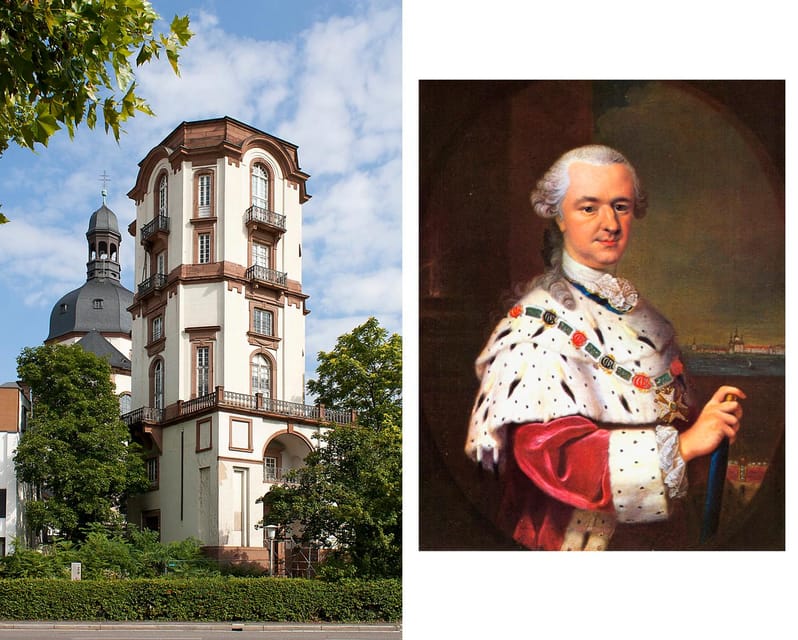
- Starting beneath the Mannheim Baroque Palace
- Palais Bretzenheim and the world around the court
- Alte Sternwarte and Mannheim’s curious inventions
- Schillerhaus and the literary side of Mannheim
- Schillerplatz and the city’s public spaces
- The Jesuit Church and the weight of Mannheim’s past
- Paradeplatz and the changing face of the city
- Dalberghaus before returning to the palace
- What Marie’s performance adds
- Is $17 a fair price for 90 minutes?
- Who should book this Mannheim walk?
- My verdict on Night Watchwoman Marie
- FAQ
- Where does the tour begin?
- Where does the tour finish?
- How long does the tour last?
- What language is the tour in?
- Is the tour wheelchair accessible?
- What landmarks are included?
- Can I cancel for a refund?
Key points before you book
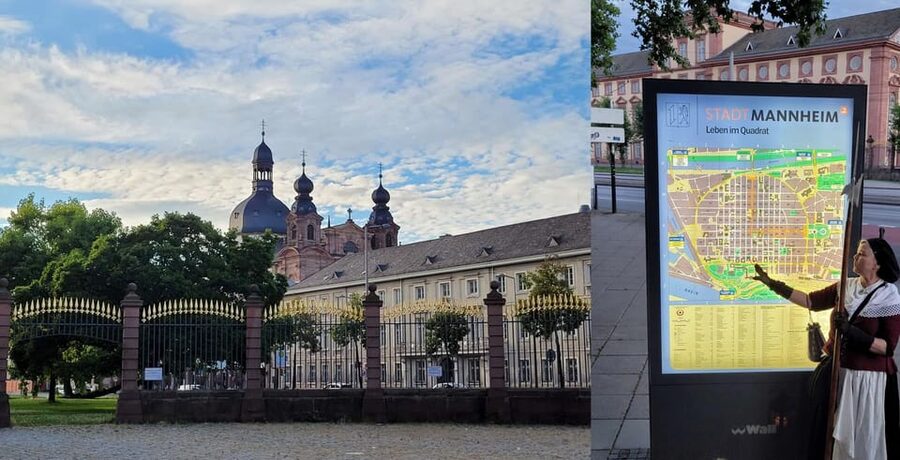
- Marie brings the night watchman role to life: Her costume, lantern, and halberd make the walk feel like a guided performance rather than a standard history talk.
- The stories reach beyond medieval clichés: Expect anecdotes about dishonest jobs, bad air, lightning rods, automobiles, and Mannheim’s Elector Carl Theodor.
- The route links major Mannheim sights: You pass the Baroque Palace, Palais Bretzenheim, the old observatory, Schiller sites, the Jesuit Church, Paradeplatz, and Dalberghaus.
- The tour is short but full: The 1.5-hour route gives you a useful introduction to the old city without taking up an entire evening.
- It is a good value at $17: You receive a costumed, live-guided city tour with a distinctive theme for less than many large sightseeing experiences.
- German is essential: The humor and storytelling matter here, so a basic grasp of German will make a major difference.
Why Mannheim works so well after sunset
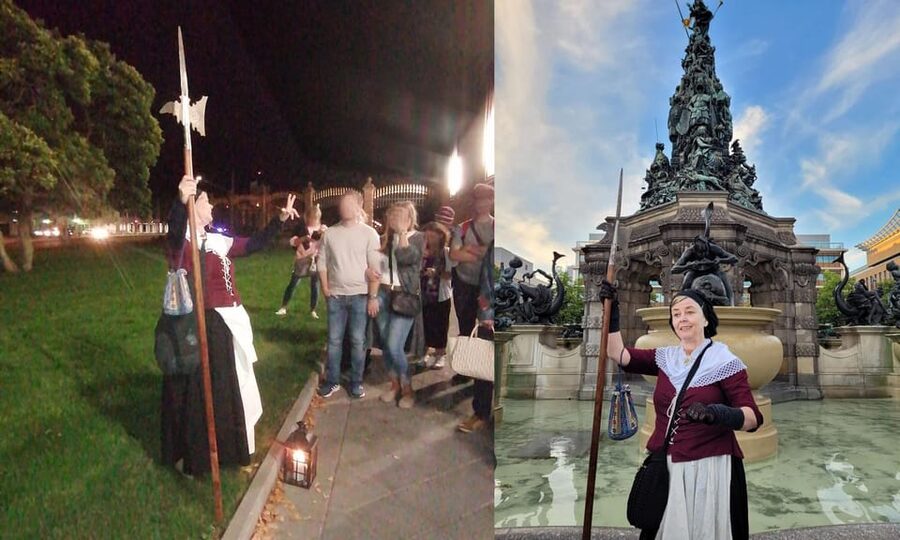
Mannheim is a planned city with grand squares, court buildings, churches, and broad routes tied to its time as the seat of the Elector Palatine. By day, you can read the facades and admire the architecture. At night, the city’s older stories take over.
That is where this tour earns its keep. Marie does not simply point at a building and recite a date. She uses the night watchwoman’s job as a viewpoint, then connects daily life, crime, inventions, court culture, and public order.
The result is less formal than a traditional architectural walk. I would choose it if you want to understand how Mannheim functioned, not just memorize the names of its landmarks.
The night watch role also gives the tour a practical theme. Marie carries a halberd and presents herself as the person responsible for keeping peace and protecting the group from thieves and drunken rabble. That does not turn the walk into a frightening show. Instead, it adds a playful reminder that darkness once carried real risks.
Her costume and lantern help, too. They are not just decorations for photographs. They establish the mood from the first minutes and give the stories a frame. You are hearing about the past from a character who supposedly moved through that past at night.
More Night Watchman Tours in Germany:
- Dresden: The Original Night Watchman Tour in Lantern Light
★ 4.6 · 6,653 reviews - Hamburg: Night Watchman’s Tour of St. Pauli in German
★ 4.7 · 4,818 reviews - Leipzig: 1.5-Hour Public Tour with Night Watchman Bremme
★ 4.6 · 3,116 reviews
Starting beneath the Mannheim Baroque Palace
The meeting point is the Court of Honor at Mannheim Baroque Palace. This is a practical starting place because the palace immediately gives you the grandest possible introduction to Mannheim’s ruling world.
The palace connects the tour to Elector Carl Theodor and the court culture often called the Golden Age. Marie’s stories about the Elector’s Musenhof, or court of the muses, add a human and sometimes amusing layer to a setting that can otherwise feel imposing.
I like this opening because it sets up a useful contrast. The palace represents court power, ceremony, and cultural ambition. The night watchwoman represents the streets, the working world, and the people who had to keep order once the court day was finished.
You should arrive with enough time to find the Court of Honor. The activity returns here at the end, so you will not need to arrange transport between the start and finish. The supplied details do not promise an interior palace visit, so think of this as a city walk beginning and ending at the palace rather than a palace tour.
Palais Bretzenheim and the world around the court
From the palace, the route continues to Palais Bretzenheim. Its inclusion keeps the focus on Mannheim’s courtly past, but Marie’s presentation is designed to move beyond polished facades.
The stories about the dishonest professions are one of the tour’s more unusual features. This phrase points to occupations once treated with suspicion or social contempt. That subject can make the past feel more real because old cities were not made only of rulers, artists, and respectable merchants.
I would pay close attention here if you enjoy social history. The best city tours explain who had power, who worked under pressure, and who lived outside the accepted order. Marie’s night watchwoman persona gives her a natural route into those questions.
The tone is not grim. The experience is repeatedly described as entertaining, informative, and full of affection for Mannheim. You can expect jokes and anecdotes alongside the darker material, rather than a solemn lecture about crime and punishment.
Alte Sternwarte and Mannheim’s curious inventions
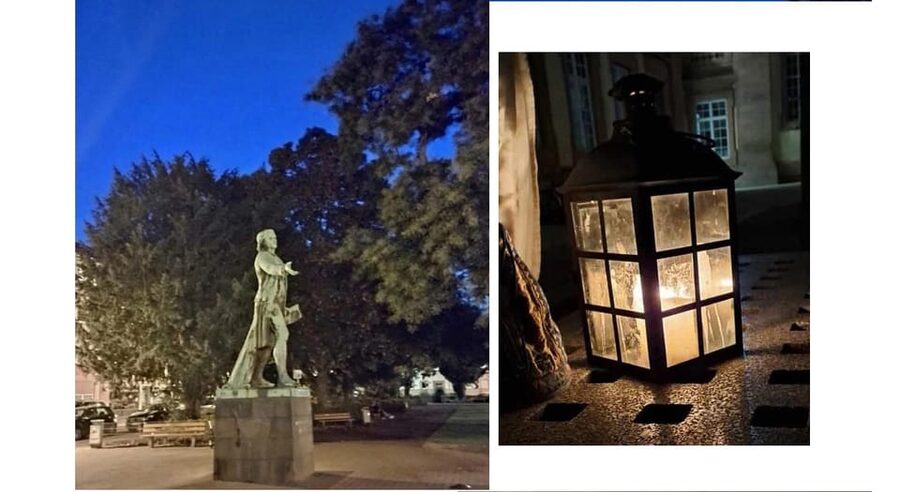
The Alte Sternwarte, or Old Observatory, adds a different note to the walk. Here the tour’s interest in science, technology, and changing ideas comes forward.
Marie’s subject list includes the lightning rod and the horseless carriage, meaning the automobile. Those details suggest a tour that connects older city life with the arrival of inventions that changed how people understood danger, travel, and public space.
The lightning rod is especially well suited to a night watchman’s story. Lightning, fire, and weather were serious concerns in a city before modern systems made them easier to manage. You should expect the subject to be treated as an anecdote within the walk, not as a technical museum presentation.
The automobile provides another amusing bridge between past and present. The phrase horseless carriage captures how strange early cars must have seemed. It also gives you a way to think about Mannheim as a place where modern transport and older street life met.
The supplied information does not specify whether you enter the observatory. I would treat the stop as a guided look at the site and its place in the city story.
A few more Germany trips worth comparing
- Mannheim, guided Walking Tour: Discover Mannheim
★ 4.5 · 62 reviews - Mannheim: Guided Street Art Walking Tour
★ 4.7 · 57 reviews - Mannheim, guided costume tour: Tour with Night Watchman
★ 4.9 · 26 reviews - Segway Tour: Old Town Hall, Water Tower & Ehrenhof
★ 5.0 · 21 reviews
Schillerhaus and the literary side of Mannheim
Schillerhaus Mannheim brings Friedrich Schiller into the route. This stop gives the tour a literary angle and ties into the city’s cultural life.
Schiller’s connection helps balance the darker stories about thieves, drunken disorder, and questionable jobs. Mannheim was not only a place of rules and patrols. It was also a place where theater, literature, music, and court culture mattered.
Marie’s stories about Carl Theodor’s Musenhof fit naturally with this part of the route. The court’s cultural ambitions helped shape Mannheim’s identity, while Schiller represents the creative energy that could challenge, entertain, and provoke an audience.
If you know little about Schiller, you can still enjoy the stop. This is not presented as a specialist literary seminar. It is part of a broader story about the people and ideas that made the city more than a collection of buildings.
Schillerplatz and the city’s public spaces
The walk then reaches Schillerplatz. A stop in a square matters because public spaces reveal how a city gathers people, displays status, and manages movement.
In daylight, a square can seem ordinary. At night, under a lantern, it becomes a useful setting for stories about patrols, public behavior, and the practical work of watching a city. I like this kind of change in viewpoint. It encourages you to look at familiar urban spaces as working places, not only scenic backgrounds.
The route through the former old town’s alleys is described as a mix of humor, night watchman life, and Mannheim history. That combination is likely to appeal to you if you prefer a walk with a strong narrative rather than a checklist of monuments.
There is also a physical point to remember. A 1.5-hour walking tour requires you to remain on your feet, and the experience takes place at night. The tour is wheelchair accessible, but you should still consider your own comfort with an evening route and changing weather.
The Jesuit Church and the weight of Mannheim’s past
The Jesuit Church is another major landmark along the route. Its presence brings religious architecture and the Elector’s era into the story.
A night watchwoman’s account can make a church stop feel different from a standard church visit. Rather than focusing only on artistic details, Marie can connect the building to the city around it, including authority, public life, and the people who moved through Mannheim after dark.
The tour information does not promise a detailed interior visit, so you should not book this expecting a full church art tour. The value is in seeing the church as one piece of the city’s historical setting and hearing how it fits into the larger story.
This is also a good point to judge the tour’s style. If you want dates, architectural terminology, and a quiet academic presentation, another tour may suit you better. If you like buildings explained through characters and anecdotes, Marie’s approach should be more rewarding.
Paradeplatz and the changing face of the city
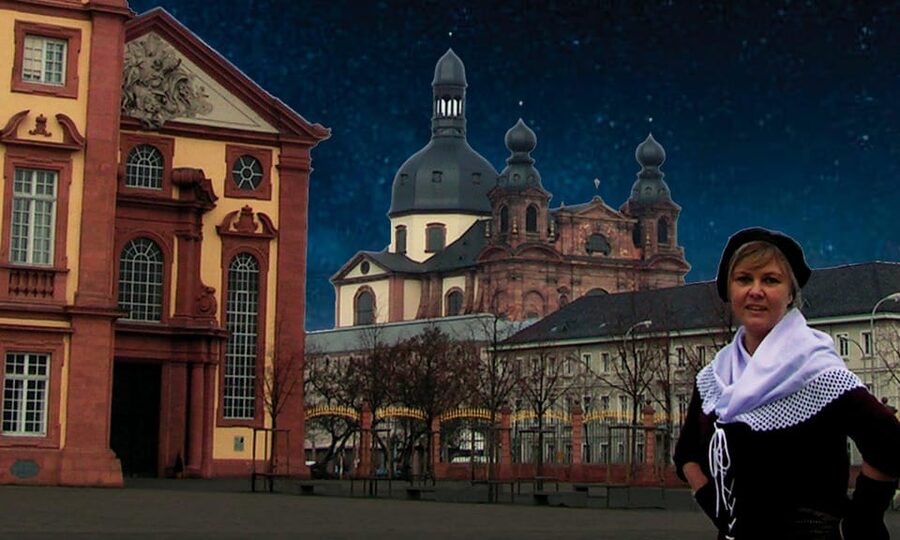
Paradeplatz brings the route into one of Mannheim’s best-known central public spaces. Its name alone suggests order, ceremony, and movement, which suit a tour built around public control.
Here, the night watchwoman’s role has extra meaning. A night patrol had to deal with the city as it actually behaved, not as rulers wished it would behave. Marie’s stories about bad air, disorder, and street life help show the gap between official ideals and everyday experience.
The reference to stinking air is a small but effective detail. It reminds you that historic cities had problems that grand architecture tends to hide. Smells, waste, noise, and crowding were part of urban life, and a person walking the streets at night would have noticed them.
The stop also helps connect the old city to present-day Mannheim. You see how a public space can carry layers of court history, civic use, and modern city life. The tour does not ask you to admire the past uncritically. It lets you laugh at some of its habits while recognizing its rough edges.
Dalberghaus before returning to the palace
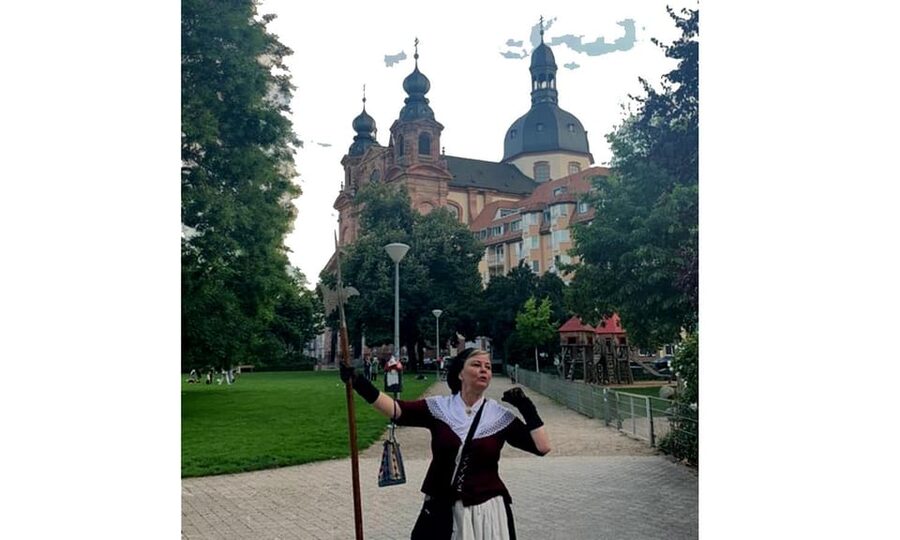
Dalberghaus is the final named stop before the group returns to Mannheim Baroque Palace. Like Palais Bretzenheim and the palace, it adds to the picture of Mannheim’s courtly and civic architecture.
By this point, the tour has moved through several kinds of history: aristocratic culture, literature, religion, technology, public order, and the less respectable side of urban work. Dalberghaus works as a final piece in that sequence before the walk closes where it began.
I appreciate the circular route because it simplifies your evening. You finish at a known central landmark instead of trying to find your way from a distant neighborhood. It also gives the tour a neat shape, beginning with power and returning to it after looking at the city from street level.
The itinerary lists guided touring at each stop, but it does not give exact visit times or promise entry into every building. Plan on a continuous outdoor walk with explanations at or near the landmarks.
What Marie’s performance adds
The guide is Night Watchwoman Marie, and her performance is the main reason to choose this experience over a regular city walk. She uses costume, lantern, halberd, old-fashioned night watch language, and character-based storytelling to make the past easier to picture.
The style is clearly meant to be kurzweilig, or brisk and entertaining. That matters during an evening tour. A long lecture can feel heavy after dark, while a sequence of short anecdotes keeps you moving and listening.
The best praise for Marie centers on her delivery. She is described as engaging, committed, interesting, and entertaining, with particular appreciation for how she made Mannheim around 1875 understandable from a night watchwoman’s viewpoint. A local who grew up in Mannheim even found new things to learn, which is a useful sign for anyone who already knows the city.
There is also a personal touch in the story of Marie stepping in for her husband. That detail suggests an established family role in these tours, but you should still book based on the named guide and German-language format provided for this experience.
The humor seems to be a major part of the appeal. One December walk stayed exciting despite klirrende Kälte, or biting cold. That is a strong indication of Marie’s energy, though it is not a reason to underestimate the weather.
Is $17 a fair price for 90 minutes?
At $17 per person, I consider this good value if you want a guided introduction to Mannheim with a clear theme. You get 1.5 hours, a live costumed guide, a route through several important sites, and stories that go beyond standard palace history.
The price is especially reasonable for a small city experience that combines performance and local history. You are not paying simply to be led from one facade to another. The unusual subjects, including dishonest professions, the lightning rod, automobiles, bad air, and the night watchman’s difficult life, give the walk a distinct personality.
The value depends on how much you understand German. Because the guide speaks German and some material is presented in its original language, limited German may reduce the humor and detail you receive. You could still enjoy the visual setting and performance, but the spoken stories are the heart of the tour.
The free cancellation period gives you room to adjust plans up to 24 hours before the activity for a full refund. You can also reserve and pay later, which helps if your Mannheim schedule is still changing.
Who should book this Mannheim walk?
I would recommend it to you if you enjoy local characters, historical anecdotes, and city walks that do not take themselves too seriously. It suits couples, families with older children who understand German, and visitors who want a gentle evening activity after seeing Mannheim’s main sights.
It is also a smart choice for repeat visitors. The route covers familiar landmarks, but the night watchwoman’s viewpoint can make them feel new. The local response is especially encouraging here, since even an original Mannheim resident found fresh information in the tour.
History fans should like the range of subjects. You receive court culture, literature, religion, technology, public health, street crime, and working life in one compact walk.
I would be more cautious if you want an English tour, a long indoor visit, or a highly technical explanation of architecture. The experience is in German, includes outdoor walking, and places its emphasis on storytelling and character rather than exhaustive monument detail.
Bring warm clothing in winter, comfortable shoes, and enough German to follow spoken anecdotes. Since the tour is wheelchair accessible, it can work for visitors with mobility needs, though the activity remains a walking tour and exact route conditions are not described in the available details.
My verdict on Night Watchwoman Marie
You should book this tour if you want Mannheim’s famous buildings connected by a memorable human voice. Marie’s costume, lantern, and halberd provide the theater, while her stories supply the substance.
The strongest reason to go is the mix. You will hear about courtly culture and Schiller, then shift to dishonest work, foul air, inventions, and the hazards of night patrol. That range makes the city feel lived in rather than polished for display.
For $17, the tour offers a focused 90-minute introduction with a distinctive guide and a convenient start and finish at the Baroque Palace. Book it if German works for you and you are ready to walk outside after dark. Skip it only if you need English commentary or prefer a formal indoor sightseeing tour.
FAQ
Where does the tour begin?
The tour begins at Mannheim Baroque Palace, in the Court of Honor.
Where does the tour finish?
The route returns to Mannheim Baroque Palace.
How long does the tour last?
The tour lasts 1.5 hours.
What language is the tour in?
The live tour guide speaks German. Some content is presented in its original language.
Is the tour wheelchair accessible?
Yes, the activity is listed as wheelchair accessible.
What landmarks are included?
The route includes Mannheim Baroque Palace, Palais Bretzenheim, Alte Sternwarte, Schillerhaus Mannheim, Schillerplatz, the Jesuit Church, Paradeplatz, and Dalberghaus.
Can I cancel for a refund?
Yes. You can cancel up to 24 hours in advance for a full refund. You can also reserve now and pay later.
Just added around Germany
- The History of Berlin: WWII PRIVATE Walking Tour With Locals★ 5.0 · 209 reviews
- Private Walking Tour in Berlin: Hitler’s Germany & WWII★ 5.0 · 7 reviews
- Private Berlin WWII and Cold War History Tour with Local Expert Guide★ 5.0 · 28 reviews
- Private Walking Tour Berlin 3 hours: Brandenburg, Historic Center★ 5.0 · 7 reviews
- Berlin: Private Bike Tour of the Berlin Wall and Third Reich★ 5.0 · 23 reviews
- Berlin: Guided Private Bike Tour to Explore the Highlights★ 5.0 · 12 reviews
- Berlin Photography Masterclass – Private Photography Lesson★ 4.5 · 23 reviews
- Group Driving Tour 1 to 6 people. Berlin Shore Excursion incl pick-up at Port★ 5.0 · 8 reviews
Night Watchman Tours, compared.
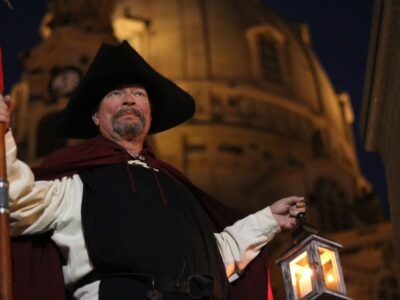
The Original Night Watchman Tour in Lantern Light
Read our review →
1.5-Hour Public Tour with Night Watchman Bremme
Read our review →

The Night Watchman Old Town Walking Tour in German
Read our review →
Browse the lists this tour appears in