
Reviewed · WALKING TOURS
Munich: Highlights Walking Tour with a Guide
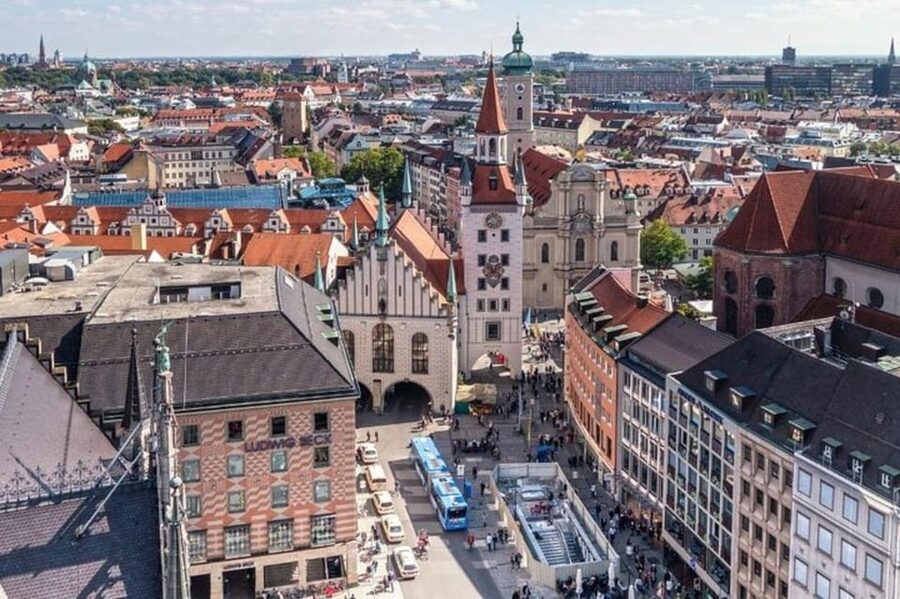
Munich rewards curious walkers. This three-hour Old Town tour combines must-see sights with local stories, and I like that you can shape a private outing around your interests. I also like the useful city advice from guides such as Elettra and Roberto, who were praised for making the tour engaging and informative. The main concern is time: one disappointing experience spent too long on churches and missed the Residenz and the planned Glockenspiel finish.
The tour costs $53 per person and begins at the Julia-Capulet-Statue near Marienplatz. It is a good first look at central Munich, but you should tell your guide clearly what matters most to you, especially if churches are not high on your list.
In This Review
- Key points at a glance
- Why this three-hour Munich walk works well
- Starting at Marienplatz and the Julia-Capulet-Statue
- Frauenkirche and Munich’s church architecture
- The Rathaus-Glockenspiel at the right hour
- Hofbräuhaus and the beer culture stop
- Odeonsplatz and Munich’s difficult past
- The Residenz and Viktualienmarkt: two stops worth protecting
- What $53 per person really buys you
- Who should book this Munich walking tour
- Should you book it?
- FAQ
- How long is the Munich Highlights Walking Tour?
- Where does the tour meet?
- Where does the tour finish?
- Can I see the Rathaus-Glockenspiel during the tour?
- Is the tour private?
- Which languages are offered?
- Is the walking tour wheelchair accessible?
- Are food, drinks, or entrance tickets included?
Key points at a glance
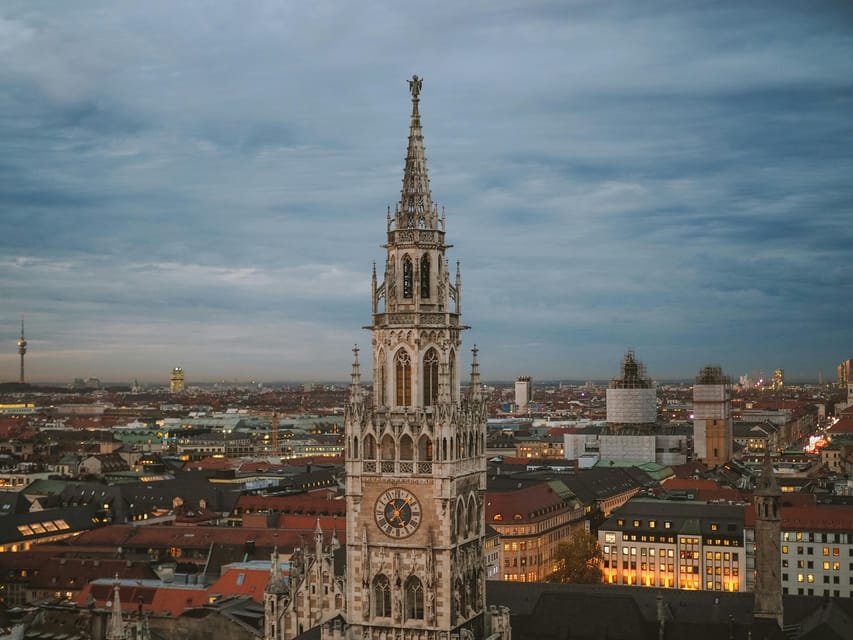
- Glockenspiel timing matters: The Rathaus-Glockenspiel performs at 11:00 am, 12:00 pm, and 5:00 pm from March through October.
- A private option is available: You can request a private and exclusive tour, with the route shaped around your interests.
- The walk covers Munich’s core sights: Marienplatz, Frauenkirche, Hofbräuhaus, Odeonsplatz, the Residenz area, and Viktualienmarkt all feature in the plan.
- Guides are the strongest part: Elettra was praised for her energy and preparation, while Roberto earned high marks for his friendly manner and broad knowledge.
- The route has a serious side: Odeonsplatz offers important context about Nazi rallies in the 1930s and 1940s.
- Plan around your priorities: The tour may not allow enough time for every stop in equal detail, so speak up early.
Why this three-hour Munich walk works well
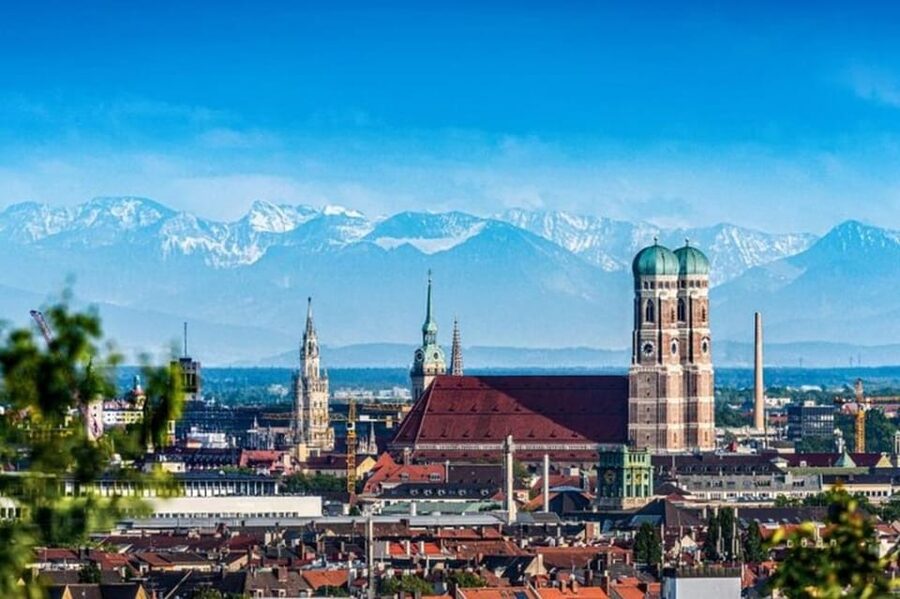
Munich’s Old Town is compact enough to explore on foot, but it can feel like a parade of grand façades if you do not know what you are seeing. This tour gives those buildings a story and connects the main squares, churches, palace, market, and beer hall in one outing.
I see the biggest value in using the walk as your first orientation to Munich. You get a central route, a guide who can answer questions, and practical suggestions for the rest of your stay. That can save you from spending your first day simply circling Marienplatz and wondering where to go next.
The format is also more flexible than a fixed large-group excursion. A private group is available, and the tour is described as customizable. That means you can ask for more architecture, more city history, more food-market context, or less time inside churches. Still, flexibility only helps if you state your preferences at the start.
The rating is 4.4 out of 5 from nine reviews, with strong praise for the guides. Elettra was described as very prepared, engaging, and satisfying to tour with. Roberto was praised for being friendly and full of information. Another high mark specifically noted that the guide tailored the walk to the group’s requirements.
There is one important warning. A poor experience focused heavily on one church after the group had explained that religion was not a main interest. The Residenz was not reached, and the group was left at Odeonsplatz instead of returning to Marienplatz as expected. I would treat that as a reminder to confirm both your priorities and the exact ending point before you set off.
More Walking Tours in Munich
- Munich: Third Reich & WWII Walking Tour
★ 4.6 · 6,181 reviews - Third Reich Walking Tour Munich
★ 4.5 · 4,291 reviews - Munich: Old Town & Viktualienmarkt City Walk in German
★ 4.7 · 2,304 reviews
Starting at Marienplatz and the Julia-Capulet-Statue
The meeting point is in front of the Julia-Capulet-Statue, at Marienplatz 15. This is a sensible place to begin because Marienplatz is the heart of Munich’s Old Town and the tour returns there in the planned route.
You should arrive with the meeting point details ready on your phone. A central square can be confusing when there are crowds, street performers, or several statues and landmarks nearby. The supplied meeting information is specific, so use the Julia-Capulet-Statue rather than simply waiting somewhere in the square.
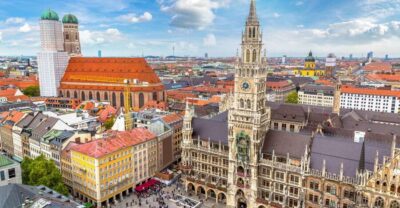
Marienplatz gives your guide an easy opening. You can learn how the square functions as Munich’s main gathering point while taking in the New Town Hall and its famous clock tower. The stop is not only a photo opportunity. It sets up the city’s civic story and gives you a clear mental map for the rest of the walk.
If you want to see the Glockenspiel, timing becomes crucial. Performances take place at 11:00 am, 12:00 pm, and 5:00 pm from March through October. A noon start may sound convenient, but it could create a rushed ending if the route is not handled carefully. Ask your guide at the beginning how the performance fits into the three-hour plan.
Frauenkirche and Munich’s church architecture
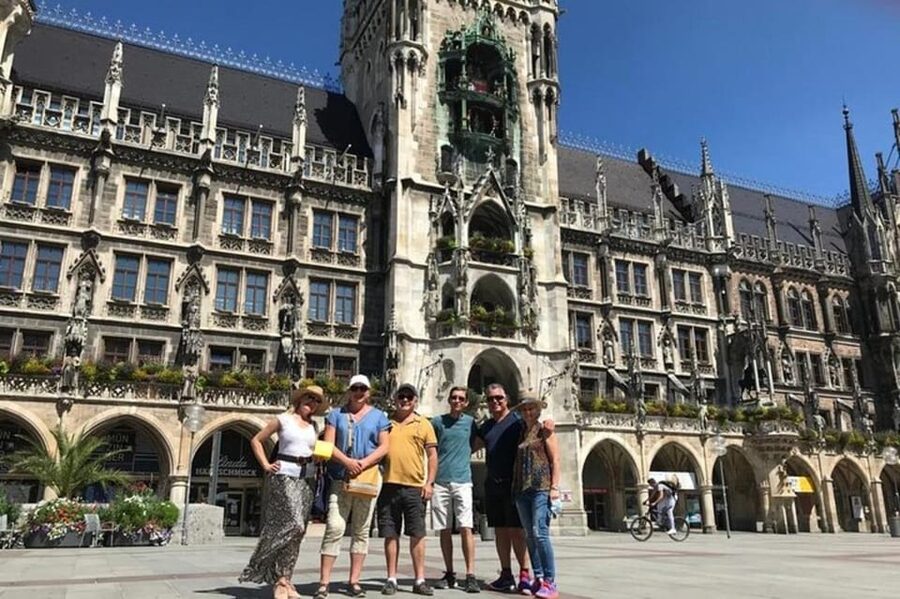
Frauenkirche is Munich’s largest church and one of the city’s defining buildings. Its twin towers shape the Old Town skyline, and a guided visit can help you understand why it matters to Munich rather than leaving you with only a quick exterior photograph.
The church also provides a useful way to discuss the damage Munich suffered during the Second World War and the work that followed. One guide reportedly placed a strong focus on how churches were damaged during the war and how they look today. That subject can be meaningful, especially if you want to understand the city’s rebuilding, but it may feel like too much if religious buildings are not your main interest.
This is where the customizable format needs to work in practice. Tell your guide whether you want a short look at Frauenkirche or a longer explanation of its architecture, wartime damage, and restoration. You can enjoy the stop without allowing it to take over the whole walk.
The tour description also includes the Rathaus-Glockenspiel as a guided stop, separate from the church visit. That gives you another reason to clarify the timing. If the performance is a priority, say so before the tour begins, not when the clock is already approaching noon.
The Rathaus-Glockenspiel at the right hour
The Glockenspiel is one of Munich’s most popular sights, and its moving figures draw a crowd at the stated performance times. From March through October, you can see it at 11:00 am, 12:00 pm, or 5:00 pm.
I would make this the first practical decision when booking. Choose a start time that gives you a realistic chance to see the performance without cutting the walk short. If you book a morning tour, ask if the guide plans to place Marienplatz at the beginning or end. If you book near noon, confirm the route and finishing point.
The performance itself is brief compared with a three-hour walking tour, but it is one of those classic Munich moments worth fitting in. The surrounding square also gives you time to look upward at the Rathaus façade and hear why the clock became such a draw.
Be careful with the promise of returning to Marienplatz. The planned route finishes there, but one group reported being left at Odeonsplatz and missing the performance they expected to see. That is not a small detail if your schedule includes a timed train, museum entry, or lunch booking.
Still Munich, at a slower pace:
- From Munich: Neuschwanstein & Linderhof Castle Full-Day Trip
★ 4.5 · 12,494 reviews - Neuschwanstein & Linderhof Castle-Fairytale Day Tour from Munich
★ 4.5 · 7,275 reviews - Dachau Concentration Camp Memorial Site Tour from Munich by Train
★ 4.5 · 5,637 reviews - Neuschwanstein Castle Tour from Munich
★ 4.5 · 5,117 reviews
Hofbräuhaus and the beer culture stop
Staatliches Hofbräuhaus is Munich’s famous beer hall and a natural stop on a city highlights walk. Even if you do not drink beer, the building connects to the city’s public culture, tourism, and long-running brewing traditions.
The guide is expected to cover fun facts about the beer purity law and Oktoberfest. Those details give the stop more weight than simply pointing out a popular hall. You can ask how Munich’s beer identity developed and how the annual Oktoberfest fits into the city’s wider traditions.
Food and drinks are not included, so do not assume that this stop is a meal break. The tour price covers the guide and walking tour, not refreshments. You might choose to return to Hofbräuhaus later if you want a full meal or drink, but the supplied details do not promise time for that during the walk.
I like this stop because it balances the churches and formal squares with a place tied to ordinary social life. Still, your own interests matter. If you are more interested in architecture or the Residenz, ask for enough time at those stops before spending too long on beer history.
Odeonsplatz and Munich’s difficult past
Odeonsplatz is one of Munich’s most attractive squares, but it carries a serious political history. The tour explains how the square was used for Nazi rallies during the 1930s and 1940s.
That context is important. Munich is not only a city of royal buildings, beer halls, and polished public spaces. A good walk should help you see how the same central places have been used for celebration, power, propaganda, and public memory.
I appreciate that the tour includes this stop rather than limiting itself to postcard Munich. You can ask your guide how the square’s appearance and role relate to the events discussed. The information provided does not promise a separate memorial visit or an extended political history lesson, so expect a concise explanation within the larger Old Town route.
Odeonsplatz is also where the route problem becomes especially important. The advertised plan returns to Marienplatz, yet one group was left at Odeonsplatz. Before the walk begins, confirm whether your guide will accompany you back to the starting point and how long that final stretch should take.
The Residenz and Viktualienmarkt: two stops worth protecting
The Residenz is described as Germany’s largest inner-city palace and the former home of Bavaria’s Wittelsbach royal family. It is one of the most significant stops on the route, particularly if you want royal history, palace rooms, or a clearer sense of Bavaria’s political past.
The tour may pass by or discuss the Residenz rather than provide a full palace visit. Entrance tickets are not included in the stated inclusions, although the tour team can help book tickets for desired visits. Ask in advance whether you will see the interior, only the exterior, or both, and allow extra time if you want a proper palace visit.
This is the stop most at risk when the tour runs long elsewhere. One group did not get time to visit the Residenz or even see its exterior properly because too much of the walk went to churches. If the palace is a priority, say so clearly at the meeting point and ask how the guide plans to fit it in.
Viktualienmarkt is Munich’s largest inner-city fresh food market. It adds a different flavor to the walk, with food stalls and local shopping replacing royal rooms and civic monuments. The supplied plan identifies it as a place to pass by, so you should not expect a long tasting session or included food.
Still, I like having the market on the route. It gives you a practical place to return for snacks or browsing later. Since food and drinks are not included, you can treat the first walk as an introduction and come back when you have more time.
What $53 per person really buys you
At $53 per person, the tour is not the cheapest way to see Munich’s center. You are paying for a guide, a planned three-hour walking route, local explanations, and the chance to shape a private outing if you select that option.
The price makes the most sense for a first visit, a short stay, or anyone who wants help deciding what deserves more time. A good guide can connect the city’s sights and give you practical advice for the next day. That guidance is especially useful when the walk includes places with very different subjects, from royal history to beer traditions and Nazi-era politics.
The value is weaker if you expect every major sight to receive a full interior visit. The details do not include food, drinks, or entrance admission. The team can help book tickets for desired visits, but you should confirm those costs and arrangements before booking.
If you are traveling with a small private group, the fee may feel more reasonable because the guide can respond to your interests. If you are booking as one person or as a couple, compare the price with other walking options and ask how private the selected package actually is.
Who should book this Munich walking tour
I would recommend it to first-time visitors who want a clear introduction to the Old Town without arranging every stop themselves. It also suits families or small groups who prefer to ask questions and adjust the pace.
It is a good match for you if you want:
- A central introduction in three hours
- A guide speaking English, French, Spanish, Italian, or German
- A mix of famous sights and serious city history
- Advice about what else to do in Munich
- A private option with a more personal route
I would be more cautious if you want a detailed palace tour, a food tour, or a church-heavy experience. The walk covers many sights, so the time at each one may be limited. Tell the guide your top two or three priorities and confirm the final stop.
The activity is wheelchair accessible, which helps many visitors plan with confidence. Starting times vary, so you need to check availability when choosing your date.
Should you book it?
Book this tour if you want a flexible first look at Munich and value a guide who can explain the city while helping you plan the rest of your stay. The strongest praise goes to the guides’ preparation, friendliness, and ability to tailor the route, with Elettra and Roberto receiving especially warm approval.
Before paying, decide whether the Glockenspiel, Residenz, churches, or Hofbräuhaus matters most. Then state those priorities at the start and confirm that the walk returns to Marienplatz. At $53 per person, it can be good value when the route fits your interests, but it is not the right choice if you expect a full interior tour of every major sight.
FAQ
How long is the Munich Highlights Walking Tour?
The tour lasts three hours.
Where does the tour meet?
You meet your guide in front of the Julia-Capulet-Statue at Marienplatz 15.
Where does the tour finish?
The planned route returns to Marienplatz 15.
Can I see the Rathaus-Glockenspiel during the tour?
Yes, the Glockenspiel performs at 11:00 am, 12:00 pm, and 5:00 pm from March through October. You should confirm the timing with your guide when the tour begins.
Is the tour private?
A private and exclusive tour is available if you select that option. Private groups are also available.
Which languages are offered?
The live guide option is available in English, French, Spanish, Italian, and German.
Is the walking tour wheelchair accessible?
Yes, the activity is listed as wheelchair accessible.
Are food, drinks, or entrance tickets included?
Food and drinks are not included. The tour team can help book tickets for desired visits, but the provided details do not state that entrance fees are included.
Just added around Munich
- Pub crawl incl. Oktoberfest museum guided tour with beer tasting (private)★ 5.0 · 5 reviews
- South Tyrolean specialties and wine tasting★ 5.0 · 5 reviews
- Size Matters Beer Tour Munich★ 4.6 · 105 reviews
- Short & sweet: Tasting the Viktualienmarkt★ 4.8 · 37 reviews
- Secret Food Tours Munich★ 4.8 · 5 reviews
- Munich: Romantic Wine Experience for Two at Viktualienmarkt★ 4.2 · 14 reviews
- Residence of Munich private tour with skip the line ticket★ 5.0 · 4 reviews
- Munich: Resistance against Hitler – Historical Walking Tour★ 5.0 · 5 reviews
Walking Tours, compared.
Old Town & Viktualienmarkt City Walk in German
Read our review →Browse the lists this tour appears in