
Reviewed · HISTORICAL TOURS
Munich: National Socialism Historical Tour in GERMAN
The past is written into Munich’s streets. I like the route’s focus on real places, from Königsplatz to Feldherrnhalle, and I like how historic black and white photographs help you compare the city of the 1920s and 1930s with what you see today. This is not a general city walk. It deals directly with how National Socialism began and gained power.
The tour also gives you a clear two-hour framework, which is useful if your time in Munich is tight. The main consideration is language: the guide speaks German, and the walk covers serious material at a steady pace. The advertised information also says the activity is wheelchair accessible, while separately noting that it is not suitable for people with mobility impairments, so you should confirm the route before booking if that matters to you.
In This Review
- Key points to know before booking
- Why this difficult Munich tour matters
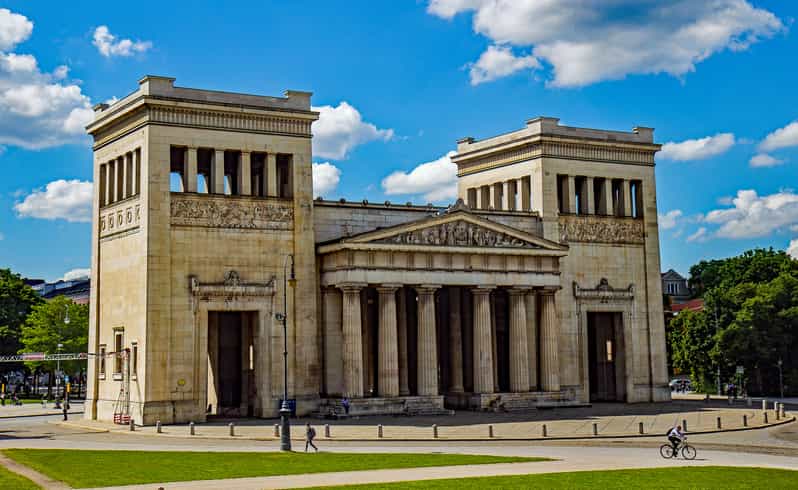
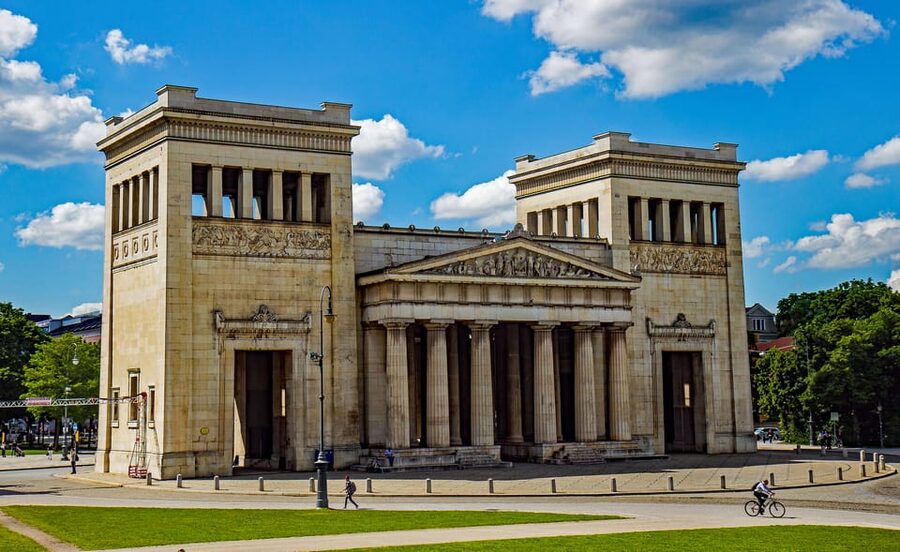
- Starting at Königsplatz
- The former Führerbau and the Munich Agreement
- Walking along Briennerstrasse
- Passing the former Gestapo headquarters
- Feldherrnhalle and November 9, 1923
- How the photographs improve the walk
- German language and guide format
- Is $34 a fair price?
- Who will get the most from this walk?
- Should you book the National Socialism Historical Tour?
- FAQ
- How long does the tour last?
- What language is the tour conducted in?
- Where is the meeting point?
- How will I recognize the guide?
- Which locations does the tour visit?
- Are entrance fees included?
- What should I bring, and does the tour run in bad weather?
Key points to know before booking
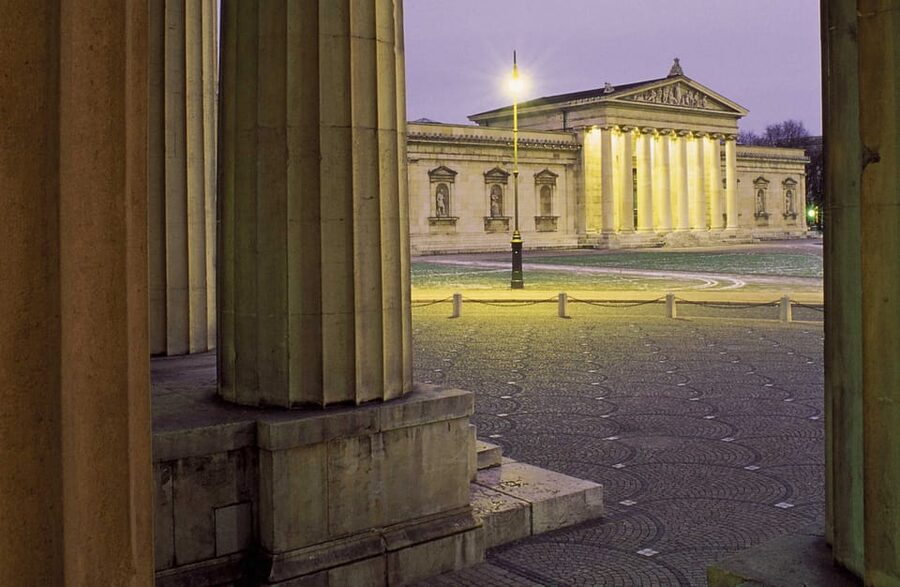
- The route begins at Königsplatz, a major square tied to Munich’s Nazi-era planning and public life.
- Historic photographs are part of the guide’s toolkit, giving visual context to locations that may otherwise look ordinary today.
- The walk follows the former Führerbau and Gestapo headquarters, then continues to Feldherrnhalle at Odeonsplatz.
- November 9, 1923, is a central subject, especially the failed Beer Hall Putsch and its later importance to Nazi propaganda.
- You can choose a private or group format, depending on the option available when you book.
- The tour is conducted in German, lasts two hours, and runs rain or shine.
Why this difficult Munich tour matters
Munich is often introduced through royal palaces, beer halls, museums, and handsome squares. Those are important parts of the city, but they tell only a partial story. In the 1920s and 1930s, Munich became known as the City of the Movement, a place closely tied to the early growth of the National Socialist German Workers’ Party, or NSDAP.
That label was not harmless civic pride. It reflected the city’s role in the movement’s rise, organization, public rituals, and political mythmaking. This tour helps you understand that connection by taking you to places where events actually unfolded.
I appreciate the route because it does not treat the subject as an abstract chapter in a textbook. You walk between specific buildings and squares. The guide can point to the former Führerbau, the former Gestapo headquarters, and Feldherrnhalle while explaining what happened there and why each location mattered.
The subject is grim, and the tour should not be chosen as light entertainment. It is best approached with attention and respect. You will spend two hours learning about political violence, propaganda, dictatorship, and the effect of National Socialism on Germany.
More History Tours in Munich
- Munich: Guided Tour of the historic Town Hall on Marienplatz
★ 4.8 · 63 reviews - Munich Craft Beer & Cultural Tour With Snack
★ 5.0 · 46 reviews - Munich History Tour: Private & Personalized with a Local Guide
★ 4.5 · 33 reviews
Starting at Königsplatz
The meeting point is in front of the main entrance of the Staatliche Antikensammlungen at Königsplatz. Look for a guide carrying a big blue bag marked with the white words Weis(s)er Stadtvogel. That detail is practical and useful, especially in a busy square where several people may be waiting for different activities.
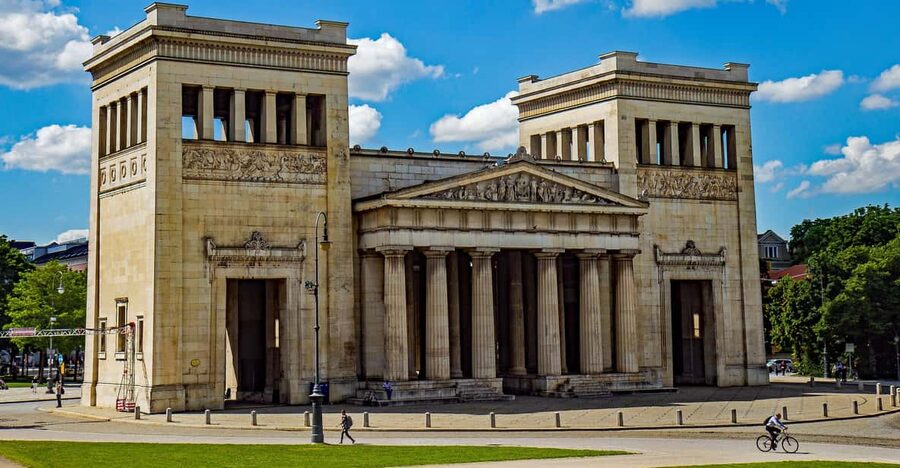
Königsplatz gives the tour a fitting beginning. The square is visually grand, with monumental architecture and broad open space. Your guide uses the setting to explain Munich’s place in the early Nazi movement and to establish the political background before the group starts walking.
Do not expect a long museum visit here. The tour is an outdoor walking experience, and the focus is on the guide’s explanation of the sites. The black and white photographs add a useful layer. A present-day building can seem detached from its past, but an old image can show how the same place looked during rallies, official events, or periods of political change.
You should arrive wearing comfortable shoes. The tour takes two hours, and the activity runs in rain or shine. Munich weather can change quickly, so a light waterproof layer is sensible, even though food, drinks, and other personal items are not included.
The former Führerbau and the Munich Agreement
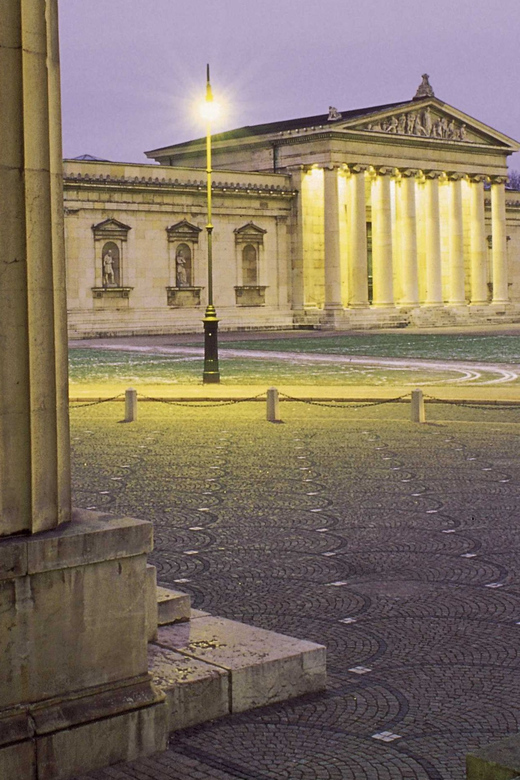
From Königsplatz, the route continues to the former Führerbau, or Führer’s building. The building is especially important because the Munich Agreement was signed there in 1938.
That agreement is a key point in the story of Europe before the Second World War. Your guide can place the building within the wider political setting of the period and explain why the signing became so significant. You are not simply looking at an old government building. You are standing at a place connected with decisions that shaped the direction of European politics.
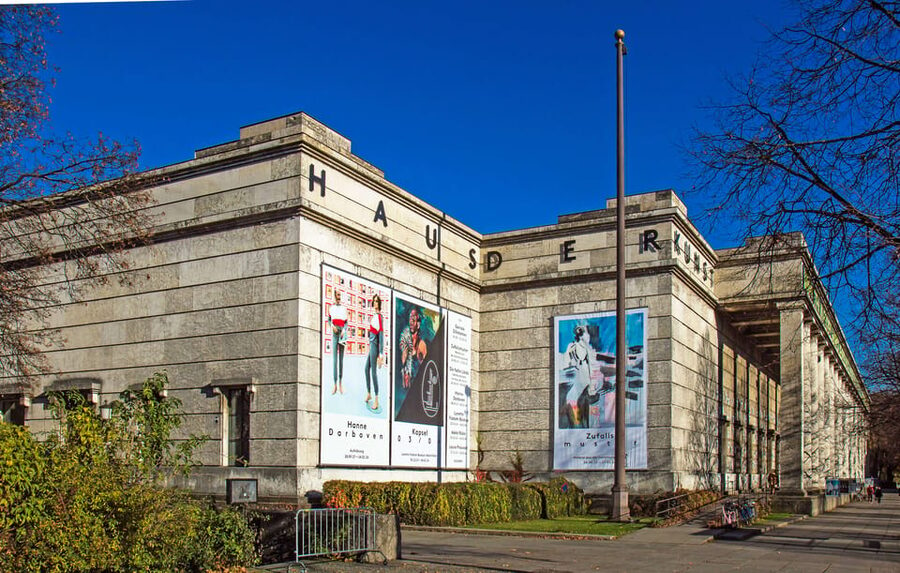
Today, the site is associated with the Munich Documentation Centre for the History of National Socialism. The tour description does not include an entrance ticket, so do not assume that this walking experience includes a visit inside the documentation centre. The guide discusses the location from the outside as part of the route.
This is one of the tour’s practical limits. If you want a long museum visit with exhibitions and displays, you will need to arrange that separately. If you want a compact introduction that links the building to the period, the stop fits the tour well.
Walking along Briennerstrasse
The route follows Briennerstrasse, giving the guide time to connect individual buildings with the wider development of Munich under National Socialism. This part of the walk matters because political history rarely happens at one isolated address.
As you move through the city, the guide can show how public spaces, official buildings, and streets were tied into the political life of the era. The walking format gives you a better sense of distance and geography than a lecture alone. You can see how the stops relate to one another instead of placing each event in a separate mental box.
The photographs should be especially useful here. They can show Munich during the 1920s and 1930s, when the city looked and functioned differently. They also help you avoid a common problem with historical walking tours: hearing dates and names without being able to picture the setting.
Because the tour is in German, your experience will depend on your comfort with spoken German and historical vocabulary. The guide is described as a professional city guide, but no alternative language is offered. If you only speak English, this is not the right booking.
Still Munich, at a slower pace:
- From Munich: Neuschwanstein & Linderhof Castle Full-Day Trip
★ 4.5 · 12,494 reviews - Neuschwanstein & Linderhof Castle-Fairytale Day Tour from Munich
★ 4.5 · 7,275 reviews - Munich: Third Reich & WWII Walking Tour
★ 4.6 · 6,181 reviews - Dachau Concentration Camp Memorial Site Tour from Munich by Train
★ 4.5 · 5,637 reviews
Passing the former Gestapo headquarters
The route then passes the former Gestapo headquarters. This is a serious stop, and the guide uses it to discuss the machinery of repression during the National Socialist period.
The word Gestapo refers to the secret state police. The location provides a direct link between political ideology and state power. It helps explain that National Socialism was not only about speeches, elections, or public rallies. It also relied on surveillance, intimidation, arrest, and the suppression of opposition.
You may find this section more sobering than the earlier discussion of party organization. That is appropriate. A good historical tour should not soften the consequences of dictatorship or present the period as a collection of dramatic political anecdotes.
Since this is an outdoor stop, the depth of the explanation will come from the guide rather than from an exhibition inside the building. The black and white images can help make the setting more understandable, but you should not expect a full memorial or museum presentation at every point.
Feldherrnhalle and November 9, 1923
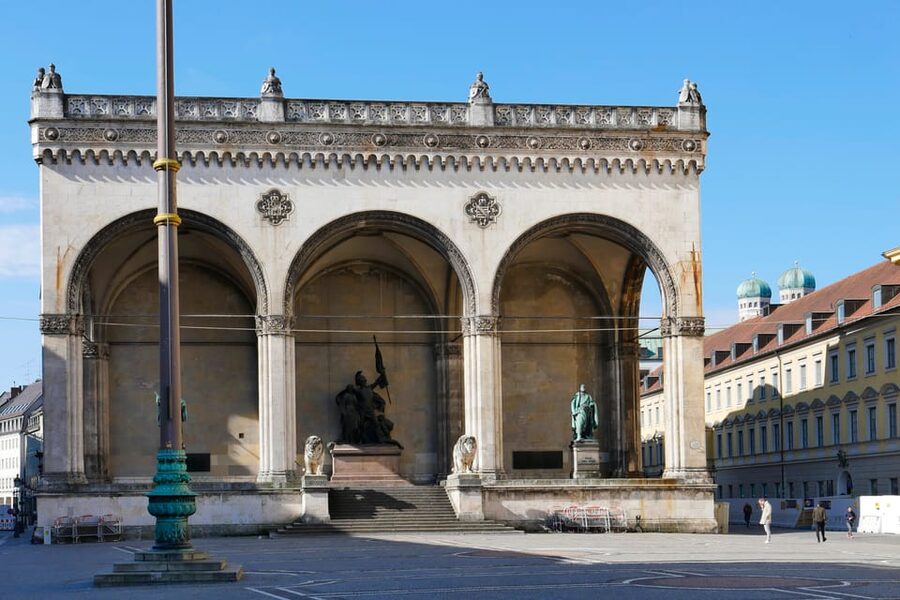
The tour ends at Feldherrnhalle on Odeonsplatz, one of the most important locations on the route. This is where Hitler’s Beer Hall Putsch took place on November 9, 1923.
The failed putsch was an attempt by Hitler and his supporters to seize political power in Bavaria. Its failure did not end Hitler’s movement. Instead, the event later became an important part of Nazi mythology and propaganda. The guide’s job here is to explain both the event itself and the way it was remembered and used afterward.
This stop brings together several themes from the walk: the early NSDAP, Munich’s political role, public symbolism, and the path from failed insurrection to a later bid for power through political means. It is also a useful place to ask questions if the guide allows time, since the site connects the local story with the national rise of National Socialism.
One point deserves care. The supplied tour details refer to the Beer Hall Putsch as occurring on November 9, 1923, while another description gives 1933. The historically established date of the putsch is November 9, 1923. Your guide may address the later Nazi commemorations connected with that date, which could explain why both years appear in the material.
How the photographs improve the walk
The guide brings historic black and white photographs to illustrate selected events and topics. This is one of the strongest features of the experience because the images give you something concrete to study while standing at each location.
A photo can show the scale of a gathering, the appearance of a building, or the way a public square was used. It can also make clear how political movements use architecture and ceremony to create an impression of power.
The photos will not turn the tour into a museum exhibition. They are supporting material, not a replacement for one. Still, they can make the two-hour walk easier to follow, especially when the city around you has changed.
I would pay close attention to how the guide uses each image. The most useful explanations should connect what you see in the photograph with what remains in front of you. That is where the tour can move beyond dates and offer a stronger sense of place.
German language and guide format
The live tour guide speaks German, and the activity is offered as either a private or group tour. The private option may suit you if you want a more personal pace or have specific questions about Munich’s role in National Socialism. A group tour can be a practical choice if you prefer a shared experience and a lower price than a private booking, depending on the option selected.
No group size is provided, so you should not assume the tour will be intimate. The guide carries the photographs and leads the route, but the amount of time available for questions may depend on the number of people attending.
German ability is the main booking question. You should be able to follow a spoken historical explanation for two hours, including political terms, names, and events. If your German is basic, you may miss important distinctions, and the serious subject makes guessing at the meaning especially unhelpful.
Is $34 a fair price?
At $34 per person, the value depends on what you want from a Munich history experience. You are paying for a two-hour guided walk with a professional city guide and visual material, not for museum entry, food, transportation, or hotel pickup.
I consider the price reasonable if you want structure and context. You could walk past Königsplatz, Briennerstrasse, the former Führerbau, the former Gestapo headquarters, and Feldherrnhalle on your own, but you would not automatically understand how these places connect. The guide supplies that connection.
The cost is less attractive if you are looking for a full indoor exhibition or a longer historical program. Entrance fees are not included, and the tour does not promise access to the Munich Documentation Centre. You may want to pair the walk with a separate museum visit if you have more time and want to read documents or view larger displays.
The free cancellation option up to 24 hours before the start and the reserve-now, pay-later choice add flexibility. These terms are useful when your Munich schedule is still changing, but they do not alter what is included in the tour itself.
Who will get the most from this walk?
I would choose this experience if you want a focused introduction to Munich’s role in National Socialism, especially if you prefer learning outdoors and seeing the locations directly.
It suits you best if:
- You understand German well enough for a two-hour historical talk.
- You want a serious subject handled through specific places.
- You value photographs and spoken explanation more than a large indoor exhibition.
- You have comfortable shoes and can walk outdoors in changing weather.
- You want either a group experience or the option of a private tour.
You may want another format if you have mobility limitations, need an English guide, or want extensive indoor museum time. The activity is described as wheelchair accessible but also marked as unsuitable for people with mobility impairments. That conflict should be clarified with the provider before you reserve.
Should you book the National Socialism Historical Tour?
Book it if you want a concise, place-based introduction to Munich’s Nazi past and can follow German comfortably. The route is well chosen, the photographs should make the explanations easier to picture, and the final stop at Feldherrnhalle gives the story a clear historical focus.
Skip it if you are seeking a relaxed sightseeing walk, a tour in English, or a fully accessible experience without first confirming the route. For the right visitor, $34 buys more than a list of addresses: it gives you a guided way to understand why these Munich locations still matter.
FAQ
How long does the tour last?
The tour lasts two hours.
What language is the tour conducted in?
The live tour guide speaks German. No other tour language is listed.
Where is the meeting point?
Meet in front of the main entrance of the Staatliche Antikensammlungen at Königsplatz.
How will I recognize the guide?
The guide will carry a big blue bag with the white words Weis(s)er Stadtvogel on it.
Which locations does the tour visit?
The route begins at Königsplatz, continues to the former Führerbau, follows Briennerstrasse, passes the former Gestapo headquarters, and ends at Feldherrnhalle at Odeonsplatz.
Are entrance fees included?
No. Entrance fees, food, and drinks are not included.
What should I bring, and does the tour run in bad weather?
Bring comfortable shoes. The activity takes place rain or shine.
Just added around Munich
- Pub crawl incl. Oktoberfest museum guided tour with beer tasting (private)★ 5.0 · 5 reviews
- South Tyrolean specialties and wine tasting★ 5.0 · 5 reviews
- Size Matters Beer Tour Munich★ 4.6 · 105 reviews
- Short & sweet: Tasting the Viktualienmarkt★ 4.8 · 37 reviews
- Secret Food Tours Munich★ 4.8 · 5 reviews
- Munich: Romantic Wine Experience for Two at Viktualienmarkt★ 4.2 · 14 reviews
- Residence of Munich private tour with skip the line ticket★ 5.0 · 4 reviews
- Munich: Resistance against Hitler – Historical Walking Tour★ 5.0 · 5 reviews
Historical Tours, compared.
City History Canal Sightseeing Tour on a Motorboat
Read our review →
Browse the lists this tour appears in