
Reviewed · THIRD REICH HISTORY TOURS
Munich: Third Reich and World War II Segway Tour of the City
History moves fast here. This three-hour Munich Segway tour covers a wide stretch of the city while connecting Bavarian royal history with the darker story of the Third Reich. I like the chance to see sites such as Königsplatz, the Old Synagogue site, and Hitler’s former apartments without spending the day on foot. I also like the patient instruction, especially for first-time riders, and the small groups capped at 10 people.
The main consideration is comfort on city roads. One rider found the streets nerve-racking, while the parks and cycle paths felt much easier. The historical commentary can also be uneven, so you should choose this tour for its broad coverage and lively guide, not as a substitute for a specialist museum visit.
At about $100 per person, this is not a bargain city ride. Still, you are paying for three hours of transport, local commentary, Segway use, safety equipment, and a route that reaches far more ground than a walking tour. Guides including Abdel and Jamal have been praised for patience, clear instruction, and friendly help.
In This Review
- Key points to know before you book
- Why a Segway works well for Munich’s long historical route
- First-time riders get a proper introduction
- Riding Munich’s streets, parks, and cycle paths
- Königsplatz and the political heart of Munich
- The Old Synagogue site and Munich’s Jewish history
- Hitler’s Munich apartments, from 1920 to 1933
- Odeonsplatz and the Bavarian royal story
- Schelling-Salon and an everyday wartime detail
- What $100 buys you in three hours
- Who should book this Munich Segway tour
- FAQ
- How long is the Munich Third Reich and World War II Segway tour?
- How much does the tour cost?
- Where does the tour meet?
- Is Segway equipment included?
- Are hotel pickup and drop-off included?
- What languages are available?
- Who cannot take this tour?
- Should you book it?
Key points to know before you book
- Hitler’s two Munich apartments are part of the route, one associated with 1920 to 1929 and another with 1933.
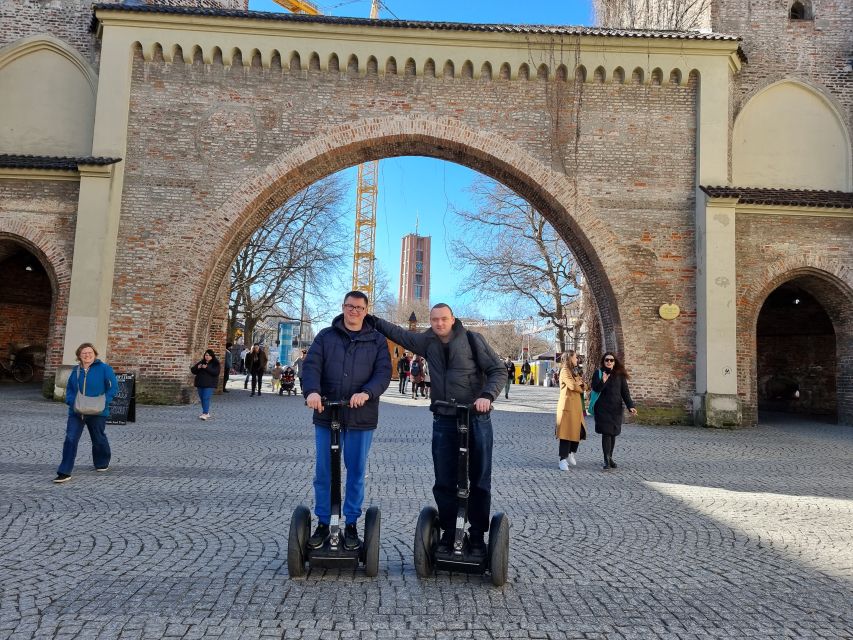
- A full Segway lesson comes first, making the tour workable for people who have never ridden one.
- Königsplatz, Odeonsplatz, the Führer’s Building, the Brown House, and the Old Synagogue site give the route serious historical weight.
- Schelling-Salon remained open through both world wars, adding an unusual social detail to the city’s wartime story.
- The group is limited to 10 people, with English and German tours available.
- Road riding may feel harder than park or cycle-path riding, especially in wet, snowy, or crowded conditions.
Why a Segway works well for Munich’s long historical route
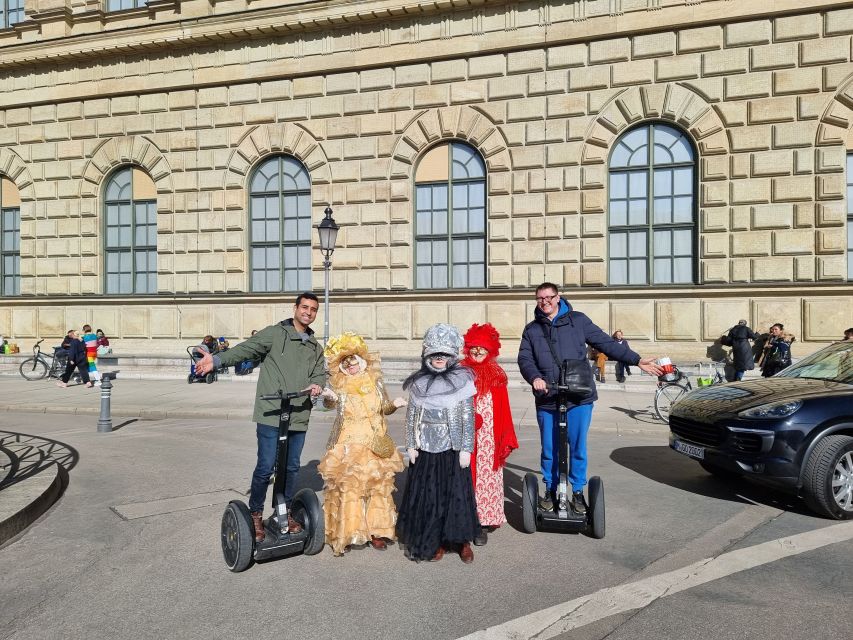
Munich’s central sights are spread out. You can walk between many of them, but three hours on foot gives you a different pace and less reach. A Segway lets you cover a large area while saving your legs for museums, beer halls, and evening wandering.
I like the format because the machine is more than a novelty here. It helps connect locations that make sense as one story. You can move from royal Munich to the Nazi party’s rise, then on to places tied to wartime destruction and postwar memory.
The ride is not a race. You stop outside key buildings and hear the guide explain what happened there. That gives you a useful first look at the city before deciding which places deserve a longer visit on your own.
The format also has a social side. A group of no more than 10 is small enough for questions and personal help, but large enough to keep the tour lively. If you are traveling with friends or family, the Segway adds a playful element to a serious subject.
More City Tours in Munich
- Munich: Old Town & Viktualienmarkt City Walk in German
★ 4.7 · 2,304 reviews - Munich: City Bus Tour & FC Bayern Munich Allianz Arena Tour
★ 4.5 · 2,071 reviews - Munich City Hop-on Hop-off Tour
★ 3.5 · 1,233 reviews
First-time riders get a proper introduction
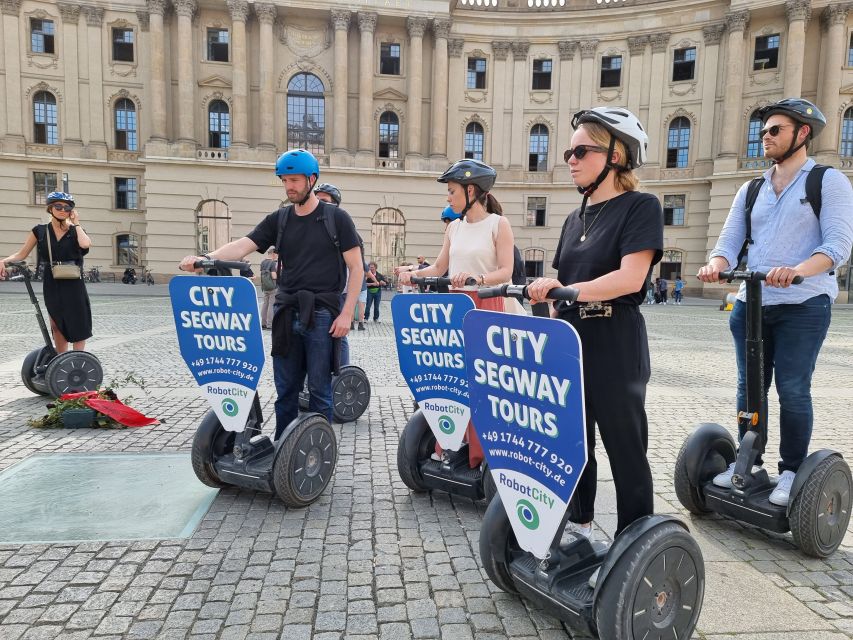
You meet the guide at Robot City Segway Tour München, where the tour begins with a safety briefing and practice session. This part matters. Several people on the tour had never used a Segway, and patient instruction made the difference between nervousness and enjoyment.
You control the Segway by shifting your weight. That sounds simple, but it takes a little practice. The guide helps you learn how to move, stop, and steer before the group heads into Munich.
Abdel has received especially strong praise for being professional, friendly, patient, and calm with beginners. Jamal has also been singled out for detailed training before the group entered the city center. Those details are worth noting because a rushed lesson would make the first half hour stressful.
You receive a Segway and helmet as part of the tour. Hotel pickup and drop-off are not included, so you need to make your own way to the office. The tour is not suitable for children under 14 or pregnant women.
Riding Munich’s streets, parks, and cycle paths
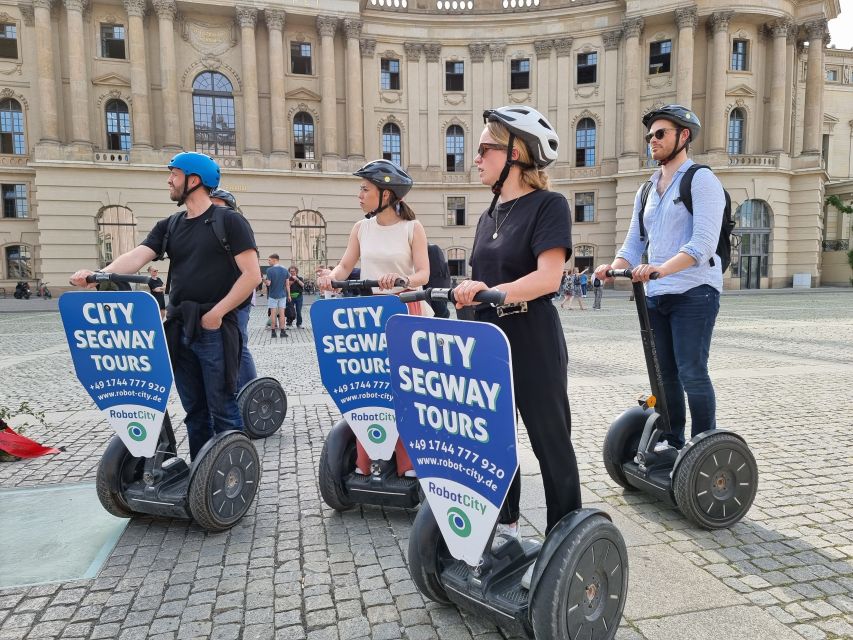
Once the practice session ends, the route heads through Munich by a mix of city streets, cycle paths, and park areas. The surface and traffic level affect the experience more than you might expect.
The park sections are likely to feel relaxed, with more room to get used to the machine. Cycle paths can also be comfortable once you find your balance. City roads are a different matter. One rider described them as scary for a member of the group, even though the park and cycle-track portions felt excellent.
That does not make the tour unsafe by definition, but it does mean you should be honest about your comfort level. If you are unsteady on bikes, dislike traffic, or tend to worry about balance, a walking tour may suit you better. The guide does provide instruction and support, and one group felt well cared for throughout the ride.
Rain, cold, and snow do not automatically stop the tour. A December outing continued in freezing, snowy weather, and another group completed the ride in rain. You should dress for the forecast and expect weather to shape your enjoyment. Gloves and warm layers would be sensible in colder months, though the supplied information does not specify clothing requirements.
The tour returns to the same office after roughly three hours. Since the route is active rather than museum-based, you spend most of the time outdoors.
Königsplatz and the political heart of Munich
Königsplatz is one of the most important stops for understanding Munich’s Nazi-era story. Its grand open space and monumental architecture were used by the Nazi regime for ceremonies and propaganda.
The guide’s job here is to connect the physical setting with the political events that took place in the city. You are not simply looking at an attractive square. You are seeing how public spaces can be reshaped for power, spectacle, and mass politics.
The route also includes the Führer’s Building and the Brown House. These names point to Munich’s role as an early center of the Nazi movement. The Brown House was associated with the Nazi Party’s headquarters, while the Führer’s Building became part of the regime’s official presence in the city.
You will hear about Hitler’s rise in Munich rather than only seeing plaques and facades. That spoken explanation is the main value of the stop, since the tour does not include entry to these buildings. If you want archival material, detailed exhibitions, or a quieter treatment of the subject, plan a separate museum visit.
The route’s broad coverage gives you orientation. You begin to understand how the city’s streets and ceremonial spaces fit together, which can make later sightseeing more meaningful.
More Segway Tours in Munich
- Munich: City Highlights Guided Segway Tour
★ 4.6 · 266 reviews - Munich 3-Hour Segway Tour: Nazi Munich & Royal Architecture
★ 4.9 · 194 reviews - Munich Segway Tour
★ 5.0 · 181 reviews - Munich: City Highlights Guided Segway Tour
★ 4.5 · 161 reviews
The Old Synagogue site and Munich’s Jewish history
The stop at the site of the old synagogue adds an important counterpoint to the grand political buildings. It shifts attention from the institutions of Nazi power to the Jewish community that was targeted and destroyed.
You pause outside the historic site while the guide explains what happened in Munich during World War II. This is a short stop within a moving tour, so you should not expect the depth of a dedicated Jewish history museum. Still, placing the site on the route keeps the tour from becoming a parade of Nazi landmarks without human context.
The subject deserves a respectful tone. The best part of this stop is the chance to connect a central Munich location with the lives and losses behind the city’s wartime history. You may want to return later for more detailed learning if this is your main reason for booking.
The tour’s historical focus is strongest when the guide explains how different places relate to one another. The Old Synagogue site, Königsplatz, and the party buildings are not isolated curiosities. Together, they show how Munich’s public life was altered by ideology and persecution.
Hitler’s Munich apartments, from 1920 to 1933
The itinerary includes two stops connected with Hitler’s time living in Munich. One apartment dates from 1920 to 1929, and another is linked to his residence in 1933.
These stops are useful because they place a major political figure in the ordinary geography of the city. You are not only hearing about speeches and party offices. You are seeing where he lived during different stages of his political career.
The guide explains Hitler’s time in Munich and his rise to power. This is where a good guide adds value, turning addresses into a timeline. The first apartment relates to his early political period, while the later residence connects to his position after the Nazis had gained power.
Do not expect preserved interiors or a formal memorial experience. The emphasis is on the location, the dates, and the historical explanation delivered from outside. That may feel thin if you want a detailed personal biography, but it works well as part of a city-wide route.
I would treat these stops as prompts for further study rather than the final word on Hitler’s life. Their strongest use is helping you see Munich as a place where political change developed over time, not as a backdrop that suddenly became important in 1933.
Odeonsplatz and the Bavarian royal story
The tour is not only about the Third Reich. At Odeonsplatz, the guide also talks about Munich’s earlier history and the Bavarian kings.
That wider frame improves the experience. Munich was a royal capital long before the twentieth century, and its grand squares, formal buildings, and public monuments make more sense when you know something about the Wittelsbach rulers and Bavaria’s political past.
The royal story and the Nazi story also sit close together in the city. You can pass from palace-era grandeur to sites linked with dictatorship within a short ride. That contrast is one reason a moving tour works well in Munich.
The guide’s commentary is described as entertaining as well as informative. English-language skills have been praised, though one rider felt the explanation of some sights was limited. An archway at the end of Leopoldstrasse was mentioned as an example of a place that could have used more detail.
That is a fair warning. The guide can point out many sites in three hours, but not every building receives a full explanation. The tour favors range over scholarly detail.
Schelling-Salon and an everyday wartime detail
Schelling-Salon is one of the route’s more unusual stops. The pub remained open throughout World War I and World War II, giving the guide a chance to talk about everyday Munich life during periods of upheaval.
This kind of detail helps break up the sequence of political monuments and military history. A pub is an ordinary place, and that makes the wartime story feel closer to daily life. It also gives you a practical suggestion for later eating or drinking if the venue appeals to you.
The tour does not promise a meal or a drink at Schelling-Salon. You simply pass by and hear about its history. That distinction matters when planning your day.
The guide also recommends places to return to, including Hofbräuhaus am Platzl and Hofbraukeller. Hofbräuhaus was originally built in 1589, while Hofbraukeller serves traditional Bavarian food. These suggestions are useful because the tour gives you a quick orientation to Munich’s historic eating and drinking culture without trying to turn the ride into a food tour.
What $100 buys you in three hours
At $100 per person, the tour sits in the premium range for a short Munich activity. The value depends on how you measure it.
If you want the cheapest way to see central Munich, public transport and a self-guided walk cost less. If you want museum-quality historical detail, your money may be better spent on an entrance ticket and a specialist guide.
But the Segway combines several services. You receive a machine, a helmet, instruction, a live guide, and a three-hour route through many major sites. You also save walking time and cover a larger area than most visitors could manage comfortably on foot.
I think the price makes the most sense early in your Munich stay. You get a city overview, hear names and dates that can guide later sightseeing, and collect restaurant and beer-hall suggestions. It is less convincing as a second city tour after you have already visited the same landmarks on foot.
The value improves if you are short on time. A first-time Munich visitor who wants both sightseeing and history can see a lot in one booking. The value drops if you dislike riding, need extensive historical detail, or plan to spend most of the three hours inside museums.
Who should book this Munich Segway tour
I would recommend it most strongly to adults and older teenagers who are comfortable trying a new way to move around. It suits people who want to cover ground, enjoy a little adventure, and prefer a guide’s stories to reading every plaque.
It is also a good match for anyone interested in World War II and the rise of Hitler in Munich. The two apartment stops, the Brown House, the Führer’s Building, Königsplatz, and the Old Synagogue site create a clear historical thread.
First-time Segway riders should not rule it out. The training is detailed, and guides such as Abdel and Jamal have been praised for patience. Still, your comfort on roads matters. You may enjoy the park and cycle paths more than the urban portions.
This tour is less suitable for children under 14, pregnant women, and anyone seeking a quiet, deeply academic history lesson. It is also not ideal if wet or cold weather would ruin your day.
FAQ
How long is the Munich Third Reich and World War II Segway tour?
The tour lasts three hours, including the initial Segway safety briefing and practice.
How much does the tour cost?
The listed price is $100 per person.
Where does the tour meet?
You meet the guide at Robot City Segway Tour München in Munich.
Is Segway equipment included?
Yes. The tour includes the Segway and a helmet, along with a guide.
Are hotel pickup and drop-off included?
No. You need to make your own way to the meeting point, as hotel pickup and drop-off are not included.
What languages are available?
The live tour is offered in English and German.
Who cannot take this tour?
The activity is not suitable for children under 14 or pregnant women.
Should you book it?
Book this tour if you want to see a wide section of Munich in three hours, enjoy learning through stories, and are willing to ride on city streets. The strongest reasons are the patient beginner training, the small group size, and the unusual mix of royal, Nazi-era, Jewish, and everyday wartime sites.
Skip it if you want a specialist historical study, indoor attractions, or a completely traffic-free outing. For most suitable riders, though, the tour offers an entertaining way to get oriented quickly. Just bring sensible clothes, accept that some commentary may be brief, and remember that the Segway is part of the adventure, not merely a substitute for walking.
More Third Reich History Tours in Munich
- Munich: Third Reich & WWII Walking Tour
★ 4.6 · 6,181 reviews - Third Reich Walking Tour Munich
★ 4.5 · 4,291 reviews - Munich: Birthplace of the Third Reich Guided Walking Tour
★ 4.6 · 771 reviews - Munich World War II Sites Including Dachau Concentration Camp
★ 4.5 · 570 reviews
Just added around Munich
- Pub crawl incl. Oktoberfest museum guided tour with beer tasting (private)★ 5.0 · 5 reviews
- South Tyrolean specialties and wine tasting★ 5.0 · 5 reviews
- Size Matters Beer Tour Munich★ 4.6 · 105 reviews
- Short & sweet: Tasting the Viktualienmarkt★ 4.8 · 37 reviews
- Secret Food Tours Munich★ 4.8 · 5 reviews
- Munich: Romantic Wine Experience for Two at Viktualienmarkt★ 4.2 · 14 reviews
- Residence of Munich private tour with skip the line ticket★ 5.0 · 4 reviews
- Munich: Resistance against Hitler – Historical Walking Tour★ 5.0 · 5 reviews