
Reviewed · OLD TOWN TOURS
Nuremberg 2-Hour Old Town Highlights Walking Tour in English
History comes alive on foot here. This two-hour English tour gives you a smart introduction to Nuremberg, moving from medieval walls and churches to the Imperial Castle and the city’s difficult Nazi-era past. I like the central meeting point at Hauptbahnhof and the useful local advice about food, beer, markets, and getting around.
I also like the balance between famous sights and smaller details, especially the Craftsmen’s Court, the Pegnitz riverfront, Albrecht Dürer’s neighborhood, and the old marketplace. The main consideration is pace: two hours covers a lot, so this is an orientation tour rather than a deep visit inside every landmark. It also takes place rain or shine, and it is not suitable for people with mobility impairments.
In This Review
- Key points to know before booking
- Why this two-hour walk works well
- Meeting beneath the Hauptbahnhof arches
- Craftsmen’s Court and the first taste of old Nuremberg
- St. Lawrence Church and the Pegnitz setting
- Hauptmarkt and the Beautiful Fountain
- Old City Hall and St. Sebaldus Church
- Imperial Castle courtyards and Albrecht-Dürer-Platz
- Nazi-era Nuremberg: Congress Hall, Zeppelin Field, and Luitpold Arena
- The guides: facts, humor, and local advice
- Weather, walking pace, and what to bring
- Who gets the best value from this tour?
- Should you book the Nuremberg Old Town walk?
- FAQ
- Where does the Nuremberg walking tour begin?
- Where does the tour finish?
- How long is the walking tour?
- Is the tour conducted in English?
- What landmarks are included?
- Does the tour operate in bad weather?
- Is the tour suitable for people with mobility impairments?
Key points to know before booking
- Start at Nuremberg Central Station: Meet your guide by the large central arched entrance, where they will hold a red and white Nuremberg Tours in English sign.
- See medieval Nuremberg in a compact route: The walk includes the Craftsmen’s Court, Hauptmarkt, Old City Hall, St. Sebaldus Church, the castle courtyards, and Albrecht Dürer’s House.
- Expect history from several eras: The route touches the Holy Roman Empire, the German Renaissance, the Middle Ages, and Nuremberg’s Nazi-era landmarks.
- Finish at Hauptmarkt: The tour ends in the heart of the Old Town, a useful spot for continuing your sightseeing or stopping for food.
- Get practical city advice: Your guide can point out where to try Nuremberg grilled sausages and amber lager, along with more modern dining choices.
- Allow for weather and walking: The tour runs in all conditions, with some uneven city streets and no suitability for people with mobility impairments.
Why this two-hour walk works well
Nuremberg is a good city for a first-day walking tour. Much of the Old Town is pedestrianized, and the sights sit close enough together that you can cover a surprising amount without wasting time on buses or taxis.
The route also gives you a useful framework for the city. Nuremberg is not just a pretty medieval center. Its story reaches from the Holy Roman Empire and the German Renaissance to the Nazi Party rallies and the modern city that followed. A good guide can connect those periods without turning the walk into a lecture.
This tour is especially useful if you have only one day in Nuremberg, or if you want a clear introduction before exploring museums and interiors on your own. At $21 per person, the price is reasonable for two hours with a live English-speaking guide. The value comes from the interpretation and local pointers, not from admission tickets, since the tour is primarily an outdoor walk.
The published rating of 4.4 from 107 reviews suggests a generally strong experience, with particularly high praise for the guides’ command of local history, clear answers, and entertaining stories. Hannes received special praise for explaining the city in a factual, humorous way and for finding shelter during heavy rain. One less positive note concerned profanity and crude sexual references, so families and visitors who prefer a more formal style may want to keep that in mind.
More Old Town Tours in Nuremberg
- Nuremberg: Old Town Guided Walking Tour
★ 4.6 · 2,416 reviews - Nuremberg Old Town and Nazi Party Rally Grounds Walking Tour in English
★ 4.5 · 504 reviews - Nuremberg Old Town and Nazi Rally Grounds Walking Tour
★ 4.7 · 377 reviews
Meeting beneath the Hauptbahnhof arches
The tour begins in front of Nuremberg Central Station, known locally as Hauptbahnhof. Look for the large central arched entrance. Your guide will be holding a red and white Nuremberg Tours in English sign.
This is a practical starting point. The station is easy to find if you arrive by train, and it gives you a clear landmark even if you are new to the city. I would arrive a few minutes early, especially if you are coming from a hotel or another part of town. The Old Town begins close by, so you quickly leave the traffic and enter the more historic part of Nuremberg.
There is one small point to understand before you set off. The advertised route is not a museum tour with long indoor stops. It is a city walk, with explanations given outside or while moving between landmarks. Wear comfortable shoes and bring a rain jacket. The tour continues in wet weather, and there is no promise of indoor shelter throughout the route.
Craftsmen’s Court and the first taste of old Nuremberg
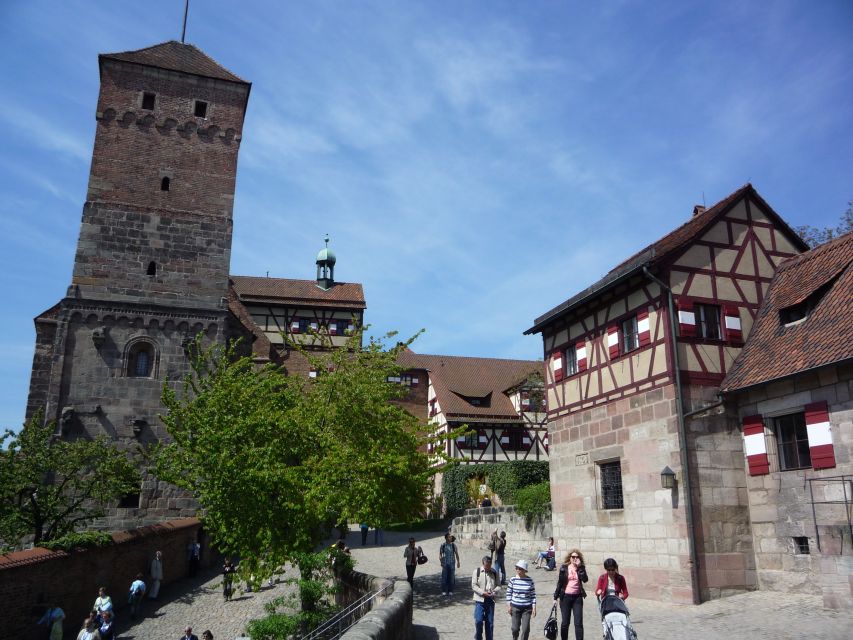
The first major stop is Handwerkerhof Nuremberg, or the Craftsmen’s Court. Tucked beside the old city walls, it gives you an immediate sense of medieval Nuremberg through its traditional-looking buildings, small workshops, and compact lanes.
It is a strong opening because you do not need much background to appreciate it. The city walls create a clear physical link to Nuremberg’s past, while the Craftsmen’s Court offers colorful details and a more intimate scale than the broad streets around the station.
Your guide can help separate the old fabric from the more recent presentation of the area. That matters because places designed to recall the past can otherwise blur together. Rather than simply snapping photos, you can learn how the city’s trades, defenses, and commercial life fit together.
From here, the walk heads farther into the Old Town. The route is pedestrian-friendly, but it still involves steady walking and standing. If you need frequent breaks or have difficulty with uneven surfaces, this is not the right activity.
St. Lawrence Church and the Pegnitz setting
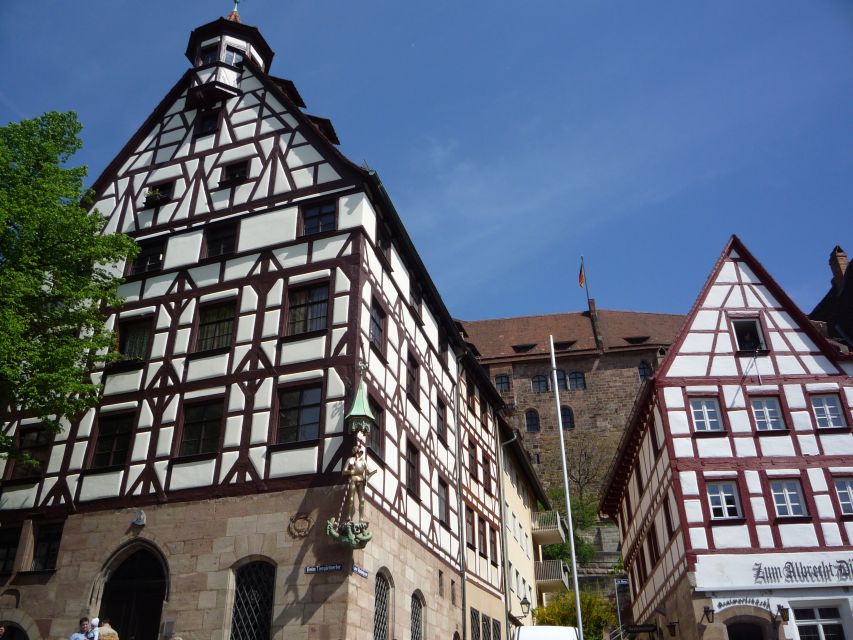
The tour passes St. Lorenz Church, one of the most important church landmarks in central Nuremberg. You should not expect a lengthy interior visit from the stated route, but the exterior helps show the scale and wealth of the medieval city.
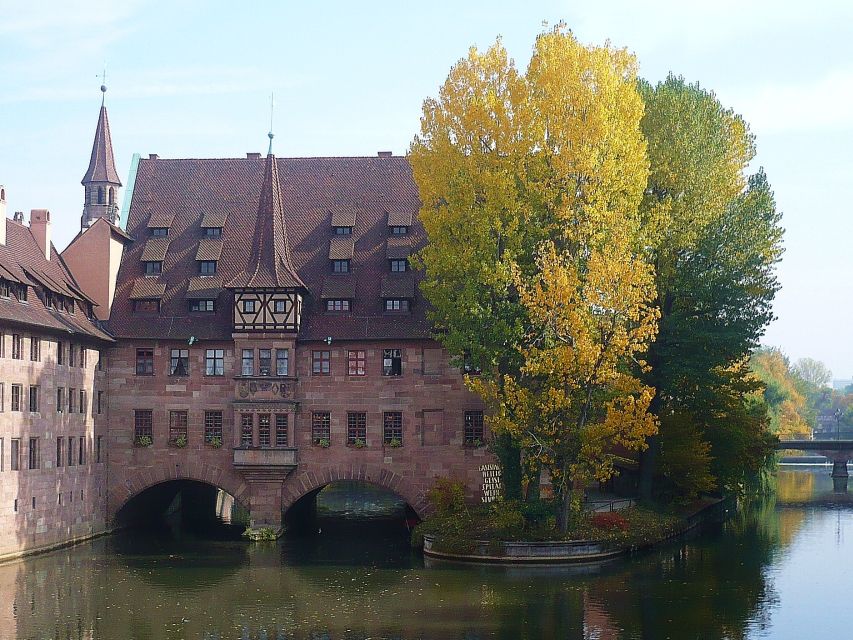
The walk along the River Pegnitz adds a welcome change of scene. Nuremberg is often presented through walls, towers, churches, and market squares, but the river helps explain how the Old Town developed as a working urban center. The water, bridges, and old buildings also provide some of the walk’s more pleasant photo opportunities.
This section is where a strong guide makes a difference. Dates and architectural labels can be useful, but stories about daily life, trade, religion, and city politics make the buildings easier to remember. The guides are expected to speak fluent English, and the strongest feedback praises their ability to answer questions rather than simply recite prepared facts.
More Walking Tours in Nuremberg
- Nuremberg: Walking Tour of Former Nazi Party Rally Grounds
★ 4.7 · 1,665 reviews - “Rotes Bier” and “Blaue Zipfel”. A historical-culinary walk
★ 4.4 · 190 reviews - Nuremberg: Private Guided Walking Tour
★ 4.5 · 9 reviews
Hauptmarkt and the Beautiful Fountain
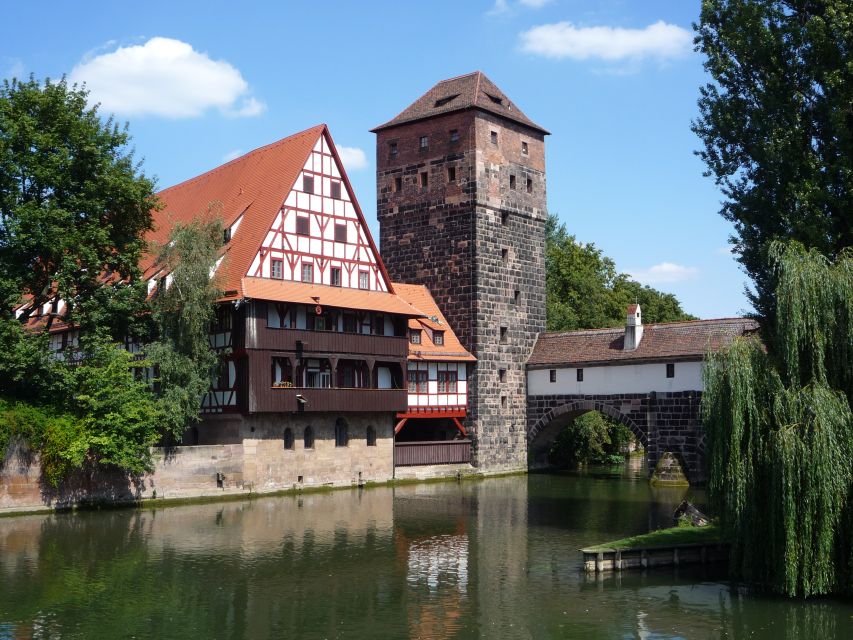
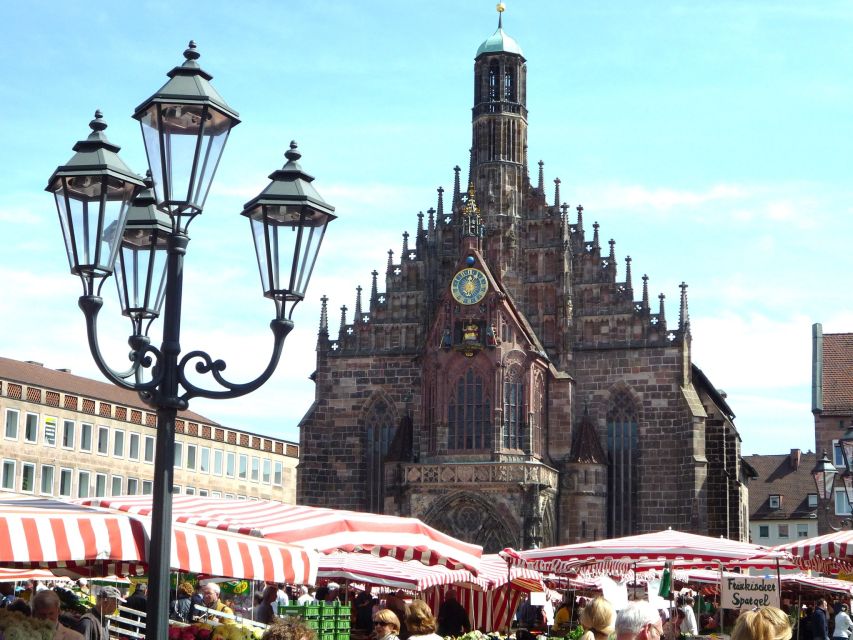
The Hauptmarkt is the main marketplace and one of the tour’s central stops. This broad square is where Nuremberg’s famous Christkindlesmarkt takes place in December. Outside the Christmas season, it remains an important public space, with seasonal markets and festivals held there throughout the year.
The Beautiful Fountain, or Schöner Brunnen, is one of the square’s key sights. Its ornate form and prominent position make it easy to spot, but the guide’s explanation gives the monument more meaning than a quick photograph would.
This is also a useful point for understanding Nuremberg as a commercial city. Markets were not simply decorative gathering places. They connected food, craft, religion, politics, and regional trade. The square still feels like a natural center of town, which makes it a good place to return after the tour.
The route ends here, so pay attention to the guide’s restaurant suggestions. You can ask where to find the city’s famous small grilled sausages and amber lager, or request recommendations for more modern food if traditional fare is not your preference.
Old City Hall and St. Sebaldus Church
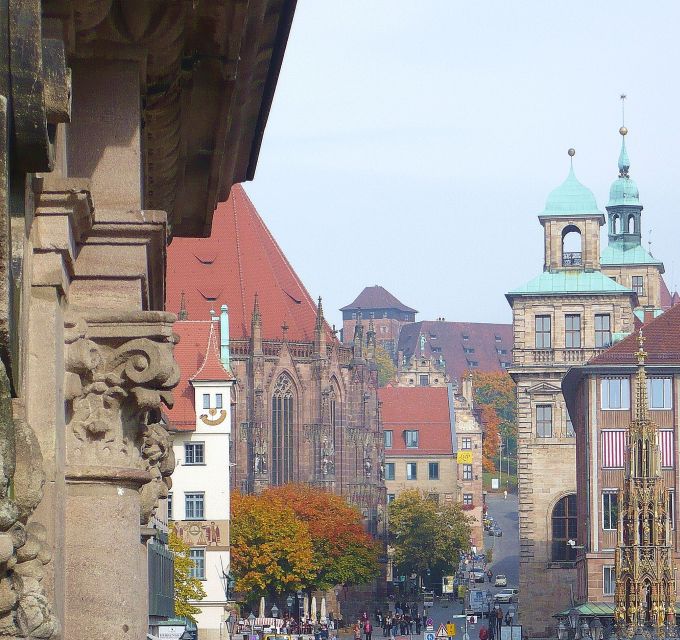
The walk continues to Old City Hall, where your guide explains another layer of Nuremberg’s civic past. The building helps show how authority was organized beyond the churches, markets, and castle. In a city shaped by imperial politics and trade, the town hall was a practical center of power.
St. Sebaldus Church is passed along the way. Like St. Lorenz, it contributes to the city’s grand medieval profile, even if the tour does not focus on an extended interior visit. Seeing both churches in the same walk helps you compare their place in Nuremberg’s religious and architectural story.
I appreciate this part of the route because it prevents the tour from becoming a simple chain of famous photo stops. The churches, market, city hall, and castle all served different purposes. Together, they explain how the Old Town worked.
Imperial Castle courtyards and Albrecht-Dürer-Platz
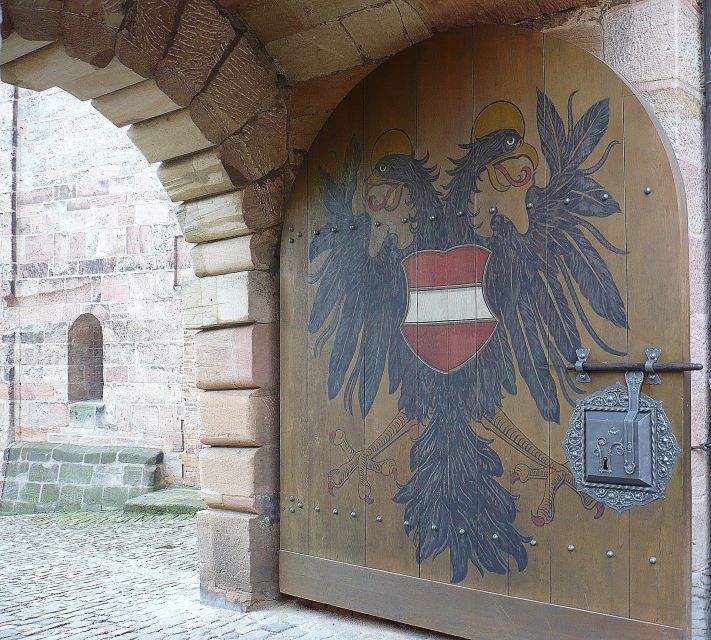
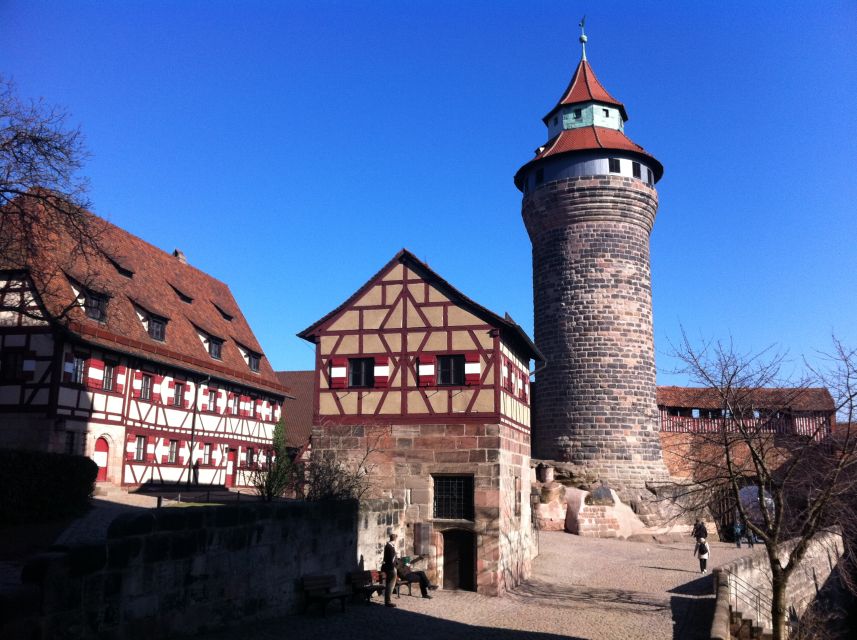
The Imperial Castle is the historic high point of the route, both literally and symbolically. The tour visits its courtyards, not necessarily every interior room or museum section. That distinction matters if you are expecting a full castle admission experience.
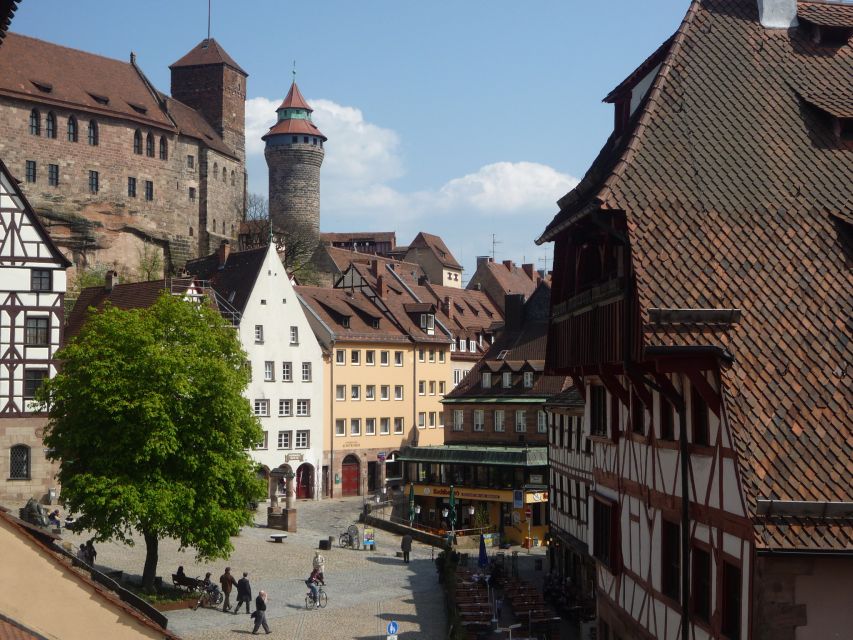
The courtyards offer views into Nuremberg’s role within the Holy Roman Empire. The castle was tied to imperial power, and its position above the Old Town helps you understand why Nuremberg mattered for centuries. From here, the city feels less like a collection of attractive buildings and more like a political center with a long reach.
Albrecht-Dürer-Platz adds the German Renaissance to the story. It is associated with Albrecht Dürer, Nuremberg’s best-known artist, and sits near Albrecht Dürer’s House. The house is included as a guided stop, but you should confirm on the day whether the schedule allows an interior visit or focuses on the exterior and surrounding square. The supplied details describe a walking tour stop, not a dedicated museum admission.
This is one of the most valuable sections for first-time visitors. Dürer’s name appears throughout Nuremberg, but the guide can connect the artist to the city’s wealth, printing trade, craftsmanship, and cultural life. You leave with a better sense of why Nuremberg became such an important Renaissance center.
Nazi-era Nuremberg: Congress Hall, Zeppelin Field, and Luitpold Arena
The experience also includes views of major Nazi-era landmarks, including the Congress Hall of the Nazi Party, Zeppelin Field, and Luitpold Arena. These sites are not part of the compact Old Town sequence in the same way as the castle and market, so you should pay attention to how the guide presents them and whether they are viewed as part of the wider tour coverage.
Nuremberg’s Nazi history cannot be separated from its medieval image. The city hosted huge Nazi Party rallies, and the surviving structures show how architecture was used for propaganda and mass political theater. A responsible explanation should make clear what these places were built to do, rather than treating them as ordinary monuments.
This subject can be heavy, especially after the charm of the old churches, market, and half-timbered buildings. That contrast is exactly why it belongs in an introduction to Nuremberg. You see how the city has had to confront both its celebrated past and its darkest chapter.
If your main goal is the Documentation Center or a detailed study of the rally grounds, you will need more time beyond this tour. The two-hour walk can introduce the subject, but it is not a substitute for a dedicated museum visit or a longer Nazi-era history tour.
The guides: facts, humor, and local advice
Guide quality is the biggest reason to book this experience. The strongest feedback praises guides who explain Nuremberg’s past clearly, add quirky facts, and answer questions without losing the group.
Hannes earned particular praise for his factual, humorous approach. He also handled poor weather thoughtfully by looking for shelter when there was a lot to explain. That is a small but meaningful sign of good guiding. Rain can quickly turn a pleasant walking tour into a test of patience, so practical care matters.
The tone may vary by guide. One published review praised the historical content but felt the guide used too much profanity and made crude sexual references. I would not treat that as a universal problem, but it is worth noting if you are traveling with children or prefer a polished, restrained presentation.
The best use of your guide is to ask practical questions. Ask where to eat, what to see after the walk, which markets are operating during your visit, and how to spend your remaining time. Those answers can save you from choosing a restaurant based only on the nearest menu or spending an afternoon circling the same streets.
Weather, walking pace, and what to bring
The tour operates rain or shine. Bring weather-appropriate clothing, and do not rely on an umbrella alone if rain is forecast. You will be outdoors for two hours, with time spent walking and standing at stops.
Comfortable shoes are essential. The Old Town is largely pedestrianized, which makes the route pleasant, but pedestrian zones do not guarantee perfectly smooth surfaces. The experience is specifically not suitable for people with mobility impairments.
The pace should suit most reasonably active visitors, but the short duration means the guide must keep moving. If you want long photo stops, extended church visits, or time inside the castle, you will need to return later. Think of this as a well-organized introduction that helps you decide where to spend more time afterward.
Who gets the best value from this tour?
I would recommend this tour to first-time visitors, short-stay visitors, solo travelers, couples, and anyone who wants historical context before exploring alone. It is also useful for people arriving by train because the meeting point is easy to locate and the walk finishes in the center.
The tour suits you particularly well if you enjoy a mix of major sights and local orientation. You get medieval walls, market squares, churches, the castle, Dürer, food advice, and an introduction to the Nazi rally grounds in one compact outing.
I would choose a different format if you need step-free access, dislike walking in poor weather, or want long interior visits. You may also prefer a specialized museum or rally-ground tour if twentieth-century history is your main interest.
At $21, the cost is fair. You are paying for two hours of live English commentary and a route that connects several important places. There are no listed admissions included, so budget separately if you plan to enter the castle, Dürer’s House, churches, or museums after the walk.
Should you book the Nuremberg Old Town walk?
Book it if you want a practical first look at Nuremberg with a guide who can connect the medieval center, Renaissance heritage, and Nazi-era past. The central route, English language, modest price, and useful food advice make it a sensible start to a city visit.
Skip it if you want a slow architectural study, a fully indoor experience, or a tour designed around mobility access. For most active visitors with two hours to spare, it offers a solid introduction and leaves you with a clear plan for the rest of your time in Nuremberg.
FAQ
Where does the Nuremberg walking tour begin?
Meet your guide in front of the large central arched entrance at Nuremberg Central Station, or Hauptbahnhof. The guide will hold a red and white Nuremberg Tours in English sign.
Where does the tour finish?
The tour finishes at Hauptmarkt in central Nuremberg, near the city’s main marketplace and several major Old Town sights.
How long is the walking tour?
The tour lasts two hours.
Is the tour conducted in English?
Yes. The tour includes a live English-speaking guide.
What landmarks are included?
The route includes the Craftsmen’s Court, Hauptmarkt, the Beautiful Fountain, Old City Hall, the Imperial Castle courtyards, Albrecht-Dürer-Platz, and Albrecht Dürer’s House. It also passes St. Lorenz Church and St. Sebaldus Church, and includes views of important Nazi-era sites such as Congress Hall, Zeppelin Field, and Luitpold Arena.
Does the tour operate in bad weather?
Yes. The tour takes place rain or shine.
Is the tour suitable for people with mobility impairments?
No. The activity is not suitable for people with mobility impairments.
Just added around Nuremberg
- Tour en español al Campo Zeppelin★ 5.0 · 8 reviews
- Stein: Public guided tour of the “Old Mine” museum★ 4.5 · 18 reviews
- “Rotes Bier” and “Blaue Zipfel”. A historical-culinary walk★ 4.4 · 190 reviews
- Nuremberg: Old Town Guided Tour By Bus★ 4.4 · 198 reviews
- Nürnberg kennenlernen: Highlights in der Altstadt★ 4.7 · 189 reviews
- Nuremberg: Bar and Club Tour with Free Shots and Free Entry★ 3.8 · 23 reviews
- Nürnberg Bachelor(ette) Party with Night PubCrawl★ 4.2 · 5 reviews
- Nuremberg: WWII Tour, Courtroom 600 and 3rd Reich Sites★ 4.6 · 94 reviews
Old Town Tours, compared.
Old Town & Viktualienmarkt City Walk in German
Read our review →
The Night Watchman Old Town Walking Tour in German
Read our review →
Browse the lists this tour appears in