
Reviewed · THIRD REICH HISTORY TOURS
Nuremberg Old Town and Nazi Rally Grounds Walking Tour
History here comes in two very different chapters. This four-hour English walking tour connects Nuremberg’s medieval Old Town with the former Nazi Rally Grounds, giving you a useful way to understand both the city’s proud past and its painful modern history. I like the thoughtful route from churches, castle courtyards, and market stalls to the vast propaganda sites outside the center. I also like that bus and tram fares are included, so you do not have to puzzle out the local transport system. The main drawback is the amount of walking, plus the fact that lunch and admission to the Documentation Center are not included.
The guide makes a real difference here. Names praised by visitors include Hannes, Natasha, Nick, Dimitri, Nic, Paul, Jax, and Nikolai, with repeated praise for clear English, humor, good pacing, and sensitive treatment of the Nazi period. You should still come prepared for rain, cold, or heat, since the tour runs in all weather and spends much of its time outdoors.
In This Review
- Key details that shape the day
- Starting at Nuremberg’s Hauptbahnhof
- Churches, markets, and the old city walls
- Town Hall, St. Sebaldus, and the Imperial Castle
- Albrecht Dürer’s house and the 30-minute pause
- Taking the bus to the Rally Grounds
- Luitpoldhain, Volksfestplatz, and Zeppelin Field
- Congress Hall and the city’s difficult memory
- The return tram and the real value of four hours
- Walking demands, weather, and who should book
- Should you book the Nuremberg Old Town and Nazi Rally Grounds tour?
- FAQ
- Where does the tour begin?
- Where does the tour end?
- How long does the tour last?
- Is lunch included?
- Are public transportation costs included?
- Is admission to the Documentation Center included?
- What should I bring?
Key details that shape the day
- Two major sides of Nuremberg: See the walled Old Town in the morning, then visit the former Nazi Party Rally Grounds.
- Castle courtyards, not a full castle visit: The tour gives you views and historical context at the Imperial Castle, but does not promise a full interior visit.
- A practical lunch pause: You get about 30 minutes near the Hauptmarkt to eat, use the toilet, or grab coffee, mulled wine, or a local snack.
- Public transport is included: The bus ride to the Rally Grounds and tram ride back to the Hauptbahnhof are covered in the $43 price.
- A serious history lesson: The guide explains Hitler’s propaganda machine and how Nuremberg addresses this difficult past today.
- Not suited to limited mobility: Expect a substantial walking tour over roughly four hours, with no stated provision for people who have trouble walking.
Starting at Nuremberg’s Hauptbahnhof
The tour begins outside the large central arched entrance of Nuremberg Central Station, known locally as the Hauptbahnhof. Look for a guide holding a red and white Nuremberg Tours in English sign, and arrive a few minutes early so the group can check in without a last-minute scramble.
This is a handy meeting point. The station is easy to find, and the tour also ends there after the return tram. You can arrive by train, leave bags nearby if your plans allow, or continue onward after the walk.
From the station, the group heads toward the old city through the Craftsmen’s Court, or Handwerkerhof. This compact area gives you an early taste of traditional Nuremberg, with local artisans working with older materials and methods. It is not a huge attraction, but it is a pleasant introduction before the tour reaches the grander sights.
You then pass the Mauthalle, a large historic building that helps set the scene for Nuremberg as a major medieval trading center. The exact amount of time spent at each early stop depends on the guide and group, but the purpose is clear: you are learning how the city functioned before reaching the better-known churches and castle.
More Old Town Tours in Nuremberg
- Nuremberg: Old Town Guided Walking Tour
★ 4.6 · 2,416 reviews - Nuremberg Old Town and Nazi Party Rally Grounds Walking Tour in English
★ 4.5 · 504 reviews - Nuremberg: The Old Town in Evening Light – IN GERMAN
★ 4.7 · 353 reviews
Churches, markets, and the old city walls
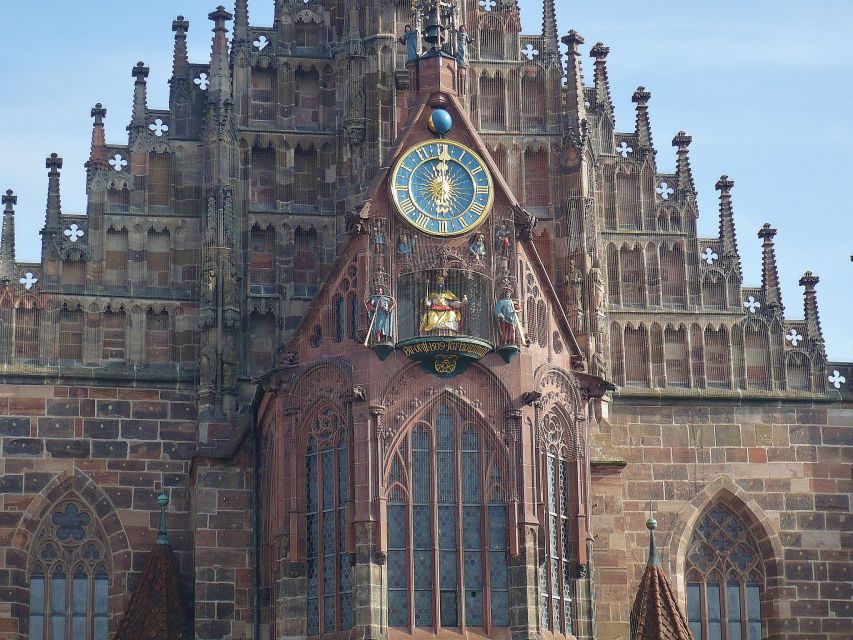
The Old Town section is strongest when your guide connects the buildings rather than treating them as isolated photo stops. You pass St. Lorenz Church, one of the city’s major Gothic landmarks, then continue toward the Hauptmarkt.
St. Lorenz is listed as a pass-by stop, so do not expect a long interior visit as part of the standard route. The same applies to St. Sebaldus Church later in the walk. You will hear about these important churches and see them in context, but this is not a church-focused art tour with extended time inside each building.
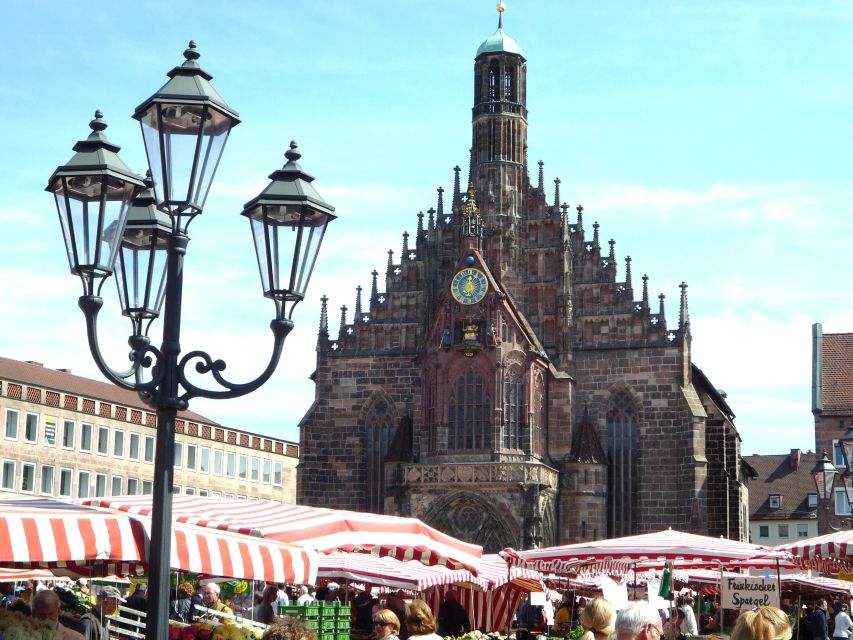
The Hauptmarkt is one of the most useful stops on the route. Markets have been held here for nearly 700 years, and in December it becomes the setting for Nuremberg’s famous Christmas markets. The square is also a good place to hear about seasonal festivals, local food, and the city’s daily life.
If you visit during the Christmas season, allow for crowds, cold weather, and a slower pace around the market stalls. The break later in the square is especially useful at this time of year. One specific tip from the tour experience is to use the pause for a quick coffee, a cup of Glühwein, or the famous three-sausage roll.
The guide also points out where to try Nuremberg’s small sausages, amber lager, beer, wine, and other local specialties. This advice has practical value because you can return to the same area after the tour instead of guessing where to eat.
Town Hall, St. Sebaldus, and the Imperial Castle
Old City Hall adds another layer to the walk. Here, the guide moves beyond medieval legends and explains how Nuremberg developed as a center of power, commerce, and civic life.
The tour then passes St. Sebaldus Church and climbs toward the Imperial Castle. The climb is one reason you need comfortable shoes, but the reward is the view across the rooftops and the old fortifications.
The castle courtyards are a key stop. Holy Roman Emperors ruled from here for more than 500 years, and the setting helps explain why Nuremberg held such importance long before the Nazi era. You get historical context and city views without spending the day inside a museum.
Be clear about what is included. The tour offers guided time in the courtyards, not a full admission visit through every castle room. If you want a detailed look at the castle interiors, you may need a separate visit.
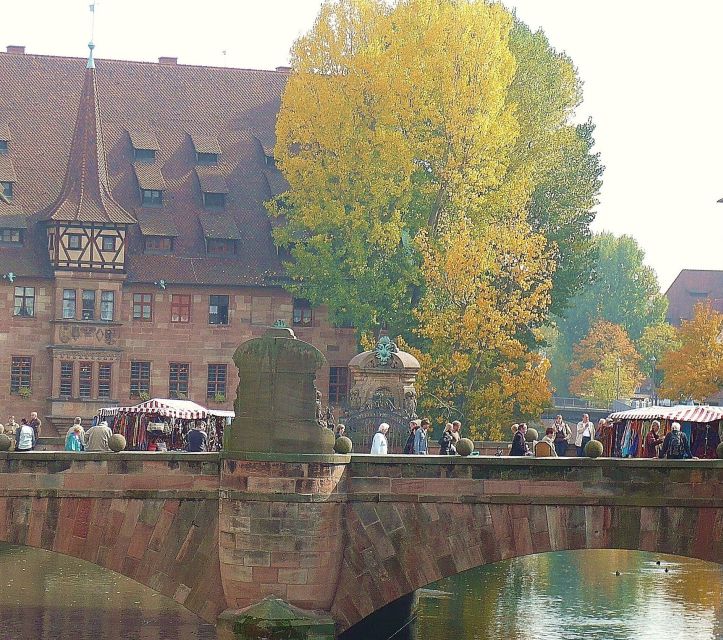
The old fortifications are another strong feature. Nuremberg has some of the best-preserved medieval defenses in Europe, and walking beside them makes the city’s earlier role easier to picture. This part is especially helpful if you are new to Nuremberg and want to understand the shape of the old city before exploring on your own.
Albrecht Dürer’s house and the 30-minute pause
The route includes Albrecht Dürer’s House, associated with one of Germany’s most famous Renaissance artists. The guide uses the stop to connect Nuremberg’s artistic life with its wider history.
As with the castle, the listed experience is a guided stop rather than a promise of a full museum visit. If Dürer is your main reason for coming to Nuremberg, plan extra time on another day or after the tour, if opening hours and your schedule permit.
The group returns to the Hauptmarkt for about 30 minutes of free time. This is not wasted time. Four hours is a lot to spend moving between history stops, and the pause lets you eat, find a restroom, warm up, or simply look around without having to listen and walk at the same time.
Lunch is not included, so plan to buy your own food. The tour is not designed around a sit-down restaurant meal, and half an hour is better suited to a quick local bite than a long lunch. The famous three-sausage roll is an obvious choice, especially if you want something tied directly to Nuremberg.
More Third Reich History Tours in Nuremberg
- Nuremberg: Walking Tour of Former Nazi Party Rally Grounds
★ 4.7 · 1,665 reviews - Nuremberg: Historischer Kunstbunker WWII Art Bunker Tour
★ 4.8 · 921 reviews - Nuremberg Third Reich Tour in Spanish
★ 5.0 · 355 reviews - Nuremberg: WWII Tour, Courtroom 600 and 3rd Reich Sites
★ 4.6 · 94 reviews
Taking the bus to the Rally Grounds
After the Old Town, the group uses public transportation to reach the former Nazi Party Rally Grounds. The ride takes about 15 minutes, and the fare is included.
This change of setting is important. You move from a compact, attractive historic center to huge open spaces built for political theater. The transport also keeps the tour practical. You do not have to arrange a taxi or work out the route yourself, and the guide can continue explaining Nuremberg as the group moves across the city.
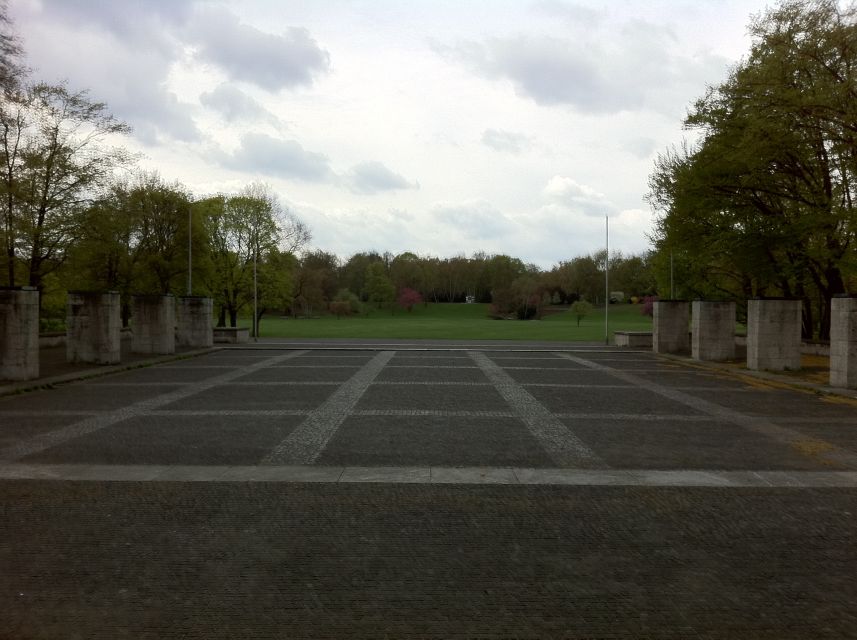
The Rally Grounds are spread out, so this part does not feel like a typical museum visit. You will walk outdoors through large areas where Hitler staged mass rallies, inspected columns of SS men, and used architecture, ceremony, and crowds to create a powerful propaganda message.
The guide explains the purpose behind the buildings and ceremonies rather than presenting them as simple ruins. That context matters. Without it, the scale can seem merely enormous. With it, you can better understand how the site was designed to turn politics into spectacle and obedience into public ritual.
Bring suitable clothing. The tour takes place rain or shine, and the open Rally Grounds can feel especially exposed in poor weather. Several guides have been praised for keeping the pace comfortable and using photos on an iPad to show how the sites looked during the Third Reich. That visual aid can be valuable because much of what you see today is incomplete or weathered.
Luitpoldhain, Volksfestplatz, and Zeppelin Field
The tour includes Luitpoldhain and Volksfestplatz, along with the major parade areas connected to the Rally Grounds. These names may mean little before you arrive, which is exactly why a guide helps.
Luitpoldhain was used for mass gatherings and staged political ceremonies. Volksfestplatz gives you another sense of the scale of the grounds and the way public events could be organized around the Nazi movement.
The itinerary also highlights Zeppelin Field and the Luitpold Arena. These are not ordinary historic squares. Their size and formal layout were meant to overwhelm people and make the individual seem small beside the state.
The subject is naturally heavy. The best guides keep the tone serious without turning the tour into a lecture filled with jargon. The most praised guides, including Hannes, Natasha, Nic, Nick, and Dimitri, are described as engaging, direct, and sensitive. Some also use humor during the Old Town portion, then shift tone appropriately when discussing Nazi crimes and propaganda.
That change in tone is one of the tour’s strengths. Nuremberg is not asked to choose between its medieval past and its Nazi past. You see both, and you learn how the city continues to deal with the second chapter.
Congress Hall and the city’s difficult memory
Congress Hall is among the most striking stops. Hitler’s plan was to create a massive Roman Colosseum-style building for Nazi Party events, but the project was never finished.
Today, the unfinished structure gives you a physical sense of megalomania. The sheer scale is hard to understand from photographs alone, while the incomplete form reminds you that the project was abandoned before it could fulfill its intended purpose.
The tour explains how Nuremberg handles this history today. That part is more valuable than simply pointing out a ruin. You are encouraged to consider why the city preserves the site, how it interprets it, and what public memory should do with places connected to dictatorship and mass violence.
Admission to the Documentation Center is not included. The center is located at Congress Hall and can provide a more detailed follow-up if you want additional museum time. One useful planning point is that the tour itself does not officially end there. It continues by tram back to the Hauptbahnhof, though you can decide to remain in the area after the guided portion if your plans allow.
The return tram and the real value of four hours
The final tram ride takes about 10 minutes and returns you to Nuremberg Central Station, where the tour began. Having transport included makes the route feel well planned rather than like two unrelated walks.
At $43 per person, the price is fair if you want both major sections of Nuremberg in one morning or afternoon. You are paying for four hours with a live English-speaking guide, local recommendations, public transport to and from the Rally Grounds, and a carefully linked historical story.
The value is less clear if you only want postcard views of the Old Town. You could see several central sights on your own for little or no admission cost. But doing both the Old Town and Rally Grounds independently requires more planning, and the Nazi sites are much easier to understand with someone explaining their purpose.
The tour also saves you from spending your limited time figuring out which bus or tram to take. Lunch is extra, and the Documentation Center costs extra, so budget for those if you want a fuller day.
Walking demands, weather, and who should book
You need comfortable shoes and a reasonable ability to walk for four hours, including time on uneven historic streets and open grounds. The tour is specifically not suitable for people with mobility impairments or people who have trouble walking.
The schedule works well for a first day in Nuremberg. You get a broad orientation, learn where to eat and drink, and finish knowing which places deserve a longer return visit.
I would especially recommend it for:
- First-time visitors who want a clear introduction to Nuremberg
- English-speaking visitors interested in both medieval and 20th-century history
- People who want the Rally Grounds explained with care and context
- Families with older children who can manage the walking
- Anyone who prefers local food suggestions and city orientation from a guide
It may not suit you if you want a slow museum day, a long restaurant lunch, or a tour focused only on art and architecture. The Rally Grounds section can also be emotionally difficult, so you should be ready for serious material rather than a light sightseeing outing.
Should you book the Nuremberg Old Town and Nazi Rally Grounds tour?
Book it if you want Nuremberg’s story told as one connected whole. The medieval walls, Imperial Castle, churches, Dürer’s house, Nazi parade grounds, and Congress Hall can feel like separate attractions when visited alone. A strong guide helps you see the links.
The repeated praise for Hannes, Natasha, Nick, Nic, Dimitri, Nikolai, Paul, and Jax points to a consistent strength: clear English, good pacing, humor used at the right moments, and honest treatment of difficult history. The 4.7 rating from 377 reviews also supports the idea that this is a dependable introduction.
I would skip it only if four hours of walking is too much, or if you want a full visit inside the Documentation Center rather than an outdoor guided overview. For most first visits, the combination of central sights, practical food advice, included transport, and the Rally Grounds makes $43 a sensible use of your time.
FAQ
Where does the tour begin?
It begins outside the large central arched entrance of Nuremberg Central Station, or Hauptbahnhof. The guide holds a red and white Nuremberg Tours in English sign.
Where does the tour end?
The tour ends back at Nuremberg Central Station after the return tram ride.
How long does the tour last?
The full experience takes about four hours, including the lunch break and public transportation.
Is lunch included?
No. Lunch is not included, but the tour includes about 30 minutes of free time at the Hauptmarkt for you to buy food or drinks.
Are public transportation costs included?
Yes. Bus transport to the former Nazi Rally Grounds and the tram ride back to the Hauptbahnhof are included.
Is admission to the Documentation Center included?
No. Admission to the Documentation Center after the guided tour is not included.
What should I bring?
Bring comfortable shoes and clothing suitable for the weather. The tour runs rain or shine and is not suitable for people who have trouble walking.
More Walking Tours in Nuremberg
- “Rotes Bier” and “Blaue Zipfel”. A historical-culinary walk
★ 4.4 · 190 reviews - Nuremberg 2-Hour Old Town Highlights Walking Tour in English
★ 4.4 · 107 reviews - Nuremberg: Private Guided Walking Tour
★ 4.5 · 9 reviews
Just added around Nuremberg
- Tour en español al Campo Zeppelin★ 5.0 · 8 reviews
- Stein: Public guided tour of the “Old Mine” museum★ 4.5 · 18 reviews
- “Rotes Bier” and “Blaue Zipfel”. A historical-culinary walk★ 4.4 · 190 reviews
- Nuremberg: Old Town Guided Tour By Bus★ 4.4 · 198 reviews
- Nürnberg kennenlernen: Highlights in der Altstadt★ 4.7 · 189 reviews
- Nuremberg: Bar and Club Tour with Free Shots and Free Entry★ 3.8 · 23 reviews
- Nürnberg Bachelor(ette) Party with Night PubCrawl★ 4.2 · 5 reviews
- Nuremberg: WWII Tour, Courtroom 600 and 3rd Reich Sites★ 4.6 · 94 reviews