
Reviewed · THIRD REICH HISTORY TOURS
Nuremberg: Walking Tour of Former Nazi Party Rally Grounds
The scale here is hard to grasp from a book. This two-hour walk makes Nuremberg’s former Nazi Party Rally Grounds easier to understand, linking the Congress Hall, Great Road, and Zeppelin Field into one clear story. I like the use of historic photographs, and I like the guides’ calm focus on propaganda rather than spectacle. The main drawback is simple: you walk a large area, and winter tours can finish after dark.
At $15, this is a strong-value way to see a spread-out historic site. You get a live guide in English or German, not just a path and a signboard. Guides such as Kai, Sylvia, Anita, Frank, Andreas, Ralf, and Marina have been praised for clear explanations, careful handling of a difficult subject, and detailed answers to questions. Bring good shoes, check sunset times, and allow two hours without other plans pressing close behind.
In This Review
- Key points to know before you go
- Why this Nuremberg walk matters
- Starting at Congress Hall and the 40-meter ruins
- Following the Great Road toward Zeppelin Field
- Seeing Zeppelin Field and the Tribune
- The guide makes the difference
- A thoughtful approach to a difficult subject
- Price, timing, and practical value
- Who should take this tour?
- Should you book the Nuremberg rally grounds walk?
- FAQ
- How long does the walking tour last?
- What is the price?
- Where is the meeting point?
- Which languages are available?
- Which sites does the tour visit?
- Does the tour include the Documentation Center exhibition?
- Is the tour suitable for people with mobility impairments?
- Does the tour run in bad weather?
- Can I cancel the booking?
Key points to know before you go
- The 40-meter Congress Hall gives you the first jolt of scale and shows how architecture served Nazi power.
- The Great Road reveals the planned north-south axis used to stage mass political events.
- Zeppelin Field and its Tribune form the dramatic final stop, but darkness can limit what you see in winter.
- Historic photographs help you compare the ruins with the buildings as they appeared during the Nazi era.
- The focus is propaganda: you learn how rallies, buildings, symbols, and crowds were used to shape public opinion.
- The walk covers a wide area and is not suitable for people with mobility impairments.
Why this Nuremberg walk matters
Nuremberg is closely linked with both the Nazi Party rallies and the postwar trials that exposed the regime’s crimes. The rally grounds are not a compact old-town attraction. They are a huge planned area on the southeastern side of the city, with monumental remains spread along broad roads and open spaces.
That size is part of the lesson. The Nazi leadership wanted to overwhelm people with scale, order, repetition, and ceremony. A lone visit can show you impressive ruins, but it may not explain how the pieces worked together. A guide gives the site a human and political frame.
I especially like that the tour does not treat the buildings as strange architectural curiosities. It explains their function, the staging of the rallies, the propaganda message, and the National Socialist view of history. The guide also addresses the crimes of the regime and the concentration camp system, so the walk does not become a narrow study of architecture.
This is a serious tour. You will hear about mass political shows, the manipulation of crowds, and the way a dictatorship used public space. The tone is thoughtful rather than theatrical, which suits the subject.
More Third Reich History Tours in Nuremberg
- Nuremberg: Historischer Kunstbunker WWII Art Bunker Tour
★ 4.8 · 921 reviews - Nuremberg Old Town and Nazi Party Rally Grounds Walking Tour in English
★ 4.5 · 504 reviews - Nuremberg Old Town and Nazi Rally Grounds Walking Tour
★ 4.7 · 377 reviews
Starting at Congress Hall and the 40-meter ruins
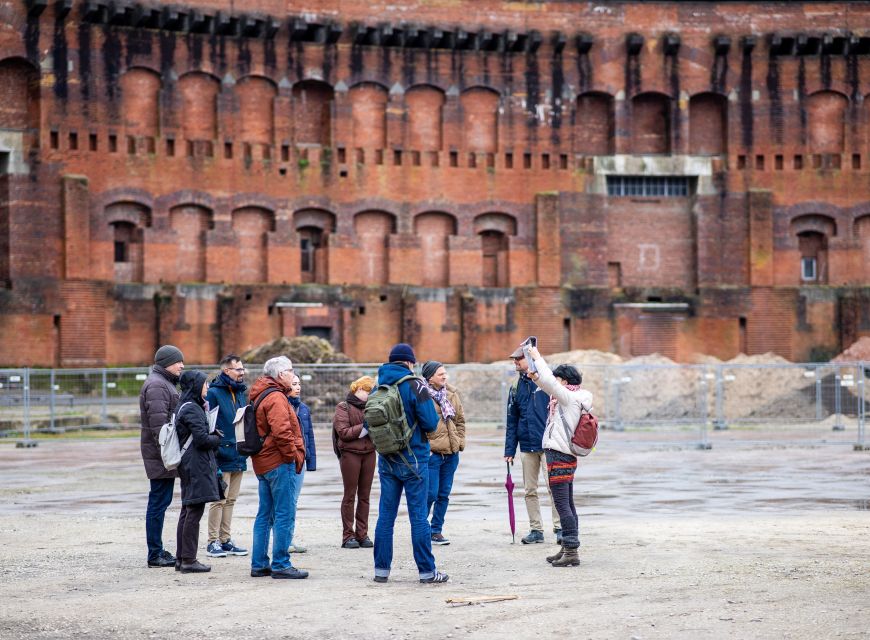
The meeting point is beside the entrance stairs to the Documentation Center Nazi Party Rally Grounds at Bayernstraße 110. Look for a guide with a picture folder and a name tag marked Geschichte Für Alle e.V. There are two stated starting options connected with the Documentation Center area, so check your booking details carefully and arrive a few minutes early.
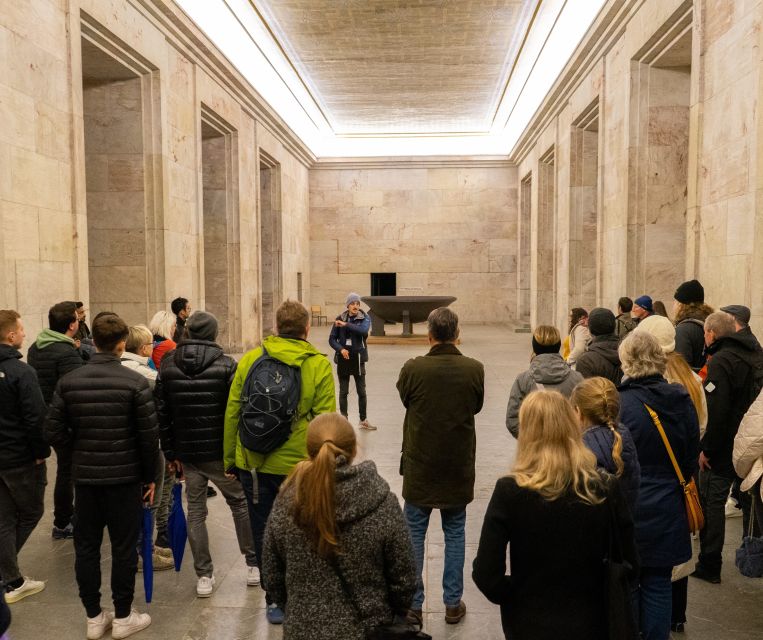
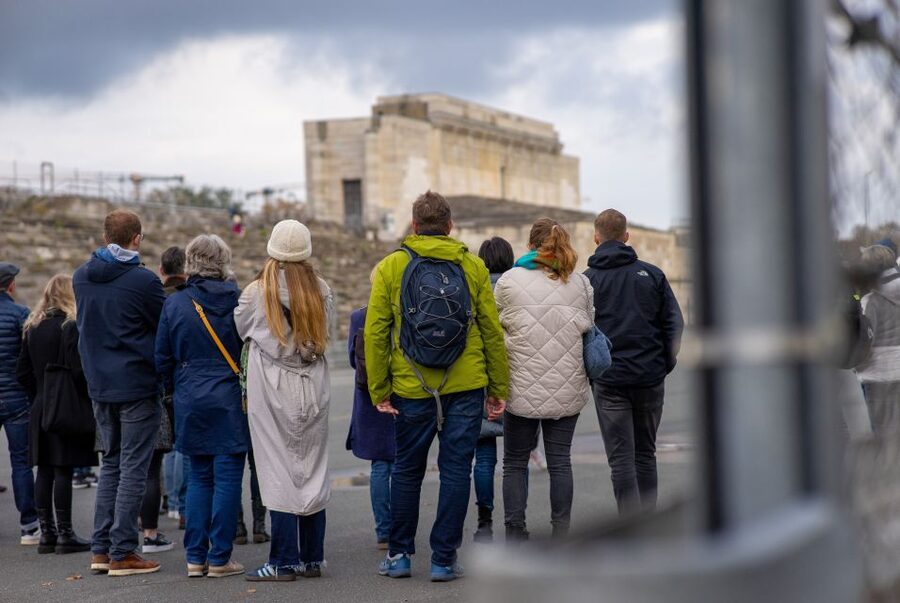
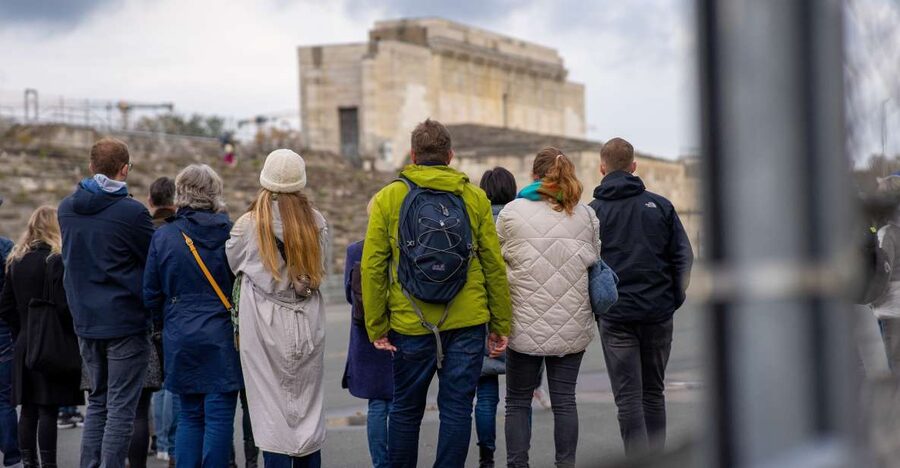
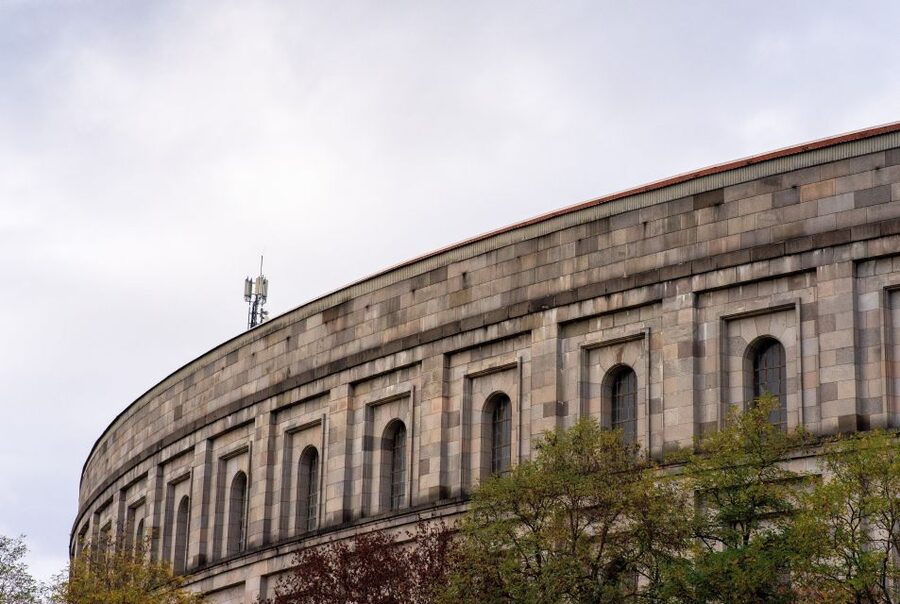
The first major stop is Congress Hall. Its surviving shell rises about 40 meters, and the scale is the first thing you notice. The structure was planned as a massive setting for Nazi Party events, built to make individuals feel small and the state feel eternal.
The guide helps you read the building as political theater. Its size was not just a matter of engineering ambition. Monumental architecture was meant to communicate power, permanence, discipline, and historical destiny. The tour also covers the first National Socialist architecture in Germany, giving you a better sense of how design became part of the regime’s public message.
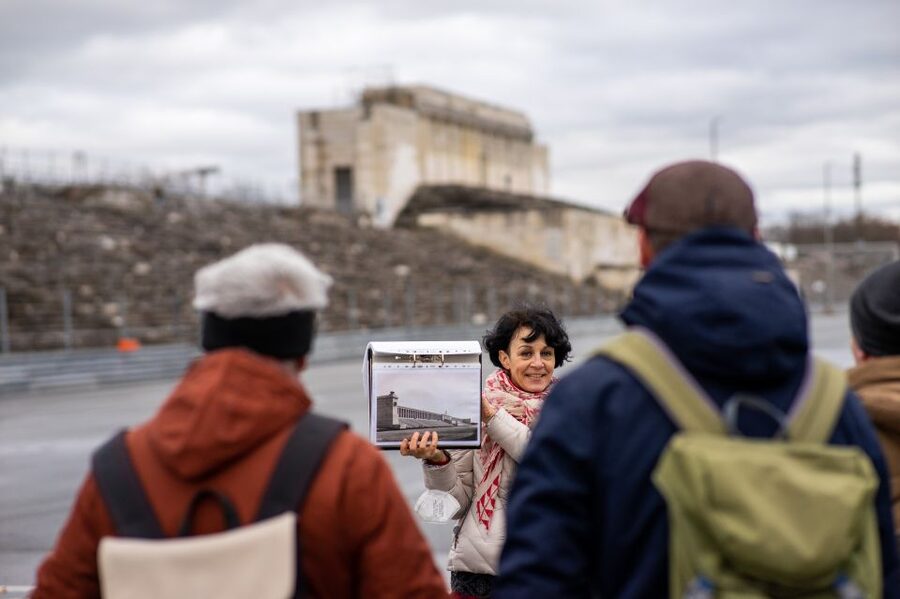
This is where the historic photographs become useful. A modern ruin can be hard to read, especially when later changes and weather have altered the site. Comparing old images with what remains helps you picture the intended setting without pretending the original vision ever had a legitimate meaning.
The Congress Hall is also a useful place to discuss the gap between plans and reality. The Nazi regime presented itself as a movement destined to last for centuries, yet many of its vast projects were left incomplete or damaged by war. The empty scale now carries a different message from the one its builders intended.
If you want to visit the Documentation Center exhibition itself, treat that as a separate activity unless your booking specifically says otherwise. The walking tour is an outdoor guided experience and includes the grounds, not food, drinks, or an indoor exhibition visit.
Following the Great Road toward Zeppelin Field
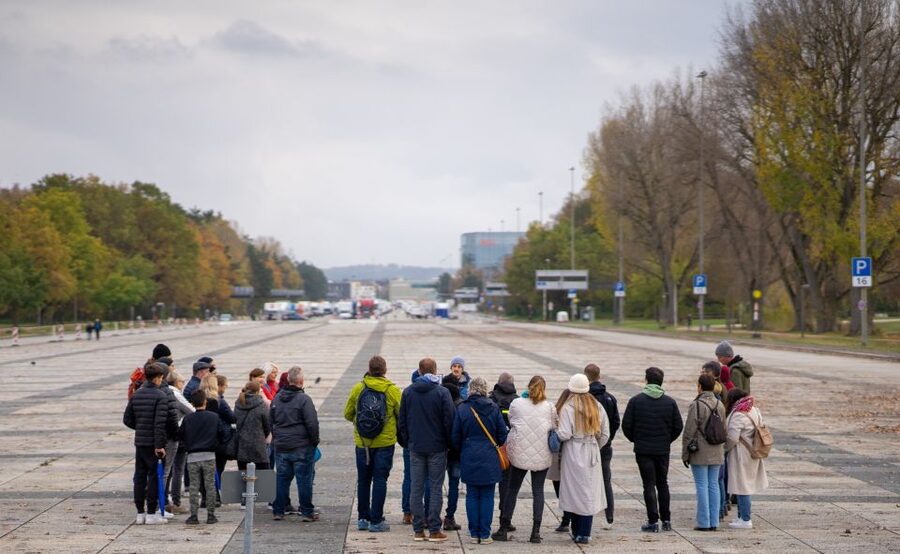
From Congress Hall, the group continues on foot. One leg takes about 10 minutes, followed by a guided visit to the Große Straße, or Great Road. A further walk of about 15 minutes leads to Zeppelin Field.
The Great Road was planned along the north-south axis of the rally grounds. Its width and length were designed for movement, formation, and spectacle rather than ordinary city life. Walking along it lets you feel how the site was arranged to direct attention and organize huge crowds.
This part of the tour is less about a single building and more about space. The guide explains how roads, sightlines, open areas, and platforms worked together during the rallies. You begin to see that propaganda was not confined to speeches or posters. It was built into the route people took, the position of the crowd, the height of the structures, and the repeated symbols surrounding them.
That is one of the best reasons to take this walk with a guide. You can visit the Great Road on your own, but its meaning is not obvious from the pavement. A guide can point out how the area helped turn politics into a carefully managed public performance.
The ground can also make the tour feel longer than the two-hour duration suggests. Several people have found the amount of walking greater than expected, while another estimate put the route at roughly 5,000 steps. In practical terms, that is manageable for many people, but it is not a short stroll between nearby monuments.
Wear walking shoes. The tour goes ahead in rain, and the grounds offer little comfort when the weather turns cold or wet. In winter, short daylight hours matter even more. Several departures in late autumn and winter ended in near darkness, especially around Zeppelin Field.
Seeing Zeppelin Field and the Tribune
The final major stop is Zeppelinfeld, home to the Zeppelin Tribune. This is the image many people associate with the Nuremberg rally grounds: a broad field arranged for mass gatherings, with a monumental reviewing stand at one end.
The Tribune was designed to hold up to 200,000 people. That figure is difficult to imagine until you see the open field in front of it. The point was not intimacy or debate. It was the visual power of a leader addressing an enormous, carefully arranged crowd.
Your guide explains how the field was used and how the surrounding structures helped create the rally experience. The important question is not only how many people could fit there, but why the setting was designed that way. The crowd became part of the message. Uniformity, chanting, flags, lighting, movement, and scale all helped turn political loyalty into a public show.
The site today is more exposed and less complete than the original propaganda setting. That contrast is valuable. You can see the remains, then use the photographs to understand the intended effect. The guide’s job is to prevent the ruins from becoming a backdrop for empty fascination.
There is also a current discussion about how the site should be used and presented. The tour introduces that debate rather than acting as if the grounds have one simple answer. Nuremberg has chosen to confront this part of its past, and the present-day treatment of the ruins is part of that story.
Try to book a time with enough daylight to see Zeppelin Field properly. This is the most common practical criticism of late tours. Several departures during the darker months reached the field after sunset, making it harder to appreciate the Tribune and the full sweep of the grounds. An earlier start by even an hour can make a real difference.
More Walking Tours in Nuremberg
- Nuremberg: Old Town Guided Walking Tour
★ 4.6 · 2,416 reviews - “Rotes Bier” and “Blaue Zipfel”. A historical-culinary walk
★ 4.4 · 190 reviews - Nuremberg 2-Hour Old Town Highlights Walking Tour in English
★ 4.4 · 107 reviews - Nuremberg: Private Guided Walking Tour
★ 4.5 · 9 reviews
The guide makes the difference
The subject is demanding, so guide quality matters. The strongest guides on this experience do more than recite dates. They explain how Hitler rose to power, how the Nazi Party used Nuremberg, and how architecture helped make propaganda feel convincing.
Anita has been praised for clearly explaining the rise of Hitler and the rally grounds’ role in the propaganda machine. Andreas, a political scientist, delivered detailed stories in clear English. Kai has been noted for precise answers and for keeping a rain-soaked two-hour walk moving at a good pace.
Other guide names associated with highly praised departures include Sylvia, Kristina, Frank, Ralf, Marina, Alan, and Mike. Their styles vary, but the most useful pattern is consistent: good explanations, room for questions, and a measured tone.
Some guides use questions to make you think about the intended effect of a building or rally. That approach is especially helpful here. You are not simply told what the regime wanted people to feel. You are encouraged to consider how the setting might have shaped a person’s response at the time.
This also makes the tour suitable for people with different levels of background knowledge. If you already teach or study history, the connection between Nuremberg, propaganda, architecture, and the wider Nazi system may still add useful detail. If your knowledge is basic, the guide builds the story without assuming too much.
English-language tours have generally been praised for clear speech. Still, the outdoor setting can make it harder to hear if you drift away from the group, so stay near the guide during explanations.
A thoughtful approach to a difficult subject
The tour covers the Nazi Party, its crimes, the rallies, propaganda shows, and the concentration camp system. It also explains basic parts of the National Socialist view of history. That broad approach is important because the rally grounds were not isolated from the rest of the regime. They were part of a political system built on racism, persecution, war, and mass murder.
The best aspect of the tour is its refusal to separate the impressive structures from the crimes committed in the name of the ideology. You learn why the buildings could impress people, but also why that effect was dangerous.
Several guides have been praised for explaining the subject with care and compassion. That is not a minor detail. A tour of Nazi sites can easily become either dry and distant or sensational. This one aims for a sober middle path, using the physical remains to explain how propaganda worked while keeping attention on the human consequences.
The walk can also leave you thinking about modern political communication. One guide drew attention to parallels with current events in some parts of the world. The tour does not need to turn into a political argument to make that connection useful. Its lesson is direct: grand settings, emotional spectacle, repeated messages, and claims about national destiny can influence people when critical judgment is pushed aside.
Price, timing, and practical value
At $15 per person, the tour offers good value. The grounds are spread out, and the guide connects several stops that would otherwise feel like separate visits. You also receive context that photographs and plaques alone may not provide.
The value is strongest if you care about history, politics, architecture, military history, or the way public events shape opinion. A self-guided visit may work if you prefer silence and a flexible pace, but you would miss the live explanation, questions, and old photographs used to show how the site once looked.
The two-hour length is enough to cover Congress Hall, the Great Road, and Zeppelin Field without turning the experience into an all-day commitment. It is also long enough to make the walking relevant. You do not merely stop at one famous structure, take a photo, and leave.
Plan around daylight. In spring and summer, this is less of a concern. In late autumn and winter, check the starting time carefully and consider an earlier departure. Cold weather is another factor. The tour runs rain or shine, so bring suitable clothing rather than hoping for perfect conditions.
Food and drinks are not included. That is easy to manage, but do not expect a café break during the walk. The meeting point is at the Documentation Center area, and the tour finishes at Zeppelin Field, so you should be ready for the end point to differ from the start.
Free cancellation up to 24 hours before the tour and the option to reserve without paying immediately make planning easier. A GetYourGuide booking confirmation serves as proof of payment, since invoices are not issued for these bookings.
Who should take this tour?
I would choose this tour if you want the site explained rather than simply photographed. It suits adults and older students with an interest in the Nazi era, political history, German history, architecture, propaganda, or the Nuremberg trials’ wider setting.
It is also a good choice for you if you have already seen the Documentation Center exhibition and want to understand the outdoor grounds. The route adds scale and physical context.
You should think twice if you dislike walking, have a mobility impairment, or need frequent indoor stops. The experience is not suitable for people with mobility impairments, and the weather can be cold, wet, or dark depending on the season.
Families can decide based on the age and maturity of their children. The subject includes persecution, concentration camps, and mass political manipulation. The guides handle it seriously, but it is not a light sightseeing outing.
Should you book the Nuremberg rally grounds walk?
I recommend booking it if you want a clear, careful explanation of one of Nuremberg’s most important historic sites. The $15 price, two-hour format, use of photographs, and strong guide feedback make it an easy addition to a Nuremberg visit.
Choose an early time in the darker months, wear solid shoes, and leave room in your schedule for the walk back or onward travel from Zeppelin Field. Skip it only if you want a quick photo stop, cannot manage a broad outdoor route, or would rather spend your time inside the Documentation Center.
For most history-minded visitors, this is a worthwhile way to see what the Nazi regime wanted these grounds to say, and to understand why the ruins now say something very different.
FAQ
How long does the walking tour last?
The tour lasts two hours.
What is the price?
The listed price is $15 per person.
Where is the meeting point?
Meet next to the entrance stairs to the Documentation Center Nazi Party Rally Grounds at Bayernstraße 110. The guide will hold a picture folder and wear a Geschichte Für Alle e.V. name tag.
Which languages are available?
The tour is offered in English and German.
Which sites does the tour visit?
The route includes Congress Hall, the Great Road, and Zeppelin Field, ending at the Zeppelin Tribune area.
Does the tour include the Documentation Center exhibition?
The included service is a guided walking tour. The provided tour details do not state that admission to an indoor exhibition is included.
Is the tour suitable for people with mobility impairments?
No. The experience is listed as unsuitable for people with mobility impairments.
Does the tour run in bad weather?
Yes. The tour takes place rain or shine.
Can I cancel the booking?
You can cancel up to 24 hours in advance for a full refund. You can also reserve now and pay later.
Just added around Nuremberg
- Tour en español al Campo Zeppelin★ 5.0 · 8 reviews
- Stein: Public guided tour of the “Old Mine” museum★ 4.5 · 18 reviews
- “Rotes Bier” and “Blaue Zipfel”. A historical-culinary walk★ 4.4 · 190 reviews
- Nuremberg: Old Town Guided Tour By Bus★ 4.4 · 198 reviews
- Nürnberg kennenlernen: Highlights in der Altstadt★ 4.7 · 189 reviews
- Nuremberg: Bar and Club Tour with Free Shots and Free Entry★ 3.8 · 23 reviews
- Nürnberg Bachelor(ette) Party with Night PubCrawl★ 4.2 · 5 reviews
- Nuremberg: WWII Tour, Courtroom 600 and 3rd Reich Sites★ 4.6 · 94 reviews