
Reviewed · THIRD REICH HISTORY TOURS
Nuremberg: WWII Tour, Courtroom 600 and 3rd Reich Sites
History has a way of becoming physical. This four-hour Nuremberg tour connects Courtroom 600 with the vast Nazi rally grounds, giving you both the courtroom where Nazi leaders faced trial and the monumental spaces built for propaganda. I like the small groups of up to eight people, and I like having hotel pickup, transport, and a live guide in one package. The main drawback is timing: Courtroom 600 may receive only about 45 minutes at the end, which can feel rushed if the courtroom and exhibition are your main reason for booking.
The tour is priced at $147 per person, plus the €7.50 entrance fee for the Palace of Justice. That is not a bargain-priced walking tour, but you are paying for a four-hour route spread across Nuremberg, a vehicle, hotel pickup and drop-off, and a guide who can explain sites that are often difficult to understand on your own. Tuesday is a poor choice, since the Palace of Justice and Courtroom 600 are closed.
In This Review
- Key points before you book
- Why Nuremberg is the right place for this tour
- Hotel pickup and the one-hour vehicle ride
- Luitpoldhain and the Luitpold Arena
- Große Straße and the scale of the plan
- Congress Hall, a building made to overwhelm
- Zeppelin Field and the surviving grandstand
- Courtroom 600 and the Palace of Justice
- The guide can make or break the history
- Is $147 a fair price?
- Who will get the most from this tour?
- Practical advice for choosing your date
- Should you book the Nuremberg WWII tour?
- FAQ
- How long does the Nuremberg WWII tour last?
- What locations are included?
- Is hotel pickup included?
- Is the Palace of Justice entrance fee included?
- Is Courtroom 600 open every day?
- How much time is spent at Courtroom 600?
- How large is the tour group?
- Which languages are available?
- Is the tour wheelchair accessible?
- Can I cancel the booking?
Key points before you book
- Courtroom 600 comes at the end: Plan your expectations around roughly 45 minutes at the Palace of Justice, not a long museum visit.
- The rally grounds are enormous: Luitpoldhain, Große Straße, Congress Hall, and Zeppelin Field make far more sense with transport and historical explanation.
- Small groups improve the experience: With no more than eight participants, it is easier to hear the guide and ask questions.
- Rob is a frequently praised guide: His energy, driving, and use of period photographs have helped make the sites easier to picture.
- The €7.50 entrance fee is extra: The tour price does not cover admission to the Palace of Justice.
- Choose a non-Tuesday date: The courtroom and Palace of Justice are closed every Tuesday.
Why Nuremberg is the right place for this tour
Nuremberg was not just another German city during the Nazi period. It became a carefully chosen stage for party rallies, political theater, and grand building plans. The surviving structures in the southeast of the city reveal the scale of that ambition.
You do not need to be a specialist in World War II to get something from this experience. The guide supplies the basic timeline, explains what each structure was meant to do, and connects the buildings to the later war-crimes trials. That connection is the real strength of the tour: you move from propaganda spaces to the legal reckoning that followed.
I find this more useful than simply visiting a museum alone. A huge parade ground can look like an empty field without context. A guide can point out how the space was arranged, what crowds would have seen, and why the surviving remains matter.
More Third Reich History Tours in Nuremberg
- Nuremberg: Walking Tour of Former Nazi Party Rally Grounds
★ 4.7 · 1,665 reviews - Nuremberg: Historischer Kunstbunker WWII Art Bunker Tour
★ 4.8 · 921 reviews - Nuremberg Old Town and Nazi Party Rally Grounds Walking Tour in English
★ 4.5 · 504 reviews
Hotel pickup and the one-hour vehicle ride
The tour begins with pickup outside your accommodation in Nuremberg. You then travel in a comfortable vehicle toward the sites, with about an hour of transport included in the overall schedule.
That arrangement matters because the Nazi rally grounds are spread out. You could reach some areas independently, but fitting Luitpoldhain, Große Straße, Congress Hall, Zeppelin Field, and the Palace of Justice into one morning or afternoon would take more planning. The vehicle keeps the day moving and reduces the need to work out several local connections.
The small vehicle also gives the outing a more personal feel than a large coach tour. A group limited to eight people is easier to manage at roadside stops and during short walks. You can usually ask a question without waiting for a whole bus to unload.
The tradeoff is that this is not four hours of walking. A significant part of the time is spent riding between locations. That is useful for the spread-out sites, but anyone expecting a nonstop walking tour should know what they are booking.
Luitpoldhain and the Luitpold Arena
The first major stop is Luitpoldhain, also known as the Luitpold Arena area. You spend about 30 minutes here with the guide.
This space was designed to provide a powerful setting for Nazi party rallies. Its size is part of the message. The open ground, broad sightlines, and formal arrangement were intended to make individuals feel small and the movement feel enormous.
That is why a guide adds real value here. The physical remains do not explain themselves. You might see a broad area of grass and paths, while the guide helps you picture the ceremonies, formations, and mass gatherings that once occupied it.
The stop is not long, so do not expect a full walking exploration of every corner. Instead, treat it as an introduction to the visual language of the rally grounds. The important lesson is how architecture and crowd control worked together as political theater.
Große Straße and the scale of the plan
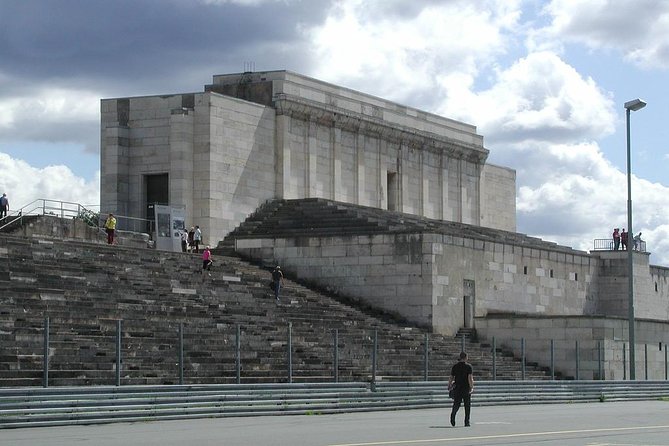
The tour continues to Große Straße for about 30 minutes. This long ceremonial avenue was part of the planned rally complex and shows the intended scale of Nuremberg’s role in Nazi public life.
Here, I would pay attention to proportion rather than decoration. The width and length of the avenue were meant for organized movement and spectacle, not ordinary city traffic. It gives you a clear sense that the planners were thinking in terms of huge gatherings and carefully controlled views.
This is also one of the places where modern Nuremberg and the Nazi past sit close together. The setting is no longer operating as its creators intended, but the physical dimensions remain difficult to ignore. Your guide’s explanation helps separate what survives from what was planned but never completed.
The half-hour allocation is sensible for an overview. If you want to study every remaining feature or photograph the site at length, you may wish for more time. The tour favors breadth, taking you to several locations rather than lingering at one.
Still Nuremberg, at a slower pace:
- Nuremberg: City Tour with the Bimmelbahn Train
★ 4.4 · 2,475 reviews - Nuremberg: Old Town Guided Walking Tour
★ 4.6 · 2,416 reviews - Nuremberg: Tunnels and Secret Passages in the City Wall Tour
★ 4.8 · 2,334 reviews - Nuremberg: Medieval Dungeons Guided Tour
★ 4.8 · 1,726 reviews
Congress Hall, a building made to overwhelm
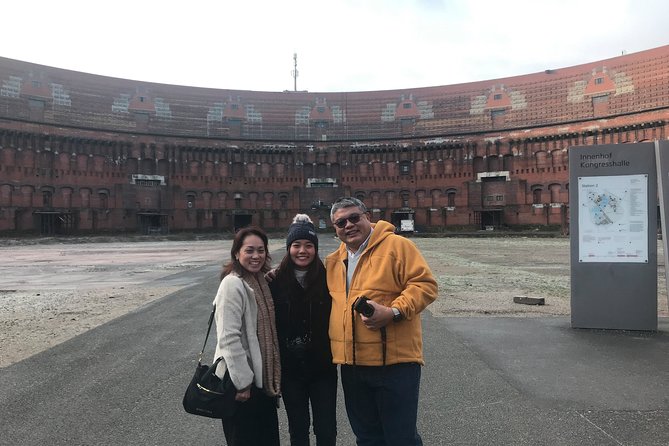
Congress Hall receives about 30 minutes and includes a photo stop and guided explanation. It is described as the largest preserved National Socialist monumental building, and its bulk is the immediate point.
The building was intended to impress through sheer mass. Even without entering every section, you can see how the design was meant to communicate authority and permanence. The structure was not created for intimacy. It was designed to make the individual feel surrounded by the state.
The Documentation Center Nazi Party Rally Grounds is located at Congress Hall. Its design includes a striking architectural intervention that cuts through the building, creating a sharp contrast between the old monumental shell and the modern museum approach. This is the architectural pun referenced in the tour description, and your guide can explain why that contrast is meaningful.
You pass by the Documentation Center rather than receiving a full museum visit as part of the four-hour route. That distinction matters. If you want a substantial amount of time inside the museum, you will likely need to return independently.
One point to consider is how the time is divided. Some people would prefer more time at Zeppelin Field, while others may appreciate the explanation around Congress Hall and the Documentation Center. The tour gives you a broad introduction, not a museum-focused study visit.
Zeppelin Field and the surviving grandstand
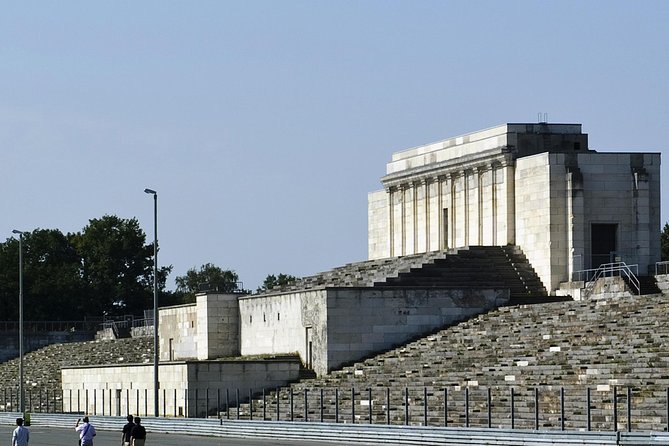
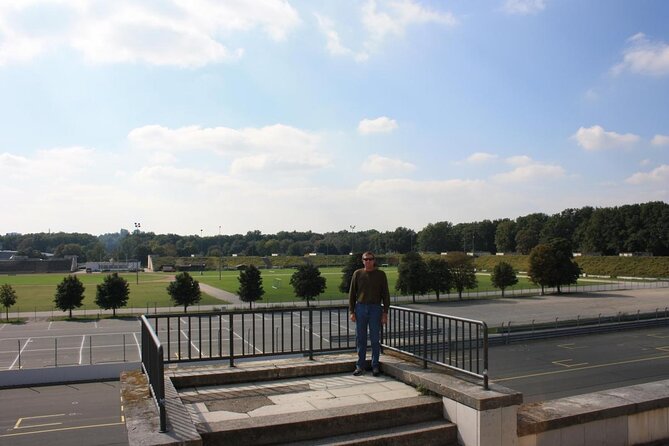
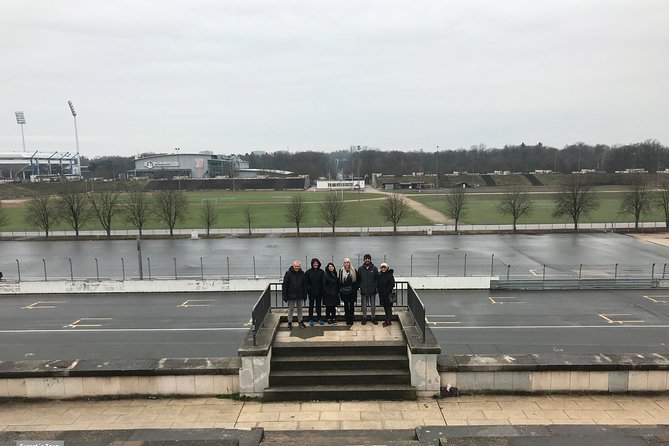
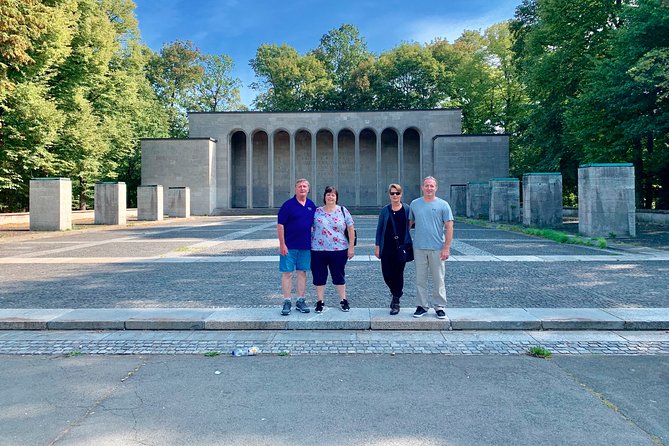
The stop at Zeppelinfeld lasts about 40 minutes and includes a photo opportunity and guided tour. This is one of the most powerful parts of the route because the scale is immediately visible.
Zeppelin Field was intended as a backdrop for party rallies, with the grandstand and open field arranged to create a controlled visual experience. The surviving structures show how architecture, ceremony, and mass politics were joined together.
You will likely spend time looking across the open ground and examining the grandstand area. The space can be hard to read without help, so the guide’s historical photographs are especially useful. Seeing the same location filled with people and symbols makes the present-day emptiness easier to understand.
This stop may feel short to anyone with a strong interest in military and political history. Forty minutes allows for explanation and photographs, but not an unhurried inspection of every detail. If Zeppelin Field is your top priority, tell the guide early. The schedule has several stops to fit together.
Courtroom 600 and the Palace of Justice
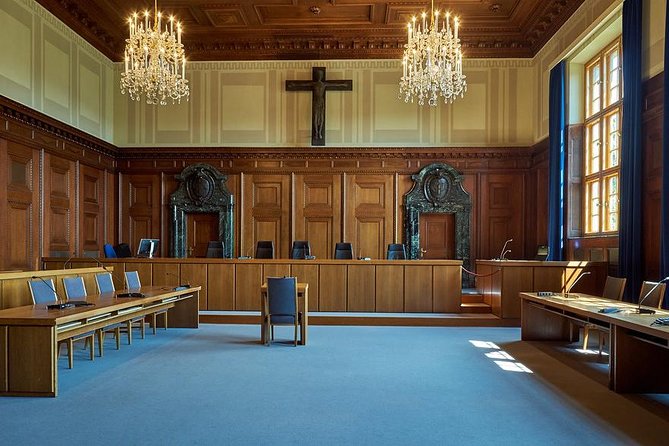
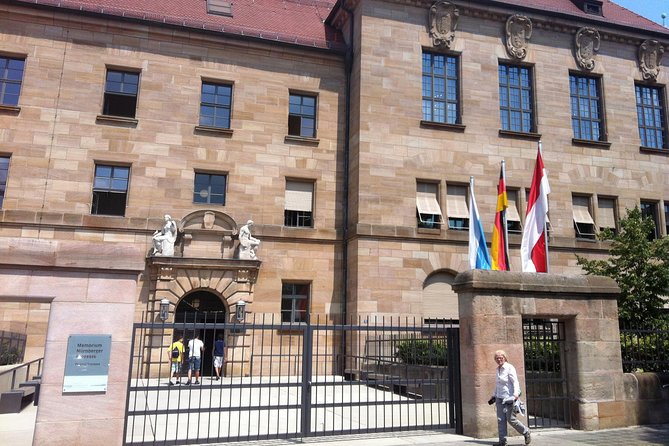
The tour ends at the Nuremberg Palace of Justice, where the International Military Tribunal tried major Nazi war criminals. You receive about 45 minutes for sightseeing and a self-guided visit.
Courtroom 600 is the emotional center of the experience. The rally grounds show how the Nazi regime presented power to the public. This courtroom shows what happened after the regime fell, when its leaders were placed before an international tribunal and the crimes of the war were examined in court.
The visit also includes an exhibition connected with the trials. For many people, this is the most important stop because it turns a vast political story into a legal and human one. You are no longer looking at a parade route or an imposing façade. You are standing in the place where testimony, evidence, and judgment shaped the public record of Nazi crimes.
The courtroom is still used for legal work at certain times, so access can depend on the schedule. The Palace of Justice is closed on Tuesdays, and the €7.50 entrance ticket is not included in the tour price. The tour information says ticket-line access is available, but admission itself remains an extra cost.
The timing deserves careful attention. Several people have found the final courtroom visit rushed, especially when the group arrives with only around 45 minutes remaining. If Courtroom 600 is the main reason you are coming, choose a day when it is open and ask at the start how the timing is expected to work.
The guide can make or break the history
The strongest part of this experience is the guiding. Rob is repeatedly praised for his energy, friendly manner, safe driving, and ability to connect present-day locations with wartime photographs. He also uses images from the period to help you see how the sites once looked.
Sheba has also been praised for an enthusiastic approach. The tour operates in English, Portuguese, Spanish, and Italian, so check the language offered on your chosen departure.
A useful practical point concerns speaking speed and accents. Some people have found certain guides fast or difficult to understand at moments, while still finding the historical explanations strong. If you need a slower pace, say so early. One participant did exactly that and found the guide adjusted.
That kind of communication matters on a history tour. The subject contains names, dates, political terms, and military events. If the explanation moves too quickly, you can lose the thread even when the guide knows the material well.
Is $147 a fair price?
At $147 per person, this is a premium half-day outing. You also pay €7.50 for the Palace of Justice, so the total cost is higher than the advertised tour price alone suggests.
I think the price makes the most sense for you if you value convenience and interpretation. Hotel pickup, a comfortable vehicle, a small group, and several spread-out sites would be difficult to combine without doing your own research and arranging transport. The guide also provides the historical link between the rally grounds and Courtroom 600.
The value is weaker if you are happy using public transport, reading on your own, and visiting only one or two locations. You could spend less by arranging separate visits, but you would lose the compact route and the live commentary.
The free cancellation option up to 24 hours before departure and reserve-now, pay-later booking also reduce the risk of committing far ahead. Still, the most important value question is not the cancellation policy. It is whether you want a guided overview or a longer, self-paced museum visit.
Who will get the most from this tour?
I would recommend it most strongly to first-time visitors to Nuremberg who want a clear introduction to the city’s Nazi-era sites. It also suits families with older children, couples, and history-focused visitors who prefer a guide to explain difficult material in a direct way.
The vehicle makes it a practical choice if long walks are tiring, though walking is still part of the experience. The tour is wheelchair accessible, which adds flexibility for many visitors.
You should think twice if you want several hours inside Courtroom 600 or the Documentation Center. This route is built around multiple locations, so it gives you range rather than a long, slow visit at one site.
The subject is also serious. The tour deals with dictatorship, war crimes, propaganda, and mass violence. It is not light sightseeing, though an energetic guide can make the material approachable without treating it casually.
Practical advice for choosing your date
Book a day other than Tuesday. The Palace of Justice and Courtroom 600 are closed then, and missing the final stop removes one of the tour’s main purposes.
Wear shoes suitable for walking and standing at large outdoor sites. The itinerary includes several guided stops at open rally grounds, followed by a visit inside the Palace of Justice.
Keep your schedule reasonably open after the tour if Courtroom 600 matters greatly to you. The four-hour plan includes transport and several stops, and the final visit may feel brief. If you want more time at the courtroom or Documentation Center, plan a separate visit when possible.
Finally, tell the guide what interests you. If your focus is Zeppelin Field, architecture, courtroom history, or Nazi propaganda, a small group gives you a better chance to shape the conversation.
Should you book the Nuremberg WWII tour?
Book this tour if you want a well-organized, small-group introduction to Nuremberg’s Nazi rally grounds and the postwar trials. The strongest reasons are the spread-out route, hotel transport, period photographs, and guides such as Rob, who bring energy and clear explanation to places that can otherwise feel abstract.
I would not book it expecting a long, leisurely visit to Courtroom 600. The courtroom is the key reason to avoid Tuesday, but the schedule gives it only a limited window at the end. For most first-time visitors, the tour offers good practical value despite its price. For serious museum readers, it works better as an orientation, followed by extra time at the Palace of Justice or Documentation Center on your own.
FAQ
How long does the Nuremberg WWII tour last?
The tour lasts four hours, including transport, outdoor visits, walking, and the Palace of Justice stop.
What locations are included?
The route includes Luitpoldhain and the Luitpold Arena, Große Straße, Congress Hall, Zeppelin Field, the Documentation Center area, and the Nuremberg Palace of Justice with Courtroom 600.
Is hotel pickup included?
Yes. Pickup and drop-off are provided outside your accommodation in Nuremberg.
Is the Palace of Justice entrance fee included?
No. Admission costs €7.50 per person and must be paid separately.
Is Courtroom 600 open every day?
No. The Palace of Justice and Courtroom 600 are closed on Tuesdays.
How much time is spent at Courtroom 600?
The planned Palace of Justice stop lasts about 45 minutes and includes sightseeing and a self-guided visit.
How large is the tour group?
The group is limited to eight participants.
Which languages are available?
The live tour guide is available in English, Portuguese, Spanish, and Italian.
Is the tour wheelchair accessible?
Yes, the activity is listed as wheelchair accessible.
Can I cancel the booking?
Yes. You can cancel up to 24 hours in advance for a full refund, and reserve-now, pay-later booking is available.
Just added around Nuremberg
- Tour en español al Campo Zeppelin★ 5.0 · 8 reviews
- Stein: Public guided tour of the “Old Mine” museum★ 4.5 · 18 reviews
- “Rotes Bier” and “Blaue Zipfel”. A historical-culinary walk★ 4.4 · 190 reviews
- Nuremberg: Old Town Guided Tour By Bus★ 4.4 · 198 reviews
- Nürnberg kennenlernen: Highlights in der Altstadt★ 4.7 · 189 reviews
- Nuremberg: Bar and Club Tour with Free Shots and Free Entry★ 3.8 · 23 reviews
- Nürnberg Bachelor(ette) Party with Night PubCrawl★ 4.2 · 5 reviews
- Nuremberg: The Old Town Hall – Centre of Power – IN GERMAN★ 4.8 · 8 reviews