
Reviewed · NUREMBERG TOURS
Tour en español al Campo Zeppelin
History gets physical here. This three-hour Spanish-language tour takes you from the Frauenkirche in Nuremberg’s Hauptmarkt to the former Nazi Party Rally Grounds, where huge ceremonies, military parades, and political theater once took place. I like that the tour connects several separate sites instead of treating Zeppelin Field as a single photo stop.
I especially like the low $20 price, which makes a specialist guide excellent value, and the clear focus on Spanish-language explanation. Federico receives repeated praise for his storytelling, detailed answers, and ability to make the subject conversational. The main consideration is that public transport and entrance to the Documentation Center are not included, so your final cost may be higher than the advertised price.
In This Review
- Key points to know before booking
- Why Zeppelin Field needs a guided visit
- Starting at the Frauenkirche in Hauptmarkt
- Luitpoldhain and the memory of Hitler’s Putsch
- Congress Hall and the scale of Nazi ambition
- Walking the Große Straße
- Zeppelin Field, the tour’s main destination
- What the Spanish guide adds
- Is three hours enough?
- The price and what it really covers
- Practical advice for a respectful visit
- Who will get the most from this tour?
- Should you book the Spanish tour to Zeppelin Field?
- FAQ
- Where does the tour begin?
- What language is the tour conducted in?
- How long does the tour last?
- How long is the bus ride?
- Which places are included in the route?
- Is entrance to the Documentation Center included?
- Is public transportation included?
- Is the tour wheelchair accessible?
- Does the tour operate in bad weather?
Key points to know before booking
- Federico’s Spanish storytelling is the heart of the tour: He explains difficult history clearly and responds to questions as the walk develops.
- The visit covers more than Zeppelin Field: You see Luitpoldhain, Congress Hall, Große Straße, and the Zeppelin Field itself.
- Bus travel takes about 40 minutes total: Allow roughly 20 minutes from the Frauenkirche to the rally grounds and another 20 minutes back.
- The rally grounds are vast and monumental: The scale makes the Nazi use of architecture and mass gatherings easier to understand.
- The $20 price is strong value for a specialist guide: You still need to pay for public transport and, if you enter it, the Documentation Center.
- Wear comfortable shoes and expect all-weather conditions: The tour runs in rain or sunshine and includes outdoor walking.
Why Zeppelin Field needs a guided visit
Nuremberg’s former Nazi Party Rally Grounds can be hard to read on your own. The sites are spread across a large area, and much of what you see today is open space, partial structures, and massive stone architecture. Without context, it can be difficult to understand what happened where, or why these places mattered so much to the Nazi regime.
This is where a Spanish-speaking guide adds real value. Federico is praised for knowing the subject well, telling the story with energy, and answering questions instead of simply reciting dates. That matters at a place where the physical remains can feel silent. A guide helps you connect the buildings and parade grounds to the Nazi Party’s rise to power and the carefully staged ceremonies held here.
The subject is serious, and the tour is not designed as light sightseeing. You will be looking at places tied to propaganda, military display, political loyalty, and the organization of the Third Reich. I would choose this experience if you want historical explanation rather than a quick look at a famous site.
A few more Nuremberg trips worth comparing
- Nuremberg: City Tour with the Bimmelbahn Train
★ 4.4 · 2,475 reviews - Nuremberg: Old Town Guided Walking Tour
★ 4.6 · 2,416 reviews - Nuremberg: Tunnels and Secret Passages in the City Wall Tour
★ 4.8 · 2,334 reviews
Starting at the Frauenkirche in Hauptmarkt
The meeting point is in front of the Church of Our Lady, or Frauenkirche, in the Hauptmarkt. Look for a guide holding a red and white umbrella. This is a useful detail because the square can be busy, and the meeting point is much easier to identify when you know what to look for.
The tour then uses a bus or coach for about 20 minutes. Your public transport ticket is not included, so arrange that before departure. The ride is not just a transfer. It gives you time to move from central Nuremberg, with its medieval streets and market square, toward the much more open former rally grounds.
The contrast is important. Nuremberg is often associated with its old town, castle, and postwar trials, but the rally grounds show another side of the city. You leave the compact historic center and reach a place built for enormous crowds and political spectacle.
Luitpoldhain and the memory of Hitler’s Putsch
The first guided stop is Luitpoldhain, with about 30 minutes devoted to the area. This is where the tour begins to explain how the Nazi Party used ceremonies and public memory to build loyalty.
The site was associated with annual remembrance of Hitler’s failed Putsch. It was also used for ceremonies involving the SS and SA, two organizations central to the Nazi movement. Your guide can help explain how these events turned political history into ritual, with repeated ceremonies designed to shape how participants understood the party and its leaders.
I find this stop especially useful because it gives meaning to the open space. You are not simply looking at a park or a broad field. You are standing where the Nazi Party staged carefully planned gatherings, using crowds, uniforms, symbols, and ceremony to make the movement appear powerful and inevitable.
The 30-minute visit is long enough for an introduction without making the entire tour feel fixed in one location. Still, you should expect a serious outdoor explanation rather than a large indoor exhibition. Comfortable shoes will help, and bring clothing suitable for changing weather.
Congress Hall and the scale of Nazi ambition
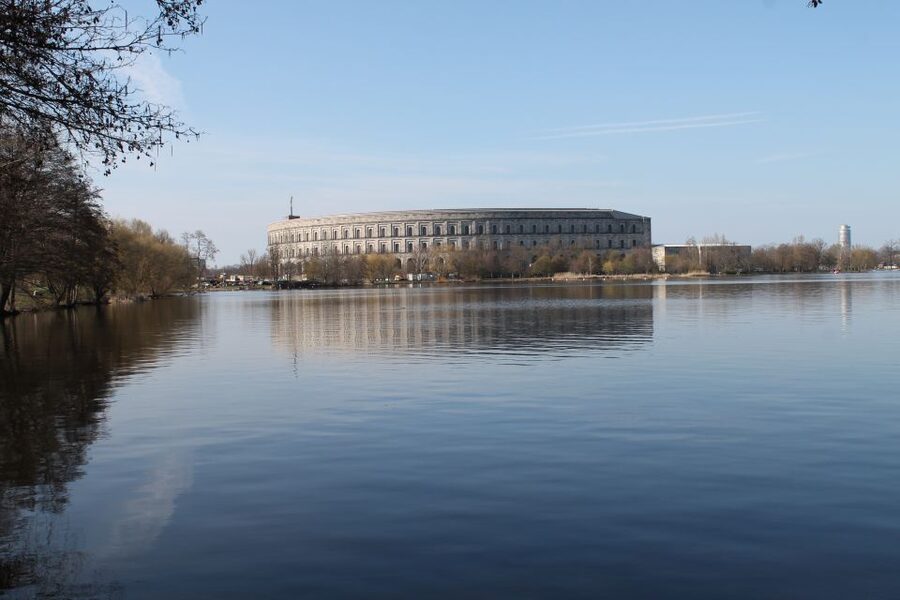
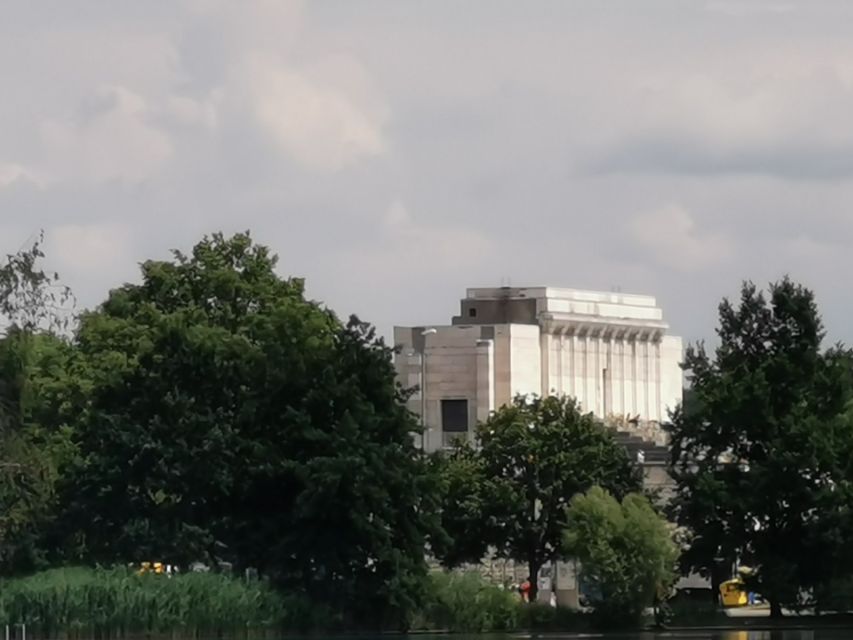
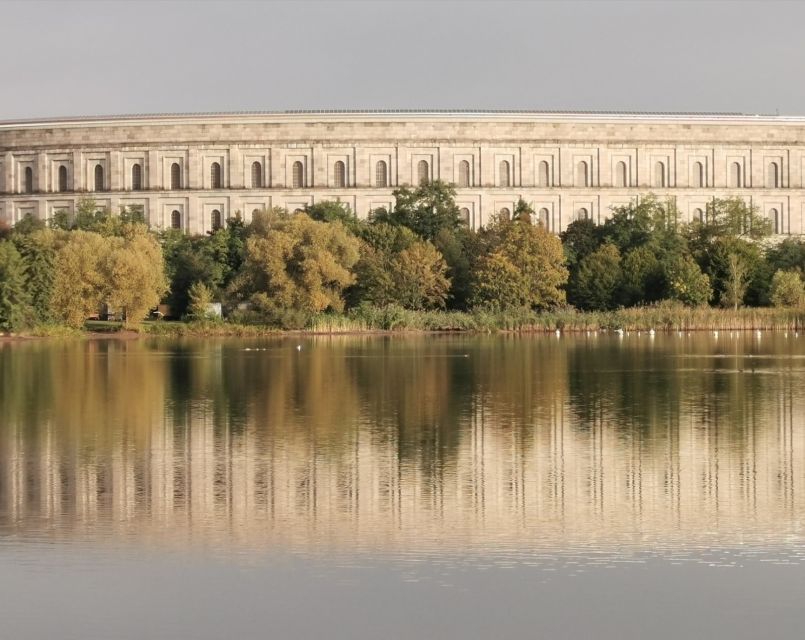
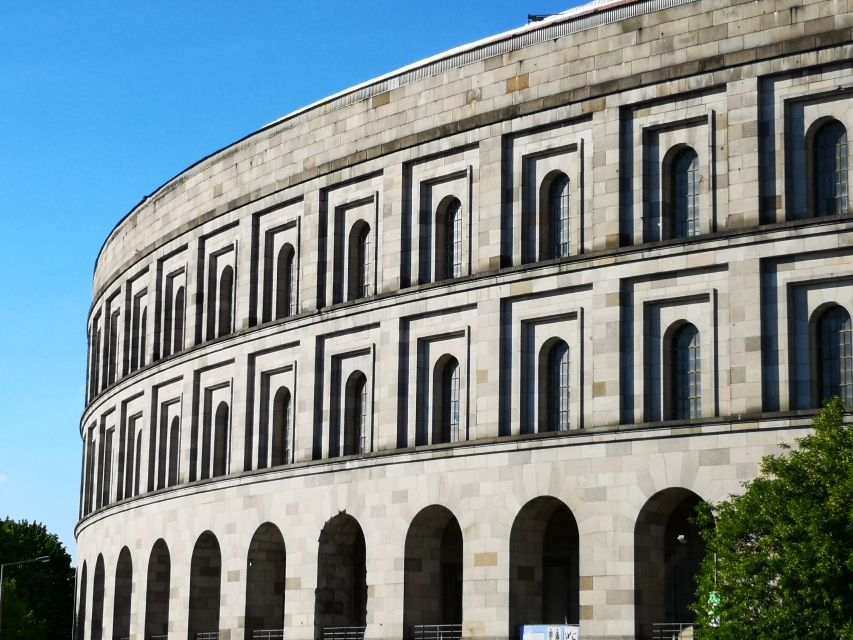
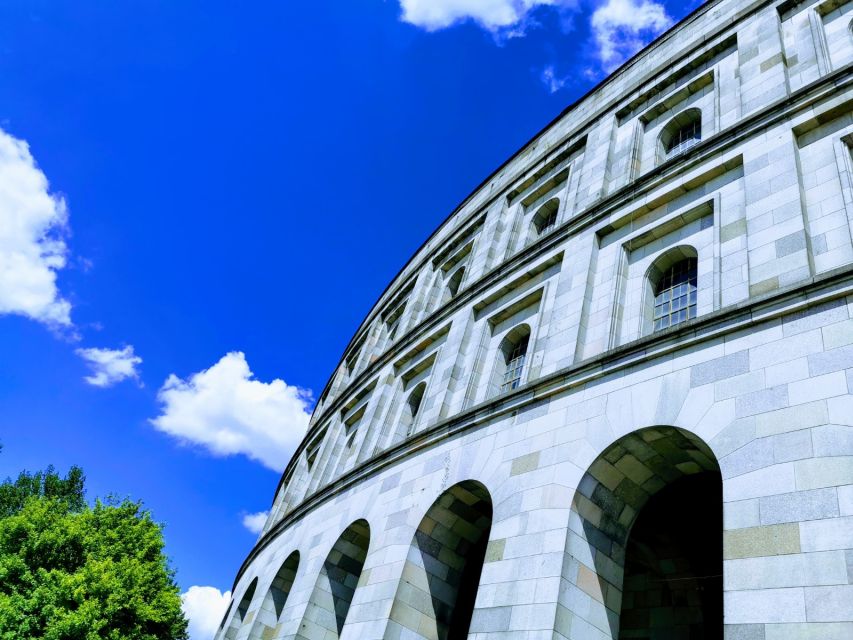
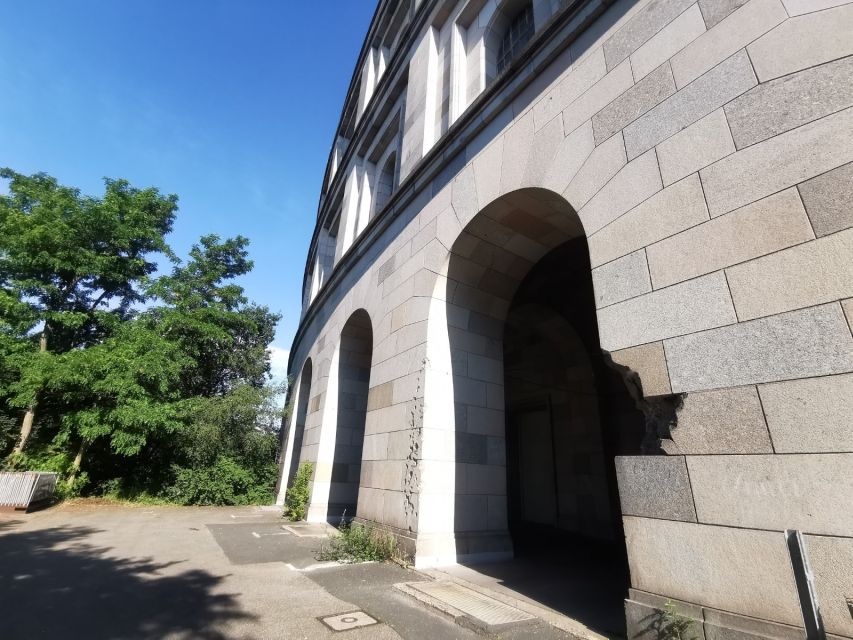
The next stop is the Documentation Center Nazi Party Rally Grounds, with about 20 minutes of guided explanation. The nearby Congress Hall is one of the most striking structures in the area. Its colossal scale was meant to communicate power, authority, and permanence.
The building is difficult to understand from a photograph alone. On site, its size helps explain how architecture was used as political messaging. The structure was not merely a meeting place. It was part of a wider plan for mass events, with buildings and open areas arranged to support the Nazi Party’s public image.
Entrance to the Doku Zentrum is not included in the tour price. The experience includes guided attention to this part of the rally grounds, but you should not assume that an admission ticket comes with your booking. If you want to visit the indoor documentation exhibition, budget separately for entry.
That extra visit could be worthwhile if you have time and want more written and visual material. If your priority is the outdoor rally grounds, the guided tour already gives you a clear framework for reading Congress Hall and the surrounding area. At $20, the base experience remains reasonably priced even without museum admission.
Still Nuremberg, at a slower pace:
- Nuremberg: Medieval Dungeons Guided Tour
★ 4.8 · 1,726 reviews - Nuremberg: Walking Tour of Former Nazi Party Rally Grounds
★ 4.7 · 1,665 reviews - Medieval Tour in Nuremberg in Spanish
★ 5.0 · 1,374 reviews - Nuremberg: Historischer Kunstbunker WWII Art Bunker Tour
★ 4.8 · 921 reviews
Walking the Große Straße
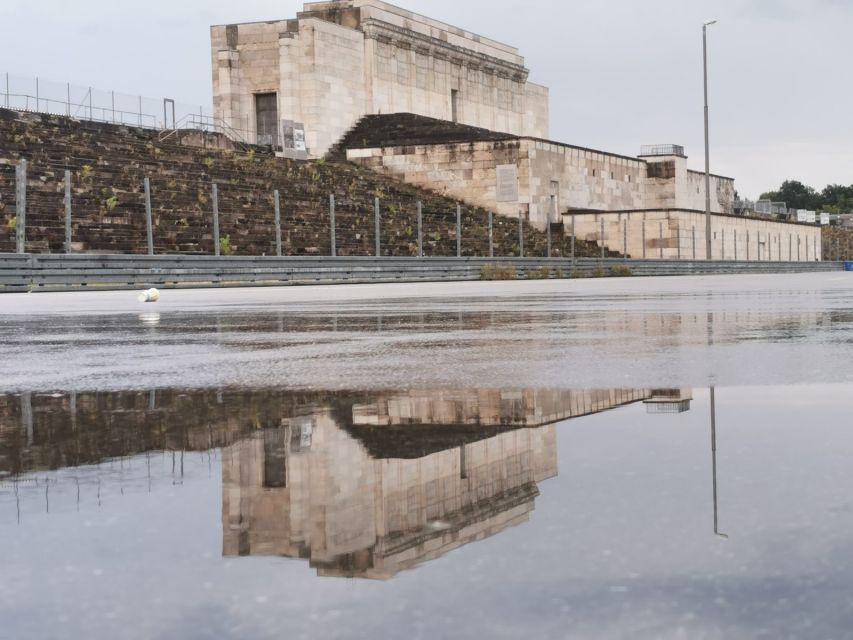
The tour continues along Große Straße, or Great Road, for about 20 minutes. This was the route where parades of the German army were formed and displayed. Its broad scale makes the intended use easy to grasp: it was built for organized movement, public viewing, and military presentation.
This section helps connect the ceremonial spaces. Luitpoldhain shows how the party used ritual and remembrance. Congress Hall shows the grand architectural plan. Große Straße shows how military order and mass movement were placed into the same political setting.
You will want to listen closely here because a wide road can look simple without explanation. The point is not decorative detail. The point is how space was designed to direct attention and create a sense of collective power.
The 20-minute walking segment is also a reminder that this is not a bus-only sightseeing trip. You move between large outdoor areas and spend time on your feet. The tour is listed as wheelchair accessible, but the duration and open-air setting still make it sensible to confirm any personal mobility needs when booking.
Zeppelin Field, the tour’s main destination
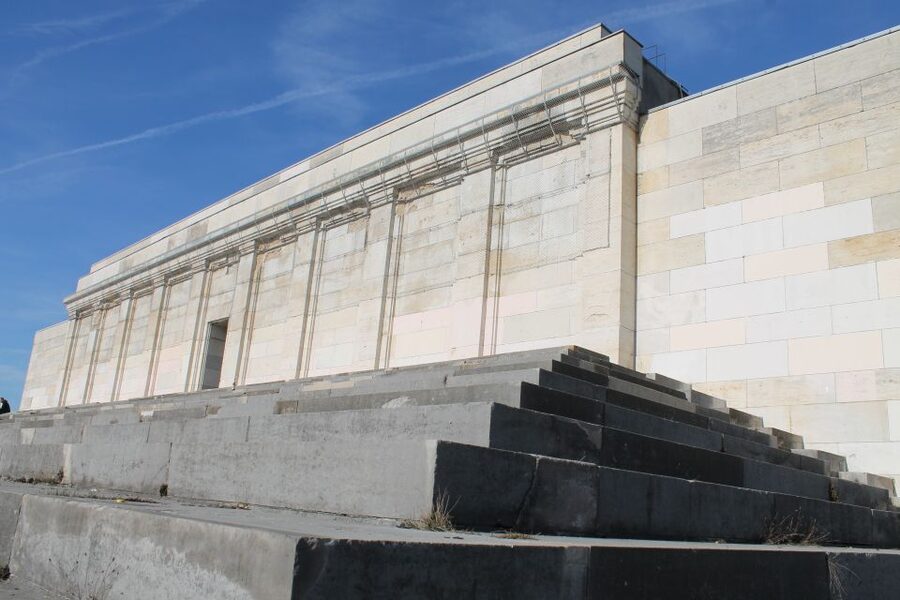
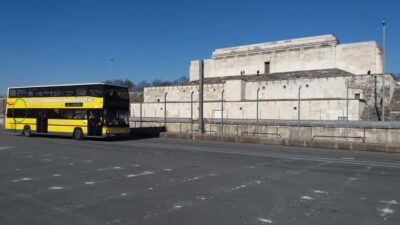
The final major stop is Zeppelinfeld, where you spend about 20 minutes with the guide. This is the site most people associate with the rally grounds, but seeing it after Luitpoldhain, Congress Hall, and Große Straße makes it easier to understand as part of a larger system.
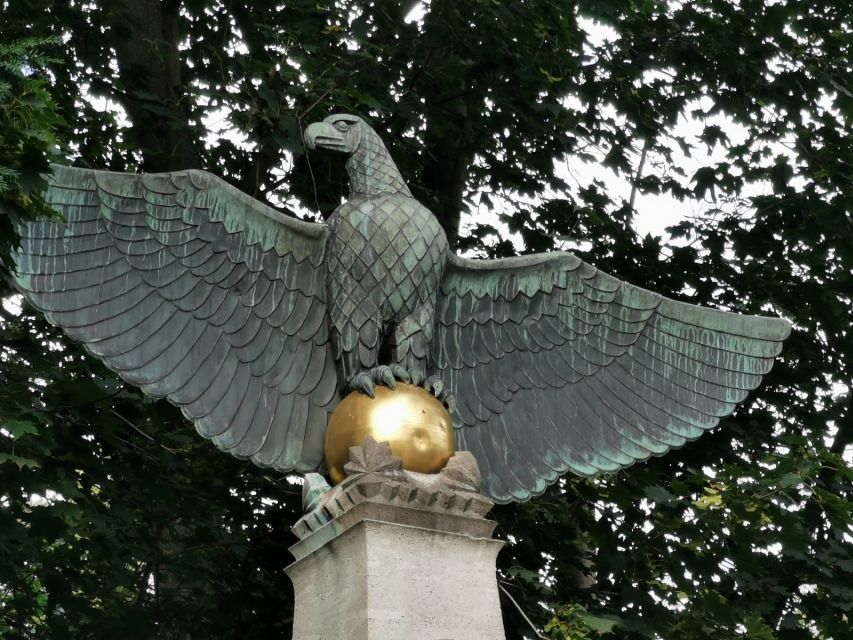
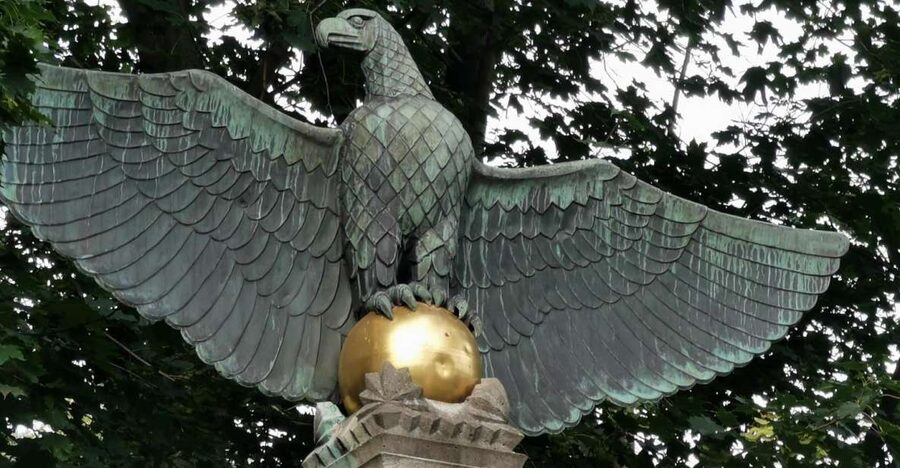
The field was used for major Nazi Party rallies and military displays. Its scale is the main visual experience. It was designed to hold and organize enormous crowds, with the architecture framing the political spectacle.
A short visit here can leave you with more questions than answers, which is one reason the guide matters. Federico’s strength, based on the feedback provided, is his ability to add details and respond to questions in a two-way discussion. Several comments praise his passion for the subject and his storytelling, while one person noted that the site looked very different from what they had imagined. That is useful advice: Zeppelin Field may not match the dramatic images you have seen. The present-day site and the historical photographs are two different things.
I would not book this expecting a preserved theme park or a polished monument. You are visiting a place marked by its scale, its surviving structures, and the weight of what occurred there. The experience is strongest when you are willing to look carefully and let the guide explain what is no longer visible.
What the Spanish guide adds
The tour is conducted in Spanish, and that language choice is central to its appeal. Historical terms connected to the Nazi Party, the SS, the SA, propaganda, and the Third Reich can be difficult to follow in a second language. A specialist guide can explain them in natural Spanish and adjust the discussion when questions come up.
Federico is the guide named most often in the available comments. He is described as an excellent storyteller, exceptionally strong on the subject, and willing to answer questions as they arise. That last point matters. A place like this can produce uncomfortable or unexpected questions, and a conversational guide is more helpful than a fixed speech.
The feedback also describes the tour as entertaining in the sense of being engaging, not lighthearted. That distinction matters. You can expect a clear and lively presentation, but the topic remains the rise of Nazism and the use of these grounds by the Third Reich.
The listed rating is 5 out of 5 from eight reviews, with praise focused almost entirely on Federico’s historical skill and teaching style. That consistency gives me confidence in the guide-led part of the experience, though it does not tell you everything about group size, walking pace, or how much time you may have at each exact viewpoint.
Is three hours enough?
Three hours is a sensible length for this outing. The published schedule gives about 20 minutes by bus to the rally grounds, then roughly 90 minutes of guided stops, followed by another 20 minutes back. That leaves some time for moving between areas and handling the natural pace of a group.
You will not study every corner of the former rally grounds in detail. Instead, you get a focused route through the most important locations. I like this approach for a first visit because it gives you a coherent story without turning the day into a long specialist lecture.
The drawback is that the tour may feel brisk if you want extensive photography, private reflection, or a full museum visit. The time at each stop is limited, with 20 minutes at several locations. If you prefer to read every display and linger at each structure, plan additional time before or after the tour.
The price and what it really covers
At $20 per person, this is a good-value introduction to a difficult and important site. The price covers the guided visit to Zeppelin Field and the wider route through the rally grounds, but it does not cover public transport or entry to the Documentation Center.
That distinction is easy to miss. The advertised price is not necessarily your complete spending total, especially if you need to buy a transport ticket and want to enter the Doku Zentrum. Even so, the guide is the main reason to book, and the cost is modest for three hours of specialist explanation in Spanish.
I would compare this with the price of trying to understand the grounds alone. You can walk through open areas without paying for a guide, but you may miss the link between the sites and the political purpose behind them. For $20, the historical framing is the strongest part of the value.
The tour also offers free cancellation up to 24 hours before departure and a reserve-now, pay-later option. Those terms are useful if your Nuremberg plans may change, but the more important booking question is whether you want a guided historical visit rather than an independent walk.
Practical advice for a respectful visit
Wear comfortable shoes. The route includes outdoor walking across a broad site, and the tour lasts three hours from start to finish.
Bring a valid public transport ticket because it is not included. Also check the available starting times before booking, since the departure schedule can vary.
The tour operates rain or shine. A waterproof layer, sun protection, and comfortable clothing are sensible choices depending on the forecast. The red and white umbrella makes the meeting point easier to find, but it does not make the rest of the tour weatherproof.
Allow enough time to reach the Frauenkirche in Hauptmarkt before departure. Arriving early is wise because the first part of the experience depends on joining the correct guide before the bus transfer begins.
If you want to enter the Documentation Center, treat that as an additional plan and cost. The guided stop gives you context for the building and rally grounds, but admission is separate.
Who will get the most from this tour?
I would recommend it most strongly to Spanish-speaking visitors who want a clear introduction to Nuremberg’s Nazi Party Rally Grounds. It suits anyone interested in 20th-century European history, political propaganda, military ceremony, or the way architecture can be used to shape public behavior.
It is also a good choice if you are visiting Nuremberg for a short time. The bus connection and focused route let you reach several distant sites without planning the transport and sequence yourself.
Families with older children or teenagers may find the subject valuable, provided they are ready for a serious discussion. The tour is also listed as wheelchair accessible, which makes it more practical for people who need an accessible experience, though the outdoor route and personal mobility needs are worth checking in advance.
I would choose another option if you want a purely independent visit, a long museum session, or extensive time for quiet reflection. The tour has a fixed route and timed stops. Its strength is structure and explanation, not freedom to wander.
Should you book the Spanish tour to Zeppelin Field?
Yes, if Spanish is your preferred language and you want historical context at a low price. The route covers Luitpoldhain, Congress Hall, Große Straße, and Zeppelin Field, giving you a much fuller picture than a quick visit to the field alone.
Federico’s repeated praise is the clearest reason to book. His storytelling, subject knowledge, and willingness to answer questions appear to shape the experience. Just budget separately for transport and possible Doku Zentrum admission, wear good shoes, and prepare for an outdoor visit in any weather.
I would book this tour when I wanted to understand what I was seeing, not simply photograph it. At this site, that difference is everything.
FAQ
Where does the tour begin?
The tour begins in front of the Church of Our Lady, or Frauenkirche, in Nuremberg’s Hauptmarkt. Your guide will be holding a red and white umbrella.
What language is the tour conducted in?
The live tour guide speaks Spanish.
How long does the tour last?
The experience lasts three hours, including the bus journeys to and from the Nazi Party Rally Grounds.
How long is the bus ride?
The bus or coach journey takes about 20 minutes to the rally grounds and about 20 minutes back.
Which places are included in the route?
The route includes Luitpoldhain, the Documentation Center Nazi Party Rally Grounds area, Große Straße, and Zeppelinfeld.
Is entrance to the Documentation Center included?
No. Entrance to the Doku Zentrum is not included in the tour price.
Is public transportation included?
No. You need to bring or purchase your own public transport ticket.
Is the tour wheelchair accessible?
Yes, the activity is listed as wheelchair accessible.
Does the tour operate in bad weather?
Yes. The tour takes place rain or shine, so bring suitable clothing and comfortable shoes.
Just added around Nuremberg
- Stein: Public guided tour of the “Old Mine” museum★ 4.5 · 18 reviews
- “Rotes Bier” and “Blaue Zipfel”. A historical-culinary walk★ 4.4 · 190 reviews
- Nuremberg: Old Town Guided Tour By Bus★ 4.4 · 198 reviews
- Nürnberg kennenlernen: Highlights in der Altstadt★ 4.7 · 189 reviews
- Nuremberg: Bar and Club Tour with Free Shots and Free Entry★ 3.8 · 23 reviews
- Nürnberg Bachelor(ette) Party with Night PubCrawl★ 4.2 · 5 reviews
- Nuremberg: WWII Tour, Courtroom 600 and 3rd Reich Sites★ 4.6 · 94 reviews
- Nuremberg: The Old Town Hall – Centre of Power – IN GERMAN★ 4.8 · 8 reviews
Nuremberg Tours, compared.

Tunnels and Secret Passages in the City Wall Tour
Read our review →
Browse the lists this tour appears in