
Reviewed · CASTLES AND PALACES
Potsdam Tour from Berlin With Guided Sanssouci Palace Visit
Potsdam packs centuries into four hours. This half-day outing gives you a useful taste of the royal city just outside Berlin, combining a guided Sanssouci Palace visit with coach sightseeing at the Bridge of Spies, the Dutch Quarter, Alexandrovka, and Potsdam’s Old Market Square. I like the smooth transport and the amount of history explained along the way. The main compromise is time: Potsdam offers enough to fill a full day, and this tour can feel brisk.
I also like that the tour takes care of the awkward parts, including transport from central Berlin and palace entry. Guides such as Susan, Karin, Jasmin, Bridget, and Stefanie have been praised for clear English, strong historical knowledge, and an easy way with questions. The one point to watch is the English-German format, since some departures may give more commentary in German than English.
In This Review
- Key points at a glance
- Why Potsdam makes a smart half-day from Berlin
- The coach ride from Kurfürstendamm
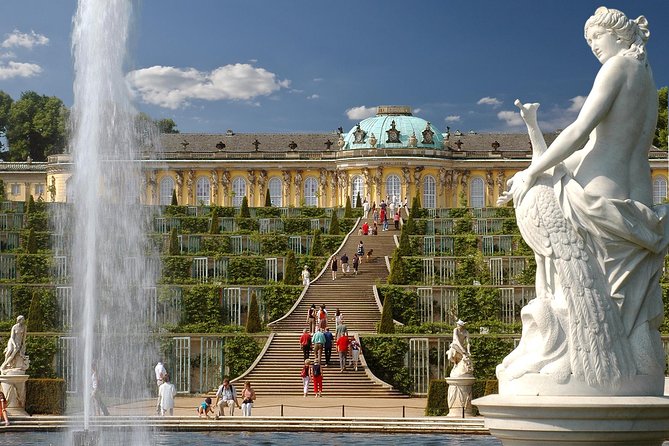
- Sanssouci Palace and Frederick the Great’s private world
- The New Palace and the wider royal setting
- Glienicke Bridge, the original Bridge of Spies
- The Dutch Quarter’s red-brick streets
- Alexandrovka, a Russian village with a personal story
- Old Market Square and St. Nicholas Church
- The guides and the bilingual format
- Who will enjoy this tour most
- Is $77.23 good value?
- Should you book the Potsdam tour?
- FAQ
- How long does the Potsdam tour last?
- What time does the tour leave Berlin?
- Where does the tour start?
- Where does the tour finish?
- Is admission to Sanssouci Palace included?
- Is the tour offered in English?
- Is food included?
- Can I cancel for a full refund?
Key points at a glance
- Sanssouci is the main event: Spend about two hours around Frederick the Great’s former summer palace, with admission included and long lines bypassed.
- The Bridge of Spies adds Cold War drama: Glienicke Bridge connects Berlin and Potsdam and was used for spy exchanges during the divided Germany era.
- You see more than one palace: The route includes views of Sanssouci and the New Palace, along with central Potsdam.
- The coach makes a short visit practical: A comfortable coach and driver let you cover scattered sights without arranging trains, buses, or taxis.
- Potsdam’s UNESCO setting is varied: Dutch brick houses, a Russian village, royal gardens, churches, and palace grounds all appear in one outing.
- Expect a brisk half-day: The 10 a.m. departure lasts about four hours and returns to Kurfürstendamm 216.
Why Potsdam makes a smart half-day from Berlin
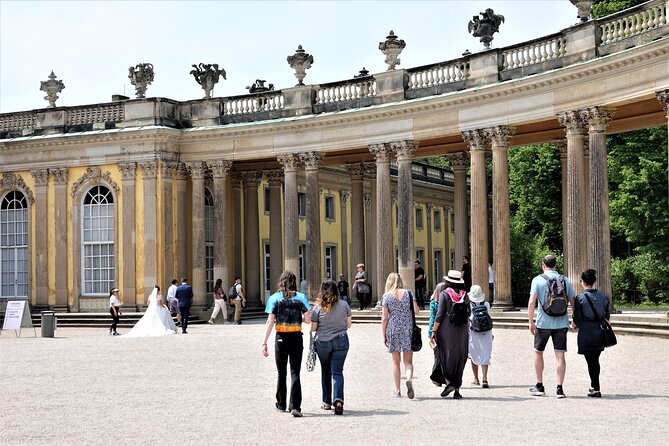
Berlin tells the story of Prussia, German division, war, and reunification. Potsdam gives you the royal setting behind much of that story, with palaces, formal gardens, military connections, and neighborhoods built for foreign settlers and court life.
The city lies close enough to Berlin for a short coach trip, but it feels different in scale and mood. You move from Berlin’s broad urban streets to palace grounds, the Havel River, and carefully planned historic quarters. I like this contrast because it shows that Berlin’s past was not confined to the capital itself.
At $77.23 per person, the tour is not the cheapest way to reach Potsdam. You are paying for a reserved coach seat, a guide, included palace admission, and a route that connects several sights in a limited amount of time. If you are comfortable planning public transport and visiting sites independently, you may spend less. If you want history explained while someone else handles the driving, the price is easier to justify.
The group can include up to 30 people. That is large enough to keep the price reasonable, but small enough for a guide to manage without the feeling of a huge sightseeing convoy. The coach ride also gives your legs a break, which matters because the palace grounds and central sights involve walking.
More Castles and Palaces in Berlin
- Potsdam: City and Castles Tour
★ 4.7 · 3,721 reviews - Potsdam: Palace Tour by Boat
★ 4.5 · 2,369 reviews - Potsdam: Sanssouci Palace and Prussian Palaces Entry Ticket
★ 4.5 · 2,101 reviews
The coach ride from Kurfürstendamm
The tour starts at 10 a.m. from Kurfürstendamm 216, a central Berlin address, and finishes at the same meeting point. The fixed departure makes the morning simple, but you should arrive early enough to find the exact pickup spot without rushing.
The ride is part of the lesson. Guides explain Berlin and Potsdam as you go, pointing out places connected with the city’s growth and modern history. One especially good return-drive detail is the AVUS motorway and its grandstand, which adds a surprising piece of Berlin transport history to the route.
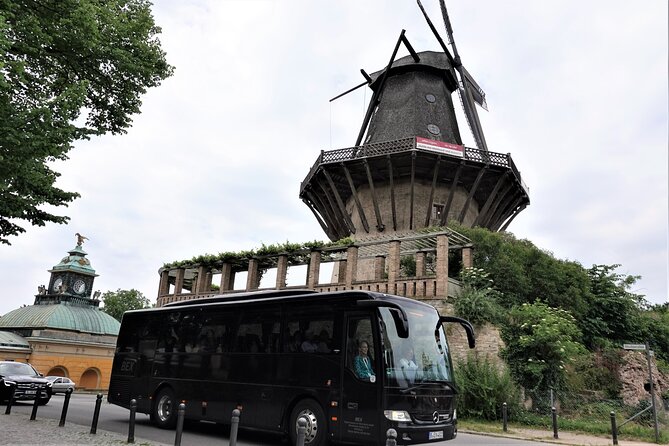
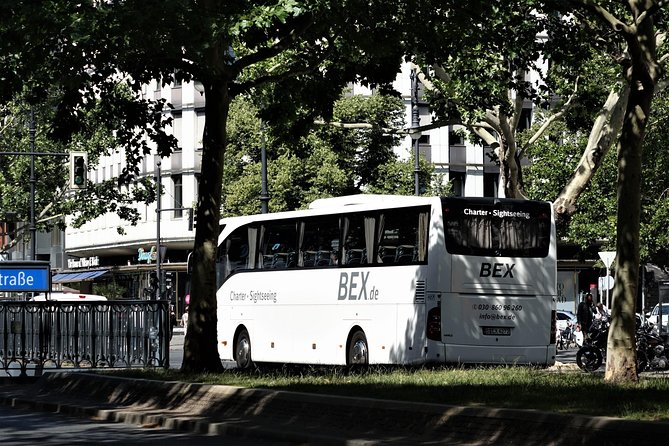
The included coach is one of the tour’s strongest practical features. It has been described as clean, quiet, and comfortable, while drivers such as Kadri and Eric received praise for smooth, careful driving. That matters on a half-day schedule, since delays or a confusing public transport connection would quickly eat into your time in Potsdam.
There is no food or drink included. The coach restroom may not be available, so use facilities before leaving or at the gate. Carry some small change, since a restroom stop has been reported to cost 50 cents. It is a minor point, but the sort of minor point that can save a scramble.
Sanssouci Palace and Frederick the Great’s private world
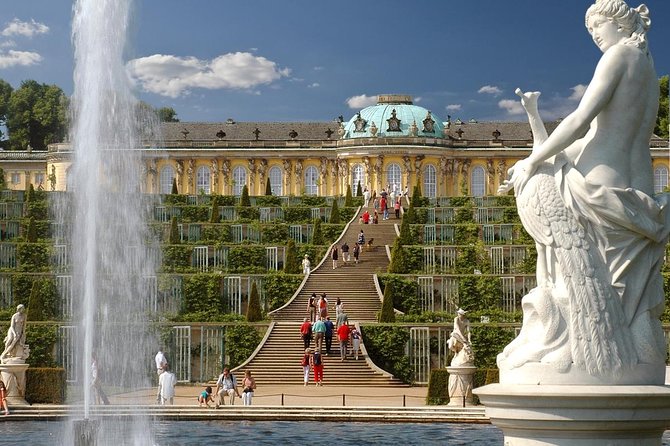
You spend roughly two hours at Sanssouci Palace, the former summer residence of Frederick the Great, King of Prussia. The palace was built between 1745 and 1747 from plans by Georg Wenzeslaus von Knobelsdorff. Frederick wanted a retreat away from the formal demands of the Berlin court, and the name Sanssouci reflects that wish for a carefree place.
The palace is not a giant royal complex in the style of Versailles. That is useful to know before you arrive. Sanssouci is more intimate and personal, with a small-scale elegance that fits its purpose as a private retreat. One of the most helpful pieces of advice is to expect something less grand than Europe’s largest palaces, but no less interesting.
Admission is included, and the tour is designed to bypass long lines. This is a real advantage because palace entry can consume a large share of a four-hour visit. The grounds are also a major part of the experience, with temples, garden buildings, and other decorative structures spread through the park.
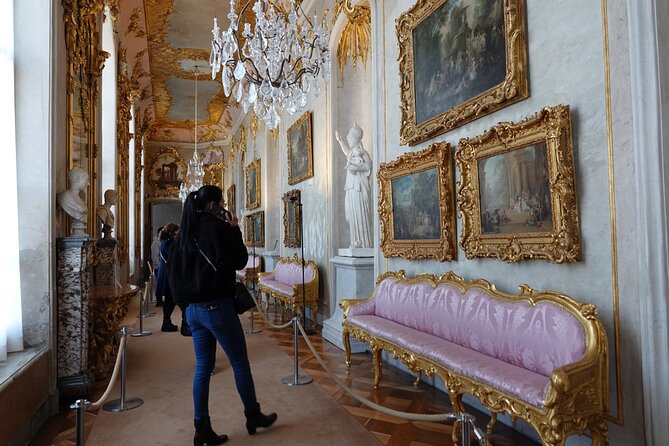
The palace portion may use a handheld audio device, even though the wider visit is guided by the tour leader. That setup can provide a large amount of information in a short time, especially about Frederick’s life and the rooms you are seeing. If you prefer a live conversation inside every room, check how your departure handles the palace commentary.
Two hours sounds generous, but it passes quickly. You should be ready to walk, listen, and keep to the group’s timing. The upside is a focused introduction. The downside is that you will not have time to explore every corner of the grounds at a slow pace.
The New Palace and the wider royal setting
The route also includes the New Palace, another major royal sight in Potsdam. Even if your main indoor visit is Sanssouci, seeing the New Palace helps you understand how Frederick’s private retreat fit into a much larger royal setting.
The contrast is useful. Sanssouci represents relaxation and personal taste, while the New Palace reflects ceremony and public display. Your guide’s explanations make these places more than attractive buildings. They become part of the political story of Prussia, where royal architecture could express power, status, and ambition.
The tour does not offer unlimited free time at each palace. If you want a slow study of interiors, gardens, and decorative details, a full-day Potsdam visit would suit you better. For a first look, though, this paired palace route gives you the essential shape of the royal city.
Still Berlin, at a slower pace:
- Berlin: Reichstag, Dome and Government District Guided Tour
★ 4.7 · 18,288 reviews - Berlin: 1-Hour City Tour by Boat with Guaranteed Seating
★ 4.3 · 16,993 reviews - Berlin: Boat Tour Along the River Spree
★ 4.4 · 11,252 reviews - Discover Berlin Half-Day Walking Tour
★ 5.0 · 9,624 reviews
Glienicke Bridge, the original Bridge of Spies
The stop at Glienicke Bridge is brief but carries unusual historical weight. The bridge crosses the Havel River between Berlin’s Wannsee district and Potsdam. The current structure dates to 1907, though it needed major rebuilding after damage during the Second World War.
During the Cold War, the river here formed part of the border between West Berlin and East Germany. Captured spies were exchanged on the bridge several times, which led to its famous nickname, the Bridge of Spies.
This is a good photo stop, but the real value is the setting. You are looking at an ordinary-looking crossing that once marked a tense frontier. I like moments like this because the history is not locked inside a museum. It happened on a bridge people still use.
Do not expect a long visit or an elaborate exhibit. The stop works best when your guide explains the political background and gives you a moment to take in the river and bridge. For many people, it becomes one of the most memorable short stops of the day.
The Dutch Quarter’s red-brick streets
The Dutch Quarter, or Holländisches Viertel, offers a sharp change from palace grounds. It contains 134 red Dutch brick buildings, built between 1733 and 1740 under Frederick William I of Prussia. Jan Bouman designed the neighborhood after the king ordered its construction.
The district was linked to Dutch workers and builders invited to Potsdam. Its neat brick façades give the city a distinct look, and the restored buildings now form one of Potsdam’s most recognizable urban areas.
You may only have time for an overview rather than a leisurely café stop or detailed architectural walk. Still, this is a valuable inclusion because it shows how Potsdam was shaped by international connections, not only by Prussian kings.
I find this kind of stop especially useful after Sanssouci. The palace explains royal taste, while the Dutch Quarter shows how rulers planned whole neighborhoods to support the city’s development. Together, they give you a broader picture than a palace visit alone.
Alexandrovka, a Russian village with a personal story
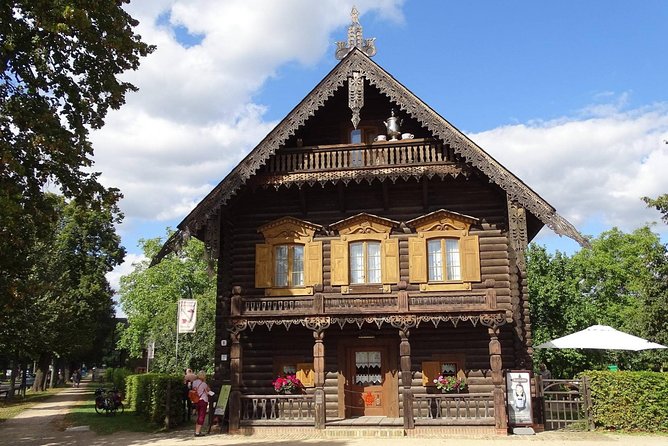
North of central Potsdam, the Russian colony Alexandrovka was built in 1826 and 1827 for the last twelve Russian singers from a former choir of 62 soldiers. King Frederick William III created it in memory of Tsar Alexander I, who had died in 1825.
The colony reflects the family and friendly links between the Hohenzollern and Romanov dynasties. Its inclusion on Potsdam’s UNESCO World Heritage listing recognizes the cultural importance of this planned settlement.
Alexandrovka is a reminder that royal friendship could shape real streets and houses. It is not simply a decorative Russian-themed stop. The colony grew from a specific relationship between courts and from the king’s wish to honor people connected with his household.
Again, time is limited. You will get an introduction and a chance to see the distinctive setting, but not necessarily a long independent exploration. If this part of Potsdam interests you most, note its location and consider returning on a separate visit.
Old Market Square and St. Nicholas Church
Potsdam’s Old Market Square is the historic center of the city. The square gathers around St. Nicholas Church, a Lutheran church built in the Classical style from plans by Karl Friedrich Schinkel between 1830 and 1837.
The church’s 77-meter tambour rises above the city roofs. Ludwig Persius and, from 1845, Friedrich August Stüler continued the work. The building was badly damaged near the end of the Second World War, first by a British air raid and then by Soviet artillery fire. After years of rebuilding, it was reconsecrated in 1981.
Today, St. Nicholas Church is open to visitors and still holds services and concerts. Even a short stop here gives you a clear view of Potsdam’s wartime damage and postwar repair.
The Old Market Square also helps you shift from royal Potsdam to civic Potsdam. The tour cannot linger everywhere, but the guide’s explanation turns a quick look at the church and square into a useful lesson about the city’s survival.
The guides and the bilingual format
The guide can make or break a short history tour. The strongest reports name Susan, Karin, Jasmin, Bridget, and Stefanie as engaging, organized, and well informed. Susan in particular has been praised for welcoming questions and connecting Potsdam’s story with Berlin’s wider development. Jasmin is described as energetic and generous with detail, while Karin received high marks for explaining sights along the road as well as those in Potsdam.
The listed guide service is in English and German. This can work well for mixed groups, and one guide was praised for moving easily between both languages. But the balance may vary. One departure had much less English commentary than expected, so English speakers should pay attention during the introduction and politely clarify the language arrangement if needed.
The guide’s strongest role is during the drive and between stops. You get context that is hard to gather from plaques alone, including the relationship between royal buildings, the Cold War border, and Potsdam’s planned neighborhoods.
Who will enjoy this tour most
I would choose this tour if you want to see Potsdam without spending a full day away from Berlin. It suits first-time visitors who want a clear introduction, people who prefer a coach to several public transport connections, and anyone who values historical explanation over unstructured wandering.
It also works well for visitors with only a few days in Berlin. You can see several major sights, enter Sanssouci, and return to the city in the afternoon.
You may want a different plan if you need long museum visits, quiet garden time, or complete control over your pace. The 30-person maximum is reasonable, but it is still a group tour. The schedule is fixed, food is not included, and the palace portion can feel fast.
A moderate level of physical fitness is advised. You will combine coach travel with walking around palace grounds, city streets, and outdoor stops. Service animals are allowed, and the meeting point is near public transportation.
Is $77.23 good value?
The value depends on what you would otherwise arrange yourself. The fare covers the coach, driver, English and German guide service, palace admission, and the convenience of a planned route. Skip-the-line access matters most on a short visit, since every saved minute gives you more time for Potsdam itself.
The price is less attractive if you only want to see Sanssouci and prefer to stay inside the palace for a long visit. It becomes more reasonable when you count the Bridge of Spies, Dutch Quarter, Alexandrovka, Old Market Square, and the commentary between them.
I would call it fair value for a well-run introduction, not a bargain. The tour’s best return comes from the guide’s stories and the transport efficiency, not from the number of hours alone.
Should you book the Potsdam tour?
Book it if you want a well-organized first visit to Potsdam with palace entry, transport, and clear historical context handled for you. The strongest guides add real value, and the comfortable coach lets you cover sights that would be harder to connect in four hours on your own.
Skip it if your priority is a slow, full-day exploration of Sanssouci Park or a fully English-only experience with no bilingual commentary. In that case, plan more time and confirm the language format before paying.
For most visitors with limited time in Berlin, I would book this as a practical half-day outing. Arrive early, carry small change for facilities, wear comfortable shoes, and keep your expectations realistic: this is a brisk introduction to Potsdam, not an exhaustive visit.
FAQ
How long does the Potsdam tour last?
The tour lasts approximately four hours.
What time does the tour leave Berlin?
Departure is at 10 a.m.
Where does the tour start?
It starts at Kurfürstendamm 216, 10719 Berlin, Germany.
Where does the tour finish?
The tour ends back at the same meeting point on Kurfürstendamm.
Is admission to Sanssouci Palace included?
Yes. Admission to Sanssouci Palace is included, and the tour provides access intended to bypass long lines.
Is the tour offered in English?
The tour is offered in English and German. The balance of commentary can vary by departure, so English speakers may want to confirm the arrangement at the start.
Is food included?
No. Food and drinks are not included.
Can I cancel for a full refund?
Yes, if you cancel at least 24 hours before the experience start time. Cancellations or changes made less than 24 hours before departure are not refundable, and the tour requires a minimum number of participants to operate.
Just added around Berlin
- Private Walking Tour in Berlin: Hitler’s Germany & WWII★ 5.0 · 7 reviews
- The History of Berlin: WWII PRIVATE Walking Tour With Locals★ 5.0 · 209 reviews
- Berlin: Private Bike Tour of the Berlin Wall and Third Reich★ 5.0 · 23 reviews
- Private Berlin WWII and Cold War History Tour with Local Expert Guide★ 5.0 · 28 reviews
- Private Walking Tour Berlin 3 hours: Brandenburg, Historic Center★ 5.0 · 7 reviews
- Berlin: Guided Private Bike Tour to Explore the Highlights★ 5.0 · 12 reviews
- Berlin Photography Masterclass – Private Photography Lesson★ 4.5 · 23 reviews
- Group Driving Tour 1 to 6 people. Berlin Shore Excursion incl pick-up at Port★ 5.0 · 8 reviews
Castles and Palaces, compared.
Neuschwanstein & Linderhof Castle-Fairytale Day Tour from Munich
Read our review →

Premium Neuschwanstein Castle and Linderhof VIP Tour from Munich
Read our review →
Browse the lists this tour appears in