
Reviewed · CITY TOURS
Public tour With Bertha Benz through the city of inventors Costume tour
Cars changed everything.
This two-hour costume tour brings Bertha Benz to life as she leads you through Mannheim, the city linked to Carl Benz and the invention of the automobile. I like the clear focus on automotive history, and I also like that the route adds Mannheim’s inventions, landmarks, and 19th-century industrial growth instead of treating the car as the whole story. The main drawback is language: the live tour is offered in German only.
The tour costs about $17 per person, a fair price for a guided walk of roughly 4 kilometers with stops across central Mannheim. I would especially consider it for families, history fans, and anyone who wants a lively alternative to a standard sightseeing walk. You should be comfortable walking for two hours, and it is worth checking the exact endpoint because the route description finishes at the Baroque Palace while the meeting information says the activity ends back at the starting point.
In This Review
- Key Points Before You Book
- Why Bertha Benz Makes Mannheim’s Car Story More Interesting
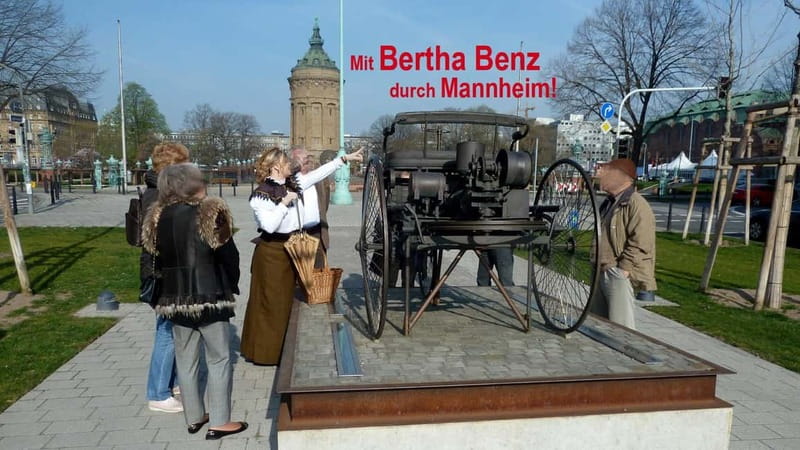
- Starting at the Carl Benz Memorial Near the Water Tower
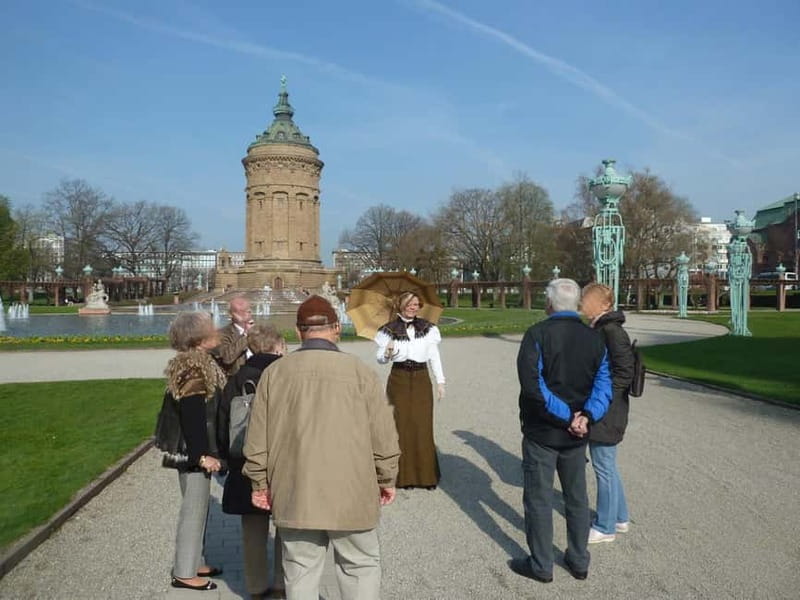
- Water Tower and Friedrichsplatz: A Grand Opening
- Planken: Mannheim’s Main City Walk
- Marktplatz: Small Details and Comic Stories
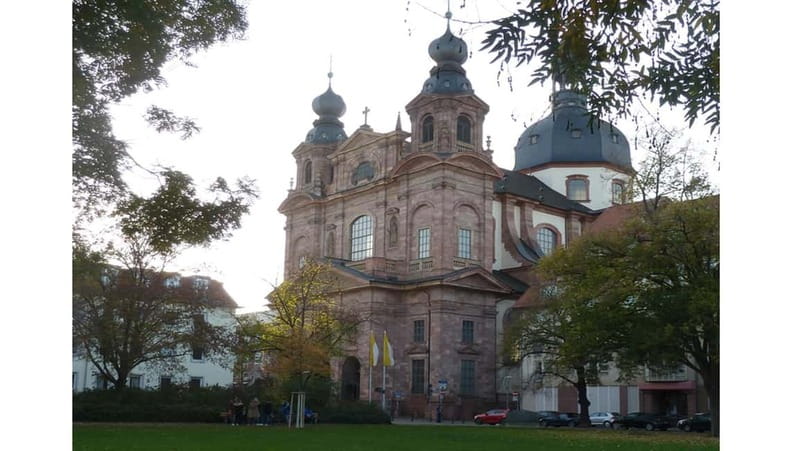
- Schillerplatz and the Jesuit Church
- Lanz Stadthaus and the Road to the Palace
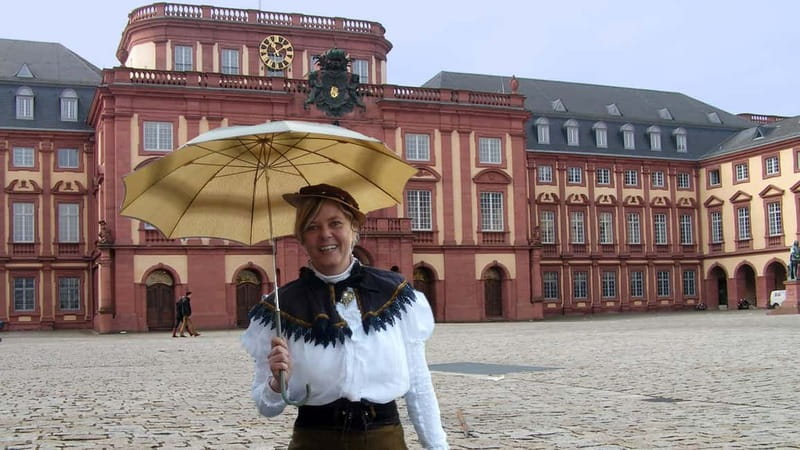
- Mannheim Baroque Palace: A Fitting Finish
- What the Two-Hour Format Gives You
- Is $17 a Fair Price?
- Who Will Enjoy This Costume Tour Most?
- Should You Book With Bertha Benz?
- FAQ
- Where does the tour start?
- Where does the tour finish?
- How long is the tour?
- How far does the group walk?
- What language is the tour in?
- How much does the tour cost?
- What places are included on the route?
- Can I cancel the booking?
Key Points Before You Book
- Bertha Benz leads in costume: The guide presents Bertha’s side of the automobile story, including the ridicule faced by Carl Benz and her daring long-distance drive.
- A 4-kilometer city walk: The route links the Water Tower, Friedrichsplatz, Planken, Marktplatz, Schillerplatz, the Jesuit Church, and Mannheim Baroque Palace.
- More than car history: You hear about the wheel, tractor, music theater, the driver’s license, a milk cart, chickens, and other Mannheim inventions.
- German-language storytelling: The live guide speaks German, so this tour works best if you can follow spoken German or are traveling with someone who can translate.
- Strong entertainment value: The guide uses wordplay, humor, and audience participation, with Maria presenting the Bertha Benz character.
- Flexible booking: You can cancel up to 24 hours before the tour for a full refund, and the reserve-now, pay-later option lets you hold a place without paying immediately.
Why Bertha Benz Makes Mannheim’s Car Story More Interesting
Carl Benz often gets the headline, but this tour puts Bertha Benz at the center. That is a smart choice. Her role gives the story energy and a human scale, moving it beyond engines, patents, and workshop details.
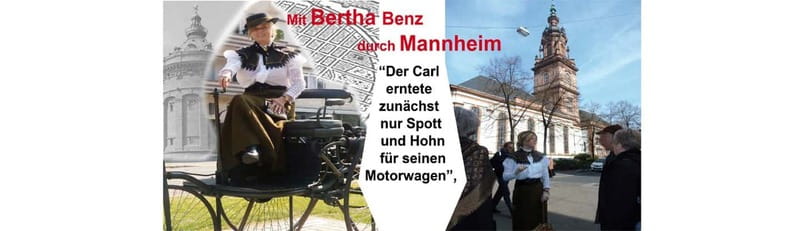
The tour begins with Bertha describing how Carl first faced ridicule and scorn for his motor car. People dismissed the machine as the devil’s work, and few believed the invention had a useful future. That early resistance makes the automobile story easier to understand. New technology rarely arrives to instant applause, even when it later reshapes daily life.
Bertha’s answer was practical and bold. She took the motor car on the world’s first long-distance journey, helping prove that the machine could work outside the workshop. The tour uses this episode to show her courage, resourcefulness, and role in promoting the invention.
I like this approach because it gives you two connected stories. You learn about Carl Benz as an inventor, but you also see Bertha as the person who helped push his creation into the real world. The result should feel less like a technical lecture and more like a dramatic city tale.
The costume matters, too. A guide speaking as Bertha can shift between personal anecdotes, jokes, and historical explanation without making the walk feel stiff. Maria, who presents the Bertha Benz character, is praised for using plenty of wordplay and involving the audience. That participation is important on a walking tour. You are not simply following a guide from one plaque to another.
More City Tours in Germany:
- Berlin: 1-Hour City Tour by Boat with Guaranteed Seating
★ 4.3 · 16,993 reviews - Leipzig: City History Canal Sightseeing Tour on a Motorboat
★ 4.7 · 6,232 reviews - Cologne: Panoramic City Cruise
★ 4.3 · 5,698 reviews
Starting at the Carl Benz Memorial Near the Water Tower
The meeting point is the Carl Benz memorial near the Water Tower and Augustaanlage. This opening spot gives the tour an immediate connection to Mannheim’s automotive story before the group begins moving through the city.
Starting at the memorial also helps set the theme. You are not beginning with a broad city overview and waiting for the automobile connection to appear later. The car is present from the first stop, then the story widens to include Mannheim’s industrial progress and other inventions.
From there, the walk heads toward the Mannheim Water Tower and Friedrichsplatz. The Water Tower is one of the city’s key landmarks, and the area gives the tour a strong visual beginning. The guide can connect the polished public face of the city with the period of industrial expansion that changed Mannheim in the 19th century.
You should expect an outdoor tour rather than a museum visit. The value comes from seeing the city streets while Bertha’s story unfolds around you. If you prefer long indoor stops with seats and displays, this format may feel active. If you like learning as you move, it should fit well.
Water Tower and Friedrichsplatz: A Grand Opening
The Water Tower stop offers one of the tour’s most recognizable city settings. From here, the route moves into central Mannheim and begins blending architecture, public spaces, and stories of invention.
Friedrichsplatz helps place Mannheim in its urban and cultural setting. The tour is not only about machines. It also touches on the city’s connection with figures and subjects such as Elector Mozart and Schiller, as well as music theater. These references broaden the experience and remind you that Mannheim’s identity includes art, politics, public life, and engineering.
The guide’s costume and humor should be especially useful here. A city tour can become a string of names and dates if the storytelling is dry. Bertha’s first-person character gives the historical material a clear voice and helps connect separate parts of the city.
Planken: Mannheim’s Main City Walk
The route continues along Planken, one of Mannheim’s central streets. Here, the tour shifts from landmark viewing to the everyday city environment.
Planken is a useful part of the walk because it shows you Mannheim as a living urban center rather than a collection of historic monuments. The group continues through the city while the guide discusses inventions and social changes linked to the golden age of industrialization.
The tour’s subject list includes the wheel, the tractor, the driver’s license, and the milk cart. These details suggest that the storytelling looks at how inventions affect ordinary routines. The car is impressive, but a milk cart or a question about driving permissions can make technological change feel more concrete.
This portion may be less rewarding if you want a tightly focused automobile museum experience. It is better suited to someone who enjoys connections between transport, work, daily life, and city development.
A few more Germany trips worth comparing
- Mannheim, guided Walking Tour: Discover Mannheim
★ 4.5 · 62 reviews - Mannheim: Guided Street Art Walking Tour
★ 4.7 · 57 reviews - Mannheim, guided costume tour: Tour with Night Watchman
★ 4.9 · 26 reviews - Mannheim: Public Night Watchman Tour with Night Watchwoman Marie
★ 5.0 · 23 reviews
Marktplatz: Small Details and Comic Stories
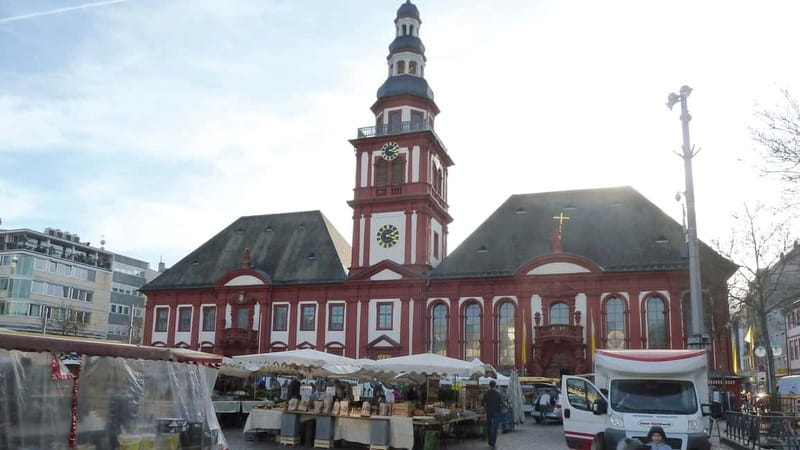
At Marktplatz, the tour continues its guided look at Mannheim’s history. This is one of the stops where the lighter style should have room to work.
The guide includes funny stories involving chickens, along with anecdotes about the driver’s license and other inventions. These small details may sound modest, but they help explain how unfamiliar machines entered daily life. A car did not simply appear as a finished success. It had to be understood, accepted, regulated, and used around animals, carts, pedestrians, and existing habits.
That is also where audience participation can make a difference. Maria’s tour style includes wordplay and direct involvement, so you may be asked to react or take part rather than quietly listen. I would expect the experience to work especially well for families with older children who can follow German. The humor gives younger members of a group a reason to stay engaged during the historical sections.
Schillerplatz and the Jesuit Church
The walk then reaches Schillerplatz and the Jesuit Church. These stops add cultural and architectural weight to a tour that began with engineering.
Schillerplatz connects the route with Mannheim’s literary and civic story. The Jesuit Church brings religious architecture into the picture. The supplied route does not specify a separate interior visit, so you should think of these as guided city stops rather than guaranteed admissions or extended indoor tours.
This change of subject is one of the tour’s strengths. Mannheim’s invention story works best when you can see it as part of a larger city. Industrial progress did not happen in isolation. It existed alongside churches, squares, theaters, commerce, and public institutions.
There is also a practical point here: the tour covers several parts of central Mannheim in one continuous walk. You get a broad introduction to the city without committing to a full-day program. At roughly four kilometers, it is not an extreme distance, but two hours on city streets still calls for comfortable shoes.
Lanz Stadthaus and the Road to the Palace
The route includes Lanz Stadthaus before continuing toward Mannheim Baroque Palace. These stops keep the industrial and civic themes connected.
The tour information links Mannheim with several inventions, including the tractor. The reference to Lanz adds another reminder that the city’s industrial identity reaches beyond the automobile. That is useful context if you are interested in machinery, manufacturing, or the wider changes of the 19th century.
The city history also includes the golden age of industrialization. That phrase matters because it places Carl Benz within a much larger period of experimentation and production. Mannheim was not presented as a one-inventor town. The tour frames the city as a place where new ideas in transport, engineering, and culture developed together.
As you walk, Bertha’s stories about early success and setbacks should keep the historical material grounded. The focus is not simply on celebrating invention. It also covers doubt, mockery, practical obstacles, and the funny situations that arise when a new machine meets ordinary life.
Mannheim Baroque Palace: A Fitting Finish
Mannheim Baroque Palace is listed as the final sightseeing stop. It gives the route a strong closing point because the palace represents an older era of power and culture, while Bertha’s automobile story points toward the modern industrial age.
Ending near the palace lets the tour move across several layers of Mannheim. You begin with the memorial to Carl Benz, pass through major public spaces and central streets, visit cultural and religious landmarks, and finish at one of the city’s grand historic buildings.
The exact return arrangement needs attention. The route description says the walk ends at the Baroque Palace, while the meeting-point information says the activity ends back at the meeting point. I would confirm this when booking, particularly if you need to catch a train, meet someone, or plan another activity immediately afterward.
What the Two-Hour Format Gives You
Two hours is a good length for this subject. It gives Bertha’s story enough room to develop without turning the walk into a full-day history course.
The route covers a wide section of central Mannheim, so the guide has to keep moving. You should expect a combination of walking and short explanations at each stop, not long breaks at every landmark. The schedule also means the tour can serve as an orientation walk early in your stay.
I like the balance between a clear theme and a broad route. You get the automobile story, but you also see enough of central Mannheim to understand the city around it. The tradeoff is depth. You will hear many stories and references, but this is not designed as a specialist technical study of Carl Benz’s engineering.
The German-only format is the largest practical limitation. The character-driven humor and wordplay are central to the experience, and those elements are difficult to translate on the spot. If you understand German, this is a strong reason to choose the tour. If you do not, you may miss much of what makes the walk distinctive.
Is $17 a Fair Price?
At about $17 per person, the tour offers good value if you want a guided city walk with a specific theme. You receive two hours with a live guide, a costume performance, a route through several important Mannheim locations, and a story that links local history with the invention of the automobile.
The price is especially reasonable for families or couples looking for something more memorable than a basic orientation walk. The tour adds character, humor, and audience involvement without charging museum-tour prices.
Value depends on your language ability. A German speaker can enjoy the wordplay, direct interaction, and comic stories fully. Someone who speaks little or no German may find the price less attractive because the central storytelling cannot be easily followed.
The flexible booking terms also reduce the risk. You can cancel up to 24 hours ahead for a full refund, and you can reserve now while paying later. Those terms are useful when your Mannheim plans are still changing.
Who Will Enjoy This Costume Tour Most?
I would recommend the walk to:
- People interested in Carl and Bertha Benz
- Families looking for a history activity with humor
- German speakers who enjoy character-led storytelling
- Visitors wanting a two-hour introduction to central Mannheim
- Anyone curious about inventions beyond the automobile
- Fans of local history, industrial progress, and city architecture
I would be more cautious if you want an English-language tour, a short route with little walking, or a detailed technical explanation of the first motor car. The program is also less suitable if you need a guaranteed endpoint without confirming the return arrangement.
The strongest feature is the combination of education and entertainment. The tour is praised for being interesting, funny, lively, and interactive. Those qualities matter because the subject could easily become a dry list of dates and inventions. Bertha’s character gives it a human voice.
Should You Book With Bertha Benz?
Book it if you want Mannheim’s automobile story told with personality. The route gives you Carl Benz, Bertha Benz, industrial progress, local inventions, central landmarks, and plenty of comic detail for about $17.
Choose it with confidence if you understand German and like a four-kilometer city walk. Families should find the humor and audience participation helpful, and the tour makes a good introduction to Mannheim before exploring more independently.
Skip it, or choose another format, if you need English commentary or prefer indoor exhibits and technical detail. Also confirm whether you return to the Carl Benz memorial or finish at the Baroque Palace. For the right audience, this is an unusual and well-priced way to meet Mannheim through the woman who helped put the automobile on the road.
FAQ
Where does the tour start?
The tour starts at the Carl Benz memorial near the Mannheim Water Tower and Augustaanlage.
Where does the tour finish?
The route lists Mannheim Baroque Palace as the final stop. The meeting information also says the activity ends back at the meeting point, so confirm the exact return arrangement when booking.
How long is the tour?
The tour lasts two hours.
How far does the group walk?
The route covers about 4 kilometers through Mannheim.
What language is the tour in?
The live tour guide speaks German.
How much does the tour cost?
The listed price is $17 per person.
What places are included on the route?
The route includes the Carl Benz memorial, Mannheim Water Tower, Friedrichsplatz, Planken, Marktplatz, Schillerplatz, the Jesuit Church, Lanz Stadthaus, and Mannheim Baroque Palace.
Can I cancel the booking?
Yes. You can cancel up to 24 hours in advance for a full refund. You can also reserve now and pay later.
Just added around Germany
- Private Walking Tour in Berlin: Hitler’s Germany & WWII★ 5.0 · 7 reviews
- The History of Berlin: WWII PRIVATE Walking Tour With Locals★ 5.0 · 209 reviews
- Private Berlin WWII and Cold War History Tour with Local Expert Guide★ 5.0 · 28 reviews
- Private Walking Tour Berlin 3 hours: Brandenburg, Historic Center★ 5.0 · 7 reviews
- Berlin: Private Bike Tour of the Berlin Wall and Third Reich★ 5.0 · 23 reviews
- Berlin: Guided Private Bike Tour to Explore the Highlights★ 5.0 · 12 reviews
- Berlin Photography Masterclass – Private Photography Lesson★ 4.5 · 23 reviews
- Group Driving Tour 1 to 6 people. Berlin Shore Excursion incl pick-up at Port★ 5.0 · 8 reviews
City Tours, compared.
1-Hour City Tour by Boat with Guaranteed Seating
Read our review →
City History Canal Sightseeing Tour on a Motorboat
Read our review →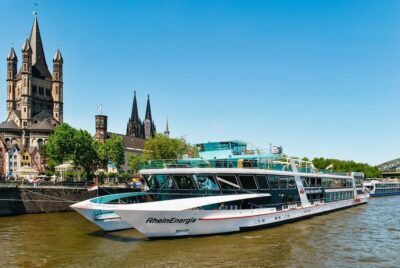
Browse the lists this tour appears in