Reviewed · PRIVATE
The Best of Berlin Private Guided Tour
Berlin’s past is never far away. This private walking tour links royal Prussia, Nazi Germany, the Cold War, and reunification in one focused route, with a guide meeting you at your accommodation or chosen point. I especially like the private format and the chance to shape the day around your interests. Guide Natalie earned praise for being well informed and easy to chat with. The main drawback is pace: fitting so many major sites into 3.5 hours means several stops are mainly outdoor explanations rather than long visits.
I also like the strong historical thread. Instead of treating the Brandenburg Gate, Berlin Wall, and Hitler’s bunker as unrelated sights, the guide explains how each chapter led to the next. At $295 for a group of up to 15, the price can make sense for a family or group, but it is less appealing if you are traveling alone or with only one companion.
In This Review
- Key points to know before booking
- Why this private Berlin route works
- Museum Island and the royal center
- Bebelplatz and the warning of May 10, 1933
- Gendarmenmarkt and Berlin’s polished public face
- Checkpoint Charlie and the Berlin Wall
- Potsdamer Platz and the rebuilt city
- Hitler’s bunker and the last days of the Nazi regime
- The Reichstag and the fight for the capital
- The Holocaust memorial and Brandenburg Gate
- What $295 means for your group
- Who should book this Berlin tour
- FAQ
- How long does the Best of Berlin Private Guided Tour last?
- How much does the tour cost?
- Is the tour private?
- Where does the tour begin?
- Is hotel pickup included?
- Which languages are available?
- Is the tour wheelchair accessible?
- Can I cancel for a refund?
- Do I have to pay when I book?
- Should you book it?
Key points to know before booking
- A full sweep of Berlin history: The route covers the Hohenzollern dynasty, Bismarck’s German nation, World War I, the Weimar Republic, Nazism, World War II, the Berlin Wall, and today’s reunited capital.
- Private group of up to 15: You are not sharing the guide with a large public tour, and the guide can remain flexible on the day.
- Hotel pickup included: The guide meets you at your accommodation or another agreed meeting point.
- Major central sights in one route: Expect Museum Island, Bebelplatz, Gendarmenmarkt, Checkpoint Charlie, Potsdamer Platz, the Reichstag, the Memorial to the Murdered Jews of Europe, and the Brandenburg Gate.
- A serious look at difficult history: Nazi book burnings, the Holocaust, Hitler’s final days, and Berlin’s division receive proper attention.
- Practical booking terms: The tour lasts 3.5 hours, runs in English or German, is wheelchair accessible, and allows cancellation up to 24 hours before departure for a full refund.
Why this private Berlin route works
Berlin can feel confusing on a first visit. Its sights are spread across a city that was repeatedly rebuilt, divided, renamed, and politically reshaped. A grand square may mark a royal project, a Nazi crime, a wartime ruin, or a Cold War frontier, sometimes all within a short walk.
That is where a private guide helps. You get more than a list of monuments. You get a timeline. Frederick the Great and the Hohenzollern dynasty lead into Prussia’s role in forming Germany under Otto von Bismarck in 1871. That new nation then faces World War I, the unstable Weimar Republic, Hitler’s rise, World War II, division, and reunification.
I would choose this tour early in a Berlin visit because it gives you a useful map of the city and its story. The route is not designed for one museum or one era. It is designed to answer the larger question: how did Berlin become the city you see today?
The private setup matters most for families, friends, and small groups with different interests. You can ask questions without worrying about slowing down a crowd. The guide is also described as flexible on tour days, which may help if one part of Berlin’s story catches your attention more than another.
Still, 3.5 hours is a tight window for this much ground. You should expect a walking tour with explanations at the sites, not a long interior visit at every stop. If you want to spend hours inside Museum Island’s museums or climb through every museum exhibit, you will need separate time.
A few more Berlin trips worth comparing
- Berlin: Reichstag, Dome and Government District Guided Tour
★ 4.7 · 18,288 reviews - Berlin: 1-Hour City Tour by Boat with Guaranteed Seating
★ 4.3 · 16,993 reviews - Berlin: Boat Tour Along the River Spree
★ 4.4 · 11,252 reviews
Museum Island and the royal center
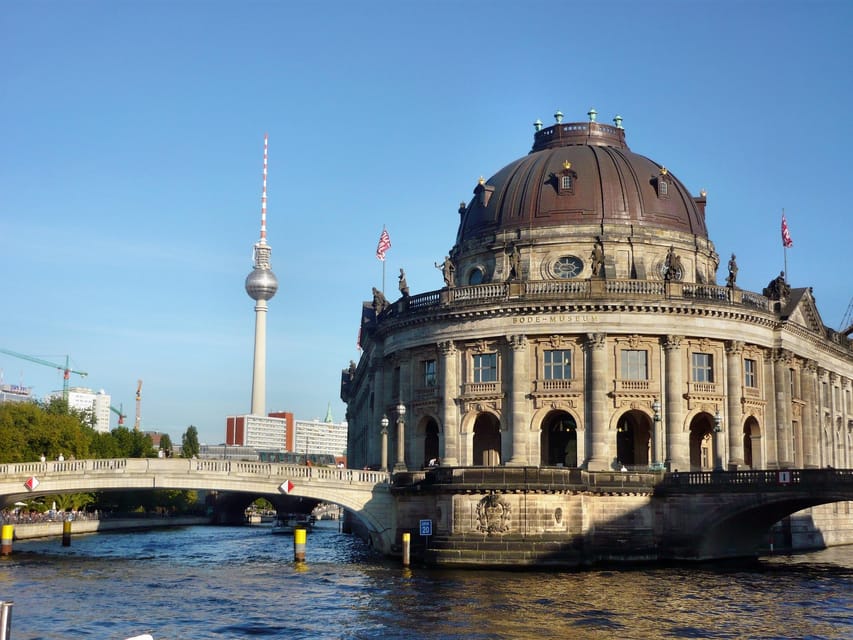
The tour begins with Berlin’s historic core, Museum Island. This area contains six major museums, the Berlin Cathedral, and the newly rebuilt Hohenzollern city palace. Even if you do not enter a museum, the concentration of grand buildings gives your guide a strong setting for explaining Berlin’s royal and cultural ambitions.
This is a useful opening because it places the Hohenzollern dynasty at the center of the story. Berlin was not always the national capital it is today. Its identity grew through Prussian power, court life, military ambition, and a desire to present itself as a European center of learning and government.
You will likely appreciate having the guide explain what you are seeing rather than simply photographing domes and façades. Museum Island can look like a collection of handsome buildings unless someone connects it to the rulers, institutions, and national projects behind it.
The limitation is simple: no museum admission is listed as part of the experience. Treat this section as an outdoor introduction. If you have a particular museum on your Berlin wish list, save time before or after the tour to visit it on your own.
From here, the route follows Unter den Linden, Berlin’s famous boulevard. Its name means Under the Linden Trees, and the avenue connects Museum Island with the Brandenburg Gate and the former City Palace. This is one of the best places to understand how royal Berlin was laid out.
The boulevard also helps you see the city as a seat of power. Its institutions, monuments, and grand scale were meant to announce importance. Your guide can place the avenue within the larger story of Prussia and the German nation formed in 1871.
Bebelplatz and the warning of May 10, 1933
Bebelplatz is one of Berlin’s most important stops because beauty and menace sit close together. The square was first known as Frederick’s Forum, after Frederick the Great. Today it is bordered by Humboldt University, the Opera House, the former Royal Library, and Hedwig’s Cathedral.
It was also the site of the Nazi book burning on May 10, 1933. The date matters. This was not a random act of destruction, but a public signal of the new regime’s attack on free thought and political opposition.
I find this stop especially valuable because it shows how Nazi history is not confined to distant battlefields or isolated camps. It happened in a central civic space, beside major cultural and religious institutions. A guide can help you pause here and consider the gap between Berlin’s intellectual image and the political violence that followed.
Because the tour is short, the experience at Bebelplatz will be a guided outdoor visit rather than an extended memorial program. That is appropriate for a city overview, but you may want extra time here if this subject is central to your trip.
Gendarmenmarkt and Berlin’s polished public face
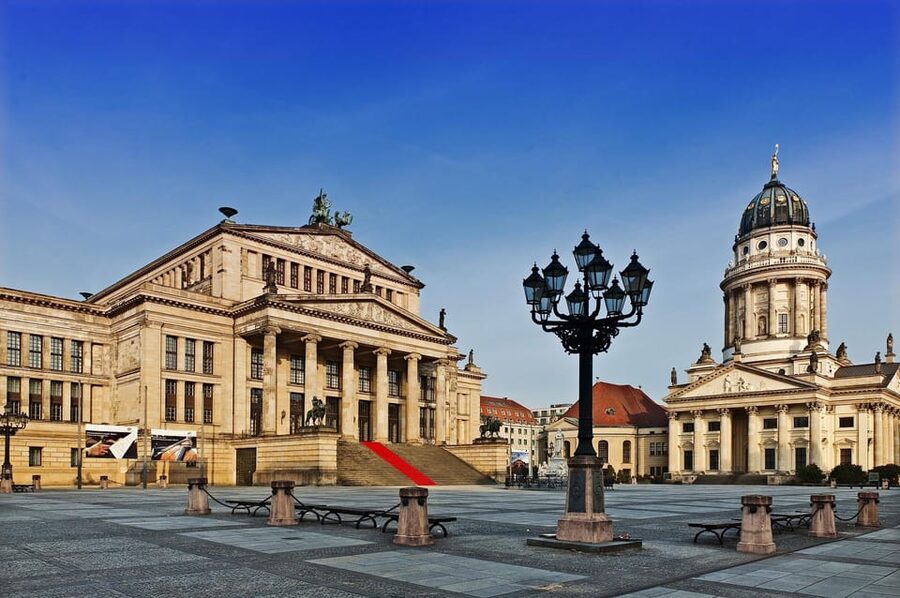
Gendarmenmarkt is often called Berlin’s most beautiful square. It is home to the French Cathedral, the German Cathedral, and the Konzerthaus. The setting gives the tour a visual break from the darker stops while continuing the story of Prussian ambition and civic life.
A guide can help you distinguish the square’s religious, royal, and cultural roles. Without context, it is easy to see only matching façades and a concert hall. With context, the space becomes a lesson in how governments use architecture to project order and prestige.
The square is also a reminder that Berlin’s story is not only about destruction. It includes competing traditions, public institutions, artistic life, and the effort to create a national capital worthy of Germany’s political ambitions.
You should not expect a concert or interior sightseeing as part of this walking tour. Gendarmenmarkt works best here as a place to see, listen, and connect the architectural setting to the guide’s explanation.
Still Berlin, at a slower pace:
- Discover Berlin Half-Day Walking Tour
★ 5.0 · 9,624 reviews - Berlin: Hop-on Hop-off Bus Tour with Live Commentary
★ 4.3 · 8,579 reviews - Berlin: Government District around the Reichstag Guided Tour
★ 4.7 · 8,447 reviews - Berlin: Reichstag, Plenary Chamber, Cupola & Government Tour
★ 4.6 · 8,422 reviews
Checkpoint Charlie and the Berlin Wall
Checkpoint Charlie brings the story forward to the Cold War. This was the famous Allied checkpoint where American and Soviet personnel faced one another in divided Berlin. The name is familiar, but the guide’s context is what gives it weight.
Berlin’s division was not just a line on a map. It shaped daily movement, political tension, and the city’s role as a front line between rival powers. Checkpoint Charlie became one of the clearest symbols of that confrontation.
The tour also visits one of the three remaining stretches of the Berlin Wall. This section is located on the former site of the SS and Gestapo headquarters, directly across from the former Nazi Luftwaffe headquarters. That location creates a striking connection between two dictatorships and two periods of oppression.
Here, the guide can show you how the same city carried different kinds of fear across successive decades. The Nazi regime used surveillance and terror. The East German state used the Wall and border controls to restrict movement. The physical setting makes those overlapping histories difficult to ignore.
Do not expect a long preserved Wall corridor. The information provided describes one of three remaining stretches, so the visit is focused on seeing the surviving structure and understanding its setting. If you want a larger Wall exhibition, you would need to plan another stop elsewhere in Berlin.
Potsdamer Platz and the rebuilt city
Potsdamer Platz offers one of the sharpest changes in appearance. In the 1920s, it was one of Europe’s busiest traffic intersections, with more than 20,000 cars crossing each day. World War II destroyed most of the area, and it was later rebuilt as Berlin’s most modern district during the 1990s and early 2000s.
This is an excellent stop for understanding Berlin’s physical rebirth. The city did not simply repair old streets after reunification. It created new districts and made bold choices about what modern Berlin should look like.
The contrast is part of the appeal. Earlier stops focus on royal buildings, memorials, and surviving wartime traces. Potsdamer Platz shows glass, redevelopment, and a capital trying to present a new future.
That contrast can also feel abrupt. If you prefer older streets and intact historic buildings, this section may be less appealing than Museum Island or Gendarmenmarkt. I would still keep it on the route because it explains the city’s post-Cold War identity better than a string of monuments can.
Hitler’s bunker and the last days of the Nazi regime
The site of Hitler’s bunker is a sober stop. The air raid shelter became the center of the Nazi government during the final week of World War II in Europe. Hitler took his own life there, and the guide discusses the collapse of the regime and his final days.
The physical site is not presented as a grand monument. That is important. You are visiting a place with enormous historical importance, but the focus is on what happened there and how the dictatorship ended, not on creating a shrine.
A private guide is useful here because the subject can easily become sensational. A careful explanation keeps attention on the human cost of the regime, the destruction of Berlin, and the decisions made during its final days.
This stop may be emotionally heavy, especially when paired with the Wall site and the Holocaust memorial. The tour does not soften Berlin’s past, and that is a strength, but you should know that this is not a light sightseeing walk.
The Reichstag and the fight for the capital
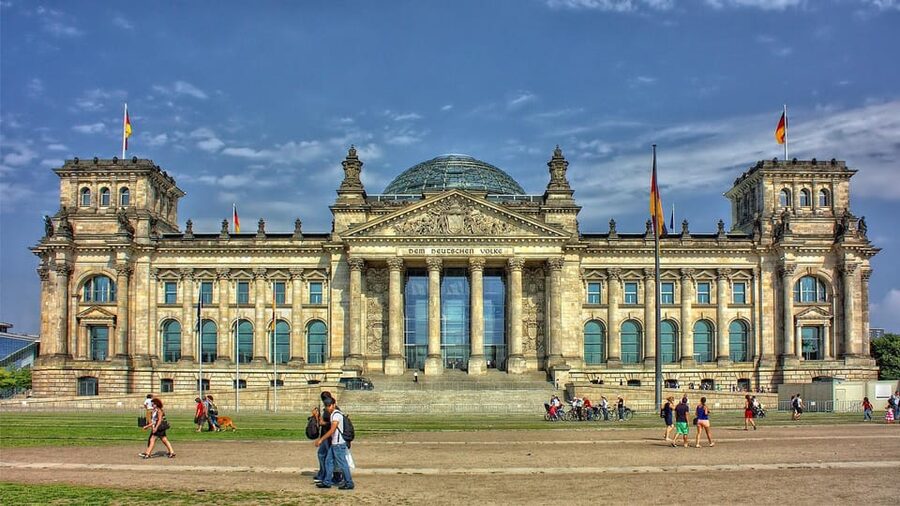
The Reichstag is Germany’s parliament and one of Berlin’s most recognizable buildings. It became infamous after the fire that helped Hitler take total control. The building was later fought over during the Battle of Berlin between German and Soviet forces.
Today, the Reichstag is topped with a glass cupola designed by British architect Sir Norman Foster. The glass structure gives the building a modern symbol of public oversight and a very different political meaning from the dictatorship associated with its past.
The guide’s explanation helps you read the building in layers. It is not only a handsome parliament beside the Brandenburg Gate. It is tied to the Nazi seizure of power, the final battle of World War II, and the democratic government of reunified Germany.
The tour does not list entry to the Reichstag or its cupola. You should treat this as an exterior stop and make separate arrangements if you want to go inside.
The Holocaust memorial and Brandenburg Gate
The Memorial to the Murdered Jews of Europe is the central German memorial to the six million Jews murdered by the Nazis in concentration and death camps across Europe. Its open field of concrete slabs creates a stark, unsettling place for reflection.
The memorial works best when you are given time to experience it without rushing. On a 3.5-hour route, the guide must balance quiet reflection with the need to reach the remaining sights. I would listen carefully here and avoid treating the memorial as just another photo stop.
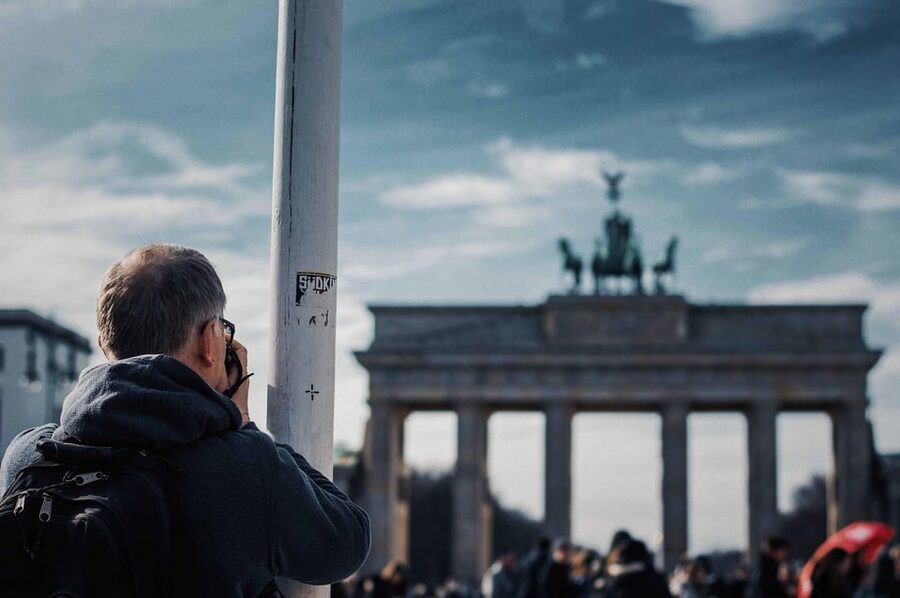
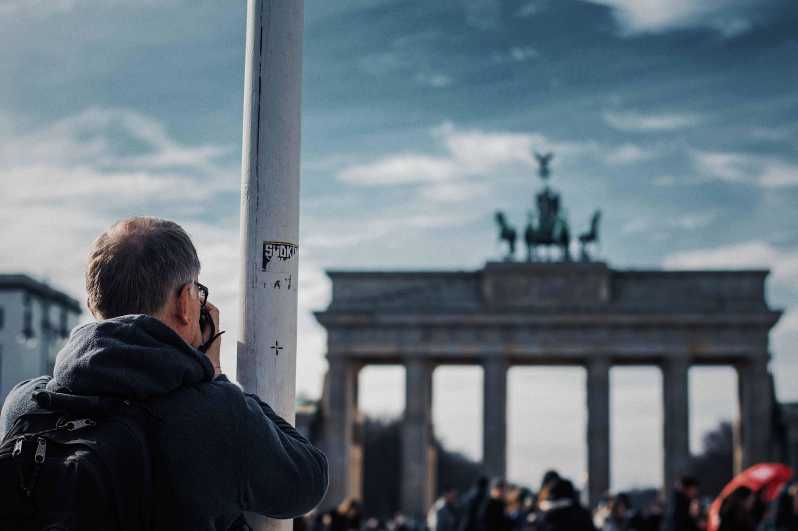
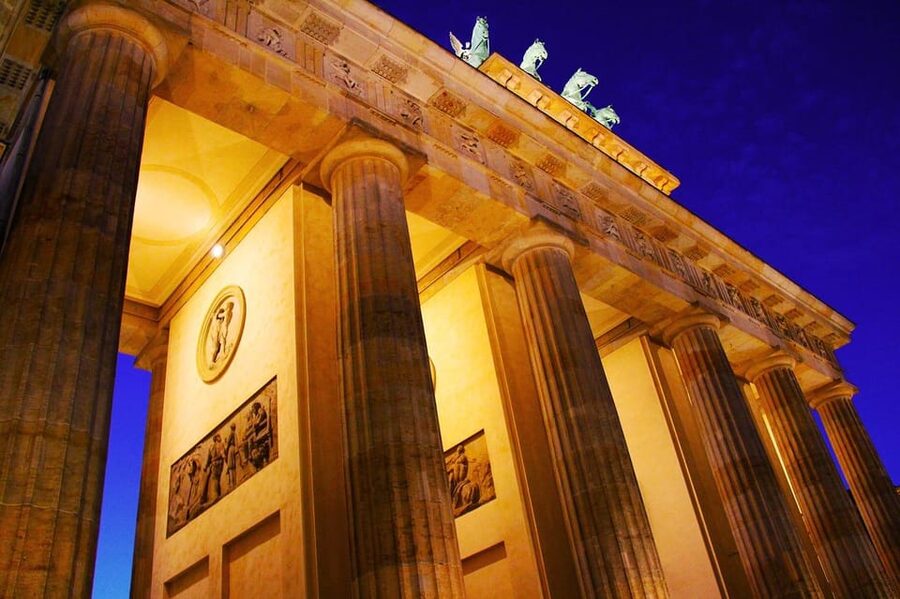
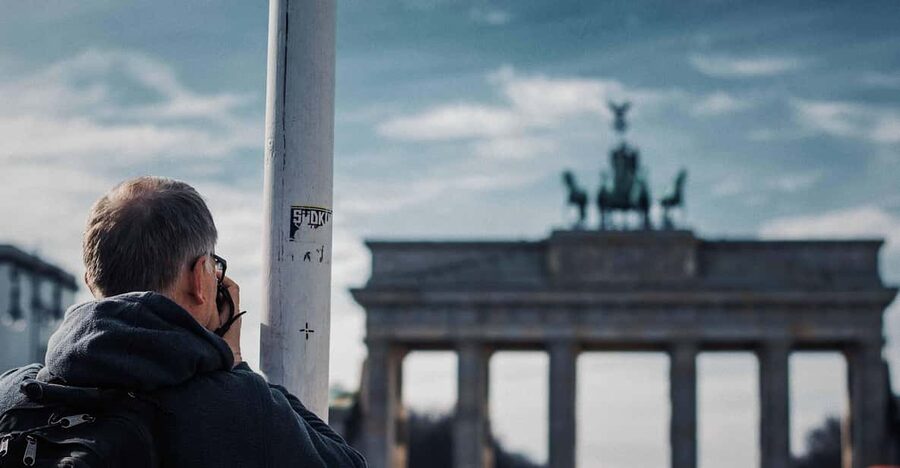
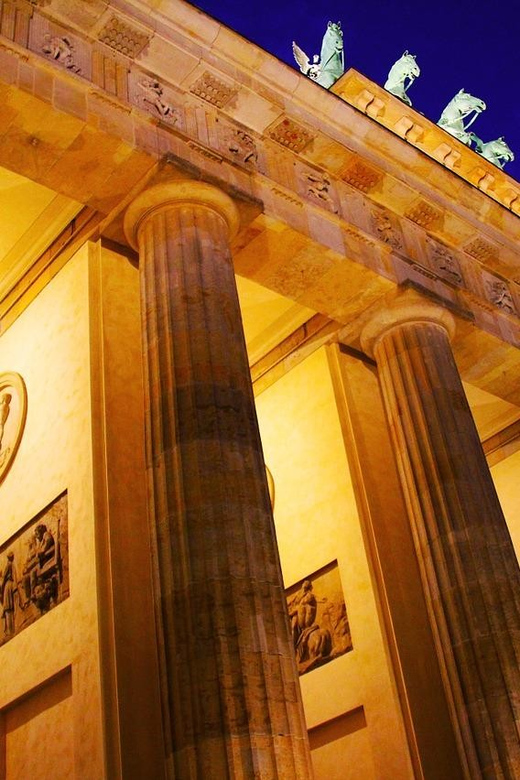
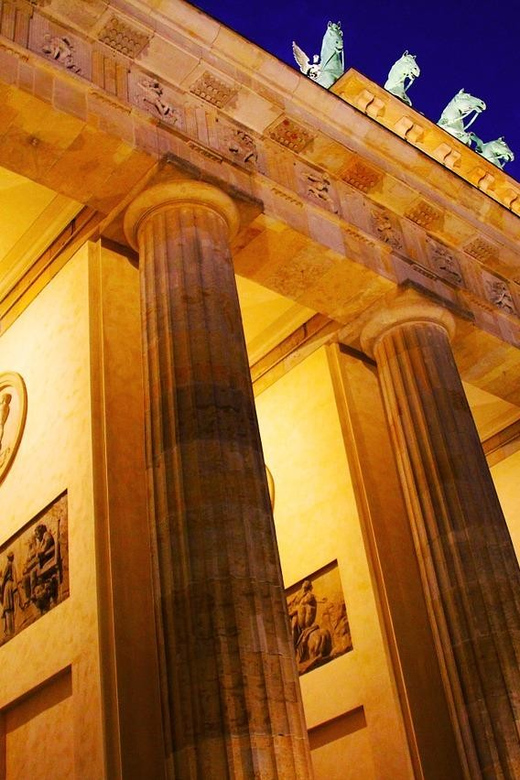
The final major sight is the Brandenburg Gate. Once the royal entrance to Berlin for the Prussian family, it survived Napoleon and World War II before becoming trapped beside the Berlin Wall for almost 30 years.
Its meaning changed with the city. It was once a royal gateway, then a symbol of division, and now a major sign of German unity. Ending here gives the tour a natural shape. You begin with Prussian power and finish with a reunited Germany.
The gate is also one of Berlin’s busiest photo locations, so a private guide can help you focus on its story rather than simply waiting for a clear picture.
What $295 means for your group
The price is $295 per private group of up to 15 people. That is not a low-cost walking tour if you are alone or traveling as a pair. The value improves quickly when the cost is shared by a family or a larger group.
For 10 people, the cost works out to $29.50 each. For 15, it is about $19.67 each. At that point, you are paying for a private guide, hotel pickup, and the ability to ask questions without joining a large mixed group.
The tour is also useful for groups with children, older relatives, or different levels of interest. The guide can remain flexible on the day, and wheelchair access is listed. Still, the route covers a great deal of ground, so confirm that the walking pace and meeting point suit everyone in your group.
The rating is 4.8 from six reviews, with the clearest praise going to the guides. Natalie was singled out for making the experience informative and easy to discuss. Another short review was simply Excelente, while a less enthusiastic four-star comment points toward a useful consideration: guides may address subjects that people no longer discuss openly in their own countries. In other words, expect direct historical conversation, not a polished version of Berlin’s past.
You can reserve now and pay later, and cancellation is free up to 24 hours before departure. Those terms help if your schedule is still shifting.
Who should book this Berlin tour
I would recommend it to first-time visitors who want a firm grasp of Berlin before exploring on their own. It is also a strong choice for families, private groups, and anyone who prefers questions and conversation over a fixed public tour script.
It suits people who want history explained at the actual sites. You will see the major central landmarks, but the real benefit is the thread connecting them.
I would be more cautious if you have only a short list of one or two favorite places. A specialist tour focused only on the Wall, Nazi Berlin, or Museum Island would give you more time at that subject. This route is broad by design.
The 3.5-hour length is another factor. You will cover many important places, but you should not expect full museum visits or long interior stops. Wear comfortable shoes, bring water, and keep your expectations focused on a guided city overview rather than a series of admissions.
FAQ
How long does the Best of Berlin Private Guided Tour last?
The tour lasts 3.5 hours. Starting times depend on availability.
How much does the tour cost?
The price is $295 per private group of up to 15 people.
Is the tour private?
Yes. The experience is arranged for a private group rather than a shared public tour.
Where does the tour begin?
The guide meets you at your accommodation or at another chosen meeting point.
Is hotel pickup included?
Yes. Hotel pickup is included, with the guide meeting you before the tour begins.
Which languages are available?
The tour is available in English and German.
Is the tour wheelchair accessible?
Yes. The activity is listed as wheelchair accessible.
Can I cancel for a refund?
Yes. You can cancel up to 24 hours in advance for a full refund.
Do I have to pay when I book?
No. Reserve now and pay later is available, so you can book the group and pay nothing at the time of reservation.
Should you book it?
Book this tour if you want Berlin’s major chapters explained in one private outing, especially with a group large enough to share the $295 cost. The route gives you royal Berlin, Nazi Berlin, divided Berlin, and the reunited capital in a single clear sequence.
Skip it if you want long museum visits or a narrow specialist tour. For most first visits, though, the combination of hotel pickup, a flexible private guide, and serious historical context makes this a useful way to get your bearings before spending the rest of your time in Berlin.
Just added around Berlin
- Private Walking Tour in Berlin: Hitler’s Germany & WWII★ 5.0 · 7 reviews
- The History of Berlin: WWII PRIVATE Walking Tour With Locals★ 5.0 · 209 reviews
- Private Walking Tour Berlin 3 hours: Brandenburg, Historic Center★ 5.0 · 7 reviews
- Berlin: Private Bike Tour of the Berlin Wall and Third Reich★ 5.0 · 23 reviews
- Private Berlin WWII and Cold War History Tour with Local Expert Guide★ 5.0 · 28 reviews
- Berlin: Guided Private Bike Tour to Explore the Highlights★ 5.0 · 12 reviews
- Berlin Photography Masterclass – Private Photography Lesson★ 4.5 · 23 reviews
- Group Driving Tour 1 to 6 people. Berlin Shore Excursion incl pick-up at Port★ 5.0 · 8 reviews
Private, compared.


Berlin Private Complete History All Day Walking Tour
Read our review →
Munich Private Tour with a Local – Highlights & Hidden Gems
Read our review →
Your private 3-hour Hamburg driving tour with a former policeman
Read our review →
Strasbourg: Private City Sightseeing Boat Tour
Read our review →
1.5-Hour Private Tour through Historical Old Town
Read our review →
Berlin Private Half-Day Walking Tour: Discover the German Capital’s History
Read our review →