Reviewed · GUIDED
Berlin: 4-Hour Guided Highlights Tour in Spanish
Berlin’s story is written in its streets. This four-hour Spanish walking tour links the city’s grand landmarks with the harder stories behind them, from Nazi rule to the Berlin Wall and daily life in divided Berlin. I like the clear route from Alexanderplatz to the Brandenburg Gate, and I like that the guide explains not only what happened, but how ordinary people lived through it. The main consideration is the pace: four hours on foot is a serious walk, even with a planned break.
I also like the strong Spanish-language focus. Guides such as Evelyn and Celia have been praised for clear explanations, patience, and thoughtful discussion, while Constantino has included a break of about 30 minutes for coffee, a restroom stop, and rest. Rain or shine, the tour begins at 10:00, so bring comfortable clothing and prepare for changing weather.
In This Review
- Key points to know before you go
- Starting beneath the TV Tower at Alexanderplatz
- San Nicolas and Berlin’s early beginnings
- Museum Island and the Berliner Dom
- Unter den Linden and Berlin’s royal avenue
- Gendarmenmarkt, a pause among Berlin’s grand squares
- Nazi Berlin and the Gestapo Headquarters remains
- The Holocaust memorial and the work of remembering
- Understanding the Berlin Wall from both sides
- Potsdamer Platz and the modern city
- Ending at the Brandenburg Gate
- Four hours on foot: how the pace feels
- Is $29 good value for Berlin?
- Who should book this Spanish tour?
- Should you book the Berlin highlights walk?
- FAQ
- In what language is the tour conducted?
- How long does the tour last?
- Where does the tour begin?
- What time does the tour begin?
- Does the tour run in bad weather?
- Is the tour wheelchair accessible?
- Is a private tour available?
- Can hotel pickup be arranged?
- What is the cancellation policy?
Key points to know before you go
- The route crosses Berlin’s main historical spine, from the TV Tower and Alexanderplatz through Museum Island, Unter den Linden, Gendarmenmarkt, Potsdamer Platz, and the Brandenburg Gate.
- The tour is entirely in Spanish, making it especially useful if you want history explained naturally rather than pieced together from signs and guidebooks.
- Berlin’s divided past receives major attention, including why the Wall was built, how East Germans tried to cross it, and what everyday life looked like on both sides.
- The itinerary mixes famous buildings with difficult history, including the Gestapo Headquarters remains and the Memorial to the Murdered Jews of Europe.
- A break may be included during the walk, with one account describing roughly 30 minutes for coffee, the restroom, and a rest.
- The meeting point is easy to identify, beside the only entrance to the TV Tower at Alexanderplatz, next to an Espresso House and a green Spanish tours flag.
Starting beneath the TV Tower at Alexanderplatz
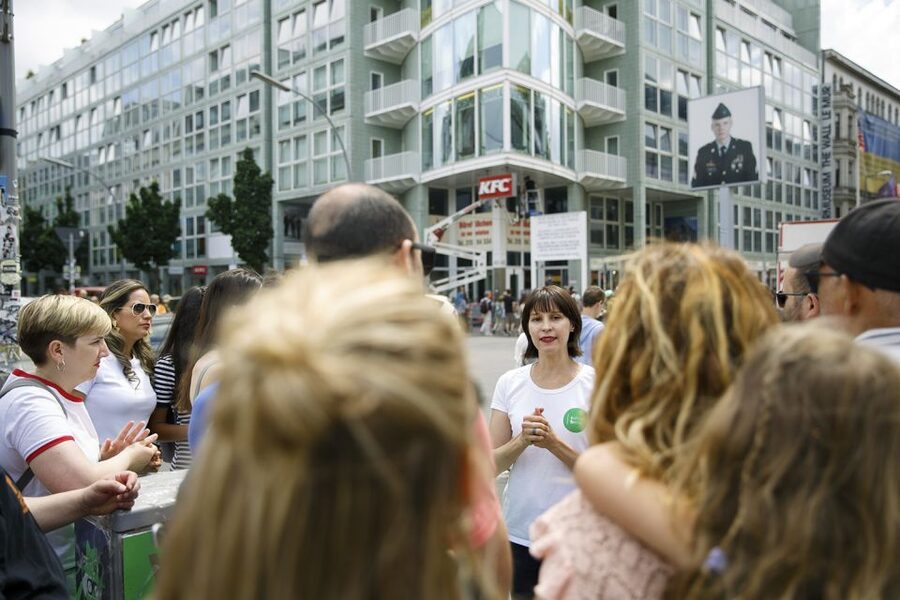
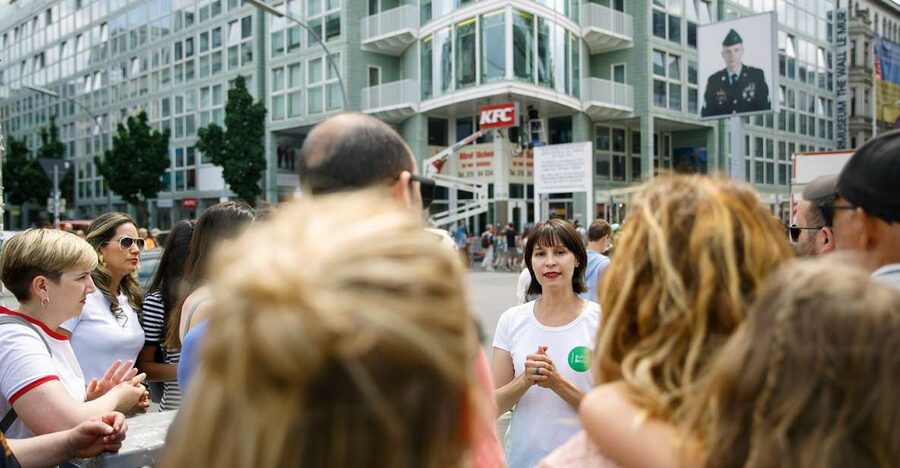
The tour begins beside Berlin’s TV Tower, or Fernsehturm, at Alexanderplatz. Look for the green flag marked tours en español, beside the tower’s only entrance, between the tower and Alexanderplatz train station, near Espresso House.
That detail matters. Alexanderplatz is a large, busy area, and simply being told to meet at Alexanderplatz would leave you hunting around with a phone in hand. The tower gives you a clear landmark, while the café helps confirm you are in the right spot.
The square also sets up the story well. Alexanderplatz reflects Berlin’s East German past, with the TV Tower serving as one of the city’s most recognizable symbols. From here, the route moves into the older parts of Berlin, helping you see that the city is not one single architectural experience. It shifts from socialist-era planning to medieval origins, royal avenues, modern commercial districts, and memorial spaces.
Tours run every day and begin at 10:00. Since the tour operates in all weather, I would not treat a weather forecast as a reason to skip it automatically. In winter, snow and cold have not prevented visitors from enjoying the historical discussion, but warm clothes and sensible shoes will make a clear difference.
A few more Berlin trips worth comparing
- Berlin: Reichstag, Dome and Government District Guided Tour
★ 4.7 · 18,288 reviews - Berlin: 1-Hour City Tour by Boat with Guaranteed Seating
★ 4.3 · 16,993 reviews - Berlin: Boat Tour Along the River Spree
★ 4.4 · 11,252 reviews
San Nicolas and Berlin’s early beginnings
The first part of the route explores the San Nicolas neighborhood, an area connected with the origins of Berlin. This is a useful opening because Berlin can otherwise feel like a city assembled from separate periods, with little obvious connection between them.
Here, your guide begins with the city’s early development before moving toward its later political and cultural importance. The value is not just in seeing an attractive old quarter. You get a starting point for understanding how Berlin grew into the capital you see today.
The Spanish commentary is particularly helpful at this stage. Berlin’s origins can be easy to skip when your main interest is the Wall or the Second World War, but the early story gives the rest of the route more shape. You can better understand why royal avenues, state buildings, churches, museums, and government institutions gathered in this part of the city.
Museum Island and the Berliner Dom
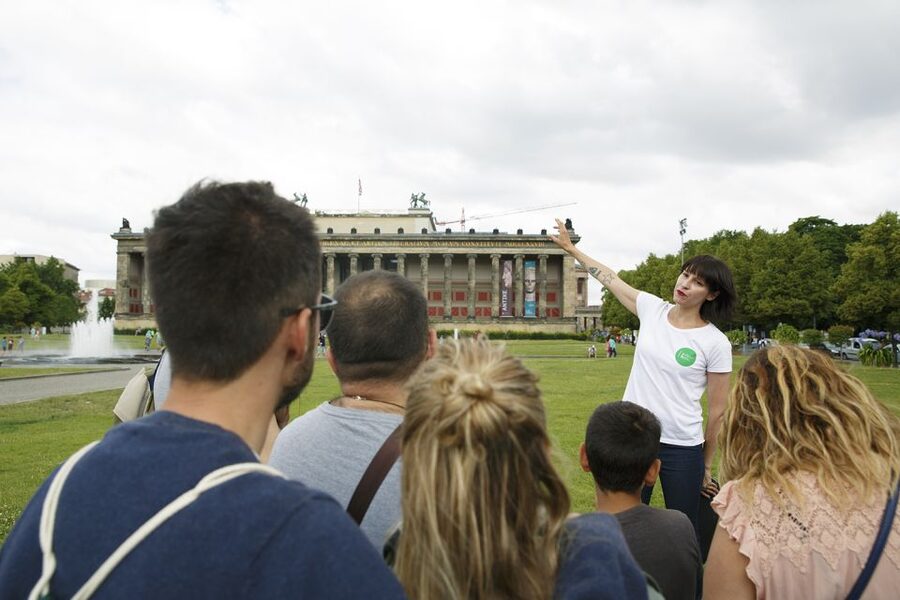
Next comes Museum Island, a UNESCO World Heritage Site and one of Berlin’s most impressive cultural districts. The tour takes you through the area rather than presenting it as a separate museum visit, so you should not expect admission to the museums themselves.
That limitation is worth knowing. If you want to see the collections inside the museums, you will need extra time and a separate ticket. The walking tour’s purpose here is to explain the setting and point out the major buildings, including the Berliner Dom.
The cathedral makes a strong visual stop. Its dome and grand exterior give you one of the route’s best photo opportunities, while the surrounding island shows how Berlin used architecture to express royal, religious, and national power. Your guide can place the buildings within the wider story instead of leaving you with a list of names.
I find this kind of outside visit useful early in a city tour. You see an important part of Berlin without using up the entire day indoors. Later, you can decide if one of the museums deserves a longer visit.
Unter den Linden and Berlin’s royal avenue
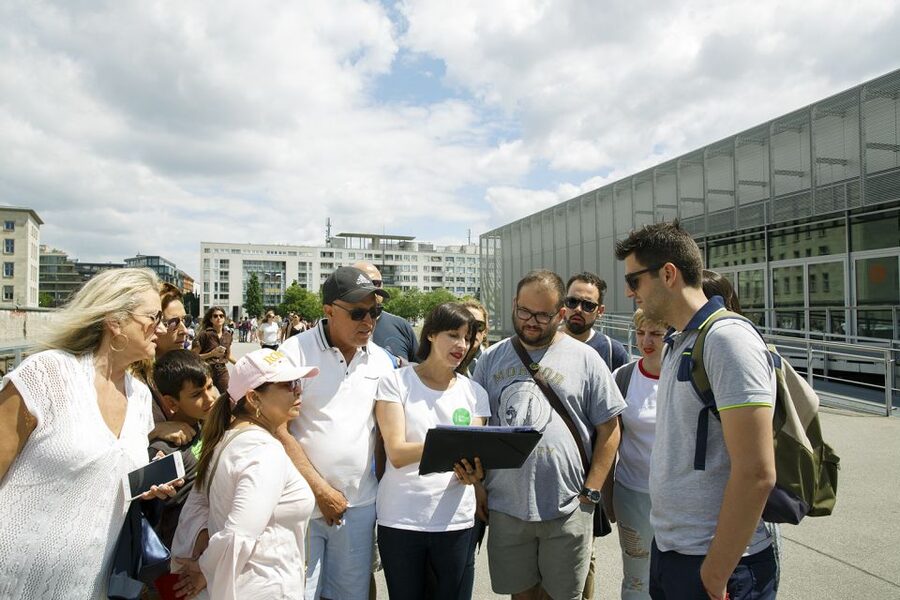
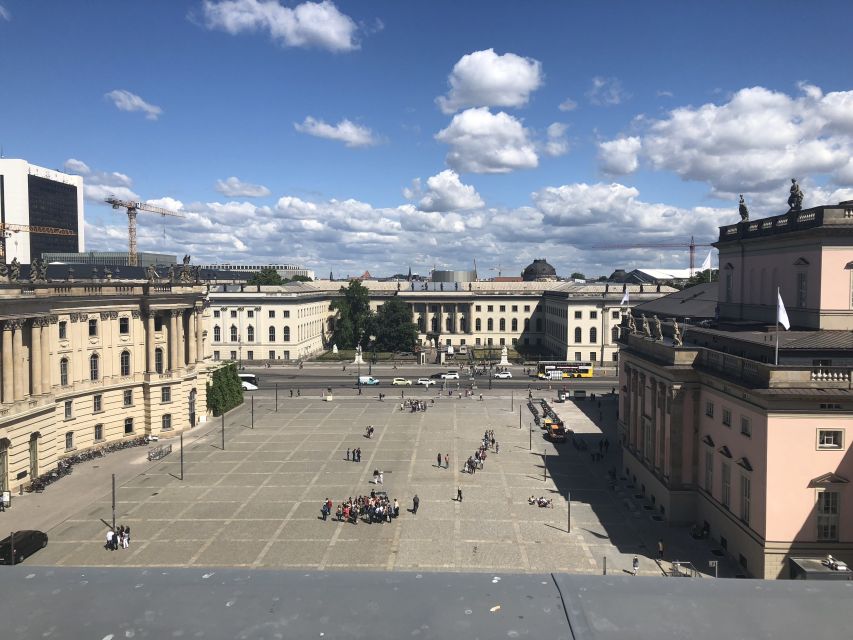
The route continues along Unter den Linden, historically known as Kaisers Avenue. This broad, prominent street connects several of the city’s most important buildings and gives the walk a strong sense of direction.
Along the way, you pass Humboldt University, the former Royal Library, and the State Opera. These are not random sights placed along a walking route. Together, they show how Berlin’s rulers and institutions shaped the center of the city.
This section rewards people who like context. A quick photograph of a grand façade is pleasant, but understanding why the buildings were placed here makes the street more meaningful. Your guide’s job is to connect the architecture with the people and political forces behind it.
The route is also practical for first-time visitors. Instead of trying to locate each sight separately, you see them in a logical sequence. You save time and get a map of central Berlin in your head.
Still Berlin, at a slower pace:
- Discover Berlin Half-Day Walking Tour
★ 5.0 · 9,624 reviews - Berlin: Hop-on Hop-off Bus Tour with Live Commentary
★ 4.3 · 8,579 reviews - Berlin: Government District around the Reichstag Guided Tour
★ 4.7 · 8,447 reviews - Berlin: Reichstag, Plenary Chamber, Cupola & Government Tour
★ 4.6 · 8,422 reviews
Gendarmenmarkt, a pause among Berlin’s grand squares
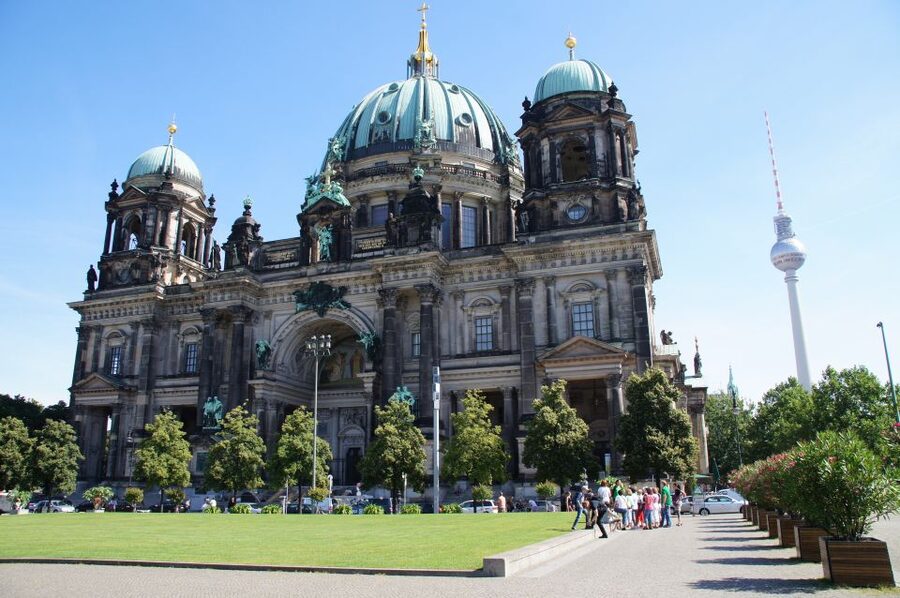
Gendarmenmarkt is one of the most attractive squares on the route and is used as a photo stop. Its formal design and surrounding buildings offer a change of mood after the long avenue of Unter den Linden.
I would use this pause to take photographs, listen to the explanation, and catch your breath. The tour covers a lot of ground, so these short moments matter. You are not simply racing from one address to another.
Gendarmenmarkt also helps show Berlin’s polished side before the tour turns toward darker chapters. That contrast is important. Berlin’s history is not confined to memorials and ruins. It includes ambitious public spaces, cultural institutions, royal projects, and places designed to project confidence.
Do not expect a long independent break here. It is a guided stop within a four-hour route, not a leisurely café visit. If you want more time for photographs, you may need to return later.
Nazi Berlin and the Gestapo Headquarters remains
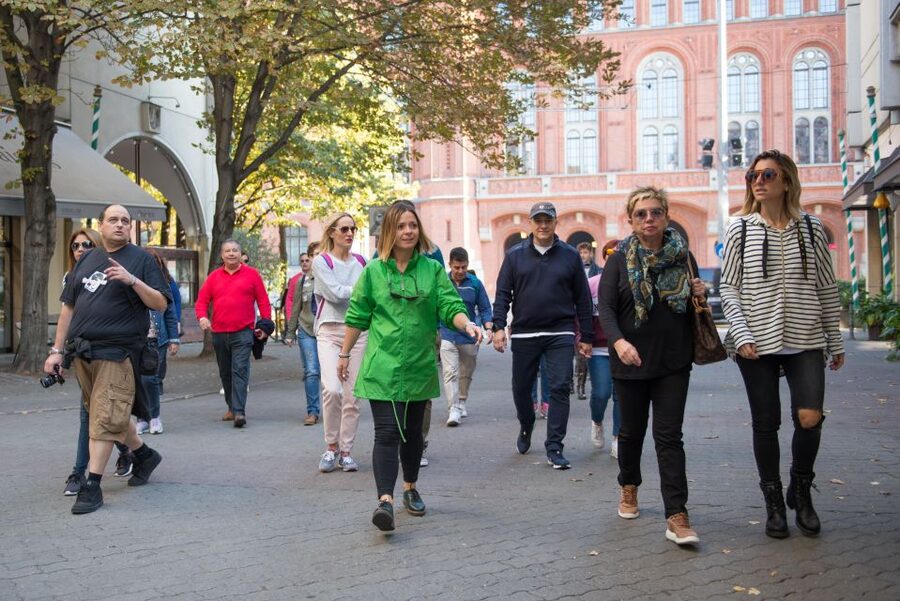
The tour then moves into the period of Hitler’s rise to power and the Nazi dictatorship. You see the remains of the Gestapo Headquarters, a place that helps turn an abstract political story into something connected to the city beneath your feet.
This part requires attention. Berlin’s central buildings can look impressive, but they also witnessed the growth of a regime that used state power, terror, and propaganda. A good guide can help you understand how the political changes affected the city and its residents.
The route does not treat history as a string of dates. Celia, one of the guides, has been praised for encouraging debate and reflection while keeping the explanation accessible and human. That approach suits Berlin particularly well, since the city’s past raises difficult questions about power, responsibility, memory, and daily choices.
You should expect a serious tone here. The tour is not designed as light sightseeing from start to finish, and that is one of its strengths. The guide presents major landmarks, but also asks you to consider what took place around them.
The Holocaust memorial and the work of remembering
The Memorial to the Murdered Jews of Europe is another major stop. The field of concrete slabs is one of Berlin’s most recognizable memorial spaces, but seeing it with a guide gives the site a clearer historical frame.
Your guide discusses the Holocaust and the way Berlin remembers the victims. This is not simply a photograph stop. Give the memorial the respect and attention it demands, and be ready for the mood to turn quiet and serious.
The memorial’s open design can leave you with questions rather than a simple message. That is appropriate here. The tour helps place it within the city’s broader effort to confront the crimes committed under the Nazi regime.
Because the group moves through several important sites, the exact amount of time at each place may feel limited if you want extended reflection. Still, this stop adds moral and historical weight to the route. Without it, a highlights tour of Berlin could become too focused on buildings and famous names.
Understanding the Berlin Wall from both sides
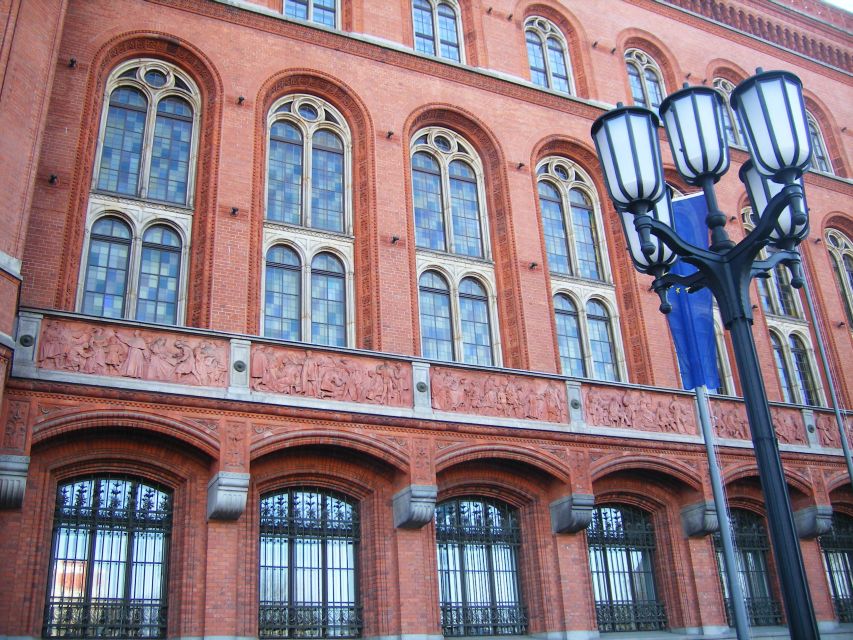
The strongest part of the tour is its treatment of divided Berlin. You learn why the Berlin Wall was built, how it eventually fell, and what it meant for people living in East and West Berlin.
That focus gives the tour more value than a simple city-center walk. The Wall was not just a physical barrier. It affected families, work, travel, friendships, and the basic routines of city life. The guide explains how local residents lived with the division on both sides, rather than treating the Wall as a symbol detached from human experience.
You also hear stories of East Germans who risked their lives trying to reach West Berlin. These accounts help explain the personal cost of the border. Political decisions become easier to grasp when you connect them with people who faced surveillance, separation, and dangerous escape attempts.
The tour also covers why the Wall fell. That wider view matters. You are not left with the familiar image of crowds celebrating in November 1989. You get the background that explains how Berlin reached that moment.
A Spanish-speaking guide can make this section especially effective for you if history is easier to follow through conversation. The guides Evelyn and Celia have received particularly strong praise for clear explanations and for making complex material understandable. Evelyn has also been noted for her patience with slower walkers, which is useful on a route of this length.
Potsdamer Platz and the modern city
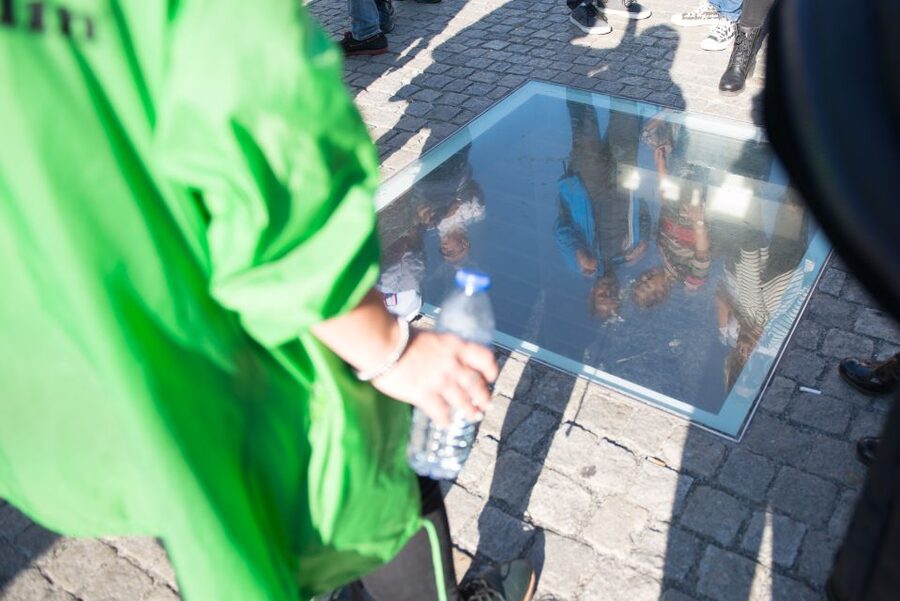
Potsdamer Platz brings the tour into modern Berlin. Its large-scale contemporary architecture offers a sharp contrast with the older streets, royal buildings, memorials, and Wall history seen earlier.
This is one of the route’s most useful comparisons. You can see how Berlin changed from a divided city into a modern capital with new commercial and public spaces. The area also reinforces a recurring Berlin theme: the past is rarely far from the present.
Potsdamer Platz is a good late-tour stop because it gives you a visual reset before the final landmark. By now, you have moved through several versions of Berlin, from early settlement to royal capital, dictatorship, division, and reunification.
Ending at the Brandenburg Gate
The tour finishes at the Brandenburg Gate, Berlin’s most famous symbol. Ending here gives the route a natural sense of arrival and ties together many of the themes discussed along the way.
The gate has witnessed different chapters of Berlin’s political story, but the tour presents it as a symbol of the city today. After hearing about division and the Wall, reaching this open public landmark has extra meaning.
It is also a practical ending point. You can take photographs, continue exploring central Berlin, or use the location as a reference for planning the rest of your day. The tour does not include a return transfer, so plan to continue independently from the Brandenburg Gate.
Four hours on foot: how the pace feels
Four hours is enough time to see a large number of central sights, but it is not a casual stroll. You will be outside and walking between stops, so comfortable clothes and shoes are essential.
The route includes many pauses for explanation, which breaks up the walking. One account describes a break of about 30 minutes for coffee, the restroom, and rest. Even so, the walking can feel demanding if you have mobility concerns or prefer slow sightseeing.
The tour is listed as wheelchair accessible, and a private group option is available. If you need a hotel pickup, that can also be selected as an option, with pickup at your hotel lobby. Since the meeting point is otherwise at Alexanderplatz, check the exact arrangement when booking.
Group size can affect the feel of the experience. A private group gives you more control over questions and pace. A standard group may suit you if you want the social energy and lower price of a shared tour.
Is $29 good value for Berlin?
At $29 per person, this tour offers strong value if you want a first look at central Berlin with a Spanish-speaking guide. Four hours of guided walking across major landmarks costs less than arranging several separate visits, and the route gives you an overview you can use to plan the rest of your stay.
The value comes mainly from the guide and the structure. You are not paying for museum admission, a meal, or transport. You are paying for interpretation, direction, and a connected story.
That distinction matters. If you prefer to explore at your own pace, spend long periods inside museums, or stop often for photographs, the fixed route may feel restrictive. If you want a clear introduction to Berlin and its major historical themes, $29 is a reasonable spend.
The booking terms also reduce risk. You can cancel up to 24 hours before the tour for a full refund, and you can reserve now and pay later. Those policies are useful when your Berlin schedule is still changing.
Who should book this Spanish tour?
I would recommend it most strongly to first-time visitors who want a broad introduction in Spanish. Families and mixed-age groups may also find it helpful, especially because Evelyn has been praised for waiting patiently for slower walkers.
It suits you if you want:
- A strong overview before visiting Berlin independently
- Historical explanations in Spanish
- Major landmarks covered in one morning or afternoon
- A serious look at the Nazi period and the Berlin Wall
- Practical recommendations for continuing your day
It may not suit you if you want a museum-focused experience, a very short walk, or a tour available in English or another language. The Spanish-only format is firm, so make sure everyone in your group can follow Spanish comfortably.
Should you book the Berlin highlights walk?
Book this tour if you want Berlin’s major sights connected by a clear human story. The route covers a lot, and the best part is the attention given to divided Berlin, the reasons behind the Wall, and the lives affected by it.
I would book it near the start of a Berlin visit, ideally when you can still use the guide’s orientation and recommendations for later sightseeing. Wear comfortable shoes, arrive at the green flag near the TV Tower before 10:00, and allow for cold or wet weather.
Skip it only if you dislike long walking tours or need extended time at each site. For Spanish-speaking visitors seeking history, context, and a solid first map of Berlin, the $29 price is well judged.
FAQ
In what language is the tour conducted?
The tour is offered only in Spanish, with a live Spanish-speaking guide.
How long does the tour last?
The tour lasts four hours.
Where does the tour begin?
It begins beside the only entrance to the TV Tower, or Fernsehturm, at Alexanderplatz. The meeting point is between the TV Tower and Alexanderplatz train station, next to Espresso House and a green flag marked tours en español.
What time does the tour begin?
Tours run every day and begin at 10:00 in front of the TV Tower at Alexanderplatz.
Does the tour run in bad weather?
Yes. The tour runs rain or shine, so you should bring suitable clothing for the weather.
Is the tour wheelchair accessible?
Yes, the activity is listed as wheelchair accessible.
Is a private tour available?
Yes, a private group option is available.
Can hotel pickup be arranged?
Yes, pickup at your hotel lobby is available as an optional service.
What is the cancellation policy?
You can cancel up to 24 hours in advance for a full refund. You can also reserve your place and pay later.
Just added around Berlin
- Private Walking Tour in Berlin: Hitler’s Germany & WWII★ 5.0 · 7 reviews
- The History of Berlin: WWII PRIVATE Walking Tour With Locals★ 5.0 · 209 reviews
- Private Berlin WWII and Cold War History Tour with Local Expert Guide★ 5.0 · 28 reviews
- Private Walking Tour Berlin 3 hours: Brandenburg, Historic Center★ 5.0 · 7 reviews
- Berlin: Private Bike Tour of the Berlin Wall and Third Reich★ 5.0 · 23 reviews
- Berlin: Guided Private Bike Tour to Explore the Highlights★ 5.0 · 12 reviews
- Berlin Photography Masterclass – Private Photography Lesson★ 4.5 · 23 reviews
- Group Driving Tour 1 to 6 people. Berlin Shore Excursion incl pick-up at Port★ 5.0 · 8 reviews
Guided, compared.
Reichstag, Dome and Government District Guided Tour
Read our review →
Government District around the Reichstag Guided Tour
Read our review →